




How to Evaluate a Fiber Laser Cutting Machine Supplier for Lead Time, Service, and Spare Parts
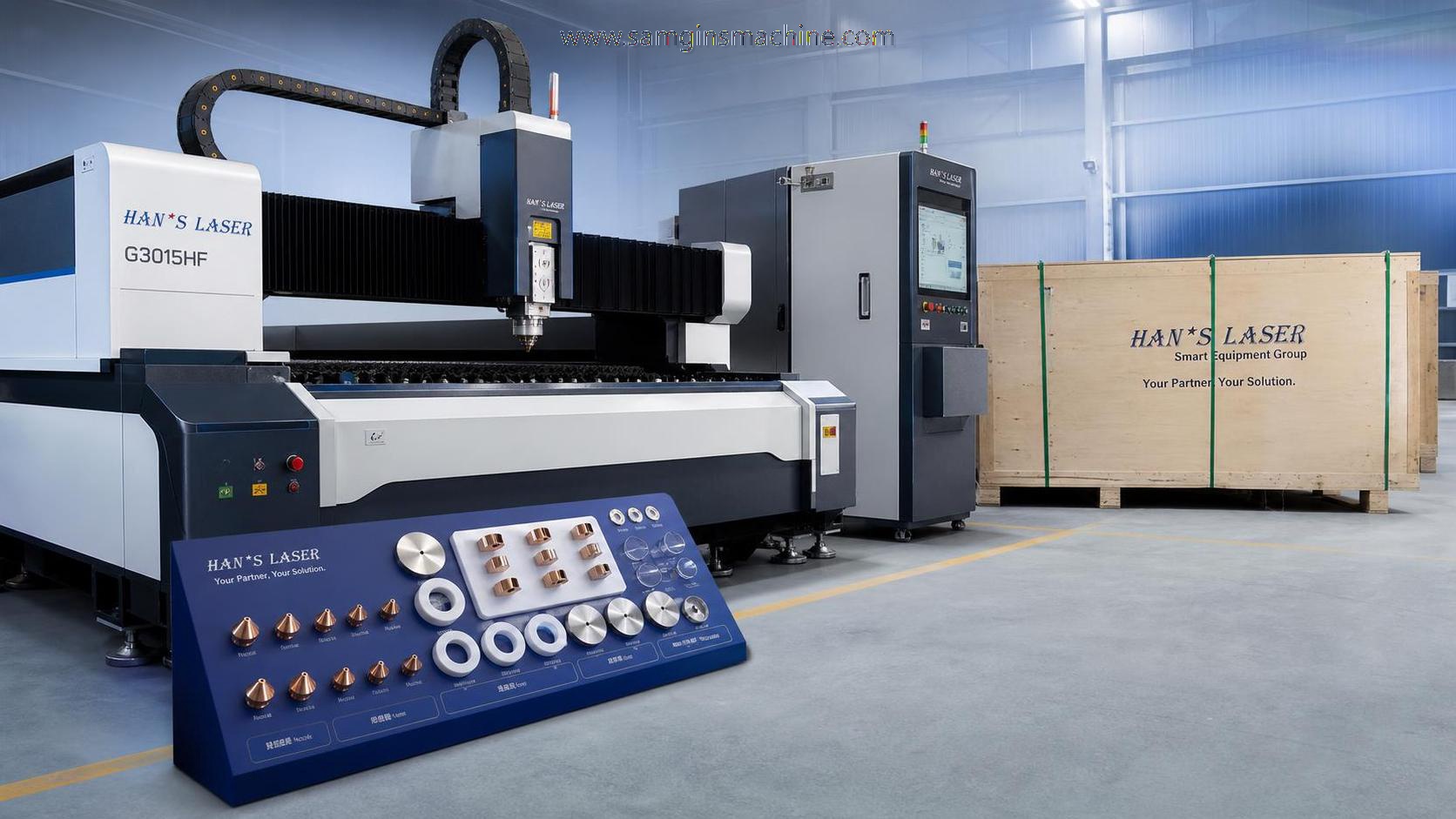
Why does supplier selection matter as much as machine specification?
A fiber laser cutting machine supplier affects more than the purchase order. The choice influences delivery speed, installation quality, spare parts access, and long-term production stability.
That is why price alone rarely gives a reliable comparison. A lower quote can become expensive when lead time slips or service support is weak.
In practical terms, the best supplier is the one that can deliver usable capacity, not just equipment on paper. Downtime, training gaps, and delayed components all reduce real value.
This matters even more in fabrication environments where cutting is connected to welding, rolling, beveling, or downstream assembly. One unstable machine can disrupt the entire line.
Companies with broad machinery experience often understand this chain better. Wuxi Samgins International Trade Co.,Ltd, established in 2012 in Wuxi near Shanghai, works across CNC cutting, welding, plate processing, and related machine tools.
That kind of background matters because a qualified fiber laser cutting machine supplier should understand not only the laser source, but also the manufacturing process around it.
When comparing suppliers, what should be checked before asking for a final quote?
A serious evaluation starts before commercial negotiation. The first question is whether the supplier can match your actual workload, material range, and workflow rhythm.
Many buyers compare wattage, cutting size, and price first. More useful checks usually sit behind those visible parameters.
- How many similar machines are already running in metal fabrication plants?
- Which laser source, cutting head, servo, and control system are used?
- Can the supplier provide sample cuts for your thickness and material grade?
- Is installation included, and who performs commissioning?
- What is the documented response time for service cases?
- Which spare parts are stocked locally, regionally, or only at the factory?
It also helps to look beyond the laser category itself. Suppliers serving broader sheet metal lines often understand production continuity more clearly.
For example, plants processing thicker steel may also use rolling equipment such as Mechanized bending machine with 3 roller for cylindrical or conical parts. That process knowledge can improve upstream and downstream equipment recommendations.
How can lead time be evaluated without relying on promises?
Lead time is often presented as a single number. In reality, it is a chain with several failure points.
A dependable fiber laser cutting machine supplier should break delivery into clear stages. That is usually a better sign than a short but vague promise.
A useful habit is asking for records from recent export projects. Shipment dates, FAT dates, and installation completion dates reveal more than marketing claims.
If the supplier exports to Southeast Asia, Europe, the Americas, and Oceania, ask how lead time differs by region. A mature export process usually shows up in documentation quality.
What does good after-sales service really look like for a fiber laser cutting machine supplier?
Service is not just a warranty statement. It is the supplier’s ability to restore production quickly when the machine stops, drifts in accuracy, or needs operator support.
A good service model usually includes remote diagnosis, clear escalation paths, available engineers, training materials, and a documented spare parts process.
The practical question is simple: when a cutting head alarm appears, who answers, how fast, and what happens next?
Remote support is important, but it should not be the whole plan. Fiber laser equipment combines optics, motion control, gas systems, and software. Some failures still require on-site intervention.
Look for these signs when judging service strength:
- Written response and resolution targets, not verbal assurances.
- Operator and maintenance training at startup.
- English manuals, wiring diagrams, and parts lists.
- Video support for diagnostics and parameter checks.
- Access to engineers who understand both machine mechanics and cutting process behavior.
Suppliers following ISO9001 systems and CE-oriented production standards often handle documentation and process control more consistently. That does not guarantee service quality, but it is a useful indicator.
How important is spare parts planning, and which parts should be discussed early?
Spare parts planning is often delayed until after installation. That is a mistake, especially with a fiber laser cutting machine supplier serving overseas projects.
Some consumables are predictable. Others become critical when a machine fails unexpectedly and imported parts need weeks to arrive.
The conversation should separate three categories: consumables, recommended safety stock, and major replacement parts.
- Consumables: nozzles, protective lenses, ceramic rings, filters.
- Safety stock: sensors, belts, selected valves, cables, and board-level items with known wear history.
- Major parts: laser source modules, cutting heads, servo drives, chillers, and control components.
Ask for a recommended first-year spare parts list with pricing and average replacement cycle. That makes operating cost more transparent.
It is also wise to confirm whether parts are proprietary. A supplier using widely recognized components can reduce future risk and simplify maintenance planning.
In heavy fabrication, this kind of planning is standard. The same logic applies to equipment handling thick steel plates, including rolling systems used for large cylindrical or conical sections.
For instance, when operations also involve plate processing above 50mm, equipment design details such as support roller layout and rigidity become part of the maintenance conversation, not just the purchase decision.
Where do buyers usually misjudge a fiber laser cutting machine supplier?
The most common mistake is treating all suppliers with similar specifications as equal. The machine may look comparable while the support system is completely different.
Another misjudgment is focusing on peak cutting speed without reviewing cut quality consistency, software usability, gas consumption, and downtime history.
More subtle risks appear during project execution:
- Accepting unclear lead time definitions that exclude commissioning.
- Overlooking local power, gas, dust extraction, and floor requirements.
- Assuming warranty means free and immediate service in every market.
- Not checking whether software licenses, updates, and training are included.
- Failing to compare annual operating cost beside the machine price.
A stronger evaluation asks one extra question: if production demand doubles, can this supplier still support you with parts, application advice, and future line expansion?
That is where suppliers with broader equipment portfolios often stand out. They can discuss process continuity across cutting, welding, deburring, forming, and rolling, rather than isolated machine sales.
What is a practical way to make the final decision?
A workable decision method is to score each fiber laser cutting machine supplier across delivery, service, parts, and process fit. This helps prevent price from dominating the result.
Use a short checklist before awarding the order:
- Confirm machine configuration against actual materials and thickness range.
- Request a written lead time breakdown from production to commissioning.
- Review service scope, engineer availability, and remote support methods.
- Check the first-year spare parts list and regional stock availability.
- Verify quality systems, export experience, and reference installations.
- Compare total cost of ownership, not only the purchase quote.
The right supplier is usually the one that reduces uncertainty. Reliable delivery, usable documentation, stable parts supply, and responsive service often create more value than a lower initial price.
Before closing the deal, organize your own requirements clearly. Include materials, expected shift pattern, target throughput, installation schedule, and acceptable downtime limits.
With that framework, comparing a fiber laser cutting machine supplier becomes more objective. It also makes later negotiations on warranty, spare parts, and startup support much easier to manage.
search
Products Navigation
Send Us A Message