




Laser Cutting Machine Deep Dive: How It Works, Material Compatibility, and Performance Factors
What A Laser Cutting Machine Is In Modern Manufacturing
A laser cutting machine is a digitally controlled manufacturing system that focuses a high-energy beam onto a workpiece to melt, burn, or vaporize material along a programmed path. In industrial practice, the term usually refers to CNC laser equipment used for sheet metal, tubes, profiles, and selected nonmetal applications, although fiber laser systems now dominate most metal fabrication environments.
The core industrial value of a laser cutting machine lies in its ability to combine precision, flexibility, and throughput in a single process. Compared with mechanical cutting, it reduces tooling changes and contact wear. Compared with some thermal cutting alternatives, it can produce narrower kerf widths, finer details, and cleaner edges on many thin to medium-thickness materials.
For buyers in manufacturing and processing machinery sectors, a laser cutting machine is not just a standalone asset. It often sits inside a broader workflow that includes material handling, deburring, bending, welding, blasting, drilling, and final assembly. This is why machine selection should be linked to downstream quality requirements, delivery targets, and production mix rather than headline power alone.
In global fabrication markets, the machine is widely used in sheet metal shops, steel structure plants, tank and pipeline workshops, agricultural equipment production, machinery enclosures, transport components, and custom metal part manufacturing. The strongest business case appears where frequent design changes, batch variability, and dimensional consistency are critical to profitability.
How A Laser Cutting Machine Works
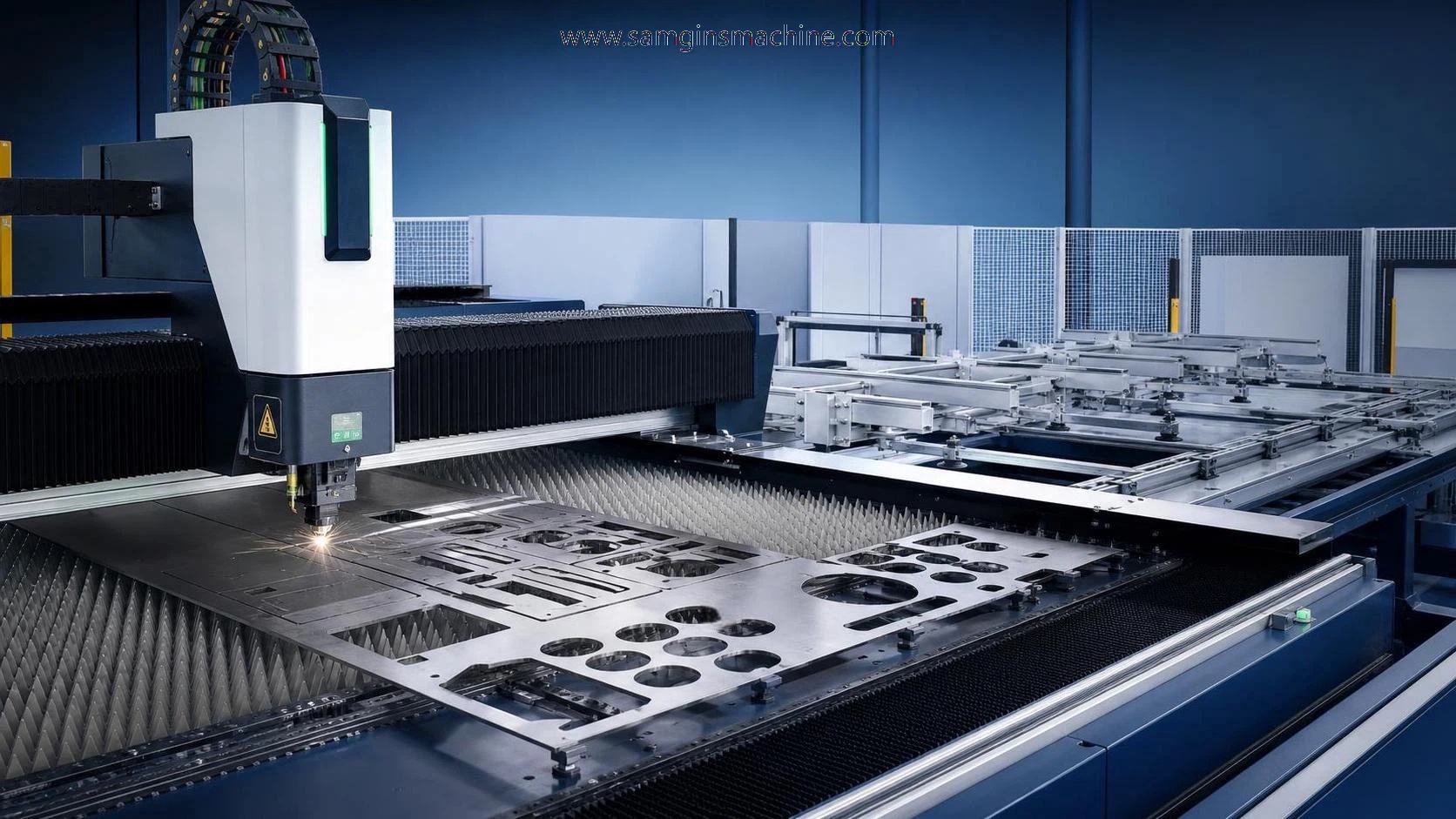
A laser cutting machine converts electrical energy into a coherent beam, then directs that beam through optical delivery components toward a cutting head. The beam is focused to a very small spot on the material surface, creating energy density high enough to raise local temperature rapidly. Depending on material type and process parameters, the material melts, oxidizes, or vaporizes at the cut line.
Assist gas is a major part of the process. Oxygen can support exothermic cutting on carbon steel, often improving thick-section cutting efficiency. Nitrogen is commonly used where oxidation-free edges are preferred, especially for stainless steel and decorative or weld-ready parts. Compressed air may be used in cost-sensitive applications, though its effect on edge quality and consistency must be evaluated case by case.
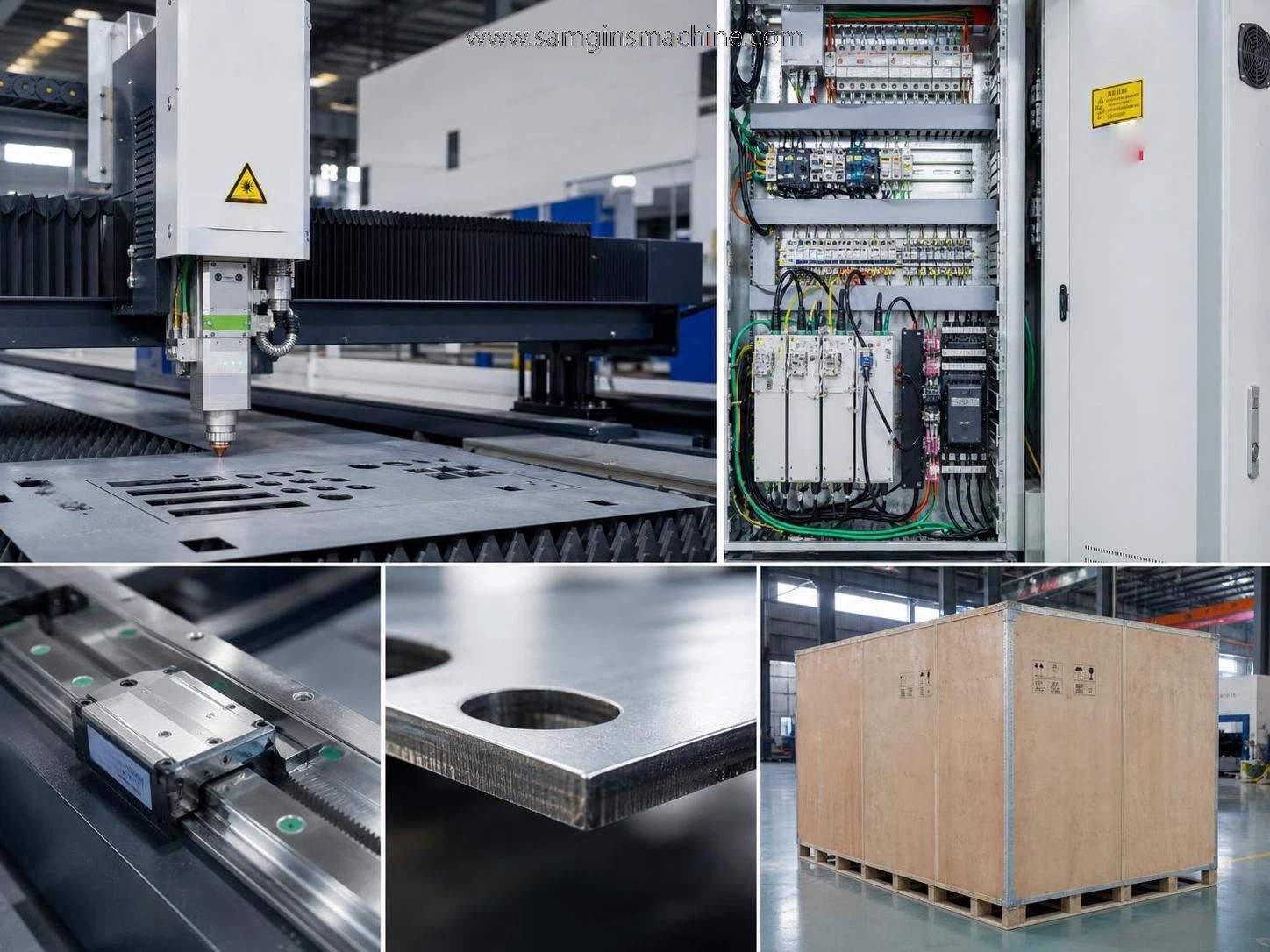
Motion control determines whether beam power becomes useful production output. Servo-driven axes, CNC interpolation accuracy, rack or linear transmission stability, and head height control all affect corner sharpness, hole roundness, taper, burr level, and repeatability. A stable machine bed and responsive control system are especially important when the laser cutting machine is expected to process mixed geometries throughout long shifts.
Thermal input, nozzle condition, focal position, cutting speed, piercing strategy, and sheet flatness also influence results. This is why experienced suppliers focus on the whole cutting system rather than only the laser source. In practical procurement, the best performing laser cutting machine is usually the one with balanced optics, control, gas management, mechanical rigidity, and service support.
Main Types Of Laser Cutting Machines And Their Use Cases
The main market categories are fiber laser, CO2 laser, and specialized laser systems. For metal fabrication, fiber laser has become the mainstream choice because it offers strong electrical efficiency, high cutting speed on thin to medium sheet, and practical integration with automated production. CO2 systems still exist in some installations, but they are less common in new metal cutting investment decisions.
By workpiece format, buyers typically choose among flat sheet machines, tube and pipe laser cutters, and combination sheet-and-tube systems. A flat-bed laser cutting machine suits general sheet metal work such as cabinets, enclosures, brackets, machine covers, and structural plates. Tube systems are better for round, square, and rectangular sections used in frames, furniture, fitness equipment, and process piping supports.
By production scale, there are entry-level manual loading machines, exchange-table systems for higher throughput, and automated cells with loaders, unloaders, sorting, and digital production management. The right configuration depends on lot size, labor cost, shift pattern, material mix, and how much non-cutting time currently limits output in the workshop.
Within Wuxi Samgins' broader machinery offering, recommended related solutions include CNC fiber laser cutting machines for sheet work, pipe CNC fiber laser cutting machines for tubular production, and CNC flame cutting machines where thicker plate economics favor alternative thermal processes. For steel fabricators handling H-beam or structural workflows, laser equipment can also complement drilling, edge preparation, welding, and blasting equipment in an integrated production chain.
Material Compatibility, Thickness Logic, And Cut Quality Expectations
A laser cutting machine is most commonly used on carbon steel, stainless steel, aluminum alloys, galvanized sheet, and certain copper or brass grades, subject to suitable source power, optics protection, and gas strategy. Material reflectivity, thermal conductivity, surface coating, and flatness all influence process stability. Buyers should confirm target materials by test cutting under realistic production parameters rather than relying on brochure claims alone.
Thickness capability is not a simple function of wattage. A machine may technically cut a certain maximum thickness, but commercially useful cutting requires acceptable speed, edge condition, dimensional stability, and downstream suitability for welding, coating, or assembly. For many factories, the profitable thickness window matters more than the laboratory maximum because it determines daily output and total cost per part.
Cut quality is usually judged by kerf width, edge roughness, burr formation, heat-affected zone, dimensional accuracy, hole quality, and consistency over long runs. Stainless parts that go directly to visible assemblies often require oxide-free edges and limited discoloration. Carbon steel components intended for structural welding may prioritize edge reliability and throughput over cosmetic appearance, provided downstream fit-up remains stable.
Material compatibility should also be linked to factory workflow. If the shop regularly bends, welds, or paints parts after cutting, the laser cutting machine must support that sequence with predictable edge condition. In many plants, a deburring machine, press brake, welding robot, or edge milling process may sit directly after cutting, so consistency matters as much as nominal precision.
Who Uses A Laser Cutting Machine And Why It Matters
The main users of a laser cutting machine are sheet metal fabricators, OEM component suppliers, steel structure workshops, machinery builders, enclosure manufacturers, transport equipment producers, and energy-related fabrication contractors. These users typically need flexible cutting without dedicated tooling, fast drawing-to-part conversion, and consistent geometry for downstream fitting and welding.
It is especially valuable for buyers that handle mixed orders, export projects, and custom fabrication. A laser cutting machine can shorten preparation time between jobs, improve nesting efficiency, and reduce scrap when paired with capable programming. This makes it attractive in B2B environments where order variation is high and delivery windows are tight.
For pressure equipment, tanks, pipelines, and steel structure applications, equipment selection often needs to align with broader fabrication systems. Wuxi Samgins positions well here because its product range extends beyond cutting to welding manipulators, welding rotators, welding positioners, long seam welding machines, H-beam production equipment, press brakes, rolling machines, and pipe processing machinery. That gives procurement teams a practical route to line compatibility rather than isolated machine buying.
The strongest adoption case appears when labor efficiency, dimensional repeatability, and production traceability matter to the customer. In such settings, a laser cutting machine becomes a process control tool, not only a cutting device. Its value is amplified when management is measuring lead time, part consistency, rework rate, and machine utilization across the factory.
How To Select The Right Machine Configuration
Selecting a laser cutting machine starts with production reality: material type, thickness distribution, annual volume, part size, tolerance needs, and whether output is mainly prototypes, mixed small batches, or repetitive serial work. Buyers should map at least six to twelve months of actual cutting data. This avoids the common mistake of purchasing excess power for rare jobs while overlooking the throughput bottlenecks that affect daily production.
Key configuration choices include worktable size, source power, cutting head capability, assist gas system, dust extraction, software, and loading method. Exchange tables improve spindle-on time in busy sheet operations. Tube cutting chucks and support systems matter for pipe and profile work. For factories supplying weld-ready components, focus stability and edge cleanliness may be more important than maximum rapid speed on the specification sheet.
Mechanical and electrical component quality also deserves attention. Wuxi Samgins emphasizes the use of well-known imported hydraulic, servo, and CNC components in key positions to support precision, stability, and service life. In practical terms, that matters because servo response, motion smoothness, and control reliability directly affect corner performance, hole accuracy, unplanned downtime, and maintenance burden.
Customization is another selection factor. Some buyers require special loading layouts, longer pipe capacity, integrated beveling logic, or compatibility with existing welding lines. Wuxi Samgins' customization capability across welding robots, long seam welding machines, and heavy-duty rotators suggests useful engineering flexibility for customers that want the laser cutting machine to fit into a larger fabrication process rather than forcing the plant to adapt around a standard machine.
Quality Control, Standards, Installation, And Service Expectations
A reliable laser cutting machine should be evaluated through manufacturing discipline as much as through sample parts. Buyers should review machine bed fabrication, stress relief approach where applicable, alignment inspection, electrical assembly quality, protective layout for cables and optics, and factory acceptance testing methods. Repeatability over time depends on machine structure and build consistency, not only on the laser source brand.
For international procurement, quality system and compliance documentation are part of risk control. Wuxi Samgins states that its machines comply with the ISO9001 quality system and EU CE Machinery and LVD directives, and that the company holds utility model patents related to welding and cutting equipment. These points are relevant for buyers that need a documented baseline for import review, project qualification, or internal supplier approval.
Installation planning should cover foundation condition, power supply, gas availability, ventilation, extraction, material flow, and operator training. Many performance problems that buyers attribute to the laser cutting machine itself actually come from unstable compressed air, unsuitable assist gas purity, poor sheet storage, or weak maintenance routines. A disciplined commissioning process reduces those risks significantly.
After-sales support should be assessed with the same seriousness as machine specification. Wuxi Samgins highlights long-term warranties and support spanning design, manufacturing, sales, after-sales, and technical service. For B2B users, the real question is response capability: spare parts availability, remote diagnostics, documentation quality, process guidance, and whether the supplier understands standards such as ASME, API, and local fabrication codes that shape end-use requirements.
Application Scenarios, Market Access, And Global Reference Context
A laser cutting machine is widely applied where precision profiles, slot-hole combinations, contour flexibility, and controlled heat input are required. Common scenarios include sheet metal cabinets, machine guards, stainless processing parts, support brackets, ducting elements, structural connection plates, light industrial frames, and pipe or tube components for fabricated assemblies. In export-oriented workshops, digital cutting also improves drawing revision control across multilingual supply chains.
Global market access often requires more than a good sample cut. Buyers may need consistent documentation, code familiarity, and practical understanding of industry-specific workflows. Wuxi Samgins cites over ten years of export experience and familiarity with ASME, API, and local codes, which is relevant for customers in sectors such as pressure equipment, steel structures, energy-related fabrication, and project-based industrial supply.
Its reference list, including companies such as URALSTANKOIMPORT, MD Calbah Industries Pty Ltd, Ersay International Transport, Zein Steel Industries Co. LLC, BatysMunaiGazZhabdyktary LLP, PT. Cahaya mas Cemerlang, Estructuras Metalicas Girders Chile Limitada, and Lincoln Electric-MENA, suggests exposure to varied regional requirements and industrial applications. These references should be read as commercial context rather than a universal proxy for suitability, but they do indicate experience with cross-border project delivery.
For buyers comparing sourcing options, this matters because a laser cutting machine often enters operations where downstream deadlines are strict and shutdown costs are real. A supplier with broader fabrication knowledge can usually communicate more effectively about nesting logic, weld preparation, plate handling, or integration with bending and welding stages than a vendor focused only on standalone machine sales.
Performance Factors, Maintenance Timing, And Future Industry Trends
The main performance factors of a laser cutting machine are beam quality, motion accuracy, thermal stability, gas control, software efficiency, and operator discipline. In daily operation, lens contamination, nozzle wear, misalignment, assist gas inconsistency, and neglected slat cleaning can gradually degrade cut quality. Buyers should therefore view maintenance as a production variable, not a background task.
Routine maintenance timing depends on utilization, material type, and workshop conditions. Consumables and optical components require scheduled inspection, while rails, drives, chucks, filters, and extraction systems need preventive care based on actual running hours. The right interval is not universal. It should be defined during commissioning and then adjusted using production records, defect trends, and downtime analysis.
Looking ahead, the market trend is toward higher automation, better software-driven nesting, more integrated loading and unloading, remote diagnostics, and tighter links between cutting data and factory management systems. Another visible trend is process specialization, where flat sheet, tube cutting, bevel preparation, and weld cell integration are planned together to reduce manual handling and secondary operations.
For procurement teams, the future-proof laser cutting machine is not necessarily the one with the highest nominal specification. It is the one that fits the plant's material profile, can be maintained with confidence, supports quality requirements in downstream forming or welding, and comes from a supplier capable of scaling with broader fabrication needs. That is where a multi-product industrial partner can offer strategic value beyond the initial machine purchase.
How Much A Laser Cutting Machine Really Costs To Own
The total cost of owning a laser cutting machine includes far more than purchase price. Buyers should calculate capital cost, installation, power consumption, assist gas, consumables, preventive maintenance, spare parts, operator training, software, extraction, floor space, and financing impact. Material utilization and scrap rate can be major hidden drivers, especially when nesting practices are weak or order mix is unstable.
Labor economics also matter. A more automated machine may cost more upfront but reduce loading delays, sorting time, rework, and dependence on highly specialized operators. In many B2B factories, the return on a laser cutting machine comes from shorter lead times, fewer outsourced parts, lower secondary finishing, and better fit-up in bending or welding, not simply from raw cutting speed.
ROI analysis should be built around actual job families. Compare current methods such as plasma, flame, saw cutting, punching, or subcontracted laser work against expected in-house performance. Measure cycle time, defect rate, energy, gas use, and downstream labor. Where part geometry is complex and changeovers are frequent, laser processing often gains advantage because it combines precision with programming flexibility.
For many industrial buyers, the best investment case emerges when the laser cutting machine is chosen as part of a process chain. If a supplier can support related needs such as press braking, pipe handling, H-beam processing, seam welding, or robotic welding, the buyer may achieve lower system-level cost and better production coordination than through fragmented procurement. That broader view is usually where long-term value is created.
search
Recommended Products
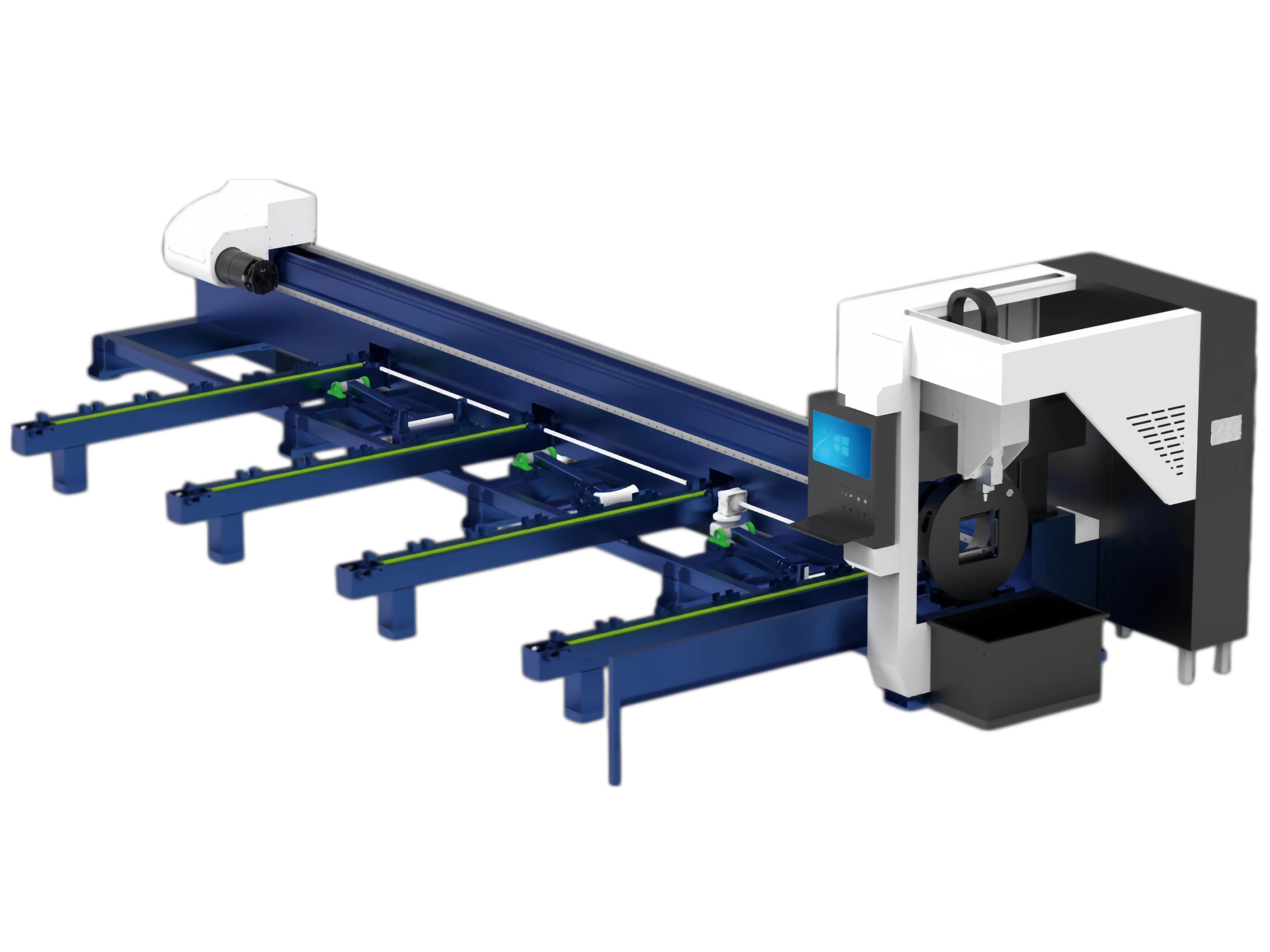
 Pipe cnc fiber laser cutting machine1.Introduction for Pipe cnc fiber laser cutting machine:
The laser cutting machine focuses the laser beam emitted from the laser source through the optical path system into a high-power-density laser beam. This laser beam is directed onto the surface of the workpiece, causing it to reach the melting point or boiling point. At the same time, the high-pressure gas coaxial with the laser beam blows away the molten or vaporized metal.![星星1]()
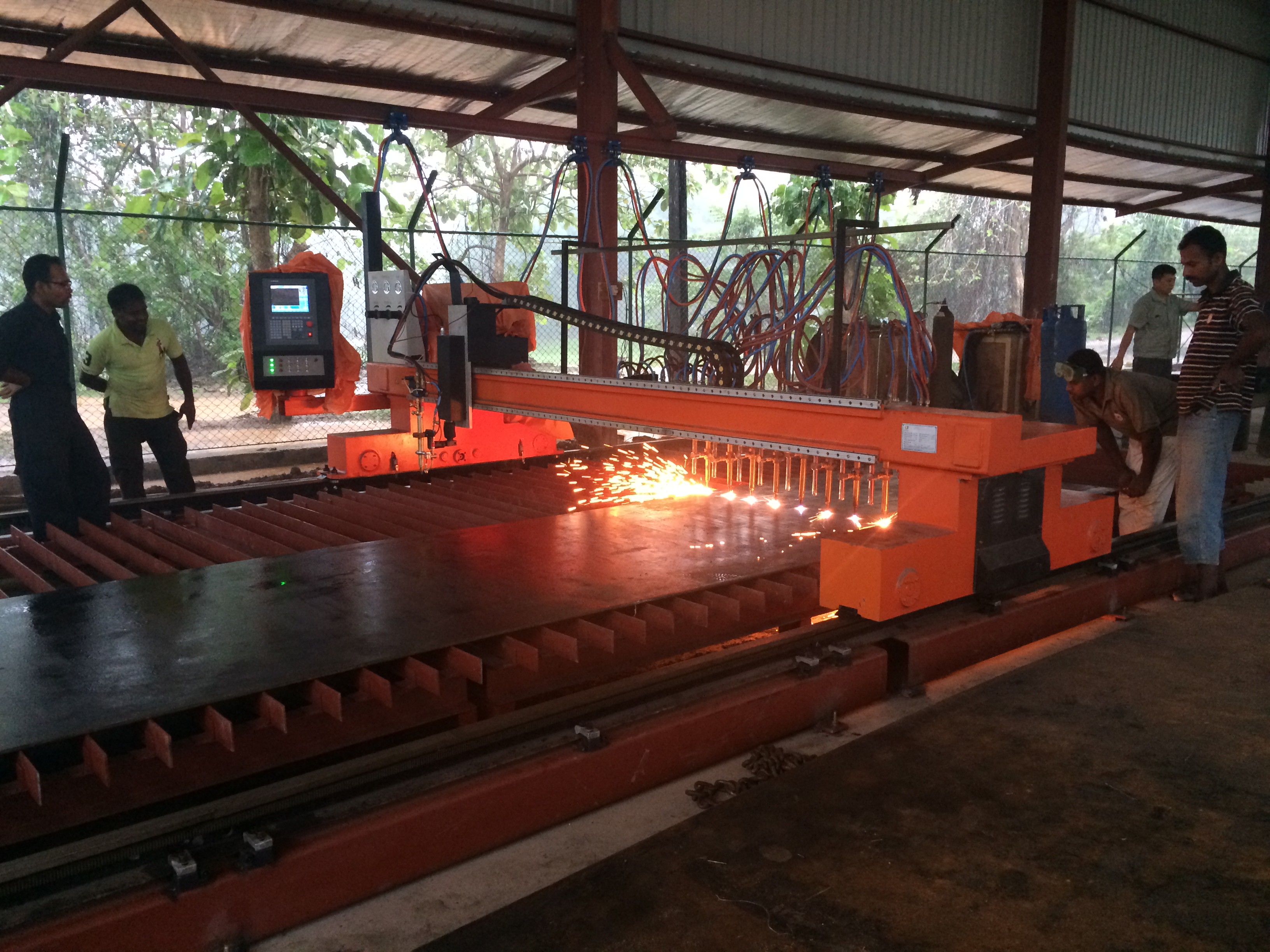
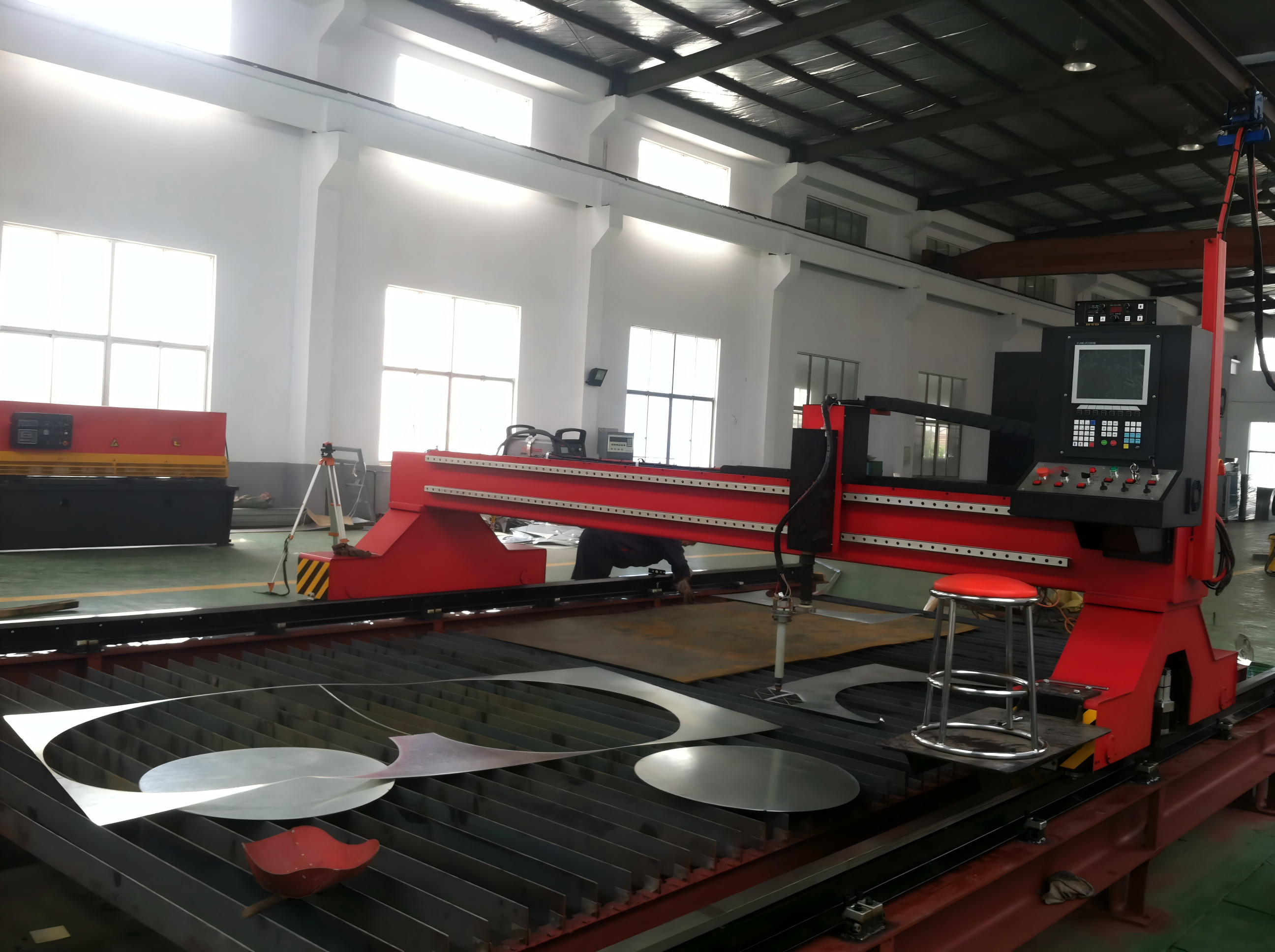
- Cnc flame cutting machineThe CNC flame/plasma cutting machine features box-beam welded end beams and cross beams with stress relief, ensuring compact structure, light weight, high rigidity, minimal deformation, and good appearance. Longitudinal and transverse movements are driven by Panasonic servo motors and SHIMPO reducers via rack-and-pinion gearing for precise control. Horizontal guide wheels with eccentric shaft adjustment press firmly against the rails, ensuring stable and accurate motion. High-strength longitudinal rails with precision-machined surfaces and ground racks are securely mounted to guarantee straightness and parallelism. Optional automatic igniter and torch height controller are available for user-friendly operation.
![星星1]()
 Gantry CNC plasma cutting machineThe CNC flame/plasma cutting machine features box-beam welded end beams and cross beams with stress relief, ensuring compact structure, light weight, high rigidity, minimal deformation, and good appearance. Longitudinal and transverse movements are driven by Panasonic servo motors and SHIMPO reducers via rack-and-pinion gearing for precise control. Horizontal guide wheels with eccentric shaft adjustment press firmly against the rails, ensuring stable and accurate motion. High-strength longitudinal rails with precision-machined surfaces and ground racks are securely mounted to guarantee straightness and parallelism. Optional automatic igniter and torch height controller are available for user-friendly operation.
![星星1]()
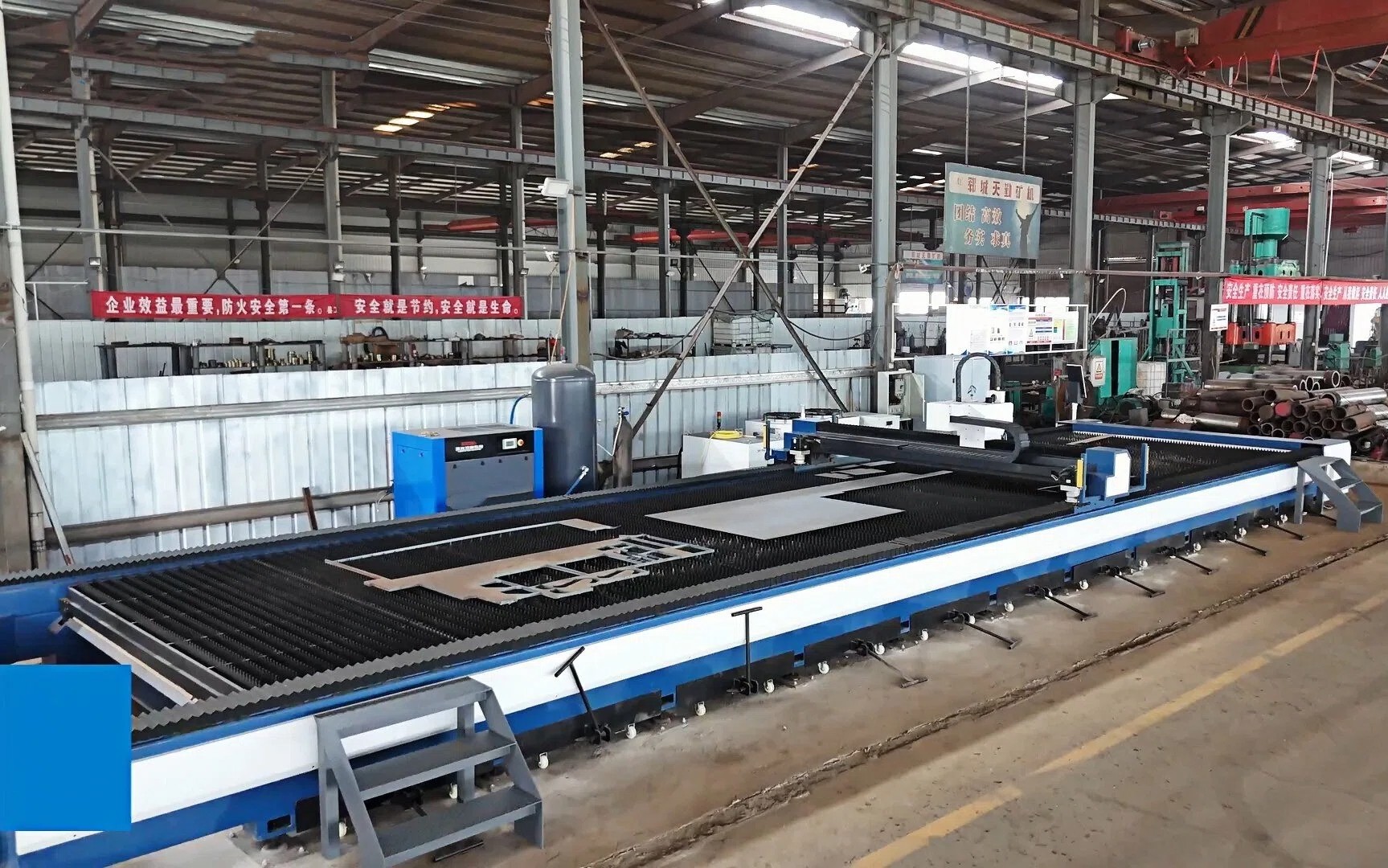
 Steel Plate cnc fiber laser cutting machine1.Introduction for Steel Plate cnc fiber laser cutting machine:
The laser cutting machine directs a laser beam emitted from the source through an optical system, focusing it into a beam of high power density. This concentrated beam is applied to the workpiece surface, rapidly raising the temperature to the melting or boiling point. Simultaneously, a stream of high-pressure gas coaxial with the beam ejects the molten or vaporized material. As the beam moves relative to the workpiece, a cutting kerf is formed, completing the cutting process.![星星1]()
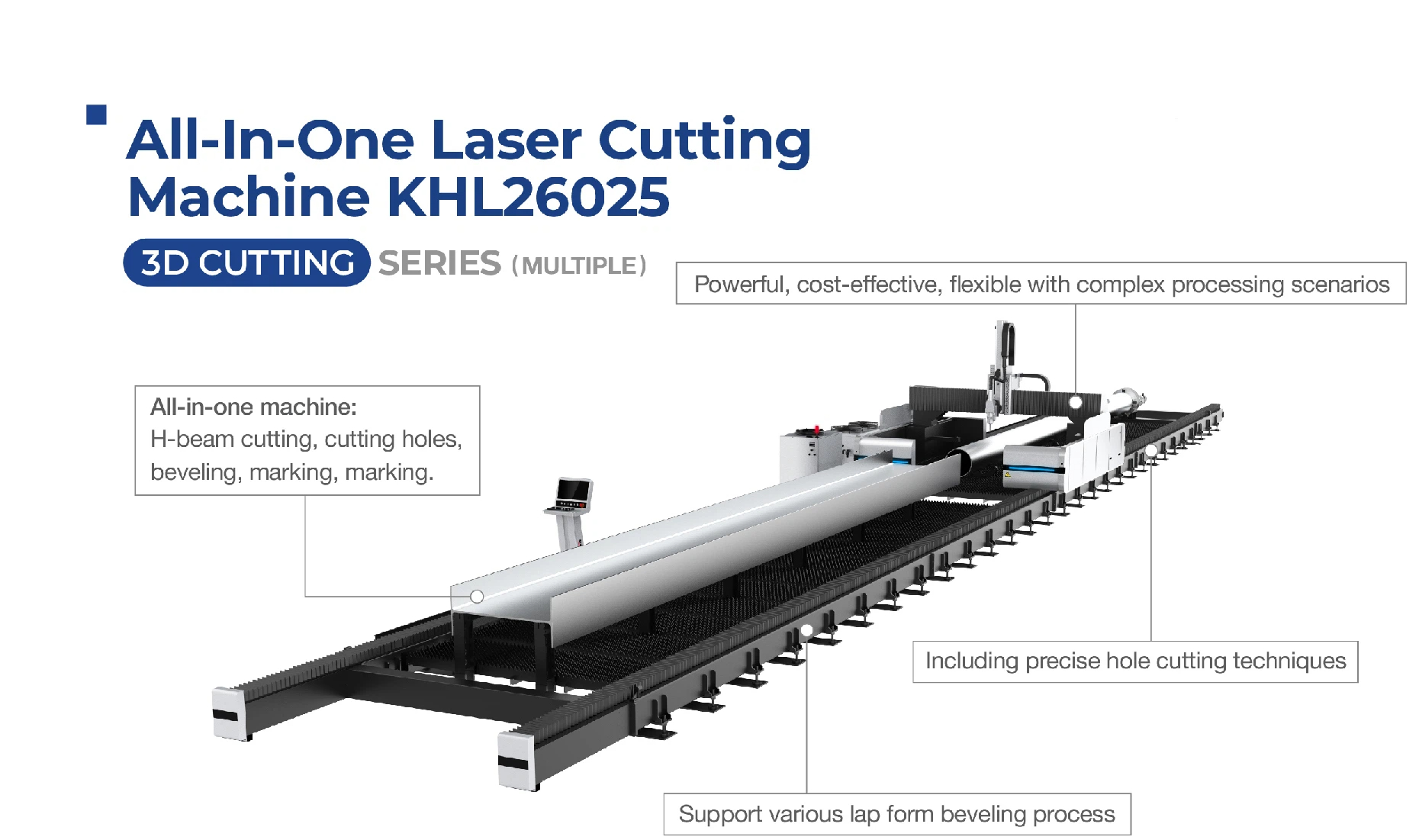
 H beam cnc fiber laser cutting machine1.Introduction for H beam cnc fiber laser cutting machine:
The laser cutting machine focuses the laser beam emitted from the laser source through the optical path system into a high-power-density laser beam. This laser beam is directed onto the surface of the workpiece, causing it to reach the melting point or boiling point. At the same time, the high-pressure gas coaxial with the laser beam blows away the molten or vaporized metal.![星星1]()

Recommended blogs
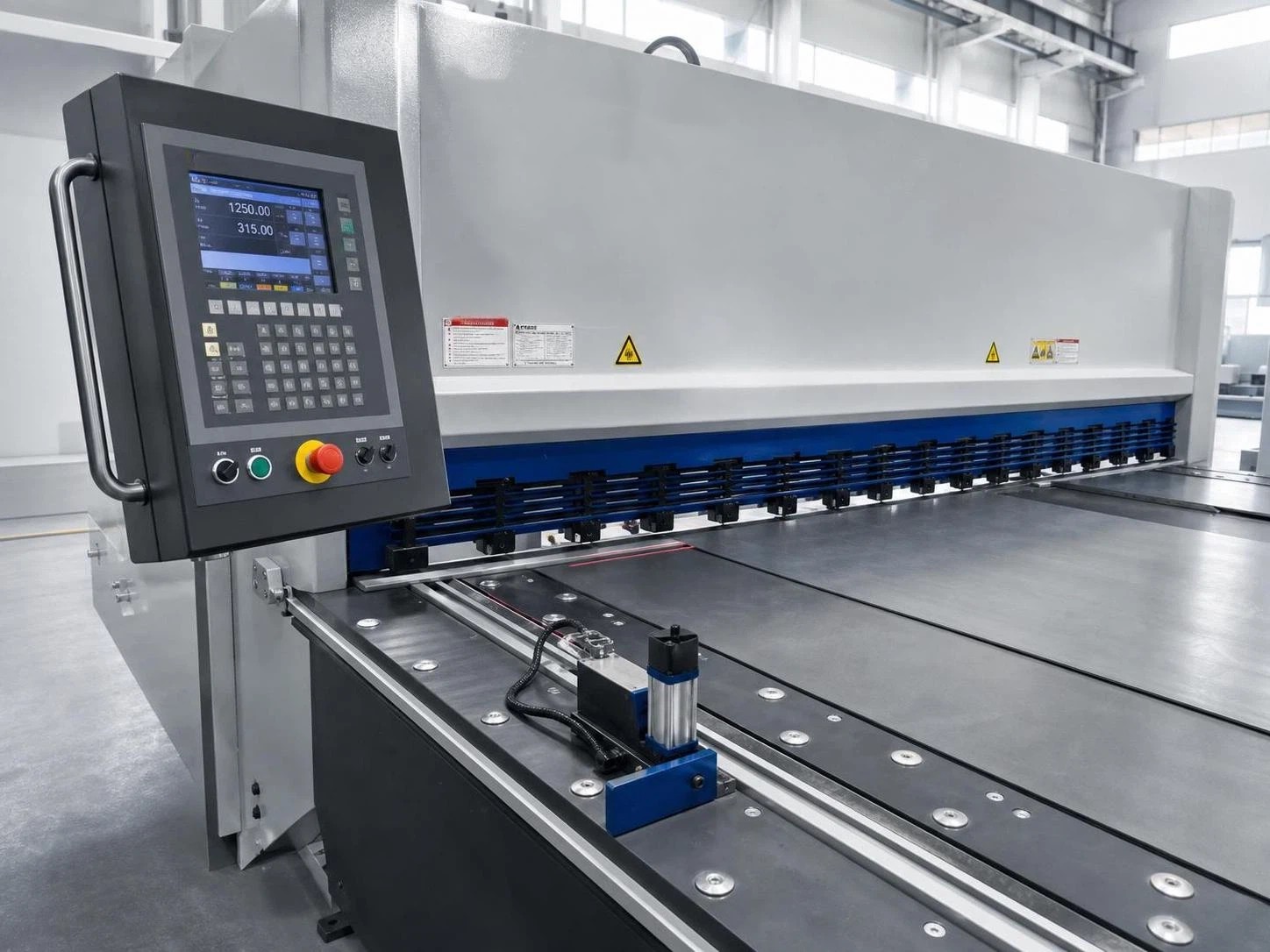
- CNC Hydraulic Shearing Machine Selection Guide: Stroke, Backgauge, and Control System
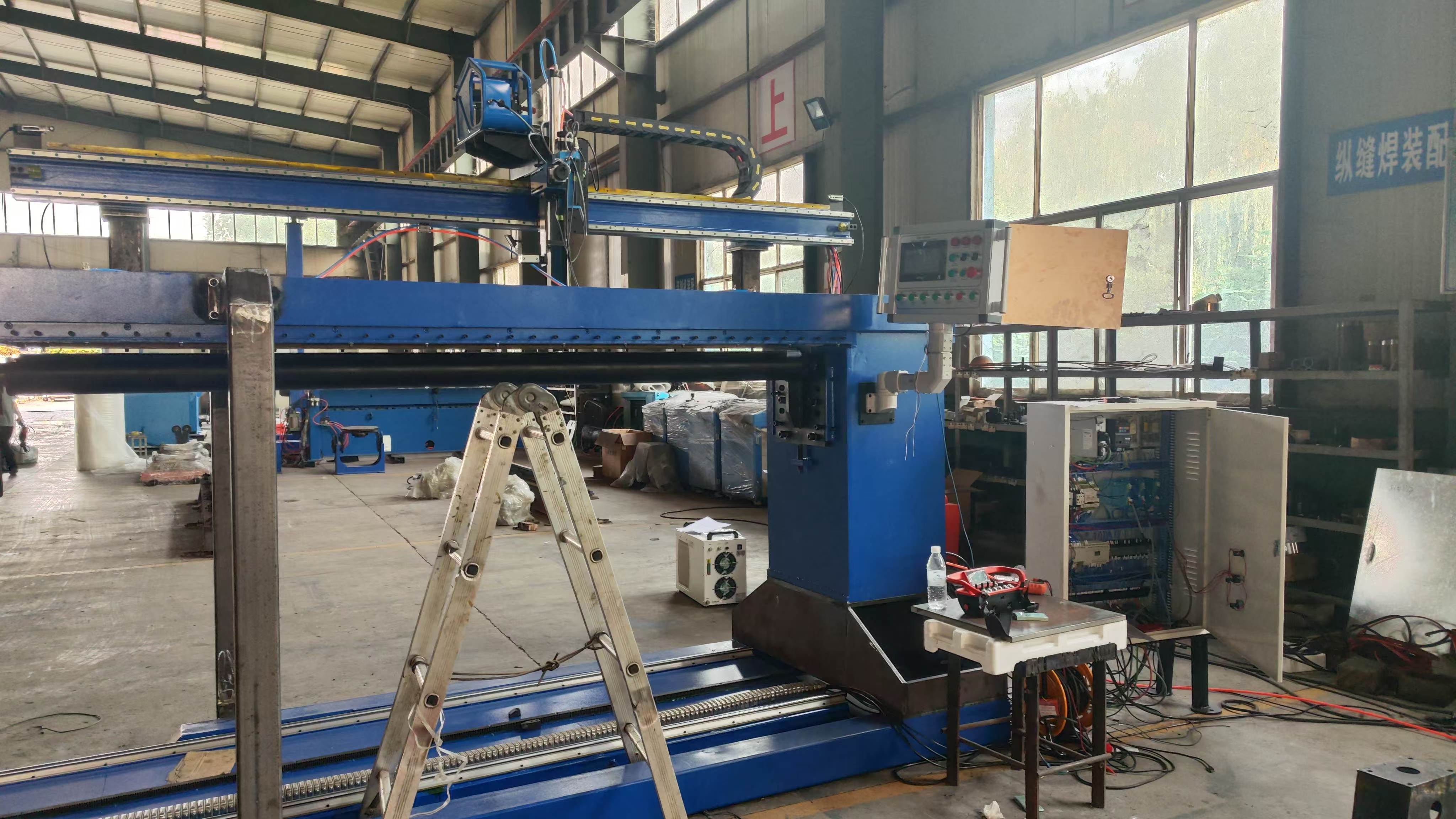
 Longitudinal Seam Weld Defects: Causes and Practical Fixes
- How to Choose a Plate Laser Cutting Machine for Thickness and Throughput
- How to Prevent Burrs When Shearing Stainless Steel Sheets
- What to Look for in a Hydraulic Shearing Machine for a Fabrication Shop
- What Export Quality Standards Should Buyers Check Before Ordering?
Send Us A Message
Send us a Message
A dedicated person will follow up on your needs one-on-one and provide personalized customized solutions according
to your needs.
Get In Touch
We look forward to hearing from you for in-depth communication on how to fulfill your mixing requirements.