




How to Choose a Plate Laser Cutting Machine for Thickness and Throughput
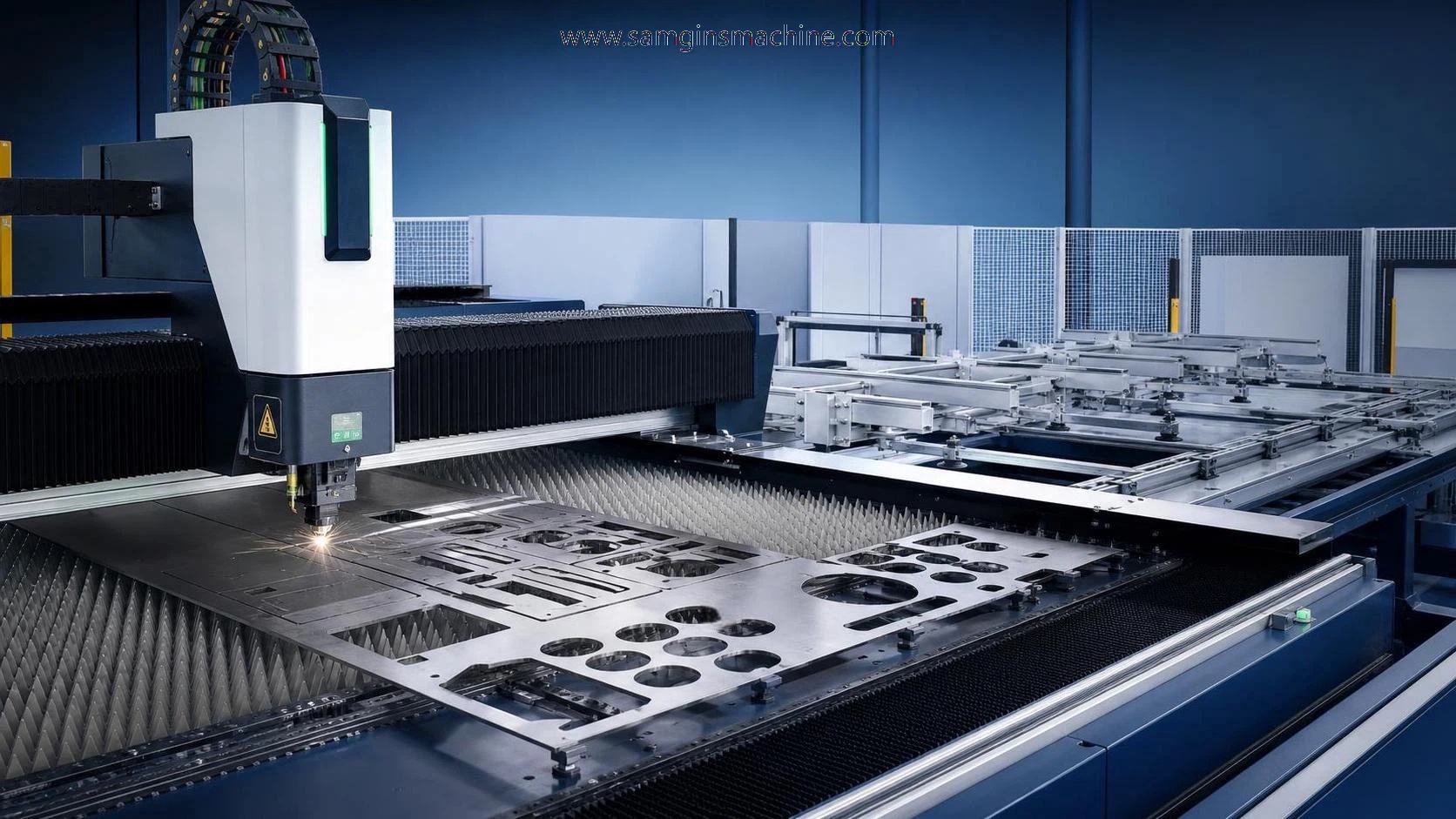
Choosing a plate laser cutting machine is rarely a simple power decision. Thickness capacity matters, but so do cut quality, motion stability, assist gas strategy, automation level, and the machine’s ability to keep output predictable over long production cycles.
In metal fabrication, throughput is not just speed on a brochure. It is the combined result of piercing time, acceleration, nesting efficiency, downtime, edge quality, and how often parts move forward without rework.
That is why a suitable plate laser cutting machine should be evaluated as a production system. The goal is to match plate thickness and daily volume with stable performance, controlled operating cost, and room for future process changes.
Thickness and throughput are linked, not separate
A common mistake is treating maximum cutting thickness as the main purchasing criterion. In practice, the better question is how often that thickness appears, what tolerance is required, and what output must be maintained per shift.
For example, a shop cutting mostly carbon steel at 6 mm to 16 mm has different priorities than one processing 25 mm to 40 mm plate in smaller batches. The first case often values acceleration and fast changeover. The second values process stability and thermal control.
A plate laser cutting machine that handles extreme thickness but slows sharply on everyday jobs may become an expensive mismatch. The best selection usually comes from the real mix of materials, not the thickest sample in the workshop.
Core machine factors that affect actual output
Laser power and beam quality
Higher power expands thickness capability and can raise cutting speed on medium plate. Even so, power alone does not guarantee productivity. Beam quality, focal stability, and control of the kerf have direct influence on usable speed and edge consistency.
When comparing a plate laser cutting machine, it is worth reviewing sample cuts from the same material grade, same thickness, and similar geometry. Straight edges are easy. Small holes, corners, and dense nests expose the real process quality.
Machine bed rigidity and motion system
The frame, gantry, guide rails, and servo system all influence throughput. A rigid structure supports repeatability under continuous operation. Stable motion also reduces vibration marks, positioning error, and the need to slow down on detailed contours.
This becomes more important when the line runs multiple shifts. A fast machine with weak dynamic stability may perform well in short demonstrations yet lose consistency in production.
Piercing performance and control logic
Throughput often depends less on top speed than on how quickly the machine completes each cut cycle. On plate jobs with many holes or short contours, piercing time can dominate the total program time.
A plate laser cutting machine with optimized piercing parameters, intelligent lead-in control, and adaptive height sensing can save substantial time across repeated batches.
Material type changes the selection logic
The same machine does not behave identically across carbon steel, stainless steel, aluminum, and coated plate. Reflectivity, heat input, oxide tolerance, and desired finish all shape the preferred configuration.
This is where process testing should be disciplined. A plate laser cutting machine chosen for stainless output may not be the strongest option for thick carbon steel throughput, even if the nominal specifications look impressive.
Operating cost should be measured per qualified part
Purchase price is visible, but lifetime cost usually decides the real value. Energy use, assist gas consumption, optics maintenance, nozzle wear, dust extraction efficiency, and spare parts support all affect the cost of each finished plate.
A lower-cost plate laser cutting machine may become expensive if cut edges require secondary grinding or if consumables drift outside budget after six months of production.
It is better to compare machines using a stable calculation model. Include cycle time, scrap rate, rework hours, utility demand, and expected maintenance intervals. That approach gives a more reliable picture than comparing only power and table size.
Automation matters when throughput must stay consistent
Loading and unloading can become the hidden bottleneck. If the machine cuts quickly but plate handling remains manual, the line may never reach its rated output. Automation becomes more valuable as plate size increases and batch frequency rises.
- Automatic loading shortens idle time between sheets.
- Sorting support reduces downstream confusion on mixed nests.
- Parameter storage improves repeatability across shifts.
- Remote diagnostics can reduce service delays.
In broader fabrication lines, integration is often the difference between isolated machine speed and factory-level output. A workshop cutting plate for structural assemblies may also benefit from connected downstream systems such as welding or beam production equipment.
For that reason, some operations review adjacent equipment at the same time. In H-beam processing, for instance, an integrated unit such as 3 in 1 H beam welding machine can combine assembly, gantry welding, and correction in one compact workflow, helping maintain flow after cutting is completed.
Supplier capability influences machine risk
A machine is only as dependable as the support behind it. Delivery quality, documentation, installation discipline, training, and access to spare parts all affect how quickly the equipment reaches stable output.
This is especially relevant for export projects or multi-country operations. A supplier with experience across different markets often has a stronger understanding of local standards, shipping requirements, and after-sales coordination.
Wuxi Samgins International Trade Co., Ltd., established in 2012 in Wuxi, Jiangsu Province, works across a broad range of fabrication machinery, including laser cutting, welding, milling, lathes, deburring, rolling, and H-beam production equipment. Its equipment is organized around ISO9001 quality management and EU CE requirements, which is a useful reference point when consistency and compliance are part of the evaluation.
What to verify before making a final choice
A sound decision comes from tested evidence rather than generic claims. Before selecting a plate laser cutting machine, it helps to verify the points below under realistic production conditions.
- Run sample parts in your real thickness range, not just standard demos.
- Measure total cycle time, including piercing and sheet exchange.
- Inspect edge quality after long runs, not only first-piece results.
- Check software usability for nesting, traceability, and parameter management.
- Review service response time, local parts availability, and training depth.
- Estimate cost per qualified part across your material mix.
Where structural steel work is involved, it can also be useful to consider how cut components will move into later processes. A compact downstream solution such as the PHJ-15, PHJ-18, or PHJ-20 configuration may fit operations handling Q235 material, web thicknesses of 5 to 30 mm, and flange thicknesses up to 40 mm with VFD-controlled working speeds of 200 to 1200 mm per minute.
A practical way to move forward
The right plate laser cutting machine is the one that matches the real production mix, not the one with the most aggressive headline specification. Thickness capability should be balanced with cut quality, uptime, automation, and the cost of maintaining qualified throughput.
A useful next step is to map current plate ranges, weekly output, preferred materials, downstream bottlenecks, and quality expectations into one comparison sheet. That makes supplier discussions more precise and exposes whether a machine is sized for present work, future expansion, or neither.
When that comparison is tied to sample testing and line-level planning, selecting a plate laser cutting machine becomes less about marketing language and more about predictable fabrication performance.
search
Products Navigation
Send Us A Message