




What a Plate Laser Cutting Machine Can Cut and Where It Fits Best
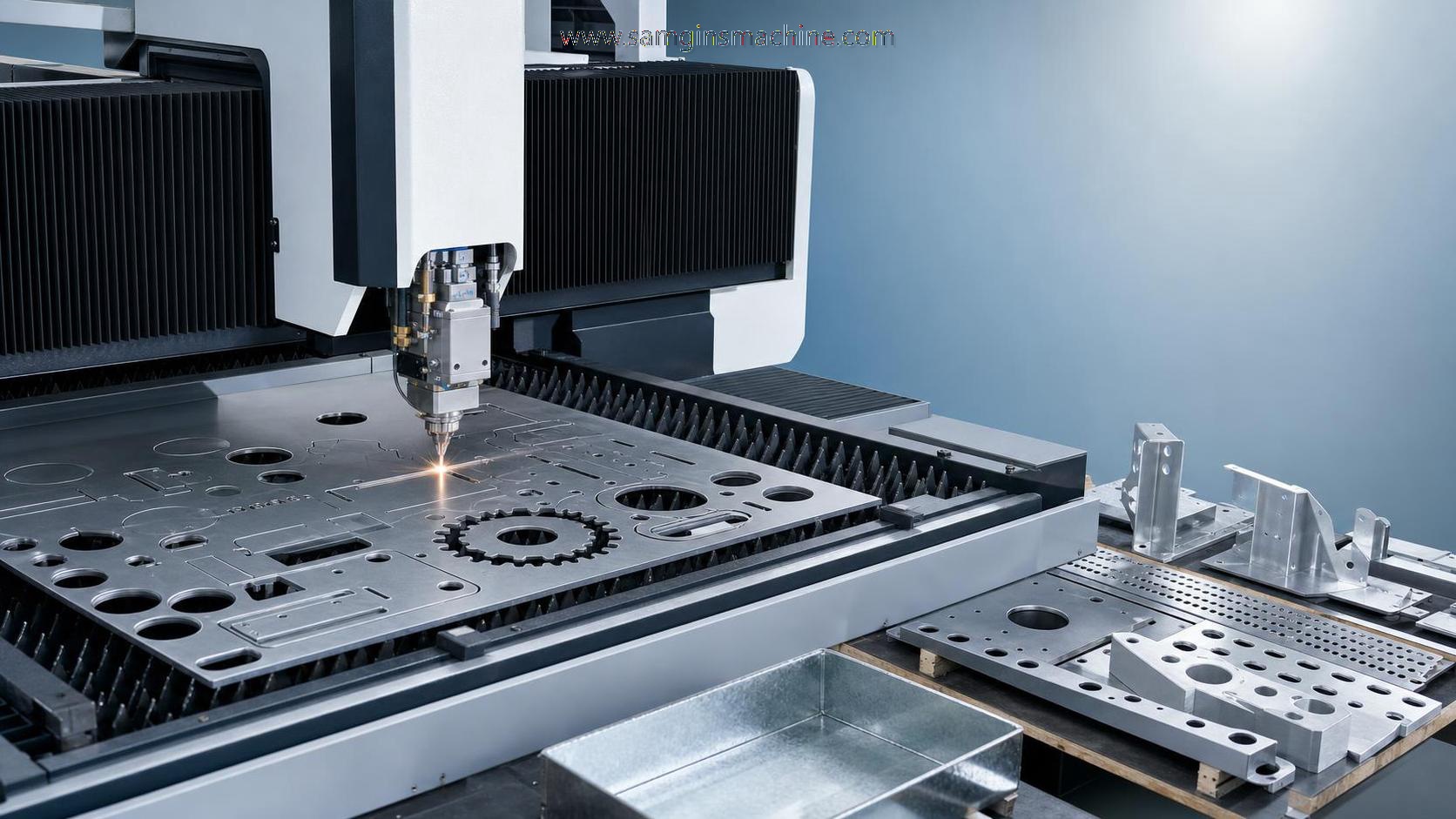
A plate laser cutting machine is valued for fast throughput, tight dimensional control, and broad material compatibility. Yet its real usefulness depends on a practical question: what can it cut well, and in which production settings does it make the most sense? In metal fabrication, that answer shapes equipment planning, part quality, downstream efficiency, and overall process cost.
For companies comparing fabrication methods, the plate laser cutting machine sits at the intersection of precision and flexibility. It can process thin sheet for high-volume parts, medium-thickness plate for structural components, and selected thicker sections where edge quality still matters. The better the match between machine capability and production task, the stronger the return on investment.
What a plate laser cutting machine is designed to do
A plate laser cutting machine uses a focused laser beam to melt or vaporize material along a programmed path. Assist gas removes molten material and supports a cleaner cut.
In simple terms, it is built for flat metal plates that require accurate contours, holes, slots, notches, and repeatable part geometry. CNC control allows complex shapes without custom hard tooling.
This matters in modern fabrication because part variety keeps increasing. Shorter lead times, smaller production batches, and tighter tolerances make flexible cutting systems more attractive than many conventional methods.
Materials a plate laser cutting machine can handle
Most plate laser cutting machine applications center on carbon steel, stainless steel, aluminum, and galvanized sheet. Copper and brass can also be processed on suitable systems with correct power and reflective-material protection.
Carbon steel is usually the most common material. It cuts efficiently, supports a wide range of thicknesses, and fits general industrial work such as brackets, frames, cabinets, and machine bases.
Stainless steel is another strong use case. When appearance, corrosion resistance, or hygiene requirements matter, laser cutting provides smooth edges and consistent detail for enclosures, food equipment, and architectural parts.
Aluminum brings different considerations. It is lighter and widely used, but thermal behavior and reflectivity demand stable process settings. A capable plate laser cutting machine can still deliver very good results on aluminum plate.
Galvanized sheet is common in cabinets, ventilation parts, and light structural assemblies. Here, process stability and fume handling become especially important during cutting.
Typical material fit
How thick can it cut in real production?
Thickness capability depends on laser source, wattage, optics, assist gas, motion system, and the edge quality expected after cutting. Nameplate maximums are useful, but production reality is more nuanced.
For thin and medium plate, a plate laser cutting machine usually performs best. Speeds are higher, piercing is easier, and fine features remain stable. This is where laser cutting often outperforms older thermal methods.
As thickness increases, cut speed drops, taper becomes more visible, and gas consumption can rise. Heavy plate can still be processed, but the economic case should be checked against plasma, oxy-fuel, or combined workflows.
That is why material thickness should never be judged in isolation. Edge finish, secondary machining, hole quality, and final assembly requirements all influence whether the plate laser cutting machine is the right choice.
Where this equipment fits best
The strongest fit is usually flat-part production with shape complexity, frequent drawing changes, and a need for consistency across batches. Laser cutting is particularly effective when design flexibility matters as much as output speed.
Common applications include sheet metal enclosures, electrical cabinets, equipment covers, machine frames, bracket sets, agricultural components, construction fittings, elevator parts, and stainless decorative panels.
In production lines that combine cutting, bending, welding, and finishing, laser cutting often works as the first precision step. It reduces layout errors and improves part matching in later operations.
This is also where supporting equipment becomes relevant. After precise cutting, thicker steel plates may move into rolling and forming stages for tanks, shells, cones, or curved structural sections.
For that kind of workflow, Mechanized bending machine with 3 roller fits naturally into metal fabrication. It rolls plates into cylinders, cones, and partial sections, and can handle plate thicknesses of 50mm or more.
Its design also adds fixed idler rollers beneath the lower rollers, reducing span and supporting better workpiece accuracy. In practice, that matters when cut blanks must hold shape during downstream forming.
Why the market keeps paying attention to laser plate cutting
The appeal is not only speed. A plate laser cutting machine supports nesting efficiency, material savings, lower tooling dependency, and cleaner changeovers between product types.
For operations serving multiple industries, that flexibility is valuable. One day may involve cabinet panels, the next day mounting plates, and the next day stainless covers with fine cutouts.
There is also a quality argument. Better cut accuracy can reduce rework in bending, welding, and assembly. Over time, that often affects labor usage more than the cutting speed alone.
Suppliers with broader fabrication equipment knowledge are often better positioned to evaluate these process links. Wuxi Samgins International Trade Co., Ltd, established in 2012 in Wuxi, Jiangsu, operates in this wider machinery context.
Its portfolio covers laser cutting machines, CNC cutting systems, welding equipment, milling machines, lathes, H-beam production line equipment, deburring machines, leveling machines, bending machines, and other metalworking solutions.
That matters because a plate laser cutting machine is rarely purchased as an isolated tool. It is usually one part of a larger fabrication chain that needs matching standards, workflow logic, and reliable output.
The company’s production and design practices are organized around ISO9001 and EU CE standards, which is a relevant signal when evaluating process stability and export-oriented equipment requirements.
Points that deserve closer evaluation before selection
A plate laser cutting machine should be judged by actual job mix, not by the highest advertised cutting thickness. Production efficiency depends on the parts that run every day, not the occasional extreme case.
- Check the dominant material types, including carbon steel, stainless steel, aluminum, and coated sheet.
- Review the real thickness range and how often each thickness appears in production.
- Assess required hole quality, contour accuracy, and downstream weld or bend sensitivity.
- Consider nesting software, loading automation, and extraction requirements.
- Estimate secondary work reduction, not only cutting speed.
- Match the machine with follow-up processes such as deburring, forming, rolling, and welding.
It is also worth reviewing sample parts rather than generic catalogs. A plate laser cutting machine may cut a stated thickness, yet edge condition, burr level, or hole geometry may still differ from project needs.
A practical reading of fit
If the workload is dominated by intricate flat parts and medium plate, laser cutting is often the strongest option. If the workload is mainly very thick plate with simple profiles, another method may carry better economics.
When the process includes rolled shells or conical sections after cutting, it helps to compare the cutting machine with forming equipment at the same time. That prevents isolated decisions and improves line balance.
How to move from research to a sound decision
A useful next step is to organize parts by material, thickness, accuracy demand, and monthly volume. That creates a clearer picture of whether a plate laser cutting machine is being considered for its real strengths.
Then compare not only cutting capability, but also how the machine fits the full fabrication route. Loading, deburring, bending, rolling, welding, and delivery requirements all influence the final value.
In other words, the best plate laser cutting machine is not simply the one with the highest power. It is the one that matches material mix, production rhythm, and downstream fabrication needs with the fewest compromises.
A well-structured evaluation usually starts with sample parts, process expectations, and equipment compatibility. From there, it becomes much easier to judge where laser plate cutting delivers the greatest advantage and where another method should share the workload.
search
Products Navigation
Send Us A Message