




Plate Laser Cutting Machine vs Plasma: Which Delivers Better Edge Quality
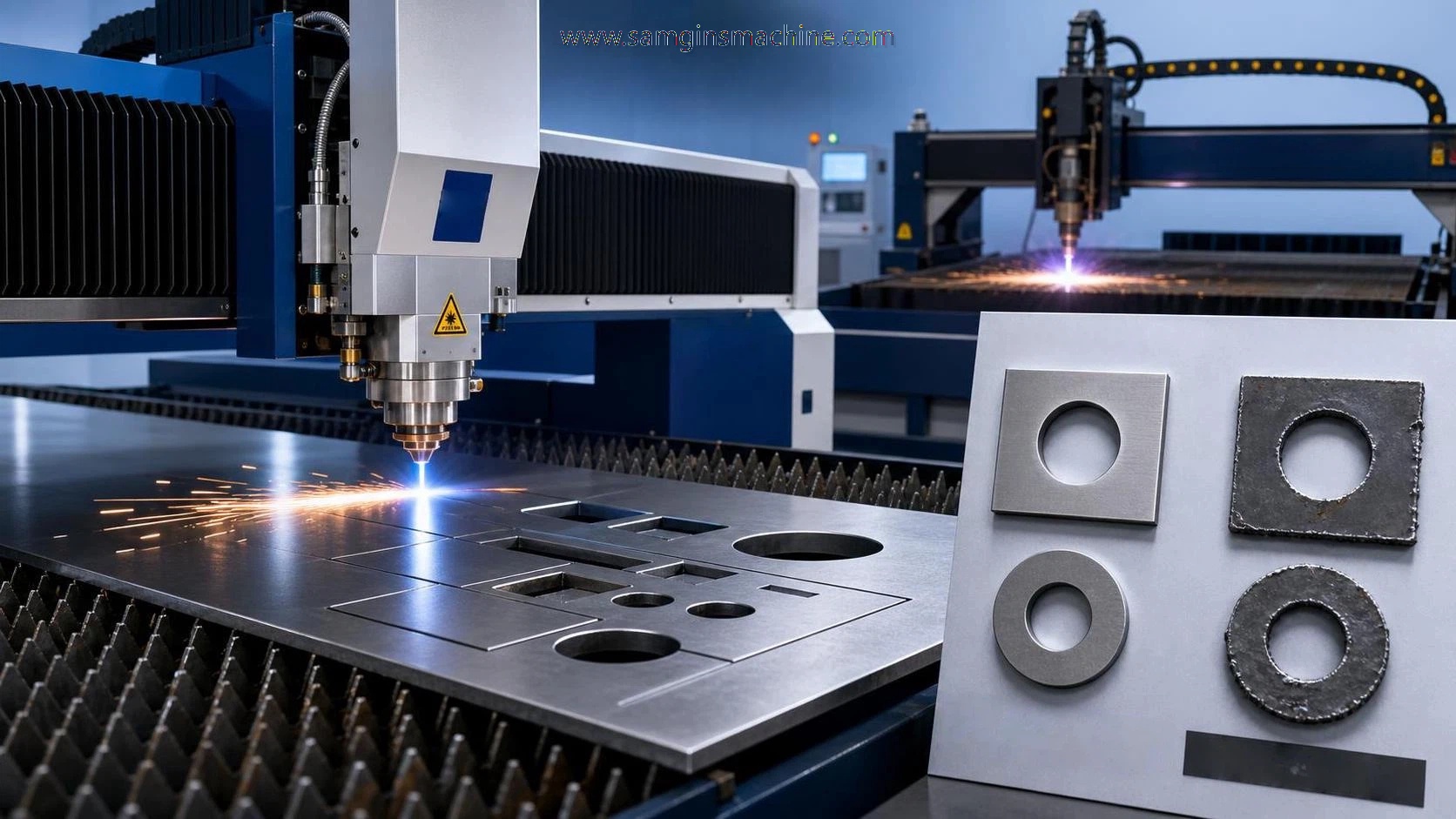
Plate Laser Cutting Machine vs Plasma: Which Delivers Better Edge Quality
When comparing a plate laser cutting machine with plasma cutting, edge quality often decides the smarter investment.
That is especially true when precision, finishing time, and downstream consistency affect delivery speed and margin.
Both technologies are proven.
But they do not leave the same edge, require the same post-processing, or perform equally across thickness ranges.
In practical production, edge quality is not only about appearance.
It affects weld fit-up, coating results, dimensional repeatability, scrap rates, and labor hours after cutting.
So, does a plate laser cutting machine deliver better edge quality than plasma?
In most thin to medium plate applications, yes. Yet the full answer depends on material, thickness, tolerance targets, and total process flow.
What Edge Quality Really Means in Plate Cutting
Edge quality usually includes several measurable factors.
- Surface smoothness
- Kerf consistency
- Dross or slag formation
- Heat affected zone size
- Squareness and taper
- Micro-cracking risk on difficult materials
A cleaner edge normally means less grinding, easier assembly, and more stable quality in later operations.
That is why the edge itself should be assessed as part of production economics, not as a cosmetic detail.
How a Plate Laser Cutting Machine Performs
A plate laser cutting machine uses a focused beam to melt or vaporize material along a programmed path.
Assist gas then removes molten material from the kerf.
This process creates a narrow cut and very controlled heat input.
On carbon steel, stainless steel, and aluminum sheet or plate, the result is usually a smooth edge with limited burr.
For parts that go directly to bending, fitting, or robotic welding, this matters a lot.
Key edge advantages of a plate laser cutting machine include:
- Lower edge roughness on thin and medium plate
- Smaller heat affected zone
- More accurate holes and contours
- Less secondary deburring in many jobs
- Better consistency between batches
If the business depends on neat finished parts, laser usually sets the higher standard.
How Plasma Cutting Compares on Edge Finish
Plasma cutting removes metal with a high-temperature ionized gas jet.
It is fast, widely used, and strong on thicker plate.
However, edge quality is usually rougher than what a plate laser cutting machine can deliver.
Common plasma edge issues include more dross, more bevel, and a wider heat affected zone.
Modern high-definition plasma has improved significantly.
Still, for tight cosmetic or dimensional expectations, it often needs more finishing work.
That extra grinding may not look expensive per part, but it adds up quickly across volume production.
Thickness Changes the Decision
Thickness is where many buying decisions become clearer.
Thin to medium plate
For thinner material, a plate laser cutting machine usually leads on edge smoothness and accuracy.
It also handles small holes, slots, and intricate contours more reliably.
Thicker plate
As plate gets thicker, plasma becomes more competitive on cost and speed.
For heavy fabrication where edges will be machined or heavily welded later, plasma may be sufficient.
So the better edge quality of a plate laser cutting machine matters most when that edge will remain functionally important.
Material Type Also Matters
Different metals respond differently to heat and cutting energy.
If product appearance, fit, or repeatability matters, laser usually keeps more options open downstream.
Edge Quality and Secondary Processing Cost
This is where many comparisons become more realistic.
A lower machine purchase price does not always mean a lower production cost.
A plate laser cutting machine often reduces:
- Manual grinding time
- Deburring labor
- Part rejection from poor fit-up
- Variation before welding or coating
- Tool wear in later machining steps
That savings can be substantial in operations with many part numbers and tight schedules.
In actual business terms, better edge quality often shortens the full manufacturing cycle, not just the cutting stage.
Why This Matters Even More Before Welding
Clean cut edges support more stable welding quality.
Poor edges can create gap variation, spatter problems, and inconsistent penetration.
That is one reason advanced fabrication lines often evaluate cutting and welding as one connected process.
For example, manufacturers expanding automated welding may also review supporting systems like the 7 axis railway type welding robot.
Its setup includes a dedicated robot rail, a servo-driven slide carriage, and a 6-axis welding robot with control integration.
For long workpieces, the system supports efficient zone-based welding and real-time weld correction through arc tracking.
That kind of automation performs best when upstream cut edges are consistent and predictable.
When Plasma Still Makes Sense
Plasma is not the wrong choice.
It can be the practical choice in several cases.
- Very thick plate dominates production
- Edge appearance is not critical
- Secondary grinding is already built into workflow
- Capital budget is limited and tolerances are moderate
- Part geometry is simple and hole quality is less important
If those conditions describe the plant, plasma may still deliver a better return despite lower edge quality.
How to Make the Right Buying Decision
A useful comparison should go beyond cutting speed and machine price.
- List your main materials and thickness ranges.
- Check how much time is spent on grinding and deburring now.
- Review tolerances for holes, slots, and final assembly.
- Estimate scrap or rework linked to edge inconsistency.
- Evaluate whether future automation needs cleaner inputs.
- Request sample cuts on your own plate grades.
This approach usually makes the answer visible very quickly.
If your products demand precision and lower finishing effort, a plate laser cutting machine often wins clearly.
If your priority is heavy plate throughput at a lower initial cost, plasma may still fit better.
Wuxi Samgins International Trade Co.,Ltd supplies mechanical equipment for global manufacturing customers across cutting, welding, forming, and machining applications.
With ISO9001-based quality management and EU CE-oriented standards, the company focuses on practical equipment selection and dependable production performance.
That matters because the right equipment choice is rarely isolated.
It should support the full manufacturing chain, from cutting quality to final welded output.
Final Verdict
For better edge quality, a plate laser cutting machine is usually the stronger option.
It typically delivers smoother edges, tighter accuracy, less heat distortion, and lower finishing workload.
Plasma remains valuable for thicker plate and cost-sensitive fabrication.
But when edge quality drives downstream efficiency, laser has the clearer advantage.
The most reliable next step is to compare both technologies against your actual parts, real tolerances, and real finishing costs.
search
Products Navigation
Send Us A Message