




How Does a Hydraulic Swing Beam Shear Work and Where Is It Best Used?
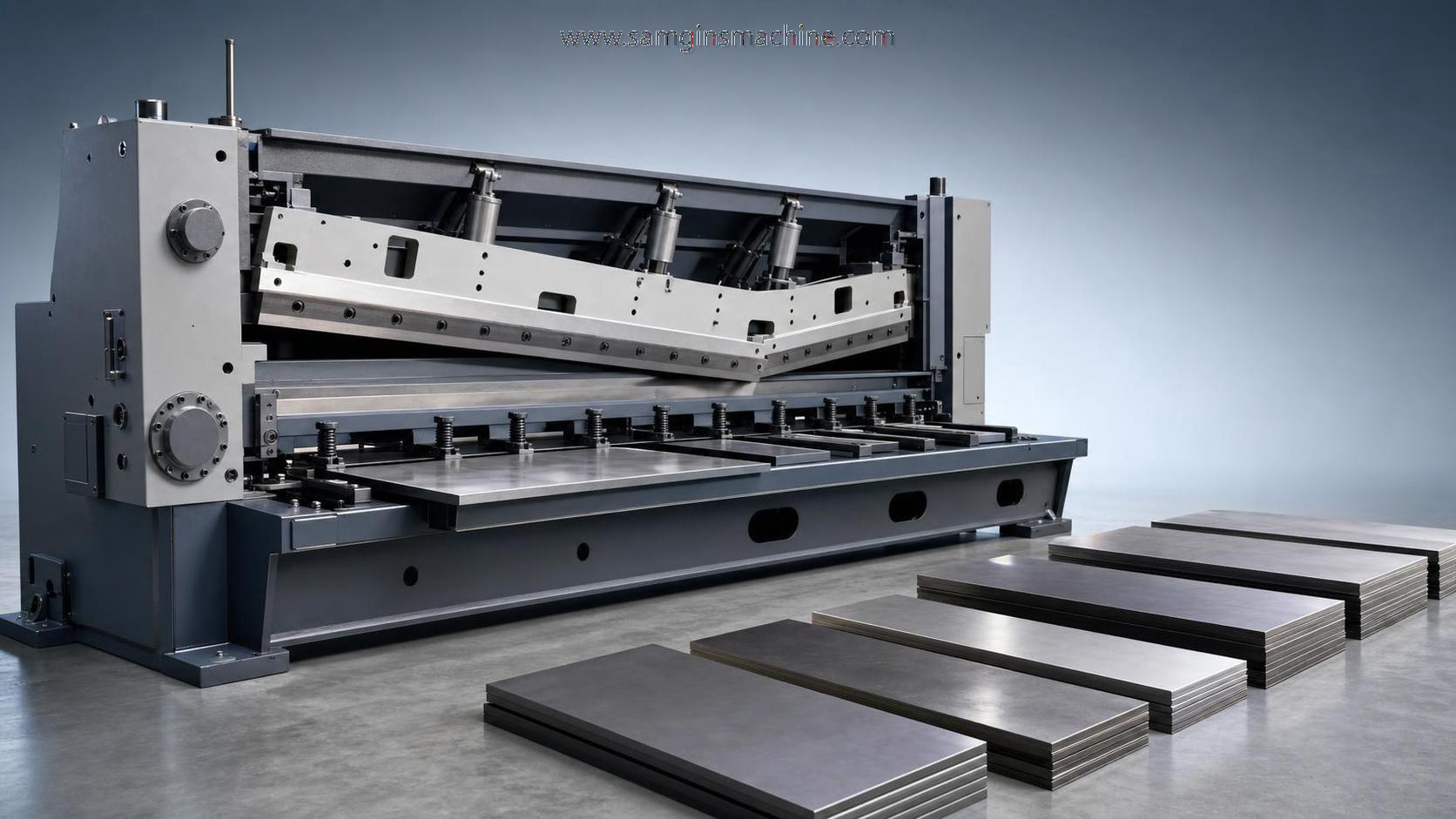
Why is a hydraulic swing beam shear still so common in metal fabrication?
A hydraulic swing beam shear remains popular because it solves a basic production task very well: fast, repeatable straight cutting of sheet metal.
Compared with more complex cutting systems, it offers a simpler structure, stable hydraulic movement, and lower operating cost for many workshops.
That matters in real production lines where material preparation affects bending, welding, rolling, and assembly quality.
In practice, the hydraulic swing beam shear is often chosen when users want dependable cutting performance without moving directly to a higher-cost precision platform.
For companies working across fabrication processes, this machine fits naturally beside press brakes, plate rolling machines, leveling machines, and welding equipment.
That is also why equipment suppliers with broad fabrication experience tend to treat shearing as part of a complete processing workflow, not as an isolated machine decision.
So how does a hydraulic swing beam shear actually work?
The cutting principle is straightforward, but the result depends on good mechanical coordination.
A hydraulic system drives the upper blade holder in a swinging arc around a pivot point.
The lower blade stays fixed, while the upper blade moves downward and across the sheet.
As the blades pass each other with a controlled clearance, the metal first deforms, then fractures along the cutting line.
This is why blade gap, hold-down pressure, and material thickness matter so much.
If the clearance is too small, blade wear rises and cutting force increases.
If it is too large, the edge may show more burr, twist, or distortion.
A typical hydraulic swing beam shear also includes a backgauge for repeat length setting, front support arms, sheet hold-down cylinders, and manual or powered blade clearance adjustment.
The design is valued because it is mechanically less complicated than some alternative shearing systems, while still delivering reliable output for general steel plate processing.
What does the operator need to control?
- Material type and tensile strength
- Sheet thickness and width
- Blade clearance setting
- Backgauge accuracy for repeat cuts
- Blade sharpness and alignment
- Hydraulic stability and hold-down pressure
Where does a hydraulic swing beam shear perform best?
It performs best in straight-line cutting jobs with medium accuracy requirements and frequent batch production.
Common applications include carbon steel sheets, stainless steel sheets, aluminum plates, and pre-processing for welded structures.
More specifically, a hydraulic swing beam shear is well suited for:
- Sheet metal shops producing panels, covers, enclosures, and brackets
- Steel structure preparation before drilling, bending, or welding
- HVAC, cabinet, and light industrial fabrication
- General workshops needing efficient blanking with controlled cost
It becomes especially practical when the workflow depends on cutting many rectangular blanks quickly and consistently.
For example, in structural fabrication, clean sheared plates often move next to beveling, welding, and assembly stations.
In those environments, suppliers with experience in shearing machines, H-beam production lines, and welding systems usually understand the full process more accurately.
That broader process view matters when a cut part is not the finished product, but the starting point for later forming or joining.
Is it better than a guillotine shear or other cutting options?
Not automatically. The better question is which machine matches the job.
A hydraulic swing beam shear is often preferred for its robust design, easier maintenance, and cost-effectiveness in general fabrication.
A guillotine shear usually offers more vertical blade movement and can be better for higher precision or thicker material control.
Laser cutting, meanwhile, handles contours and holes, but brings a different cost structure and production logic.
A more common decision rule is simple.
If the work is mostly straight cuts and volume is steady, the hydraulic swing beam shear usually makes sense.
If the work includes complex shapes, internal cutouts, or frequent design changes, another process may fit better.
What should be checked before choosing one?
This is where many comparisons become more practical.
Instead of asking only for maximum thickness, it helps to review the full cutting profile.
Key checks usually include:
- The real material mix, not just the thickest sheet ever used
- Daily cutting length, batch size, and repeat frequency
- Required edge quality for the next process
- Backgauge range and control accuracy
- Blade life, replacement convenience, and maintenance access
- Electrical and hydraulic reliability standards
It is also useful to consider who supports the machine after delivery.
A supplier with long-term experience in fabrication equipment can often judge whether the hydraulic swing beam shear should stand alone or connect with upstream and downstream machines.
That matters in businesses handling shearing, welding, plate preparation, and structural assembly under one roof.
For instance, some production lines combine cut plate preparation with H-beam welding systems such as Standard gantry h beam welding machine, especially in projects involving bridges, buildings, ships, or high-speed railways.
In that context, accurate shearing helps reduce mismatch before welding, which improves overall line efficiency.
What problems appear most often during use?
Most issues come from setup, wear, or unrealistic expectations.
A hydraulic swing beam shear is dependable, but it is not immune to poor parameter control.
Common mistakes worth avoiding
- Using one blade clearance for every material thickness
- Ignoring blade wear until burr becomes obvious
- Assuming shearing is suitable for contour cutting
- Overlooking sheet support on wider or thinner material
- Treating hydraulic maintenance as a low-priority task
Another misunderstanding is expecting the same finish on every metal grade.
Harder or thicker material may show a different edge profile, even when the hydraulic swing beam shear is operating correctly.
This is why trial cutting on actual production material is often a better evaluation method than relying only on catalog data.
Suppliers with export experience and process knowledge usually understand this point well, especially when serving varied markets with different quality expectations and compliance standards.
Where equipment is organized around ISO9001 quality control and CE-oriented design practice, documentation, consistency, and machine verification tend to be more systematic.
When is a hydraulic swing beam shear the right choice?
It is the right choice when the job centers on straight sheet cutting, reasonable accuracy, and efficient cost control.
It is also a strong fit when the machine must support broader fabrication work rather than act as a highly specialized cutting center.
The clearest way to decide is to map the machine against three things: material range, downstream process needs, and daily throughput.
If those align, a hydraulic swing beam shear can deliver years of productive service with manageable maintenance and predictable output.
A sensible next step is to compare actual sheet sizes, thickness distribution, and required cut quality, then review how the machine will connect with bending, welding, or structural fabrication stages.
That kind of process-based review usually leads to a better decision than comparing machine labels alone.
search
Products Navigation
Send Us A Message