




How to Choose a Hydraulic Swing Beam Shearing Machine for Sheet Metal Production?
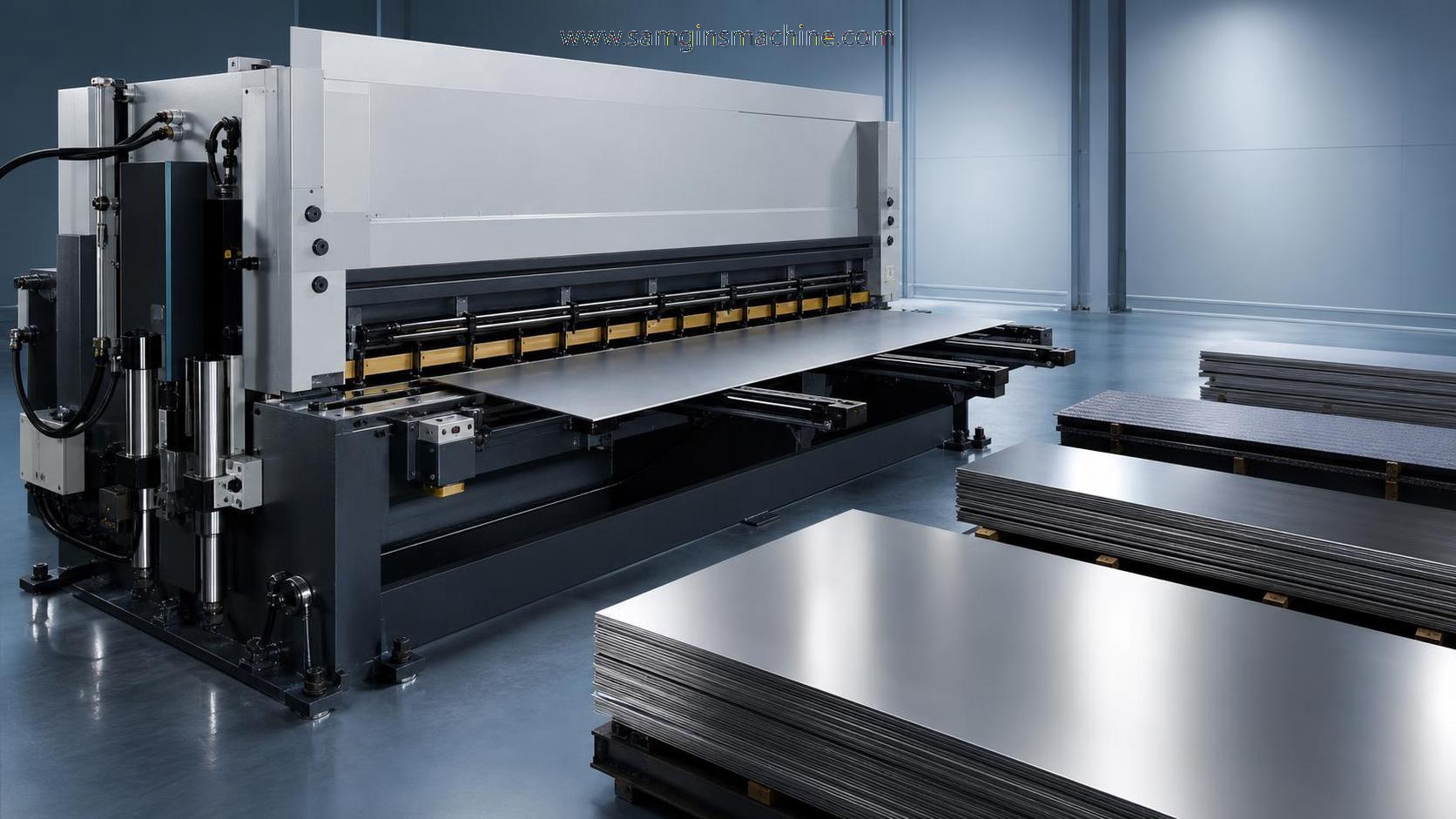
Choosing a hydraulic swing beam shearing machine is not only about tonnage or price. In sheet metal production, the right model influences cut quality, material yield, workflow speed, maintenance frequency, and the consistency of downstream forming or welding.
A poor match often appears later as burrs, twist, blade wear, or unstable cycle times. A well-matched hydraulic swing beam shearing machine supports cleaner cutting, steadier output, and a more predictable cost structure across daily production.
This matters even more when production includes mixed materials, changing order sizes, and strict delivery schedules. The decision should connect machine capability with actual plate thickness, sheet width, tolerance expectations, and future expansion plans.
What the machine is really expected to do
A hydraulic swing beam shearing machine is designed for straight-line cutting of sheet and plate. Its upper beam moves in a swinging arc, delivering strong shearing force with a relatively simple and reliable structure.
In practical terms, it is often selected for carbon steel, stainless steel, aluminum, and other common metal sheets. It suits fabrication shops, general machinery plants, steel service centers, and production lines handling repeated cuts.
Compared with manual or less stable cutting methods, a hydraulic swing beam shearing machine brings better repeatability. It also helps control deformation when the setup, blade clearance, and hold-down system are chosen correctly.
Why selection has become more important
Sheet metal processing is under pressure from shorter lead times and tighter quality demands. Buyers are no longer comparing machines only by initial quotation. They are comparing uptime, usable capacity, operator efficiency, and long-term service support.
Another shift is the growing need for process compatibility. The shearing stage affects bending accuracy, welding fit-up, and edge preparation. When cut edges are inconsistent, later operations become slower and more expensive.
That is why a hydraulic swing beam shearing machine should be evaluated as part of the whole production route, not as an isolated machine.
Core parameters that deserve close attention
Capacity data on a brochure is only a starting point. The real question is whether the machine can handle your normal material mix without forcing production to run at its limit.
Thickness, width, and material grade
Check the maximum cutting thickness together with tensile strength assumptions. A machine rated for mild steel may not deliver the same result on stainless steel or high-strength material.
Sheet width is equally important. If production frequently handles longer sheets, backgauge travel, table support, and front support arms become part of the purchasing decision.
Cutting accuracy and edge condition
A hydraulic swing beam shearing machine should deliver stable straightness, acceptable squareness, and controlled burr levels. These results depend on frame rigidity, blade quality, blade gap adjustment, and hold-down pressure.
If the cut edge will later be bent, welded, or coated, surface condition becomes more important. Lower rework at this stage can save significant labor across the production chain.
Control system and backgauge
For repeat jobs, a reliable controller and accurate backgauge matter more than decorative features. Program storage, fast positioning, operator-friendly input, and stable repeat accuracy should be verified during comparison.
A plant producing varied batch sizes usually benefits from a hydraulic swing beam shearing machine with dependable CNC or NC functions. That reduces setup time and lowers the risk of dimensional mistakes.
A practical comparison framework
The following points help turn a broad supplier list into a shorter, more realistic shortlist.
How the upstream and downstream process affects the choice
In many workshops, shearing is only one step in a connected line. Material may move next to deburring, edge milling, bending, welding, or rolling. Because of that, cut quality should be judged by downstream performance, not only by the first operation.
For thicker plates or bevel preparation, edge processing equipment may also be required after shearing. In such cases, matching the cut edge to later milling improves process stability and reduces extra handling.
A useful reference in this workflow is the Heavy Edge Milling Machine, which is built for processing carbon steel, stainless steel, and aluminum plates. It can form straight, inclined, U-shaped, V-shaped, and K-shaped bevels in one pass.
Its feed speed ranges from 0.13 to 1.0 m/min, with standard thickness coverage of 6 to 80 mm and heavy-duty versions up to 400 mm. For lines handling extra-long workpieces, stable support and accurate positioning become especially relevant.
This is not a substitute for a hydraulic swing beam shearing machine. It simply shows why the shearing decision should reflect the full plate preparation route.
Supplier evaluation is part of machine evaluation
A competitive price means little if drawings are unclear, commissioning is slow, or spare parts are hard to obtain. Supplier reliability should be tested with the same seriousness as machine specifications.
It helps to review production standards, export experience, and responsiveness during technical discussions. A supplier with broad machinery knowledge can also give better advice on integration with bending, welding, cutting, and plate preparation equipment.
Wuxi Samgins International Trade Co.,Ltd, based in Wuxi near Shanghai, has focused on mechanical equipment since 2012. Its range covers shearing machines, bending machines, CNC cutting equipment, milling machines, welding systems, rolling machines, deburring equipment, and more.
That broader product coverage matters because machine selection is often linked to line planning. ISO9001-based quality organization and EU CE-oriented production standards also provide a clearer baseline when evaluating consistency and compliance.
Questions worth answering before placing an order
A hydraulic swing beam shearing machine should be chosen against real production data. The more precise the input, the easier it becomes to compare offers on a meaningful basis.
- What material grades and thicknesses account for most monthly output?
- What is the largest sheet size handled now, and what may be added later?
- How important are burr control, edge straightness, and repeat accuracy?
- Will the machine run in single-shift or continuous production?
- How fast must blade replacement, maintenance, and troubleshooting be handled?
- Does the line require later beveling, welding, or high-precision bending?
These questions usually reveal whether a lower-cost model is enough or whether a more capable hydraulic swing beam shearing machine will deliver better lifetime value.
Making the final decision with fewer blind spots
The best purchase is rarely the machine with the highest specification on paper. It is the hydraulic swing beam shearing machine that fits your normal production window, keeps cut quality stable, and works smoothly with the rest of the fabrication process.
A sound approach is to compare two or three models against real job samples, operating costs, control usability, and supplier support terms. That gives a more accurate picture than relying on nominal capacity alone.
When requirements are clearly mapped, discussions with suppliers become more productive. The next step is to organize your material list, tolerance needs, and workflow sequence, then evaluate which hydraulic swing beam shearing machine aligns with both current demand and future production plans.
search
Products Navigation
Send Us A Message