




Shearing Machine Explained: Key Components, Cutting Methods, and Selection Essentials for Manufacturers
What A Shearing Machine Is And Why It Matters
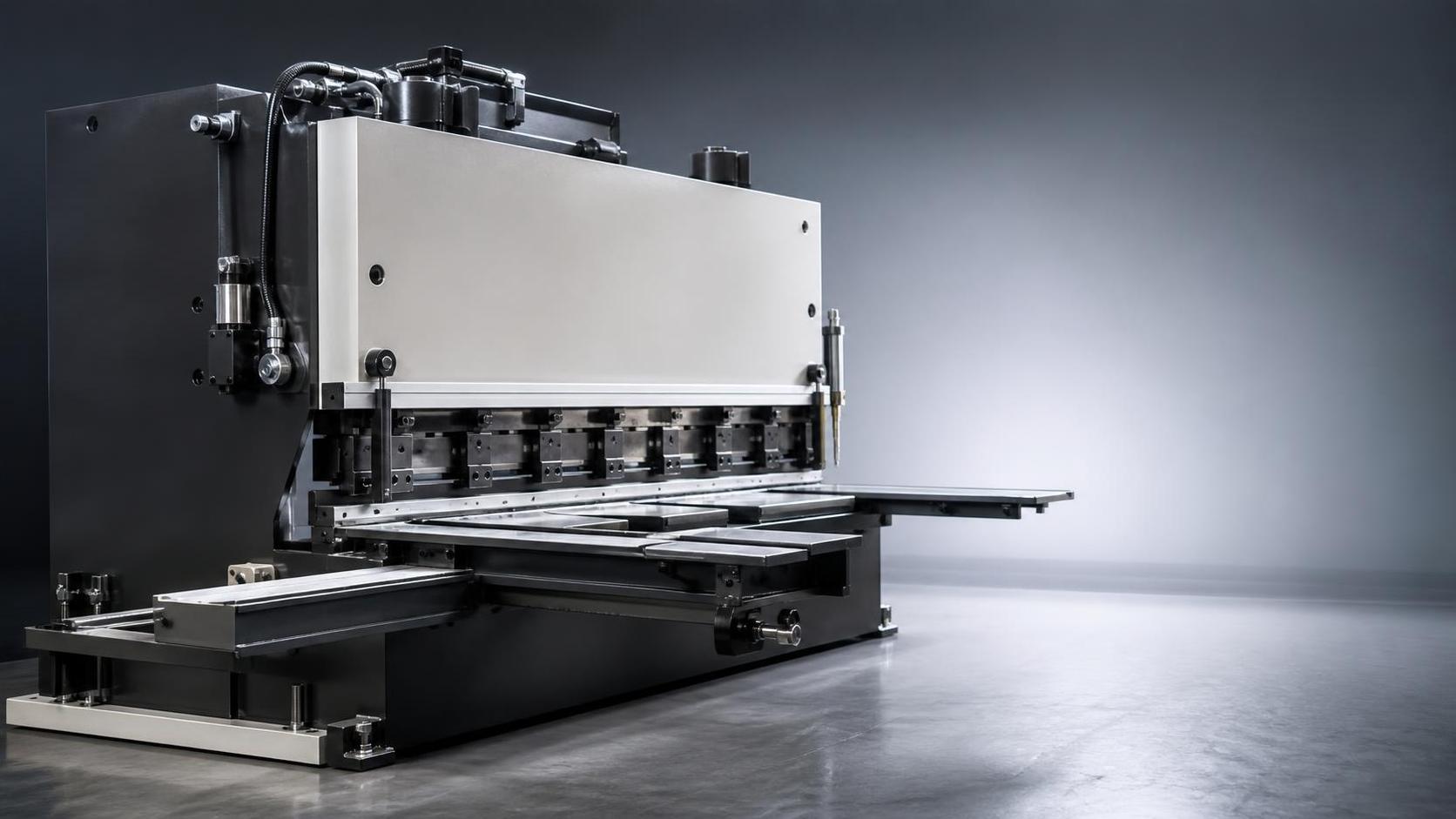
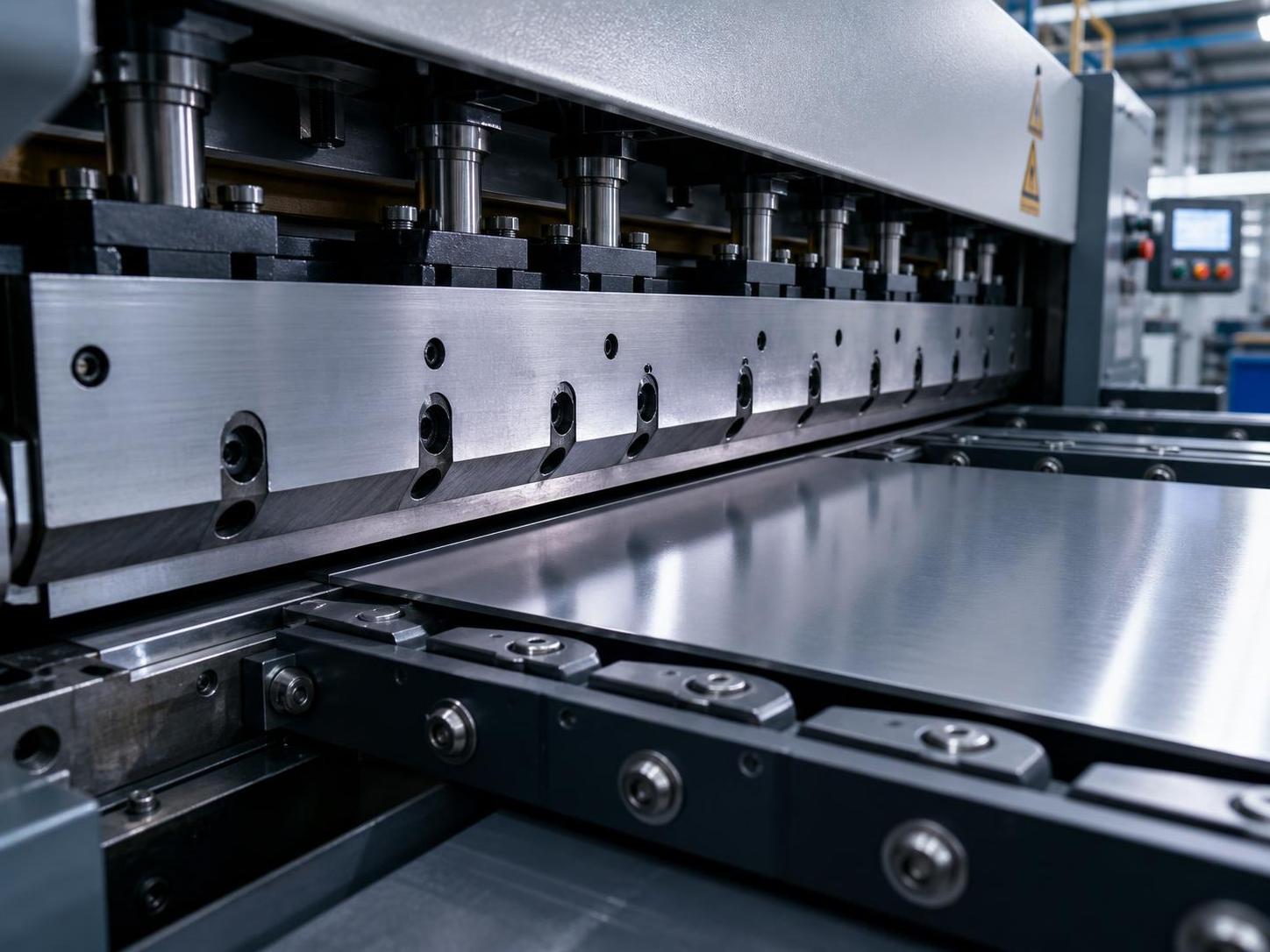
A shearing machine is an industrial cutting system designed to separate metal sheet or plate by applying force through upper and lower blades. Unlike thermal cutting methods, the process does not rely on heat input, so it is widely used when manufacturers want fast throughput, low distortion, and clean straight cuts on carbon steel, stainless steel, aluminum, and similar materials.
In practical fabrication, a shearing machine is often positioned near leveling, deburring, bending, rolling, and welding operations. It prepares blanks for downstream processing in enclosure production, structural steel support work, tank manufacturing, ducting, machinery covers, and general sheet metal fabrication. Its value is not only cutting speed, but also process stability and material utilization.
For buyers, the machine should be evaluated as part of a complete production flow rather than as a stand-alone asset. The right shearing machine can reduce manual handling, improve dimensional consistency, lower scrap rates, and simplify scheduling between cutting and forming departments. The wrong machine creates bottlenecks, edge defects, and unnecessary tool wear.
This is why procurement teams usually look beyond nominal cutting thickness. They compare frame rigidity, blade adjustment, backgauge accuracy, hydraulic stability, safety design, and service responsiveness before making a decision. In B2B production environments, these factors have a direct effect on output, labor efficiency, and total ownership cost.
How The Cutting Principle Works
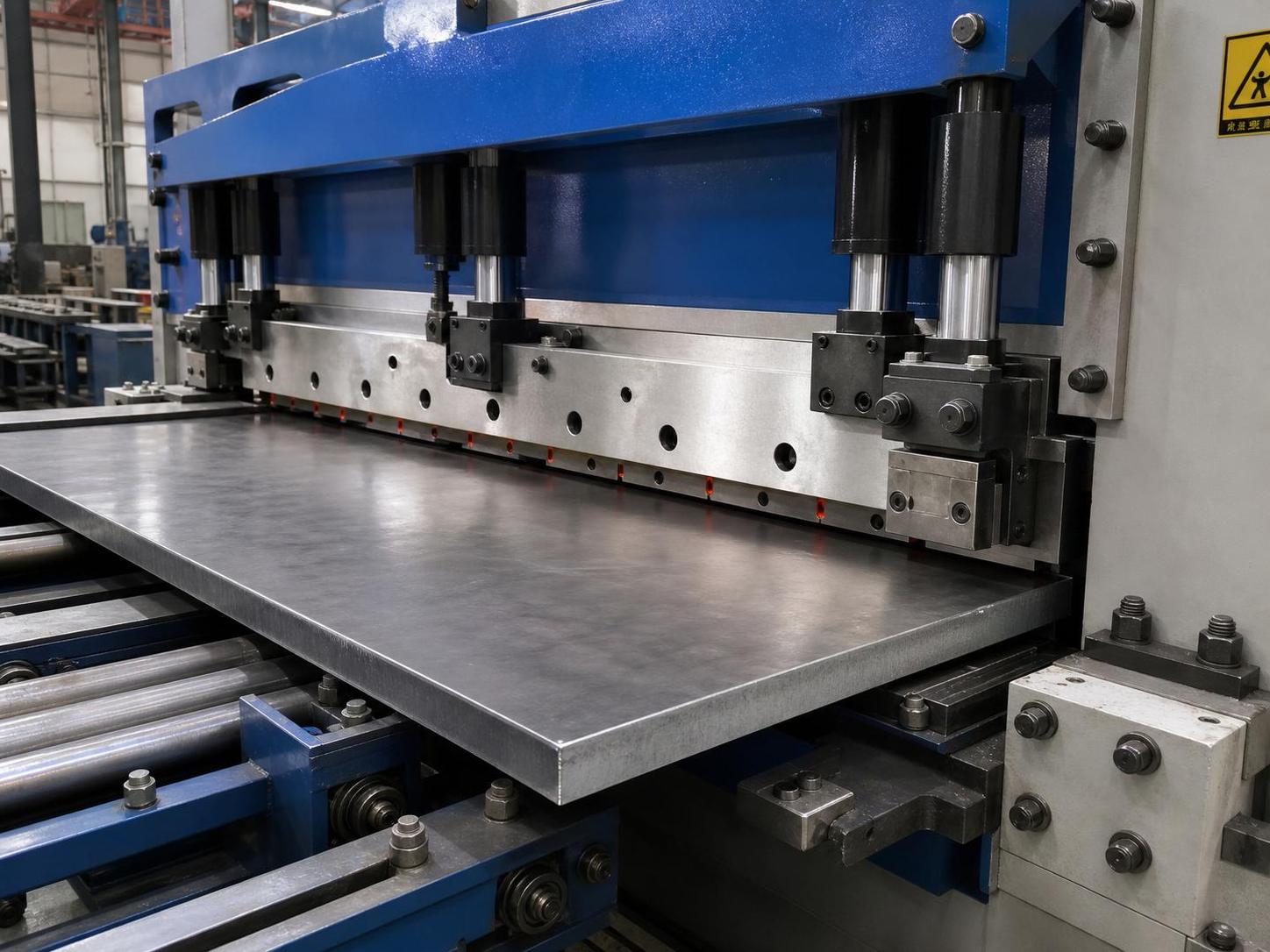
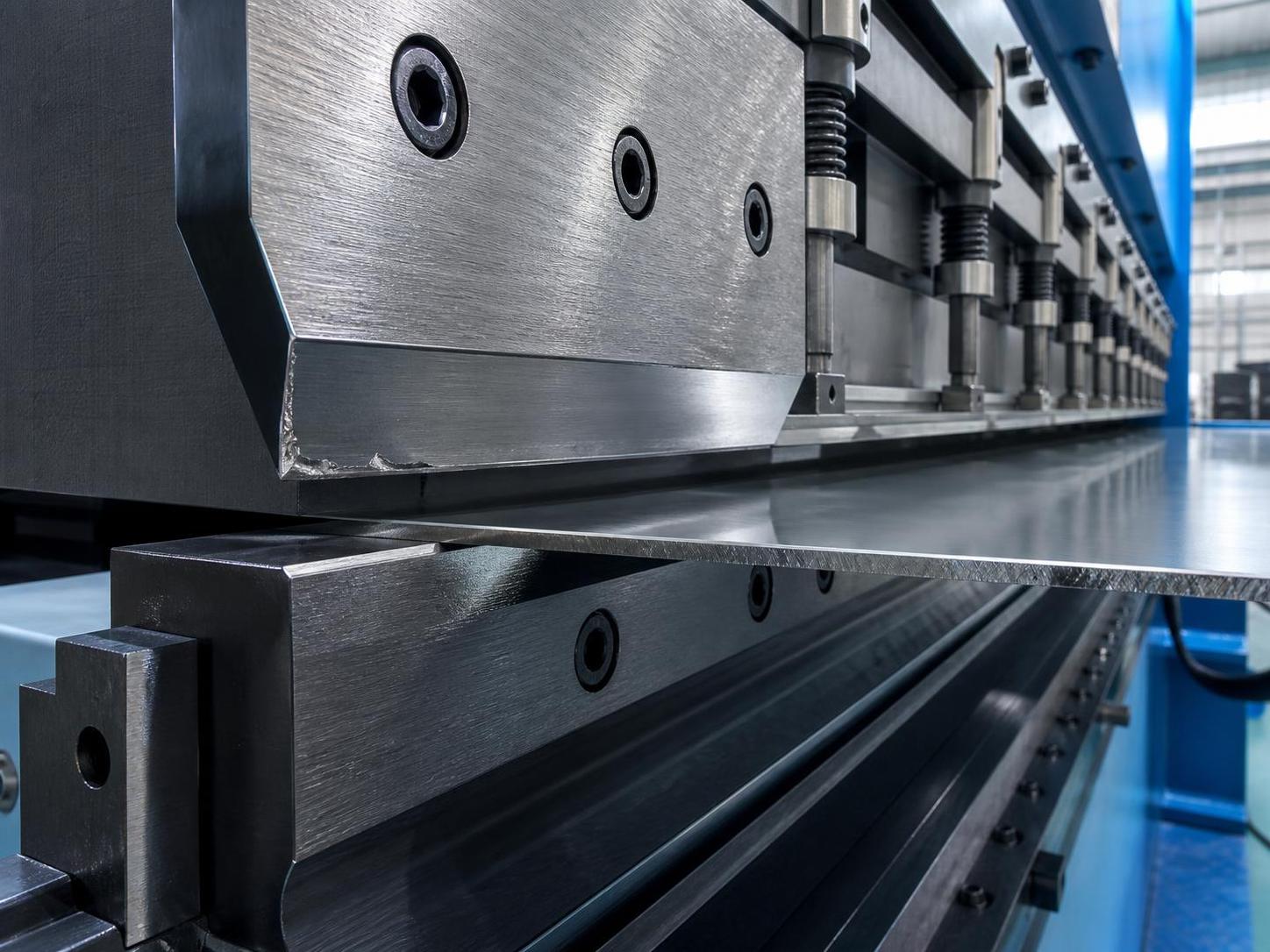
The working principle of a shearing machine is based on controlled plastic deformation and fracture. The upper blade moves relative to the fixed lower blade, applying concentrated force to the sheet. As stress rises past the material yield point, the metal first deforms, then fractures along the cutting line. Proper blade clearance is critical because it determines burr level, cut zone appearance, and required cutting force.
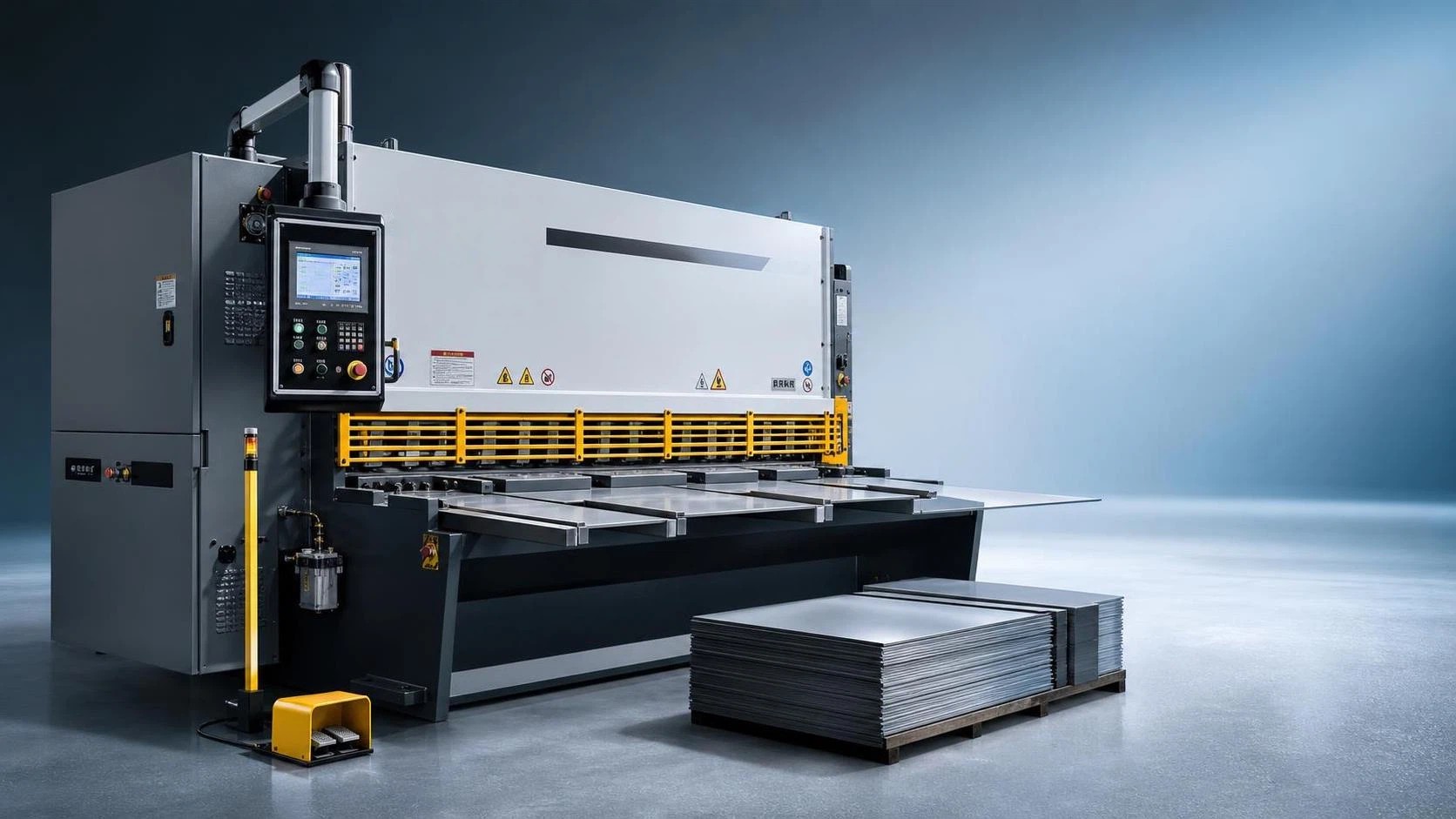
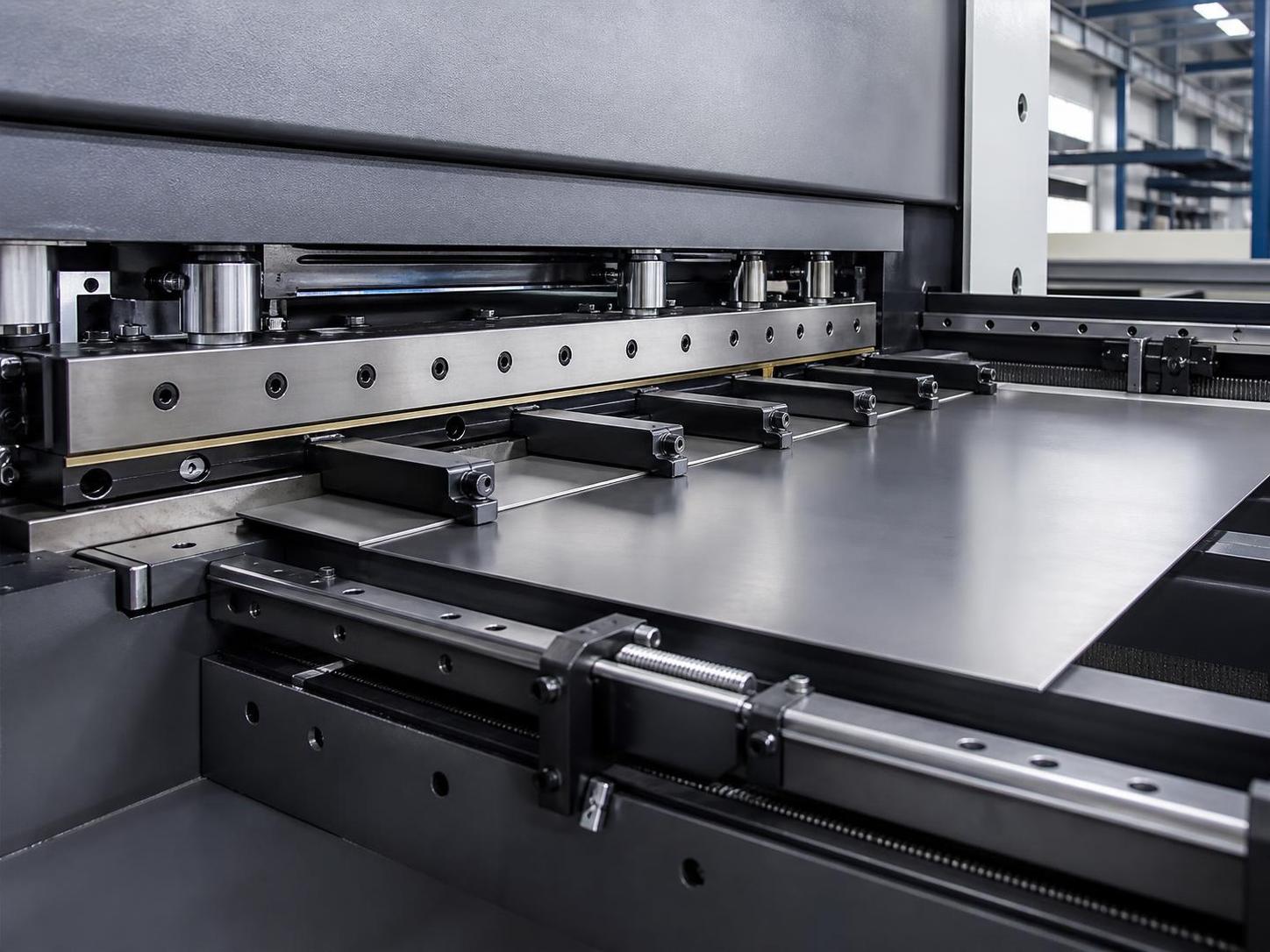
A typical machine includes the frame, hydraulic or mechanical drive, hold-down cylinders, blade set, backgauge system, squaring arm, control unit, and safety protection. During the cycle, hold-down devices clamp the sheet to limit movement, the backgauge positions the workpiece to the required cut length, and the blade stroke completes the cut. The combination of these elements determines repeatability.
Blade angle also influences cutting behavior. A larger rake angle reduces peak force because the cut progresses gradually from one side to the other, but it may introduce more twist on thin sheets. A smaller angle can improve cut geometry in some applications, though it generally requires more tonnage and stronger machine rigidity. That tradeoff is central when comparing machine types and production goals.
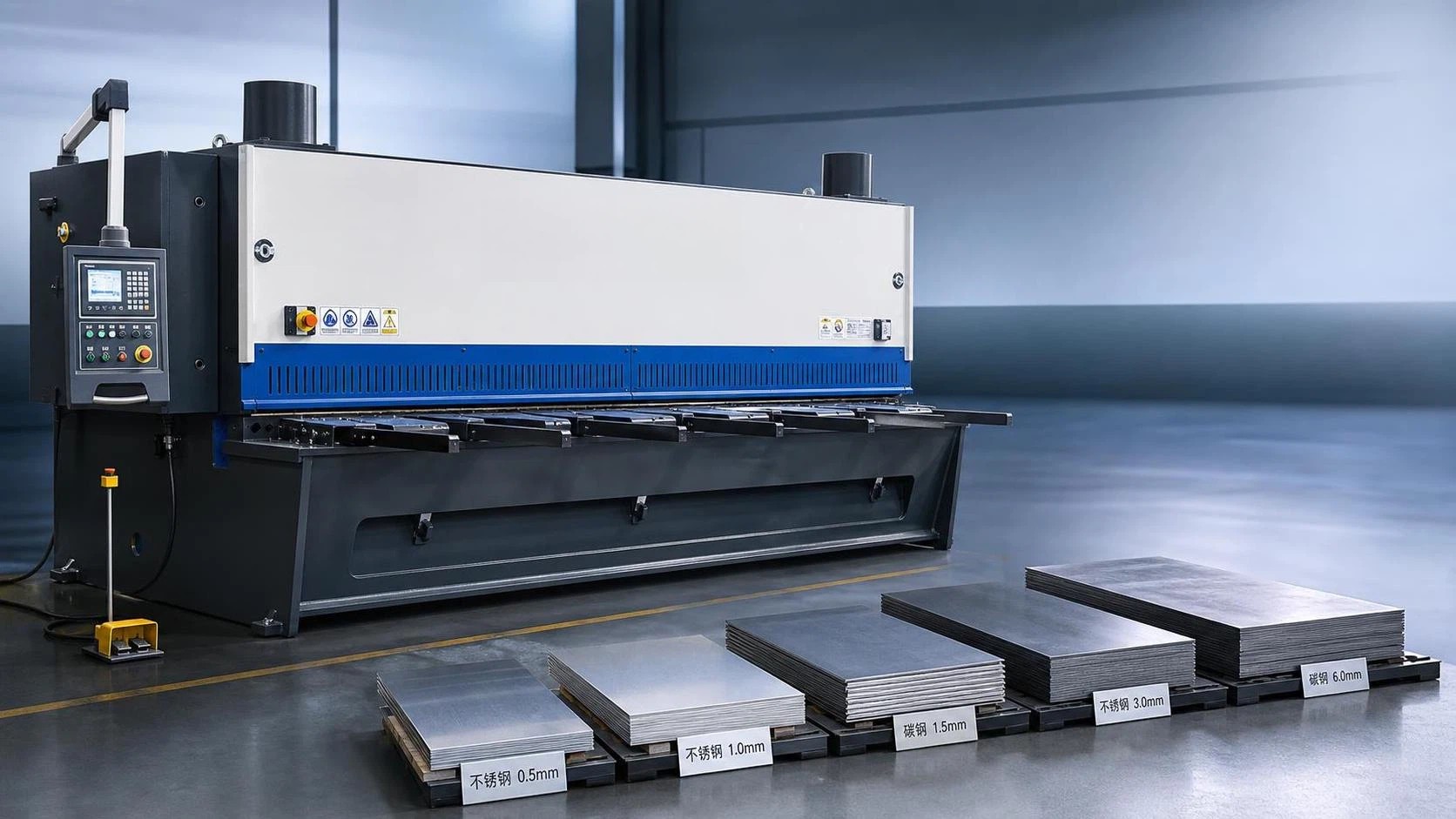
Material condition matters as well. High-strength steel, thick stainless plate, coated sheet, and soft aluminum each respond differently to shearing. Manufacturers should match blade material, clearance settings, and operating speed to the actual workload. A machine that performs well on mild steel may need different setup discipline when cutting polished stainless or mixed-thickness inventory.
Main Types And Their Practical Differences
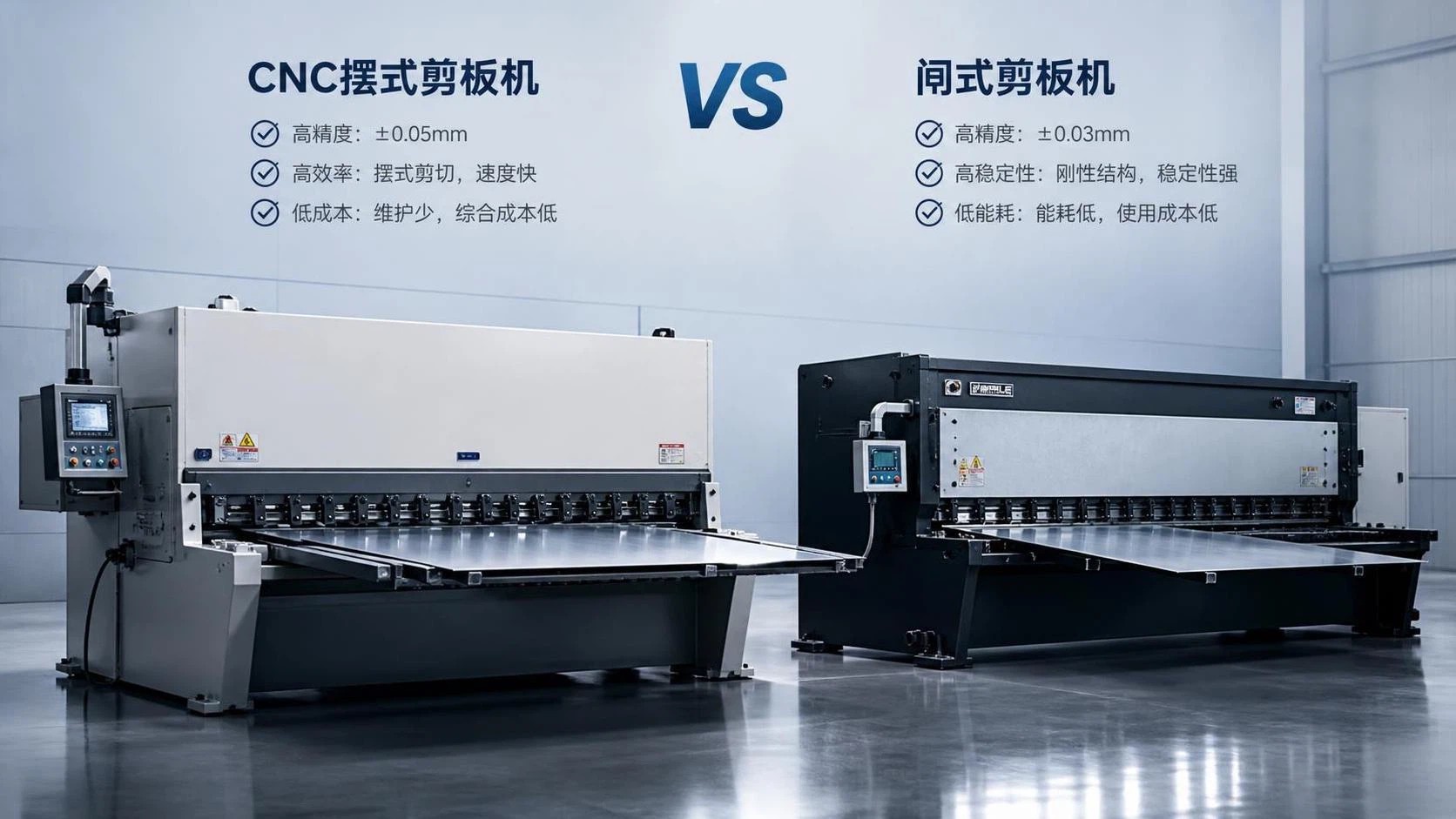
The two mainstream hydraulic categories are the hydraulic swing beam shear and the hydraulic guillotine shear. Both are common in metalworking plants, but they differ in motion path, adjustment behavior, and the balance between simplicity and cutting precision. Understanding this distinction helps buyers align machine selection with production tolerance and budget expectations.
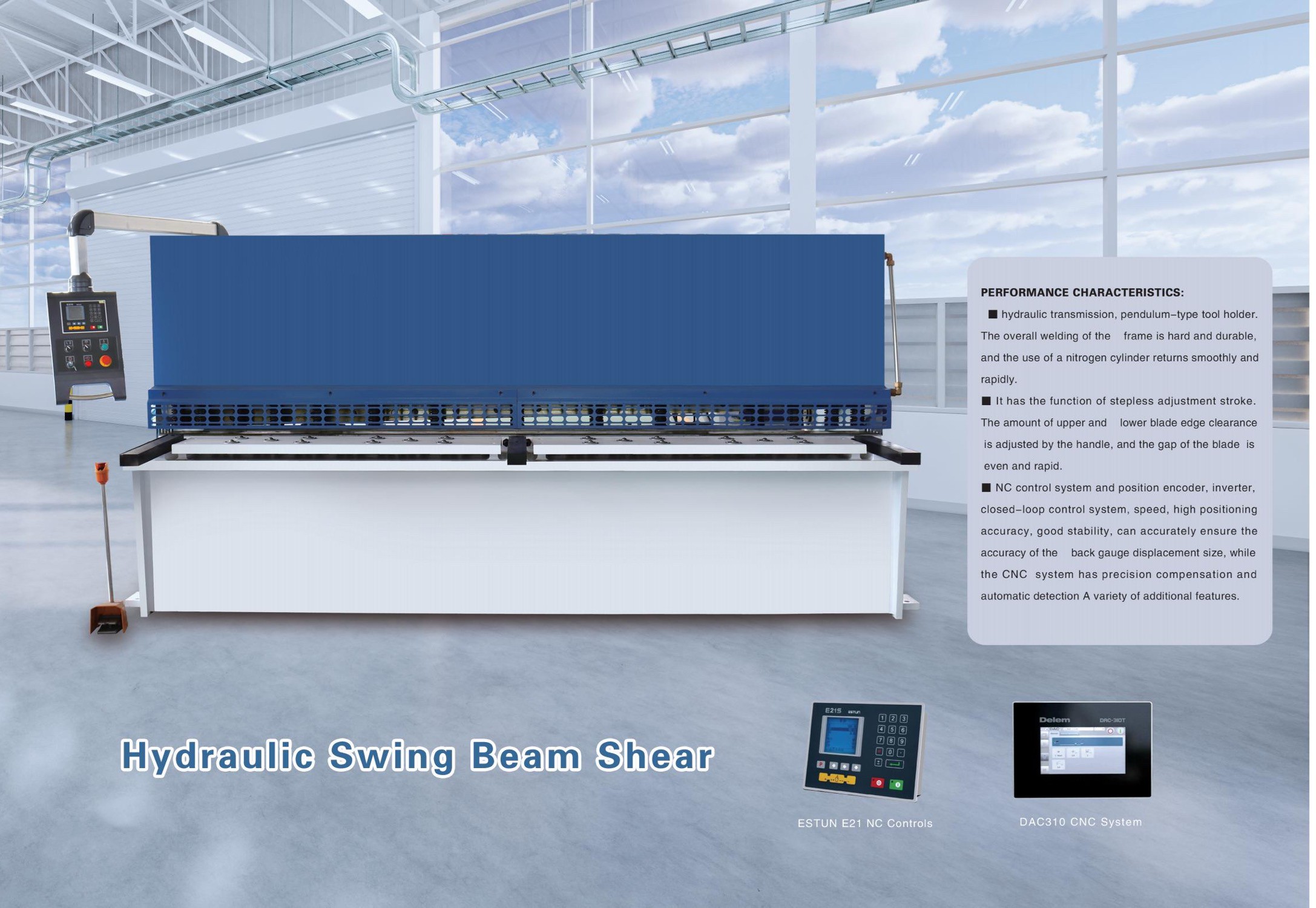
A hydraulic swing beam shear uses a swinging upper beam movement. It is often appreciated for straightforward construction, stable operation, and competitive acquisition cost. For many general fabrication jobs, especially medium-thickness carbon steel cutting, this type offers practical value and dependable daily productivity. It is frequently chosen by workshops that prioritize robust operation and uncomplicated maintenance.
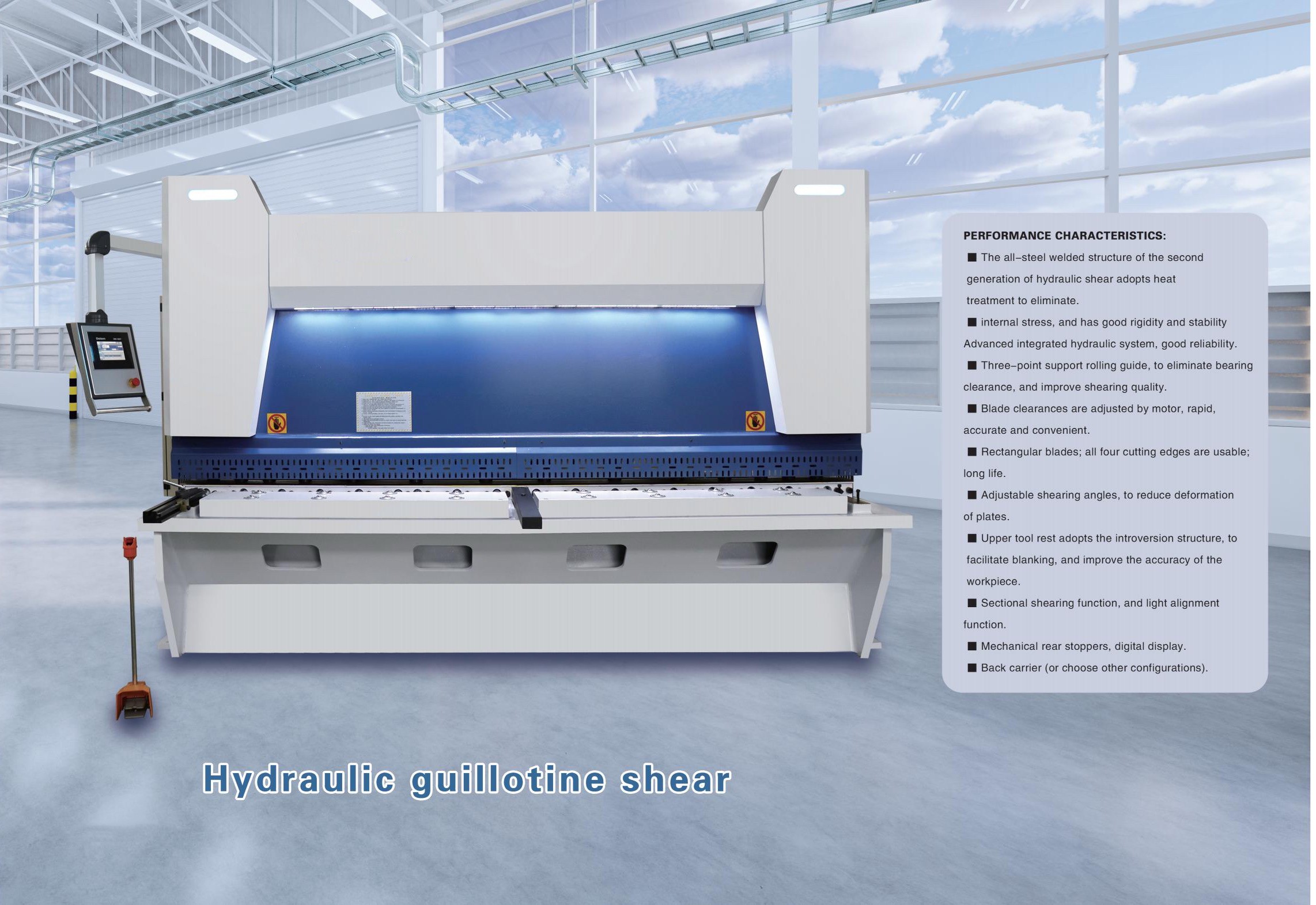
A hydraulic guillotine shear moves the upper blade in a more linear path and is commonly preferred when users want better control of blade gap adjustment, improved cut consistency across varying thicknesses, and stronger performance on more demanding tolerance requirements. It is often a better fit for service centers, precision sheet metal plants, and manufacturers processing diversified materials.
Beyond the main cutting mechanism, buyers also compare NC and CNC control levels, front support configuration, pneumatic sheet support for thin plate, automatic blade clearance adjustment, and backgauge travel. These options do not change the category name, but they change productivity significantly. A basic shearing machine may be sufficient for short-batch work, while a more automated configuration supports repeat orders and tighter quality management.
Who Uses It And Where It Fits In Production
A shearing machine serves a broad user base across fabrication and process industries. Typical buyers include sheet metal factories, steel structure workshops, pressure vessel auxiliaries, electrical cabinet manufacturers, HVAC duct producers, agricultural equipment plants, transport body fabricators, and subcontract machining businesses. In each case, the machine is selected to support straight cutting before bending, welding, rolling, or assembly.
It is particularly suitable when production requires repetitive rectangular blanks, strips, panels, and edge trimming with high speed. Compared with plasma, flame, or laser cutting, shearing is often the more economical choice for straight-line cuts on high-volume parts. There is no heat-affected zone, post-cut cleanup is usually limited, and cycle times can be very short when the material format is standardized.
In integrated workshops, the shearing machine often works alongside equipment such as press brakes, plate rolling machines, edge milling machines, leveling machines, CNC cutting machines, and welding systems. That makes supplier breadth relevant. Wuxi Samgins provides a broad product range across cutting, welding, forming, drilling, blasting, and handling equipment, which can help buyers coordinate related equipment planning instead of sourcing each station separately.
For factories building tanks, pipelines, steel structures, and sheet metal products, upstream and downstream process compatibility is critical. A shearing machine should not only meet cut thickness, but also match the material flow, handling method, and precision needs of the full line. This is one reason some buyers prefer suppliers that also understand welding rotators, long seam welding machines, H-beam lines, and other adjacent fabrication systems.
Selection Essentials For Manufacturers
The first selection criterion is the real material mix. Buyers should define maximum thickness, common thickness range, material grade, sheet width, and expected cut quality rather than relying only on a catalog limit. A shearing machine rated for a certain mild steel thickness may deliver different practical performance on stainless steel or higher tensile materials. Daily production data is more useful than peak theoretical demand.
The second criterion is dimensional repeatability. Backgauge accuracy, gauge travel, control usability, and sheet support all influence whether the machine can hold practical tolerances over many cycles. For factories processing long sheets or thin materials, support design is especially important because sagging and operator repositioning can affect cut consistency more than blade force alone.
The third criterion is machine structure and component quality. Buyers should examine frame construction, hydraulic system stability, seal quality, motor specification, electrical integration, and the origin of key CNC or servo components when applicable. Wuxi Samgins emphasizes the use of world-famous imported brands for key hydraulic, servo, and CNC components, which is relevant for users concerned about long-term stability, precision retention, and spare part confidence.
The fourth criterion is customization and workflow fit. Some manufacturers need special throat depth, front feeding supports, heavy-duty handling, or integration with broader fabrication cells. Wuxi Samgins has customization capability across several fabrication equipment categories, which can be useful for buyers with non-standard production tasks, especially where sheet cutting is linked with welding, structural fabrication, or pipe and tank manufacturing.
The fifth criterion is compliance and export readiness. Machines supplied to international markets are commonly reviewed against quality systems, electrical safety expectations, and documentation completeness. Wuxi Samgins states that its machines comply with ISO9001 quality system requirements and EU CE Machinery and LVD directives. For buyers operating under project or regional compliance rules, this kind of baseline documentation can reduce qualification friction.
Quality Control, Installation, And Daily Maintenance
Machine performance depends on setup discipline as much as design. Before production, installers typically verify foundation condition, machine leveling, hydraulic oil specification, blade alignment, electrical connection, and backgauge calibration. A shearing machine placed on an unstable floor or commissioned without full geometry checks may show premature inaccuracy, uneven blade wear, or vibration-related issues under load.
Quality control in manufacturing generally focuses on frame welding integrity, machining accuracy of guiding surfaces, hydraulic sealing, cylinder response, blade fitment, and control system testing. In a practical sourcing review, buyers should ask about inspection points, test procedures, and whether the supplier supports pre-shipment verification. Documentation quality often indicates how systematically the machine builder manages consistency.
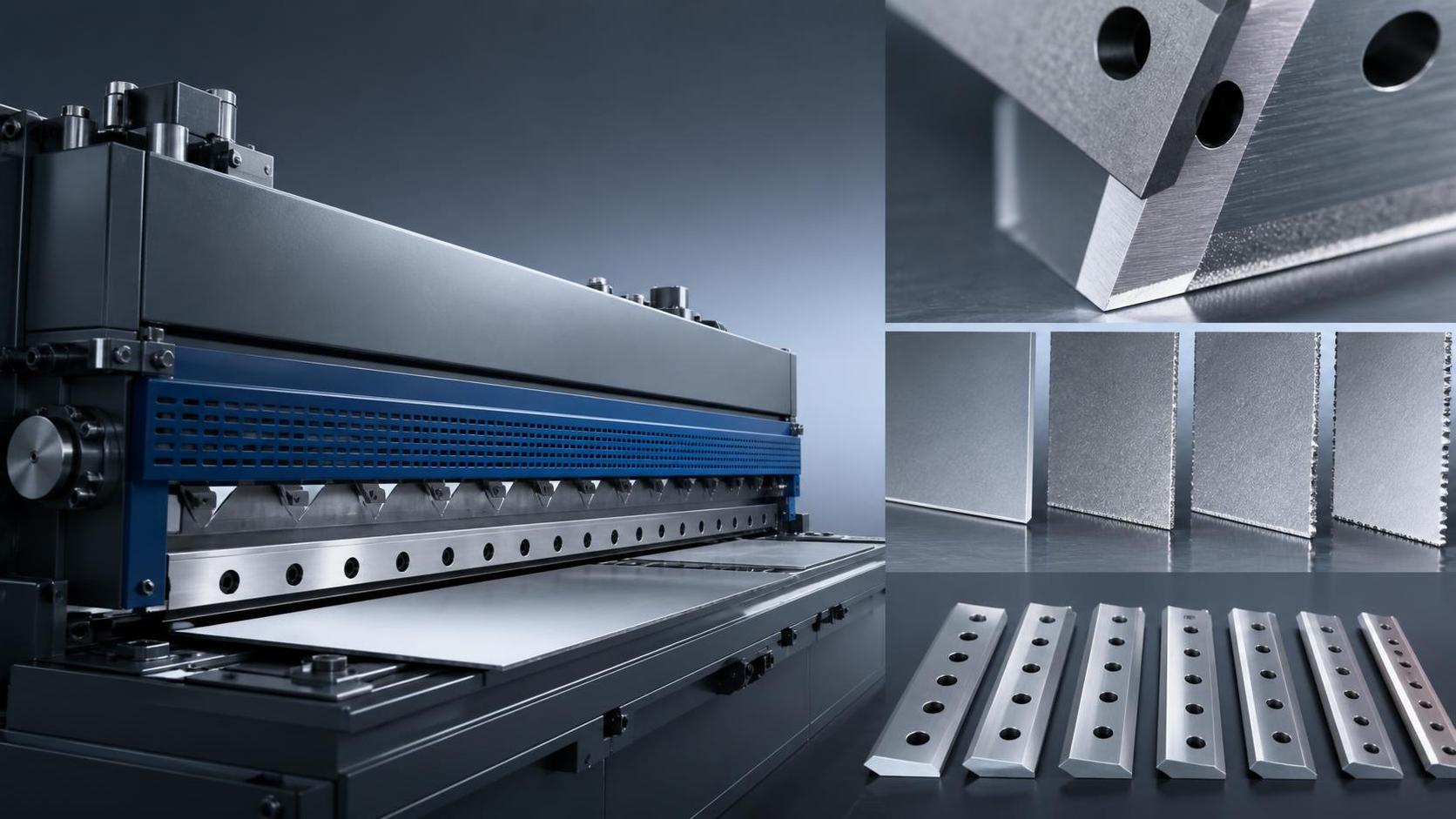
Routine maintenance should include blade edge inspection, blade rotation or replacement when wear reaches the limit, lubrication checks, hydraulic oil monitoring, filter replacement, bolt tightness verification, and backgauge inspection. Operators should also check hold-down action and listen for changes in hydraulic noise because small abnormalities usually appear before larger failures. Maintenance intervals should reflect operating hours and material severity.
From a support standpoint, after-sales responsiveness matters because downtime on a shearing machine can stop multiple downstream stations. Wuxi Samgins highlights long-term warranties and support spanning design, manufacturing, sales, after-sales, and technical service. For international buyers, that full-process support model can be important when troubleshooting commissioning issues, training operators, or ordering replacement wear parts.
Standards, Global Use Cases, And Buyer Confidence
Industrial buyers often evaluate a shearing machine not only on specifications but also on the supplier’s familiarity with export projects and fabrication standards. While the exact machine standard requirement depends on destination and application, documentation, electrical conformity, guarding, and operating manuals are routine parts of cross-border purchasing. A supplier accustomed to international shipments can usually handle these steps more efficiently.
Wuxi Samgins states more than 10 years of global export experience and familiarity with ASME, API, and other local industry codes. That experience is especially relevant for manufacturers serving oil and gas, steel construction, process equipment, and related sectors where upstream cutting quality must support later fabrication steps. Even when the shearing machine itself is a standard product, the project environment is often not standard.
Its customer list includes companies such as URALSTANKOIMPORT, MD Calbah Industries Pty Ltd, Ersay International Transport, Contevix comercio e servicos ltda, Zein Steel Industries Co.LLC, BatysMunaiGazZhabdyktary LLP, S.P Blue Fisheries LDA, Rienzie Group, SALEH SAAD ALSANHANI, Engiplas engineering plastics, Regional engineering works, PT.Cahaya mas Cemerlang, Estructuras Metalicas Girders Chile Limitada, and Lincoln Electric-MENA. These references indicate practical international delivery exposure across different markets and industrial contexts.
For buyers comparing suppliers, this kind of background does not replace technical due diligence, but it helps establish whether the manufacturer is used to export documentation, communication across time zones, and long-distance service coordination. In capital equipment procurement, that operational maturity can be as important as the machine specification sheet itself.
How To Evaluate Total Cost Of Ownership
The purchase price of a shearing machine is only one part of the investment. Total cost of ownership includes transport, installation, operator training, power use, hydraulic consumables, blade maintenance, spare parts, unplanned downtime, and productivity loss from poor cut quality. A lower initial quote may become more expensive if the machine requires frequent adjustment or produces excess scrap.
Blade life and usable cut quality are major cost drivers. If clearance adjustment is difficult or frame rigidity is insufficient, edge defects and burrs can increase rework, especially when blanks move directly to bending or welding. Over time, inconsistent cuts affect not only material waste but also labor efficiency because operators spend more time checking dimensions and correcting misfeeds.
Return on investment should be estimated from throughput gain, scrap reduction, labor savings, and lower outsourcing dependence. For a manufacturer cutting standard parts in medium or high volume, the right shearing machine may deliver payback through cycle speed and stable process flow. For low-volume mixed production, flexibility and ease of setup may be more valuable than maximum speed alone.
A disciplined buying process usually compares at least three scenarios: basic machine cost, realistic annual running cost, and the cost of disruption if service support is weak. Buyers should ask for recommended spare parts, blade replacement guidance, and expected maintenance routines at the quotation stage. That conversation often reveals whether the supplier is selling a machine only or supporting a workable long-term production asset.
Future Trends And Recommended Purchasing Approach
The shearing machine market is moving toward more intelligent control, faster setup, and better integration with digital fabrication workflows. Users increasingly expect programmable backgauges, easier blade clearance adjustment, diagnostic visibility, and compatibility with upstream ERP or downstream part planning systems. While the core shearing principle remains mature, operating efficiency continues to improve through controls and serviceability.
Another trend is tighter alignment between cutting and whole-line productivity. Manufacturers no longer assess a shearing machine in isolation; they look at how it supports bending, rolling, welding, deburring, and assembly. Suppliers with broader fabrication portfolios can help buyers reduce interface risk, particularly when several stations must be commissioned together or adapted to one material handling path.
For companies choosing between a hydraulic swing beam shear and a hydraulic guillotine shear, the best route is to start from real production requirements: material range, tolerance expectations, shift pattern, downstream sensitivity, and service access. The right choice is usually the machine that matches the plant’s daily operating profile, not simply the one with the highest advertised cutting capacity.
As a practical sourcing approach, manufacturers should prepare a cut list profile, request technical clarification on blade system and controls, review compliance documents, and evaluate the supplier’s related equipment expertise. For buyers seeking a shearing machine within a wider metal fabrication upgrade, Wuxi Samgins is relevant because it combines shearing equipment with complementary welding, cutting, forming, and structural production machinery under one industrial supply scope.
search
Recommended Products
 Hydraulic guillotine shearA shearing machine is a machine that uses one blade to perform reciprocating linear motion to shear the sheet metal. It relies on the moving upper blade and the fixed lower blade, with a reasonable blade gap, to apply shear force to various thicknesses of metal sheets, causing the sheets to break and separate according to the required dimensions. Shearing machines belong to a type of forging machinery and are mainly used in the metal processing industry. The products are widely applicable to industries such as aviation, light industry, metallurgy, chemical industry, construction, shipbuilding, automobiles, power, electrical appliances, and decoration, providing the necessary specialized machinery and complete equipment.
![星星1]()
 Hydraulic Swing Beam ShearA shearing machine is a piece of equipment that uses a blade performing reciprocating linear motion to cut sheet metal. It operates with a moving upper blade and a fixed lower blade, set at an appropriate clearance, to apply shearing force to metal sheets of varying thicknesses. This force causes the material to fracture and separate along the required dimensions.
Shearing machines belong to the category of forging machinery and are primarily used in the metal processing industry. Their products are widely applied across numerous sectors, including aviation, light industry, metallurgy, chemical engineering, construction, shipbuilding, automotive, power generation, electrical appliances, and decoration, providing essential specialized machinery and complete equipment for these fields.![星星1]()

Recommended blogs
 When Does a Custom Hydraulic Shearing Machine Make Sense for Specialized Metal Cutting?
 When Does a Custom Hydraulic Swing Beam Shear Make Sense for Mixed-Batch Fabrication?
- CNC Swing Beam Shear vs Guillotine Shear: Which One Lowers Cutting Costs?
- How to Select a Hydraulic Sheet Metal Guillotine for Thickness, Width, and Output
- Why Hydraulic Metal Guillotine Blades Chip Early and How to Extend Service Life
- Key Safety and Inspection Points for a Hydraulic Guillotine Shearing Machine
Send Us A Message
Send us a Message
A dedicated person will follow up on your needs one-on-one and provide personalized customized solutions according
to your needs.
Get In Touch
We look forward to hearing from you for in-depth communication on how to fulfill your mixing requirements.