




When Does a Custom Hydraulic Shearing Machine Make Sense for Specialized Metal Cutting?
When a Standard Shear Stops Being Enough
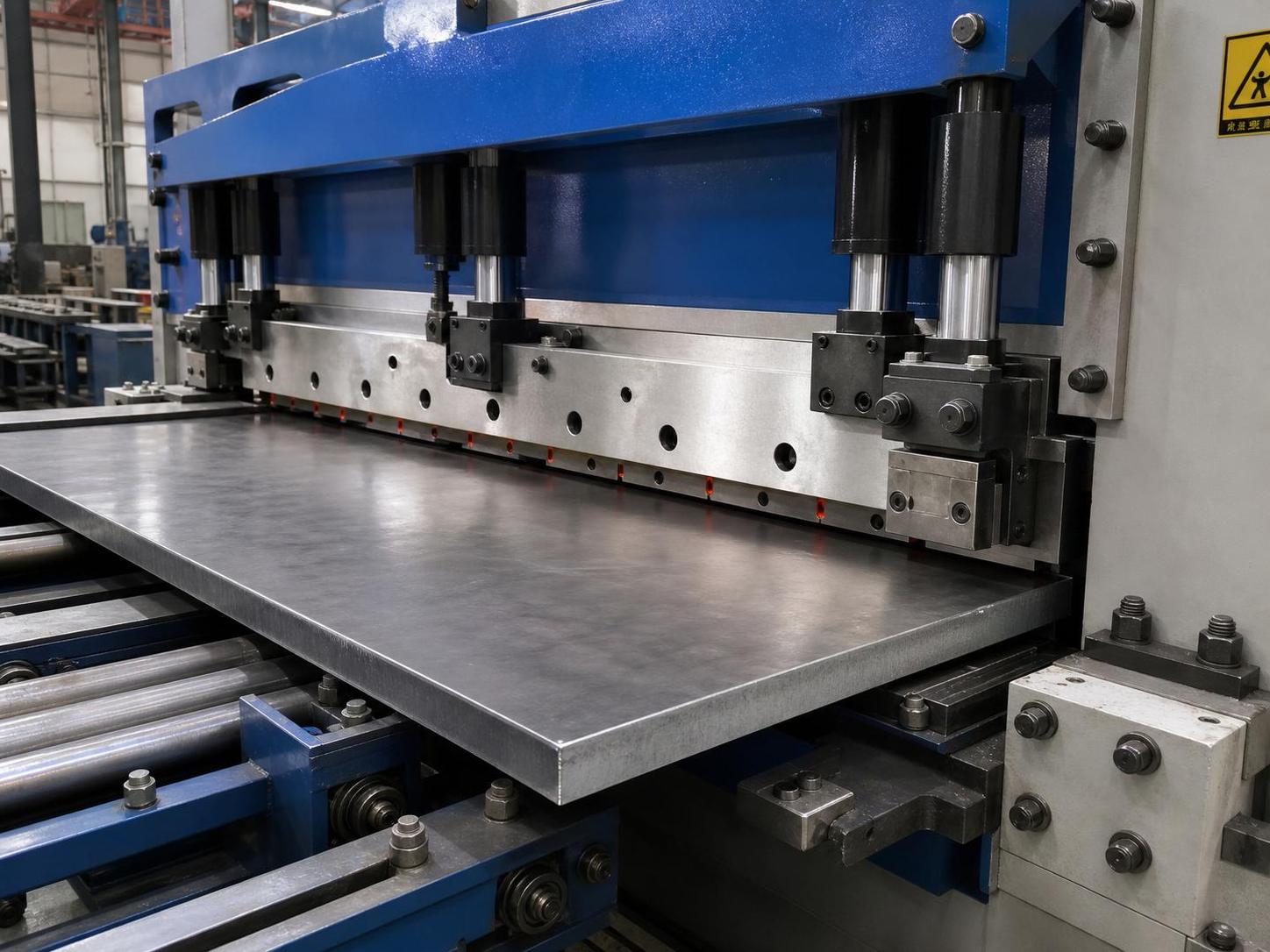
A custom hydraulic shearing machine starts to make sense when cutting accuracy, material behavior, and workflow stability begin to clash with standard machine limits.
In specialized metal cutting, the issue is rarely just tonnage.
Plate width, thickness variation, surface protection, edge straightness, and downstream welding requirements often matter more than catalog specifications suggest.
That is why many fabrication lines reach a point where a standard shear still works, but no longer works efficiently.
In practical terms, a custom hydraulic shearing machine helps reduce scrap, improve repeatability, and keep delivery schedules under control when cutting jobs become less predictable.
This matters in workshops handling mixed orders, export projects, or thicker materials with tighter downstream tolerances.
Wuxi Samgins International Trade Co., Ltd has worked across machine tool, cutting, welding, and forming equipment since 2012.
That broader equipment background matters because shearing decisions are rarely isolated from leveling, beveling, welding, and final assembly.
Actual Demand Changes from One Job Type to Another
Not every metal cutting line needs a custom hydraulic shearing machine.
The real question is whether the cutting task stays stable enough for a standard configuration to remain economical over time.
A service center processing routine carbon steel sheets may value speed and blade life more than deeper customization.
A heavy fabrication workshop, by contrast, may struggle with material deformation, inconsistent edge quality, or difficult loading conditions.
These differences come from four variables.
- Material type and yield strength
- Sheet size, thickness range, and cutting frequency
- Edge quality needed for bending, welding, or assembly
- How the shear fits into the wider production line
Once those variables shift, the value of a custom hydraulic shearing machine becomes easier to justify than a simple machine upgrade.
High-Mix Sheet Processing Usually Exposes the Limits First
One common case is high-mix production.
The workshop may cut stainless steel in the morning, aluminum in the afternoon, and thicker carbon steel before shift end.
Standard shears often handle this on paper, but setup time, hold-down pressure, and blade clearance become recurring problems.
In this setting, a custom hydraulic shearing machine should be judged by changeover stability, not just maximum thickness.
Operators usually need adjustable backgauge behavior, reliable clamping, and controls that support repeat jobs without lengthy recalibration.
If coated sheets or decorative stainless are involved, surface marking becomes another deciding factor.
A custom design may include support arrangements that reduce scratching and sheet drift during cutting.
Heavy Plate Work Brings Different Priorities
Heavy machinery, structural parts, and large fabricated sections create a different decision path.
Here, the question is less about variety and more about force control, frame rigidity, and consistent edge condition over long production runs.
A custom hydraulic shearing machine is often justified when heavy plates show burr growth, bowing, or inconsistent cut surfaces that later slow fit-up.
The extra cost is usually recovered downstream.
Poor shearing on thick material does not stay inside the cutting station.
It increases grinding time, weld preparation time, and assembly correction work.
In these cases, customization may involve a reinforced frame, tailored blade geometry, larger work support, or automation features that improve plate handling safety.
When Cutting Is Closely Tied to Weld Preparation
Some projects do not stop at straight-edge shearing.
Pressure vessels, boilers, and shipbuilding parts often need accurate edge preparation immediately after cutting.
In that environment, evaluating a custom hydraulic shearing machine alongside beveling capability is more realistic than treating them as separate investments.
A related option is Pipe Cutting & Beveling Machine, especially where edge quality affects welding rhythm.
For carbon steel, stainless steel, and aluminum, one-pass beveling with 0° to 90° adjustment can reduce secondary grinding and improve preparation consistency.
That matters when fabrication flow depends on keeping cutting and welding aligned instead of building queues between departments.
Different Scenarios Need Different Judging Standards
The same custom hydraulic shearing machine will not be optimal for every specialized metal cutting task.
A quick comparison makes the difference clearer.
This is also why experienced suppliers look beyond machine parameters alone.
A company supplying welding, cutting, milling, and forming equipment can often spot process conflicts earlier than a seller focused on one machine category.
The Most Common Misjudgments Happen Before Installation
The first mistake is choosing a custom hydraulic shearing machine only by peak thickness.
Daily material mix, minimum part size, and actual production rhythm usually reveal more about suitability.
Another mistake is assuming similar materials behave the same.
Stainless steel, aluminum, and high-strength carbon steel can demand very different blade clearance and support conditions.
A third issue is ignoring the space around the machine.
Loading paths, return handling, scrap removal, and operator movement strongly affect whether customization actually improves efficiency.
Long-term maintenance is often underestimated too.
It is not enough for a custom hydraulic shearing machine to perform well when new.
It also needs practical access for blade adjustment, hydraulic service, and control troubleshooting.
A Practical Way to Judge Fit Before You Commit
A useful evaluation starts with actual jobs rather than generic capacity targets.
- List the full material range, not just the thickest plate.
- Track how much time is lost in setup, rework, and downstream correction.
- Define which edge defects create welding or bending delays.
- Check floor space, loading direction, and operator access.
- Review compliance expectations for export or regulated industries.
Where beveling is part of the same workflow, standard and heavy-duty edge preparation equipment should be reviewed together.
For example, the second use of Pipe Cutting & Beveling Machine in planning discussions often appears when weld preparation needs micron-level accuracy, 6–80mm standard processing, or 6–400mm heavy-duty capacity.
Features such as automatic clamping, edge detection, automatic feed and return, and VFD-controlled feed from 0.13 to 1.0 m/min can shift labor and quality calculations in a meaningful way.
What Usually Signals That Customization Is Worth It
A custom hydraulic shearing machine generally makes sense when recurring process losses are more expensive than the customization itself.
That may show up as frequent blade resets, uneven edge quality, difficult material handling, or production delays caused by poor fit between cutting and later operations.
The strongest cases are usually not the loudest ones.
They are the lines where waste appears in small, repeated forms across cutting, welding, finishing, and maintenance.
Before moving forward, map the actual cutting scenarios, compare their material and tolerance demands, and identify where standard equipment is forcing workarounds.
That approach gives a clearer basis for judging machine structure, automation level, support equipment, service needs, and total operating cost over time.
search
Products Navigation
Send Us A Message