




CNC Swing Beam Shear vs Guillotine Shear: Which One Lowers Cutting Costs?
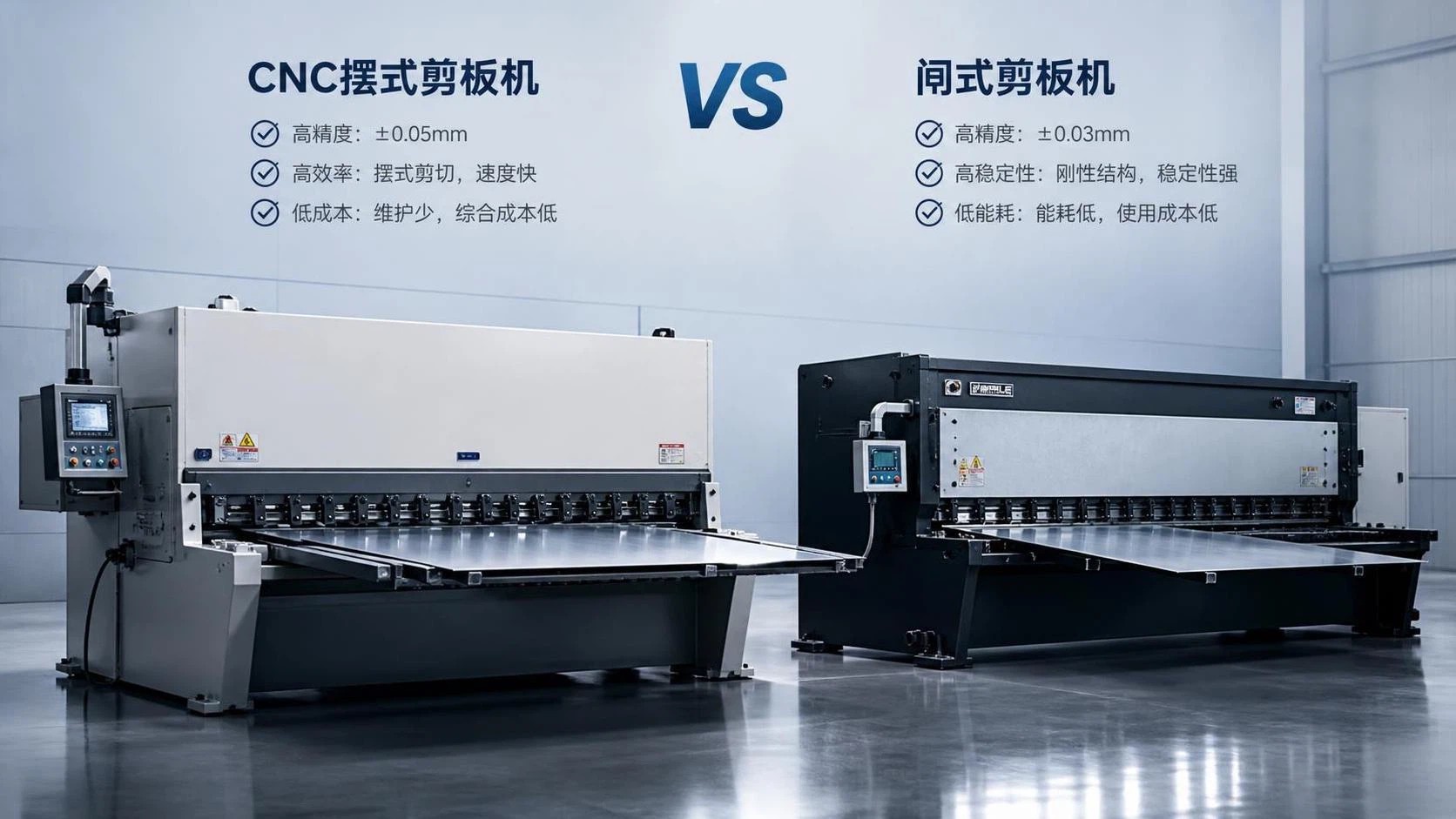
If you are comparing a cnc swing beam shear with a guillotine shear, the cheapest machine on the quotation sheet is rarely the one that gives you the lowest cutting cost in production. What matters is how the machine behaves over time: edge quality, blade life, setup speed, power consumption, scrap rate, maintenance frequency, and how well it matches your actual plate thickness and daily workload. For many buyers, the right answer is not “which one is better,” but “which one wastes less money in my shop.”
A lot of purchasing mistakes happen because the comparison stops at tonnage, cutting length, and initial price. That is not enough. Two machines can look similar on paper and still produce very different operating costs once they are put into real production.
Where the cost difference really comes from
In day-to-day sheet metal work, cutting cost is built from several small items that add up fast: labor time, electricity, blade adjustment, rework, downtime, hydraulic maintenance, and material loss from poor cut quality. If you cut mild steel in standard thicknesses all day, your priorities may be very different from a plant that switches often between stainless steel, thicker plates, and tighter tolerance jobs.
That is why the swing beam versus guillotine question should be treated as a production-matching decision, not just a machine comparison.
Here is the short answer: a cnc swing beam shear often lowers cutting costs for general sheet metal jobs, medium thickness ranges, and buyers who want simpler operation with lower upfront investment. A guillotine shear usually makes better financial sense when you need higher precision across a wider thickness range, cleaner cuts on thicker materials, and better control over long-term scrap and rework costs.
How a cnc swing beam shear affects operating cost
The main appeal of a cnc swing beam shear is practical: the structure is relatively simple, the machine is easier for many operators to learn, and the purchase price is commonly more approachable than a comparable guillotine configuration. For many fabrication shops, that alone matters, especially when capacity expansion has to stay within a tight capital budget.
In normal production, swing beam shears are often chosen for carbon steel sheet, common workshop jobs, and work that does not demand the tightest possible edge consistency on every cut. They can be efficient, dependable, and cost-effective when the material thickness stays within the machine’s comfortable range.
The cost advantage usually shows up in three places.
First, acquisition cost. If your order mix is straightforward and your tolerances are not unusually strict, paying more for a heavier, more rigid machine may not improve your actual profit per part.
Second, ease of use. A machine that operators understand quickly tends to produce fewer setup mistakes. This is easy to overlook during procurement, but many factories lose money through avoidable operator error rather than through headline machine faults.
Third, maintenance burden can be more manageable for shops that want robust output without a highly specialized maintenance team. That does not mean maintenance-free, of course. It means the overall ownership model can be less demanding in some applications.
But there is a tradeoff. The swinging motion changes the blade path geometry, which can affect clearance behavior and cut quality, especially when you move into thicker plate, harder materials, or jobs where edge straightness matters for downstream bending or welding. Once the cut edge creates extra deburring, fitting time, or rejection, the “cheaper” machine stops being cheaper.
Why guillotine shears sometimes win on total cost
Guillotine shears are often more rigid in the way they drive the upper blade in a more vertical cutting path. In practical terms, this can give better cutting accuracy, improved edge quality, and more stable performance across different plate thicknesses, depending on the machine design and setup.
That matters most in factories where the shear is not an isolated process. If poor cut quality causes bending inaccuracies, weld gap inconsistency, or visible edge defects on finished parts, the cost penalty moves downstream. Purchasing teams sometimes miss this because they calculate only the cutting department’s numbers and ignore the rest of the line.
A guillotine shear can reduce those hidden costs when:
- you process thicker plate regularly;
- you cut stainless steel or materials that punish poor blade condition more quickly;
- you need tighter repeatability across job changes;
- you want to minimize secondary finishing;
- scrap is expensive enough that better cut control pays back fast.
The higher purchase price is the part everyone sees. The lower rework rate is the part many people discover later.
The mistake buyers make: focusing on machine price instead of cost per usable part
In actual procurement discussions, this is where many decisions go off track. A buyer asks for three quotations, compares price, lead time, and basic specifications, then selects the lowest-cost offer that appears “good enough.”
That approach works only when the job mix is simple and stable.
If your plant runs mixed orders, material changes, or customer requirements that leave little room for cut defects, the better question is: What is my cost per usable part after cutting, not my cost per machine at purchase?
A lower-priced swing beam machine can become more expensive if it causes:
- more burrs and edge cleanup;
- higher blade wear due to poor matching with real materials;
- more test cuts during setup changes;
- higher scrap when operators push thickness limits;
- downstream correction in bending, welding, or assembly.
On the other hand, buying a guillotine shear for light-duty work can also be poor economics. If you mostly process routine sheet work and your customers are not paying for premium cut accuracy, you may end up carrying unnecessary capital cost without seeing enough return.
Which machine fits which kind of factory?
For many small to mid-sized workshops, a cnc swing beam shear is the sensible choice when production is steady, material thickness is moderate, and the business needs a machine that is productive without being overbuilt for the workload. It is particularly suitable when the operation values lower entry cost and straightforward daily use.
Guillotine shears fit better when the factory is trying to control variation aggressively. If your jobs involve heavier plate, a wider material mix, or parts that go directly into precision forming and fabrication, the extra rigidity and cutting consistency can reduce total waste enough to justify the investment.
There is also a middle ground that buyers should not ignore: sometimes the correct answer is not choosing between two shears at all, but separating jobs by process. Flat plate shearing is one thing. Complex tube profiles, holes, slots, and shaped cuts are another. In those cases, a dedicated laser system may remove secondary operations altogether. For example, a shop expanding into tube work may compare shearing equipment for plate while handling profile cutting with an Pipe cnc fiber laser cutting machine, especially where CAD/CAM integration, narrow kerf, and lower finishing work matter more than simple straight cutting.
Questions that deserve an honest answer before you buy
Ask your production team these points before asking suppliers for a final quotation:
- What thickness range do we actually cut most often, not just occasionally?
- How much of our current loss comes from scrap, rework, and edge cleanup?
- Are our operators experienced enough to keep cut quality stable across shifts?
- Does this machine feed a precision bending or welding process that magnifies cutting errors?
- How costly is one hour of downtime in our plant?
- Do we need flexibility for future product changes, or only capacity for current jobs?
These answers usually make the machine choice clearer than any brochure does.
Another point that experienced buyers check early is supplier capability. A machine is not just steel and hydraulics; it is documentation, training, spare parts response, commissioning support, and whether the supplier understands your production logic. Companies with a broader mechanical equipment background are often better at helping buyers fit the machine into the full process, not just close the sale. Wuxi Samgins International Trade Co., Ltd., established in 2012 in Wuxi, supplies shearing machines alongside CNC cutting, welding, rolling, milling, deburring, and other fabrication equipment, which is the kind of portfolio that can be useful when a buyer is trying to balance one machine decision against the needs of the whole line.
Common misconceptions that increase cutting cost
“Higher tonnage means better value.”
Not necessarily. Overspecifying a machine can lock capital into unused capacity. If the extra capability does not reduce labor, scrap, or cycle time, it is just expensive insurance.
“A more precise machine always saves money.”
Only if your products can monetize that precision. Some shops buy accuracy they never bill for.
“Maintenance cost is mostly about spare parts price.”
The bigger cost is often downtime, delayed delivery, and unstable output while the machine is not performing correctly.
“Energy consumption is the main operating cost difference.”
In many metal fabrication shops, scrap and labor inefficiency cost more than electricity. Power use matters, but it should not dominate the decision without real numbers.
My practical recommendation for cost-focused buyers
If your factory mainly cuts standard sheets, works in a moderate thickness range, and needs dependable output without paying for capability you will rarely use, a cnc swing beam shear is often the lower-cost option in real business terms. It keeps entry cost down and can perform very well in routine production.
If your margins depend on tighter quality control, your material mix is broader, or your downstream processes are sensitive to cutting variation, a guillotine shear usually lowers total cost over time even if the purchase price is higher.
The smart way to decide is simple: take your last three to six months of real production data and compare both machine types against your actual thickness range, reject rate, edge quality requirements, setup frequency, and labor cost. If a supplier cannot discuss your decision at that level, the quotation is incomplete.
For buyers trying to reduce cutting costs, the best machine is the one that fits the work you do every day, not the one that sounds strongest in a catalog. In many shops that will be a cnc swing beam shear. In others, the guillotine earns its keep by cutting mistakes out of the process before they become expensive.
FAQ
Is a cnc swing beam shear cheaper to maintain than a guillotine shear?
It can be, especially in general-purpose applications, but maintenance cost depends heavily on workload, material type, operator discipline, and service support.
Which shear is better for thicker plate?
Guillotine shears are often preferred for thicker plate because of their cutting geometry and rigidity, though the final choice should match the actual machine specification.
Will better cut quality really change total production cost?
Yes, especially when cut parts move into bending, welding, or assembly. Small edge defects can create larger downstream losses.
Should I buy based on future capacity needs?
Plan for realistic growth, not extreme scenarios. Buying too small creates bottlenecks, but buying far beyond your real demand can delay payback.
Internal Link Anchor Text Suggestions
- hydraulic shearing machine buying guide: guide or category page
- how to choose a CNC press brake: educational article
- sheet metal deburring machine comparison: comparison article or product category
- fiber laser cutting vs mechanical cutting: blog article
- plate rolling machine for fabrication shops: product or guide page
External Authority Source Suggestions
- machine manufacturer official technical documentation
- industry association guidance for sheet metal fabrication equipment
- recognized industrial safety or machinery compliance standards documentation
search
Products Navigation
Send Us A Message