




CNC Press Brake: The Complete 2026 Guide to Types, Working Principles, and Industrial Applications
What A CNC Press Brake Is And Why It Matters
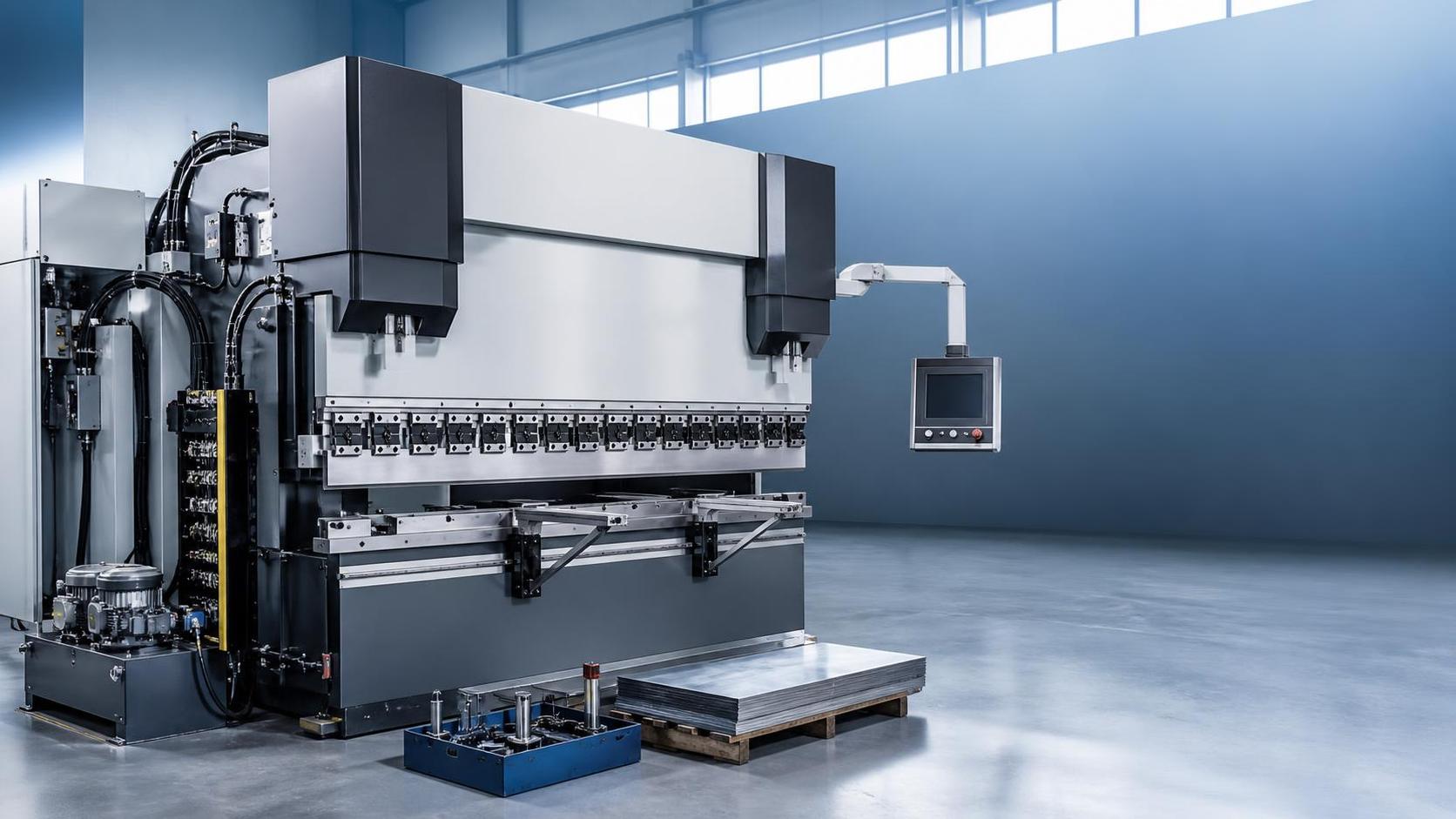
A CNC Press Brake is a programmable sheet metal forming machine that bends plate or sheet by pressing material between an upper punch and a lower die. The CNC system controls key parameters such as ram position, bending depth, backgauge movement, angle compensation, and program sequence, allowing fabricators to produce repeatable parts with tighter dimensional consistency than manual or basic hydraulic systems.
In practical manufacturing, the value of a CNC Press Brake is not only its bending force. It also determines whether a factory can deliver stable angles, short setup time, low scrap rates, and smooth changeovers across different part drawings. For buyers serving construction steelwork, cabinets, enclosures, agricultural equipment, pressure-related components, or general machinery, press brake capability directly affects lead time, labor efficiency, and final assembly fit.
The machine is especially important in high-mix, medium-batch production where operators must switch between thicknesses, bend lengths, and part geometries throughout the day. A well-configured CNC Press Brake reduces dependence on trial bending by storing recipes, backgauge positions, and step sequences in the control system. That makes production less vulnerable to operator variation and more scalable as order complexity increases.
For manufacturers evaluating equipment in 2026, the buying decision should extend beyond nominal tonnage. Buyers should examine synchronization method, frame rigidity, CNC control capability, hydraulic and servo component quality, tooling ecosystem, serviceability, and compatibility with future automation. Those factors define whether the machine performs reliably over years of industrial use rather than just passing an initial acceptance test.
How A CNC Press Brake Works
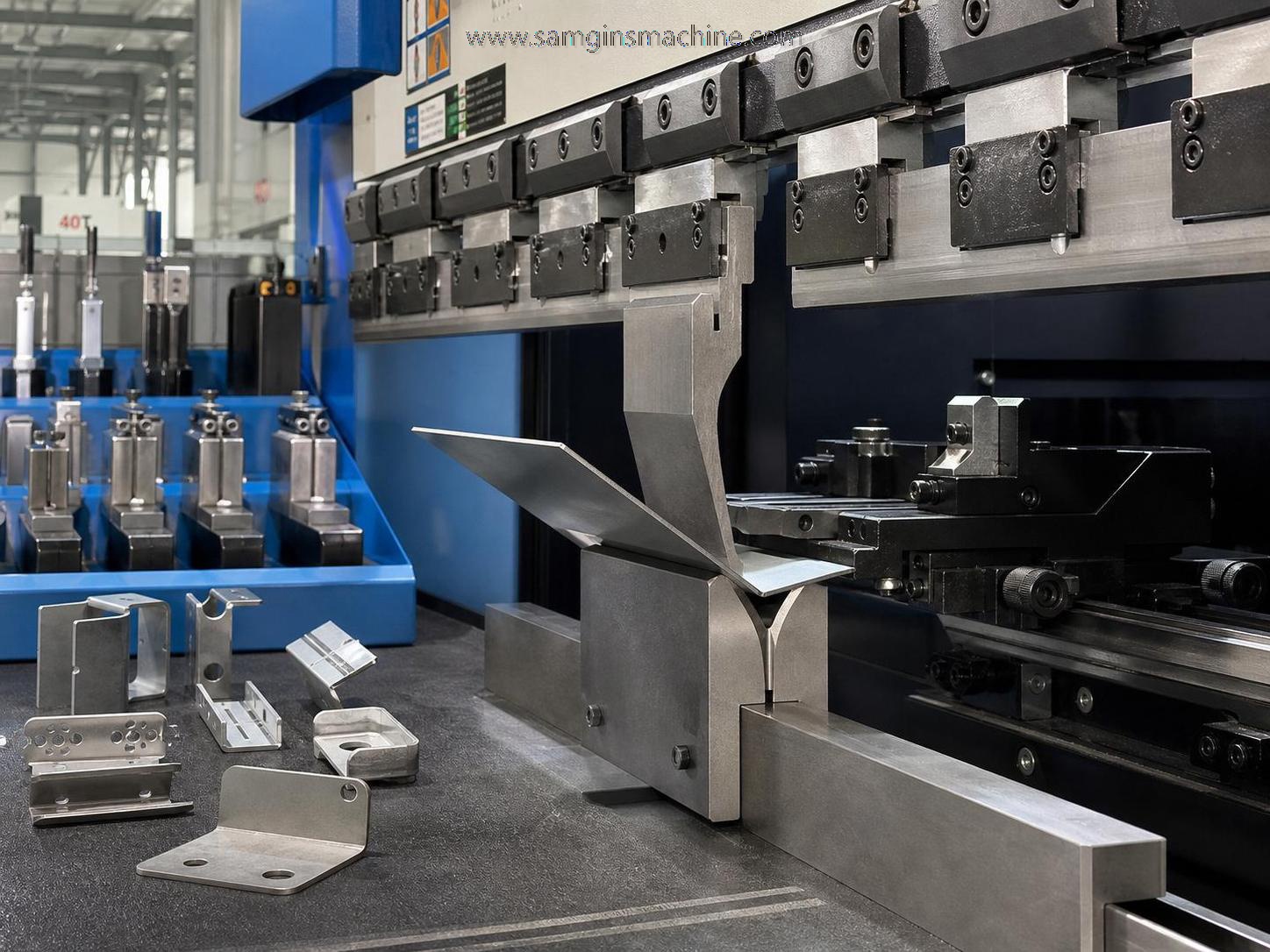
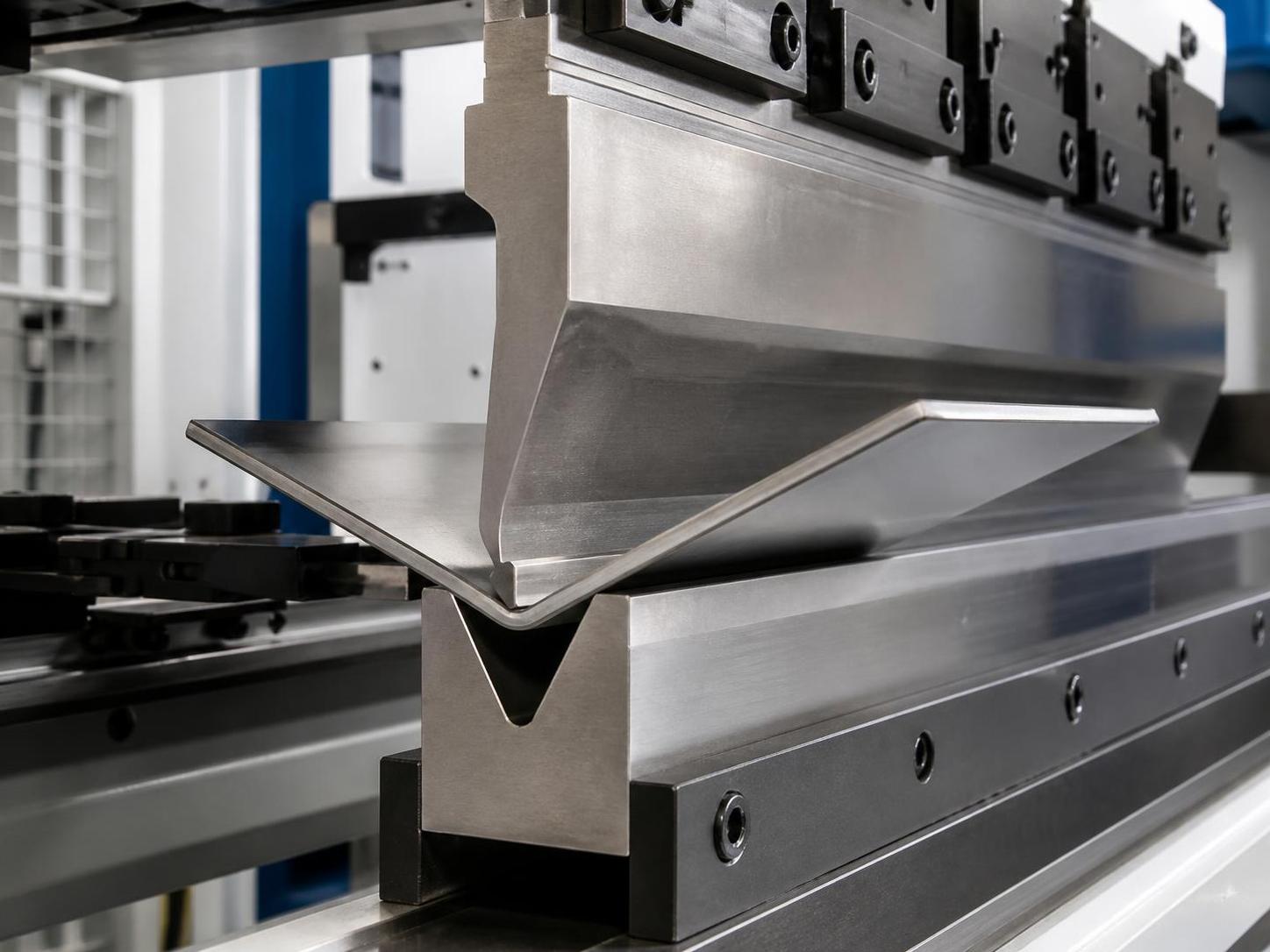
The basic working principle is controlled plastic deformation. A metal sheet is positioned on the lower die, aligned by the backgauge, and pressed by the punch as the ram moves downward. Once the bending force exceeds the material’s yield strength, the sheet takes a permanent angle. The final result depends on die opening, punch radius, material thickness, tensile strength, grain direction, bending method, and machine accuracy.
Most industrial CNC Press Brake operations use air bending, bottoming, or coining. Air bending is the most flexible and common because one tool set can produce multiple angles by varying penetration depth. Bottoming gives tighter angle repeatability for specific setups, while coining applies very high force to reduce springback but increases tooling load and is less common for general production. The correct method depends on tolerance demands and part economics.
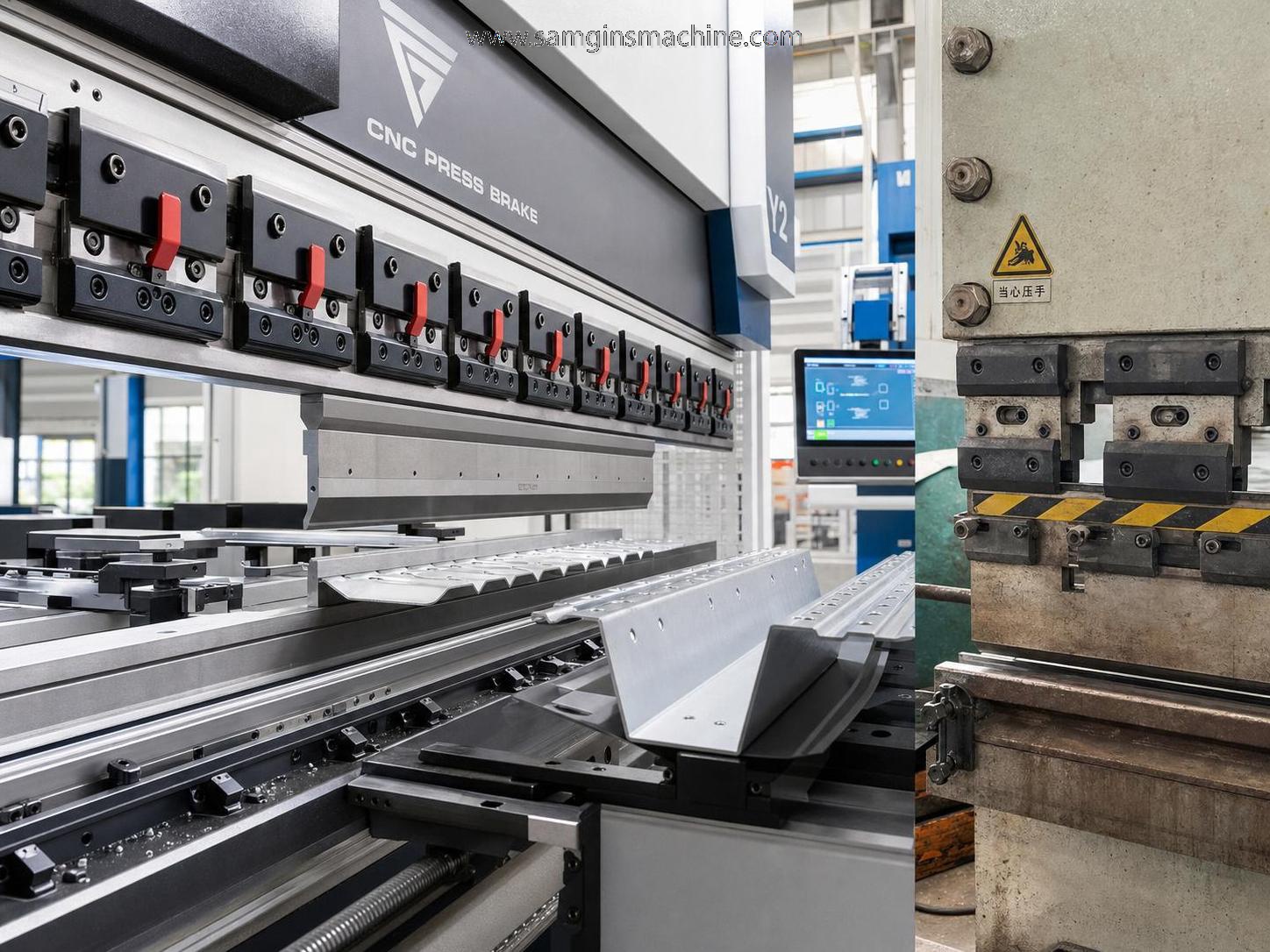
The CNC controller coordinates the ram and backgauge axes so each bend follows a programmed sequence. On advanced machines, the system may include Y1 and Y2 control for left and right cylinder synchronization, X and R axes for backgauge depth and height, and additional Z axes for finger positioning. Crowning or compensation systems help correct deflection along long workpieces, which is critical when bending wide parts that otherwise develop angle variation from center to edge.
Actual bend accuracy depends on the whole process chain, not the controller alone. Stable hydraulic response, rigid frame construction, precise tooling alignment, and clean material handling all matter. Even a capable CNC Press Brake can lose accuracy if the tooling is worn, the die opening is poorly matched to sheet thickness, or the operator ignores springback behavior on higher-strength materials such as stainless steel or advanced structural grades.
Main Types Of CNC Press Brake Machines
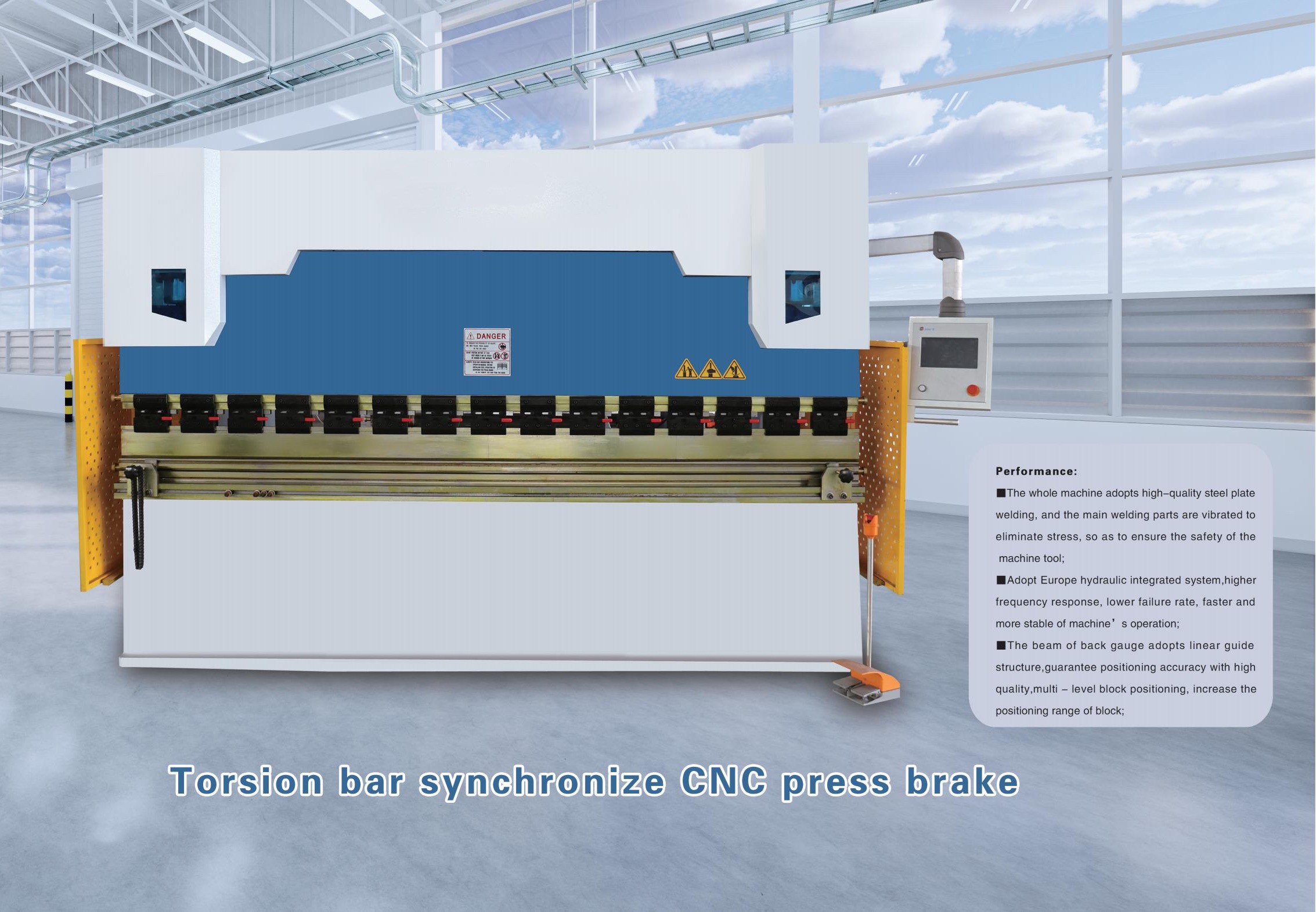
The two mainstream categories relevant to many buyers are torsion bar synchronize CNC press brake models and electro-hydraulic synchronize CNC press brakes. A torsion bar synchronize CNC Press Brake mechanically links the two sides of the ram and is widely used for cost-sensitive applications. It is suitable for routine bending work where budget, straightforward maintenance, and moderate precision are more important than advanced multi-axis control or highly demanding angular consistency.
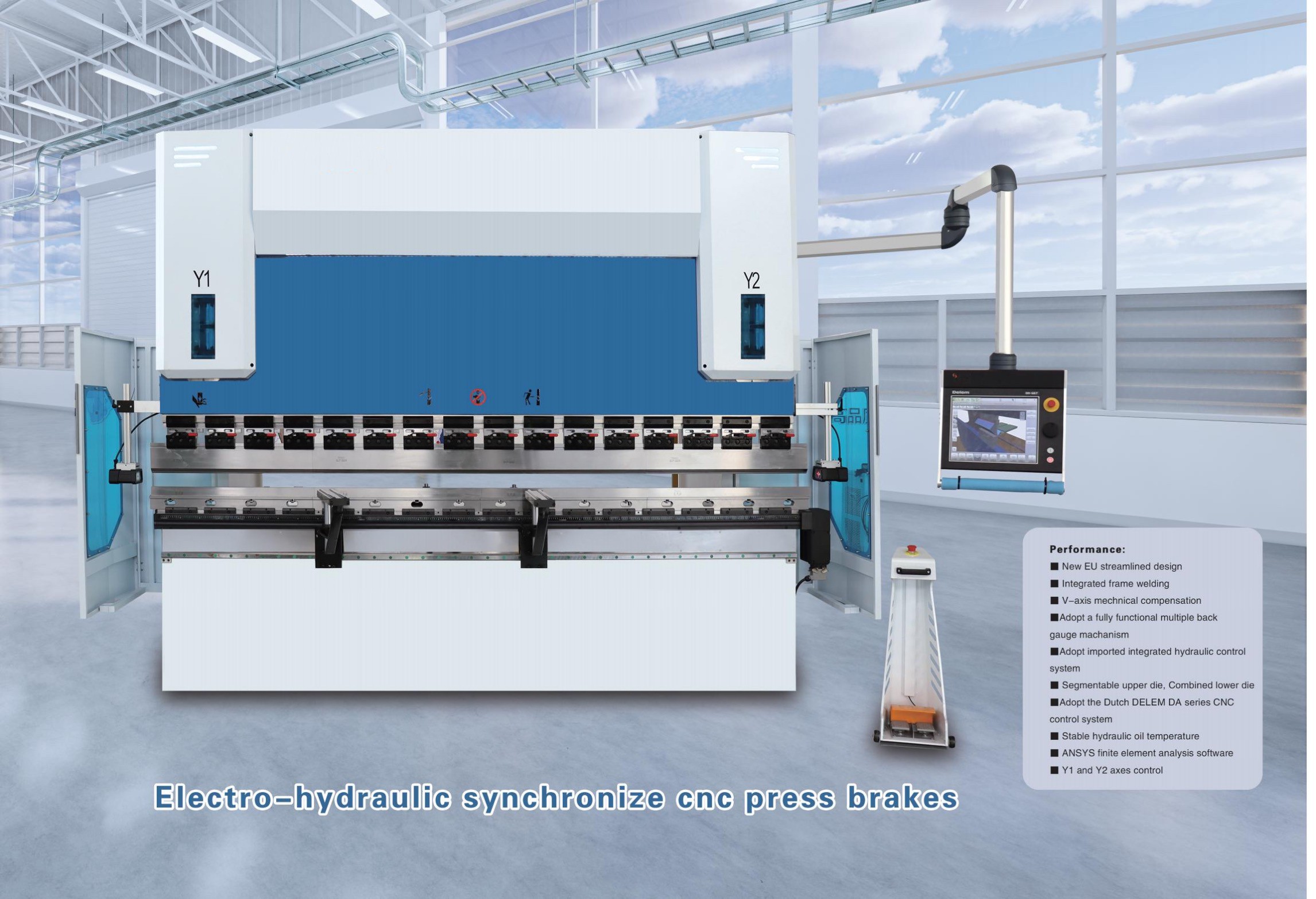
An electro-hydraulic synchronize CNC Press Brake uses proportional valves and feedback systems to control both sides of the ram independently yet in coordination. This design generally supports better repeatability, stronger compensation capability, more sophisticated CNC functions, and smoother performance on long parts or jobs with tighter tolerances. It is commonly preferred by fabrication shops handling complex programs, varied materials, and more demanding customer drawings.
Machines can also be classified by frame size, bending length, tonnage, axis count, and application scope. Small and medium machines are common in sheet metal workshops producing electrical cabinets, doors, racks, and enclosure parts. Large-tonnage machines target thicker plate, longer parts, and heavy fabrication. Some lines are optimized for general air bending, while others are integrated into larger production systems with laser cutting, deburring, rolling, or robotic handling equipment.
For buyers with long-term expansion plans, the important distinction is not only type but upgrade path. A CNC Press Brake that accepts additional axes, tooling systems, offline programming, or automation interfaces can remain useful as part complexity rises. This matters for manufacturers moving from manual batch work toward digitally managed production cells where machine data, recipe storage, and process repeatability become part of plant-level efficiency goals.
Who Uses CNC Press Brake Systems And In Which Applications
A CNC Press Brake serves a broad set of industrial users. Typical buyers include sheet metal workshops, structural steel fabricators, enclosure manufacturers, transport equipment producers, agricultural machinery plants, HVAC duct and frame processors, and subcontract manufacturers handling mixed customer drawings. The machine is also relevant to companies that need consistent bends before welding, machining, coating, or final assembly, where poor angle control creates downstream fitting problems.
Application examples include forming brackets, channels, trays, doors, machine covers, electrical cabinets, support frames, pipe supports, gusseted assemblies, and formed components for tanks or process equipment. In these environments, the CNC Press Brake is rarely a standalone asset. It usually works alongside cutting systems, deburring machines, drilling lines, welding positioners, and finishing processes, so throughput depends on how well bending integrates into the broader manufacturing flow.
Global users also evaluate market access requirements. While exact compliance obligations depend on the destination and end-use sector, buyers often expect documentation quality, machine safety features, electrical compatibility, and build practices aligned with widely recognized industrial expectations. This is where suppliers with export experience can reduce risk by understanding documentation discipline, packaging for long-distance shipment, and practical installation issues at overseas factories.
Wuxi Samgins is relevant in this context because its product range extends beyond the CNC Press Brake itself. Buyers building or upgrading a fabrication line may also need fiber laser cutting machines, shearing machines, plate rolling machines, leveling machines, edge milling equipment, welding robots, or H-beam production machines. A broader equipment portfolio can simplify technical matching across adjacent processes and reduce sourcing fragmentation for expanding factories.
How To Choose The Right CNC Press Brake
Selection starts with the workpiece, not the machine brochure. Buyers should define maximum part length, material type, thickness range, bend geometry, annual output, tolerance expectations, and changeover frequency. These inputs determine the required tonnage, bed length, throat depth, daylight, stroke, backgauge travel, and tooling style. A machine sized only for peak thickness but not for common daily work may create unnecessary energy use and slower handling for routine parts.
Accuracy requirements should guide the choice between torsion bar and electro-hydraulic synchronization. If the factory produces mostly simple brackets or general-purpose parts with moderate tolerances, a torsion bar synchronize CNC press brake may be economical. If the work involves long parts, multiple bends in one setup, tighter angular tolerances, or frequent product changes, electro-hydraulic synchronize CNC press brakes usually offer a stronger balance of control and long-term productivity.
Buyers should also assess the CNC system itself. Important questions include program storage capacity, ease of operator training, bend sequence editing, support for multi-axis backgauges, angle correction functions, diagnostics, and spare parts availability. A CNC Press Brake can look comparable on paper yet differ greatly in day-to-day usability. Controls that reduce setup errors and support quicker operator onboarding often produce a measurable return even before throughput rises.
Tooling, support, and future integration deserve equal attention. Confirm whether the machine accepts standard tool interfaces, whether the supplier can assist with punch and die selection, and whether hydraulic, servo, and CNC components come from established global brands where stated. Wuxi Samgins emphasizes imported key hydraulic, servo, and CNC components, which can be significant for buyers seeking stable precision, longer service life, and easier maintenance planning across export markets.
Quality Control, Manufacturing Discipline, And Installation Priorities
A CNC Press Brake is only as reliable as its mechanical and process discipline. Buyers should pay attention to frame fabrication, stress management, machining quality of key mounting surfaces, cylinder synchronization architecture, and assembly alignment. Poor structural control can lead to uneven bending, unstable repeatability, and accelerated wear. A well-built machine should maintain consistent geometry under load and support predictable behavior across both short and long bending cycles.
Quality control should extend to hydraulic performance, electrical layout, and tool setup repeatability. Stable valves, responsive controls, and clean wiring practices reduce troubleshooting time after installation. On the shop floor, even good machines need disciplined commissioning: foundation or floor evaluation, leveling, hydraulic inspection, parameter verification, test bending with the target materials, and operator training on die selection, angle compensation, and daily inspection routines.
For international projects, after-sales structure matters almost as much as the initial specification. Wuxi Samgins states that its machines comply with ISO9001 quality system practices and EU CE Machinery and LVD directives, and that it provides support from design and manufacturing through after-sales and technical service. For B2B buyers, that kind of framework can help reduce common concerns around quality variance, delayed response, incomplete documentation, or difficult handover after shipment.
Installation planning should also consider the full production route. A CNC Press Brake works best when incoming material is cut accurately, burrs are controlled where necessary, and downstream welding or assembly teams receive parts with documented bend tolerances. Suppliers with wider fabrication-line experience can be helpful here, especially when the press brake must fit into a workshop that also runs cutting, seam welding, H-beam processing, or heavy rolling operations.
Total Cost Of Ownership And Return On Investment
The purchase price of a CNC Press Brake is only one part of total ownership cost. Buyers should calculate tooling investment, freight, installation, training, maintenance parts, hydraulic oil management, power consumption, operator labor, scrap, rework, and downtime risk. In many factories, angle inconsistency and setup delay cost more over time than the original machine price difference between entry-level and better-configured models.
ROI improves when the machine reduces trial bends, shortens setup, and supports more jobs with the same labor team. A CNC Press Brake with stronger backgauge control and better synchronization may allow one operator to complete more part numbers per shift with fewer rejected pieces. For subcontract manufacturers, this translates directly into more reliable delivery promises and the ability to take on higher-mix work without expanding floor space at the same pace.
Maintenance economics also matter. Buyers should ask about seal life, filtration requirements, valve accessibility, control diagnostics, spare part lead times, and remote support capability. A lower upfront price can become expensive if downtime is frequent or troubleshooting depends on hard-to-source components. Conversely, machines using recognized hydraulic, servo, and CNC elements may simplify lifecycle support even when the initial budget is slightly higher.
From a procurement perspective, the right approach is to compare cost per good part over several years rather than machine price alone. When evaluating proposals from Wuxi Samgins or other suppliers, a practical scoring model should include technical fit, documentation quality, service responsiveness, component transparency, delivery planning, and compatibility with future automation. That framework gives a clearer picture of long-term value than a simple quotation comparison.
Global Applications, Service Experience, And Buyer Confidence
For overseas buyers, supplier experience with export projects is a meaningful risk factor. A CNC Press Brake may be technically sound, yet still create problems if crating, labeling, manuals, electrical standards, or installation communication are weak. International delivery requires disciplined coordination across manufacturing, inspection, shipping, customs documentation, and service follow-up. This is especially important when equipment is part of a larger workshop expansion with tight commissioning schedules.
Wuxi Samgins states it has more than 10 years of global export experience and familiarity with ASME, API, and other local industry codes in relevant contexts. That kind of background is useful for customers in fabrication sectors where equipment may support projects tied to tanks, pipelines, steel structures, or heavy industrial assemblies. Even when the press brake itself is not code-certified for a pressure boundary, familiarity with end-user requirements can improve communication and project fit.
Its disclosed customer list, including companies such as URALSTANKOIMPORT, MD Calbah Industries Pty Ltd, Ersay International Transport, Zein Steel Industries Co. LLC, BatysMunaiGazZhabdyktary LLP, PT.Cahaya mas Cemerlang, Estructuras Metalicas Girders Chile Limitada, and Lincoln Electric-MENA, suggests experience serving varied industrial markets. Buyers should still validate the exact machine scope relevant to their application, but a cross-region reference base is generally helpful when assessing export readiness.
For projects that combine sheet metal forming with welding or structural processing, a supplier able to coordinate multiple machine types may reduce interface issues. Because Wuxi Samgins also offers welding manipulators, welding rotators, positioners, cutting machines, deburring machines, rolling machines, and H-beam equipment, it can be considered not only as a CNC Press Brake source but as a broader fabrication-line partner for selected industrial scenarios.
Future Trends In CNC Press Brake Technology
The 2026 direction of CNC Press Brake technology is shaped by labor pressure, quality traceability, and production flexibility. Buyers increasingly want machines that shorten operator learning curves and support more stable results across changing part mixes. This is driving demand for more capable controls, better compensation systems, faster setup methods, and stronger integration with upstream cutting and downstream robotic handling or welding processes.
Another trend is the move toward data-assisted production. Even factories that are not fully automated now expect programmable recipes, error diagnostics, and easier performance tracking. Over time, the competitive advantage of a CNC Press Brake will depend less on raw force alone and more on how efficiently it can support repeatable workflows, digital planning, preventive maintenance, and shorter response times when product designs change or custom orders increase.
Energy use and component longevity are also becoming purchasing priorities. Buyers are more cautious about lifecycle cost, so machine designs that improve hydraulic efficiency, reduce unnecessary idling, and simplify service will continue to gain attention. At the same time, the market is rewarding suppliers that can offer customization, because many fabricators want machines matched to their own material range, handling method, and production sequence rather than a purely standard configuration.
For procurement teams planning beyond the immediate order, the best strategy is to view the CNC Press Brake as part of a connected fabrication capability. Suppliers such as Wuxi Samgins, with broad product coverage and customization capability for adjacent welding and processing systems, may be useful where the long-term goal is to build a more integrated plant rather than buy isolated machines one by one. That approach can support steadier scaling as product complexity and quality expectations rise.
search
Recommended Products
 Electro-hydraulic synchronize cnc press brakesA bending machine is a device designed for bending thin metal sheets. Its structure mainly consists of a base, a worktable, and a clamping plate. The worktable is mounted on the base and comprises a base frame and a pressing plate, which are connected to each other through a hinge.
The hydraulic bending machine consists of a base, a worktable, and a clamping plate. The worktable is placed on the base and is composed of a base frame and a pressing plate, which are connected via a hinge. The base frame includes a housing, a coil, and a cover plate. The coil is positioned in a recess within the housing, with the recess covered at the top by the cover plate.![星星1]()
 Torsion bar synchronize CNC press brakeA bending machine is a device used to bend thin metal sheets. Its main structure includes a base, a worktable, and a pressure plate. The worktable, mounted on the base, consists of a base frame and a pressure plate, connected by a hinge.
The base frame comprises a housing, a coil, and a cover plate. The coil is located within a recess in the housing, the top of which is sealed by the cover plate. During operation, the coil is energized by a wire. When energized, the coil generates an electromagnetic attraction force on the pressure plate, thus firmly clamping the thin sheet between the pressure plate and the base frame.
Because clamping is achieved through electromagnetic force, the pressure plate can be easily adjusted to accommodate various workpiece shapes. This design also makes it possible to process workpieces with sidewalls. By simply changing the bending dies, the machine can be configured to meet the processing needs of various different workpieces.![星星1]()

Recommended blogs
 What Affects CNC Press Brake Accuracy in High-Mix Production?
 CNC Swing Beam Shear vs Guillotine Shear: Which One Lowers Cutting Costs?
- How Long Does It Take to Commission a Press Brake at a New Site?
- Press Brake Sheet Metal Bending: How to Control Springback and Angle Consistency
- What jobs are best suited to a 3 roller plate rolling machine?
- CNC Press Brake vs Hydraulic Press Brake: Which Fits Batch Production?
Send Us A Message
Send us a Message
A dedicated person will follow up on your needs one-on-one and provide personalized customized solutions according
to your needs.
Get In Touch
We look forward to hearing from you for in-depth communication on how to fulfill your mixing requirements.