




How Long Does It Take to Commission a Press Brake at a New Site?
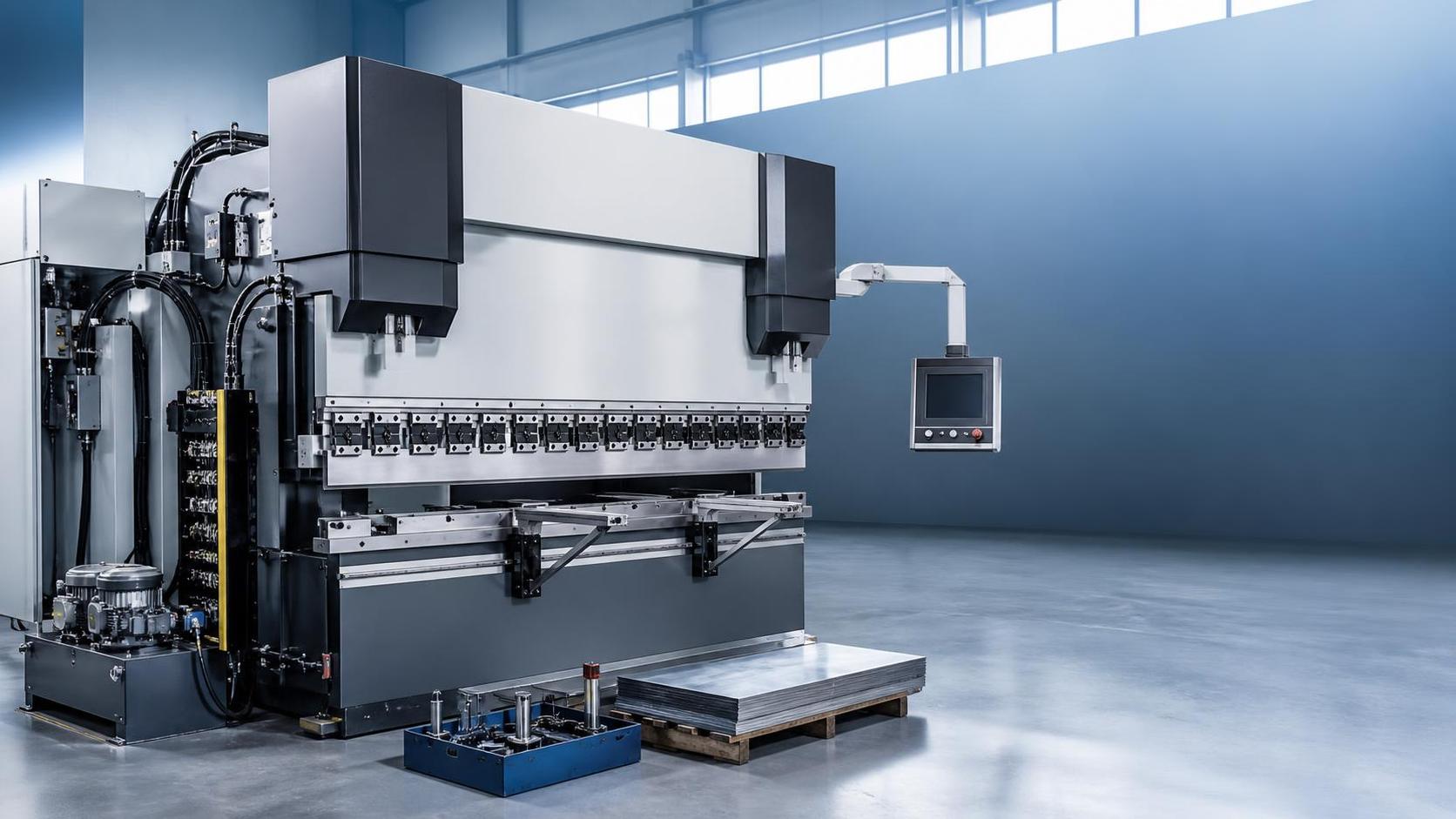
How long does it take to commission a press brake at a new factory site? In most cases, commissioning takes anywhere from two days to two weeks after the machine arrives, but the real answer depends on how well the site is prepared.
Machine size, foundation conditions, electrical readiness, tooling setup, software calibration, and operator training all affect the final schedule. A small standard press brake can be ready quickly, while a large CNC unit with automation needs more coordination.
For factory managers, production planners, and technical teams, the key issue is not only installation time. The bigger concern is how to avoid delays that push back production, increase labor costs, and create risk during startup.
This guide explains the realistic timeline, what happens at each stage, and what factors most often slow down commissioning. It will help you estimate the schedule more accurately and prepare your site properly before the machine arrives.
What Is the Real Search Intent Behind This Question?
When someone searches “How long does it take to commission a press brake at a new factory site?”, they usually do not want a vague technical definition. They want a practical schedule they can use for planning.
Most readers are trying to answer business-critical questions: When can production begin? What must be ready before delivery? What can delay installation? How much technician support will be needed on-site?
In other words, the search intent is strongly transactional and operational. The reader is likely comparing suppliers, preparing a new workshop, expanding sheet metal capacity, or planning the launch of a fabrication line.
That means the most useful content is not broad theory about press brakes. It is a realistic commissioning roadmap, typical time ranges, risk points, and clear ways to shorten the startup period without compromising safety or accuracy.
A Typical Press Brake Commissioning Timeline
For a standard hydraulic or CNC press brake installed in a prepared facility, commissioning usually takes two to five working days. That assumes the machine can be unloaded, positioned, connected, leveled, tested, and accepted without major site issues.
For a larger press brake, tandem model, heavy-tonnage system, or machine integrated with backgauge automation and special tooling, the timeline is more often one to two weeks. Complex systems simply require more setup, verification, and operator instruction.
The biggest planning mistake is to count only the technician’s on-site hours. Real commissioning time starts before arrival, because utility checks, floor load verification, crane access, and material flow planning all determine whether installation proceeds smoothly.
As a practical benchmark, buyers should divide the project into three phases: pre-installation preparation, physical installation and machine setup, and production validation with training. Delays usually happen in the first and third phases, not during basic machine placement.
What Happens Before the Machine Arrives?
Pre-installation preparation is often the hidden part of the schedule. If the site is fully ready, the machine supplier’s team can move quickly. If not, even a high-quality press brake may sit idle for days.
First, the factory needs to confirm floor capacity, installation space, and access paths. This includes door size, unloading area, forklift or crane capacity, and safe movement routes from receiving to final machine position.
Second, the electrical system must match machine requirements exactly. Voltage, frequency, grounding, and cable size must all be checked in advance. A mismatch here can stop commissioning immediately, even if the machine itself is fully assembled.
Third, air supply, hydraulic oil, lubrication points, and environmental conditions must be reviewed. CNC press brakes perform best in stable, clean conditions, especially when precise repeatability and angle consistency are required from the start.
In many factories, this preparation stage takes several days to several weeks, depending on how developed the site already is. For a new workshop, preparation may actually take longer than the commissioning visit itself.
How Long Does Physical Installation Usually Take?
Once the press brake arrives and the site is ready, physical installation is usually the fastest part of the project. For a mid-size machine, unloading, positioning, anchoring if required, and initial mechanical checks can often be completed within one day.
After placement, technicians connect electrical and hydraulic systems, inspect moving components, and verify that transport locks or protective fixtures have been removed correctly. This stage may extend if the machine was shipped in separated modules.
Large tonnage press brakes or machines with segmented structures can take longer because alignment is more demanding. Positioning accuracy matters, especially for long bending lengths where frame leveling directly affects part quality.
Buyers should also allow time for basic safety verification. Emergency stops, guards, light curtains, foot pedals, and control interfaces must all be tested before the machine can move into calibration and trial operation.
How Much Time Is Needed for Electrical Setup and CNC Configuration?
Electrical setup can take a few hours or more than a full day, depending on machine complexity. A conventional hydraulic press brake with standard controls is relatively quick, while a CNC model with multiple axes and network integration needs more attention.
Technicians typically verify power supply stability, motor direction, sensor response, axis movement, hydraulic pressure behavior, and controller startup. Any abnormal alarm or communication error has to be resolved before test bending begins.
If the machine includes imported control systems, offline programming functions, angle measurement devices, or robotic interfaces, the setup period becomes more detailed. Parameter confirmation and software synchronization can add meaningful time to the project.
This is why buyers asking “How long does it take to commission a press brake at a new factory site?” should consider software readiness as part of commissioning, not as a separate issue. On modern machines, controls are central to production readiness.
Why Tooling Setup and Calibration Often Decide the Final Schedule
Many commissioning delays happen after the machine is powered on. The machine runs, but it is not yet producing acceptable parts. That gap is usually caused by tooling setup, calibration, and first-piece validation.
Punches and dies must be installed correctly, aligned accurately, and matched to the intended material type and thickness. If tooling selection was not finalized before delivery, technicians may lose time adjusting around incomplete or unsuitable setups.
Next comes axis calibration, crowning adjustment, backgauge positioning, and bend angle verification. On CNC press brakes, this stage is essential because small setup errors can cause large quality deviations across batch production.
Trial bends are then performed using actual production material whenever possible. This step confirms whether the machine, tooling, material springback data, and operator inputs are working together as expected under real factory conditions.
For simple jobs, calibration and test bending may take half a day. For customers with tighter tolerances, unfamiliar materials, or multiple part types, this phase can easily extend to two or three days.
How Long Does Operator Training Add?
Operator training is often underestimated in project timelines. A press brake may be mechanically commissioned, but that does not mean the customer team is ready to run production efficiently or safely.
Basic training usually covers startup and shutdown procedures, tooling changes, program input, axis reference, safety devices, and routine maintenance checks. For experienced operators, this may only require several hours.
For teams new to CNC bending, training may take one to three days, especially if they need help with bend sequence planning, angle correction, program storage, and troubleshooting common production errors.
From a management perspective, training should be treated as part of commissioning because it directly affects startup speed, scrap rate, and machine utilization in the first weeks after handover.
What Factors Most Commonly Cause Delays?
The most common cause of delay is incomplete site preparation. Missing power cables, weak foundations, blocked access paths, or unavailable lifting equipment can pause work before installation really begins.
The second major issue is poor coordination between departments. Purchasing, maintenance, production, and facility teams may each assume another group has handled utilities, oil, tooling, or material for testing. That assumption creates avoidable downtime.
Another frequent problem is unclear scope between supplier and buyer. Customers sometimes expect the supplier’s technician to handle crane service, civil adjustment, network setup, or production qualification beyond the agreed commissioning scope.
Delays can also result from part complexity. If acceptance testing involves difficult bends, thick plate, narrow tolerances, or custom tooling, the process naturally takes longer than standard startup checks.
Finally, international projects may be affected by customs timing, local electrical standards, language support, or technician scheduling. This matters for buyers importing equipment into new regions or greenfield factories.
How Can You Reduce Commissioning Time at a New Factory Site?
The fastest way to shorten commissioning is to complete a detailed pre-installation checklist with the supplier before shipment. That checklist should cover floor conditions, utilities, unloading method, consumables, tooling, and test material.
It also helps to assign one internal project owner. When one responsible person coordinates maintenance, production, safety, and purchasing, communication becomes faster and on-site decisions are made without delay.
Ask the supplier to confirm utility drawings, foundation recommendations, machine dimensions, and required clearances early. This is especially important for CNC press brakes, tandem systems, and machines with special backgauge or automation options.
Prepare actual production material and representative part drawings before the technician arrives. Commissioning moves faster when test bending reflects real jobs instead of generic samples that do not prove production readiness.
Finally, clarify in advance what successful acceptance means. If both sides agree on the test criteria, quality target, and training scope, the handover process becomes much more efficient.
What Is a Safe Planning Estimate for Buyers?
For planning purposes, most buyers should assume three levels of timing. A simple standard machine in a prepared workshop may need two to five working days. A more advanced CNC setup often needs five to seven working days.
A large, high-tonnage, custom, or automated press brake project may require one to two weeks of commissioning support, sometimes longer if the site is new, utilities are incomplete, or process validation is complex.
If this machine is critical to a production launch, do not schedule customer orders based on the shortest possible installation estimate. Build in buffer time for trial production, operator learning, and early-stage adjustments.
This is the practical answer to the question, “How long does it take to commission a press brake at a new factory site?” The safest estimate combines installation time with preparation quality and production readiness, not just machine arrival.
Why Supplier Experience Makes a Difference
Experienced suppliers reduce commissioning risk because they know what usually goes wrong before the machine reaches the customer site. They can provide clearer preparation guidance, realistic schedules, and better technical support during startup.
For buyers sourcing bending machines internationally, it is useful to work with a company that understands both machine performance and export project coordination. That includes documentation, standards compliance, remote support, and spare parts response.
Wuxi Samgins International Trade Co., Ltd supplies bending machines and other metal processing equipment with attention to quality, practical design solutions, and customer requirements across different global markets.
For a new factory site, that kind of experience matters because smooth commissioning is not only about the machine. It is about whether the full installation process is planned correctly from shipment to first qualified parts.
Conclusion
Commissioning a press brake at a new site usually takes from two days to two weeks, depending on machine complexity and site readiness. In many projects, preparation quality has a bigger impact on timing than installation itself.
The readers who ask this question are usually trying to make a planning decision, not just learn a technical fact. They need to know when production can begin, what delays are likely, and how to reduce startup risk.
The most reliable approach is to prepare utilities, handling, tooling, test materials, and operator availability before delivery. When those elements are ready, press brake commissioning becomes faster, safer, and more predictable.
If you are evaluating equipment for a new fabrication workshop, use commissioning time as part of your supplier comparison. A machine that starts production smoothly often creates more value than one that only looks competitive on paper.
search
Products Navigation
Send Us A Message