




What to Check Before Accepting a Bending Machine Shipment from China
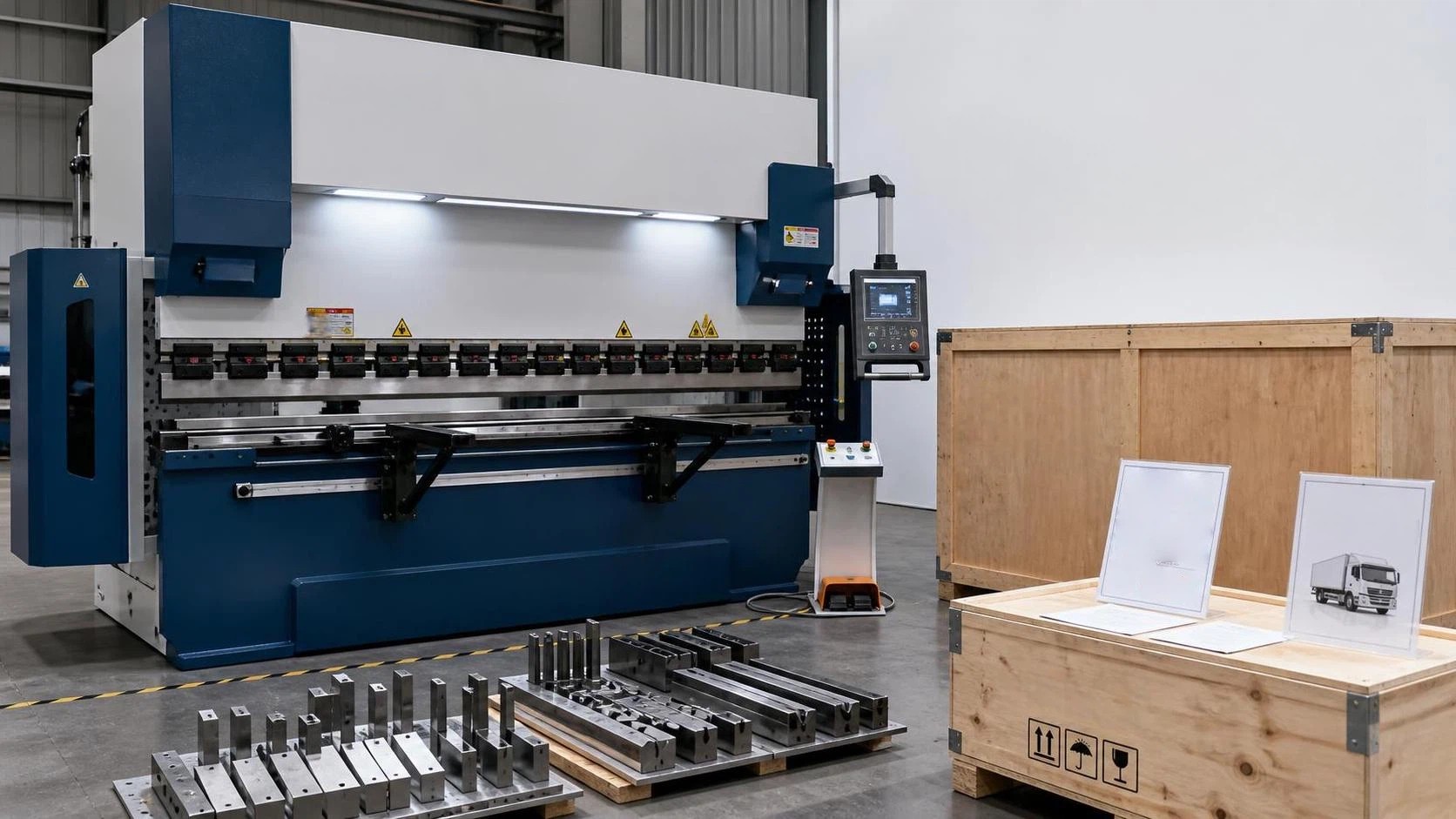
What to Check Before Accepting a Bending Machine Shipment from China
What should I check before accepting a bending machine shipment from China? The short answer is: do not treat acceptance as a formality. Before signing off, buyers should verify machine specifications, electrical standards, tooling, safety features, surface condition, packing, and test records. A bending machine that looks fine on arrival can still create weeks of delay if the voltage is wrong, the tooling is incomplete, the controller language is not usable, or the machine was not tested under realistic conditions.
In metal fabrication, shipment acceptance sits between factory inspection and real production. It is the point where assumptions become costs. That is especially true when equipment is sourced internationally and the machine may travel by truck, port handling, sea freight, customs, and inland delivery before it reaches your plant.
Companies that regularly export fabrication equipment usually understand this pressure. Wuxi Samgins International Trade Co.,Ltd, based in Wuxi, Jiangsu, about 30 minutes from Shanghai by high-speed rail, has been engaged in mechanical equipment sales since 2012 and supplies a wide range of machines including bending machines, shearing machines, rolling machines, CNC cutting equipment, welding systems, laser machines, and other metalworking equipment. For suppliers working across Southeast Asia, Europe, the Americas, and Oceania, acceptance issues rarely come from one dramatic defect. More often, they come from small mismatches that were not checked carefully enough.
Start with the purchase specification, not the machine paint
The first acceptance check is paperwork against contract, not appearance against expectation. Buyers should compare the delivered machine with the final commercial and technical documents: model, nominal tonnage, bending length, axis configuration, controller brand and version, backgauge arrangement, throat depth, open height, motor details, and included accessories.
This sounds basic, but it is where many disputes begin. A press brake ordered with a particular CNC control, hydraulic system, or crowning method is not interchangeable just because another setup can also bend sheet metal. If your production relies on segmented punches, special dies, front support arms, or sheet followers, these must be checked as delivered items, not assumed to be packed “somewhere in the container.”
If there was any pre-shipment approval based on drawings or a proforma list, have that list in hand during acceptance. The machine should be judged against what was agreed, including any changes made after order confirmation.
Electrical compatibility is one of the most expensive things to miss
A bending machine can arrive mechanically intact and still be unusable if the electrical standard does not match the destination site. Check voltage, frequency, phase, plug or terminal arrangement, control transformer details, and cabinet labeling. In many projects, the machine is produced for a target market, but actual site conditions still need separate confirmation.
Pay attention to more than the main motor. The CNC system, servo drives, light curtains, foot pedal, and auxiliary components all depend on correct electrical integration. If your facility uses 60 Hz and the machine was prepared for 50 Hz, or if local compliance requires specific electrical labeling, this should be identified before energizing the machine. It is much cheaper to resolve on the supplier side than after installation.
Tooling completeness matters as much as machine condition
A bending machine is only productive if the tooling package matches the jobs you intend to run. During acceptance, verify punch and die profiles, lengths, segmentation, hardness or material declaration if supplied, clamping type, and any special adapters. If one critical die is missing, the machine may technically be delivered but practically unusable.
It is also worth checking whether the tooling is protected properly for transport. Rust spots, impact marks on working surfaces, or mixed segments without identification can slow setup and reduce bend quality. For buyers who run short-batch or varied work, tooling traceability is not a luxury. It affects programming, repeatability, and operator confidence from day one.
Do not skip the safety and compliance review
Safety features should be checked physically, not only by certificate copies. On a bending machine, that may include emergency stops, guard arrangements, light curtain or laser protection where applicable, foot switch response, warning labels, and control logic for safe operation.
For buyers in Europe or in markets that reference European requirements, CE-related expectations often shape the acceptance process. That does not mean every machine should be judged in the same way regardless of destination. Local regulations, importer responsibilities, and user modifications can all affect compliance status. But if the supplier states that production and design are organized according to ISO9001 quality management and EU CE standards, the delivered machine should show that discipline in its documentation, labeling, and safety execution.
At minimum, confirm that manuals, electrical diagrams, operating instructions, and basic maintenance documents are included in a language your team can work with. Missing documents tend to surface only when commissioning problems begin.
Look closely at travel damage, but also at hidden transport risk
Visible freight damage is the obvious concern: dents, cracked panels, scratched guides, broken display screens, damaged hydraulic pipes, or deformed guards. Yet transport-related issues are often subtler. Corrosion from poor moisture protection, loosened connectors from vibration, leaked hydraulic oil, or shifted accessories inside the crate may not be immediately visible from the outside.
Check the packing condition before opening, photograph the crate or wrapping from multiple sides, and note any external impact marks on the delivery receipt. Once unpacked, verify whether anti-rust treatment, desiccants, fixture blocks, and locking devices were used appropriately. A machine shipped from eastern China to a humid coastal destination or through a long sea route faces different risks than one moving by short regional transport.
Machine accuracy should be tied to actual use, not only a factory promise
Many buyers focus on whether the machine powers on. That is necessary, but not enough. Acceptance should include some level of functional verification: axis movement, backgauge operation, ram travel, controller response, hydraulic behavior, lubrication points if relevant, and basic bending performance using agreed material and tooling where possible.
If a factory acceptance test was done before shipment, ask for the records, sample bend results, and any calibration notes. If not, request a commissioning checklist and define what will be verified on site. The real issue is not whether the machine can make one acceptable bend under ideal conditions, but whether it is ready for repeatable production after installation.
For higher-spec machines, especially CNC press brakes used for tighter tolerances or varied part programs, it is sensible to confirm controller setup, language package, backup data, parameter locks, and whether standard tooling libraries or programming functions were included as ordered.
Acceptance is also about the missing pieces around the machine
A shipment can be “complete” on paper while still lacking the items needed to start production. Check anchoring or leveling requirements, hydraulic oil recommendations, spare seals if promised, maintenance tools, foot pedal, front support arms, manuals, drawings, software media or backup files, and any optional devices ordered with the machine.
This is where an experienced machinery supplier usually distinguishes itself. Businesses that handle not only bending machines but also related fabrication equipment—such as shearing, rolling, milling, laser cutting, welding automation, and CNC machine tools—tend to understand how equipment fits into a workflow rather than a catalog line. That broader view is useful during delivery because the machine is being judged as a production asset, not as a stand-alone object.
A practical acceptance checklist
When to sign, when to note exceptions
Not every issue means you should reject the shipment. A missing touch-up paint bottle is not the same as a mismatched controller or damaged hydraulic assembly. The better approach is to separate critical nonconformities from minor open items. Critical issues affect safety, compliance, core function, or contractual specification. Minor items can often be documented and closed through parts replacement or remote support.
What matters is documentation. Record the unpacking condition, keep photos, note shortages on the delivery record, and send a written acceptance report quickly. If there is a commissioning stage after delivery, make sure the acceptance wording does not waive unresolved technical issues too early.
For buyers importing from China for the first time, that may be the single most practical answer to the question, “What should I check before accepting a bending machine shipment from China?” Check what will affect production in the first week, not just what looks acceptable in the first ten minutes.
A well-prepared supplier can help by aligning machine configuration, export packing, test records, and documentation before the machine leaves the factory. That is often where experienced exporters from established equipment clusters such as Wuxi add value: not through slogans, but through fewer surprises between dispatch and startup. Before you sign off, make sure the machine you received is the machine you can actually install, run, and support in your own market.
search
Products Navigation
Send Us A Message