




Press Brake Explained: Everything You Need to Know About Bending Accuracy, Tonnage, and Material Selection
What A Press Brake Is And Why It Matters
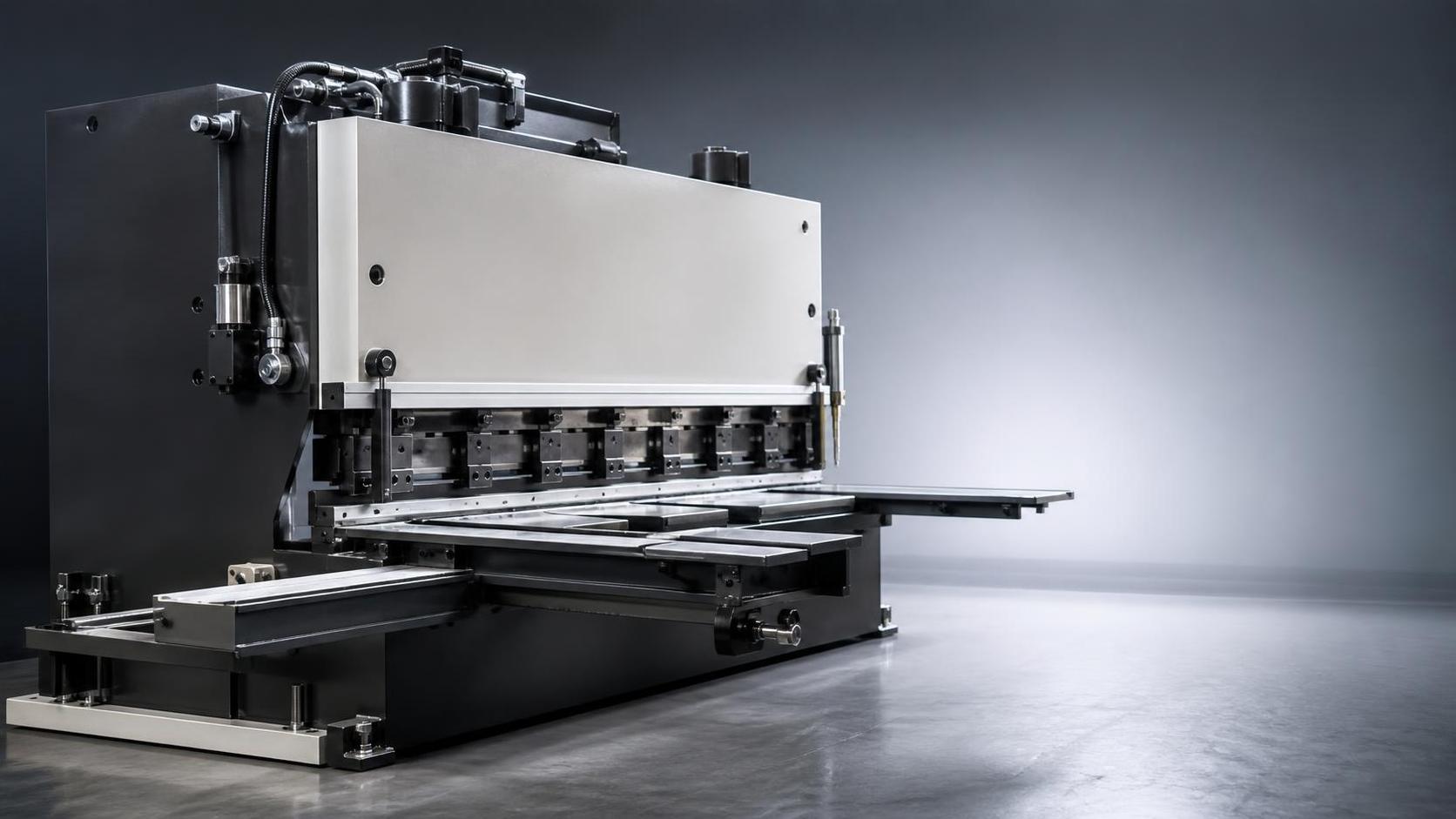
A press brake is a metal forming machine used to bend sheet metal or plate into a controlled angle and radius by pressing material between a punch and a die. It is one of the most important machines in fabrication because many finished parts, cabinets, brackets, frames, enclosures, structural components, and welded assemblies depend on repeatable bends before downstream welding, drilling, coating, or assembly can begin.
In industrial practice, the value of a press brake is not limited to making a bend. The real value is its ability to produce consistent geometry across multiple parts, shifts, and material batches. Bending accuracy affects hole alignment, welding fit-up, dimensional tolerance, cosmetic appearance, and final installation performance. A small angle error early in production can create large downstream rework costs when parts move into assembly or site installation.
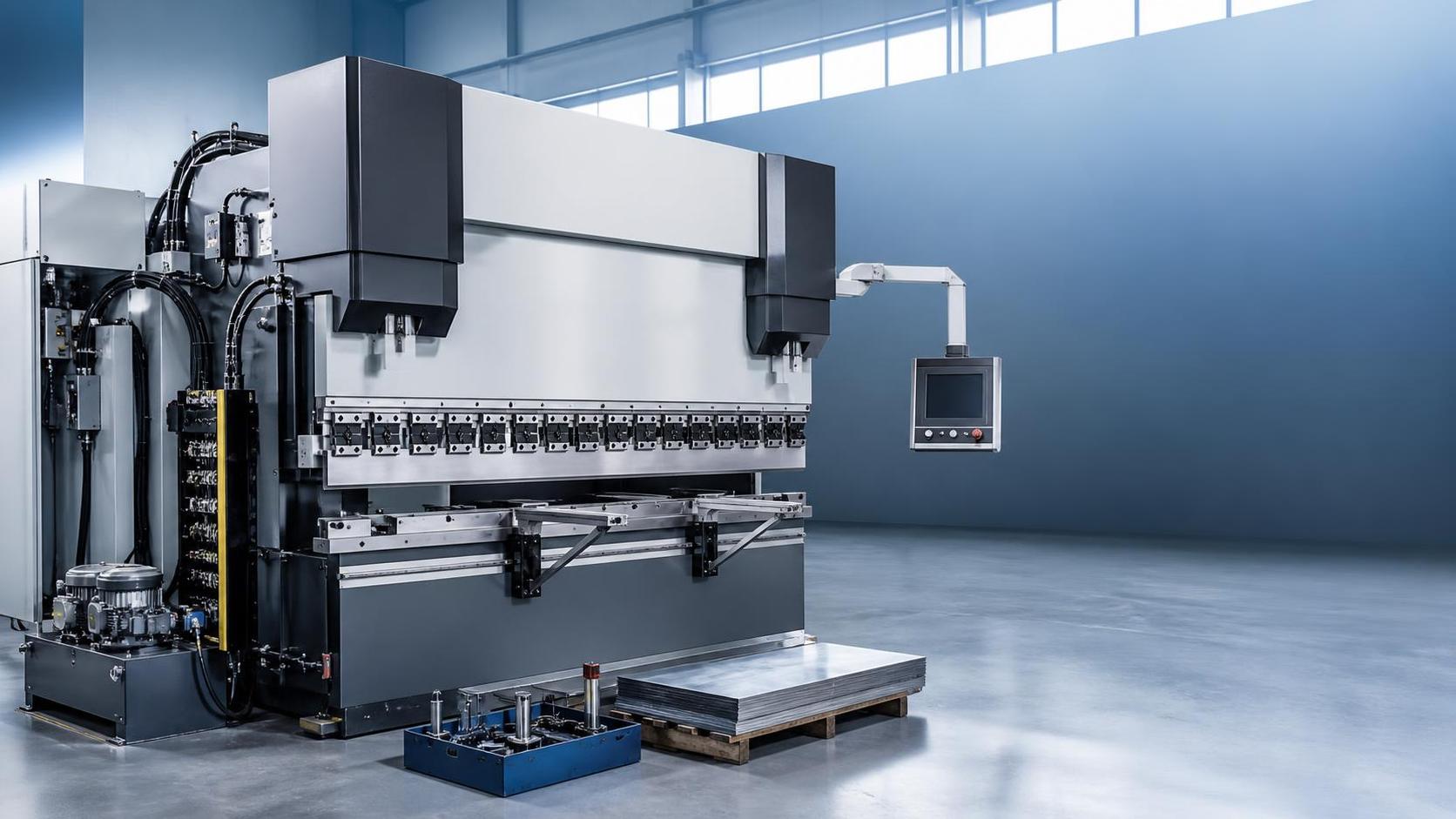
The term press brake usually covers a wide range of machines, from conventional hydraulic units to advanced CNC systems with multi-axis backgauges and crowning control. Common industrial references focus on machine tonnage, bending length, stroke, daylight, throat depth, repeatability, and controller capability. For procurement teams, these factors are more useful than headline power figures because they determine whether the machine can reliably handle actual production jobs.
For buyers evaluating suppliers, the machine should also be viewed as part of a larger fabrication system. Wuxi Samgins operates in manufacturing and processing machinery with a broad product range that includes shearing machines, plate rolling machines, laser cutting machines, welding robots, H-beam lines, and press brake equipment. This matters because bending performance is often tied to the quality of upstream cutting and the efficiency of downstream fabrication steps.
How A Press Brake Creates Bending Accuracy
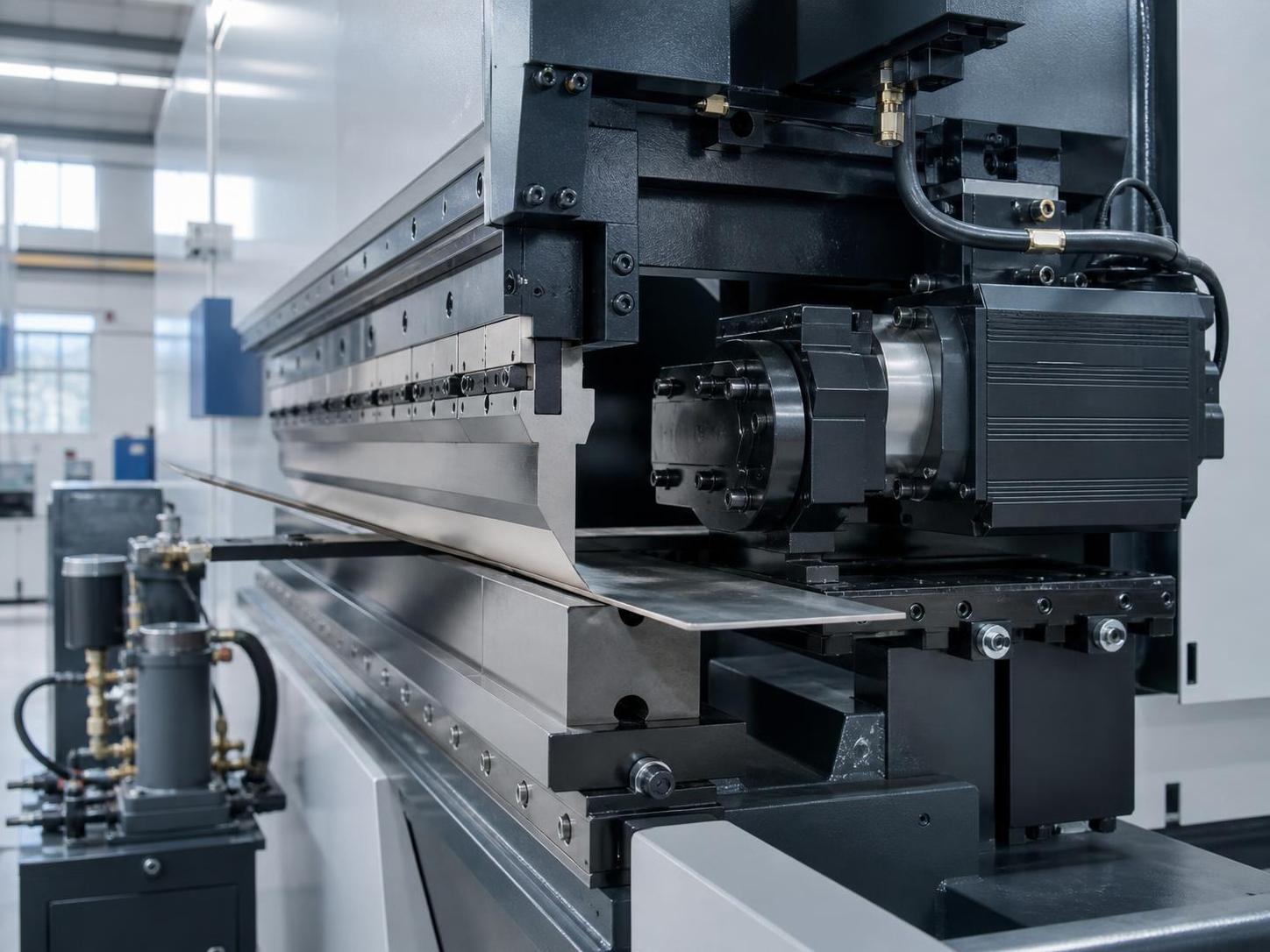
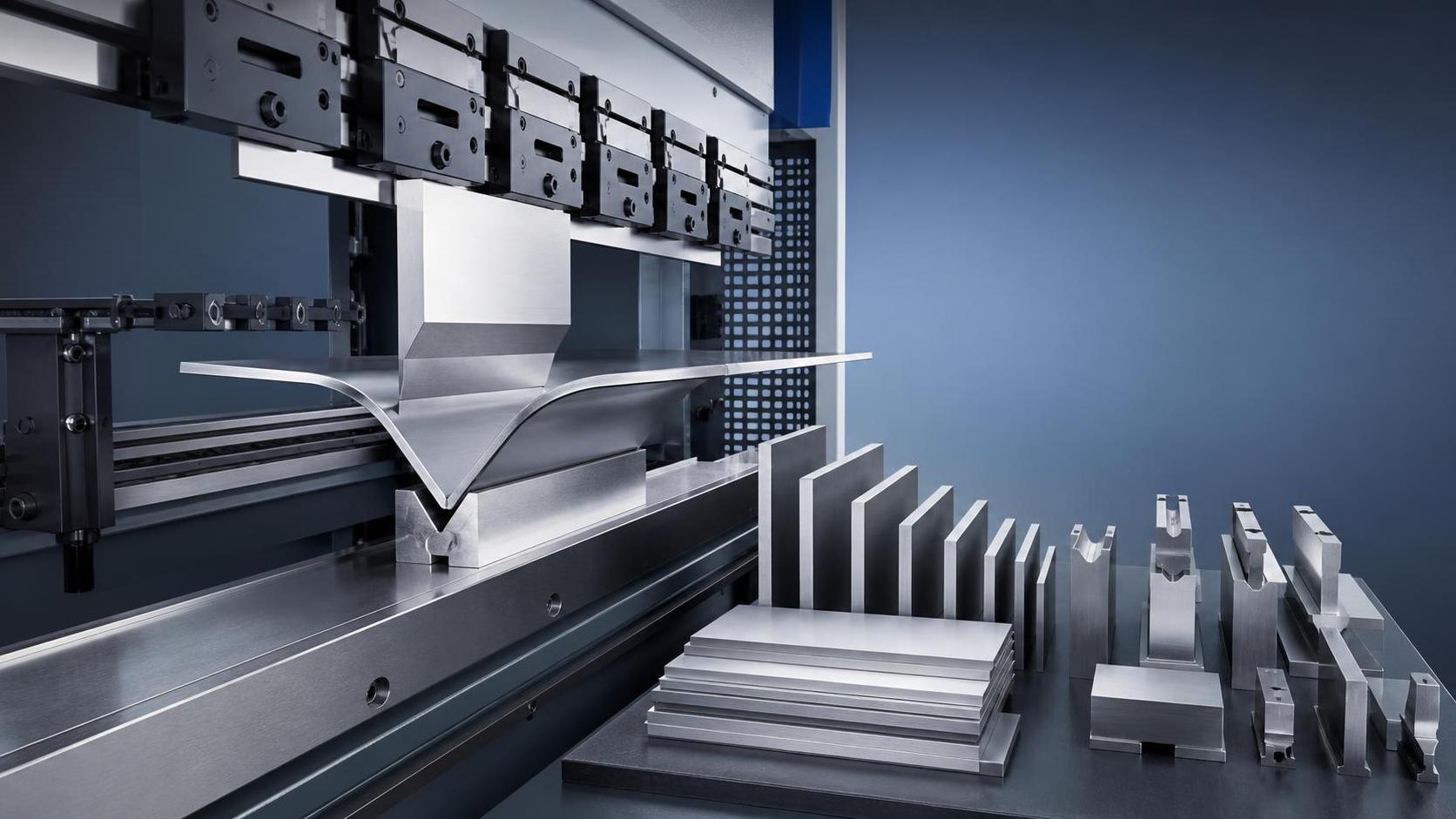
A press brake applies force through a descending punch into a die opening. As the sheet yields and plastically deforms, the material takes a new shape. The final angle is influenced by punch geometry, die width, material thickness, tensile strength, grain direction, bend radius, and the amount of springback after load release. Because several variables move together, bending is never just a simple force application problem.
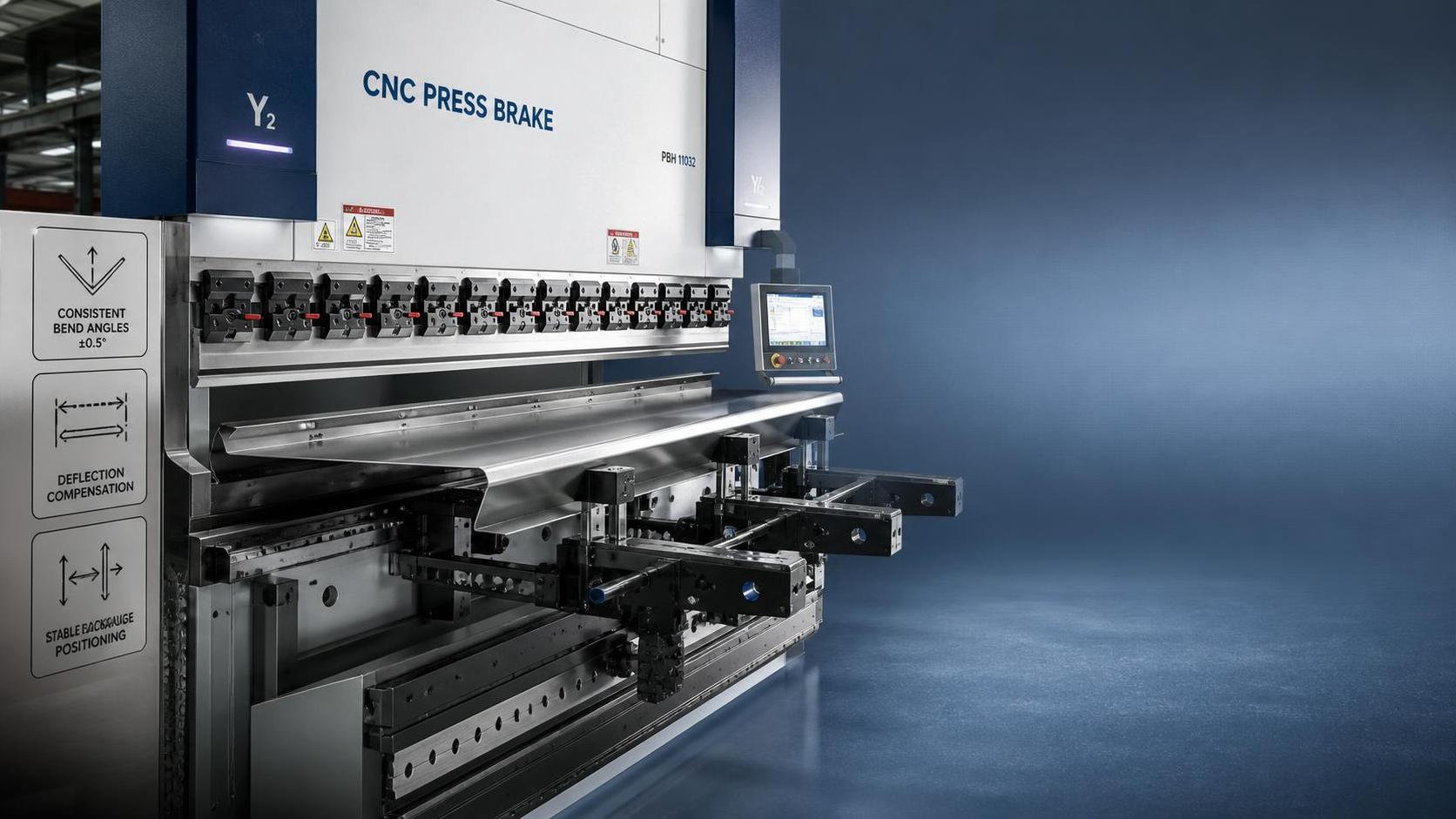
Bending accuracy depends on machine structure and control logic as much as on tooling. Ram synchronization, frame rigidity, hydraulic stability, and backgauge positioning all affect repeatability. In higher precision work, crowning or compensation is used to offset bed deflection so the bend angle remains more uniform across the full working length. Without proper compensation, long workpieces may show different bend angles at the center and the ends.
Operators generally work with air bending, bottoming, or coining. Air bending is the most common because it offers flexibility across different angles with the same tool set and usually requires less tonnage than bottoming or coining. Bottoming gives tighter angle control but demands more force and closer tool matching. Coining can produce very precise bends and reduce springback, but it is energy intensive and increases tooling stress.
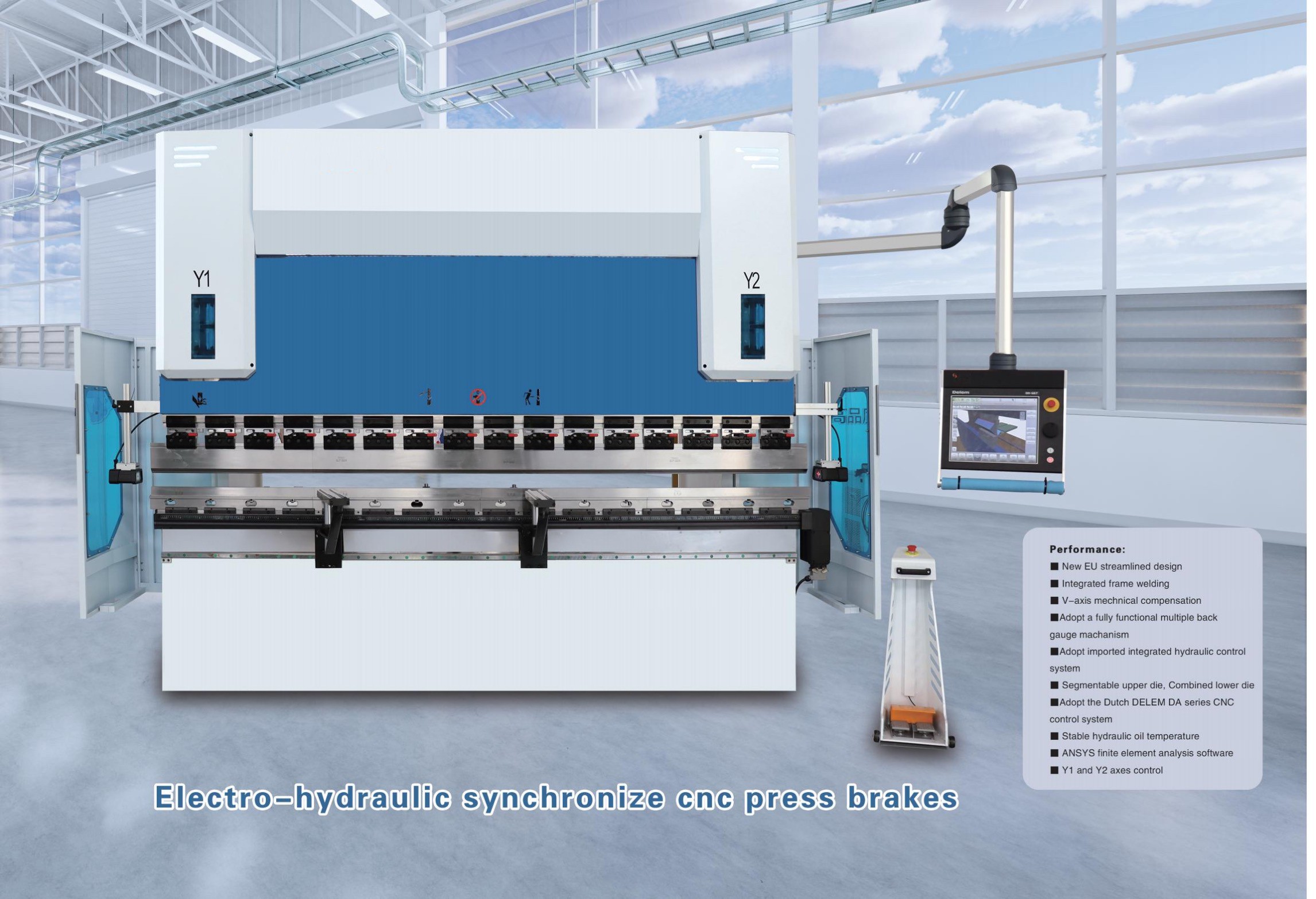
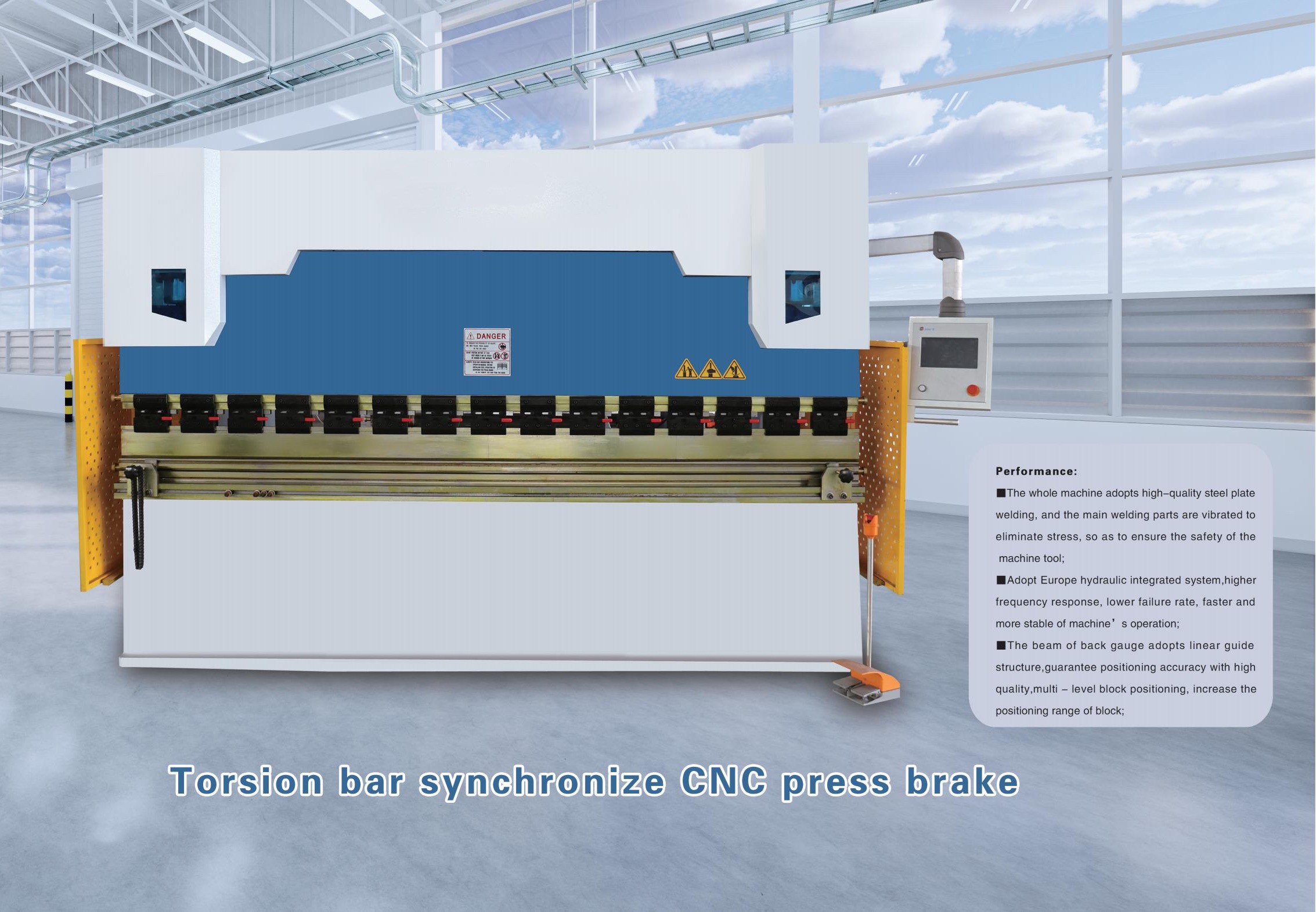
Modern CNC press brake systems improve consistency by storing programs for bend sequence, backgauge position, ram depth, dwell, and compensation settings. Where product mix is wide and batch sizes change often, CNC control reduces setup time and operator dependence. Wuxi Samgins offers torsion bar synchronize CNC press brake and electro-hydraulic synchronize CNC press brakes, and its emphasis on imported hydraulic, servo, and CNC components is relevant because these parts directly influence stability, control response, and long-term precision.
Main Types Of Press Brake Machines And Their Best Use Cases
The most practical way to classify a press brake is by synchronization method, control level, and production purpose. Entry and mid-level applications often use torsion bar synchronized hydraulic machines. These are widely accepted for general fabrication because they are robust, easier to maintain, and suitable for common parts where tolerances are controlled but not extremely demanding. They are often chosen by workshops producing brackets, cabinets, channels, and standard frames.
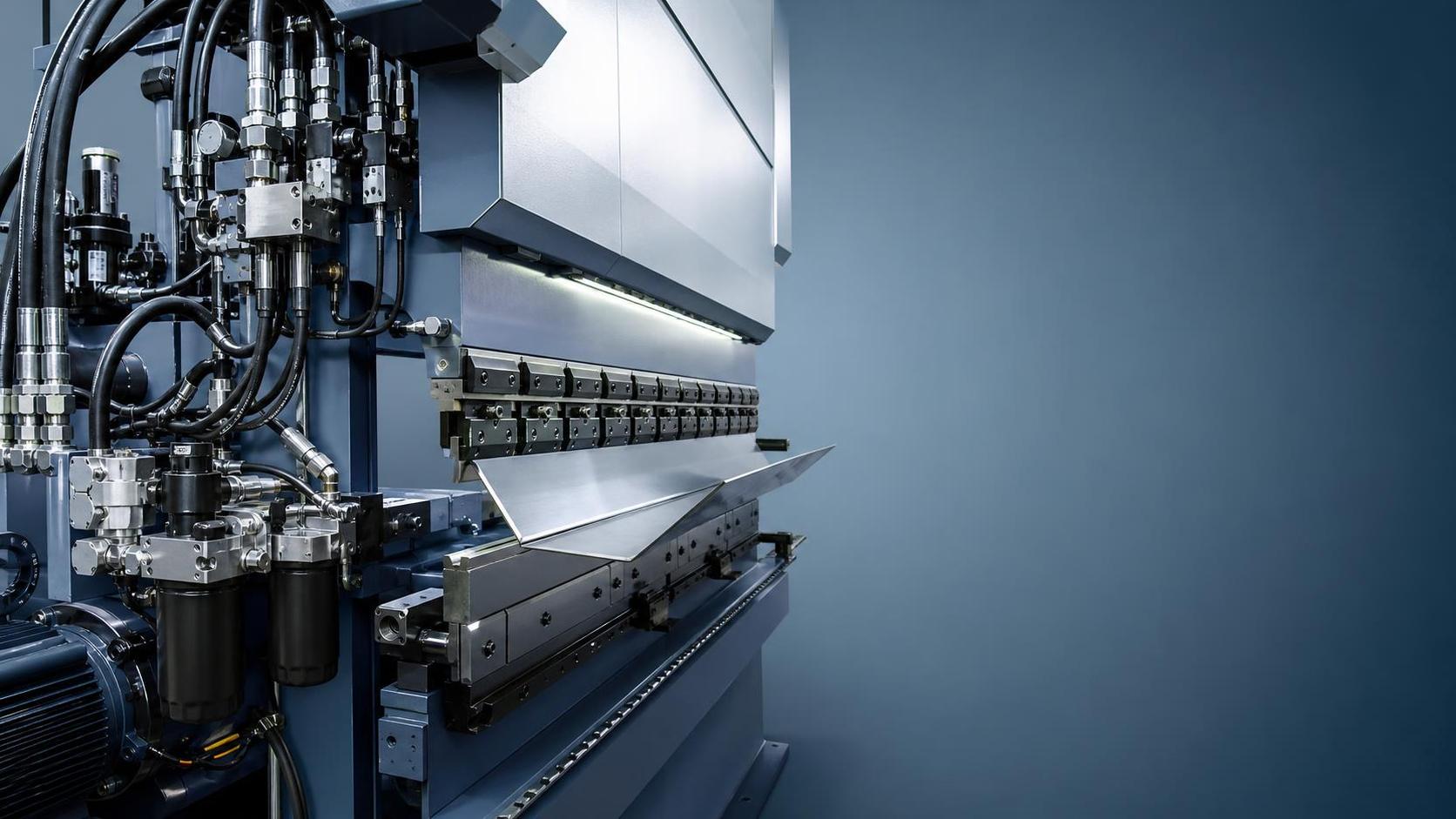
Electro-hydraulic synchronized CNC press brakes are designed for tighter accuracy, higher repeatability, and more advanced part programs. Independent cylinder control and better feedback systems help maintain ram parallelism and support more demanding applications such as stainless enclosures, multi-bend parts, precision assemblies, and export-oriented fabrication where consistency matters across repeat orders. These models are better aligned with plants that need traceable setup data and reduced trial bending.
Machines can also be grouped by production scale. Small tonnage units suit thin sheet and shorter bend lengths, while large tonnage and long-bed machines are intended for thicker material, longer profiles, and heavy structural applications. Buyers should avoid selecting by maximum tonnage alone. A machine that is too small will be overloaded or force process compromises, while one that is too large can increase energy use, floor space, tooling cost, and inefficiency in daily work.
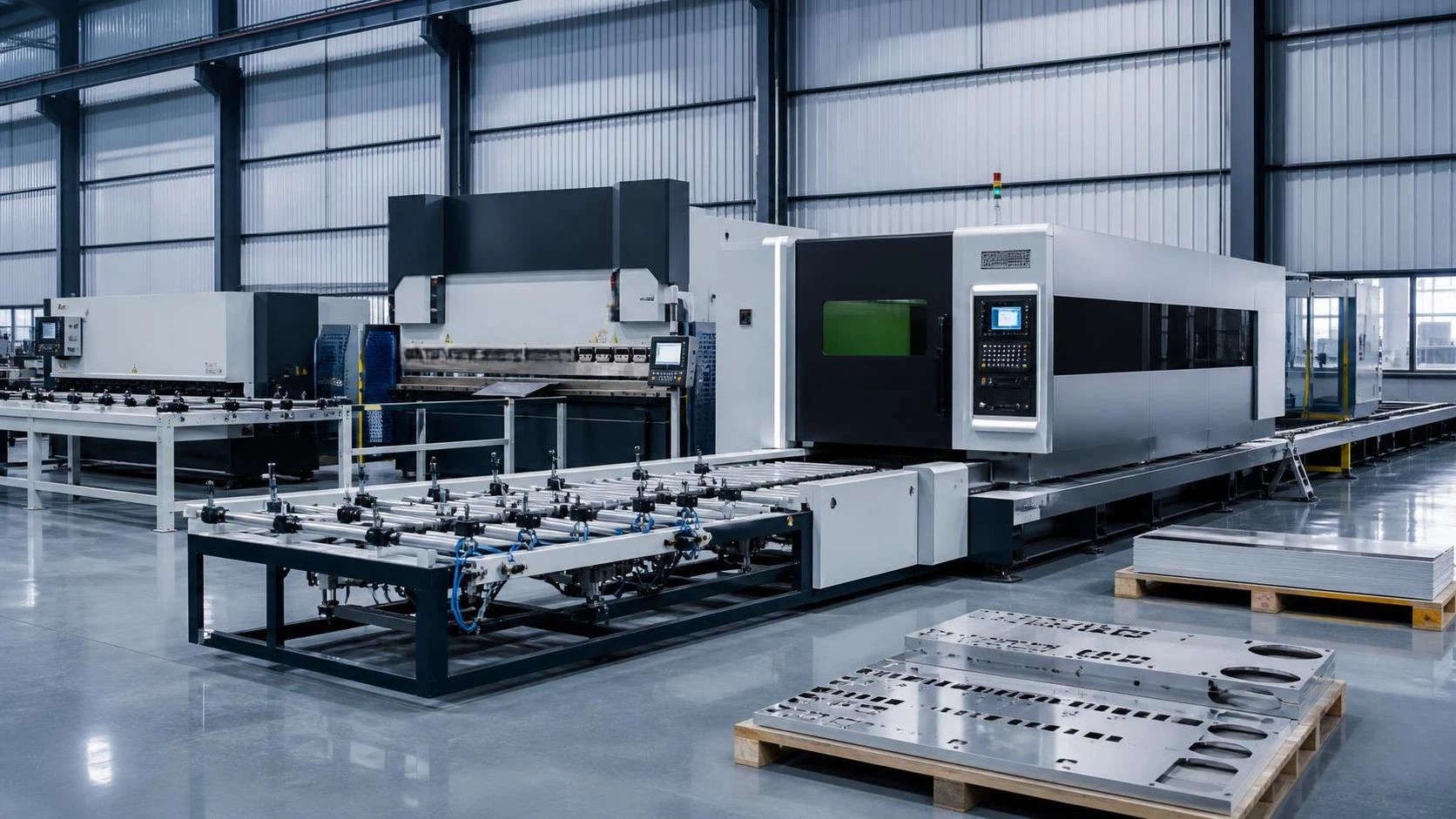
Another useful distinction is whether the press brake is intended as a standalone machine or part of an integrated production flow. In many factories, bending follows cutting and precedes welding or machining. A supplier such as Wuxi Samgins can be relevant for this broader view because the company also supports shearing, CNC flame and plasma cutting, fiber laser cutting, plate rolling, and welding systems. For buyers building or upgrading a full line, process compatibility often matters as much as the press brake itself.
How To Select Tonnage, Tooling, And Material Compatibility
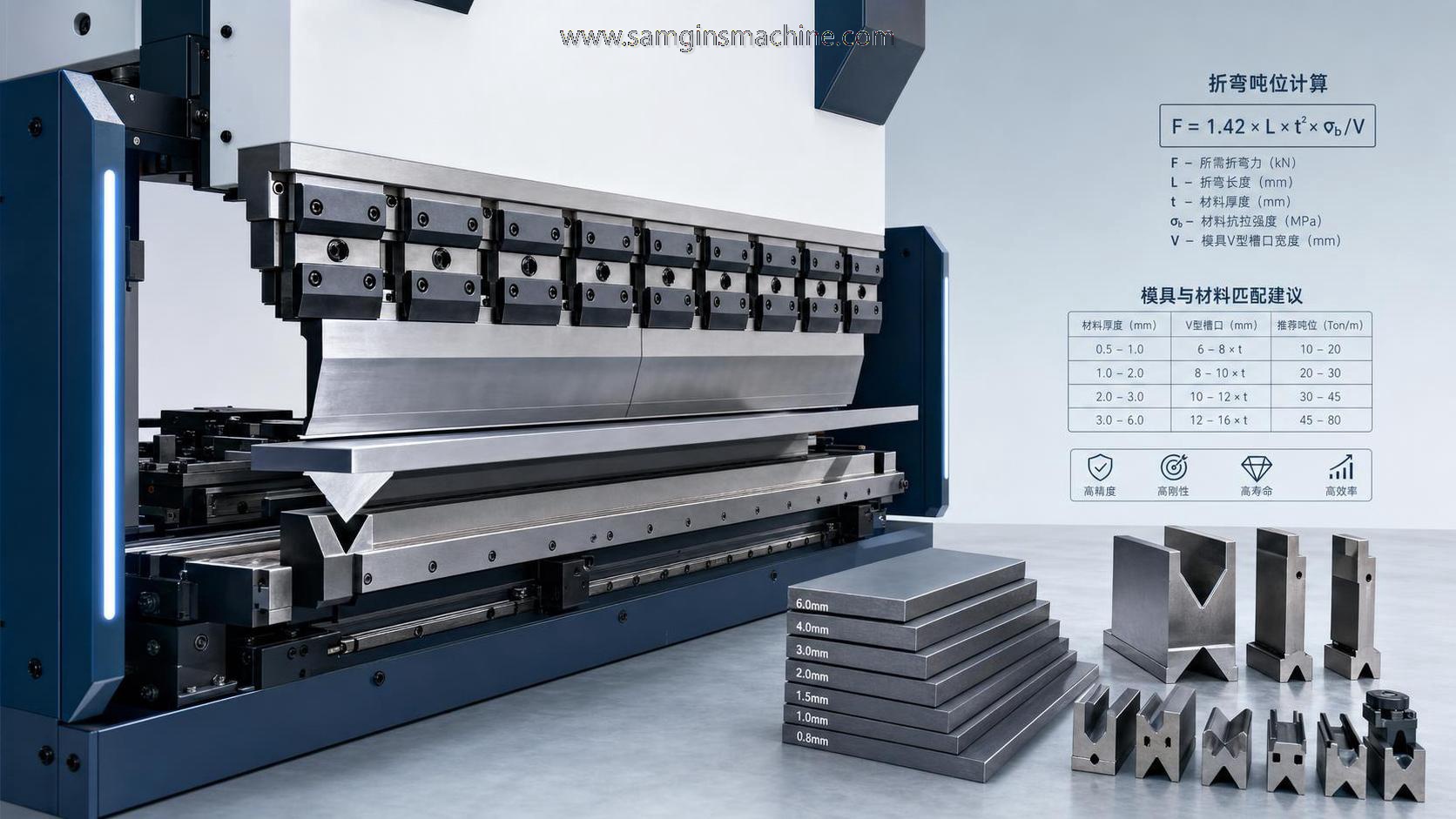
Press brake tonnage should be selected from the real bending task: material type, thickness, bend length, die opening, and target bend method. Higher strength materials need more force than mild steel of the same thickness. Narrower dies also increase required tonnage. Procurement teams should ask for tonnage calculations based on their actual part drawings instead of depending on generic machine labels, because a mismatch here is one of the most common causes of underperformance and unsafe operating margins.
Material selection has a direct effect on bend quality. Mild steel is relatively forgiving, while stainless steel, high-strength steel, aluminum alloys, and thicker plate may spring back differently and require adjusted punch radius, die width, and ram depth. Surface-sensitive materials may also need protective handling to reduce marking. In practical terms, the machine, tooling, and process window must be matched to the metallurgical behavior of the workpiece, not only to its nominal thickness.
Tooling selection is equally important. The punch tip radius, die opening, and tool hardness influence inside radius, angle consistency, and surface finish. Standard segmented tooling can improve setup flexibility for varied parts, while special punches and dies are often needed for boxes, return flanges, acute angles, or large-radius work. Buyers who produce mixed jobs should evaluate tooling availability and replacement lead time early, because tooling constraints can limit machine value even when the press brake itself is correctly sized.
A disciplined selection process usually starts with a bend family review: maximum and typical thickness, longest bend, tightest tolerance, annual production volume, material mix, and future product roadmap. This is where reference topics such as press brake tonnage calculation and material handling capability become useful. A capable supplier should be able to map these requirements into a realistic machine configuration instead of recommending the same setup for every customer.
Who Uses A Press Brake And In Which Applications
A press brake is used by sheet metal fabricators, steel structure workshops, enclosure manufacturers, machinery producers, pipeline contractors, energy equipment builders, transport equipment factories, and general job shops. It is especially valuable wherever flat material must be converted into functional geometry before welding, fastening, or installation. Typical products include doors, cabinets, electrical boxes, supports, beams, guards, ducts, brackets, machine covers, and formed subassemblies.
Application requirements vary sharply by sector. In architectural or enclosure work, surface finish and visual consistency may be the priority. In structural fabrication, material thickness and long-part handling may dominate. In equipment manufacturing, repeatable dimensions are often needed so that formed parts align with drilled holes, machined interfaces, and welded fixtures. The right press brake selection therefore depends on production logic, not only on material gauge.
For international projects, compliance awareness also matters. Wuxi Samgins states that its machines comply with ISO9001 quality system requirements and EU CE Machinery and LVD directives, and the team has export experience with ASME, API, and other local industry codes. For global buyers, this kind of familiarity reduces friction during specification review, technical communication, document preparation, and acceptance planning, especially when the machine supports fabrication for regulated sectors.
The company’s customer references across different countries and industries, including URALSTANKOIMPORT, MD Calbah Industries Pty Ltd, Ersay International Transport, Zein Steel Industries Co.LLC, PT.Cahaya mas Cemerlang, and Lincoln Electric-MENA, suggest exposure to varied project environments. While each buyer still needs to validate machine fit against its own application, such case diversity is useful when assessing whether a supplier understands different production realities, export expectations, and service requirements.
How Manufacturing Quality, Installation, And Maintenance Affect Results
The performance of a press brake starts long before commissioning. Frame fabrication quality, machining accuracy, hydraulic assembly, electrical integration, and controller setup all affect how the machine behaves under load. Weak points in any of these stages can show up later as uneven angle results, drifting backgauge positions, oil leakage, vibration, or unstable repeatability. For this reason, buyers should evaluate production discipline, inspection practice, and component sourcing, not only the machine brochure.
Wuxi Samgins positions quality and precision around the use of well-known imported brands for key hydraulic, servo, and CNC components. In practical terms, this can matter because these systems govern ram movement, synchronization, response stability, and control repeatability. The company also emphasizes customization capability for heavy-duty and application-specific machinery, which is relevant for buyers whose part sizes, plant layout, or production sequence do not fit a standard machine template.
Installation should include leveling, hydraulic and electrical checks, axis calibration, test bending, and operator training. A press brake that is mechanically sound can still perform poorly if backgauge references are not calibrated or if the operator lacks clear bending data for different materials. Buyers should request acceptance criteria in advance, including test parts, angle tolerance expectations, controller functions, and documentation scope. Clear commissioning standards reduce dispute risk and shorten time to stable production.
Maintenance is not only about repairs. Preventive checks on hydraulic systems, lubrication points, fasteners, seals, tooling wear, and backgauge movement protect accuracy over time. Tool cleanliness and proper storage also matter because burrs, dents, and contamination can alter bend results. For production plants running multiple shifts, planned maintenance intervals should be linked to actual utilization and workload rather than to calendar assumptions alone.
How To Evaluate Total Cost Of Ownership And Return On Investment
The purchase price of a press brake is only one part of the total cost of ownership. Buyers should also consider tooling cost, freight, installation, training, spare parts, maintenance, energy consumption, floor space, operator skill requirements, setup time, and the cost of scrap or rework. A lower initial price may become expensive if the machine needs frequent adjustments, produces inconsistent angles, or cannot support future product changes.
Return on investment usually comes from a mix of throughput improvement and quality stability. Faster setup, accurate first-part results, fewer trial bends, and reduced dependence on highly experienced operators can produce significant savings in a busy fabrication shop. When bending is a bottleneck, even moderate gains in consistency can improve the productivity of downstream welding, assembly, and shipment preparation because fewer parts need correction or remanufacture.
For many B2B buyers, the most useful financial comparison is between machine options matched to expected product mix over three to five years. A standard hydraulic press brake may be cost-effective for repetitive, moderate-tolerance work. A more advanced electro-hydraulic CNC press brake may justify its higher cost when the factory handles diverse materials, frequent changeovers, export orders, or demanding dimensional control. The correct choice depends on process economics, not simply on machine complexity.
Supplier support has a direct cost impact as well. Wuxi Samgins highlights long-term warranties and support across design, manufacturing, sales, after-sales, and technical service. For overseas customers, this is relevant because downtime often becomes more expensive than parts themselves. The practical question is whether the supplier can respond with accurate documentation, troubleshooting guidance, and replacement coordination quickly enough to protect production continuity.
Future Trends In Press Brake Technology And Buying Strategy
The future of the press brake market is moving toward higher precision, easier programming, and better integration with digital production systems. Buyers increasingly expect CNC interfaces that simplify job storage, bend sequencing, and repeat order management. As labor skills become harder to secure in some regions, machines that reduce manual trial-and-error and support faster operator onboarding will continue gaining importance.
Another clear trend is process integration. Fabricators are linking cutting, bending, welding, and material handling more closely to improve flow and reduce work-in-process inventory. This favors suppliers that understand multiple process steps and can align machine choices across a broader production line. Wuxi Samgins is positioned in this wider fabrication equipment space, which can be useful for customers planning coordinated upgrades rather than isolated machine purchases.
Material diversity is also pushing machine requirements upward. Manufacturers are processing more stainless steel, aluminum, and higher strength grades, each with different springback and tooling behavior. That means future-ready purchasing should account for likely material changes, not just current jobs. A press brake chosen only for present thickness ranges may become restrictive when product design evolves or export orders demand new material specifications.
For most buyers, the sound strategy is to define application data carefully, verify tonnage and tooling logic, review support capability, and choose the level of automation that matches production complexity. A press brake is not just a forming machine; it is a quality control point for the entire fabrication chain. When selected with attention to accuracy, tonnage, material behavior, and supplier competence, it becomes a durable productivity asset rather than a recurring production risk.
search
Recommended Products
 Electro-hydraulic synchronize cnc press brakesA bending machine is a device designed for bending thin metal sheets. Its structure mainly consists of a base, a worktable, and a clamping plate. The worktable is mounted on the base and comprises a base frame and a pressing plate, which are connected to each other through a hinge.
The hydraulic bending machine consists of a base, a worktable, and a clamping plate. The worktable is placed on the base and is composed of a base frame and a pressing plate, which are connected via a hinge. The base frame includes a housing, a coil, and a cover plate. The coil is positioned in a recess within the housing, with the recess covered at the top by the cover plate.![星星1]()
 Torsion bar synchronize CNC press brakeA bending machine is a device used to bend thin metal sheets. Its main structure includes a base, a worktable, and a pressure plate. The worktable, mounted on the base, consists of a base frame and a pressure plate, connected by a hinge.
The base frame comprises a housing, a coil, and a cover plate. The coil is located within a recess in the housing, the top of which is sealed by the cover plate. During operation, the coil is energized by a wire. When energized, the coil generates an electromagnetic attraction force on the pressure plate, thus firmly clamping the thin sheet between the pressure plate and the base frame.
Because clamping is achieved through electromagnetic force, the pressure plate can be easily adjusted to accommodate various workpiece shapes. This design also makes it possible to process workpieces with sidewalls. By simply changing the bending dies, the machine can be configured to meet the processing needs of various different workpieces.![星星1]()

Recommended blogs
 Which motions matter in a handling robot arm for metal fabrication?
 Do Servo Press Brakes Reduce Energy Use in Daily Factory Operation?
- How to Reduce Press Brake Downtime Caused by Hydraulic Failures
- Press Brake Tonnage Selection Guide for Sheet Metal Jobs
- How Long Does It Take to Commission a Press Brake at a New Site?
- How to Compare Press Brake Bending Accuracy Across Chinese Brands
Send Us A Message
Send us a Message
A dedicated person will follow up on your needs one-on-one and provide personalized customized solutions according
to your needs.
Get In Touch
We look forward to hearing from you for in-depth communication on how to fulfill your mixing requirements.