




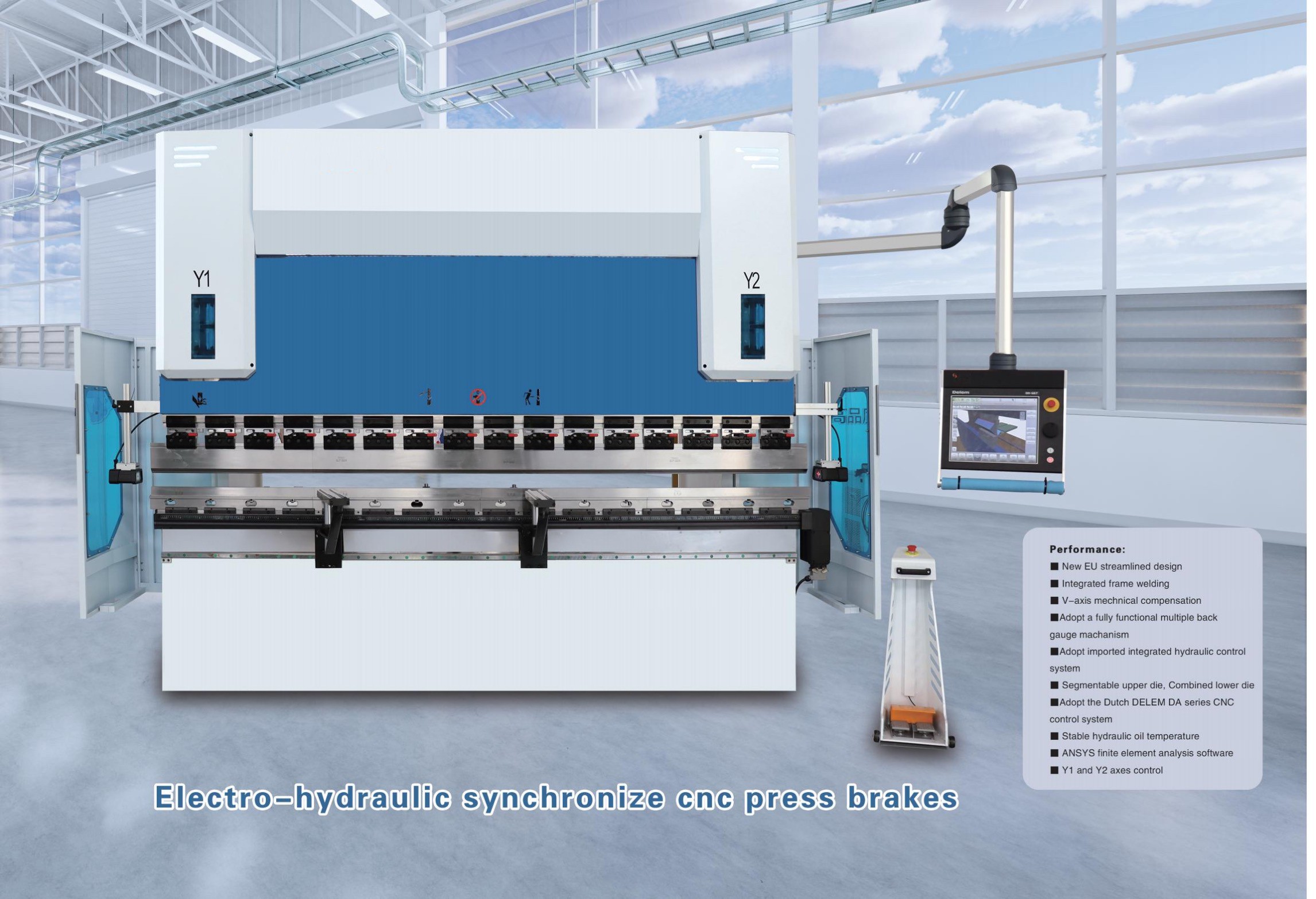
Electro-hydraulic synchronize cnc press brakes
The hydraulic bending machine consists of a base, a worktable, and a clamping plate. The worktable is placed on the base and is composed of a base frame and a pressing plate, which are connected via a hinge. The base frame includes a housing, a coil, and a cover plate. The coil is positioned in a recess within the housing, with the recess covered at the top by the cover plate.
Full-range Machinery & Customized Non-standard Solutions
Authorized Certificates & Independent R&D Patents
Over 10 Years Global Export & Worldwide Project Cases
Navigation

Electro-hydraulic synchronize cnc press brakes Description
1.Introduction for Electro-hydraulic synchronize cnc press brakes:
A bending machine is a device designed for bending thin metal sheets. Its structure mainly consists of a base, a worktable, and a clamping plate. The worktable is mounted on the base and comprises a base frame and a pressing plate, which are connected to each other through a hinge.
The base frame is made up of a housing, a coil, and a cover plate. The coil is seated within a recess in the housing, and the top of the recess is closed by the cover plate. During operation, the coil is energized through electrical wiring. Once energized, it generates an electromagnetic attractive force on the pressing plate, securely clamping the thin sheet between the pressing plate and the base frame.
Because clamping is achieved through electromagnetic force, the pressing plate can be easily adapted to accommodate various workpiece shapes. This design also enables the processing of workpieces with side walls. Additionally, by simply changing the bending die, the machine can be configured to meet the requirements of a wide range of different workpieces. The entire operation is straightforward and user-friendly.
The hydraulic bending machine consists of a base, a worktable, and a clamping plate. The worktable is placed on the base and is composed of a base frame and a pressing plate, which are connected via a hinge. The base frame includes a housing, a coil, and a cover plate. The coil is positioned in a recess within the housing, with the recess covered at the top by the cover plate.
In operation, the coil is energized through electrical wires. The energized coil generates an attractive force on the pressing plate, securely clamping the thin sheet between the pressing plate and the base frame. By utilizing electromagnetic force for clamping, the pressing plate can be designed to suit a variety of workpiece requirements, including those with side walls. Furthermore, the bending machine can accommodate different workpieces by simply changing the bending mold.
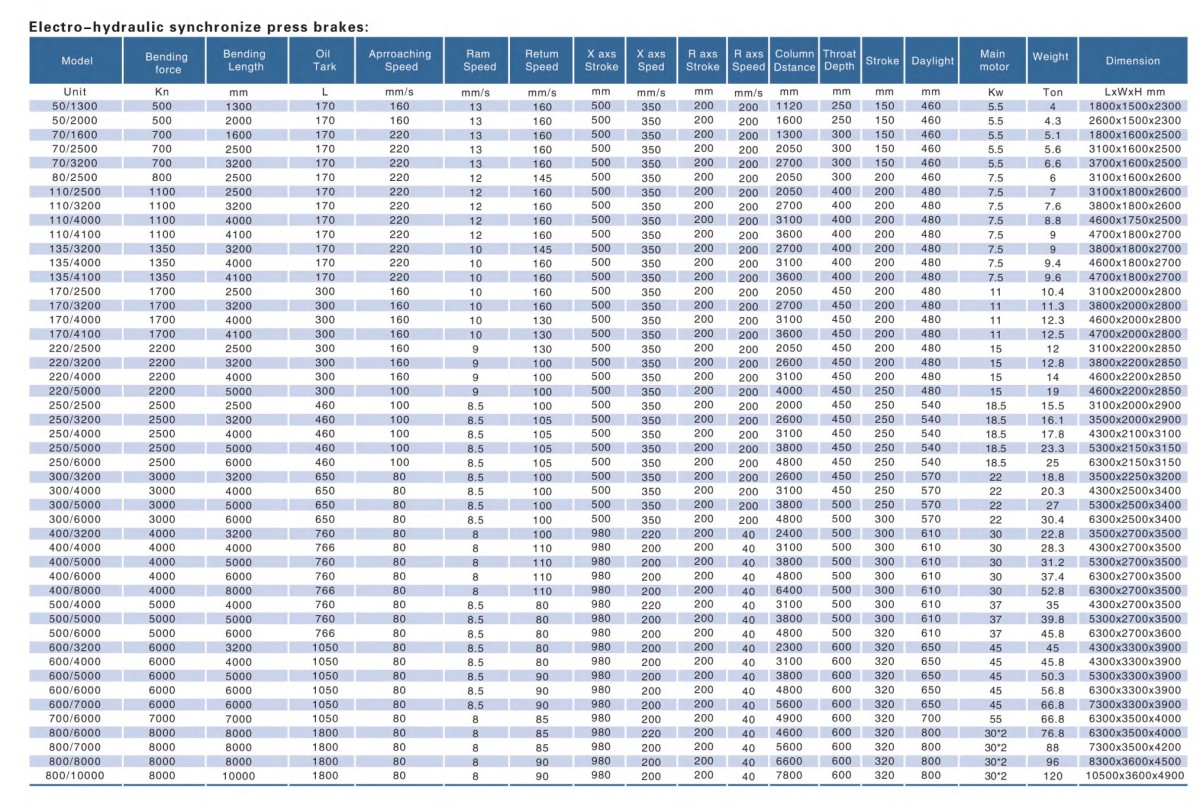
2.Technical parameter for Electro-hydraulic synchronize cnc press brakes
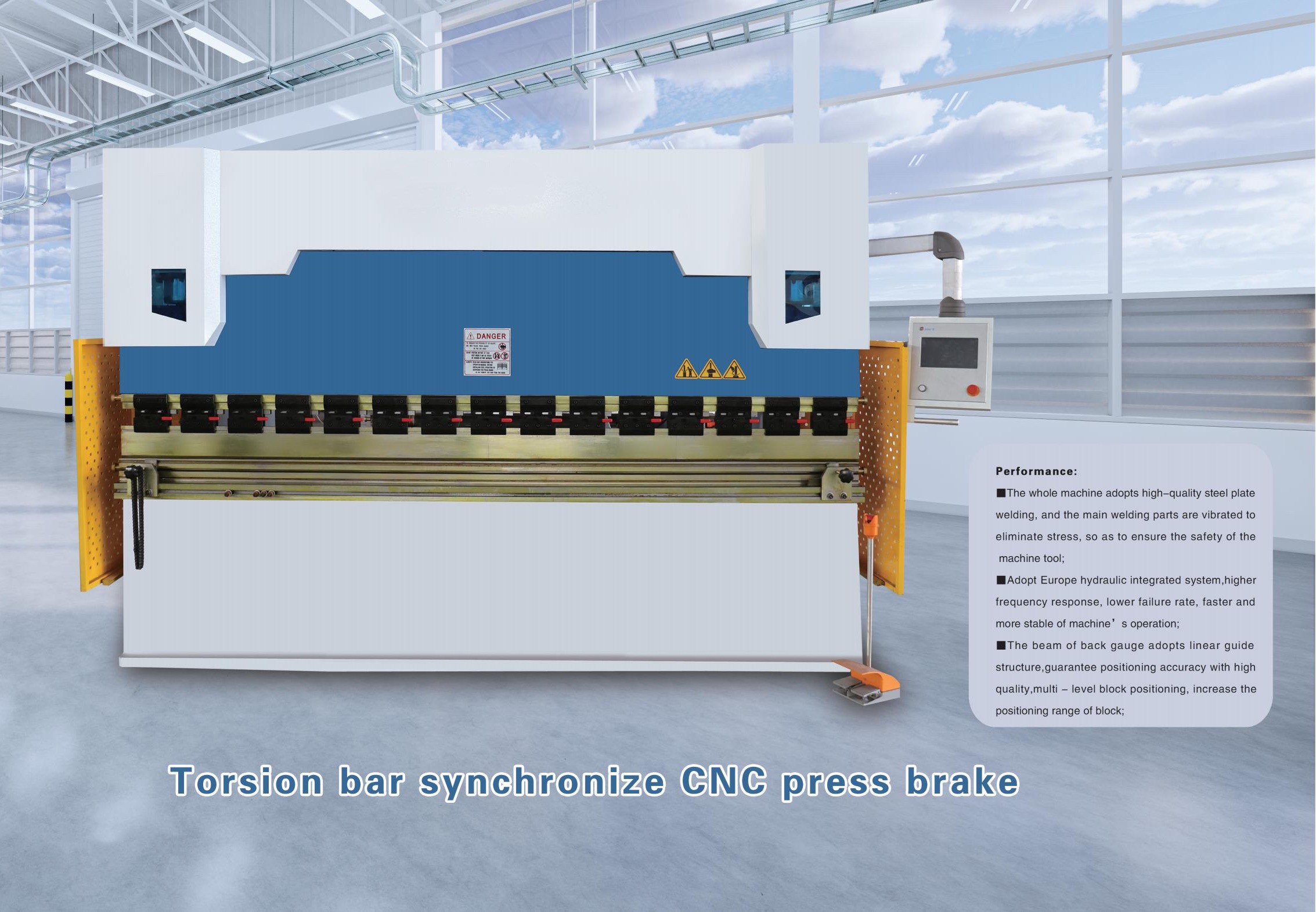
3.Characters for Electro-hydraulic synchronize cnc press brakes:
3.1 The structure is made of full steel welding, which has sufficient strength and rigidity;
3.2 Hydraulic transmission is used, and the oil cylinders at both ends of the machine are placed on the slider and directly drive the sliding operation;
3.3 The slider synchronization mechanism adopts torsion shaft forced synchronization;
3.4 A mechanical stop block structure is adopted, which is stable and reliable;
3.5 The slider stroke can be adjusted flexibly automatically and manually, and the counter shows the result;
3.6 The wedge-type deflection compensation mechanism is used to ensure high bending accuracy.
products faq
A hydraulic press brake uses hydraulic cylinders to generate bending force, offering high tonnage capacity and smooth, powerful operation—ideal for thick and heavy plates. A servo-electric press brake uses servo motors and ball screws for motion, providing higher speed, lower energy consumption (up to 50% savings), and cleaner operation (no hydraulic oil). Servo-electric models are best suited for light-gauge sheet metal and high-speed production, while hydraulic models remain the standard for heavy-duty fabrication.
The machine supports three primary bending methods:
Air bending – the punch does not fully press the material into the die; angle is controlled by stroke depth. Most common, flexible, and requires less tonnage.
Bottoming – the punch forces the material fully into the die for high accuracy and minimal springback.
Coining – extreme pressure deforms the material permanently; highest accuracy, used for precision parts.
Typical press brakes offer bending lengths from 1,500mm to 16,000mm, with pressing forces from 400 kN to 20,000 kN (40 to 2,000 tons). Maximum bending thickness depends on material type, tooling, and machine capacity—for mild steel, this can range from 1mm up to 25mm or more. Customized models are available for thicker or longer plates.
Crowning is a compensation mechanism that counteracts deflection of the frame and table during bending. As the ram applies force, the frame tends to flex slightly in the center, causing a bend angle that is shallower in the middle than at the ends. Auto-crowning systems (mechanical or hydraulic) raise the table or adjust the ram in the center to compensate, ensuring a uniform bend angle along the entire workpiece length. This is critical for long parts where consistent accuracy is required.