




How to Compare Press Brake Bending Accuracy Across Chinese Brands
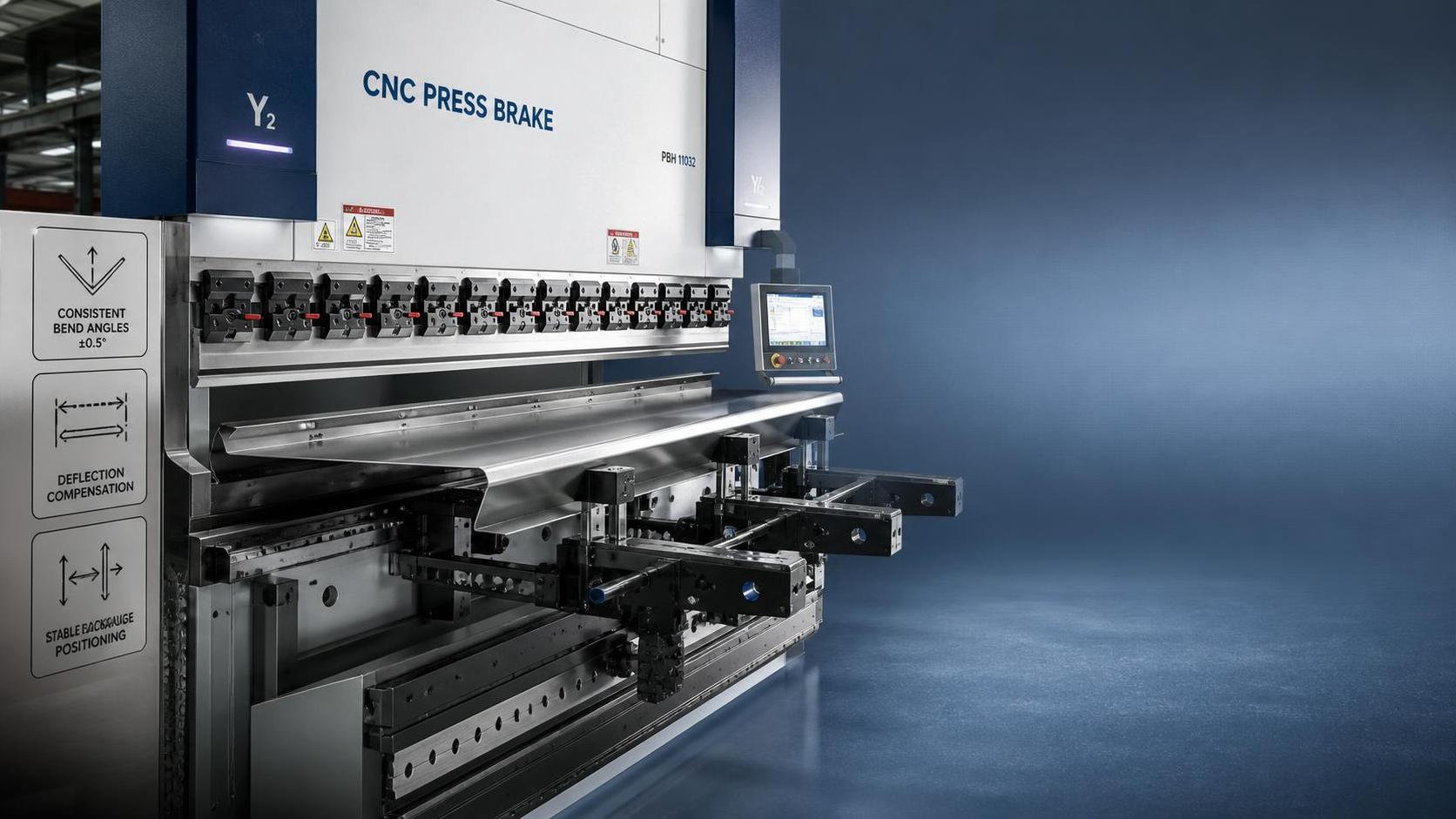
Many buyers only start asking hard questions about bending accuracy after something goes wrong. A machine arrives, the first trial parts look acceptable, and then small inconsistencies begin to show up: one flange is slightly open, another part needs extra correction, long workpieces vary from center to edge, and operators start compensating with experience instead of process control. When you are comparing Chinese press brake suppliers, this is often the moment when brochure tolerances stop being useful.
That is why the question, How to compare press brake bending accuracy between different Chinese brands?, should be answered before purchase, not after installation. The difficult part is that “accuracy” is not one single number. It is the combined result of machine frame rigidity, hydraulic stability, backgauge repeatability, crowning performance, CNC control logic, tooling condition, and the supplier’s ability to help you set the machine correctly for your actual parts. If you compare only price or nominal tonnage, you may miss the factors that decide whether the machine works smoothly in daily production.
Where buyers usually get misled
A common mistake is to compare machines only by stated positioning accuracy or a generic bending tolerance mentioned in sales material. Those numbers may refer to ideal conditions, a limited axis movement, or a specific test piece. They do not automatically describe real shop-floor behavior across different thicknesses, material batches, bend lengths, and operator habits.
Another problem is assuming that two press brakes with similar specifications will deliver similar results. On paper, the stroke, throat depth, motor power, and control brand may look close. In practice, one machine may recover better under load, hold ram synchronization more steadily, or maintain backgauge positioning more consistently over repeated cycles. These differences show up during production, especially when parts are long, tolerances are tighter, or material springback is not uniform.
Buyers also sometimes judge a brand by a single sample bend. That can be misleading. A well-prepared demonstration part can hide instability that appears only after multiple cycles, multiple setups, or changes in material thickness. Accurate comparison needs a broader method.
Start with the kind of accuracy you actually need
Before comparing brands, define the work you expect the machine to do. Precision requirements for simple brackets are not the same as for cabinets, elevator panels, electrical enclosures, stainless decorative parts, or welded assemblies where angle deviation affects later fit-up. If your parts have several bends that stack tolerance from one operation to the next, repeatability matters as much as first-hit angle accuracy.
It helps to separate the question into several layers:
- Angle consistency from part to part
- Angle uniformity across the full bending length
- Backgauge positioning repeatability
- Stability after continuous operation, not just one test bend
- Accuracy when changing material type, thickness, or tooling
When you define these points first, supplier discussions become more practical. Instead of asking, “Is your machine accurate?” you can ask, “How does the machine maintain angle consistency across a long workpiece?” or “How is backgauge repeatability affected after many cycles?” Those questions reveal much more.
Look beyond the frame: the machine structure still matters, but not by itself
Frame design is one of the first things people notice, and it does matter. A stable frame helps reduce deflection and improves consistency, especially for longer bends. But comparing frame thickness alone is not enough. Welding quality, stress relief process, machining quality of mounting surfaces, and assembly precision all affect how the machine behaves under load.
If possible, ask the supplier to explain how the frame is processed after welding and before final assembly. A well-machined frame supports accurate alignment of the ram, bed, guides, and backgauge system. Poor alignment can produce inconsistent results that operators try to fix by repeated adjustments.
Still, even a strong frame cannot compensate for weak ram control, poor hydraulic response, or inconsistent tooling. Think of the frame as the base condition, not the full answer.
The control system tells you more than the screen brand
Buyers often focus on whether the machine uses a familiar CNC brand. That matters, but only partly. The real issue is how the control is integrated with the machine. A good system should manage ram positioning, compensation logic, axis coordination, and program repeatability in a predictable way. If the supplier cannot clearly explain how the control interacts with crowning and material compensation, that is worth noting.
When comparing different Chinese brands, ask to see the operating flow for a typical production part. Pay attention to whether the programming process is straightforward, whether correction inputs are easy to apply, and whether stored programs can be reused without constant manual rework. A machine that produces good parts only in the hands of one experienced operator is not necessarily the more accurate machine. In many workshops, practical accuracy is the result of stable, repeatable control behavior that different operators can follow.
Crowning is often where real differences appear
If you bend long parts, crowning is not optional. Without proper compensation, the workpiece angle may differ between the middle and the ends because of machine deflection under load. Some buyers underestimate this and then blame the whole machine for accuracy issues that are actually related to insufficient or poorly adjusted crowning.
When comparing brands, check whether the machine uses manual crowning, motorized crowning, or CNC-controlled crowning, and ask how the supplier recommends setting it for different part lengths and loads. The important point is not just the feature name. It is whether the crowning method is fine enough, repeatable enough, and easy enough to adjust during daily work.
A useful comparison approach is to ask each supplier how they would handle a long workpiece with demanding angle consistency across the bend line. Their answer often shows how mature their application understanding really is.
Backgauge performance affects far more than dimension control
Many people think of the backgauge only in terms of flange length. In reality, unstable backgauge positioning also affects angle consistency because inconsistent contact or misalignment changes how the part sits before bending. On multi-bend parts, this quickly creates cumulative error.
During evaluation, do not stop at axis travel specifications. Look at the guide structure, drive method, rigidity of the gauge fingers, ease of fine adjustment, and how smoothly the axis moves and returns. If the fingers deflect too easily or alignment is difficult to maintain, the machine may struggle with thin sheet, narrow parts, or setups where exact positioning matters.
Ask whether the backgauge has been designed mainly for general fabrication or whether it is suitable for more demanding repeat work. The answer may not be dramatic, but details here often separate a machine that looks good in a catalog from one that holds process stability in production.
Tooling quality can distort brand comparison
Sometimes buyers compare two press brakes but test them with different tooling conditions. That makes the result unreliable. Worn punches, poor die straightness, inconsistent hardness, surface damage, or bad clamping can create bending variation that is wrongly blamed on the machine itself.
If you want a fair comparison, use tooling of similar quality and geometry, and make sure it is properly installed. Also consider whether the supplier offers practical guidance on tooling selection. A machine may be mechanically capable, but if the recommended tooling setup is vague or unsuitable for your mix of parts, you may struggle to reproduce sample results.
This is especially important for shops working with varied materials and frequent changeovers. Accurate bending is not only a machine purchase issue; it is a system issue involving machine, tooling, setup, and operator method.
A better way to compare brands during evaluation
If you are trying to decide between different Chinese brands, the most useful method is to compare them under conditions close to your own work. That does not require an elaborate lab test, but it does require discipline.
Prepare a small group of representative parts rather than one simple sample. Include different bend lengths, at least one part where backgauge positioning matters, and if relevant, one material that tends to show springback variation. Ask each supplier to explain the setup logic, not just deliver the bend.
While observing, pay attention to practical details:
- How many correction steps are needed before the result stabilizes
- Whether the machine holds consistency over repeated bends
- Whether long parts show angle variation from left to right or center to edge
- How easy it is to adjust crowning and bend parameters
- Whether programming and recall of a part are smooth or awkward
This type of comparison gives you a more realistic answer than asking for a generic tolerance figure. It also helps uncover whether a supplier understands application support or mainly relies on standard product claims.
Do not ignore hydraulic and synchronization behavior
On hydraulic press brakes, ram synchronization and pressure stability have a direct effect on bending accuracy. Even if a machine appears smooth at low intensity, variation can become more visible when you run repeated cycles or bend parts near working load conditions.
Ask how synchronization is controlled and how the supplier verifies consistency after assembly. You do not need confidential factory details, but you do need enough explanation to understand whether the machine is built with process discipline. Smooth motion, stable stopping, and repeatable return behavior matter because they affect whether the machine reproduces the same bend conditions again and again.
If a supplier avoids technical discussion and keeps returning to broad claims, that makes comparison harder, not easier.
Software features are helpful, but only if they reduce setup uncertainty
Some brands emphasize programming features, graphics, or automation options. These can be useful, especially if you handle many part numbers. But do not let software features distract from core bending stability. A polished interface does not guarantee angle repeatability.
The better question is whether the software helps reduce setup uncertainty. For example, does it support clear bend sequence planning, practical correction entry, and easy storage of proven jobs? Does it help less experienced operators reach stable results without excessive trial and error? Those are accuracy-related benefits in real production.
For companies that source equipment across categories such as CNC cutting, welding, milling, lathes, laser cutting, rolling, deburring, and bending, this point becomes familiar: useful control features matter most when they reduce variability between operators and between shifts.
After-sales support is part of the accuracy discussion
It may seem separate, but after-sales support has a direct connection to bending accuracy. A press brake does not remain accurate simply because it passed a factory test. Installation quality, parameter optimization, tooling matching, operator training, and troubleshooting response all affect whether the machine performs well over time.
When comparing suppliers, ask who will support commissioning, what information they need from you about material and parts, and how they handle setup questions after delivery. This matters especially if the machine will be used on varied jobs rather than a narrow range of repeated parts.
A supplier with broad equipment experience can sometimes be more practical during this stage because they understand the machine as part of a larger fabrication flow rather than an isolated product. That does not replace technical proof, but it can improve implementation.
Signs that your comparison method is probably too shallow
If your current process looks like this—compare tonnage, compare price, confirm control brand, watch one demo part, and decide—you are likely missing the main sources of bending variation. The same is true if you rely heavily on a supplier’s statement that their machine is “high precision” without checking repeatability, crowning behavior, and setup logic.
Another warning sign is evaluating accuracy without reference to your own material condition. Even a good press brake cannot remove variation caused by inconsistent sheet thickness, grain direction effects, or uncontrolled springback. A serious comparison should separate machine capability from material-related variation as much as possible.
A practical decision rule
When you compare Chinese press brake brands, choose the machine that gives you the most reliable path to repeatable production, not the machine that produces the most impressive single demonstration bend. That usually means balancing mechanical structure, control quality, crowning effectiveness, backgauge stability, tooling suitability, and service responsiveness.
If two suppliers look close, the better choice is often the one that answers application questions clearly, welcomes representative test parts, and explains setup variables without oversimplifying them. That kind of transparency makes it easier to judge real bending accuracy before you commit.
In the end, the question is not simply who claims the smallest tolerance. It is whether the machine can maintain predictable results in the routine, messy conditions of actual fabrication. If you compare brands from that angle, your decision will usually be more grounded, and the risk of disappointing accuracy after purchase becomes easier to control.
search
Products Navigation
Send Us A Message