




How to Reduce Press Brake Downtime Caused by Hydraulic Failures
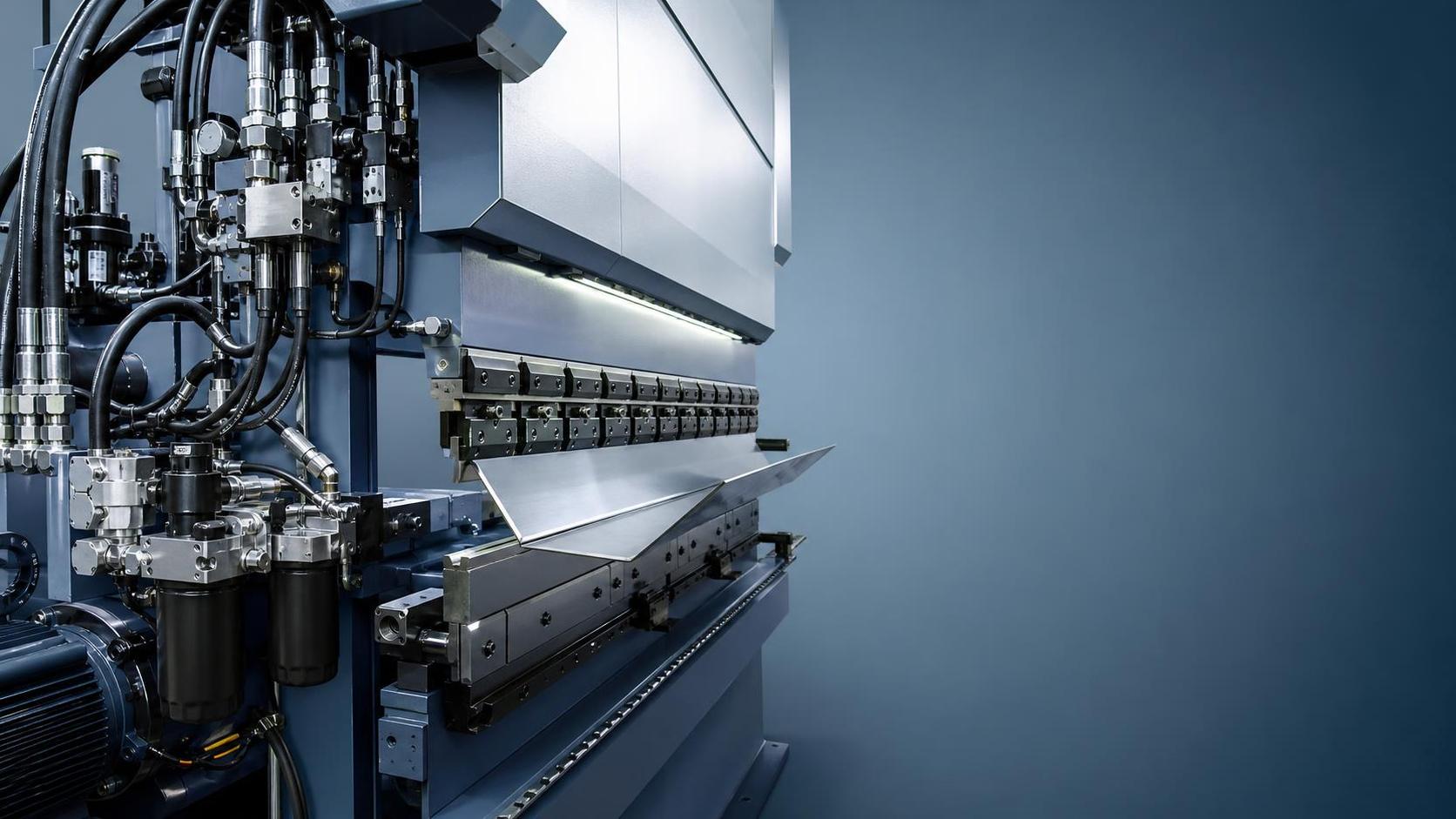
Hydraulic failures rarely arrive as isolated technical events. In a press brake shop, they show up as missed bending windows, unstable angle accuracy, repeated setup work, overtime labor, and delivery pressure that spreads well beyond one machine. That is why the real question is not simply how to repair a hydraulic system faster, but how to reduce the number of stoppages, shorten diagnosis time, and prevent small hydraulic issues from escalating into production downtime.
For most sheet metal manufacturers, this matters most when the press brake sits in the middle of a tightly linked process: laser cutting upstream, bending in the middle, welding or assembly downstream. In that environment, one hydraulic fault can idle several workstations at once. The practical response is not a single fix. It is a combination of equipment condition, maintenance discipline, component quality, operating habits, and spare-parts planning.
Why hydraulic downtime is often more expensive than it first appears
When a hydraulic press brake stops, the obvious cost is machine idle time. The less visible cost is usually larger. Operators wait for maintenance. Jobs already nested and cut for bending pile up. Urgent orders get inserted into other machine schedules. If the fault creates inconsistent pressure or ram movement before a complete shutdown, scrap and rework may start before anyone calls it a hydraulic problem.
Many factories underestimate this phase because the machine still moves, so the issue is treated as an operator adjustment problem rather than a hydraulic stability problem. By the time alarms become frequent or the ram can no longer hold repeatable position, production has already paid for the failure several times over.
This is why hydraulic downtime deserves attention even in shops that do not experience catastrophic failures very often. Frequent minor stoppages, pressure instability, overheating, or seal leakage can be more damaging across a quarter than one dramatic breakdown.
The fault points that deserve the most attention
Not every hydraulic problem carries the same downtime risk. In practice, several areas repeatedly create the longest interruptions because they affect both machine motion and diagnostic complexity.
- Hydraulic oil contamination: Dirt, metal particles, water ingress, and degraded oil can damage valves, pumps, and seals while also making troubleshooting less clear.
- Pump wear or cavitation: Pressure drop, noise, slow response, and unstable movement often point here, but the symptoms may resemble valve issues.
- Seal failure and leakage: External leakage is visible, but internal leakage is often harder to confirm and can cause drifting, reduced tonnage, or poor repeatability.
- Valve sticking or spool contamination: A press brake may show delayed response, asymmetrical motion, or inconsistent holding pressure.
- Overheating: Heat accelerates oil degradation and seal wear and may indicate cooling problems, pressure inefficiency, or excessive duty cycles.
- Hose and fitting fatigue: These are often treated as minor items until a sudden leak stops production immediately.
- Sensor and control interaction issues: Some “hydraulic failures” begin as feedback errors between hydraulic components and the CNC control system.
The key point is that hydraulic reliability is not only about the hydraulic unit. It is about the whole system: fluid, filtration, mechanical load, electrical control, and operating environment.
Daily inspection is still the highest-return action
Factories often look for a technical upgrade when the most effective change is operational consistency. A disciplined daily inspection routine does not eliminate failures, but it catches the conditions that create them. This is one of the cheapest ways to reduce downtime caused by press brake hydraulic system failures.
A useful inspection routine is short enough to be followed every shift, but specific enough to catch early symptoms. It should cover oil level, oil temperature trend, visible leakage points, hose condition, unusual pump noise, ram motion smoothness, and alarm history. For shops running multiple shifts, the inspection record should transfer cleanly from one team to the next. Problems are often visible one shift earlier than they are reported.
What many plants get wrong is treating these checks as a formality. If the checklist only records “normal” every day, it is not a maintenance tool. Operators should be trained to note changes, not just failures: slower approach speed, rising oil temperature, vibration, or repeated small corrections in bending angle. These are often the first signs that the hydraulic circuit is no longer stable.
Oil management is usually where prevention starts
Hydraulic oil is often discussed as a consumable, but in reality it is one of the most important reliability factors in a press brake. Wrong viscosity, poor cleanliness, mixed oil grades, and extended replacement intervals can all increase downtime risk.
In busy fabrication shops, contamination often enters during top-up, maintenance, or storage rather than during normal operation. Open containers, unsealed transfer tools, and careless hose replacement can introduce the kind of contamination that does not stop the machine immediately but shortens component life. Months later, the failure appears to be a pump or valve problem when the root cause was fluid handling.
Temperature also matters. Oil that routinely operates too hot loses performance and stresses seals and components. If the machine runs long batches or works in a warm environment, monitoring temperature trend is more useful than checking only whether an alarm threshold has been crossed. A machine that gradually runs hotter over time is already giving a warning.
For plants without a formal fluid management program, the practical priorities are straightforward:
- Use the manufacturer-recommended hydraulic oil specification.
- Prevent mixing of oil types unless compatibility is confirmed.
- Filter oil during filling where appropriate.
- Store oil and service tools in clean, sealed conditions.
- Replace filters on schedule, not only after failure.
- Investigate recurring discoloration, odor change, or foam rather than treating them as cosmetic issues.
Do not separate hydraulic faults from production behavior
A common mistake is to analyze hydraulic failures as if they come only from the hydraulic station. In many shops, operating patterns play a direct role. Running a machine near its upper tonnage range for extended periods, processing thicker materials than the machine is regularly set up for, using poor-quality tooling alignment, or accepting frequent overload conditions can all increase hydraulic stress.
This does not mean the operator caused the failure. It means machine loading and application fit matter. A press brake selected too close to the plant’s maximum demand will usually show the consequences first in wear, heat, response instability, and maintenance frequency. The hydraulic system becomes the messenger for a broader capacity mismatch.
That is why downtime reduction should include a basic review of actual jobs being run: material thickness range, bend lengths, tooling setups, shift intensity, and ambient conditions. A machine that performs well in light production may behave very differently under dense, multi-shift throughput.
Faster troubleshooting depends on clearer fault isolation
When a hydraulic issue occurs, downtime length often depends less on the failure itself than on how quickly the team can isolate the cause. Too many shops still troubleshoot by replacing suspected parts one after another. That approach becomes expensive fast, and it keeps the machine down longer than necessary.
A better method is to separate symptoms into functional groups: pressure generation, pressure holding, motion response, temperature behavior, leakage, and control feedback. Even without advanced diagnostic systems, this narrows the search path. For example, low pressure under load points toward different causes than drift during holding, and both differ from unstable motion with normal pressure readings.
Where budget allows, machines with stronger self-diagnostic capability, more transparent alarm history, and better parameter visibility are easier to recover after a fault. This is often overlooked at purchase stage. Buyers compare tonnage, bed length, and price, but not how easily the machine can be diagnosed under pressure during a real production stop.
Spare parts strategy is part of uptime strategy
Hydraulic downtime is often extended by procurement delays rather than repair complexity. A leaking seal kit, solenoid valve, pressure sensor, filter element, or hose assembly may not be expensive, but if the correct part is unavailable locally, the machine can sit idle for days.
For this reason, critical spare parts should be defined in advance based on failure probability and lead time, not only on unit price. A simple internal matrix can help:
The lesson here is simple: the cheapest machine can become the most expensive machine if the replacement parts path is unclear. For import-dependent equipment especially, buyers should ask early about spare parts lists, lead times, interchangeability, and service support structure.
Equipment selection has more to do with downtime than many buyers admit
Some hydraulic failures are maintenance issues. Others begin with equipment selection. Press brakes that use well-matched hydraulic components, stable control architecture, clean layout, and accessible service points are easier to keep running over time. By contrast, machines built around aggressive cost reduction may still perform acceptably at installation but become harder to maintain as operating hours accumulate.
For B2B buyers, this means the uptime discussion should start before the machine enters the plant. Useful questions include:
- Are the hydraulic components from established suppliers with documented replacement channels?
- Is the hydraulic circuit layout accessible for inspection and service?
- Can alarm records and key pressure or position parameters be reviewed easily?
- Are maintenance intervals clearly defined?
- Does the supplier provide startup guidance and preventive maintenance support?
- Are ISO9001-managed production processes and CE-related compliance practices in place where relevant to the target market?
These questions do not guarantee zero downtime, but they help distinguish between machines that fail predictably and can be serviced efficiently, and machines that become difficult to support after handover. For suppliers active in international markets, consistent manufacturing control and documentation discipline generally matter as much as the component list itself.
Operator training should include hydraulic awareness
In many factories, operators are trained on programming, tool setup, and bend sequence, but not on hydraulic warning signs. That gap matters because operators often see the first evidence of trouble. If they only know how to react to alarms and not how to recognize abnormal machine behavior, the plant loses early intervention time.
Training does not need to turn operators into hydraulic technicians. It should give them enough awareness to report meaningful symptoms: abnormal sound at startup, slower response after long runs, oil smell, visible seepage, repeated need for angle correction, ram hesitation, or unusual vibration. Good maintenance teams diagnose faster when the first report is accurate.
There is also a management point here. If operators are penalized for every stop they report, they will delay escalation. That usually converts a minor hydraulic issue into a larger one.
Predictive maintenance is useful, but only if the basics are already stable
Condition monitoring, temperature tracking, oil analysis, and connected maintenance alerts can all help reduce downtime. But these tools work best after the shop has already established basic inspection discipline, clean service habits, and a spare parts process. Without those foundations, predictive maintenance becomes a layer of data on top of poor execution.
For larger operations, periodic oil analysis may be worth considering, especially on heavily used machines or production lines where downtime cost is high. It can reveal contamination, wear trends, and fluid condition before visible failure occurs. Still, results need interpretation. A test report alone does not solve a maintenance problem.
Smaller shops do not need an elaborate digital system to improve reliability. In many cases, a consistent log of temperature trend, filter changes, leakage events, and alarm recurrence already provides enough insight to identify patterns.
What buyers and plant managers should watch going forward
The press brake market continues to move toward tighter CNC integration, higher efficiency, and more serviceable machine architecture, but buyers should be cautious about assuming “more advanced” always means “less downtime.” Additional automation can improve performance, yet it also raises the importance of support quality, parameter management, and replacement part availability.
For decision-makers comparing machines or reviewing an existing fleet, the more useful question is not whether hydraulic failures can be eliminated. They cannot. The question is whether the machine, the maintenance system, and the supplier relationship are structured so that hydraulic faults are rare, detected early, and resolved quickly.
That is usually where downtime reduction becomes real: clean oil, disciplined checks, trained operators, serviceable machine design, and procurement decisions that treat uptime as an operating requirement rather than an after-sales issue. In sheet metal production, that combination does more for output stability than any promise of trouble-free hydraulics ever will.
search
Products Navigation
Send Us A Message