




Is ISO 9001 Certification Enough to Trust a Rolling Machine Manufacturer?
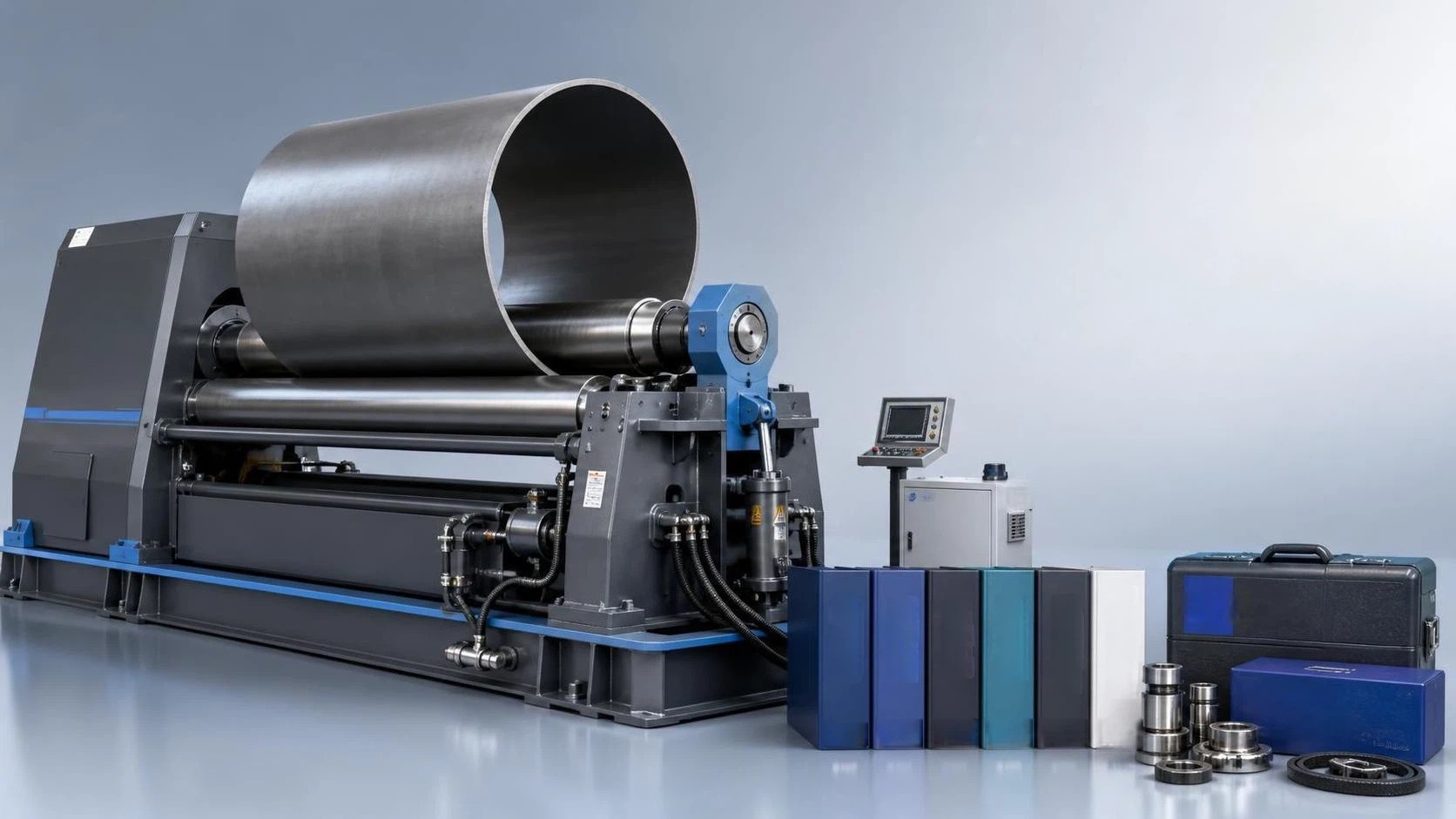
Is ISO 9001 Certification Enough to Trust a Rolling Machine Manufacturer?
The short answer is no. ISO 9001 is a useful sign, and in machinery manufacturing it should not be dismissed. It tells you a company has a documented quality management system and that its internal processes are expected to be controlled, reviewed, and improved. But if you are buying a plate rolling machine, that certificate alone does not tell you how the machine performs under load, how stable the geometry remains after long production cycles, whether spare parts are easy to source, or how the supplier handles problems when the machine is already on your floor.
That is why the real question behind “Is ISO9001 certification enough to trust a rolling machine manufacturer?” is usually broader: can this supplier consistently deliver a machine that matches my material, my production rhythm, my compliance requirements, and my after-sales expectations? In practice, trust is built from several layers, and ISO 9001 is only one of them.
What ISO 9001 actually tells you
ISO 9001 is about management discipline. In a rolling machine factory, that can mean controlled drawing revisions, purchasing procedures, inspection records, supplier evaluation, corrective actions, and traceable production steps. Those things matter. A manufacturer without any process control often shows the same problems over and over: inconsistent assembly quality, undocumented design changes, missing inspection points, and unclear responsibility when a machine issue appears after shipment.
Still, ISO 9001 does not certify that every rolling machine is high precision, heavy duty, or suitable for difficult applications such as thick plates, high-strength steel, or demanding cone rolling work. It also does not rank one manufacturer above another in engineering depth. Two suppliers may both hold ISO 9001, while one has strong machine frame design, mature hydraulic integration, and experienced commissioning support, and the other mainly follows paperwork correctly.
In other words, the certificate helps reduce uncertainty around process management. It does not replace technical due diligence.
Why buyers get into trouble even with certified suppliers
Many purchase problems in fabrication equipment do not come from the absence of certification. They come from mismatched expectations. A buyer asks for a “plate rolling machine for 20 mm steel,” but the real production need may depend on plate width, yield strength, minimum rolling diameter, edge pre-bending expectations, batch size, and whether the machine will run one shift or nearly nonstop. If those details are not clarified early, a formally certified supplier can still deliver a machine that is technically compliant on paper but uncomfortable in real production.
This is common in export business. A machine may leave the factory with acceptable documentation, yet the buyer later discovers that electrical configuration, operator language, guarding details, or local compliance expectations do not match the destination market. Certification did not fail in that case. The evaluation process did.
What matters more than the certificate when evaluating a rolling machine manufacturer
1. Technical fit for your actual workload
A trustworthy manufacturer should ask good questions before quoting. Not just thickness and width, but material grade, required cylinder diameter, acceptable flat ends, tolerances, production frequency, and whether future jobs may be heavier than current ones. If a supplier jumps directly to price, be careful.
Rolling machines are application-specific. A machine chosen for occasional light fabrication is not the same as one intended for pressure vessel work or structural steel shops with mixed batches. The supplier’s engineering response tells you a lot. Good manufacturers usually discuss machine structure, roller configuration, drive style, control logic, and the tradeoff between budget and long-term rigidity.
2. Build quality you can verify
For plate rolling machines, trust comes from physical details. Ask about the frame fabrication process, machining accuracy of side stands, roller material, heat treatment where applicable, hydraulic component sourcing, and control system integration. Not every buyer needs the same depth, but a serious manufacturer should be able to explain these points without becoming vague.
You do not need inflated claims. What you need is clarity. How is the machine tested before delivery? Under what conditions? Are no-load tests the only standard, or is there trial rolling when the project requires it? These answers often reveal more than a certificate on the wall.
3. Compliance beyond internal quality management
If you are importing to Europe or working with customers who require formal safety documentation, CE-related readiness matters. That includes not only the marking itself but also the supporting technical file, safety design, electrical conformity, emergency stop logic, guarding, and documentation consistency. These items usually need to be reviewed against the actual machine configuration and destination requirements.
A manufacturer that already works according to ISO 9001 and EU CE standards is generally better positioned than one with no exposure to export compliance. That does not automatically solve every project detail, but it reduces the risk of preventable delays.
4. Export and communication experience
This point is underrated. A capable domestic machine builder may still struggle with export packaging, multilingual manuals, electrical standards, spare parts preparation, or remote troubleshooting. Manufacturers and trading companies that regularly serve Southeast Asia, Europe, North and South America, and Oceania tend to understand these practical issues better because they have already dealt with different installation conditions and buyer expectations.
Wuxi, Jiangsu is one of the better-known machinery clusters in China, and proximity to Shanghai can be useful for logistics, factory visits, and shipment coordination. That location advantage is not a quality guarantee by itself, but it often makes supplier interaction more efficient, especially when equipment lines involve multiple machines such as rolling, cutting, welding, milling, and beam fabrication systems.
5. Service after shipment
Buyers often focus on machine acceptance and forget the first six months of use. That is usually when the real supplier quality becomes visible. Can the manufacturer provide commissioning guidance? Are wear parts and standard components easy to replace? Will you get wiring diagrams, hydraulic schematics, and parameter support when needed? If a rolling machine stops in production, a fast and technically competent response matters more than polished sales language.
A reliable supplier does not have to promise impossible response times. What matters is whether they have a practical support structure and whether they communicate honestly about what can be handled remotely and what may require local technician cooperation.
A better way to assess trust before you place the order
When comparing rolling machine manufacturers, it helps to treat ISO 9001 as a checkpoint, not a final answer. A stronger evaluation usually includes:
- Reviewing the supplier’s technical questions before quotation
- Checking whether proposed machine specifications match your material and production pattern
- Confirming what testing, inspection records, and acceptance methods are available
- Verifying CE-related readiness if your market requires it
- Asking how installation, training, and spare parts support will work after delivery
- Assessing whether the supplier has experience with similar equipment categories, not just one product line
That last point deserves attention. Companies active across multiple metalworking systems—such as CNC cutting machines, welding equipment, lathes, beam production lines, deburring systems, bending and shearing machines, pipe benders, and plate rolling machines—often see how upstream and downstream processes connect. That broader fabrication knowledge can be useful when a buyer is not selecting one standalone machine, but trying to fit a rolling machine into a real production flow.
A practical judgment: when ISO 9001 is enough, and when it is not
If you are buying a relatively standard machine for light-duty use, with clear specifications and limited compliance complexity, ISO 9001 may be a reasonable baseline filter. It tells you the manufacturer is not operating entirely without structure.
But if your project involves heavy plate work, custom configurations, export compliance, integration with other fabrication equipment, or tight uptime expectations, then no, ISO 9001 is not enough to trust a rolling machine manufacturer on its own. In those situations, trust should come from a combination of process discipline, engineering transparency, machine suitability, compliance awareness, and responsive service.
That is also why many experienced buyers look for manufacturers or equipment suppliers that combine documented quality systems with real-world export experience and a practical approach to design and support. A company established in machinery supply for years, working under ISO 9001 procedures and CE-oriented standards, and familiar with serving overseas markets may be a safer starting point than a cheaper source that can only offer certificates and a low quote.
So if you are asking whether ISO9001 certification is enough to trust a rolling machine manufacturer, take it as a useful green light to continue the conversation, not as the reason to stop asking questions. The right supplier should be able to earn trust in the details. That is where machine purchases usually succeed or fail.
search
Products Navigation
Send Us A Message