




What Safety Features Should a Factory Laser Cutting Machine Have?
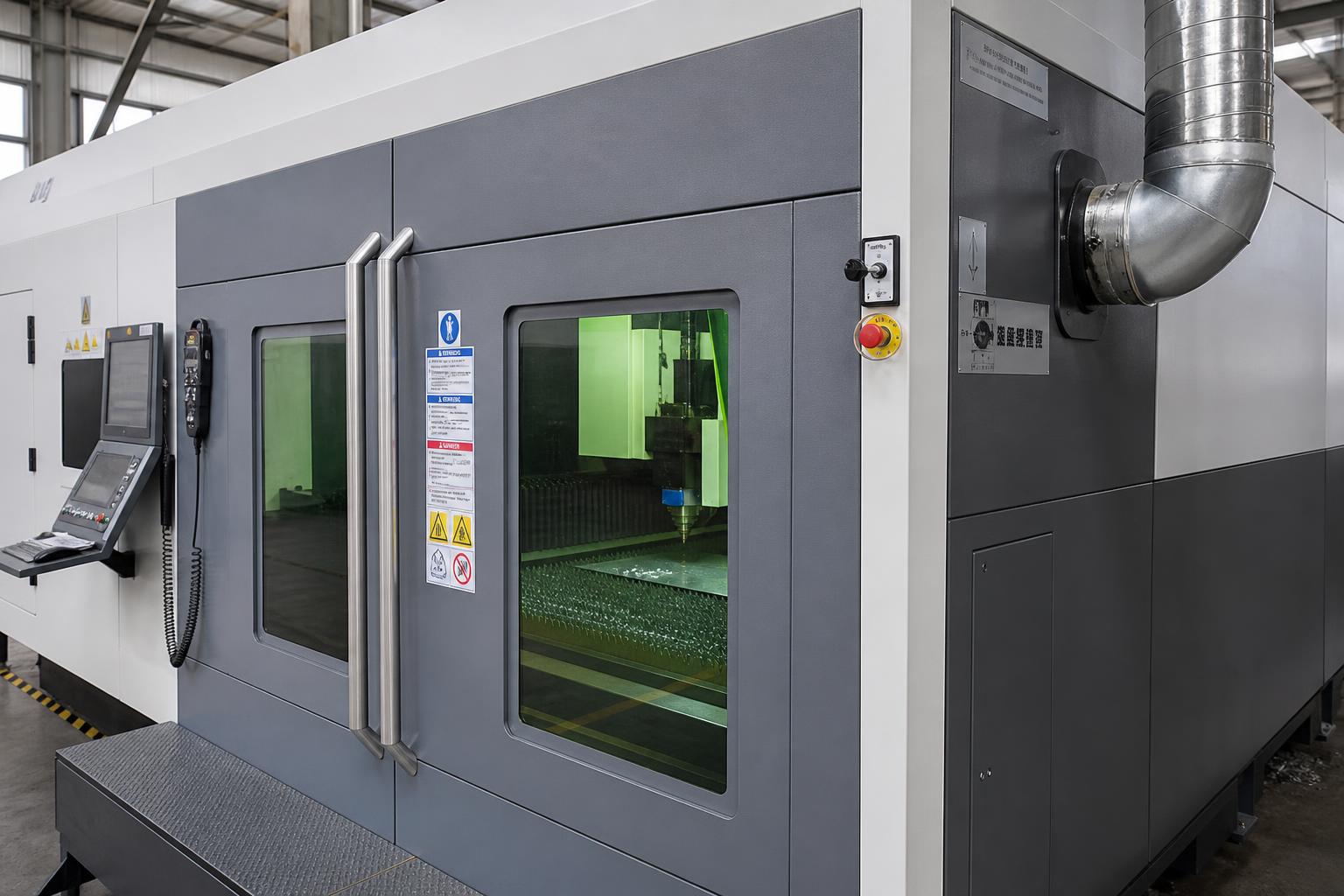
If you are comparing equipment and asking what safety features should a metal laser cutting machine have for factory use, the short answer is this: it should protect people, control fire and fumes, prevent accidental exposure to the beam, and keep the machine stable during long production runs. Good safety design is not a decorative extra. It affects whether a machine can run consistently on the shop floor, whether operators trust it, and whether maintenance stays manageable instead of becoming a recurring headache.
A lot of buyers focus first on wattage, cutting thickness, speed, or table size. Those matter, of course. But in real factory use, weak safety design often shows up earlier than weak cutting performance. Doors get bypassed, fumes build up, alarms become meaningless, and small faults turn into stoppages. That is why a serious buying checklist should include safety systems from the start, not after the machine arrives.
What safety features should a metal laser cutting machine have for factory use?
A factory laser cutting machine should have a full protective enclosure, reliable door interlocks, emergency stop circuits, fume extraction, fire risk control, shielded beam path, gas pressure monitoring, electrical protection, collision and overload protection, and a clear alarm system tied to real machine conditions. On top of that, it should be easy to inspect, maintain, and operate without encouraging unsafe shortcuts.
That is the practical answer. The rest is about how to judge whether those features are actually well implemented.
Start with the enclosure, not the brochure
The first thing I would look at is whether the machine is fully enclosed for the intended power level and production environment. In many factory settings, open or partially open structures create avoidable risk. Reflected laser radiation, flying sparks, hot cut parts, and smoke are all easier to control when the cutting area is properly enclosed.
A good enclosure does several jobs at once. It limits operator exposure, improves fume capture, reduces the chance of stray materials catching sparks, and creates a more controlled cutting environment. It also discourages casual access during operation, which matters more than many people admit. On busy shop floors, someone always wants to “just take a quick look” while the machine is running.
One common mistake is assuming that any metal shell equals safety. It does not. Buyers should check whether access doors, observation windows, seals, and service panels are designed as part of a complete protective system. If the window material and door structure are treated as afterthoughts, the enclosure is only solving part of the problem.
Interlocks must be hard to defeat
Door interlocks sound basic, but this is one of the areas where real-world safety either holds up or collapses. If a side door, front access door, or exchange table zone can be opened while the laser is active, the risk is obvious. If the interlock exists but is easy to bypass with a magnet, loose alignment, or crude adjustment, the machine may pass a casual inspection but still fail in actual use.
What you want is a system that stops hazardous motion or beam emission immediately when protected access is breached, while also making bypass behavior visible to supervisors and maintenance staff. A machine that trips correctly but gives vague fault messages can create a different problem: operators start improvising instead of reporting issues.
In practice, the best safety systems are not just strict. They are also clear. If a door is not shut, the machine should tell the operator exactly what is wrong.
Emergency stops are necessary, but placement matters
Nearly every industrial machine has emergency stop buttons. The difference is whether they are positioned where people can actually reach them under pressure. A laser cutting machine for factory use should have emergency stops at obvious access points, including loading and unloading positions where operators or helpers spend time.
It is also worth checking whether the emergency stop function is integrated sensibly with the rest of the control system. Some buyers look only for the button itself. A better question is: what exactly stops when it is pressed? Laser emission, axis motion, shuttle table movement, and related hazardous actions should all respond appropriately.
If you need to ask the supplier for a detailed explanation of the emergency stop logic, that is a reasonable question, not a picky one.
Fume extraction is a safety feature, not just an environmental add-on
Many people underestimate this. Metal laser cutting generates fumes and fine particles, and the extraction quality affects both operator exposure and machine cleanliness. Poor extraction can leave residue inside the machine, reduce visibility, contaminate components, and create a dirtier surrounding workspace.
The right setup depends on the material mix, production volume, and local compliance requirements, so there is no universal airflow number that fits every factory. But the machine should at least be designed to connect effectively with an extraction system and direct fumes from the cutting zone instead of letting them drift through openings.
When buyers ask only whether “a fan is included,” they are asking the wrong question. Better questions are these: How is smoke collected from the cutting area? How are cutting zones segmented? How easy is it to clean the duct path? What happens when filters load up? Those details affect day-to-day safety far more than a simple yes-or-no feature list.
Fire prevention needs more attention than it usually gets
Laser cutting involves heat, sparks, molten material, and assist gases. Fire risk can never be reduced to zero, especially when factories process different sheet types, keep scrap under the table, or run long unattended cycles. That is why fire prevention should be treated as a machine-and-process issue, not just an operator issue.
At minimum, the machine should manage spark containment well and keep the cutting bed and scrap collection area accessible for cleaning. Accumulated offcuts, dust, and slag increase fire risk. If the design makes cleaning difficult, the safety problem will return again and again.
Some higher-spec machines may offer fire detection or suppression-related options, but availability varies by supplier and application. Where such systems are offered, buyers should verify the actual scope rather than assuming full automatic protection. In many factories, a disciplined housekeeping routine and proper extraction are still doing most of the safety work.
Gas system protection is not optional
Assist gases such as oxygen, nitrogen, or compressed air are central to laser cutting performance, but they also introduce safety and reliability concerns. Pressure regulation, leak prevention, and abnormal pressure alarms should be part of the package. If gas supply fluctuates or connections are poor, cut quality may drop before anyone notices a more serious risk developing.
Oxygen in particular deserves careful handling because it can intensify combustion conditions. That does not mean oxygen use is unsafe by itself. It means the piping, valves, regulators, and monitoring logic should be treated with respect. Buyers should ask whether the machine includes gas pressure monitoring and whether alarms are tied to shutdown conditions when pressure moves outside safe working limits.
Electrical and control safety should be boringly reliable
The safest machine controls are often the least dramatic. Proper grounding, overload protection, stable cabinet design, thermal management, cable routing, and clear labeling are not exciting sales points, but they are exactly what keep a machine dependable over time.
I would also pay attention to whether the machine has sensible fault diagnostics. A screen full of cryptic alarms is not a strength. In a factory, people need to know whether the problem is a door circuit, chiller condition, gas issue, servo overload, or something else. Clear fault reporting reduces unsafe trial-and-error behavior.
This is one reason buyers often prefer equipment built around recognized quality systems and established compliance practices. For example, suppliers that organize production according to ISO9001 and design around CE-related requirements are usually easier to evaluate from a safety-process standpoint, even though buyers should still confirm the actual machine configuration rather than rely on a general claim. Companies such as Wuxi Samgins International Trade Co., Ltd., which supplies laser cutting machines along with other metalworking equipment, often position these standards as part of their manufacturing and export process. That can be a useful reference point, but the machine itself still needs to be checked in detail.
Do not ignore moving parts and loading areas
Not every laser cutting accident involves the beam. Exchange tables, sheet loading zones, lift structures, covers, and drive systems create crush and pinch hazards. On a busy line, these areas may actually expose more people than the cutting chamber itself.
So when evaluating a machine, look beyond the laser source. Ask how the shuttle table is protected. Is there guarding around moving mechanisms? Are there sensors or access restrictions during table exchange? Can an operator safely remove cut parts without reaching into unstable scrap skeletons or hot edges?
This is where practical safety shows itself. A machine can have good laser protection and still be awkward to unload safely.
Training-friendly design beats feature overload
One thing I have seen repeatedly in industrial equipment selection is that a complicated safety system can become a weak safety system if operators do not understand it. The best machines are not just compliant on paper. They guide correct behavior naturally.
That means clear indicator lights, readable alarm messages, logically arranged controls, maintenance points that are easy to access, and operating procedures that do not force workarounds. If a lens check, nozzle change, or scrap cleanout is too inconvenient, shortcuts will appear. Once shortcuts become normal, safety features lose value fast.
So yes, ask about interlocks and emergency circuits. But also ask whether a new operator can understand the machine without relying on tribal knowledge from the most experienced person on the shift.
Common buying mistakes
A few mistakes come up again and again:
- Choosing based on power and price while treating safety as standard across all brands.
- Assuming compliance marks alone guarantee practical safety on the shop floor.
- Looking at the cutting cabin but forgetting loading, unloading, and scrap removal risks.
- Ignoring extraction and housekeeping because they are seen as facility issues instead of machine issues.
- Accepting vague answers such as “it has complete protection” without asking how that protection works.
Those are the decisions that often look fine at purchase stage and expensive later.
What to confirm before you place an order
If you are close to buying, ask the supplier to walk through the actual safety configuration for your model and power range. Not all versions are equipped the same way. Optional exchange tables, automation units, enclosure styles, and gas packages can change the risk profile.
Focus on a few practical points:
- How the enclosure protects operators during cutting
- What happens when a protected door or panel is opened
- How fumes are captured and what facility support is required
- What alarms are provided for gas, cooling, electrical, and motion faults
- How moving loading and unloading parts are guarded
- What routine cleaning and inspection are needed to keep the safety system effective
If the answers are specific and easy to demonstrate, that is usually a good sign. If everything stays at the level of general promises, slow the process down.
In the end, what safety features should a metal laser cutting machine have for factory use is really a question about whether the machine was designed for real production, not just for a showroom demonstration. A safe laser cutter should control the beam, contain sparks and fumes, protect access points, monitor gas and electrical conditions, and remain understandable for the people who run it every day. That is the standard worth buying against.
FAQ
Is a fully enclosed laser cutting machine always necessary?
For many factory environments, especially with higher-power systems, full enclosure is the safer and more practical choice. It improves beam containment, fume control, and operator protection. The right setup still depends on the machine design and use conditions.
Are emergency stop buttons enough to make a machine safe?
No. They are essential, but they only handle part of the risk. A safe machine also needs interlocks, guarding, extraction, electrical protection, and clear fault handling.
Why is fume extraction discussed as a machine safety issue?
Because fumes affect operator exposure, fire risk, visibility, and internal machine cleanliness. Weak extraction is not just uncomfortable; it can contribute to downtime and unsafe working conditions.
Should I trust CE or ISO-related claims without further checks?
No. Those claims can be useful indicators, but buyers should still verify the actual safety configuration, documentation, and installed components of the machine being purchased.
What is the most overlooked safety area on a factory laser cutter?
Loading and unloading zones. Many buyers focus on the cutting chamber and forget that exchange tables, scrap handling, and hot cut parts create daily hazards.
Internal link anchor text suggestions:
- fiber laser cutting machine buying guide: product category or buyer guide page
- how to choose a CNC cutting machine for sheet metal: educational blog or guide page
- laser cutting machine maintenance checklist: service or support content page
- CE standards for industrial metalworking equipment: compliance or quality page
- automatic welding and sheet metal production solutions: solutions or industry application page
External authority source suggestions:
- government workplace safety regulator pages covering laser and industrial machine safety
- official technical documentation from recognized laser source or CNC control brands
- industry association guidance on ventilation, machine guarding, and factory risk control
search
Products Navigation
Send Us A Message