


Cnc Cutting Machine Explained: Key Technologies, Materials, and Industrial Use Cases
What A Cnc Cutting Machine Means In Industrial Production
A Cnc cutting machine is a computer-controlled system that follows programmed toolpaths to cut metal or other sheet and plate materials into precise shapes. In fabrication, the term usually refers to thermal cutting equipment such as CNC flame cutting, CNC plasma cutting, and CNC fiber laser cutting, although some buyers also use it more broadly for other digitally controlled cutting processes.
Its industrial value comes from repeatability. Instead of relying on manual marking and hand cutting, the machine converts CAD or nesting data into controlled motion, torch or beam output, and coordinated cutting parameters. This improves dimensional consistency, edge quality, material utilization, and downstream fit-up for welding, bending, machining, or assembly.
In steel structure plants, pressure vessel shops, tank fabrication, shipbuilding, machinery manufacturing, and sheet metal workshops, a Cnc cutting machine often sits at the start of the production flow. The quality of the cut affects bevel preparation, weld gap control, assembly speed, and rework rates, which is why cutting performance has a direct impact on total factory efficiency.
For B2B buyers, the right definition is not only about the machine itself. It also includes table size, gantry rigidity, drive system, control software, power source or gas system, extraction design, and the supplier’s ability to support installation, training, spare parts, and process tuning. That broader system view is what separates a commodity purchase from a productive capital investment.
How The Core Cutting Technologies Work
Every Cnc cutting machine combines motion control with a cutting process. The CNC controller interprets part geometry, then commands servo or drive systems to move the gantry and torch or cutting head along X, Y, and sometimes Z axes. Height control maintains a stable stand-off from the workpiece, while process parameters such as speed, current, gas flow, focus, or flame setting determine kerf width and cut quality.
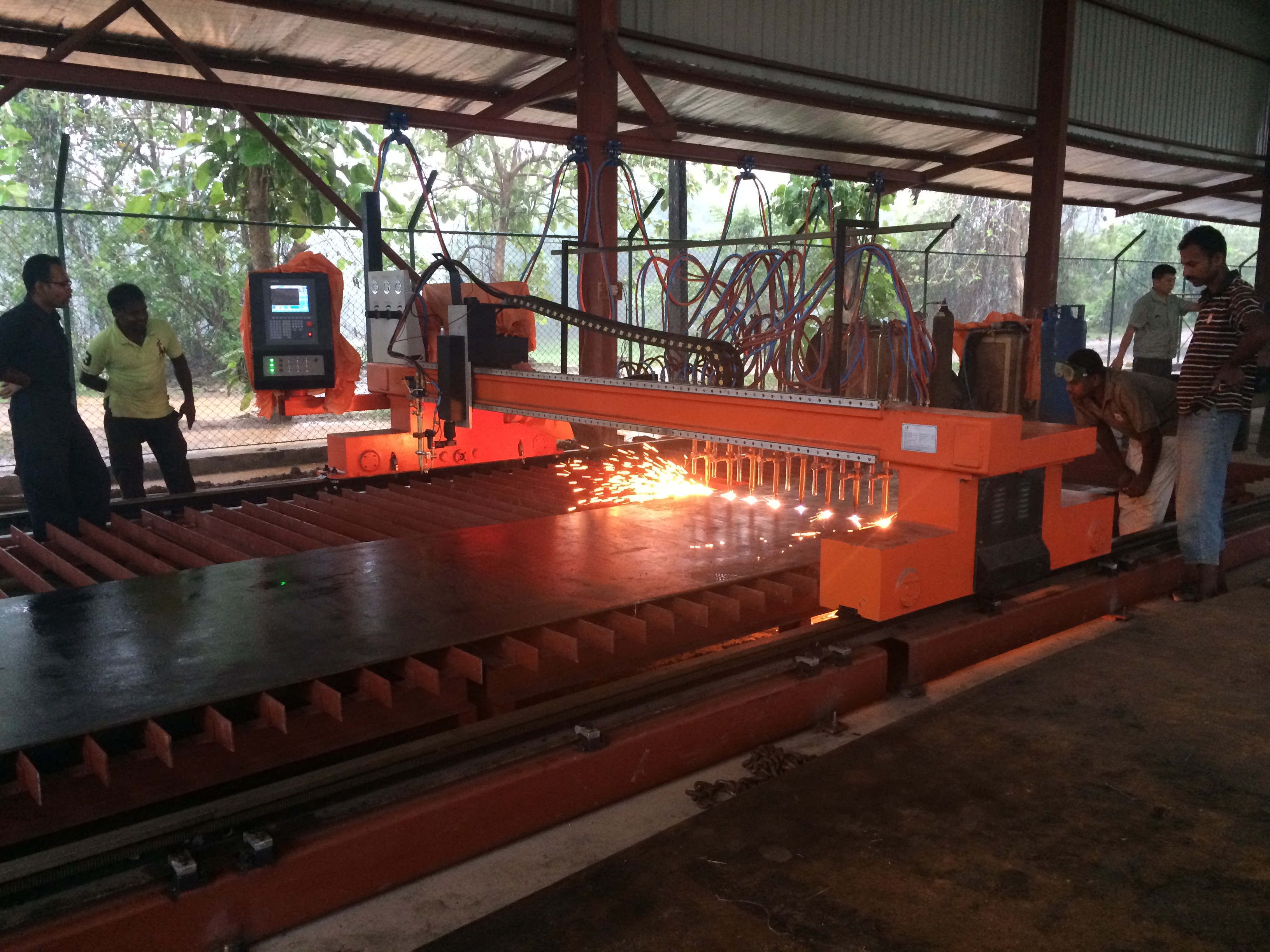
In oxy-fuel or flame cutting, the machine preheats carbon steel and then uses oxygen to oxidize and remove material. This process is economical for thicker carbon steel plates and is common where edge taper and heat input are acceptable within the application. It is not suitable for stainless steel or aluminum in the same way, so material type is a primary selection factor.
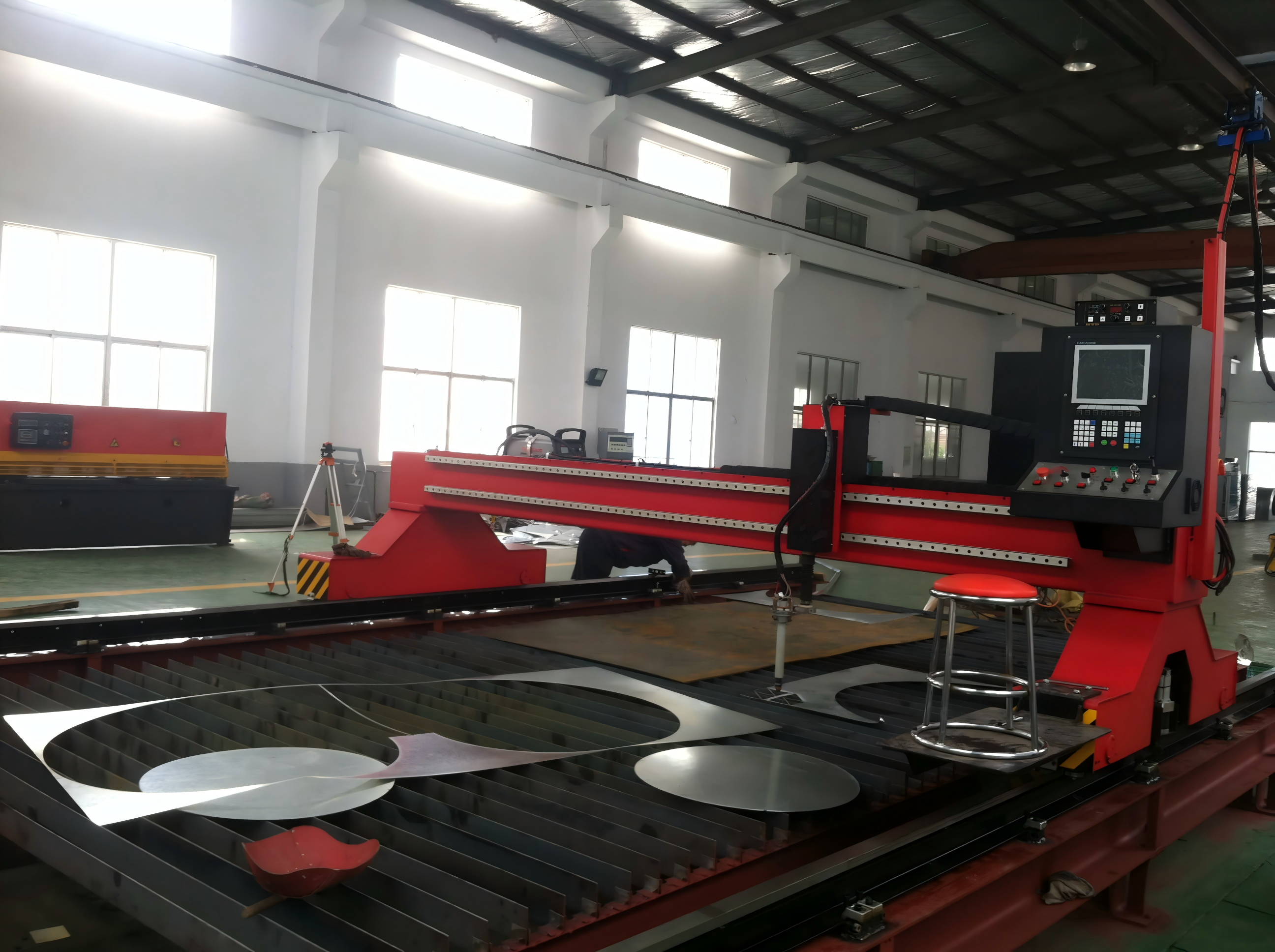
In plasma cutting, an electric arc ionizes gas into a high-temperature plasma jet that melts conductive metals and blows molten material out of the kerf. A CNC plasma cutting machine can process carbon steel, stainless steel, and aluminum with good speed and flexibility. Table type CNC plasma cutting machines suit many medium-duty workshops, while gantry CNC plasma cutting machines are more common for larger plates, heavier duty cycles, and multi-torch layouts.
In fiber laser cutting, a highly concentrated laser beam melts or vaporizes material with excellent precision and narrow kerf. A CNC fiber laser cutting machine is often chosen for thinner to medium-thickness sheet where edge quality, cutting speed, small features, and automation integration are priorities. Compared with flame and plasma, laser systems usually require higher initial investment but can reduce secondary finishing in the right production mix.
Main Types Of Cnc Cutting Machine And Material Fit
The most practical way to classify a Cnc cutting machine is by process, workpiece format, and factory role. By process, the mainstream categories are CNC flame cutting machine, CNC plasma cutting machine, and CNC fiber laser cutting machine. Each serves a different balance of thickness range, edge quality, speed, and operating cost.
Flame cutting is typically preferred for heavy carbon steel plate where low consumable cost and thick-section capacity matter more than fine detail. Plasma is often the broadest utility choice because it handles multiple conductive metals and supports a wide range of job-shop and structural applications. Fiber laser is usually strongest in precision sheet processing, high-throughput nested parts, and automated production environments that value clean edges and compact heat-affected zones.
By machine structure, buyers commonly compare table type and gantry type systems. A table type CNC plasma cutting machine can be a practical choice for smaller sheets, limited floor space, and moderate daily volume. A gantry Cnc cutting machine usually offers greater travel, stronger frame design, better scalability for wider beds, and easier integration of multiple torches, bevel heads, or marking functions for large fabrication plants.
Material fit should always be checked against actual production drawings rather than generic claims. Carbon steel plate for welded structures, stainless for food or chemical equipment, aluminum for transport or light industrial use, and mixed-material job-shop work all place different demands on the machine. Buyers should review actual thickness bands, hole size expectations, cut edge acceptance, and whether parts go directly to welding, machining, or cosmetic finishing.
Why Manufacturers Use These Systems Instead Of Traditional Cutting
Traditional manual cutting methods remain useful for repair work, simple field tasks, or low-volume fabrication, but they struggle when factories need repeatable quality, traceable programs, and predictable throughput. A Cnc cutting machine reduces dependence on manual layout, improves nesting efficiency, and makes it easier to standardize production across shifts and operators.
The gain is not only speed. Better cut accuracy reduces downstream grinding, weld gap adjustment, assembly correction, and scrap caused by dimensional deviation. In industries where plate parts feed directly into H-beam production, vessel shell fabrication, pipe support manufacturing, or sheet metal assemblies, stable cutting quality supports the entire production chain and shortens the time between raw material intake and finished shipment.
For buyers comparing suppliers, Wuxi Samgins is positioned around a broad product range rather than a single machine category. That matters because many factories need cutting equipment that fits into a larger workflow alongside welding manipulators, welding rotators, welding positioners, H-beam lines, press brakes, edge milling machines, plate rolling machines, and drilling equipment. A supplier that understands those process links can usually give more practical configuration advice.
The company’s stated focus on customization is also relevant in projects where standard machines do not fully match part sizes, plate weights, automation expectations, or future expansion plans. In B2B purchasing, the value of a Cnc cutting machine often depends on whether the system can be aligned with real production conditions, not merely whether the base specification looks attractive on paper.
Who Uses A Cnc Cutting Machine And In Which Applications
The main users are fabrication businesses that process plate, sheet, pipe-related components, or structural members in repeatable batches. Typical buyers include steel structure manufacturers, tank and pressure vessel workshops, general engineering companies, agricultural and construction equipment makers, energy project contractors, and sheet metal processing plants. The machine is equally relevant to export-oriented shops that must maintain stable quality across diverse orders.
Application scenarios vary by cutting technology. Flame systems are common for thick base plates, gussets, stiffeners, and heavy structural elements. Plasma systems are widely used for brackets, flanges, enclosures, support frames, base panels, and medium-thickness general fabrication. Fiber laser systems are often selected for cabinets, precision sheet components, decorative industrial parts, and production runs where edge finish and speed on thin material are important.
A Cnc cutting machine also becomes more valuable when paired with subsequent operations. Parts cut for H-beam assembly can move into fit-up and welding cells. Sheet parts can continue to deburring, press braking, rolling, or machining. This is one reason integrated equipment suppliers remain attractive to factory managers trying to reduce handoff friction between departments.
In practical sourcing terms, buyers who already run welding robots, seam welding machines, or structural fabrication lines often prioritize cut consistency because it directly affects robot path stability, fixture repeatability, and weld preparation quality. The better the upstream cut, the less correction is needed before downstream automation can perform as intended.
How To Select The Right Machine, Configuration, And Supplier
Selection should begin with a production profile, not with a catalog. Buyers should quantify the materials they cut most often, the realistic thickness range, average and maximum plate size, annual throughput, required cut quality, tolerance expectations, shift pattern, and the mix between repetitive parts and custom jobs. These inputs determine whether flame, plasma, laser, or a combined strategy makes economic sense.
The next layer is machine architecture. Key checkpoints include gantry rigidity, guide rail design, servo and CNC control quality, torch height control, dust or fume extraction, table construction, maintenance access, and software compatibility with the buyer’s CAD and nesting workflow. A Cnc cutting machine with strong core components but weak support systems can still underperform in day-to-day use, so the complete package matters more than headline power alone.
Supplier evaluation should include documentation discipline, installation planning, training scope, spare parts access, and responsiveness after delivery. Wuxi Samgins states that its key hydraulic, servo, and CNC components use world-famous imported brands, with an emphasis on precision, stability, and long service life. For buyers, the practical takeaway is to verify exactly which critical components are specified, how replacements are supported locally, and what preventive maintenance routines are recommended.
It is also reasonable to ask for application-based recommendations. For example, a buyer focused on heavy carbon steel plate may be better served by a CNC flame cutting machine or a gantry CNC plasma cutting machine, while a sheet metal factory seeking cleaner edges and less secondary finishing may lean toward a CNC fiber laser cutting machine. The right answer depends on production reality, not trend-following.
Industrial Standards, Quality Control, And Global Project Requirements
In international procurement, machine quality is judged not only by initial performance but also by compliance, documentation, and consistency over time. For a Cnc cutting machine, buyers typically review electrical safety, machine guarding, control reliability, calibration discipline, and the supplier’s quality management process. They also look for complete manuals, parameter records, inspection routines, and commissioning support that fit the buyer’s site requirements.
Wuxi Samgins states that its machines comply with the ISO9001 quality system and EU CE Machinery and LVD directives, and that the team has export experience of more than 10 years with familiarity in standards such as ASME and API. For overseas industrial users, this matters because cutting equipment is often purchased as part of larger fabrication programs that must satisfy project documentation and customer audit expectations.
Quality control in production usually starts with frame fabrication, machining accuracy, motion alignment, cable routing, and assembly discipline. It continues with functional checks on the CNC system, drive response, torch movement, gas circuits, cooling, and trial cutting on representative materials. Buyers should ask how sample acceptance is performed, whether factory test cuts can be reviewed, and which process parameters are handed over during commissioning.
For factories serving export projects, supplier maturity in after-sales support is especially important. Long-term warranty terms, technical troubleshooting, spare parts planning, and remote guidance can materially affect uptime. This is one of the reasons many buyers prefer to source a Cnc cutting machine from a manufacturer with established global delivery experience rather than from a trading source without process depth.
Operating Cost, Total Cost Of Ownership, And Roi Drivers
The purchase price is only one part of the economics. The total cost of ownership of a Cnc cutting machine includes power consumption, gas use, consumables, nozzle and electrode life, assist gas or oxygen cost, filter replacement, dust extraction, routine maintenance, downtime risk, software, training, and labor productivity. A lower upfront price can become expensive if the system cuts slowly, consumes parts heavily, or creates too much rework.
Cost structure varies sharply by technology. Flame cutting generally has lower equipment investment and can be attractive for thick carbon steel applications, but speed and edge quality may require more downstream work. Plasma often offers a balanced combination of equipment cost and processing flexibility. Fiber laser typically carries higher capital expenditure, yet in suitable sheet applications it can improve throughput, nesting efficiency, and finished-part quality enough to justify the investment.
ROI should be evaluated against real workflow gains: less manual marking, fewer fit-up corrections, reduced scrap, shorter lead times, and more predictable scheduling. Buyers should calculate output per shift, average scrap reduction, labor hours saved in downstream grinding or assembly, and the revenue effect of taking on more complex or higher-margin jobs. These operating realities usually matter more than theoretical cutting speed alone.
For procurement teams building an investment case, it is useful to compare the machine with adjacent process needs. If improved cutting accuracy allows faster press brake setup, cleaner weld preparation, or smoother robotic welding, the business case for the Cnc cutting machine becomes much stronger. Related cost analysis topics such as power, gas, and maintenance should be reviewed in the context of the factory’s entire fabrication chain.
Global Use Cases And What Buyer Experience Suggests
A useful signal in industrial sourcing is whether a supplier has served customers across different regions and factory types. Wuxi Samgins lists customers such as URALSTANKOIMPORT, MD Calbah Industries Pty Ltd, Ersay International Transport, Contevix comercio e servicos ltda, Zein Steel Industries Co. LLC, BatysMunaiGazZhabdyktary LLP, S.P Blue Fisheries LDA, Rienzie Group, SALEH SAAD ALSANHANI, Engiplas engineering plastics, Regional engineering works, PT. Cahaya mas Cemerlang, Estructuras Metalicas Girders Chile Limitada, and Lincoln Electric-MENA.
These names should not be treated as identical projects, but they do indicate exposure to international delivery environments where machine application, electrical configuration, documentation expectations, and after-sales communication can differ significantly from one market to another. For buyers, that kind of export history can reduce practical friction during procurement and commissioning.
In real-world use, a Cnc cutting machine often solves very specific factory problems: unstable manual quality, poor nesting efficiency, slow part preparation for welding, or limited ability to process mixed material batches. The best supplier conversations are usually grounded in those practical pain points rather than generic specification comparisons.
When discussing project fit, buyers should ask for examples close to their own use case: thick plate structural work, pressure vessel components, general job-shop fabrication, or precision sheet processing. That approach makes it easier to judge whether the proposed machine configuration, support model, and cost structure truly align with production goals.
Future Trends And When To Upgrade
The future of the Cnc cutting machine market is shaped by higher automation, tighter digital integration, and stronger pressure on cost-per-part. Buyers increasingly expect machines to connect cleanly with CAD, nesting, production planning, and downstream fabrication cells. Better controls, smarter height sensing, and improved diagnostic capability are making performance more consistent while simplifying operator intervention.
Environmental and workplace considerations are also becoming more important. Fume extraction, energy efficiency, material utilization, and cleaner production flows now influence machine selection more directly than in the past. This is especially relevant for exporters and contract manufacturers that face customer audits or internal sustainability targets.
Factories should consider upgrading when current equipment creates recurring bottlenecks: frequent scrap from dimensional inconsistency, rising consumable usage, difficulty processing new materials, poor software compatibility, excessive downtime, or limited support for downstream automation. In many cases, the trigger is not machine age alone but the gap between current capability and the next stage of the business.
For companies planning future capacity, it makes sense to evaluate a Cnc cutting machine as part of a broader fabrication system. Suppliers with experience in welding, structural processing, plate preparation, and forming equipment can often help buyers map a more coherent upgrade path, especially when production growth will involve multiple linked processes rather than a stand-alone cutting cell.
 Welding Robot ROI: When Automation Starts Saving Labor CostWelding robot ROI explained: learn when automation starts cutting labor cost, what drives 18–36 month payback, and how to spot hidden savings in welding operations.
 What Is an Automatic Space Frame Welding Machine and Where Is It Used?Automatic space frame welding machine explained: learn what it does, where it is used, and how it improves welding accuracy, consistency, and productivity in frame fabrication.
 Space Frame Welding Machine Market Trends in Automated Steel FabricationSpace frame welding machine market trends reveal how automated steel fabrication improves precision, repeatability, and line integration. Explore buyer priorities and growth drivers.
 Hydraulic Shearing Machine Trends in 2026: Automation and EfficiencyHydraulic Shearing machine trends in 2026 highlight automation, energy efficiency, and precision. Discover how smarter controls and connected production can reduce waste and boost output.
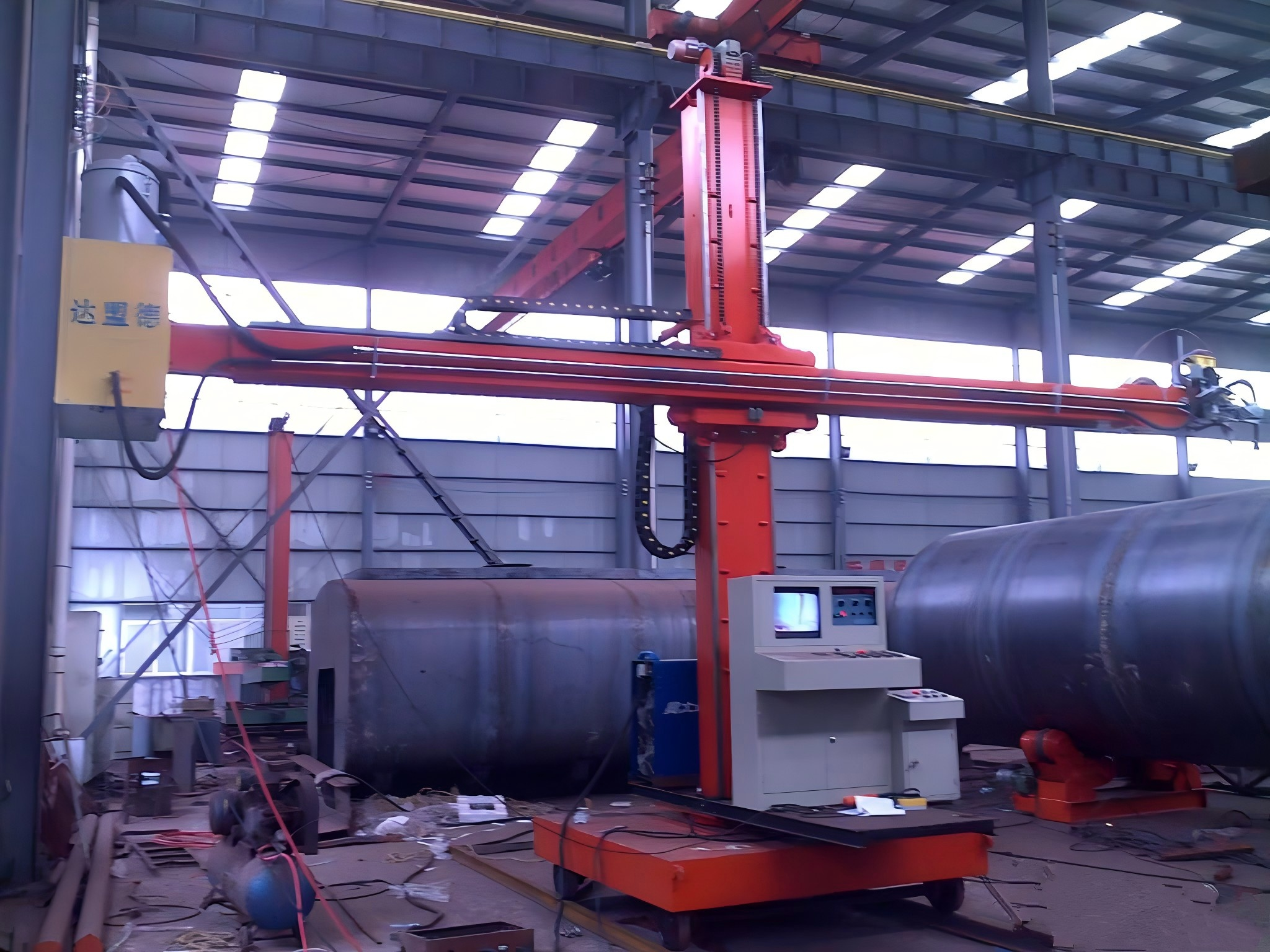
 Cnc flame cutting machineThe CNC flame/plasma cutting machine features box-beam welded end beams and cross beams with stress relief, ensuring compact structure, light weight, high rigidity, minimal deformation, and good appearance. Longitudinal and transverse movements are driven by Panasonic servo motors and SHIMPO reducers via rack-and-pinion gearing for precise control. Horizontal guide wheels with eccentric shaft adjustment press firmly against the rails, ensuring stable and accurate motion. High-strength longitudinal rails with precision-machined surfaces and ground racks are securely mounted to guarantee straightness and parallelism. Optional automatic igniter and torch height controller are available for user-friendly operation.
 Gantry CNC plasma cutting machineThe CNC flame/plasma cutting machine features box-beam welded end beams and cross beams with stress relief, ensuring compact structure, light weight, high rigidity, minimal deformation, and good appearance. Longitudinal and transverse movements are driven by Panasonic servo motors and SHIMPO reducers via rack-and-pinion gearing for precise control. Horizontal guide wheels with eccentric shaft adjustment press firmly against the rails, ensuring stable and accurate motion. High-strength longitudinal rails with precision-machined surfaces and ground racks are securely mounted to guarantee straightness and parallelism. Optional automatic igniter and torch height controller are available for user-friendly operation.
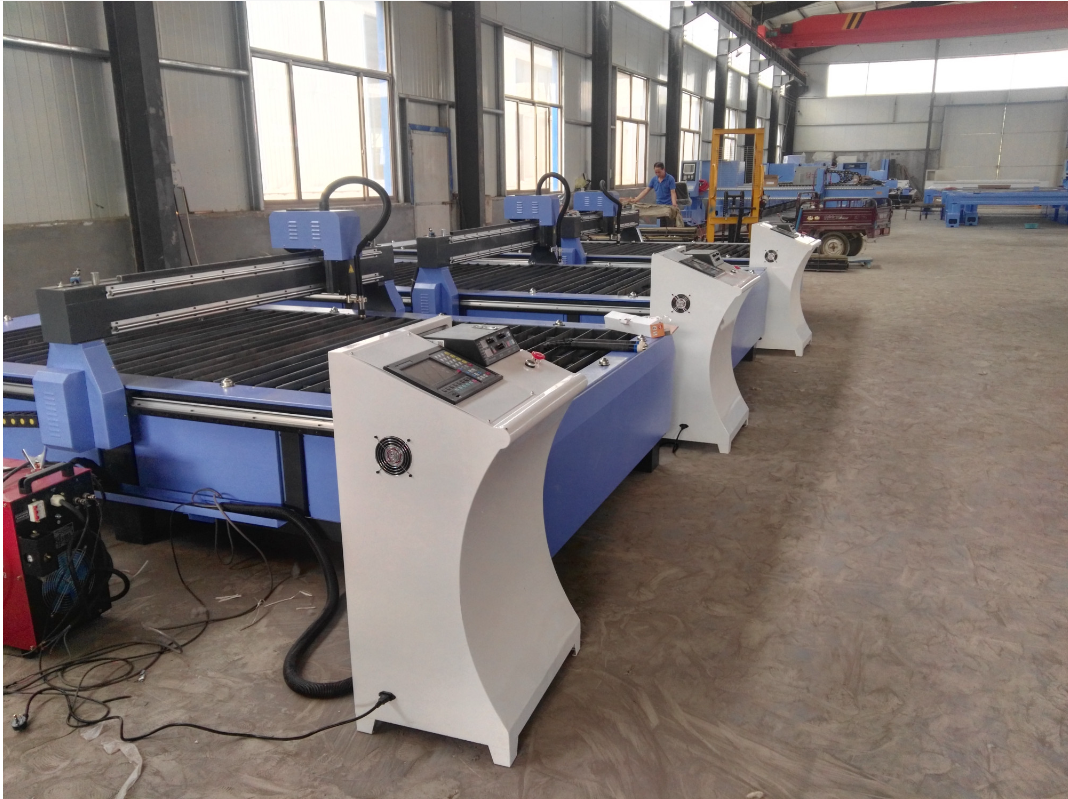
 Table type cnc plasma cutting machineThis CNC cutting machine features a bench‑type gantry structure, utilizing precision ground gears, racks, and dual‑side drive systems. It offers low inertia, stable operation, and ease of use, making it particularly suitable for automatic cutting of medium‑thickness to thin non‑ferrous metal sheets, stainless steel plates, and carbon steel plates.
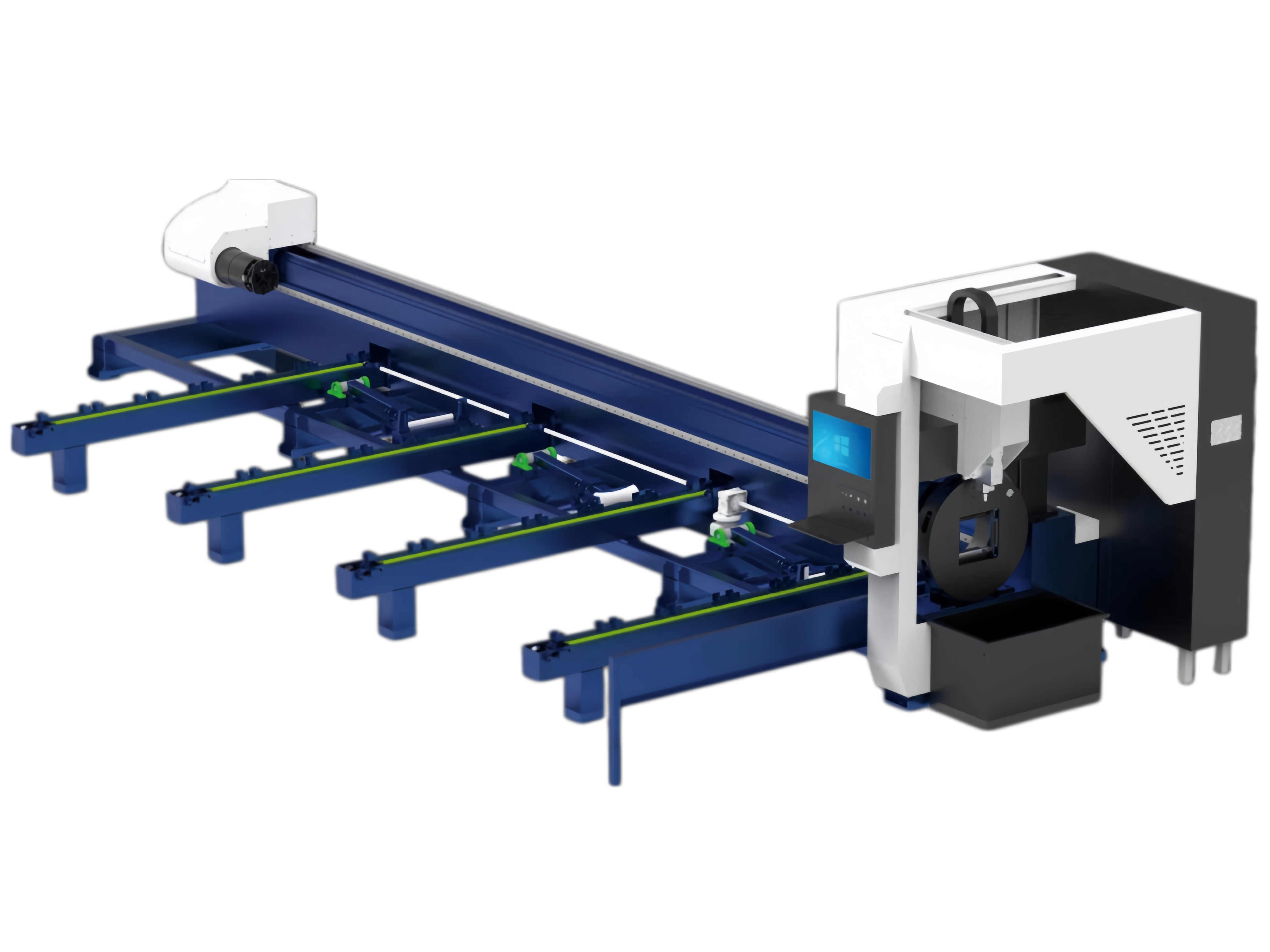
 Pipe cnc fiber laser cutting machine1.Introduction for Pipe cnc fiber laser cutting machine:
The laser cutting machine focuses the laser beam emitted from the laser source through the optical path system into a high-power-density laser beam. This laser beam is directed onto the surface of the workpiece, causing it to reach the melting point or boiling point. At the same time, the high-pressure gas coaxial with the laser beam blows away the molten or vaporized metal.
Send us a Message
A dedicated person will follow up on your needs one-on-one and provide personalized customized solutions according
to your needs.
Get In Touch
We look forward to hearing from you for in-depth communication on how to fulfill your mixing requirements.