




Space Frame Welding Machine Market Trends in Automated Steel Fabrication
Space Frame Welding Machine Market Trends in Automated Steel Fabrication
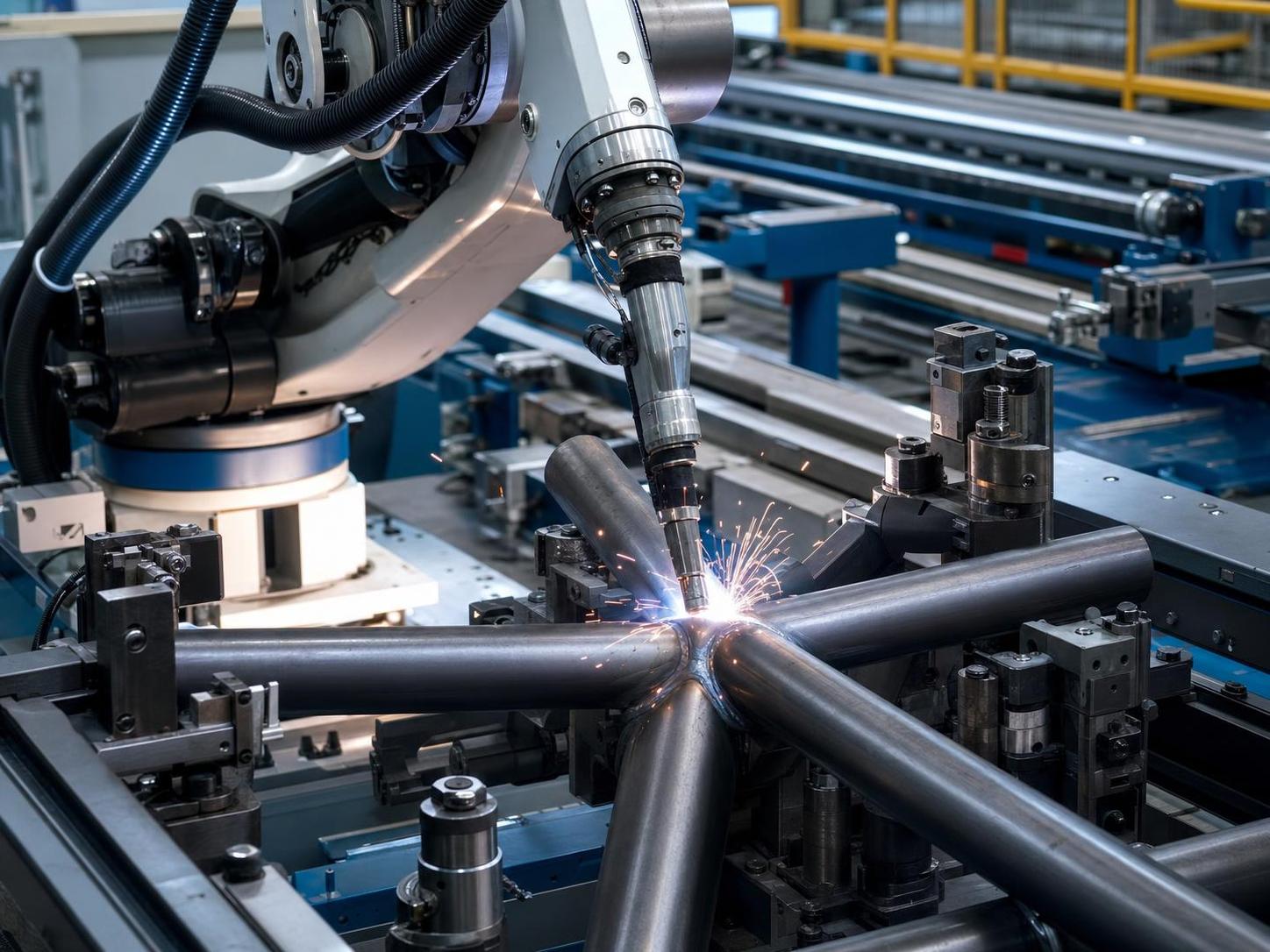
The easiest mistake in this market is to treat a space frame welding machine as just another welding unit with a larger work envelope. It is not. In steel fabrication, the term usually points to equipment designed for the repeatable joining of multi-angle structural members used in three-dimensional load-bearing frameworks. That matters because a space frame is unforgiving: the geometry must stay consistent across many nodes, and small welding deviations can turn into installation problems on site. So when buyers talk about this category, they are often discussing a production system issue, not only a welding process issue.
That distinction is driving current market behavior. Fabricators are under pressure to shorten lead times, reduce dependence on highly variable manual skill, and deliver components that fit into increasingly standardized construction workflows. Automated steel fabrication has become attractive not because automation is fashionable, but because it reduces the cost of inconsistency. For distributors and equipment partners, this changes the conversation. Customers are no longer comparing machines only by arc stability, travel speed, or fixture size. They are asking whether a machine can support repeatable node positioning, programmable welding paths, traceable production, and compatibility with broader factory automation.
A few trends stand out. One is the move from isolated welding stations toward linked production cells. In many structural steel workshops, welding no longer sits alone; it is expected to work in sequence with CNC cutting, drilling, beveling, fit-up, and handling systems. This is why machine builders with a wider equipment background tend to have an advantage. A supplier that also understands cutting, forming, and material flow can usually discuss the real production bottleneck more clearly than one selling a single machine type in isolation. In practice, that is often where orders are won or lost.
Another clear shift is the market’s preference for precision that can be maintained by ordinary factory teams, not only by top-tier operators. This is a subtle but important point. In earlier procurement cycles, some buyers accepted equipment that performed well only when tuned by an experienced technician. Today, many want interfaces, motion control, and diagnostics that help standardize output across shifts. The value is operational stability. A machine that is slightly less aggressive on peak speed but easier to program, easier to maintain, and less sensitive to operator variation can be commercially stronger than a machine with better headline specifications.
Why Demand Is Expanding
The demand behind the Space frame welding machine market is tied to how steel structures are being delivered. Space frames are used where large spans, lighter structural weight, and modular assembly are desirable. That pushes fabrication shops toward batch consistency. If a project includes many repeating joints or mirrored assemblies, automation starts to make economic sense earlier than many buyers expect. The threshold is not only volume. It is also complexity combined with repeatability.
There is also a compliance layer. International buyers increasingly care about whether equipment can fit into factories operating under ISO9001 quality management practices and, in some markets, under machinery expectations aligned with CE-related safety and documentation discipline. That does not mean every machine in the category carries identical compliance value, but it does mean paperwork, electrical configuration, guarding logic, and process consistency now influence buying decisions more directly than before. For agents and distributors, this favors manufacturers that can discuss quality systems and export readiness in a practical way, rather than treating compliance as a final-stage paperwork exercise.
Labor is another factor, though it should be described carefully. The market is not replacing welders in a simple one-for-one way. In most workshops, automated welding still depends on skilled people for fixture setup, parameter validation, distortion control, and inspection. What changes is where skill is used. Instead of spending most of the day repeating similar weld paths manually, teams supervise process stability and handle exceptions. That shift is especially relevant in regions where recruiting and retaining experienced welders has become less predictable.
What Buyers Now Evaluate Differently
A few years ago, many buyers in structural fabrication still focused on visible hardware: gantry rigidity, torch count, rail length, and power source brand. Those remain relevant, but procurement has become more layered. Serious buyers now look at at least four questions together:
- Can the machine hold dimensional consistency across repeated node configurations?
- How difficult is offline or on-machine programming for non-specialist operators?
- How easily does it integrate with cutting, handling, and upstream data preparation?
- What happens after installation: spare parts, diagnostics, training, and remote support?
This is where weaker offerings are exposed. Some machines look competitive in exhibition settings but are harder to sustain in production because fixtures are too job-specific, software logic is inflexible, or the supplier cannot support commissioning outside its home market. Distributors should pay attention here. The after-sales burden often lands on the channel partner long before it reaches the original manufacturer.
There is also a persistent misunderstanding around “full automation.” In space frame fabrication, full automation is rarely absolute. Joint preparation, tack quality, member tolerance, and part traceability still affect final weld quality. A machine can automate torch motion and sequence control very effectively, yet still require disciplined upstream preparation. Buyers who ignore that usually overestimate early productivity. The more realistic benchmark is not whether the machine removes all manual work, but whether it narrows variation enough to make production planning more reliable.
Technology Direction: Integration Over Standalone Performance
The market is moving toward integrated fabrication ecosystems. Suppliers with experience across automatic welding equipment, CNC cutting machines, laser cutting machines, milling machines, lathes, welding robots, and H-beam production line equipment are better positioned to serve this shift because many factories are no longer buying one machine at a time. They are rethinking throughput. In that environment, a welding solution must fit the logic of the whole line: part identification, buffer zones, sequence planning, and handoff to inspection or finishing.
That broader view also explains why adjacent equipment categories matter to the same buyer. A fabricator investing in automated welding may also be reviewing bending, shearing, rolling, leveling, deburring, or edge preparation equipment. The objective is not diversification for its own sake; it is process continuity. For example, a shop that handles supporting structural components for infrastructure or industrial projects may pair automated welding investments with forming equipment such as the NC hydraulic pipe bending machine. Although it serves a different task, its practical appeal comes from the same market logic: PLC-based operation, repeatable angle control, durable tooling in high-quality steel with hardness not below HRC50, and easier day-to-day use than more complex CNC alternatives in applications such as bridges, ships, boilers, railway construction, and power engineering.
This connection is worth noting because distributors often see demand in clusters. A customer asking about automated welding for structural assemblies may also be planning upgrades in pipe handling, profile preparation, or secondary forming. Recognizing those linked decisions is more useful than treating every inquiry as a single-product sale.
Regional Buying Behavior and Channel Implications
Export-oriented machinery suppliers are seeing a familiar pattern across Southeast Asia, Europe, the Americas, and Oceania: buyers want competitive pricing, but they are increasingly wary of low-cost equipment that creates hidden engineering work after delivery. That does not eliminate price pressure. It simply means the market is sorting offers more sharply by total operating value. Machines with stable performance, complete documentation, supportable control systems, and known component sourcing tend to be easier for agents to place repeatedly.
For channel partners, the practical issue is margin protection. A machine that looks inexpensive at order stage can become expensive if installation takes too long, local technicians cannot troubleshoot it, or consumable and spare-part pathways are unclear. By contrast, equipment built under organized production management and aligned with recognized quality practices tends to reduce friction in international transactions. Buyers may not always phrase it this way, but many are paying for fewer surprises.
Manufacturers with established export experience from major industrial bases such as Wuxi often benefit here. Wuxi is not just a location marker; it is part of a mature machinery supply environment with exposure to fabrication equipment, machine tools, automation, and overseas project requirements. For distributors evaluating long-term partners, that ecosystem matters because it affects engineering response speed, production discipline, and the supplier’s ability to support a mixed portfolio rather than a single isolated machine family.
How to Read the Market Without Overreading It
Not every steel fabricator needs a highly specialized space frame solution immediately. Some operations still make more sense with flexible robotic welding cells or semi-automatic fixtures, especially when product mix is wide and repeat volume is low. That is why the strongest sales discussions start with workflow and part family analysis, not with a catalog pitch. A genuine market opportunity exists when three conditions meet: geometry is repetitive enough, quality variation is costly enough, and the customer is prepared to manage upstream preparation properly.
A second caution is that software claims should be tested against real operating context. Features such as memory storage, self-diagnostics, servo-controlled rotation, touch-screen interfaces, and programmable sequences are useful, but only if the customer’s team can incorporate them into routine production. Ease of use is not a cosmetic feature. In many factories, it is the difference between a machine that becomes central to output and one that is bypassed whenever delivery pressure rises. That lesson applies across equipment categories, including the NC hydraulic pipe bending machine segment, where practical programmability often matters as much as raw forming capability.
The current direction of the Space frame welding machine market is therefore fairly clear even without overstating it. Buyers are rewarding equipment that fits automated steel fabrication as a system, not as a standalone spectacle. They want repeatability they can sustain, compliance they can document, and support they can actually use. For distributors and agents, the most reliable opportunities will come from matching those expectations with manufacturers that combine export experience, disciplined production, and a realistic understanding of how fabrication shops operate once the machine is no longer on a showroom floor.
search
Products Navigation
Send Us A Message