




Automatic Space Frame Welding Machine Price: What Drives Total Investment?
Start with the quote structure, not the headline price
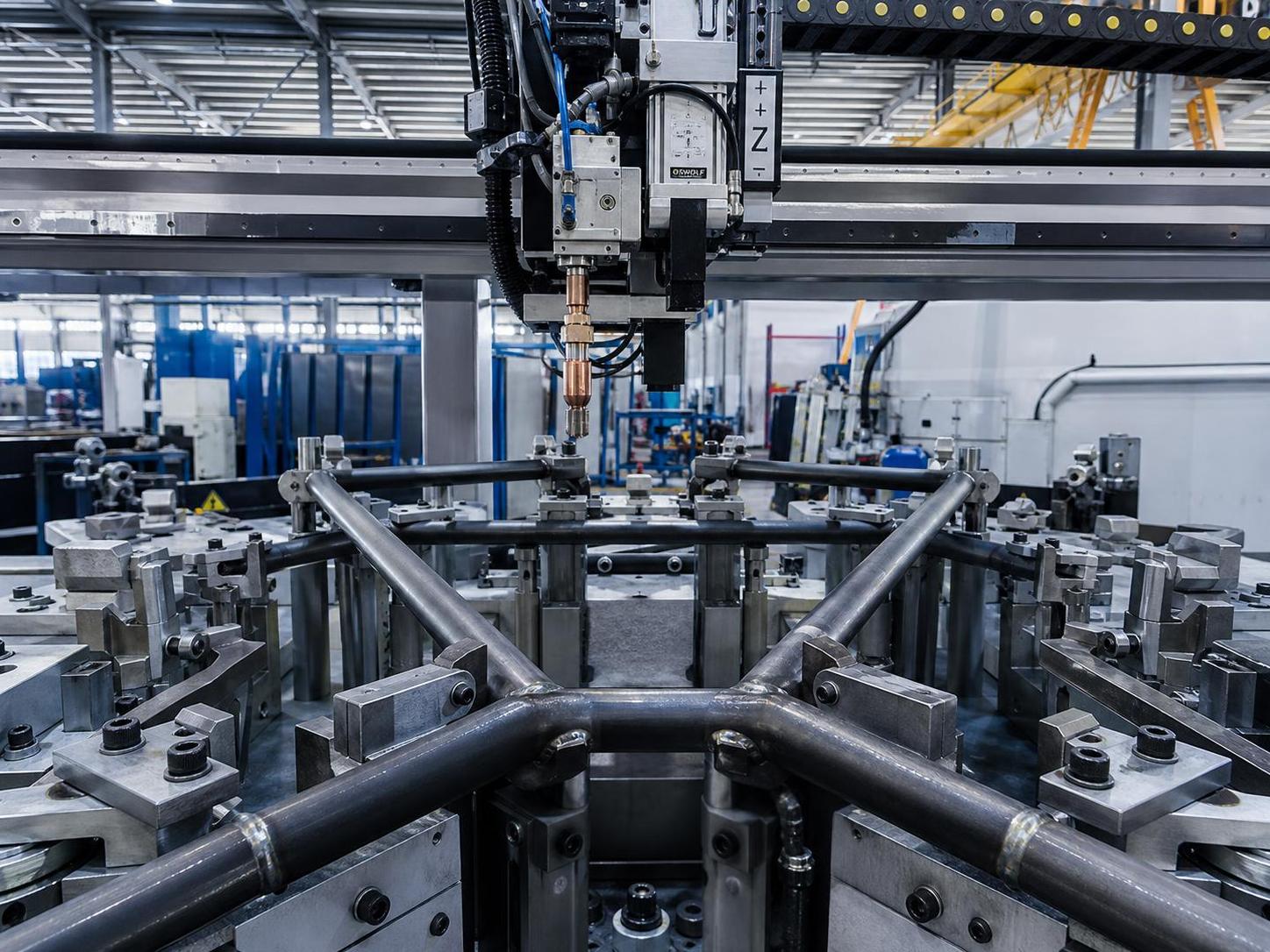
When buyers search for an Automatic space frame welding machine, the first number they see is usually the machine price. That number is useful, but it is rarely the number that decides whether the project stays on budget. In real purchasing work, total investment is shaped by configuration, throughput target, welding quality requirements, compliance documents, installation scope, operator training, spare parts, and the cost of downtime after handover.
A low quote can turn expensive very quickly if key items are missing. A higher quote can be the better buy if it includes fixtures, controls, commissioning, and a realistic service package. The practical way to compare suppliers is to break the project into cost drivers and check them one by one.
What procurement should verify before comparing offers
Use the checklist below in the same order you would review a quotation package.
- Define the actual workpiece range. Check member size, wall thickness, joint type, material grade, and expected weld length per shift. If this is vague, every quote will look comparable when it is not.
- Ask what level of automation is included. Automatic loading, positioning, seam tracking, rotation, unloading, and data logging may or may not be part of the base machine.
- Match the machine to your target output. A supplier can offer a lower-priced unit by quoting slower travel speed, more manual handling, or more changeover time.
- Check the utility requirement early. Power supply, compressed air, shielding gas setup, extraction, and workshop layout often create hidden site costs.
- Review document scope. Drawings, electrical schematics, wear parts list, PLC backup, maintenance manual, and acceptance records all matter once the machine lands on site.
Automation level changes the investment more than many buyers expect
Two machines can both be described as automatic and still sit far apart in price. One may automate welding only. Another may include automatic alignment, clamping, torch guidance, part rotation, and recipe storage. That difference affects labor, consistency, and training time.
For procurement, the useful question is not “Is it automatic?” but “Which steps still depend on manual intervention?” If operators need to reposition parts several times, shim misaligned members, or reset parameters between batches, your running cost rises even when the purchase price looks attractive. This is especially relevant for mixed production, where frequent size changes punish basic systems.
Ask the supplier to mark each step in the cycle as automatic, assisted, or manual. That simple breakdown exposes where the real labor cost sits.
Welding accuracy is not a side issue; it is a cost issue
If the machine cannot hold repeatable positioning and stable weld quality, the damage shows up later as rework, slower assembly, and rejected components. Buyers sometimes focus on arc power source brand and forget the mechanics around it: frame rigidity, clamping stability, guide accuracy, and control response all affect the finished result.
This is where factory line thinking matters. In welded structural production, downstream correction equipment can become part of the cost picture. For example, if a line also needs post-weld straightening for H-beam work, a machine such as HYJ-800 H beam straightening machine is relevant because it is designed to correct flange distortion and side bending after welding, with a stated flange width range of 200-800 mm, flange max thickness of 40 mm, and straightening speed of 13 m/min. That does not replace the need for good welding accuracy, but it does show why buyers should price the line as a process, not as a standalone welding station.
Capacity claims need to be tied to your part mix
Suppliers often discuss output in ideal conditions. Procurement should bring the discussion back to your own production mix. A machine running long, repetitive members behaves very differently from one handling short batches with many joint variations.
When reviewing capacity, check:
- Arc-on time versus total cycle time
- Fixture change time between models
- Manual tack requirement before automatic welding
- Number of operators required per shift
- Whether quoted speed applies to the full quality requirement or only to light-duty jobs
If the supplier cannot relate output to real part geometry, the capacity number has limited value in a buying decision.
Compliance and documentation can change landed cost
For buyers serving export-oriented manufacturing or multinational projects, compliance paperwork is not just a legal box. It affects import clearance, plant acceptance, insurance review, and internal EHS approval. If the equipment is offered in line with ISO9001-managed production and built to EU CE-related expectations, ask for the exact document pack included with the shipment rather than relying on general claims.
At minimum, verify whether the offer includes electrical drawings, operation manual, wear parts list, component list, and acceptance records. If CE-related documentation is relevant to your market, review the machine identification details and the document set before issuing the purchase order. It is cheaper to close that gap at quotation stage than after the machine is ready to ship.
Installation and commissioning are frequent budget traps
A quotation that excludes installation support may still be acceptable, but only if your plant team can absorb the work. Many procurement delays come from assuming the machine arrives ready to produce. In practice, site preparation, cable routing, foundation checks, gas lines, trial parts, and parameter tuning all take time.
Ask for a clear split between what the supplier provides and what your factory must prepare. This should include:
Training affects output sooner than spare capacity does
Procurement teams sometimes treat training as a soft item. It is not. If operators and maintenance staff cannot set recipes, replace wear parts, recover alarms, and keep alignment stable, the machine will never reach the output promised in the proposal.
The right question is very practical: what can your team do alone after five days, and what still requires remote or onsite support? Ask for a training scope tied to roles. Operator training and maintenance training are not the same thing. Also check the training language and the format of manuals. A strong machine with weak handover often becomes a service-dependent asset.
Maintenance cost is usually underestimated
The purchase team should ask for a wear-parts view before signing, not after the first shutdown. Torches, liners, tips, rollers, sensors, correction wheels, reducers, and electrical components all influence annual running cost. What matters is not only price, but also lead time and local availability.
This is another reason complete line planning matters. In related structural fabrication equipment, wear resistance and adjustment precision can materially affect upkeep. For instance, the linked straightening equipment above is described with heat-treated and ground components, correction wheels made of solid bearing steel, and fine adjustment through a synchronous worm gear and worm wheel mechanism. Those details are relevant because they influence service life and adjustment repeatability. Buyers should use the same mindset when reviewing an automatic welding system: ask which parts wear, how they are serviced, and how long replacement takes.
Do not ignore logistics, payment terms, and acceptance conditions
A competitive equipment price can lose its edge once freight, packaging, inland transport, customs-related handling, and local unloading are added. Procurement should compare offers on the same commercial basis. If one supplier quotes ex-works and another includes port delivery or export packing, the difference matters.
Acceptance terms deserve the same level of scrutiny. Check whether final acceptance is based on no-load running, sample welding, dimensional inspection, or a defined production trial. Without a written acceptance method, disputes tend to move downstream, when you have less leverage.
A practical comparison model for procurement
When you shortlist suppliers, build the decision around total project cost, not catalog price alone.
- Lock the workpiece range and target output.
- List every included and excluded function in the quotation.
- Price site preparation, utilities, installation, and commissioning separately.
- Review compliance documents and acceptance criteria before PO issue.
- Add first-year wear parts, training, and expected service support.
- Compare downtime risk, not just purchase cost.
That sequence usually exposes the real difference between a cheap offer and a reliable one. For an Automatic space frame welding machine, the best buying decision is usually the machine that fits your parts, reaches your quality target with the fewest manual corrections, and arrives with enough documentation and support to start production without a long learning curve.
If you are comparing quotes now, start by rewriting each offer into the same cost template. Once every supplier is forced into the same checklist, the total investment picture becomes much clearer, and the risky gaps are much easier to spot before money is committed.
search
Products Navigation
Send Us A Message