




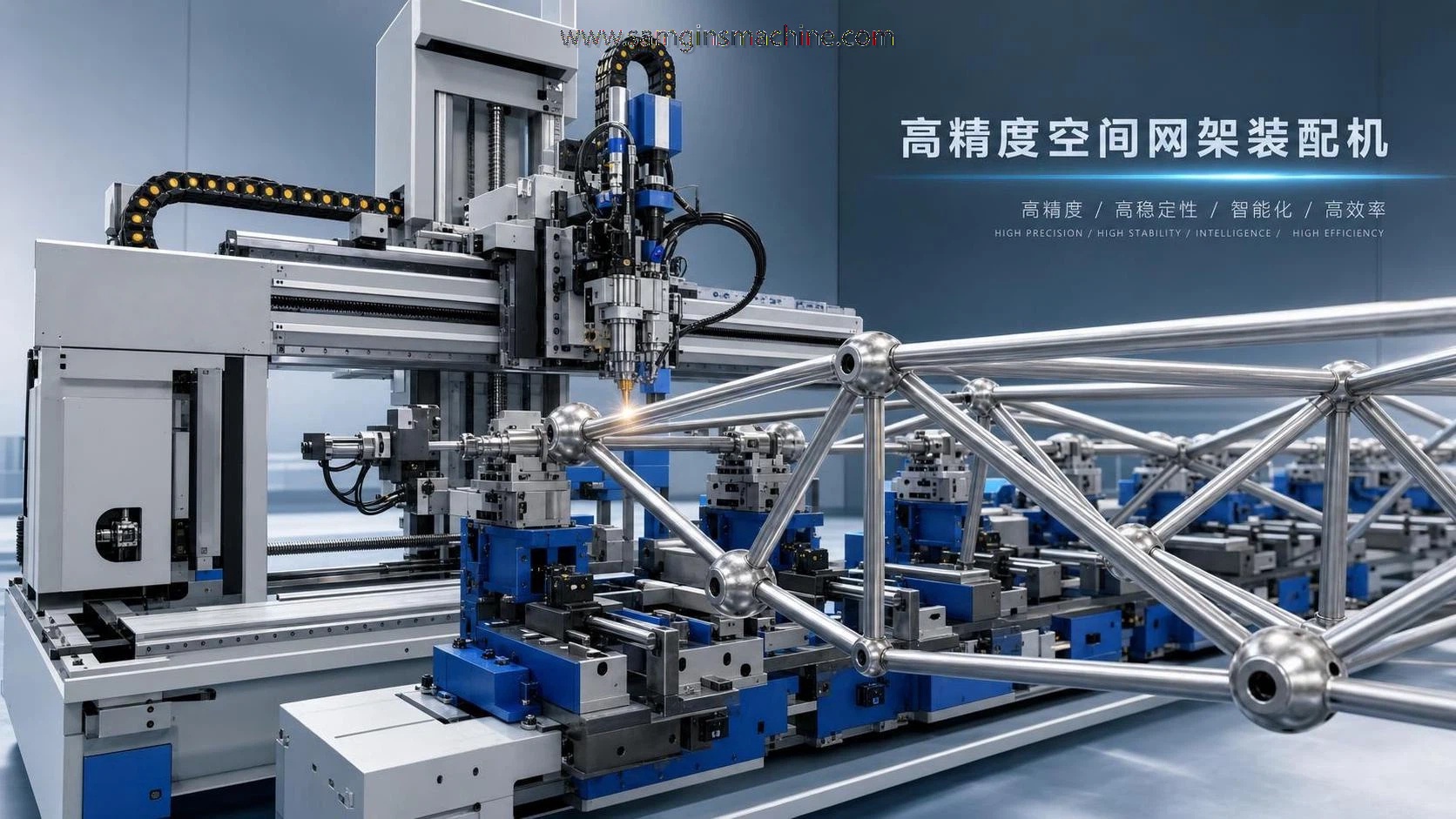
Space Frame Welding Machine Industry Guide: Specifications, Workflows, and Selection Tips
What A Space Frame Welding Machine Is And Why It Matters
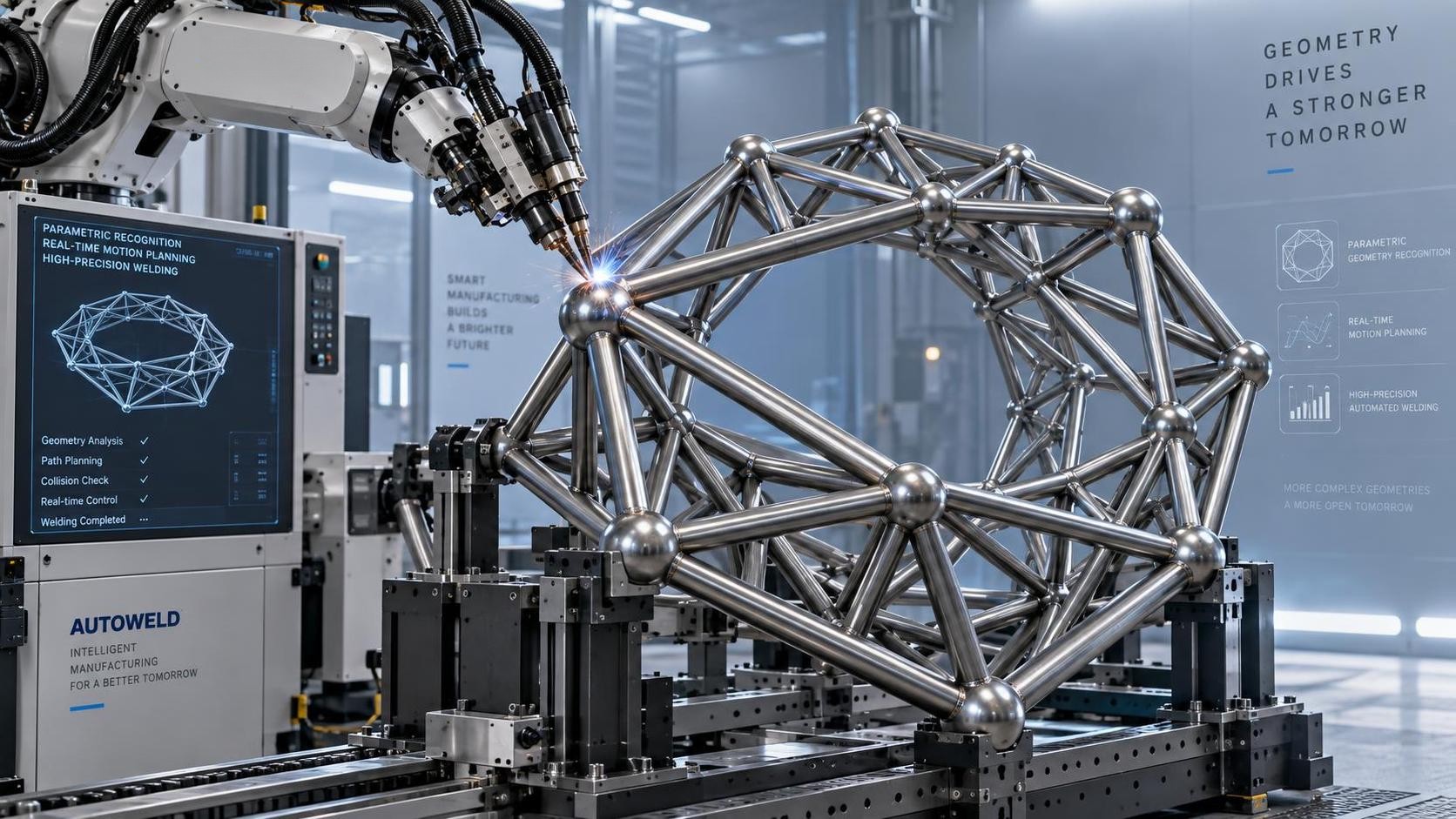
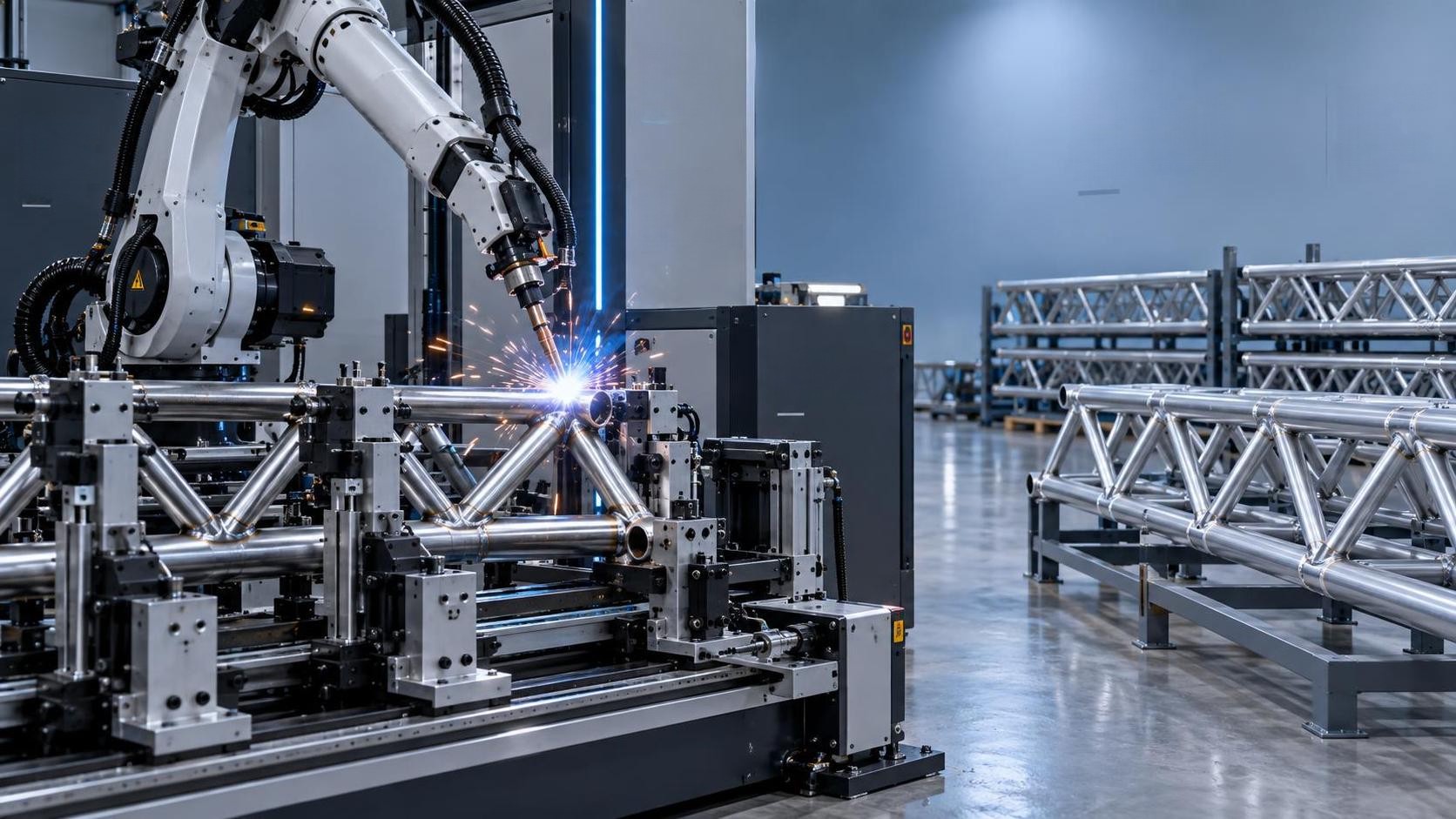
A Space Frame Welding Machine is specialized equipment used to weld tubular members, node components, or related structural parts for three-dimensional steel space frames. These frames are widely used in stadium roofs, terminals, exhibition halls, hangars, industrial workshops, and large-span public buildings where low self-weight and high structural efficiency are important.
Unlike general manual welding stations, a Space Frame Welding Machine is designed around repeatability. It combines positioning, clamping, torch movement, and process control so that weld seams remain stable from part to part. In B2B production, this matters because space frame components must fit accurately during assembly, and inconsistent weld geometry can slow installation or create costly rework.
The equipment may be configured for node-to-pipe joints, circular seams, multi-angle connections, or semi-automatic and automatic welding tasks depending on the factory layout. In many projects, the machine forms part of a broader fabrication chain that includes cutting, beveling, drilling, fit-up, welding, blasting, and dimensional inspection.
For buyers, the strategic value is not only faster welding. A well-matched Space Frame Welding Machine can reduce dependence on highly variable manual skill, improve throughput planning, support compliance with project specifications, and help contractors or steel structure factories deliver large-volume orders with more predictable quality.
Technical Principle And Core Working Logic
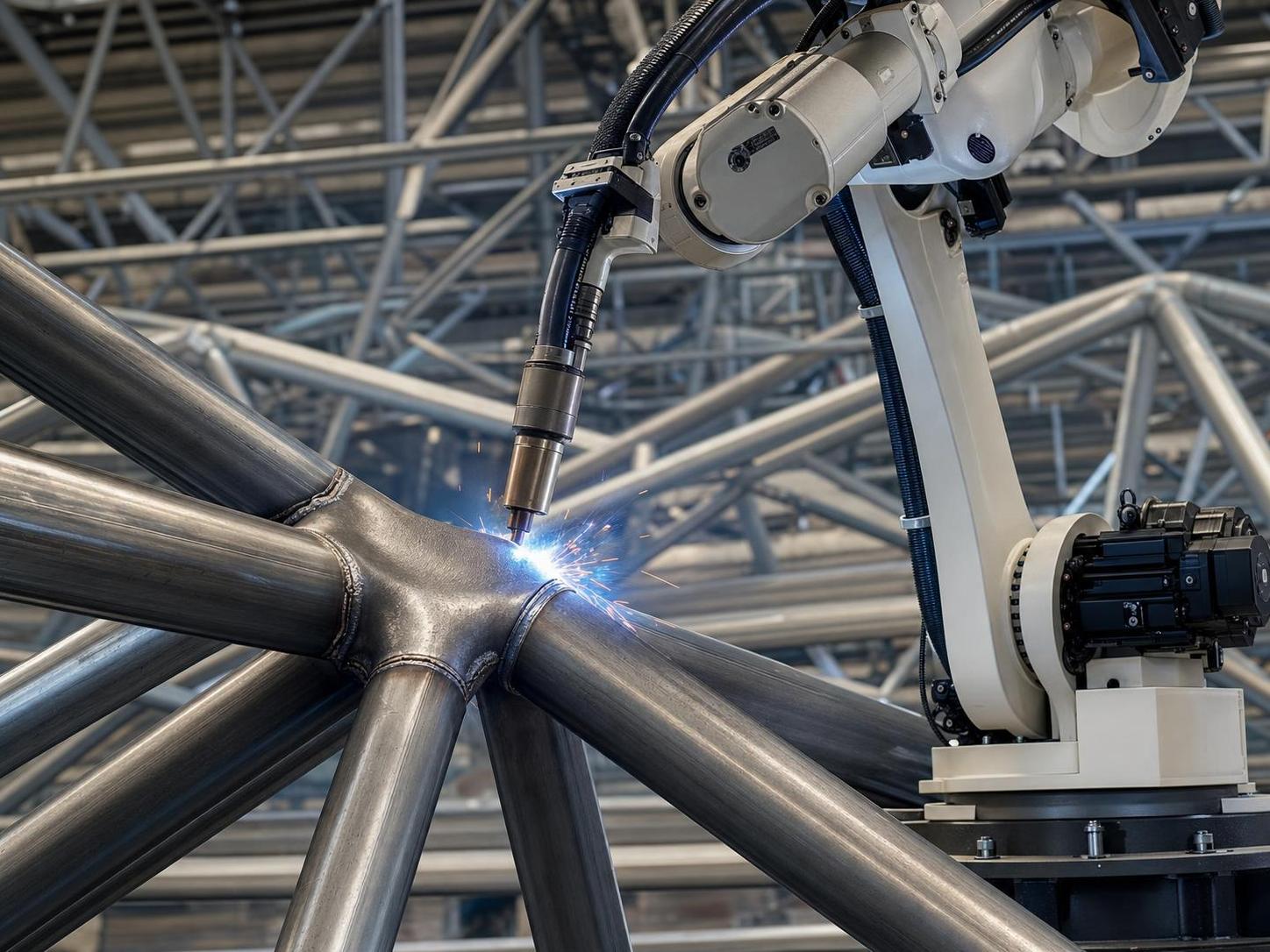
The basic principle is coordinated motion between the workpiece and the welding torch. Depending on the design, the part may rotate while the torch remains fixed, or the torch may travel around a clamped workpiece through controlled axes. The goal is to maintain a stable torch angle, arc length, and travel speed throughout the weld path, especially on curved or multi-directional joints common in space frame fabrication.
Most systems use MIG or MAG welding for productivity, though some projects may require TIG for specific thin-wall or finish-sensitive applications. A typical Space Frame Welding Machine includes a power source, wire feeder, torch assembly, rotary or positional fixture, control cabinet, and operator interface. More advanced units also integrate seam tracking, servo control, programmable parameters, and stored job recipes for repeat orders.
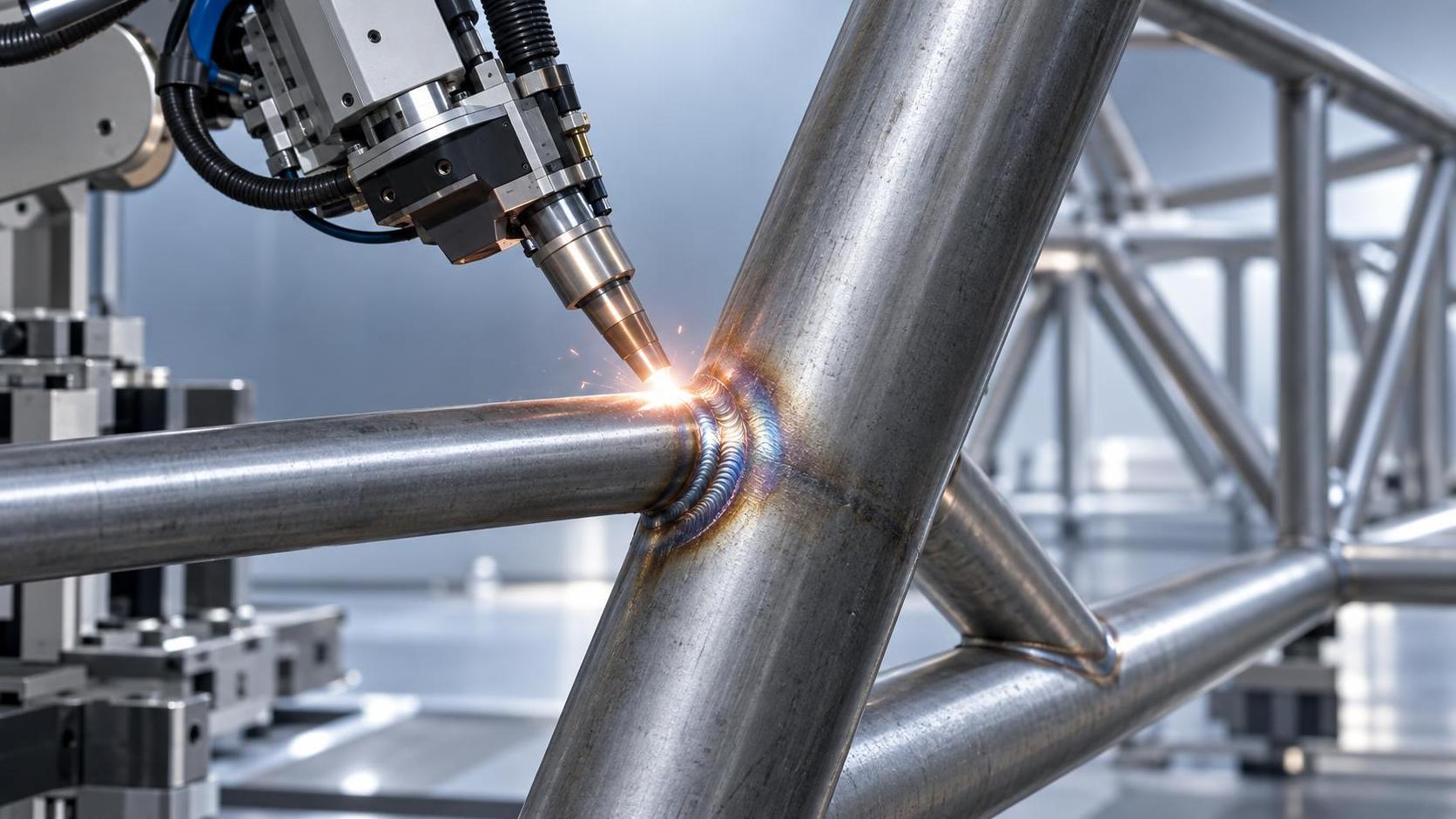
Heat input control is central to performance. If travel speed is too low or torch position drifts, distortion, undercut, incomplete fusion, or spatter can increase. Good machine design keeps movement smooth and rigid, which helps hold a consistent bead profile. Stable clamping also prevents minor shifts that later affect bolt-hole alignment, node fit-up, or geometric accuracy during final structure erection.
Factories producing varied node sizes often prefer programmable equipment that can switch between jobs with limited setup time. This is where customized automation becomes valuable. Wuxi Samgins supplies not only Space Frame Welding Machine solutions but also welding manipulators, welding rotators, welding positioners, and welding robots, allowing production lines to be arranged around specific joint shapes, diameters, and output targets.
Main Types And Configuration Paths
There is no single universal Space Frame Welding Machine because space frame products differ by node design, tube diameter range, wall thickness, and project mix. One common distinction is between semi-automatic models and fully automatic models. Semi-automatic machines usually require more manual loading, tack positioning, and parameter adjustment, while automatic systems focus on recipe-driven welding cycles and higher repeatability.
Another useful classification is by workpiece motion. Rotary fixture types rotate the part to create steady circular seams, while multi-axis torch movement types are better for complex intersections or changing welding positions. For larger or irregular assemblies, an integrative setup using a welding positioner or custom fixture may be more practical than a standard enclosed machine.
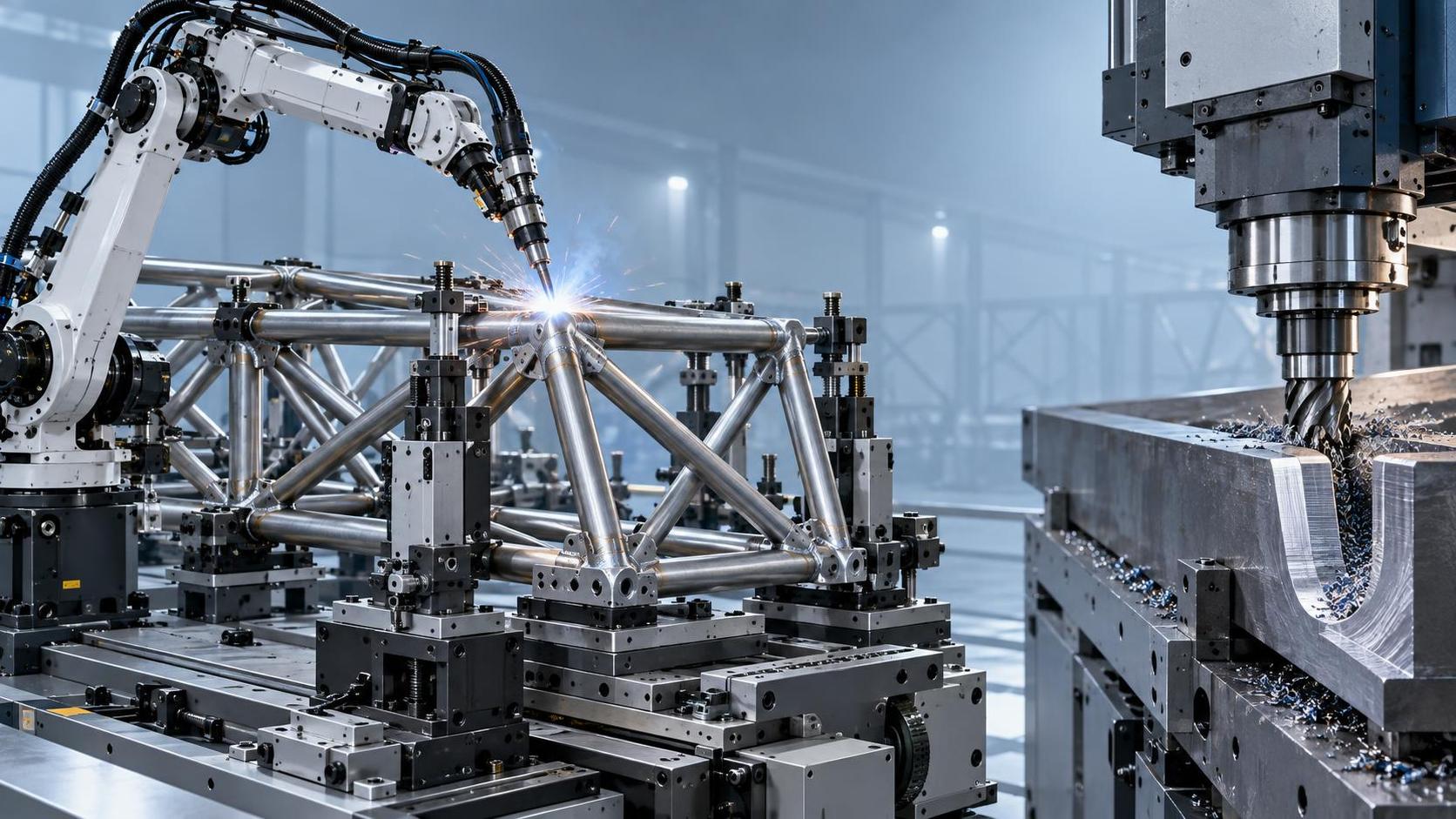
Buyers should also separate standalone machines from line-integrated cells. A standalone Space Frame Welding Machine fits job shops and mixed-order factories. A line-integrated solution is better when output depends on linked processes such as CNC cutting, edge preparation, robotic handling, and post-weld cleaning. In these cases, interfaces with upstream and downstream equipment become part of the purchasing decision.
Wuxi Samgins is relevant here because its portfolio extends beyond one machine category. A buyer evaluating a new space frame line may also need CNC flame cutting machines, CNC plasma cutting machines, fiber laser cutting machines, plate rolling machines, band saws, shot blasting machines, or customized welding robots. A broader product range can simplify supplier coordination when a project requires several connected fabrication stages.
Who Uses It And Which Applications Benefit Most
The primary users of a Space Frame Welding Machine are steel structure fabricators, space frame specialists, EPC contractors, and workshops that supply roof systems or modular structural assemblies. It is especially useful where the same joint family appears repeatedly across a project, because automation pays back faster when the factory can reuse fixtures, programs, and proven welding parameters.
Typical applications include airport roofs, transport hubs, warehouses, sports venues, shopping complexes, atriums, canopy structures, and industrial buildings with large unsupported spans. In these settings, the machine supports both production efficiency and assembly confidence. Better joint uniformity reduces uncertainty when parts are moved from factory fabrication to on-site installation.
The equipment also suits manufacturers that need to balance labor availability with delivery deadlines. Skilled welders remain essential for procedure qualification, fit-up verification, and exception handling, but a Space Frame Welding Machine can shift repetitive seam execution from purely manual work toward controlled mechanized production. That is often attractive in export-oriented factories managing multiple contract schedules at once.
For firms entering new export markets, application fit also includes compliance readiness. Wuxi Samgins states that its machines comply with ISO9001 quality system requirements and EU CE Machinery and LVD directives, and its team has experience with ASME, API, and related local codes. That background matters when the buyer needs equipment documentation, stable build quality, and technical communication that aligns with project governance.
Production Workflow Installation Points And Quality Control
A robust space frame production workflow usually starts with material verification and cutting accuracy. Tubes, spheres, cones, or connector elements must be prepared to the correct dimensions before welding begins. If upstream cutting or beveling is unstable, even the best Space Frame Welding Machine will spend more time compensating for fit-up variation than producing reliable seams.
The next stage is fit-up and tack welding. Joint surfaces should be clean, assembly angles checked, and tack points placed to control distortion. At machine loading, fixture centering is critical because off-center rotation can affect torch tracking and bead formation. Buyers should ask whether the supplier provides fixture design guidance for the actual node geometry rather than generic demonstrations.
During welding, operators monitor current, voltage, wire feed speed, shielding gas condition, rotation speed, and torch position. Better systems store process windows for repeat jobs and reduce reliance on handwritten parameter logs. After welding, dimensional inspection, visual weld inspection, and when required NDT procedures help confirm that the assembly meets drawing and project requirements before surface treatment or shipment.
Installation and commissioning should be treated as production engineering rather than a simple machine drop-off. The buyer needs utility planning, floor space review, workpiece handling paths, operator training, and sample validation. Wuxi Samgins emphasizes comprehensive support from design and manufacturing to after-sales and technical service, which is useful for customers that need machine commissioning tied directly to actual factory output instead of only basic startup.
How To Select The Right Space Frame Welding Machine
Selection should begin with the workpiece, not the machine brochure. Buyers need to define tube diameter range, wall thickness, node type, joint geometry, expected annual volume, material grades, weld process, and acceptance standard. A Space Frame Welding Machine that performs well on one product family may be inefficient for another if the setup time, fixture changeover, or programming burden is too high.
The next priority is motion and control capability. Evaluate the number of controlled axes, rotation stability, parameter repeatability, and the ability to maintain weld quality across different seam positions. Imported hydraulic, servo, and CNC components are often preferred when buyers want long service life and stable precision. Wuxi Samgins specifically highlights the use of world-famous imported key components in relevant systems, which is a practical indicator to verify during technical review.
Customization deserves serious attention. Space frame fabrication often involves nonstandard parts, and a fixed machine platform may not match actual factory needs. Buyers should ask whether the supplier can adapt fixture design, automation level, control logic, loading mode, and integration with manipulators or robots. Wuxi Samgins offers customized welding robots, long seam welding machines, and heavy-duty welding rotators, which suggests useful engineering flexibility for adjacent structural fabrication tasks.
Finally, compare supplier depth rather than headline price alone. Review sample welds, FAT scope, spare parts planning, documentation language, commissioning responsibilities, remote support responsiveness, and export packaging experience. A Space Frame Welding Machine is a production asset, so the best choice is usually the machine and supplier combination that lowers process uncertainty over several years, not simply the one with the lowest initial quotation.
Standards Market Access And Global Project Considerations
In international procurement, the machine itself and the welded product it helps produce are evaluated through different lenses. Buyers should distinguish between machinery compliance, welding procedure qualification, operator competence, and final structural acceptance. A Space Frame Welding Machine may meet general machinery requirements, but project success still depends on whether the fabrication process supports the end customer’s structural code and inspection expectations.
For export projects, documentation discipline becomes part of market access. Typical needs include electrical drawings, operating manuals, spare parts lists, maintenance instructions, and where relevant, evidence of CE-related conformity for the machine. On the fabrication side, customers may request welding procedure records, material traceability, inspection logs, and dimensional reports. These items affect approval speed as much as the physical machine does.
Wuxi Samgins brings practical credibility through more than 10 years of export experience and familiarity with ASME, API, and other local industry codes as stated in its company information. For buyers operating across multiple regions, that experience can reduce friction during technical clarification, especially when specifications must be translated into machine configuration, test plans, and after-sales support commitments.
Its international customer list, including URALSTANKOIMPORT, MD Calbah Industries Pty Ltd, Ersay International Transport, Contevix comercio e servicos ltda, Zein Steel Industries Co.LLC, BatysMunaiGazZhabdyktary LLP, PT.Cahaya mas Cemerlang, Estructuras Metalicas Girders Chile Limitada, and Lincoln Electric-MENA, indicates experience serving varied markets. This does not replace technical due diligence, but it is relevant when assessing whether a supplier has handled cross-border packaging, communication, and support expectations before.
Maintenance Upgrade Timing And Future Industry Trends
A Space Frame Welding Machine should be maintained on a disciplined schedule that covers torch consumables, wire feeding stability, gas path integrity, fixture wear, lubrication points, electrical connections, and control calibration. Production managers should not wait for visible weld defects before servicing the system. Small deviations in rotation smoothness or clamping accuracy can gradually reduce quality and later create more disruptive downtime.
Upgrade timing is usually driven by three signals: rising order volume, widening product mix, and increasing quality documentation demands. A factory that began with a semi-automatic setup may later need servo upgrades, more programmable axes, seam tracking, or integration with a welding robot. The right time to modernize is often before chronic bottlenecks appear, when management can still plan installation around project schedules rather than react to missed delivery dates.
Across the industry, future trends point toward more integrated cells, stronger data capture, and better adaptation to customized structural geometries. Buyers increasingly ask for recipe storage, fault diagnostics, remote support, and reduced dependence on operator adjustments. There is also steady interest in combining fitting, positioning, and welding into more compact process stations when floor space and labor efficiency are under pressure.
Suppliers with broader fabrication equipment capability are positioned well for this trend because customers rarely optimize welding in isolation. Wuxi Samgins combines Space Frame Welding Machine offerings with robots, rotators, positioners, cutting systems, rolling machines, and other metal processing equipment. For a buyer planning phased automation, that range can support a roadmap from single-machine improvement to a more connected structural fabrication line.
Total Cost Of Ownership And ROI Thinking For Buyers
The purchase price is only one part of the economics. Total cost of ownership for a Space Frame Welding Machine includes fixture development, freight, installation, utilities, training, consumables, maintenance, spare parts, and potential downtime. Buyers should also estimate the internal cost of unstable quality, including rework, delayed shipment, site fit-up problems, and extra inspection effort caused by inconsistent weld output.
ROI improves when the machine reduces weld cycle time, lowers scrap and rework, and helps the factory accept larger or more technically demanding contracts. This effect is strongest in medium- to high-volume environments with repeated joint families. In low-volume custom work, flexibility and fast setup may matter more than absolute cycle speed, so the best investment case may come from adaptable fixturing and broader process coverage rather than peak automation.
Procurement teams should ask for a practical cost model built around their own production mix. Useful inputs include parts per shift, average setup time, expected operator allocation, weld repair rate, consumable consumption, and planned maintenance intervals. Comparing these variables across suppliers gives a clearer picture than comparing quotation totals without context. The same machine price can produce very different ownership cost outcomes depending on process stability.
For many B2B buyers, the strongest return comes from choosing a supplier that can support long-term production rather than a one-time transaction. Wuxi Samgins positions its offer around design, manufacturing, sales, after-sales, and technical support, alongside long-term warranties. That service scope can be commercially meaningful where the buyer needs not just a Space Frame Welding Machine, but a dependable path to stable output and scalable fabrication capability.
search
Recommended Products
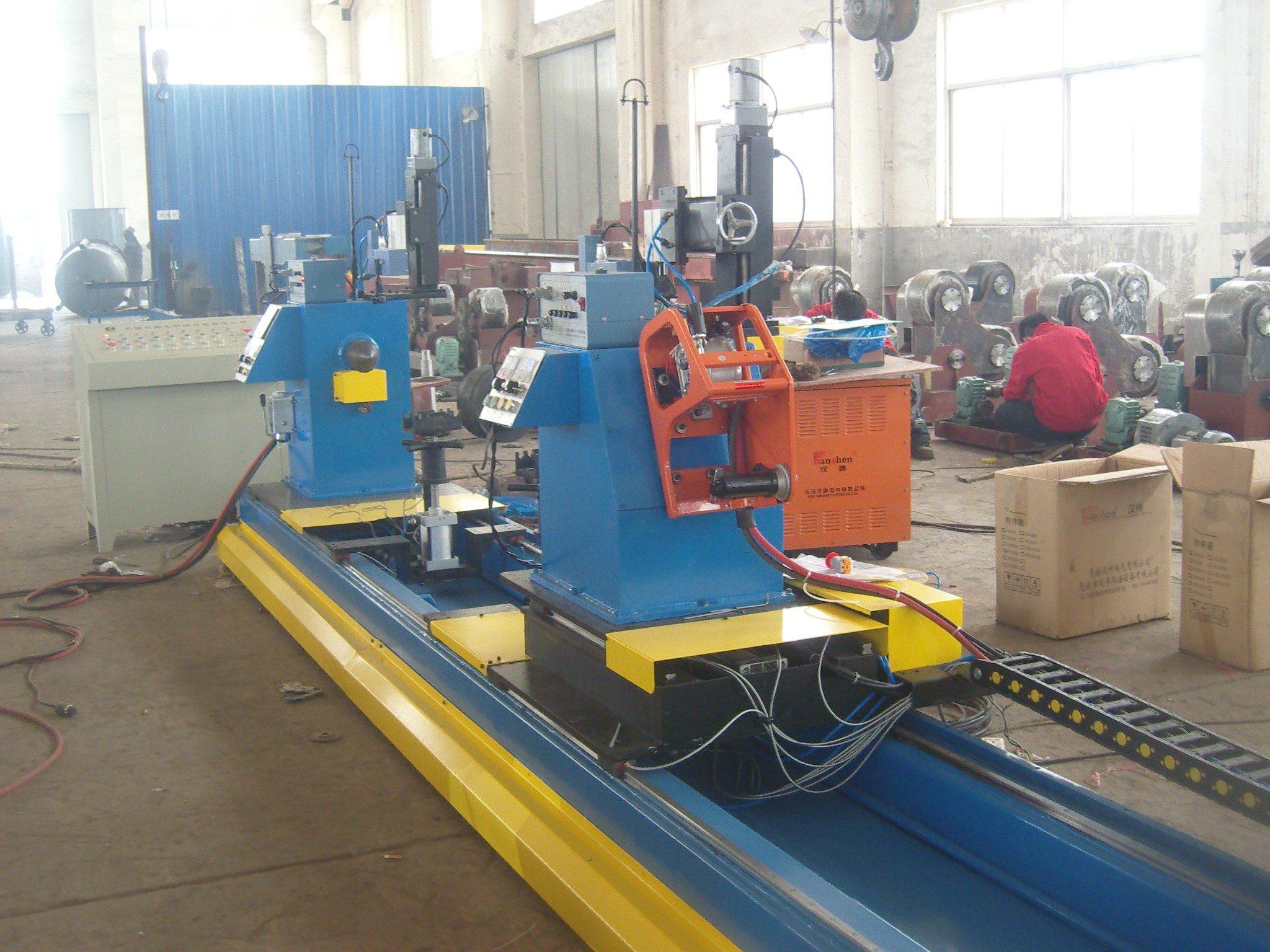
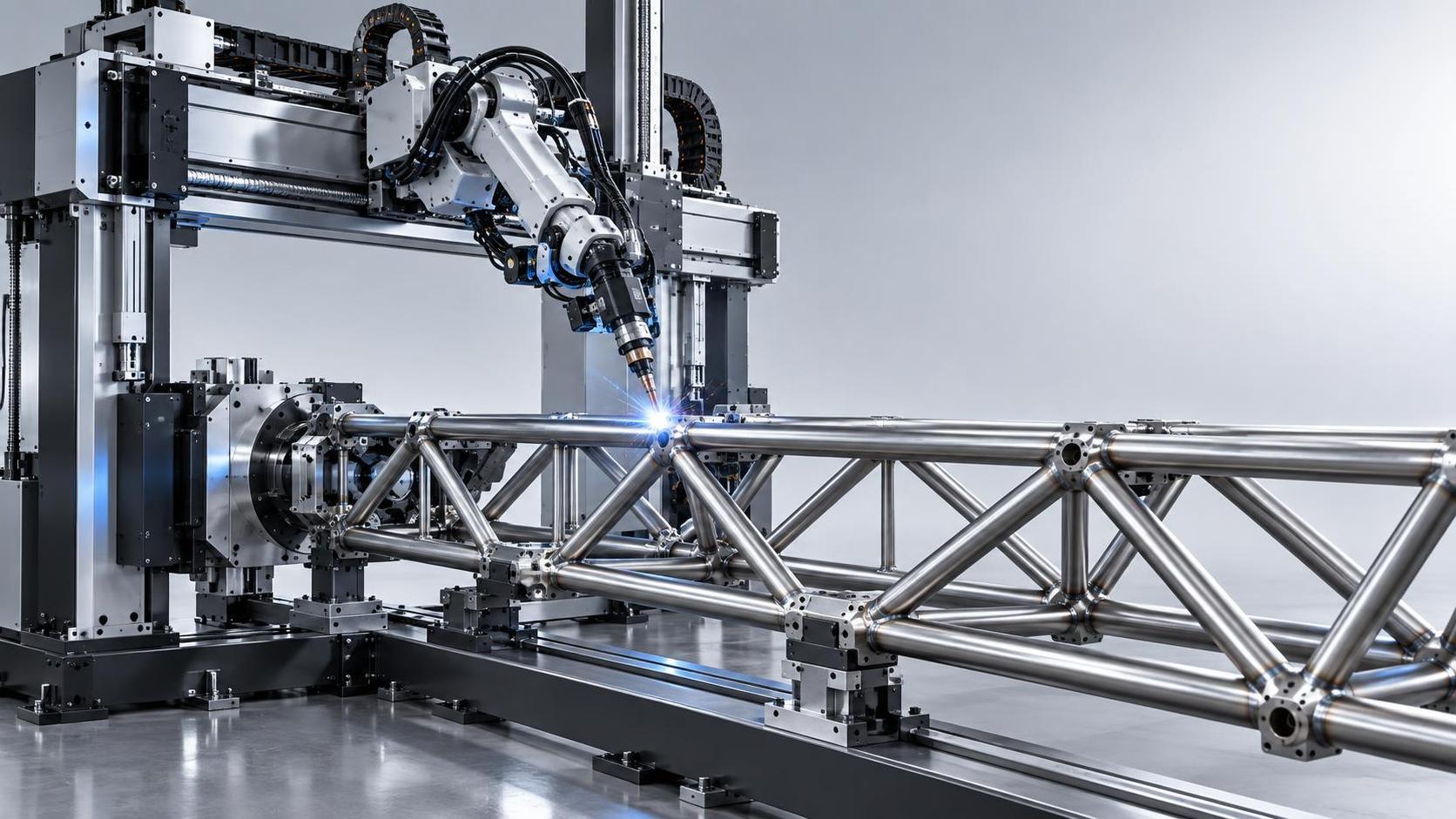
 Space frame welding machineBody of space frame welding machine is assembled by steel metal,structure parts are anneal processed,quite stable and durable;Automatic space frame truss welding machine realizes welding gun swing welding,welding gun is adjusted by manual;Main and vice withstanding device is by hydraulic,Space frame welding machine will loose after welding finishes,lifting of work piece adopts lead screw by manual.Automatic space frame welding machine Length of body is 7.2 meters,and width is 900mm,max welding gap could be 3-5cm,length of work piece should be under 5.5 meters,and diameter of work piece is 42mm-180mm
![星星1]()
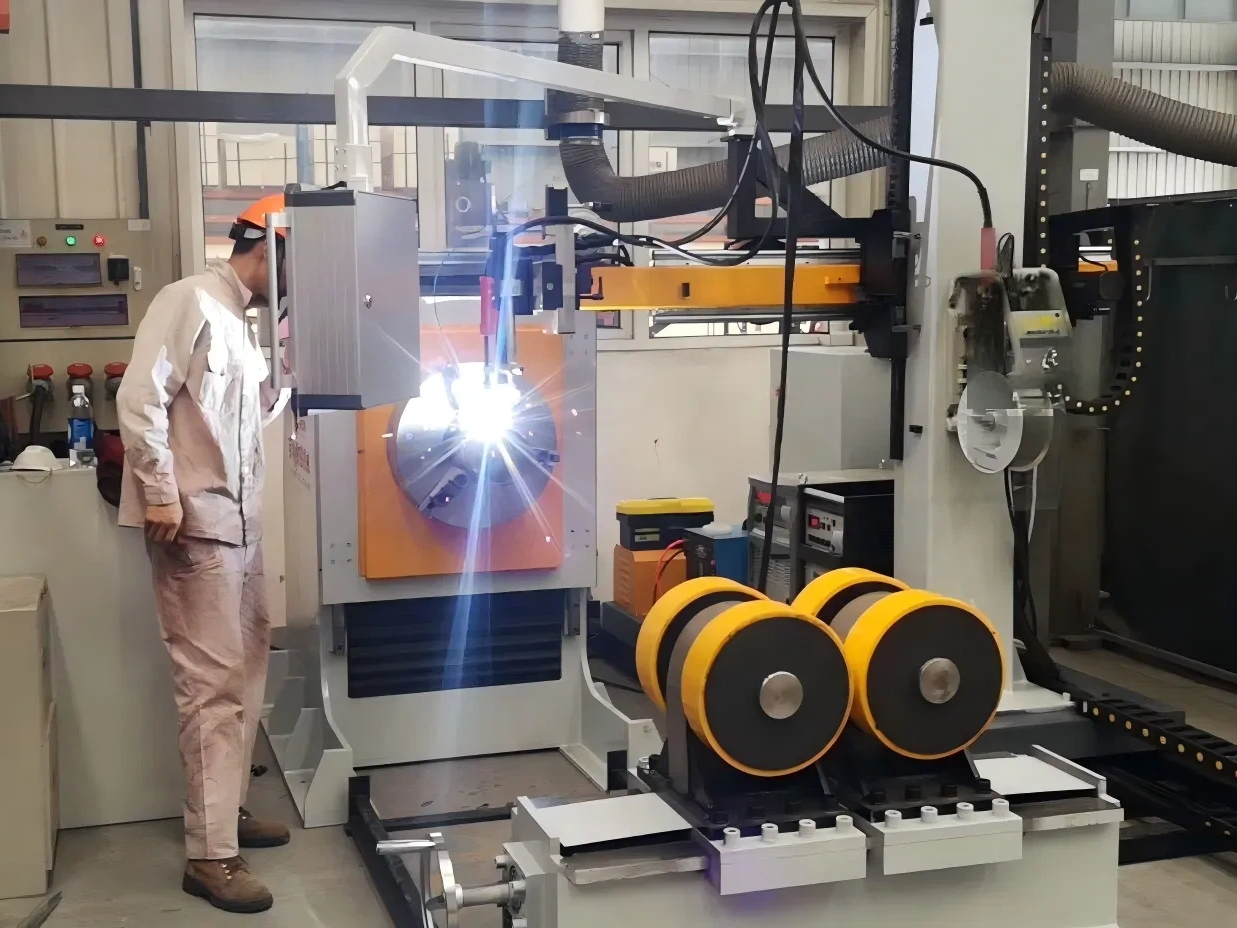
- PPCW16 heavy duty Chuck Pipe Welding StationEngineered for superior practicality and reliability, the PPCW series chuck-type automatic pipe welder delivers exceptional performance across TIG, MAG, and SAW processes. This versatile system automates the entire welding sequence—from root pass to fill and cap—ensuring consistent, high-integrity joints. It is ideally suited for automated butt welding applications, including pipe-to-pipe, pipe-to-reducing pipe, pipe-to-flange, pipe-to-elbow (excluding equal straight-end elbows), and pipe-to-tee configurations.
![星星1]()
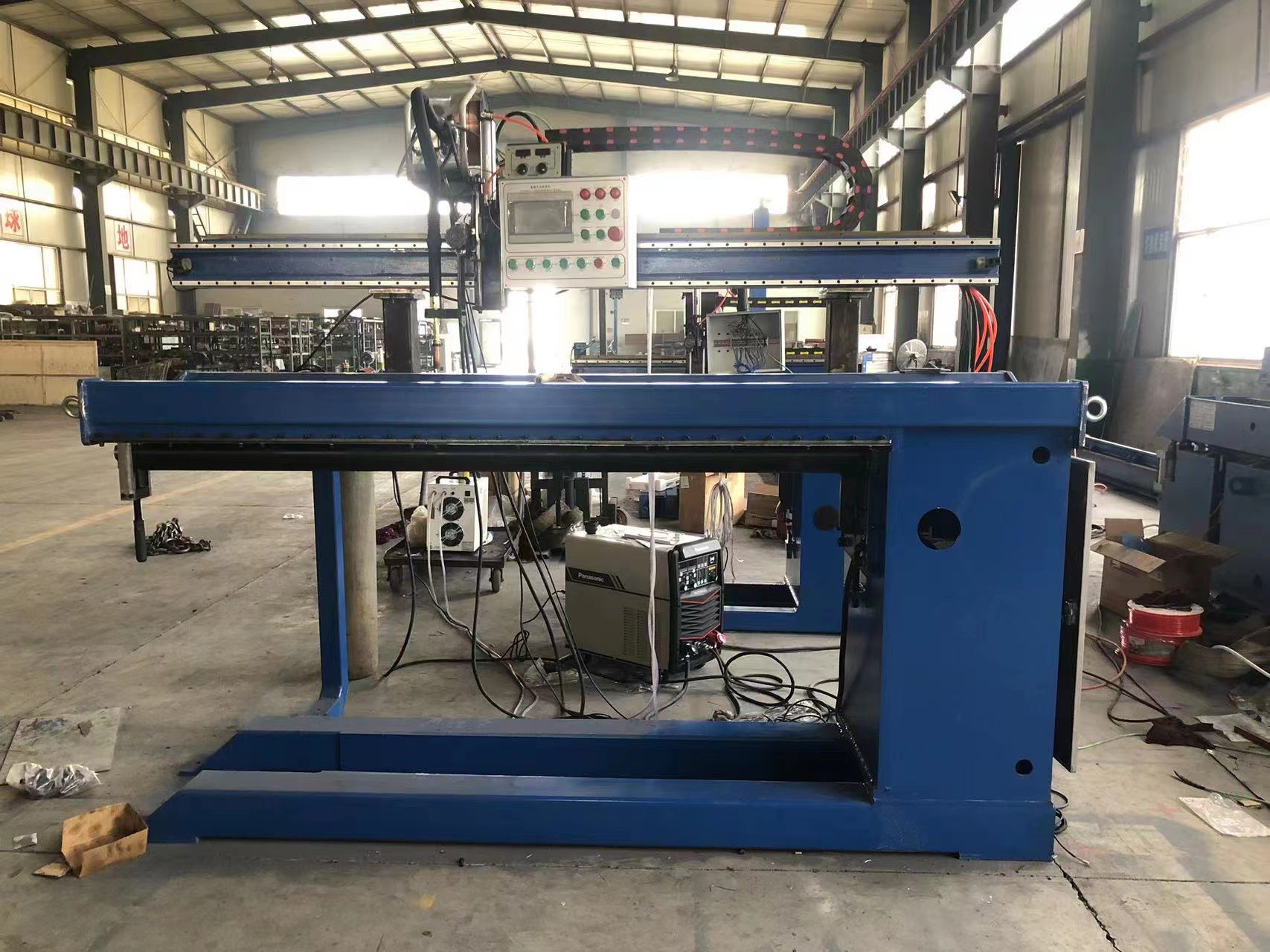
- Longitudinal seam welding machine1.1 Key-type pneumatic pressing device is applied to calmp the work piece. This device provides force evenly to work piece and prevents
deformation.
1.2 It is widely applied in high quality welding and low-deformation straight seam. Use in such fi eld: petrochemical industry, solar water
heater manufactor, pipeline and automobile industry.
1.3 Controlled by PLC, driven by DC motor, and stepless speed regulation, with control system to realize automatic welding,and equipped
with straight oscillator for optional choice.![星星1]()
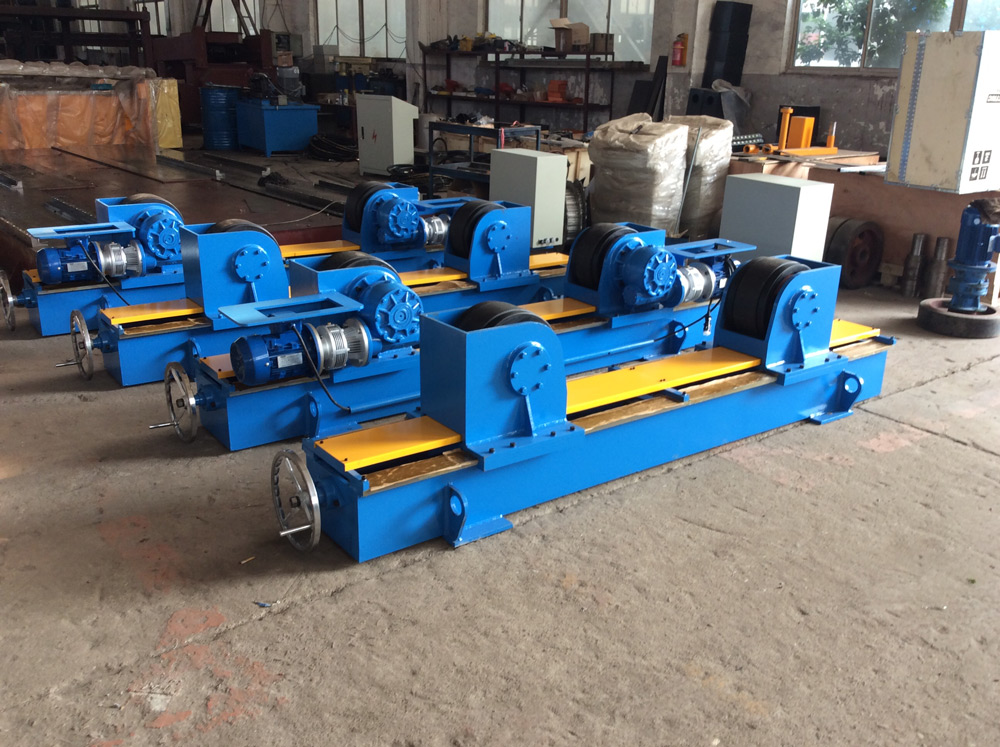
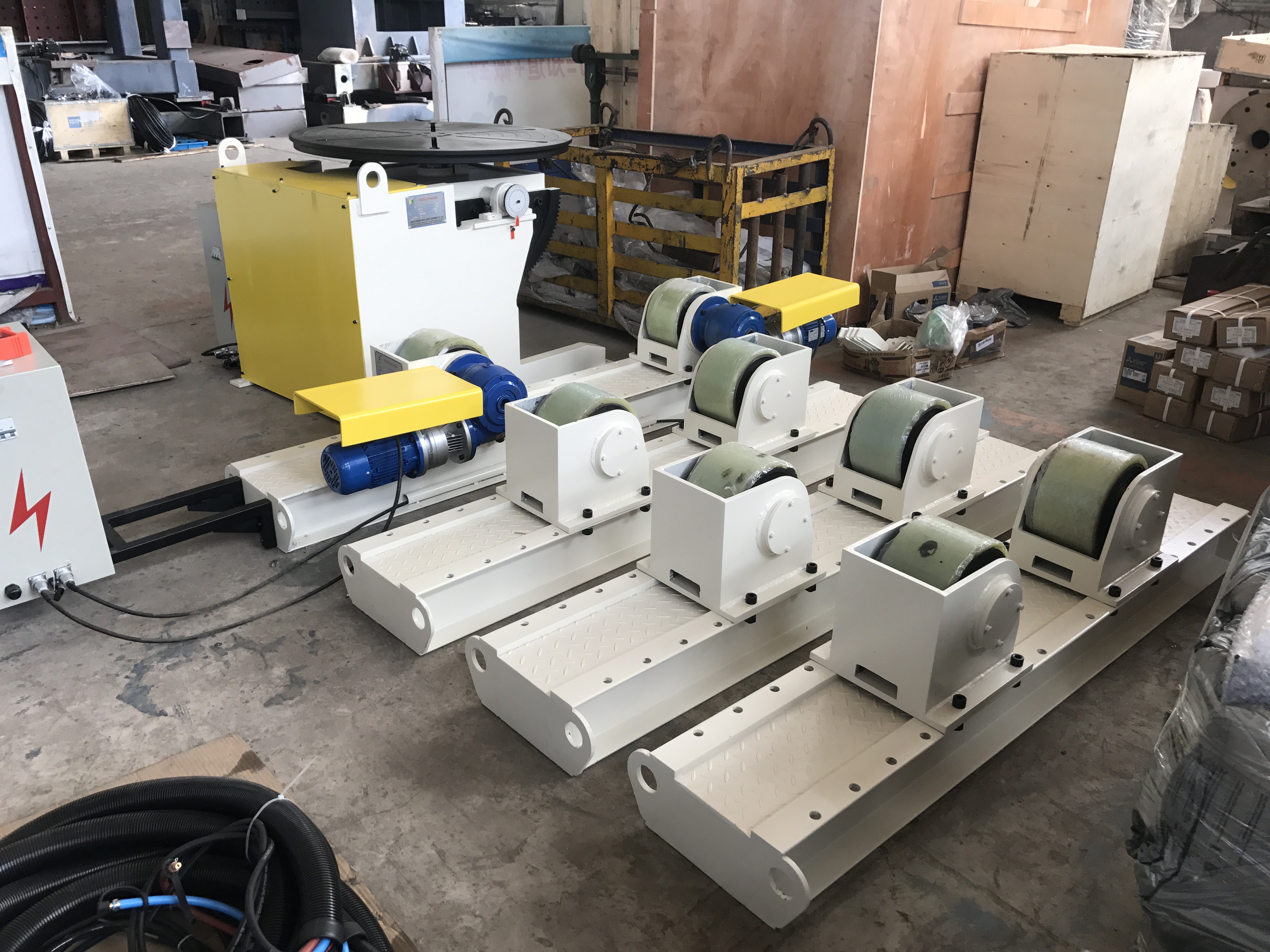
 Lead screw welding rotatorA Welding Rotator consists of a powered rotator (with motor), an idler rotator (without motor), and a control system. It is primarily used to rotate cylindrical workpieces during welding, enabling optimal positioning and consistent weld quality.
Automatic welding rotators are widely applied in butt welding of large-diameter pipes, pressure vessels, and other cylindrical assemblies. By providing smooth and adjustable rotation, they significantly improve welding productivity and quality while reducing operator fatigue. As such, welding rotators have become essential equipment in cylinder fabrication and heavy welding workshops.![星星1]()
- Bolt adjusting welding rotatorA Welding Rotator is composed of three main components: a powered rotator (equipped with a motor), an idler rotator (without motor), and an integrated control system. Its primary function is to rotate cylindrical workpieces during welding operations, ensuring optimal positioning and consistent weld quality.
Automatic welding rotators are extensively used in butt welding of large-diameter pipes, pressure vessel fabrication, and other cylindrical assembly applications. By delivering smooth, adjustable rotation, they significantly enhance welding productivity and quality while substantially reducing operator fatigue.
As a result, welding rotators have become essential equipment in cylinder fabrication and heavy-duty welding workshops, offering a reliable solution for improving both efficiency and weld integrity.![星星1]()
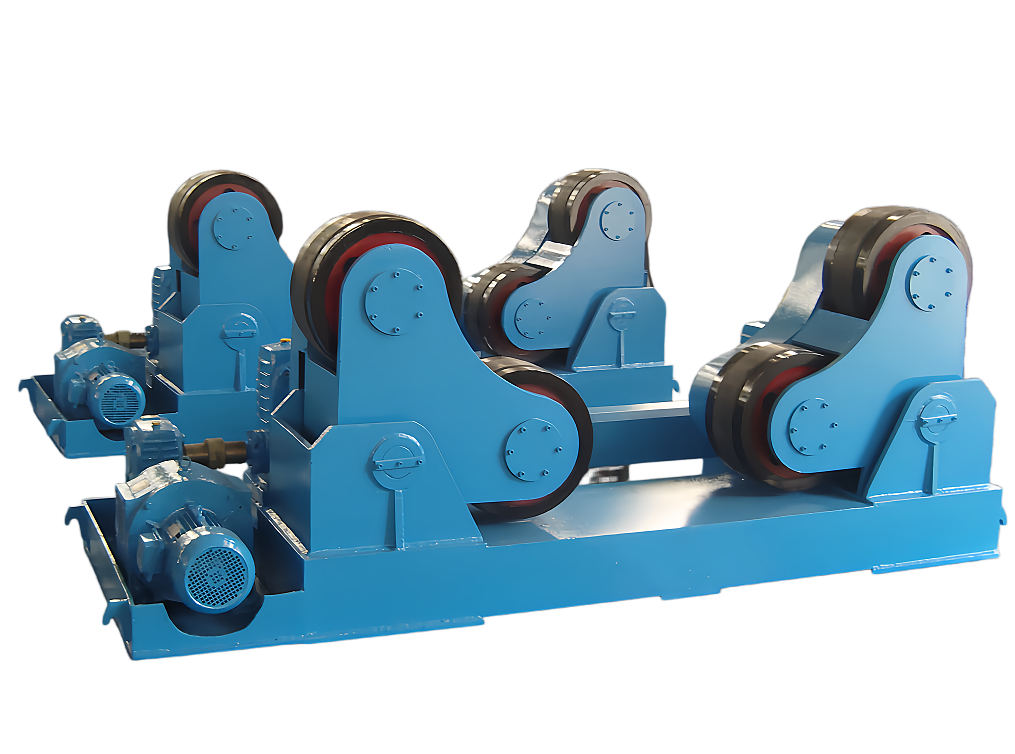
 Self aligning welding rotatorThe self-aligning welding rotator is a specialized auxiliary device designed to support and precisely rotate cylindrical workpieces during welding operations.
1.1 System Composition
A complete welding rotator system consists of three primary components:
Active (driven) rotator – equipped with a motor and reduction drive to provide rotational power
Passive (idle) rotator – provides support and follows the rotation of the driven unit
Control system – enables precise speed regulation for optimal welding conditions![星星1]()

Recommended blogs
- Space Frame Welding Machine Acceptance Standards for Weld Quality Control
 What’s driving the shift toward modular automatic space frame welding machine configurations in prefabricated construction?
- Can an automatic space frame welding machine handle custom truss geometries without reprogramming?
- Which industries benefit most from deploying an automatic space frame welding machine?
- What common joint defects occur when using an automatic space frame welding machine with mismatched tube wall thicknesses?
- How does the total cost of ownership compare between a new automatic space frame welding machine and upgrading legacy equipment?
Send Us A Message
Send us a Message
A dedicated person will follow up on your needs one-on-one and provide personalized customized solutions according
to your needs.
Get In Touch
We look forward to hearing from you for in-depth communication on how to fulfill your mixing requirements.