




PPCW16 heavy duty Chuck Pipe Welding Station
Full-range Machinery & Customized Non-standard Solutions
Authorized Certificates & Independent R&D Patents
Over 10 Years Global Export & Worldwide Project Cases
PPCW16 heavy duty Chuck Pipe Welding Station Description
1.Introduction for PPCW16 heavy duty Chuck Pipe Welding Station:
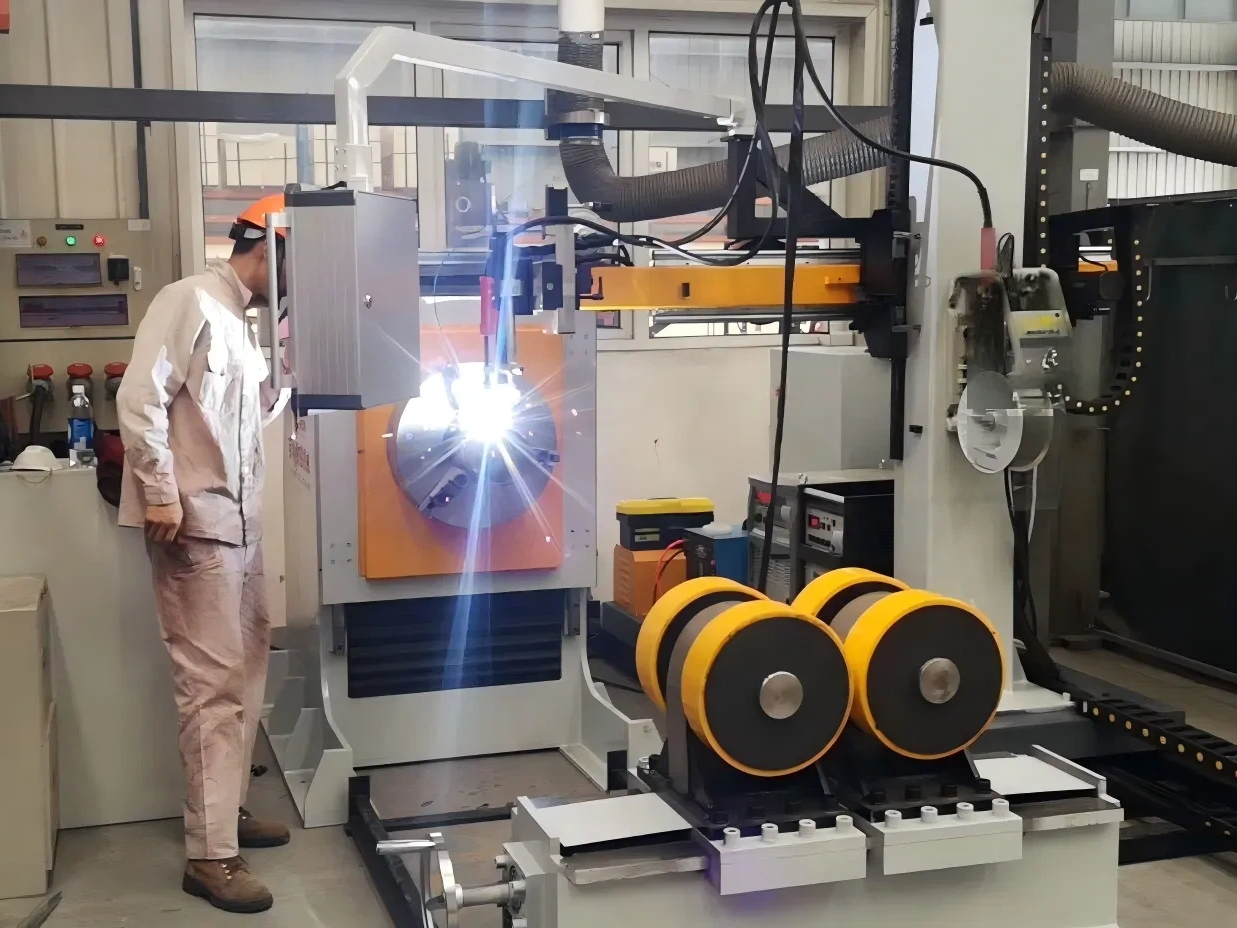
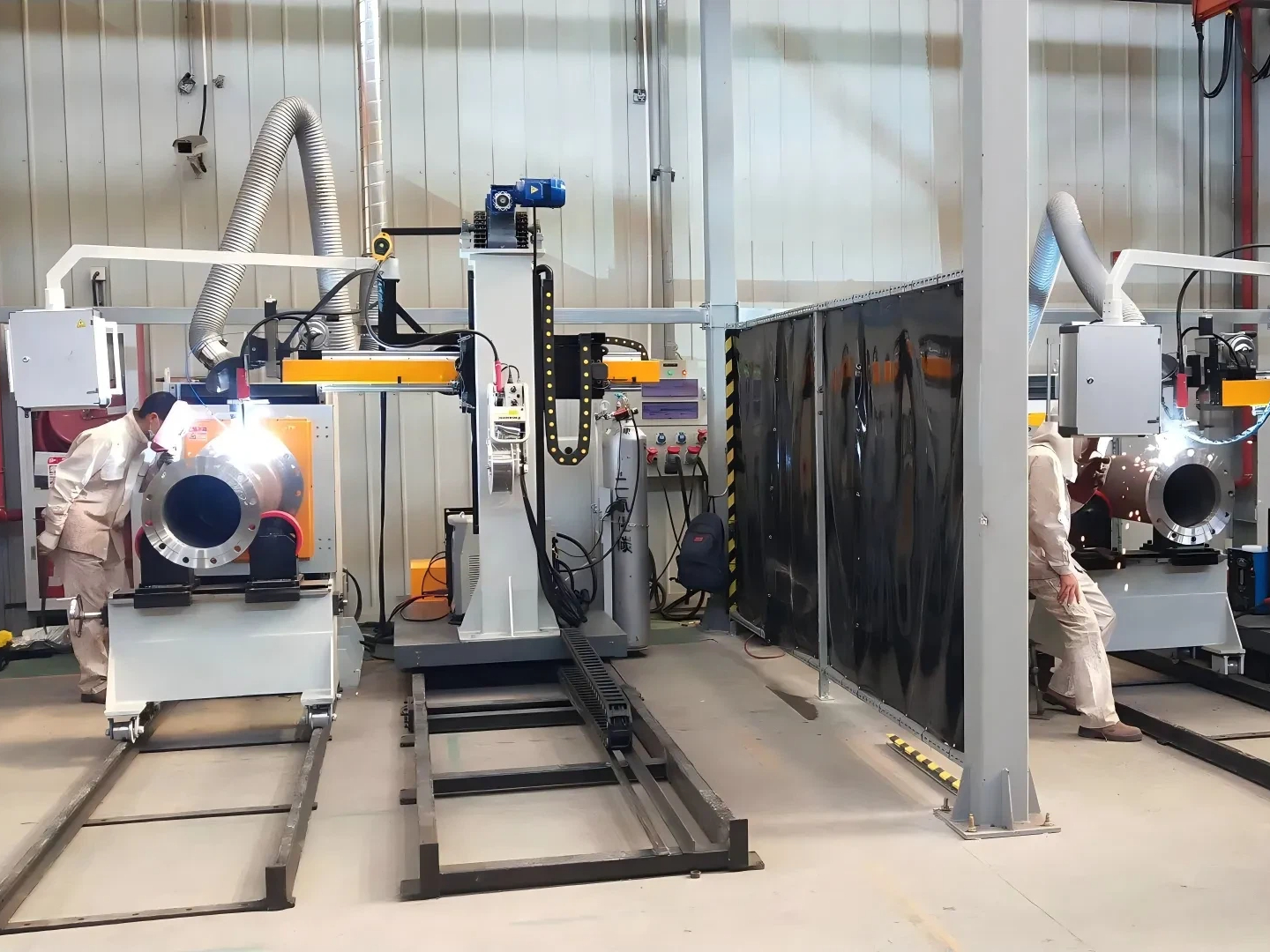
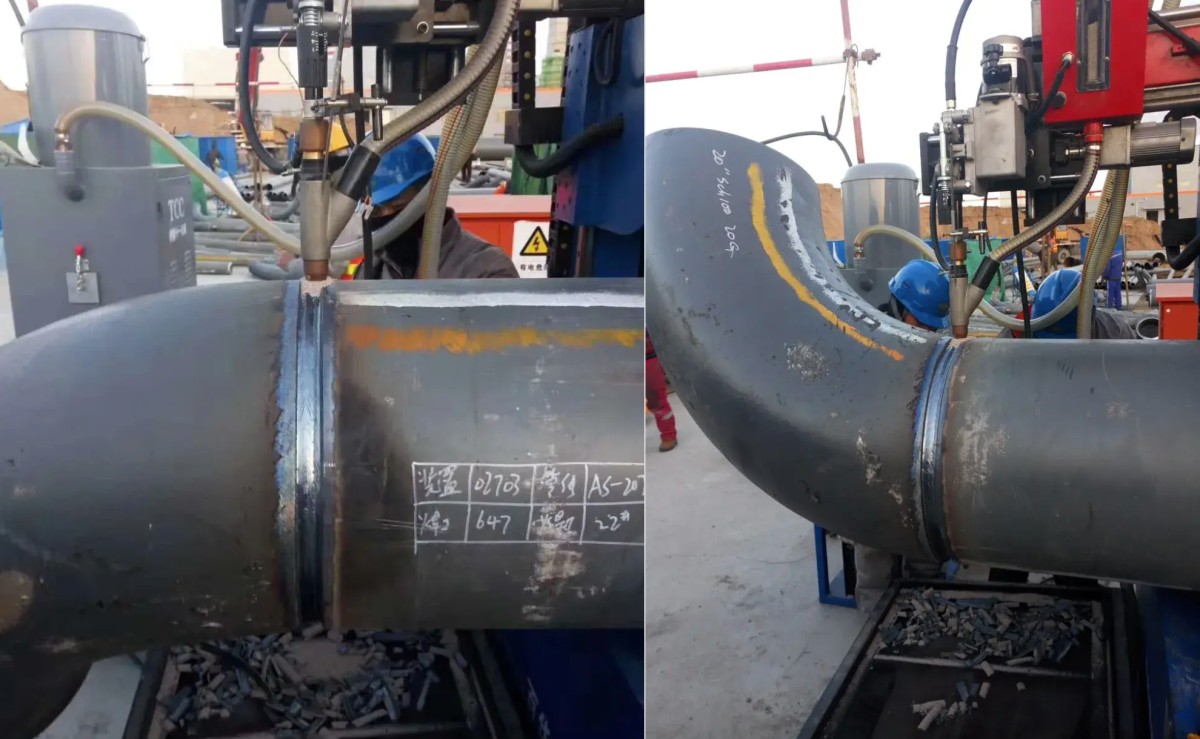
Engineered for superior practicality and reliability, the PPCW series chuck-type automatic pipe welder delivers exceptional performance across TIG, MAG, and SAW processes. This versatile system automates the entire welding sequence—from root pass to fill and cap—ensuring consistent, high-integrity joints. It is ideally suited for automated butt welding applications, including pipe-to-pipe, pipe-to-reducing pipe, pipe-to-flange, pipe-to-elbow (excluding equal straight-end elbows), and pipe-to-tee configurations.
2.Technical parameter for PPCW16 heavy duty Chuck Pipe Welding Station:
3.Characters for PPCW16 heavy duty Chuck Pipe Welding Station:
3.1 User-Friendly Operation
Advanced equipment design ensures simple operation. Even operators without prior welding experience can master the essential skills within 3–5 days of targeted training.
3.2 Industry-Compliant Design
The equipment is designed and manufactured in strict accordance with international CE, API, ASME, and HSE standards. Welding processes and control software are developed to align with these specifications, enabling users to overcome standard-related barriers in international competition.
3.3 Ergonomic Engineering
Ergonomic principles are embedded throughout the equipment design and operation process. The humanized interface and control layout allow operators to maintain comfortable working postures during all procedures, significantly reducing the risk of safety incidents. The design fully complies with HSE and other environmental, safety, and health regulations.
3.4 High Operability
Operators with no welding background can become proficient in a short time. Welding programs are preset in the PLC CNC system, supplemented by handheld control for fine-tuning and stepless speed adjustment. The operation panel is intuitive, and the handheld control box enables precise, stepless speed regulation.
3.5 Superior Weld Surface Finish
The welding torch is optimal position throughout the process, enabling single-sided welding with double-sided formation. This produces aesthetically pleasing weld seams and ensures an exceptionally high qualification rate.
3.6 Welding Drive System
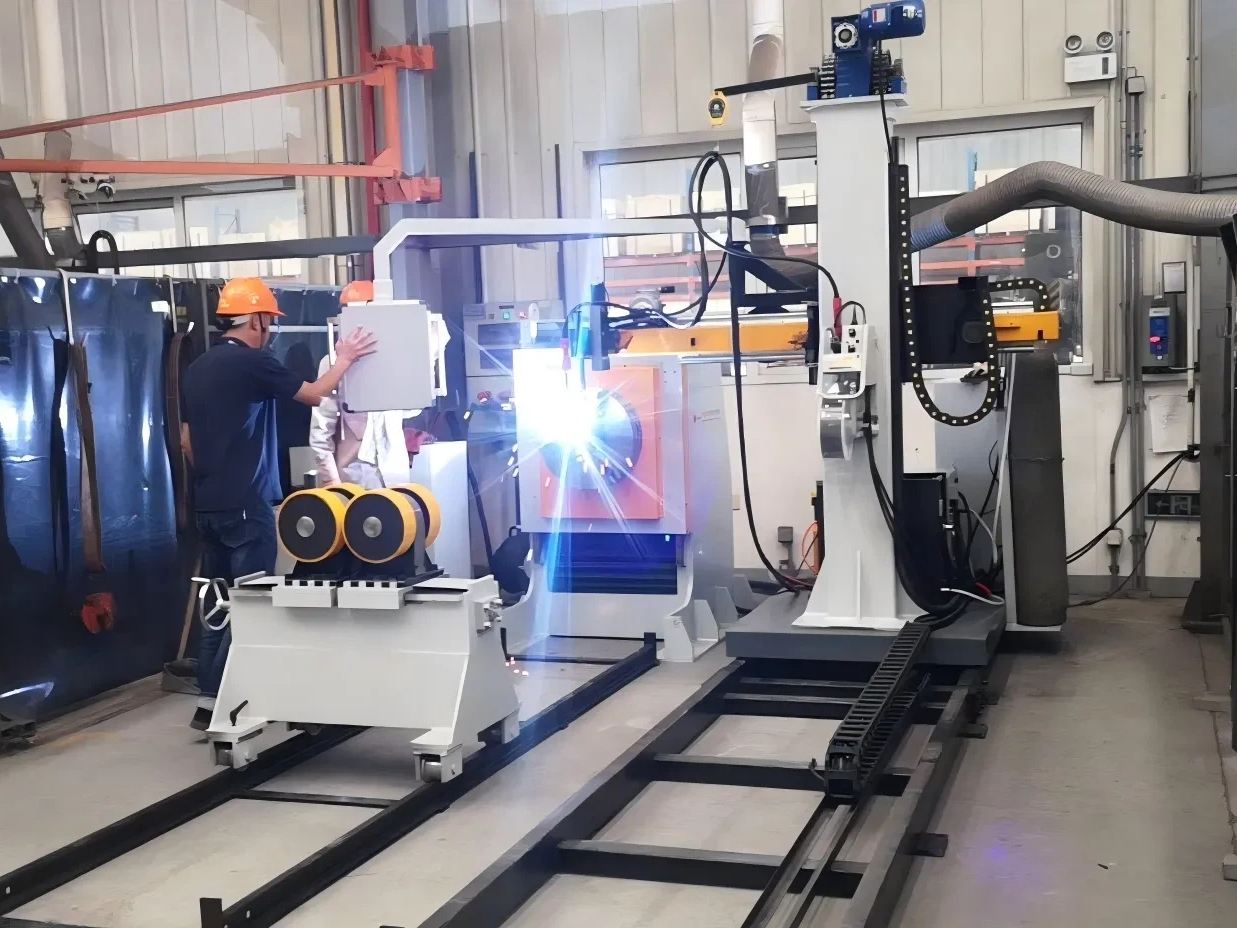
Pre-assembled workpieces are hoisted onto the support trolley and secured via the chuck, which drives the pipe to rotate for continuous welding.
3.7 Welding Host Unit
The welding host features a cantilever design mounted on linear guide rails with electric traction and walking capability. This configuration supports single-clamping and multi-point welding, greatly enhancing operational flexibility.
3.8 Welding Power Source
The system is equipped with an original imported Lincoln FLEXTEC‑650 welding power source, capable of meeting the demands of high-speed TIG, MAG, and SAW welding for pipeline applications.
3.9 Control System
The WSP pipeline welding expert control system integrates a PLC and human-machine interface (HMI) to centrally manage and control all welding process parameters. This intelligent system enables operators to "learn quickly" and significantly shortens the equipment's "input-to-output" cycle.
3.10 Welding Process Versatility
The system supports automatic TIG, MAG, and SAW welding processes, which can be freely selected based on specific requirements. Up to three welding torches can be mounted simultaneously on the torch holder, allowing for rapid process switching and on-the-fly adjustment of welding parameters.
3.11 Comprehensive Safety Features
All electrical components meet CE certification requirements, with insulation safety levels and standards compliant with H/IP23. Each functional motion is equipped with safety limit switches, and reliable protection devices—including emergency stop buttons, grounding systems, and anti-misoperation safeguards—are incorporated to prevent accidents and ensure safe operation.
products faq
A standard welding machine is a single power source that requires manual operation and external positioning equipment. An Automatic Welding Center, by contrast, is an integrated system that combines welding power source, wire feeder, manipulator, positioner, and PLC control into one coordinated unit. It automates the entire welding process—including torch movement, workpiece rotation, and parameter adjustment—delivering higher consistency, faster throughput, and reduced operator dependence.
Depending on the configuration, an Automatic Welding Center can support multiple processes including GMAW (MIG/MAG), GTAW (TIG), submerged arc welding (SAW), and RMD (regulated metal deposition) for root pass welding. Some advanced designs integrate up to three welding methods on a single manipulator, switchable by rotating the boom 180°, offering exceptional flexibility for diverse applications.
The system is designed primarily for cylindrical and rotational components, including pressure vessels, boiler shells, pipelines, wind tower sections, and hydraulic cylinders. It is suitable for both longitudinal seam welding and circumferential seam welding. With modular positioning accessories such as roller frames, positioners, and lifting supports, it can adapt to a wide range of diameters, lengths, and material thicknesses.
Quality is maintained through several integrated features: PLC-based parameter control ensures repeatable welding conditions; laser seam tracking (on advanced models) maintains torch alignment within ±1% tolerance; frequency converters provide stepless speed regulation for smooth motion; and real-time monitoring systems halt welding immediately if any subsystem anomaly is detected, preventing defects before they occur.
Yes. The system features user-friendly interface panels and remote control boxes for flexible operation. Setup involves basic parameter entry for the specific weld job—such as speed, current, voltage, and travel distance—after which the center executes the programmed sequence automatically. Batch program storage allows quick changeovers for mixed-product manufacturing. Operator training is typically straightforward and supported by comprehensive documentation.
Routine maintenance includes inspecting welding cables, torch consumables, and grounding connections; checking lubrication of moving parts (manipulator arms, roller drives, and linear guides); and monitoring the cooling system and wire feeder condition. The PLC and frequency drive systems are generally maintenance-free but should be kept free of dust and moisture. We recommend regular inspection schedules based on operating hours, with full technical support and spare parts available from our service team.