




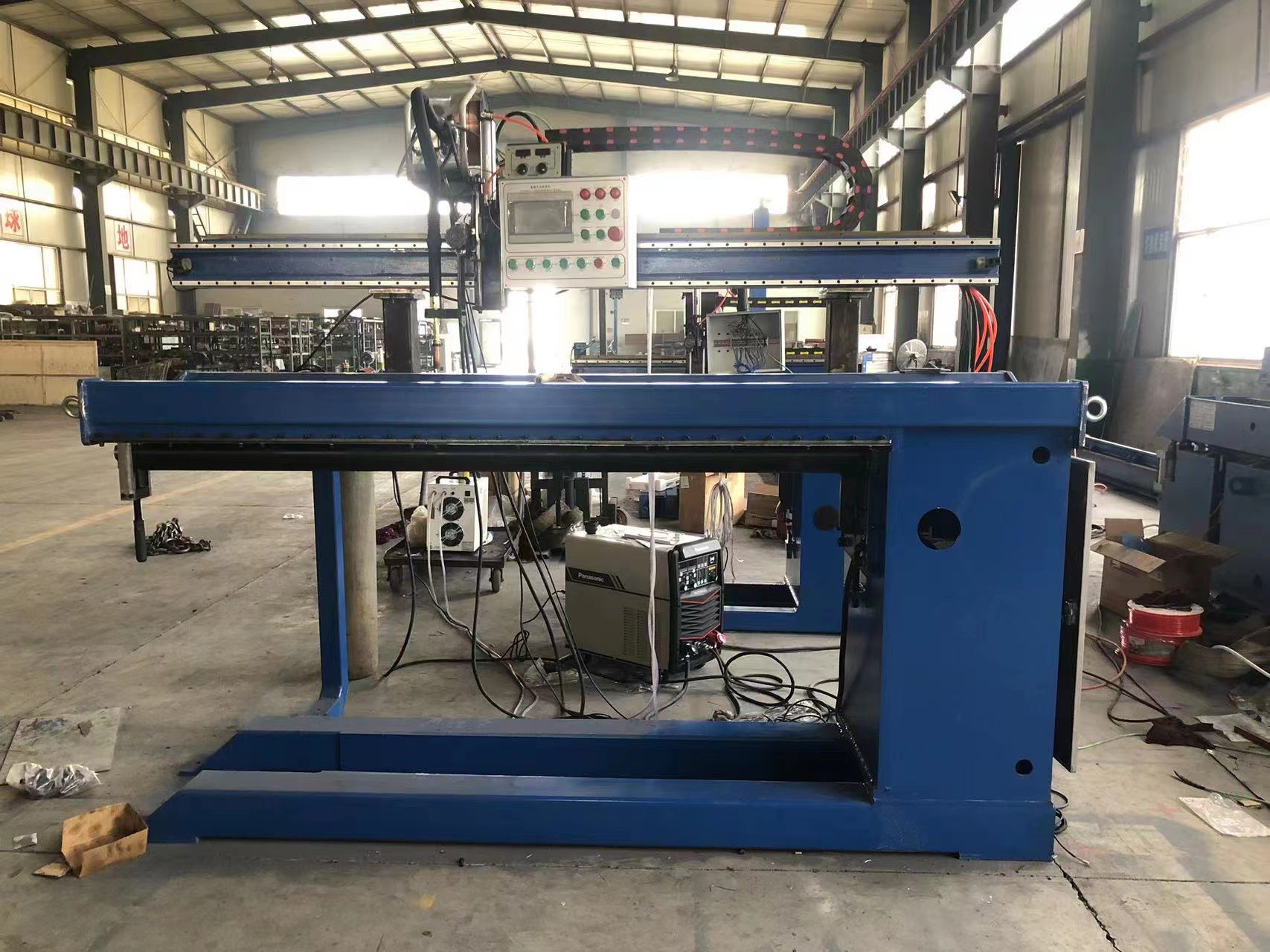
Longitudinal seam welding machine
deformation.
1.2 It is widely applied in high quality welding and low-deformation straight seam. Use in such fi eld: petrochemical industry, solar water
heater manufactor, pipeline and automobile industry.
1.3 Controlled by PLC, driven by DC motor, and stepless speed regulation, with control system to realize automatic welding,and equipped
with straight oscillator for optional choice.
Full-range Machinery & Customized Non-standard Solutions
Authorized Certificates & Independent R&D Patents
Over 10 Years Global Export & Worldwide Project Cases
Navigation

Longitudinal seam welding machine Description
1.Introduction for Longitudinal seam welding machine:
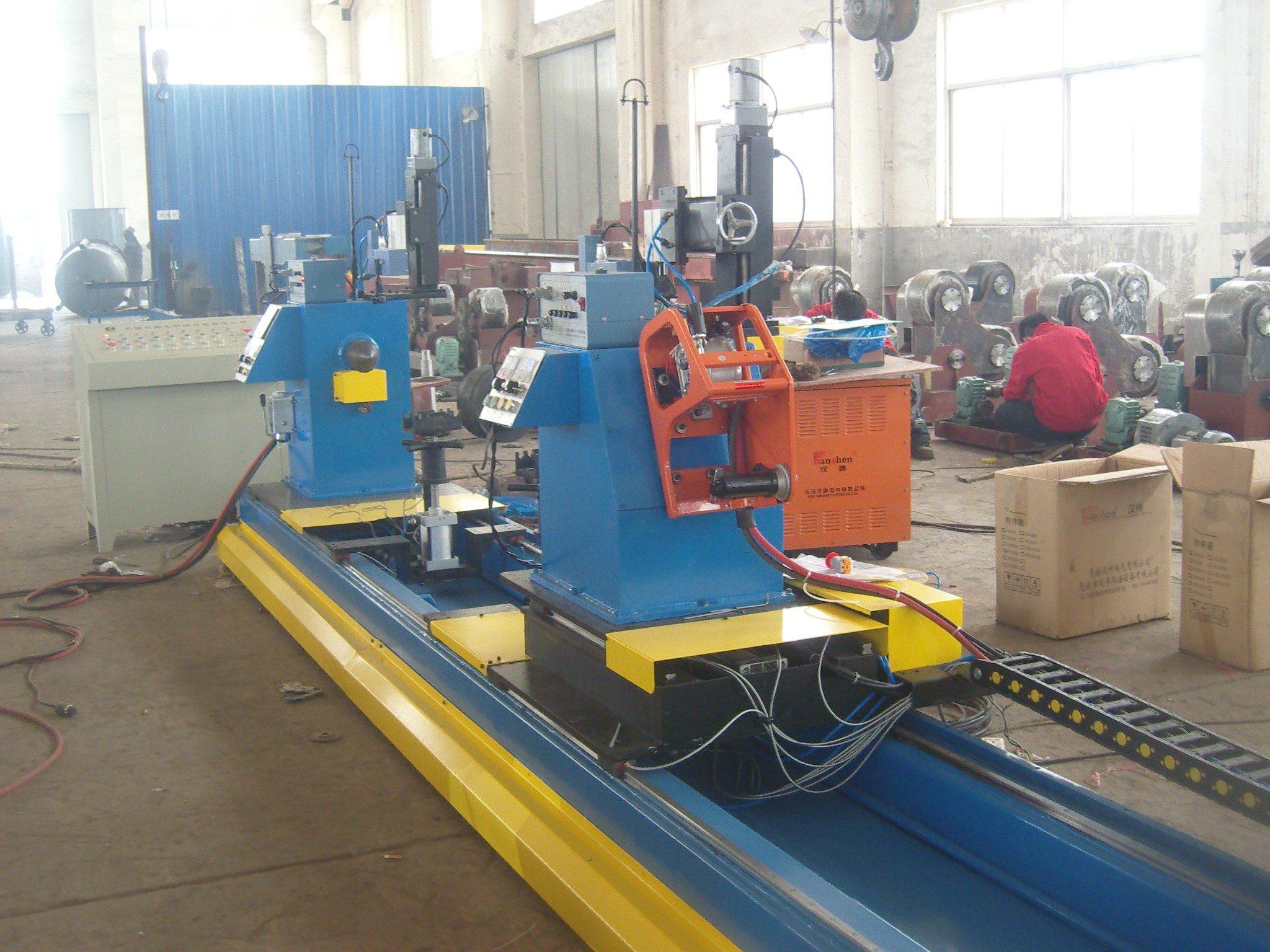
1.1 Key-type pneumatic pressing device is applied to calmp the work piece. This device provides force evenly to work piece and prevents
deformation.
1.2 It is widely applied in high quality welding and low-deformation straight seam. Use in such fi eld: petrochemical industry, solar water
heater manufactor, pipeline and automobile industry.
1.3 Controlled by PLC, driven by DC motor, and stepless speed regulation, with control system to realize automatic welding,and equipped
with straight oscillator for optional choice.
1.4 With different protection lining on the lower side, the welding seam can be welded through. Therefore the both sides of the welding
seam can be shaped with single-side welding.
1.5 Its welding thickness is 1mm~8mm, welding speed is 0.2mm~2.2m/min.
1.6 Longitudinal automatic welding machine use several welding method, such as argon submerged welding, gas shielded welding and
plasma welding etc.
2.Technical parameter for Longitudinal seam welding machine
3.Characters for Longitudinal seam welding machine:
3.1. The welding host adopts a cantilever structure. The two cantilever beams are welded and then undergo annealing stress relief treatment to ensure that the crossbeam does not deform over a long period of time.
3.2. The pneumatic key-type clamping structure is arranged closely along both sides of the straight seam, ensuring uniform clamping of the对接 weld seam throughout the welding length; the spacing between the left and right key pressing fingers can be adjusted to adapt to the welding of different workpieces.
3.3. According to the thickness of the workpiece, an airbag type or cylinder type can be used to ensure sufficient clamping force and prevent thermal deformation during the welding process.
3.4. The welding core shaft is embedded with a copper template, providing a back gas protection function for the weld seam; different welding process slots are processed for the cylinder or flat workpiece to achieve single-sided welding and double-sided forming.
3.5. The spacing between the welding core shaft and the key pressing fingers can be adjusted to meet the welding requirements of different workpieces.
3.6. The welding gun movement is driven by a DC servo motor, with gear rack transmission. The track surface is ground for smooth movement, ensuring stable and reliable welding. All air pipes and cables are placed in the conveyor chain, maintaining a neat and beautiful appearance, while avoiding wire breakage.
products faq
A standard welding machine is a single power source that requires manual operation and external positioning equipment. An Automatic Welding Center, by contrast, is an integrated system that combines welding power source, wire feeder, manipulator, positioner, and PLC control into one coordinated unit. It automates the entire welding process—including torch movement, workpiece rotation, and parameter adjustment—delivering higher consistency, faster throughput, and reduced operator dependence.
Depending on the configuration, an Automatic Welding Center can support multiple processes including GMAW (MIG/MAG), GTAW (TIG), submerged arc welding (SAW), and RMD (regulated metal deposition) for root pass welding. Some advanced designs integrate up to three welding methods on a single manipulator, switchable by rotating the boom 180°, offering exceptional flexibility for diverse applications.
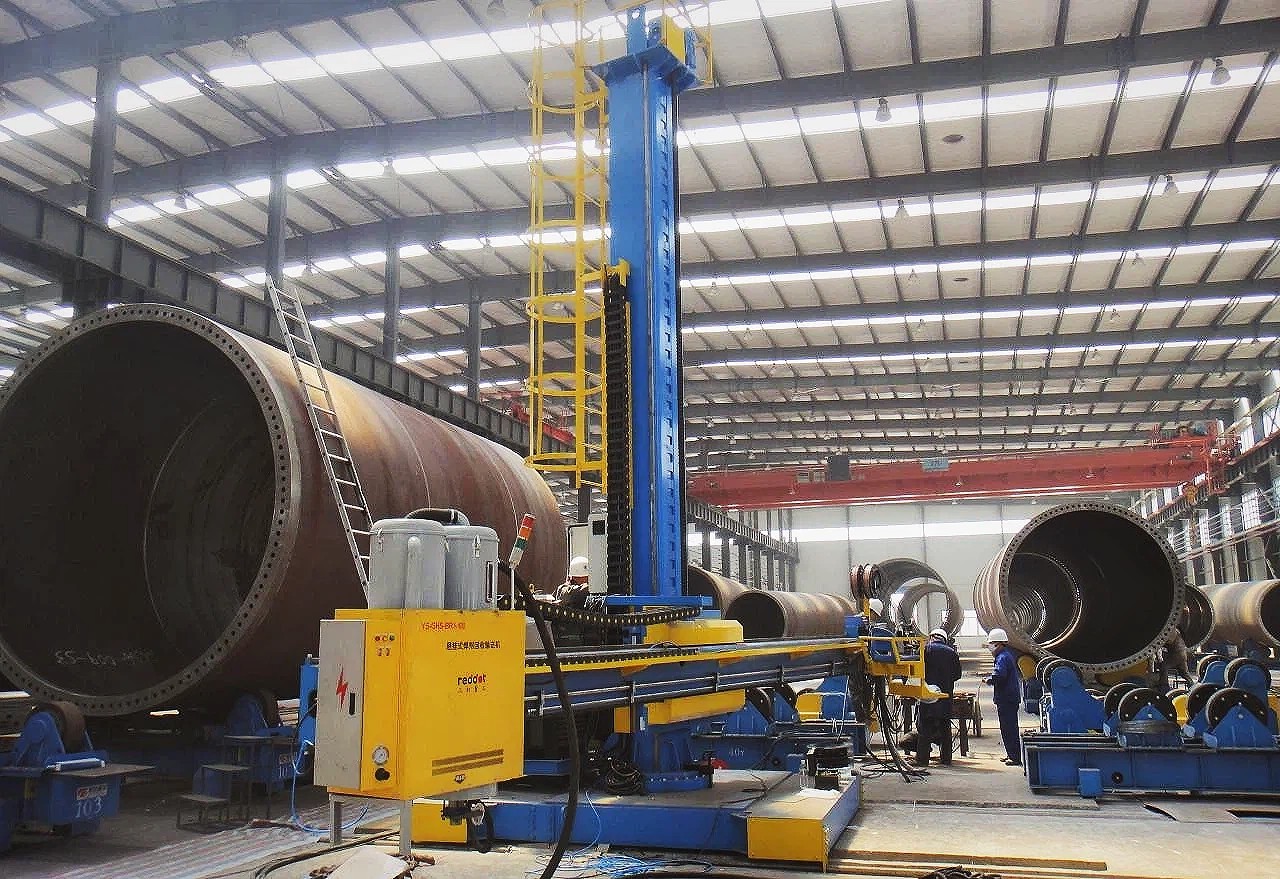
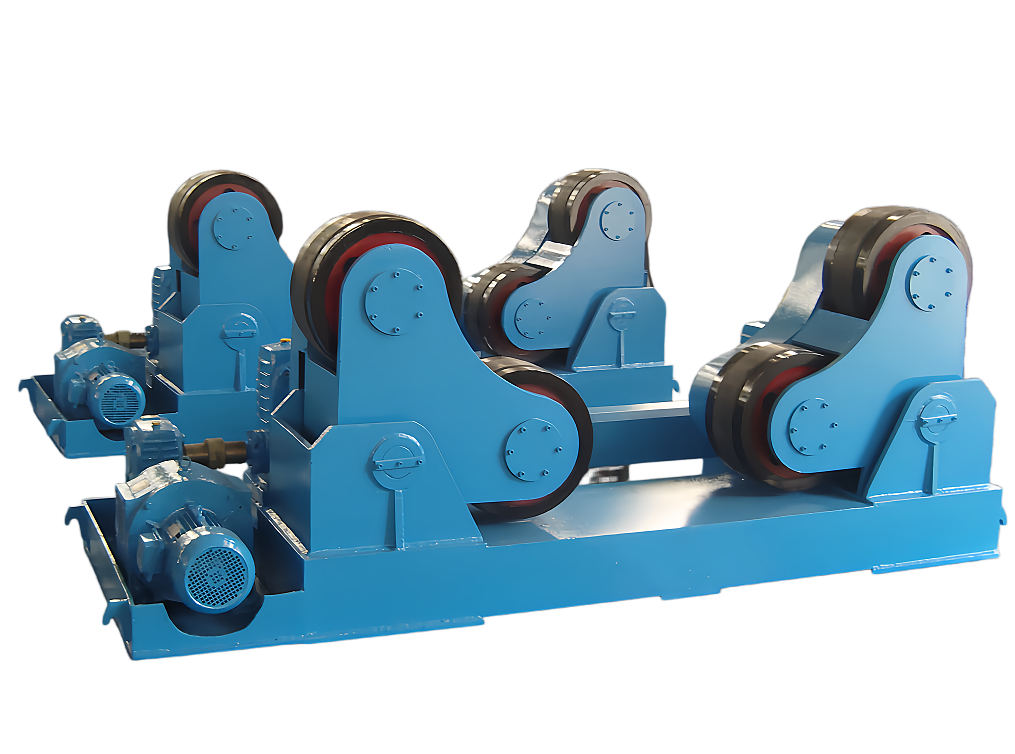
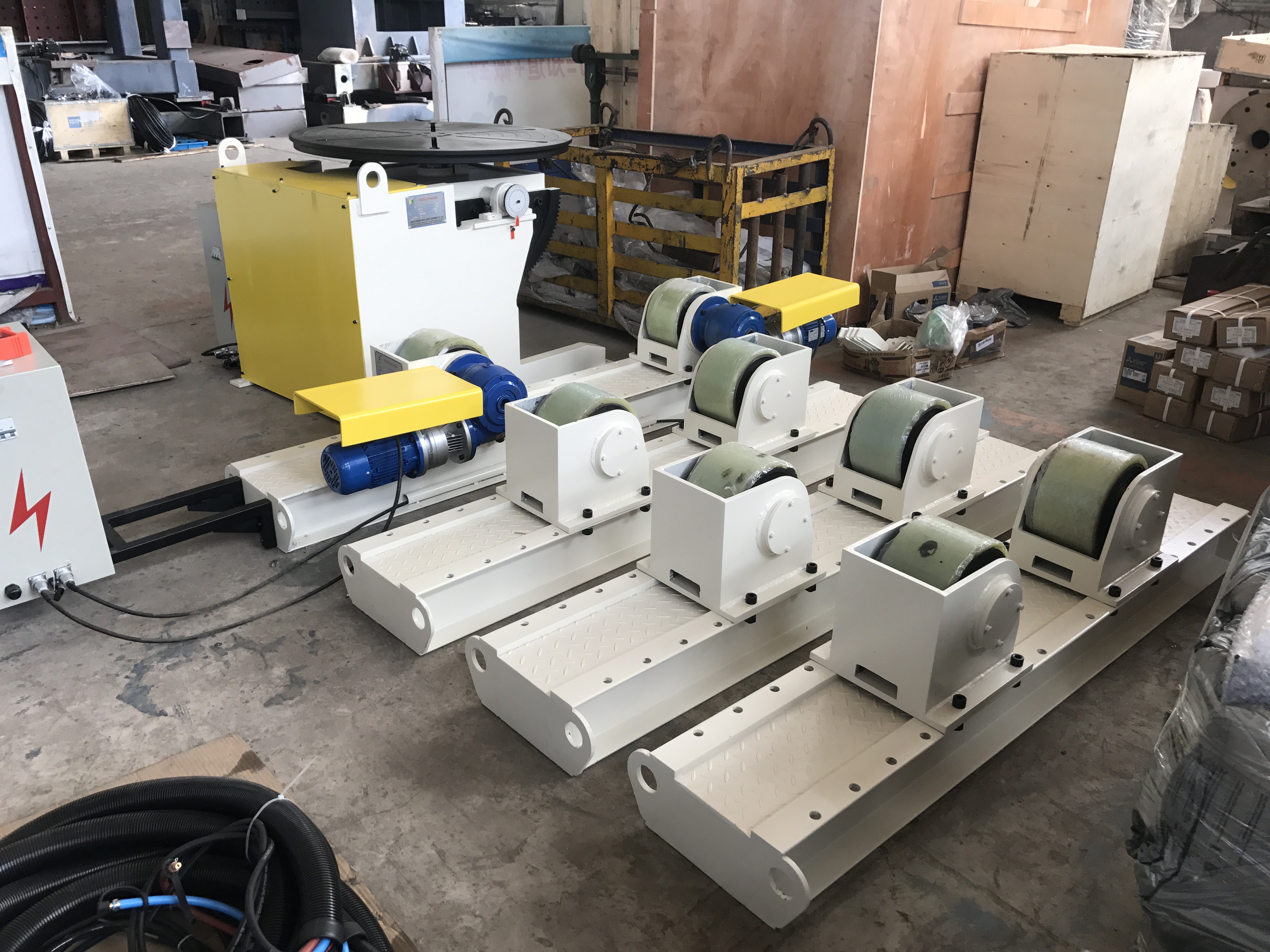
The system is designed primarily for cylindrical and rotational components, including pressure vessels, boiler shells, pipelines, wind tower sections, and hydraulic cylinders. It is suitable for both longitudinal seam welding and circumferential seam welding. With modular positioning accessories such as roller frames, positioners, and lifting supports, it can adapt to a wide range of diameters, lengths, and material thicknesses.
Quality is maintained through several integrated features: PLC-based parameter control ensures repeatable welding conditions; laser seam tracking (on advanced models) maintains torch alignment within ±1% tolerance; frequency converters provide stepless speed regulation for smooth motion; and real-time monitoring systems halt welding immediately if any subsystem anomaly is detected, preventing defects before they occur.
Yes. The system features user-friendly interface panels and remote control boxes for flexible operation. Setup involves basic parameter entry for the specific weld job—such as speed, current, voltage, and travel distance—after which the center executes the programmed sequence automatically. Batch program storage allows quick changeovers for mixed-product manufacturing. Operator training is typically straightforward and supported by comprehensive documentation.
Routine maintenance includes inspecting welding cables, torch consumables, and grounding connections; checking lubrication of moving parts (manipulator arms, roller drives, and linear guides); and monitoring the cooling system and wire feeder condition. The PLC and frequency drive systems are generally maintenance-free but should be kept free of dust and moisture. We recommend regular inspection schedules based on operating hours, with full technical support and spare parts available from our service team.