




Automatic Space Frame Welding Machine Explained: Key Technologies, Applications, and Buying Insights
What An Automatic Space Frame Welding Machine Is
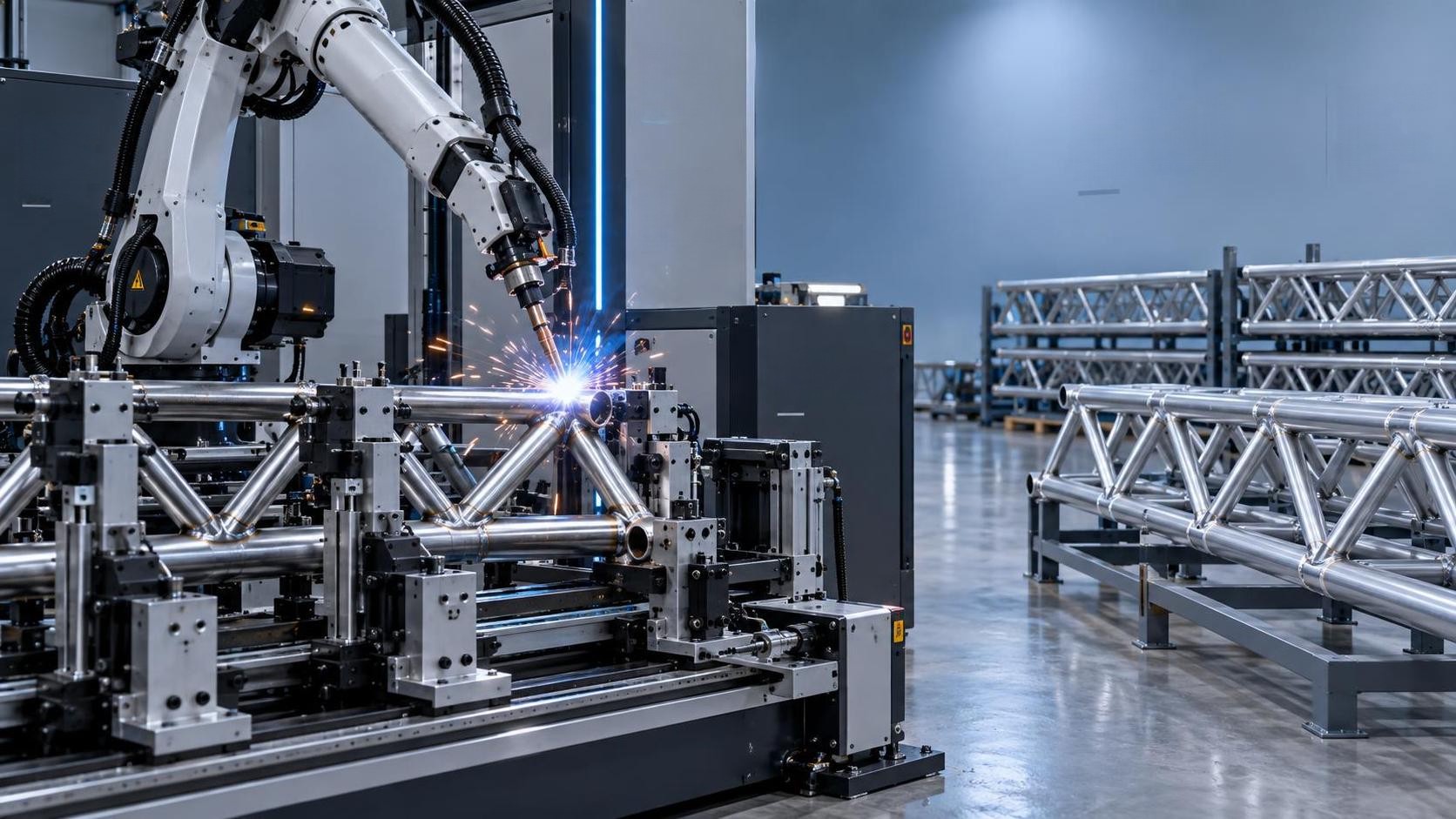
An Automatic space frame welding machine is an industrial system designed to join multiple steel tubes, profiles, or node-connected members into geometric frame assemblies with controlled weld quality and repeatable accuracy. In practice, it combines motion control, fixture positioning, welding power sources, and part handling so that complex frame sections can be produced with less dependence on operator skill than fully manual welding.
In the steel structure and fabrication sector, the term usually refers to equipment used for spherical or tubular space frame production in construction, stadium roofing, industrial workshops, public buildings, and specialized truss systems. Depending on the factory layout, the machine may be built as a standalone welding station, a semi-automatic fixture line, or a robot-integrated cell connected with cutting, fitting, turning, and inspection processes.
The core value of an Automatic space frame welding machine is not simply faster arc time. Its real value is process stability across repeated joints, better alignment control, lower rework, and more predictable throughput for buyers that need to meet drawing tolerances, delivery schedules, and project documentation requirements. That matters especially when a project includes many similar nodes or repetitive frame modules.
From a procurement perspective, this equipment sits between general fabrication machinery and dedicated structural production lines. Buyers often evaluate it together with upstream cutting systems, welding positioners, rotators, manipulators, and downstream surface treatment or straightening equipment because overall production efficiency depends on the entire workflow rather than on the welding unit alone.
How The Technology Works
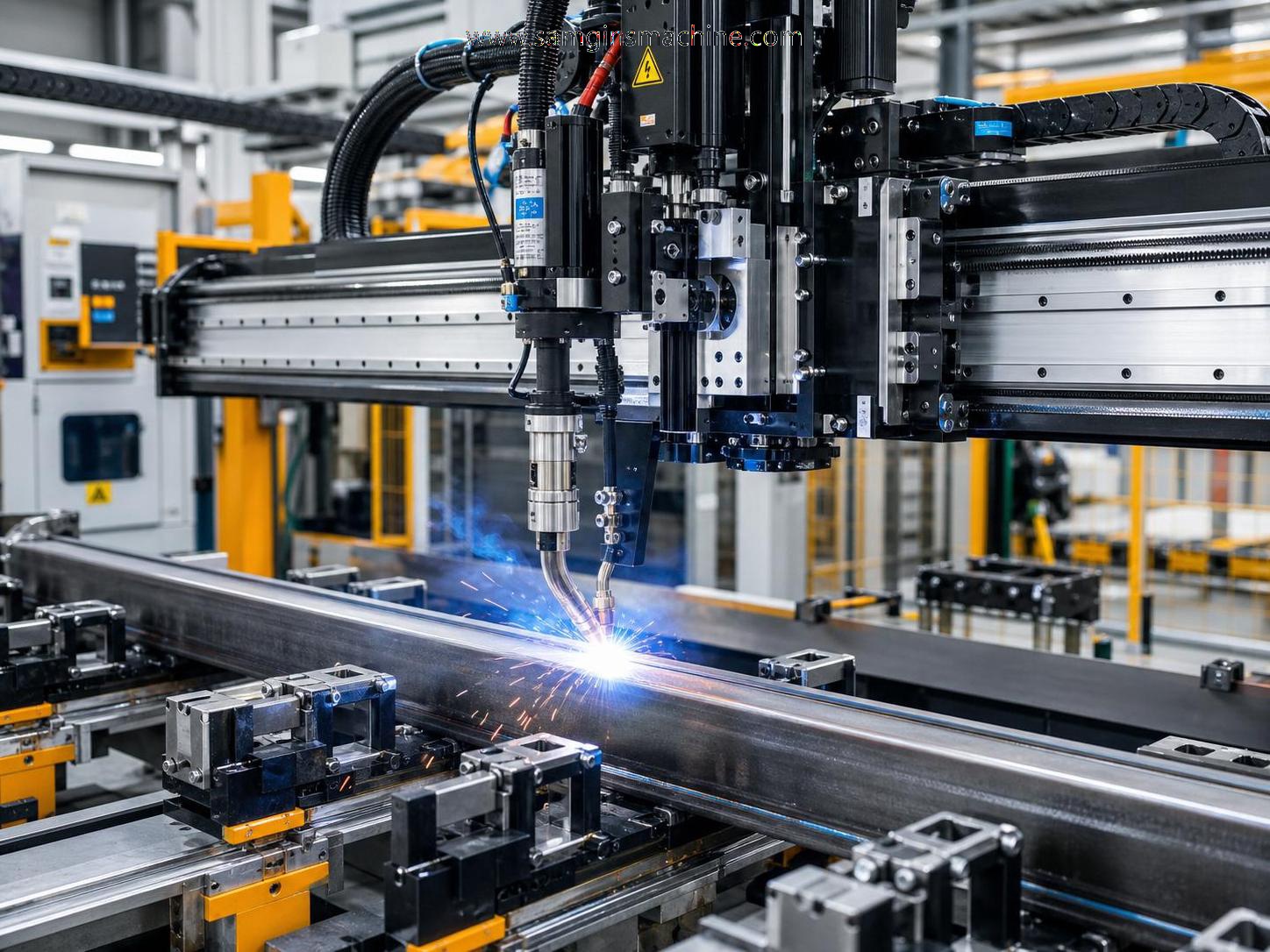
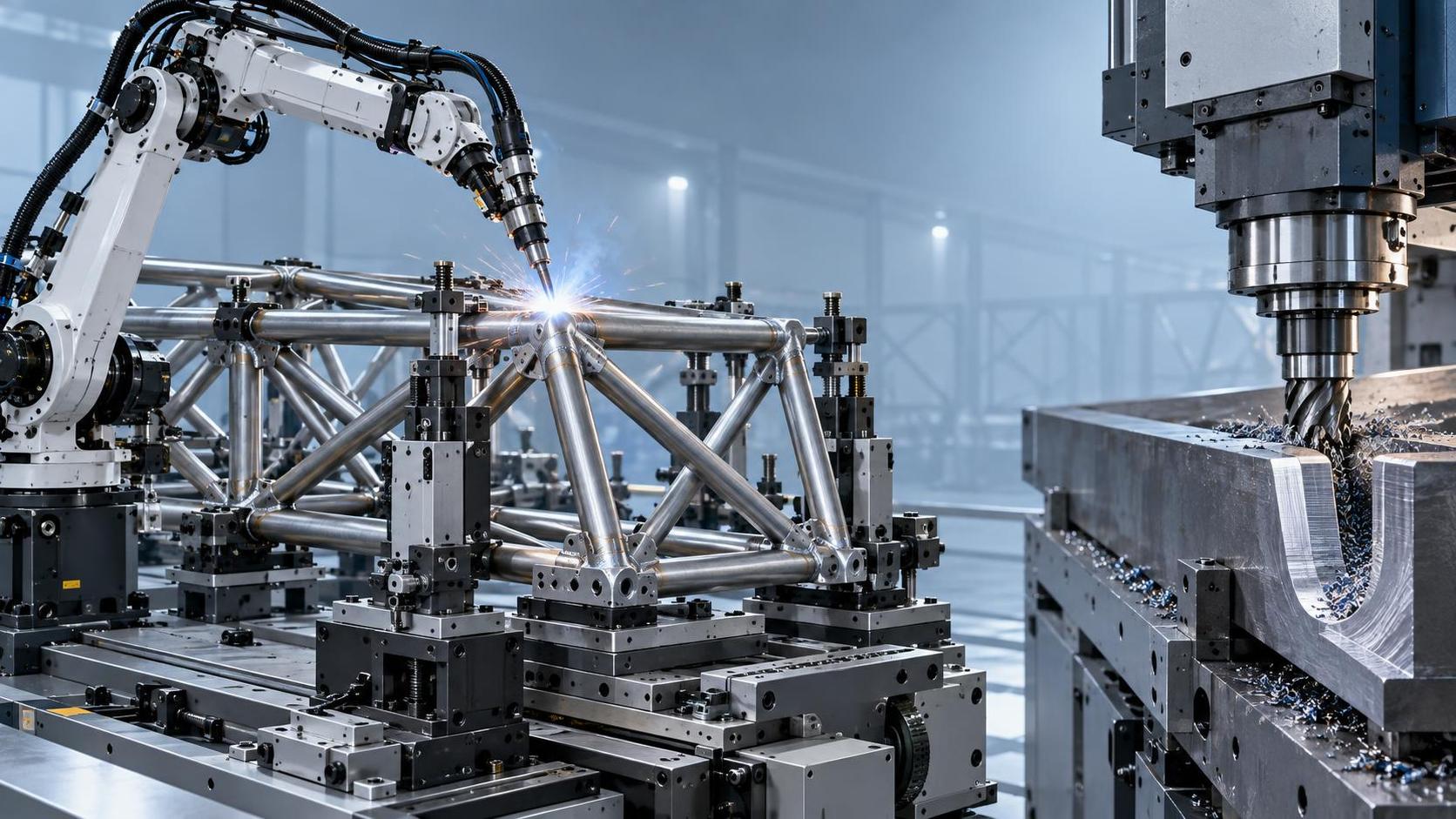
A typical Automatic space frame welding machine integrates three process layers: part location, motion execution, and weld deposition. First, fixtures or clamps locate pipes, cones, sleeves, or node components in the correct relationship. Second, servo-driven axes, rotary tables, or robotic arms move either the torch or the workpiece along the programmed weld path. Third, the welding source deposits filler metal under controlled current, voltage, speed, and shielding conditions.
For most structural applications, the machine relies on MIG or MAG welding because these processes support productivity and are widely accepted for carbon steel fabrication. Some projects may use TIG for root control or special material sections, but high-volume space frame production usually favors methods that balance speed and penetration. Stable wire feeding, torch angle consistency, and coordinated travel speed are critical because curved intersections and changing wall thickness can easily create undercut, incomplete fusion, or excessive spatter if control is weak.
Programming can be based on fixed parameters for standard parts or more flexible CNC and robot logic for varied geometries. The more diverse the joint family, the more important it becomes to manage axis synchronization, seam tracking options, and fixture repeatability. In many factories, the machine is paired with pre-cutting and fit-up controls so welding starts from parts that already meet dimensional expectations.
Heat input management is another essential technical point. Space frame structures often use tubular members where distortion can accumulate across multiple joints. Automatic control helps distribute weld sequence, torch path, and cooling intervals more consistently than manual work. That improves final geometry and reduces correction work before galvanizing, painting, or site assembly.
Main Machine Types And Configuration Options
There is no single universal Automatic space frame welding machine design. Entry-level systems are often dedicated fixtures with automatic torch travel for a narrow range of workpieces. These suit plants producing standardized frame dimensions where part variability is low. Their advantage is simpler operation and lower upfront cost, but they are less flexible when product drawings change frequently.
Mid-range solutions typically combine rotating tables, positioners, or manipulators with programmable welding motion. This format supports more joint variations and improves operator ergonomics because the workpiece can be presented in a better welding position. For many structural factories, this is the practical balance between cost and versatility, especially when product mix includes both repeated and custom projects.
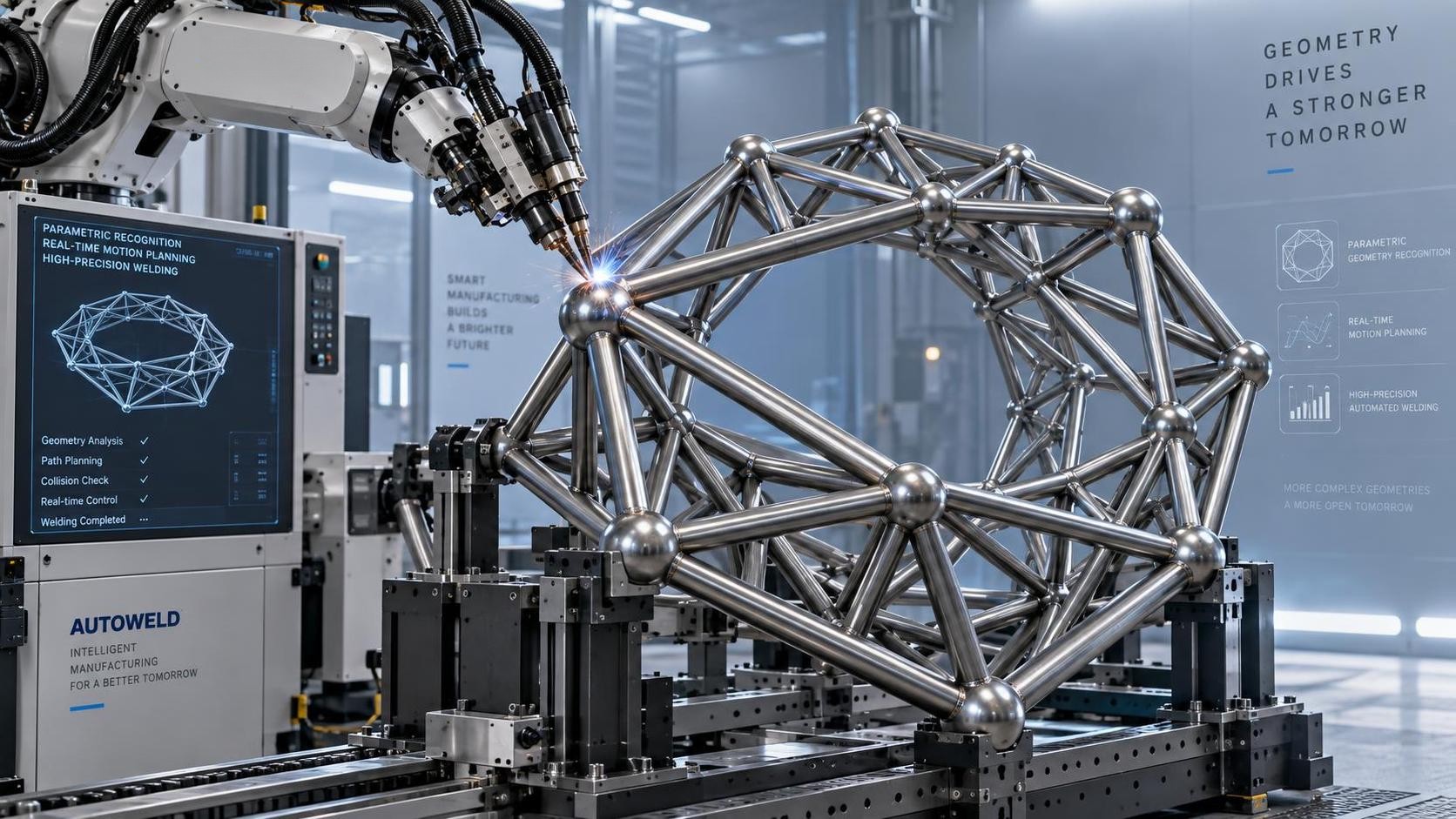
Higher-end configurations use multi-axis welding robots, often with customized 7-axis or 9-axis layouts, to handle complex node geometry and broader production diversity. This approach is suitable for factories supplying steel structures, pipelines, tanks, or fabricated assemblies that require more programmable reach and path control. Wuxi Samgins highlights customization capability in this area, which is relevant when a buyer needs more than a standard off-the-shelf station.
Configuration also depends on supporting equipment. A complete solution may include welding positioners, rotators, manipulators, CNC cutting machines, edge preparation systems, and material handling tools. Buyers comparing suppliers should therefore look beyond the headline machine and ask whether the proposed package fits their current process flow and future capacity targets.
Why Manufacturers Invest In This Equipment
The first reason is productivity. Manual fabrication of space frame joints is labor-intensive, especially when welds repeat across hundreds or thousands of similar nodes. An Automatic space frame welding machine reduces non-arc handling time, shortens training dependency, and improves takt stability. In markets where skilled welders are difficult to recruit or retain, this can be a strong operational argument.
The second reason is consistency. B2B buyers are usually managing contracts, inspection records, and installation deadlines rather than just machine utilization. Repeatable welding parameters help reduce quality variation between shifts and operators. More stable weld appearance and penetration also make downstream inspection easier, which matters when projects are delivered under formal quality systems or third-party review.
The third reason is integration with broader fabrication automation. Companies that already use CNC flame cutting, CNC plasma cutting, fiber laser cutting, H-beam lines, or plate processing equipment often find that welding becomes the next bottleneck. Adding an Automatic space frame welding machine creates a more balanced production chain and improves the return on earlier investments in precision cutting and fitting.
For buyers considering suppliers, Wuxi Samgins positions itself around broad product coverage and coordinated factory solutions rather than a single machine category. That can be useful for plants that need not only a space frame welding machine, but also welding rotators, positioners, robots, cutting systems, or plate and profile processing machines from one industrial source.
Who Uses It And Where It Fits
The most common users are steel structure fabricators producing roof grids, trusses, domes, exhibition halls, airport structures, public venue canopies, and industrial building frames. These companies need repeatable assembly of tubular members and often work under strict installation schedules, where workshop delays can affect crane time, site labor, and downstream trades.
It is also relevant to manufacturers serving energy, transport, and heavy fabrication projects where multi-directional tubular joints appear in support frames, access platforms, or specialized mechanical structures. In these cases, flexibility may matter as much as speed because project batches are smaller and design variation is greater. A programmable Automatic space frame welding machine can help bridge custom engineering and serial fabrication.
Target users usually include production managers, plant owners, technical directors, and procurement teams responsible for balancing capacity expansion, welding quality, labor structure, and export compliance. Engineering teams focus on fixture logic and weld procedure compatibility, while procurement teams typically focus on delivery, spare parts, training, and long-term service support.
Geographically, the demand is global because steel fabrication remains project-driven across developed and emerging markets. The customer references provided for Wuxi Samgins, including companies such as URALSTANKOIMPORT, MD Calbah Industries Pty Ltd, Zein Steel Industries Co. LLC, BatysMunaiGazZhabdyktary LLP, and Lincoln Electric-MENA, indicate export experience across different regional operating environments. That matters when machine documentation, electrical standards, and support expectations vary by market.
Buying Criteria And Industry Standards
A serious buying decision starts with part data. Buyers should define tube diameter range, wall thickness, joint geometry, material grade, annual output, acceptable tolerance, and required weld process before discussing machine size or price. Without this information, supplier proposals are often too generic and may miss the actual fit-up complexity or production rhythm of the factory.
Next, evaluate motion and control quality. Key questions include axis count, repeatability, fixture changeover time, compatibility with standard welding power sources, operator interface, and the availability of imported hydraulic, servo, or CNC components where appropriate. Wuxi Samgins states that key hydraulic, servo, and CNC components use world-famous imported brands, which can be relevant for buyers prioritizing precision, stability, and service life.
Compliance should also be reviewed carefully. It is reasonable to ask whether the machine is built under ISO9001 quality management practices and whether export models meet applicable EU CE Machinery and LVD requirements when needed. For buyers serving projects governed by ASME, API, or local construction codes, machine capability alone is not enough; the welding procedures, material traceability, and production documentation must also align with the end-use contract environment.
Finally, inspect the supplier's process scope. For example, a supplier that can also provide welding manipulators, rotators, positioners, long seam welding machines, H-beam equipment, and cutting systems may be better positioned to recommend an integrated line. That does not automatically make one supplier better, but it improves the chance that the Automatic space frame welding machine will match the wider factory process instead of becoming an isolated bottleneck.
Production Workflow, Installation, And Quality Control
A reliable production workflow normally starts with incoming material inspection, cutting accuracy, bevel preparation where required, and fixture verification before welding begins. Many welding defects attributed to automation are actually caused by poor part consistency upstream. The machine performs best when tube ends, node parts, and tack conditions are controlled within defined tolerances.
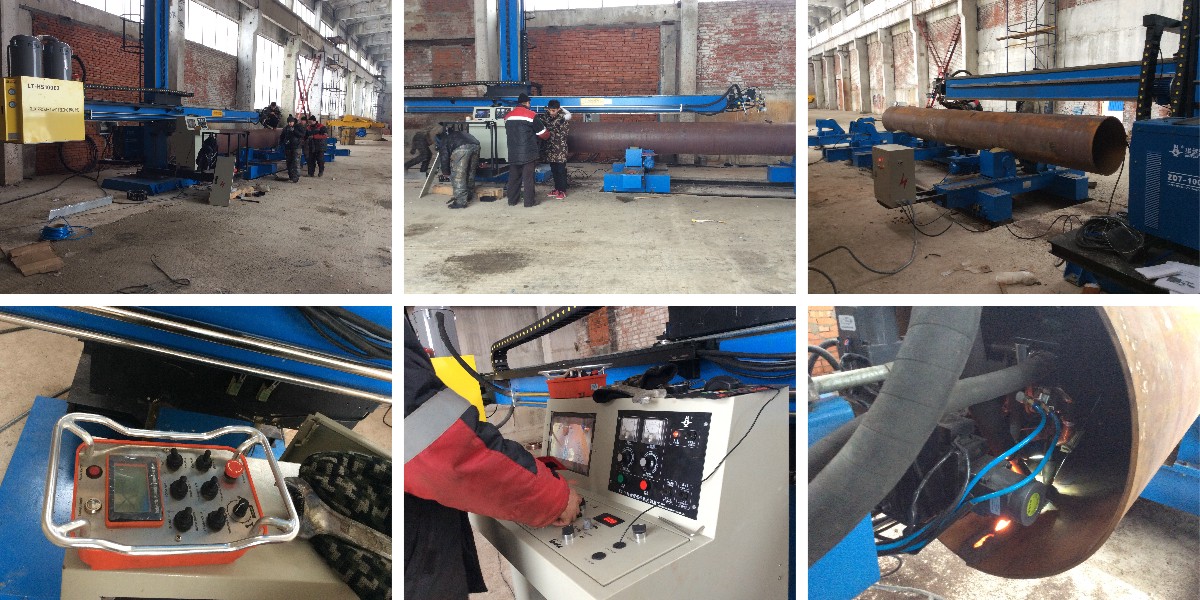
During installation, buyers should pay attention to foundation stability, power supply conditions, gas delivery, fume extraction, grounding, and safe operator access around rotating or moving assemblies. Commissioning should include dry runs, axis calibration, weld parameter validation, and sample qualification on representative parts. Training must cover not only operation, but also fixture setup, consumable replacement, alarm logic, and routine inspection points.
Quality control should combine dimensional checks and weld verification. Common checkpoints include member alignment, node position, weld continuity, bead profile, spatter condition, and distortion after cooling. Where project requirements call for it, buyers may add visual inspection records, gauge checks, or non-destructive testing according to the contract standard. The objective is to build a controlled process, not only to inspect defects after the fact.
After-sales support is part of quality assurance, not a separate commercial topic. Wuxi Samgins emphasizes long-term warranties and support from design and manufacturing through technical service. For overseas buyers, the value of that support often appears later, when parameter adjustments, spare parts, or remote troubleshooting are needed to keep production stable under real project pressure.
Cost Structure, TCO, And ROI Considerations
The purchase price of an Automatic space frame welding machine is only one layer of cost. Total cost of ownership includes fixtures, welding power sources, electrical integration, material handling, operator training, consumables, spare parts, maintenance time, floor space, and the effect of downtime on project delivery. Buyers should calculate these items before comparing quotations, especially when one offer appears cheaper but excludes key supporting functions.
Part mix strongly affects ROI. A factory producing high volumes of similar space frame modules can often justify automation faster because setup time is spread across many identical parts. By contrast, a plant focused on highly customized short runs may still benefit, but the right solution may be a flexible robotic cell rather than a rigid dedicated machine. Matching automation level to order structure is more important than simply choosing the most advanced configuration.
Labor economics, rework reduction, and schedule reliability are usually the biggest value drivers. If automation reduces repair welding, scrap, fit-up delay, and dependence on a small number of senior welders, the financial impact can exceed the direct arc-efficiency gain. Buyers should also estimate the commercial value of more stable lead times, especially when late delivery penalties or installation disruptions are material business risks.
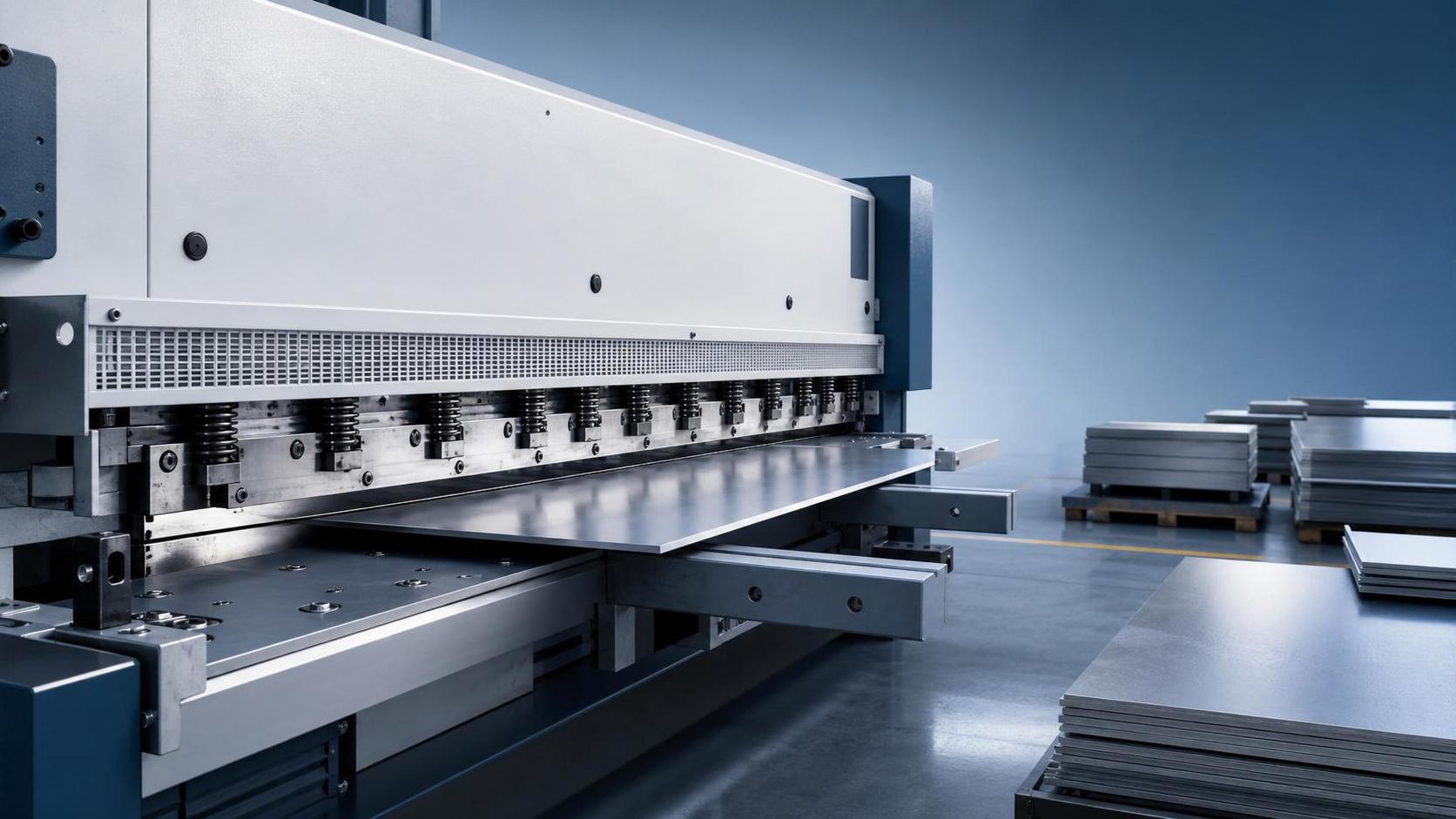
A practical evaluation method is to request sample cycle studies, estimated consumable usage, maintenance intervals, and recommended spare parts lists from the supplier. It can also help to compare the machine decision against adjacent process investments, much like buyers do when evaluating other fabrication equipment categories such as hydraulic shearing machines, cutting systems, or H-beam lines. The right ROI model is plant-specific and should reflect real production constraints.
Maintenance Cycles And Future Industry Trends
Routine maintenance usually includes daily cleaning of torch and wire feed paths, inspection of fixtures and clamps, lubrication of moving components where required, calibration checks, and periodic review of cables, gas lines, and safety interlocks. Preventive maintenance matters because welding automation often loses quality gradually through wear, contamination, and alignment drift rather than through immediate failure.
Replacement planning should cover consumables, contact tips, liners, nozzles, wear parts in fixtures, and control-system spares with long lead times. Buyers operating in export markets should ask how quickly parts can be supplied and whether remote diagnostics are available. These issues affect uptime more than many first-time buyers expect.
Looking ahead, the industry trend is toward deeper integration rather than isolated automation. Automatic space frame welding machine systems are increasingly expected to connect with digital production data, robot programming support, improved seam tracking, and upstream CNC preparation. Factories are also seeking more flexible multi-axis solutions because product variety continues to rise even in traditionally repetitive structural work.
For buyers planning medium-term expansion, the best strategy is usually to select a machine platform that solves today's production problem while leaving room for fixture upgrades, robot integration, or line extension later. In that context, suppliers with broad fabrication machinery experience, customization capability, and familiarity with international project standards can offer a more workable path than a narrowly defined machine sale alone.
search
Recommended Products
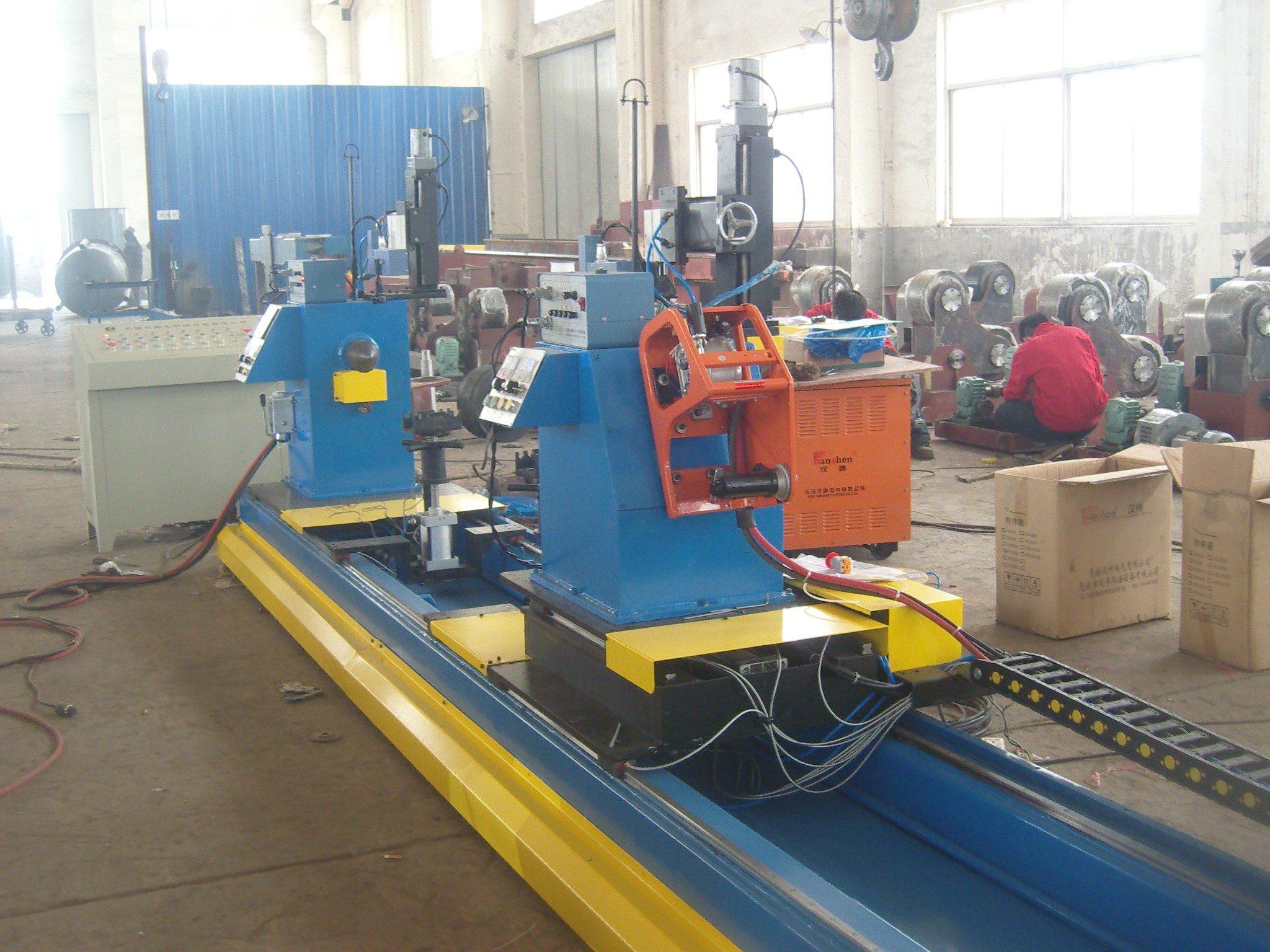
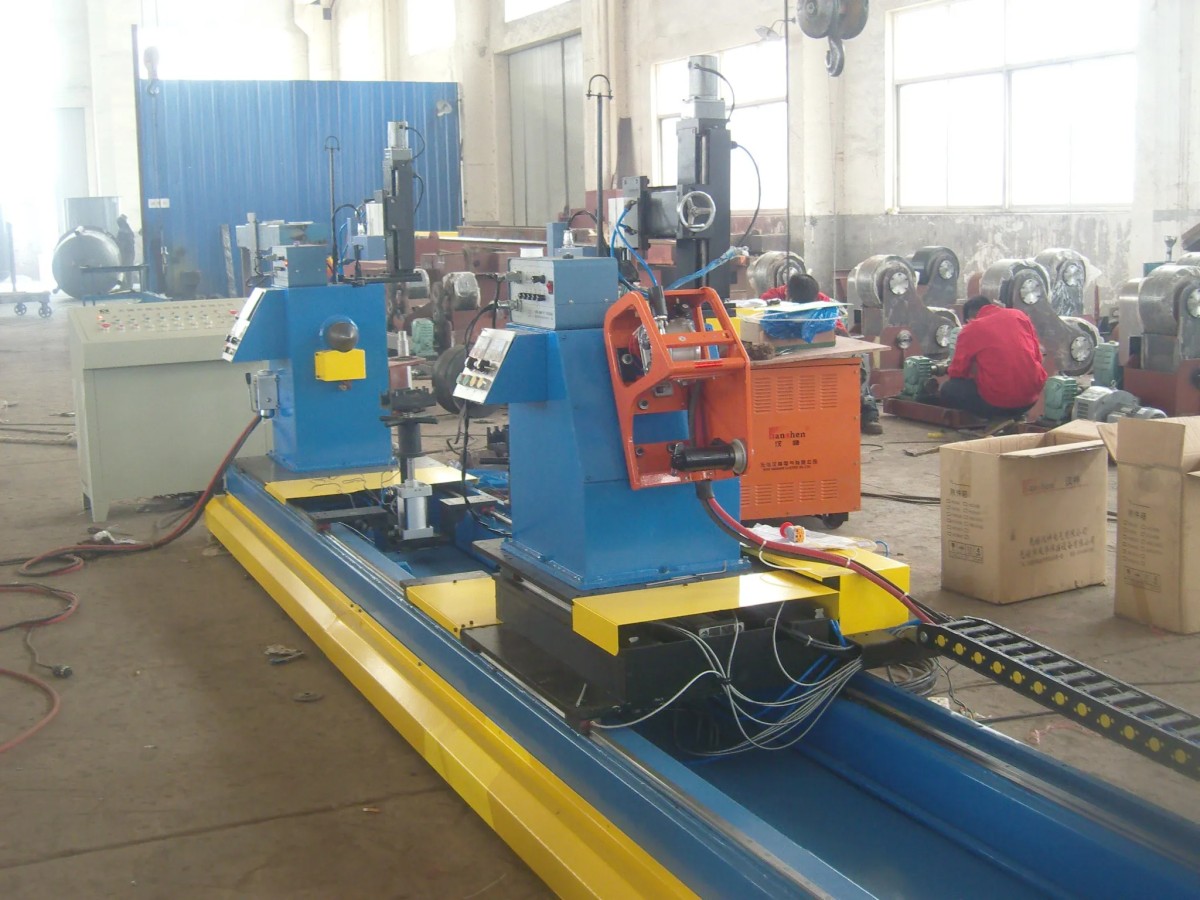
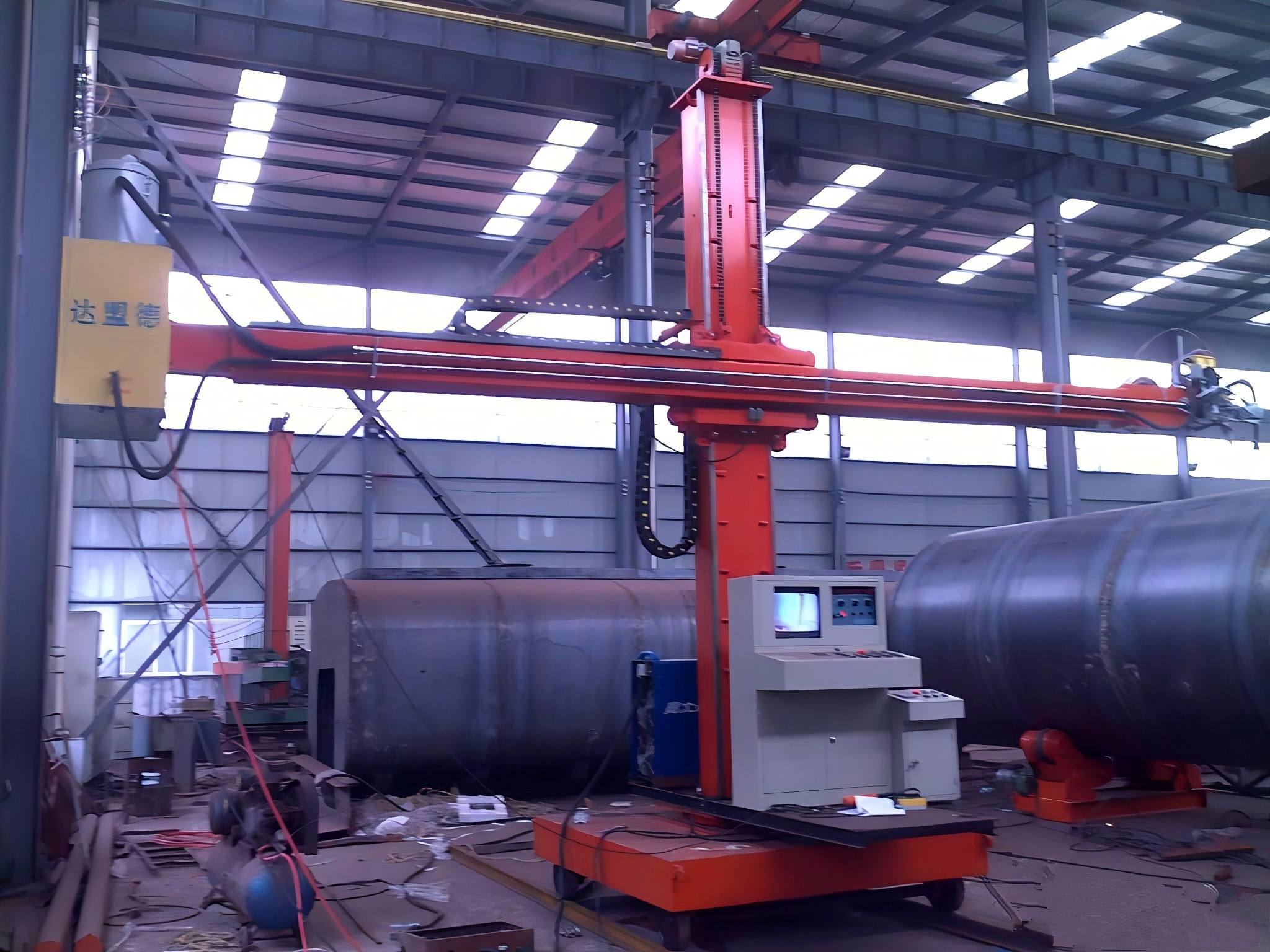
 Space frame welding machineBody of space frame welding machine is assembled by steel metal,structure parts are anneal processed,quite stable and durable;Automatic space frame truss welding machine realizes welding gun swing welding,welding gun is adjusted by manual;Main and vice withstanding device is by hydraulic,Space frame welding machine will loose after welding finishes,lifting of work piece adopts lead screw by manual.Automatic space frame welding machine Length of body is 7.2 meters,and width is 900mm,max welding gap could be 3-5cm,length of work piece should be under 5.5 meters,and diameter of work piece is 42mm-180mm
![星星1]()
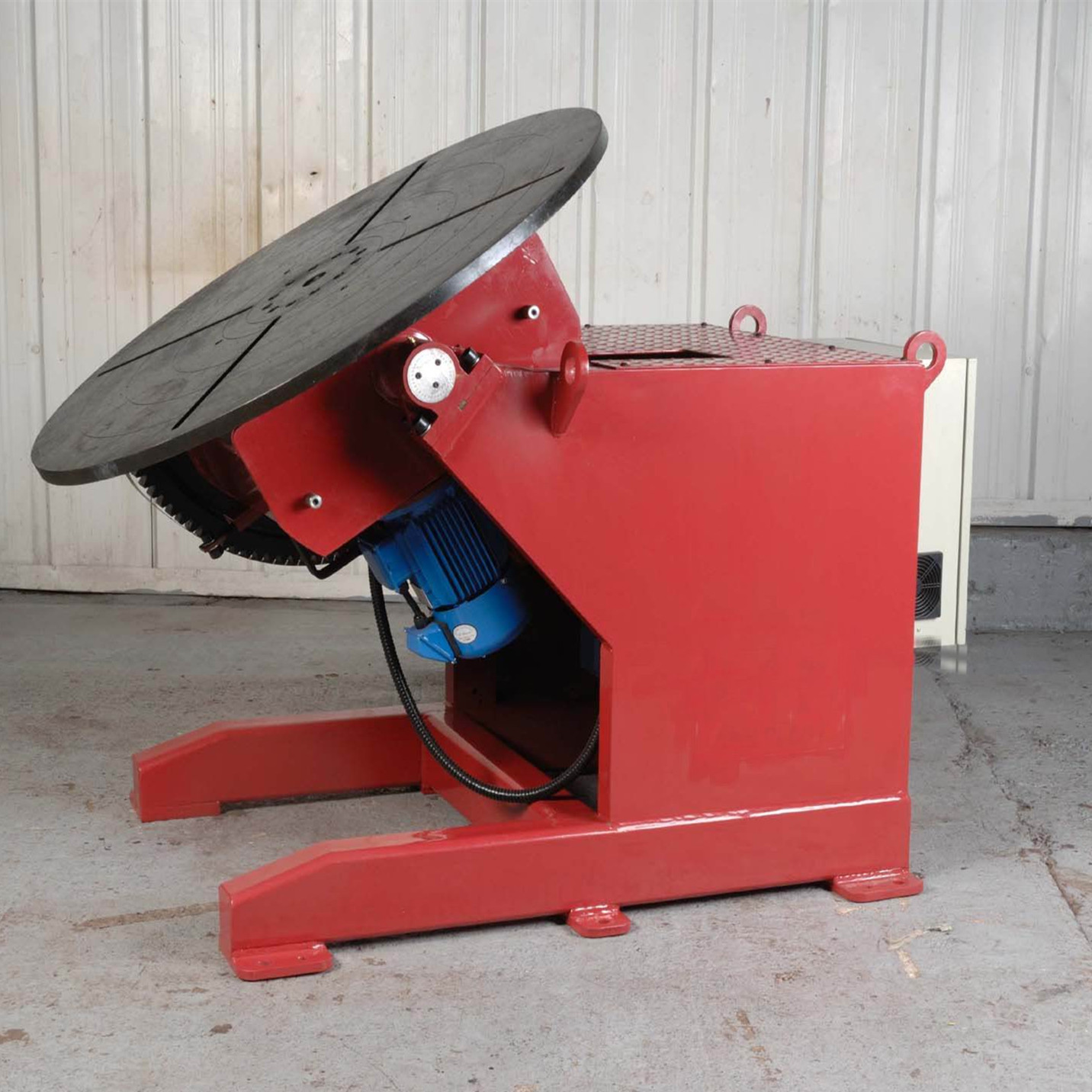
 Welding positionerOur welding positioners are available in a wide capacity range from 100kg to 20,000kg, featuring VFD-controlled 360° continuous rotation and tilting from 0° to 90°–120° for optimal welding positioning. Standard electrical configuration is 380V/50Hz/3PH, with custom voltages available. The 100kg model is equipped with wireless remote control and foot switch for ease of operation, while the 1,000kg model offers multiple configurations including hydraulic lifting, L-shape, and head & tail stock types to suit diverse application requirements.
![星星1]()
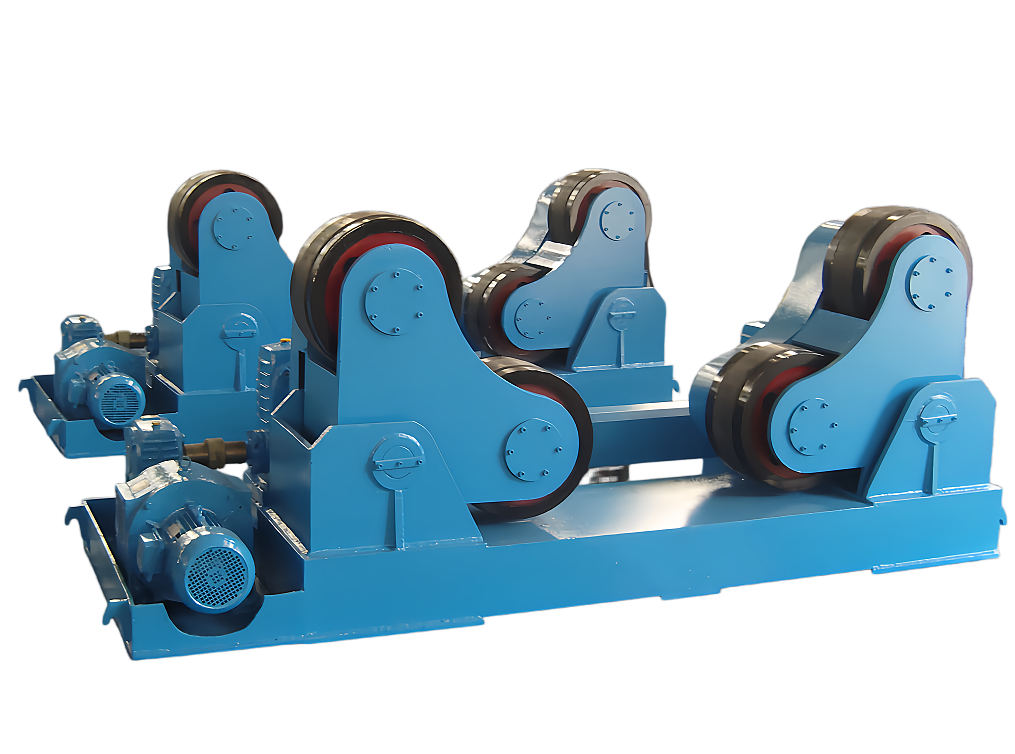
 Self aligning welding rotatorThe self-aligning welding rotator is a specialized auxiliary device designed to support and precisely rotate cylindrical workpieces during welding operations.
1.1 System Composition
A complete welding rotator system consists of three primary components:
Active (driven) rotator – equipped with a motor and reduction drive to provide rotational power
Passive (idle) rotator – provides support and follows the rotation of the driven unit
Control system – enables precise speed regulation for optimal welding conditions![星星1]()
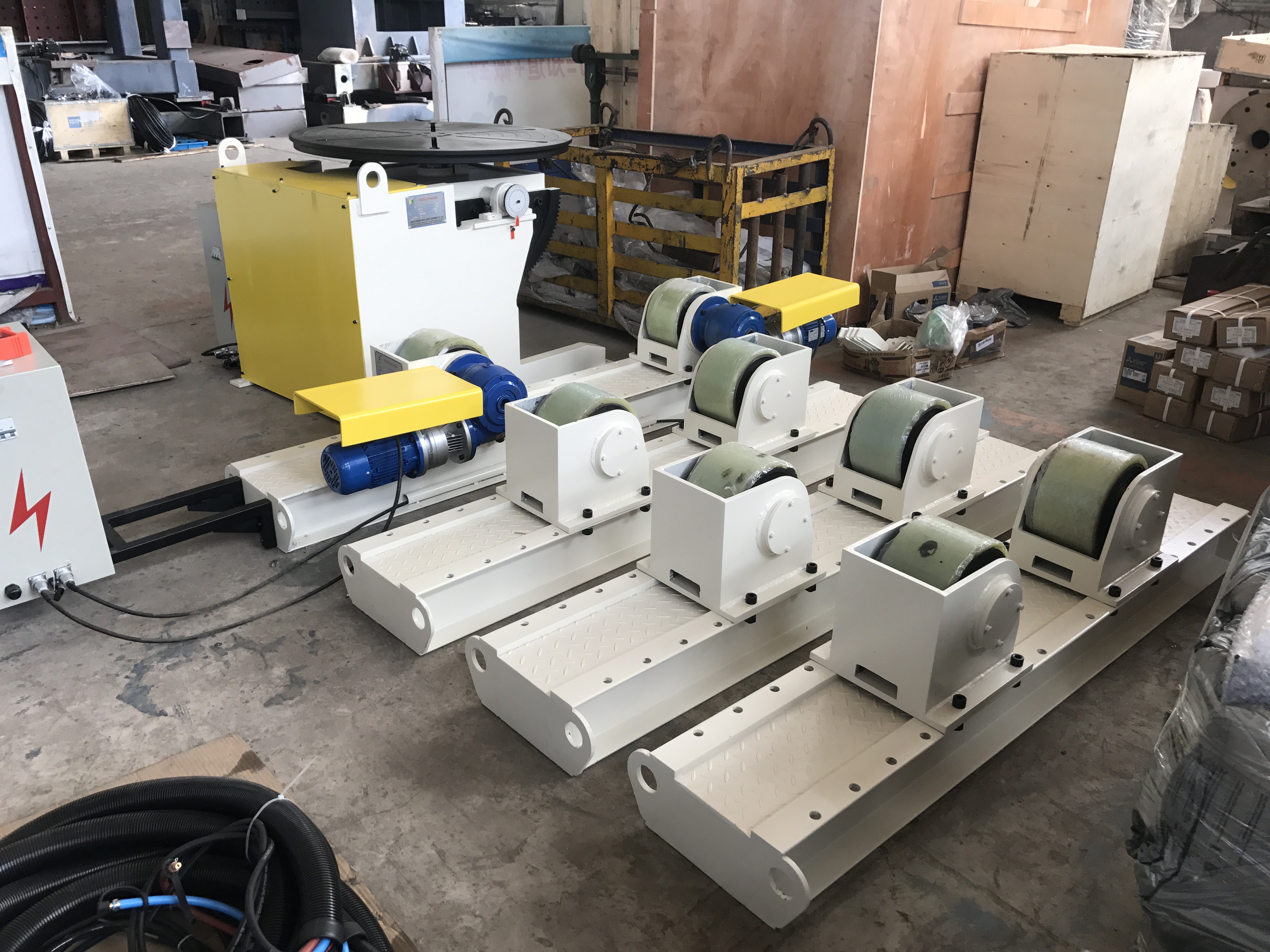
- Bolt adjusting welding rotatorA Welding Rotator is composed of three main components: a powered rotator (equipped with a motor), an idler rotator (without motor), and an integrated control system. Its primary function is to rotate cylindrical workpieces during welding operations, ensuring optimal positioning and consistent weld quality.
Automatic welding rotators are extensively used in butt welding of large-diameter pipes, pressure vessel fabrication, and other cylindrical assembly applications. By delivering smooth, adjustable rotation, they significantly enhance welding productivity and quality while substantially reducing operator fatigue.
As a result, welding rotators have become essential equipment in cylinder fabrication and heavy-duty welding workshops, offering a reliable solution for improving both efficiency and weld integrity.![星星1]()
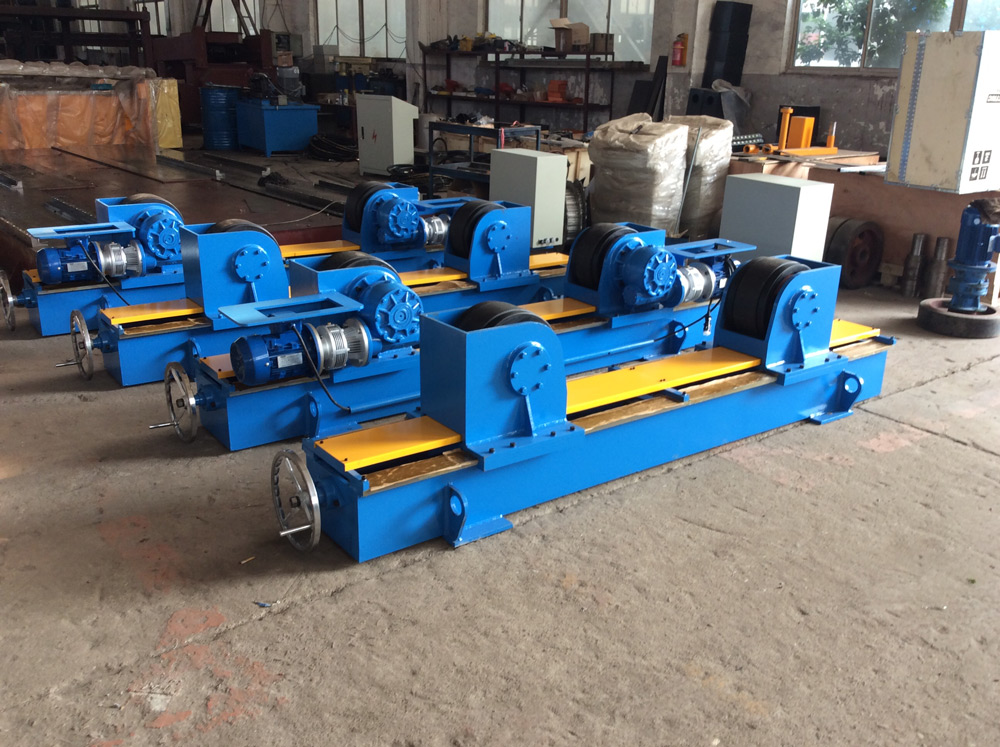
 Lead screw welding rotatorA Welding Rotator consists of a powered rotator (with motor), an idler rotator (without motor), and a control system. It is primarily used to rotate cylindrical workpieces during welding, enabling optimal positioning and consistent weld quality.
Automatic welding rotators are widely applied in butt welding of large-diameter pipes, pressure vessels, and other cylindrical assemblies. By providing smooth and adjustable rotation, they significantly improve welding productivity and quality while reducing operator fatigue. As such, welding rotators have become essential equipment in cylinder fabrication and heavy welding workshops.![星星1]()

Recommended blogs
 What’s driving the shift toward modular automatic space frame welding machine configurations in prefabricated construction?
- Can an automatic space frame welding machine handle custom truss geometries without reprogramming?
- Which industries benefit most from deploying an automatic space frame welding machine?
- Hydraulic Shearing Machine Cost Factors That Affect ROI
- What Is an Automatic Space Frame Welding Machine and Where Is It Used?
 How Automatic Space Frame Welding Machines Improve Joint Accuracy and Output
Send Us A Message
Send us a Message
A dedicated person will follow up on your needs one-on-one and provide personalized customized solutions according
to your needs.
Get In Touch
We look forward to hearing from you for in-depth communication on how to fulfill your mixing requirements.