




What Is an Automatic Space Frame Welding Machine and Where Is It Used?
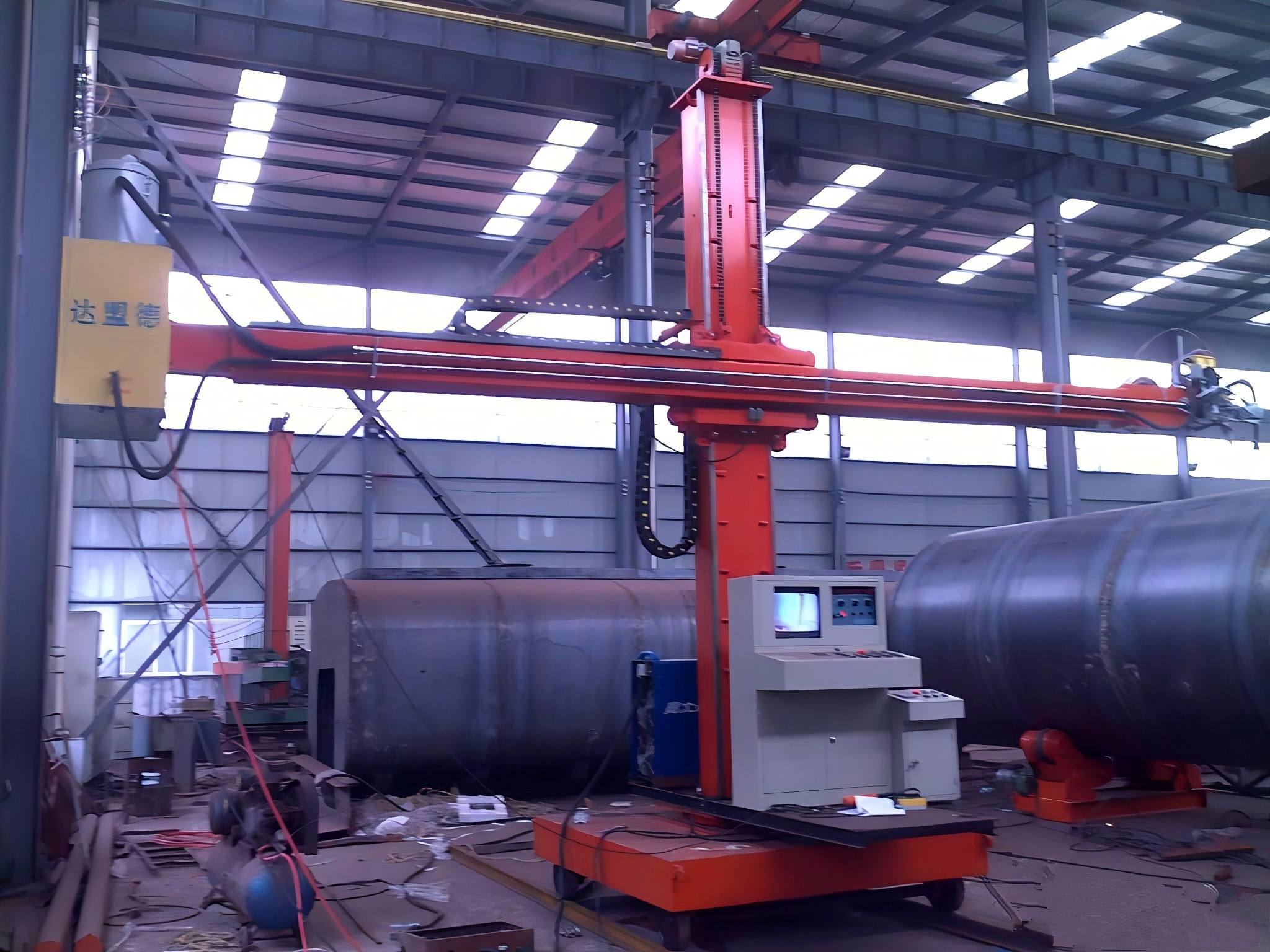
What an Automatic Space Frame Welding Machine Really Does
People often assume an automatic space frame welding machine is simply a larger version of a standard welding station with a few fixtures added. That is not quite right. In practice, it is a purpose-built production system used to weld multi-angle tubular or structural members into a three-dimensional frame with controlled positioning, repeatable weld paths, and far less dependence on manual fit-up than a conventional setup.
The key idea is not just automation in the narrow sense of replacing a welder’s hand movement. The real value is coordination. A space frame is made of many intersecting members, often meeting at different angles and around nodes that are difficult to access consistently by hand. Once production moves beyond one-off fabrication, the problem is no longer only “how to weld,” but how to hold geometry, manage sequence, reduce distortion, and keep every unit within the same dimensional tolerance. That is where this type of machine belongs.
An Automatic space frame welding machine typically combines positioning, clamping, workpiece rotation or indexing, and a programmable welding process. Depending on the design, it may work with MIG/MAG, submerged arc, or other arc-welding methods selected for the material, section size, and productivity target. The machine itself does not remove the need for engineering judgment. Joint design, member preparation, weld sequencing, and heat input still determine whether the final structure is stable and acceptable.
Why Space Frames Are Different from Ordinary Weldments
A space frame is not just a flat frame lifted into three dimensions. Its load path depends on the relationship between multiple members working together in tension and compression through a geometric arrangement. In many industrial and construction-related applications, that means the welds are part of a structural system where alignment matters as much as bead appearance.
This is why manufacturers who deal with repeated space frame production tend to look for dedicated automation earlier than shops making occasional fabricated assemblies. Manual welding can still be appropriate for prototypes, repair work, or low-volume custom jobs. But once output, consistency, or traceability becomes a serious requirement, manual methods start exposing their limits: variable root condition, inconsistent torch angle, uneven travel speed, and accumulated fixture error.
In that context, “automatic” usually means the machine controls the repeatable parts of the process better than a person can over long production runs. It does not mean every task is unattended. Material loading, tack welding strategy, parameter confirmation, and final inspection often remain human-led even in a highly automated line.
What the Machine Usually Includes
The exact configuration varies, but the core system usually revolves around several functional units working together rather than a single welding head:
- A positioning structure that sets the workpiece in the correct three-dimensional orientation
- Clamping devices that keep members stable during heat input
- A motion system for torch travel, rotation, or indexing
- A programmable welding power source and control interface
- Sometimes seam tracking, sensing, or coordinated multi-axis control when joint geometry is complex
That last point matters. Many buying decisions go wrong because people compare only amperage, travel speed, or the number of axes. Those figures matter, but they do not tell you whether the machine can manage node variability, access tight weld locations, or maintain repeatability across a full production batch. The right question is less “how advanced is the machine” and more “how well does the machine fit the geometry and process discipline of the product being built.”
Where It Is Commonly Used
The most obvious application is structural space frame production for buildings, roofs, exhibition halls, transport terminals, and similar large-span systems. In these projects, repeated nodes and tubular members make automation attractive when the design has enough standardization.
It is also used in industrial fabrication where three-dimensional welded frameworks appear in machinery bases, support systems, equipment skeletons, and certain transport or energy-related assemblies. The term “space frame” is used a bit differently from one sector to another, so the machine may serve architectural steelwork in one factory and engineered mechanical structures in another.
In export-oriented manufacturing, especially where buyers expect process stability under ISO9001-managed production and equipment aligned with CE-oriented design practice, automated welding systems are often evaluated not only for output but for consistency, documentation, and operator safety. Companies such as Wuxi Samgins International Trade Co.,Ltd, which supply a broad range of fabrication equipment including automatic welding systems, CNC cutting machines, welding robots, beam line equipment, and machine tools to markets in Southeast Asia, Europe, the Americas, and Oceania, tend to see this pattern clearly: buyers are not just asking for a machine that welds; they are asking for a machine that fits into a controlled production method.
What It Solves, and What It Does Not
The strongest case for an automatic system is not simply labor reduction. It is process stability across repeated work. When the same or similar frame geometry is produced in volume, automation can reduce variation in torch path, travel speed, arc length behavior, and sequencing. That often improves weld uniformity and helps control rework rates.
Another practical benefit is lower dependence on highly variable manual skill for physically awkward weld positions. Space frame nodes can be difficult to reach, and manual welding in those locations can become a bottleneck even when the welders are experienced.
Still, the machine is not a cure for upstream problems. Poor cut accuracy, inconsistent bevel preparation, mismatch at the joint, and unstable fixture design will show up later as welding defects or distortion. In fact, automation can expose those issues faster because the process becomes less forgiving. If one member is off-spec, the machine may repeat the same error very efficiently.
That is why edge preparation and dimensional consistency deserve more attention than they usually get in early equipment discussions. In some fabrication lines, upstream processes such as beveling directly affect whether automated welding can deliver the expected result. For heavy plate applications in pressure vessels, boilers, shipbuilding, or heavy machinery, a well-matched preparation process using equipment such as a Pipe Cutting & Beveling Machine can make a noticeable difference. Where straight, inclined, or U/V/K-shaped bevels need to be produced accurately in one pass, preparation quality influences fit-up, arc stability, and how much secondary grinding the shop has to accept later.
How to Judge Whether a Machine Is Suitable
A useful evaluation starts with the product, not the brochure. Several questions matter more than headline automation claims:
There is no single “best” Automatic space frame welding machine without that context. A system optimized for repetitive structural nodes may not be the best choice for mixed-part fabrication, even if its nominal automation level is higher.
A Common Misunderstanding About Automation Level
One common misunderstanding is to treat dedicated automatic welding equipment and welding robots as interchangeable. They overlap, but they are not the same thing. A robot offers flexibility across changing part programs, while a dedicated automatic machine is usually stronger when the workpiece family is stable and the process can be engineered tightly around it. In many factories, the decision is really about production logic: repeatability and pace versus flexibility and range.
Another misunderstanding is that higher speed always means better productivity. If travel speed rises but fit-up quality drops, distortion increases, or rework grows, the line may not actually produce more acceptable parts per shift. Good fabrication managers tend to watch overall pass rate and downstream correction time, not just welding cycle time.
Why the Upstream Process Still Matters
The best automatic welding line usually sits inside a broader process chain. Cutting, beveling, alignment, tack assembly, welding, and inspection are linked. If one stage is unstable, the rest compensates at a cost. That is especially true in heavier fabrication, where material thickness, bevel angle, and edge condition affect root opening and weld penetration behavior.
For example, in applications involving carbon steel, stainless steel, or aluminum components that require controlled edge preparation before welding, precision milling or beveling equipment may be selected for process reasons rather than convenience. A machine capable of bevel angle adjustment from 0° to 90°, automatic feed and return, and stable clamping can reduce the variability that later disrupts welding. That is not a separate topic from automation; it is part of the same production discipline.
What to Keep in Mind When Researching One
If the goal is understanding rather than buying immediately, the most useful way to think about this equipment is as a system for repeatable structural welding, not just a machine with a torch and a controller. The right questions are about frame type, joint consistency, production volume, operator involvement, and how well the welding process is integrated with cutting and preparation.
That perspective helps explain where these machines are used and where they are not. They fit best where geometry repeats, weld quality must stay consistent across batches, and manual welding would otherwise struggle with position, fatigue, or throughput. They are less compelling where every project is unique, tolerances are poorly controlled upstream, or the production mix changes too often for dedicated tooling to make sense.
So when someone asks what an automatic space frame welding machine is, the shortest accurate answer is this: it is a manufacturing solution for producing three-dimensional welded frames in a controlled, repeatable way. But the more useful answer is that its success depends on the whole fabrication process around it, from preparation and fixturing to inspection and production planning. That is usually the difference between a machine that looks capable on paper and one that actually performs in a working plant.
search
Products Navigation
Send Us A Message