




How Automatic Space Frame Welding Machines Improve Joint Accuracy and Output
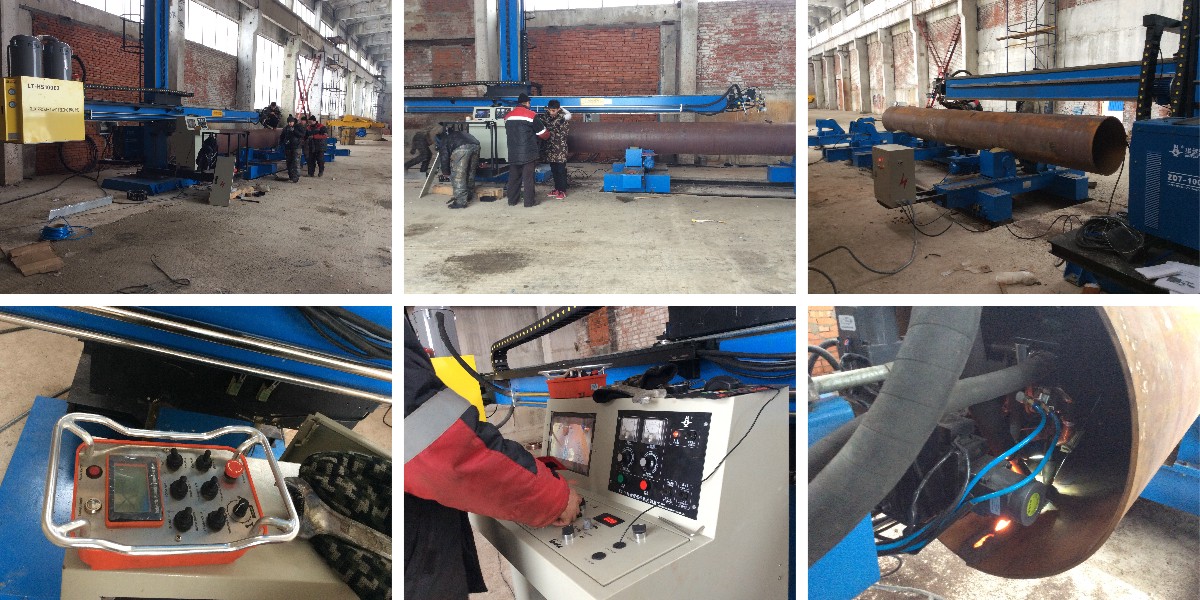
What to check before you credit the machine for better weld accuracy
Technical evaluators usually ask the right first question: does an Automatic space frame welding machine actually improve joint accuracy, or does it just automate the same variation faster? In practice, the gain comes from controlling three things at once: part positioning, torch motion, and parameter repeatability. When those are stable, the machine does more than reduce labor. It tightens fit-up consistency, lowers weld deviation between nodes, and keeps output predictable across long production runs.
That said, not every automatic system delivers the same result. Joint quality in a space frame line depends on how the machine handles geometry changes, tack condition, heat input, and sequence logic. If you are comparing equipment for steel structure fabrication, use the checklist below as a working filter rather than a marketing scorecard.
Start with the joint, not the brochure
The fastest way to misjudge a welding system is to evaluate it on generic sample pieces. Space frame joints are not generic. Tube diameter combinations, wall thickness variation, node angle, bevel preparation, and root gap all affect how much benefit automation can realistically deliver.
- Check the real joint family you plan to run: round-to-round, round-to-plate, multi-branch node, or mixed section assemblies.
- Review the largest and smallest member sizes in the production mix.
- Look at fit-up variation from upstream cutting and fixturing, not only nominal drawing dimensions.
- Confirm whether the machine program compensates for actual joint geometry or only repeats a preset path.
A machine that repeats the same torch path very accurately can still produce poor joints if the cut profile or assembly position drifts. That is why experienced buyers treat upstream tolerance as part of the welding evaluation.
Verify how the machine controls positioning accuracy
Most improvements in weld joint accuracy come from positioning discipline, not from arc time alone. For space frame work, ask how the workpiece is clamped, indexed, and referenced before arc start. If the datum changes between loading, tack, and welding, repeatability drops quickly.
What matters in the review:
- Reference method: mechanical stops, servo positioning, vision assistance, or a combination.
- Fixture stiffness: light fixtures save cost, but they let parts move under thermal stress.
- Reclamping logic: if the joint must be repositioned mid-cycle, ask how the machine preserves the coordinate system.
- Part variation handling: a useful machine does not fail the cycle every time tube straightness is slightly off.
A small detail that often gets missed: check whether the machine references from the finished cut edge or from an external fixture point. In real production, that difference affects how well the weld lands on the intended seam when upstream preparation varies.
Look closely at seam tracking and path correction
Automatic space frame welding machine performance separates quickly once you move from simple repeat parts to mixed-batch production. A rigid programmed path is fine for highly controlled components. For variable-fit structural work, you need to know whether the system can detect and correct path deviation.
A practical review should answer these questions:
- Does the machine support seam finding before welding starts?
- Can it compensate for minor assembly offset without manual reteaching?
- How does it behave at node transitions where torch angle and stick-out become unstable?
- What happens when tack weld height interrupts the planned path?
If the answer to most of those is “operator adjustment,” the line may still work, but the accuracy benefit will depend heavily on the operator assigned to setup. That weakens one of the main reasons to automate in the first place.
Judge weld consistency by heat input control, not by appearance only
Neat bead appearance is not enough for technical evaluation. Joint accuracy also means the weld is placed correctly without causing avoidable distortion. Automatic systems help by keeping travel speed, weave behavior, dwell time, and arc length more stable than manual welding, especially on repeated node types.
When reviewing test pieces, compare more than surface finish:
A consistent machine cycle usually reduces rework not because every weld looks perfect, but because fewer joints fall outside acceptable fit and placement limits after cooling.
Measure output where production actually loses time
Output claims become misleading when they focus only on welding speed. In space frame fabrication, throughput is often limited by loading, alignment, tack preparation, program calling, and post-weld handling. A faster arc does not help much if the operator spends too long recovering fixture position or editing job parameters.
Ask for the cycle to be broken into stages. Loading time, clamping time, seam search time, weld time, unload time, and intervention time should be viewed separately. This is where some automatic systems show their real value: they reduce the number of manual corrections per joint. That matters more to daily output than a small increase in travel speed.
Do not ignore the upstream cutting and preparation link
Welding automation performs best when the incoming parts are controlled. For that reason, technical evaluators often review cutting and edge preparation in the same decision path. If sheet or plate preparation elsewhere in the line is part of the same fabrication workflow, equipment such as Hydraulic guillotine shear can matter indirectly because repeatable blanking and straight-line cutting affect downstream fit-up discipline. The relevant point is not the product category by itself, but whether upstream equipment supports stable dimensions, predictable edge condition, and low handling error before components reach the weld station.
Where plate shearing is involved in bracket or connection-part preparation, features like automatic parameter adjustment, rear stopper control, or laser alignment can reduce setup drift. If you are evaluating a complete fabrication cell rather than a standalone welding unit, that upstream stability should be counted.
Check programming depth and job changeover
A machine that welds one demonstration node well may still be awkward in mixed production. Ask how jobs are created, stored, and recalled. The useful question is not whether the interface looks modern. It is whether a technician can switch between node variants without rebuilding the process every time.
- Can common programs be stored and reused across similar geometries?
- How many parameters require manual input during a job change?
- Are torch angle, offset, and sequence adjustments protected by access levels?
- Can the operator recover quickly after a stop without losing alignment history?
Poor job management does not always show up during acceptance testing. It shows up three months later when product mix gets wider and tribal knowledge starts replacing process control.
Review standards, documents, and compliance in the right order
For buyers working across export markets, document control matters almost as much as machine capability. If the equipment is supplied into projects that require formal quality management or market access documentation, ask for the machine documentation package early: technical drawings, electrical and hydraulic schematics where applicable, maintenance instructions, and the conformity documents used for the target market. If the supplier states production is organized under ISO9001 and relevant equipment is designed to EU CE requirements, verify that through the machine file and supplied documentation rather than treating it as a generic sales line.
For the welding side, also align the evaluation with the applicable project welding procedure route, inspection method, and dimensional acceptance criteria used in your fabrication environment. The machine can improve repeatability, but acceptance still depends on the procedure and inspection framework you operate under.
Pay attention to failure modes, not just nominal performance
The most useful equipment review includes one deliberately imperfect batch. Let the parts come in with realistic tolerance spread. Include slight tack variation. Run a shift-change handover. That is where you see whether the machine holds output when conditions stop being neat.
Common failure patterns are familiar: seam miss after reclamp, poor arc start on contaminated areas, fixture slip after thermal buildup, and growing deviation when operators compensate manually instead of correcting the root cause. A machine that contains those problems quickly is usually worth more than one that produces a beautiful sample under ideal conditions.
Use a practical decision sequence
For technical evaluation, keep the order simple. Start with your real joint range and upstream part tolerance. Then verify fixture and positioning logic. After that, test seam tracking, parameter repeatability, and changeover speed on more than one node type. Only then compare output. If the Automatic space frame welding machine holds placement accuracy across variable parts and reduces intervention during a full cycle, the productivity gain is usually real. If accuracy depends on perfect incoming parts and constant manual correction, the output improvement will be narrower than it first appears.
The soundest buying decision usually comes from one rule: evaluate the machine as part of a fabrication process, not as an isolated welding head. Joint accuracy and output improve together only when fit-up, positioning, path control, and document discipline are all working in the same direction.
search
Products Navigation
Send Us A Message