




How to Choose an Automatic Space Frame Welding Machine for Project Scale
Start with the production reality, not the machine brochure
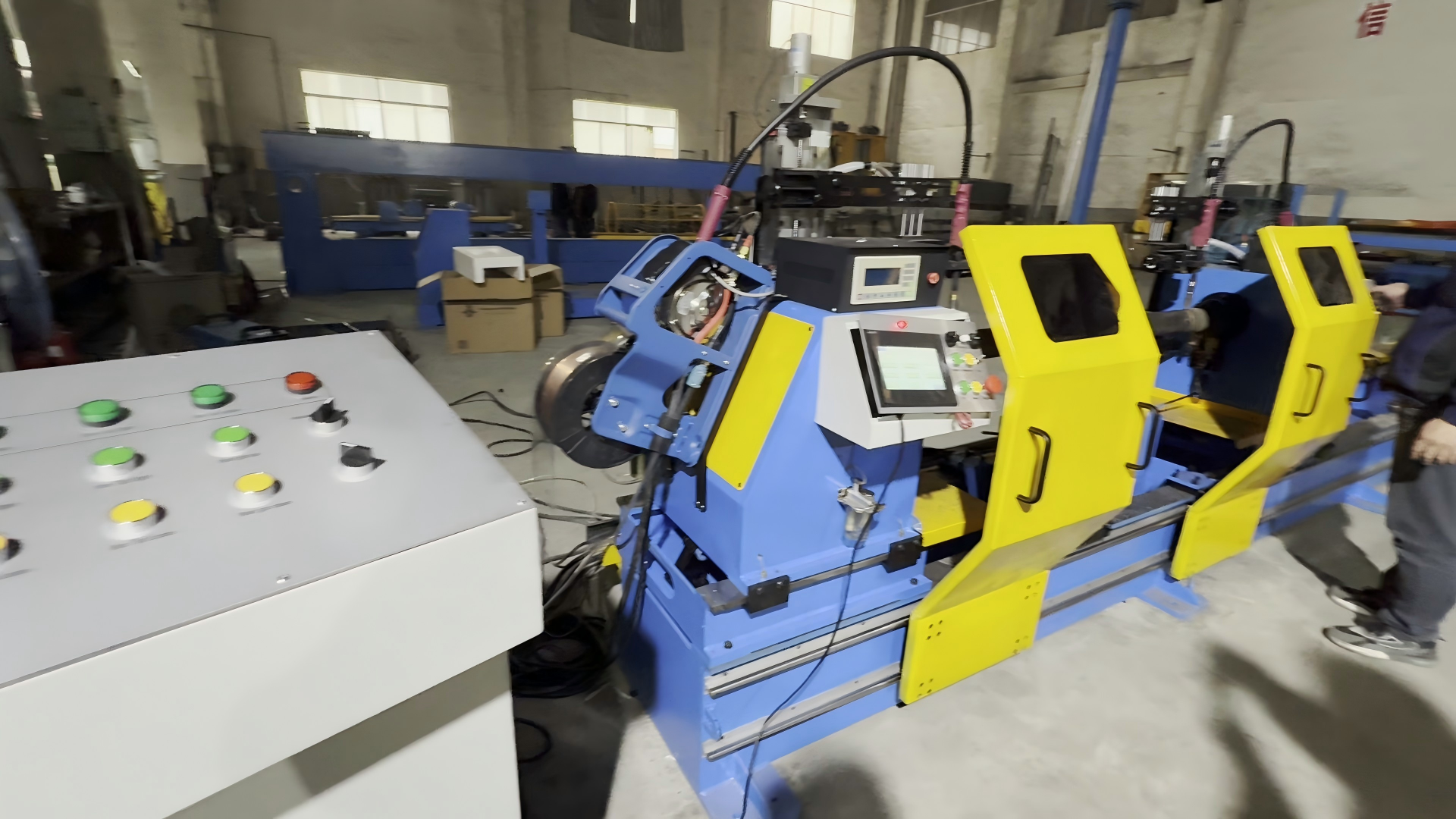
An automatic space frame welding machine can save a project or quietly become the most expensive bottleneck on the floor. For project managers, the real question is not whether the machine is advanced. It is whether its capacity, control logic, and operating method match the job mix you actually have. That decision affects weld consistency, delivery pace, staffing pressure, rework, and the cost of every delayed node.
If you are choosing equipment for a new line, an expansion, or a replacement, work through the checks below in order. That keeps the decision tied to project scale instead of getting pulled off course by headline specs.
Check what “project scale” really means in your workshop
People often reduce scale to monthly output. That is too narrow. In space frame work, scale is a combination of three things: how many joints you must complete, how much variation exists between node types, and how tight the handover schedule is.
A line producing repeatable components for a standard structure needs a different machine from a project shop switching between sizes and joint geometries every few hours. Before comparing suppliers, write down:
- Average and peak daily welding volume
- Typical member diameters and wall thicknesses
- Number of joint types per project
- Expected changeover frequency
- Required completion window for each batch
That list usually exposes the first mistake: buying for average demand when the machine must survive peak demand. If your project schedule regularly compresses installation and fabrication into the same period, the peak matters more than the average.
Match throughput to takt time, not just to rated capacity
Rated output on a quotation can look comfortable until you add loading, clamping, alignment, weld cycle time, cooling, unloading, and re-positioning. For an automatic space frame welding machine, the effective output is always lower than the clean number shown in sales material.
Ask for the full operating cycle in sequence. Not a single “pieces per hour” figure. What you need to see is whether the machine’s real takt time fits your bottleneck process upstream and downstream. If cutting and fit-up can feed 60 assemblies per shift but the welding cell can only stabilize at 40 with normal operator handling, the line is mismatched from day one.
Do not overbuy automation if your part flow is unstable
Higher automation is not automatically the better decision. It pays when your incoming parts are dimensionally stable, fixtures are disciplined, and project planning is mature enough to keep the machine fed correctly. If your fabrication floor still sees frequent variation in cut accuracy or fit-up quality, a highly automated cell may spend too much time waiting for manual correction.
A practical way to judge this is to map your current causes of weld delay. If most delays come from operator inconsistency, automation can solve a real problem. If most delays come from incoming part variation, the welding machine alone will not fix the root cause.
This is also where adjacent finishing steps matter. Shops producing cleaner upstream or downstream metal surfaces often stabilize welding and handling faster. In some mixed fabrication environments, equipment such as Standard Magnetic polishing machine is used for deburring and surface preparation on metal parts before later assembly processes, especially when burr removal and handling quality affect fit and repeatability. It is not a substitute for welding automation, but it can reduce avoidable variation around the cell.
Look closely at fixturing range and alignment control
The fixture system deserves more attention than many buyers give it. Space frame projects rarely stay inside one ideal geometry. You need to know how the machine handles different tube diameters, node arrangements, and joint angles without losing alignment efficiency.
A strong evaluation question is simple: when the workpiece changes, what changes on the machine? If the answer involves long manual adjustment, spacer swapping, repeated centering checks, or trial welds, your output on mixed projects will drop sharply.
Pay attention to:
- Clamping repeatability across the full part range
- Reference points used for positioning
- Whether alignment is mechanical, sensor-assisted, or fully programmed
- How easy it is to verify concentricity and joint offset before welding starts
If you manage large-volume standard work, dedicated fixtures can be justified. If your schedule is project-driven and changeable, flexibility has more value than chasing the fastest cycle on a single part family.
Verify weld quality control at the machine level
Weld quality does not come from a machine being automatic. It comes from whether the machine can hold parameters and whether your team can trace what happened when a weld goes wrong.
For project selection, check whether the equipment allows stable control of travel speed, arc behavior, positioning consistency, and repeatability across long runs. Then ask how operators and supervisors review faults. Alarm history, parameter storage, job recipes, and basic production records make a real difference when you are running several joint types in the same week.
Another common miss is testing only a good sample. Ask to see the machine handle a difficult geometry or a typical production tolerance condition. A clean weld on an ideal sample proves very little.
Measure labor impact honestly
Project leaders are often promised labor savings, but the real labor question is broader: how many skilled welders, machine operators, fitters, and maintenance people are still needed to keep the cell productive?
A machine that reduces arc-time labor but increases setup dependency may not improve total productivity. During evaluation, separate labor into three buckets:
- Routine operation per shift
- Setup and program adjustment for new workpieces
- Troubleshooting and preventive maintenance
That gives you a better staffing picture than a generic claim that one operator can run the system.
Check integration with your existing line before discussing extras
An automatic space frame welding machine rarely works in isolation. It sits between cutting, fit-up, handling, inspection, and sometimes finishing. If the handoff points are weak, machine performance on paper will not show up in production.
Review the basics in plain terms:
- Available floor space, including loading and maintenance access
- Power requirements and plant readiness
- Material flow direction and forklift or crane movement
- Whether upstream parts arrive in a condition the machine can accept consistently
- How finished assemblies leave the cell without blocking the next cycle
This is where many expansion projects lose time. Teams compare welding heads, software screens, and automation options before checking whether the cell can be loaded safely and cleared fast enough in the actual workshop layout.
Treat maintenance access and spare support as part of capacity
Downtime is capacity loss. That sounds obvious, but buyers still treat service support as an afterthought. For project-scale equipment, ask what wear parts are expected, how they are replaced, what can be handled by your own maintenance team, and what requires remote or on-site support.
Wuxi Samgins International Trade Co.,Ltd works across welding equipment and other fabrication machinery, with production and design organized around ISO9001 quality system requirements and EU CE standards. For buyers, that background is most useful when it translates into documentation discipline: machine drawings, operating instructions, parts lists, and clear support communication. Those documents matter more in practice than broad marketing language.
Ask for documents that support a buying decision, not just a quotation
If your project serves different export markets or internal compliance systems, document review should happen before ordering, not during installation. Depending on the destination and how the equipment will be used, you may need to inspect machine identification details, electrical documentation, safety-related information, and conformity documents attached to the delivered model.
The useful habit here is specific verification. Check the quotation model number against the technical document set, then verify that the supplied configuration, safety devices, and electrical arrangement match those documents. That prevents a common problem where the approved quote and the delivered machine are similar, but not identical in the details that affect commissioning.
Build the comparison around risk, not around features
When the shortlist is down to two or three options, stop comparing feature counts. Compare failure points. Which machine is more sensitive to poor fit-up? Which one loses the most time on changeover? Which one depends on a higher operator skill level than your team can supply right now? Which one becomes difficult when project mix changes mid-quarter?
That approach usually leads to a more durable decision than simply choosing the highest automation level or the lowest purchase price.
A practical decision sequence
If you need a clean way to move forward, use this order:
- Define peak workload, joint range, and changeover frequency.
- Test real cycle time against your line takt time.
- Check fixture flexibility and alignment method on actual part types.
- Review parameter control, records, and fault handling.
- Measure total labor impact, including setup and maintenance.
- Confirm installation conditions, documentation, and support readiness.
A good automatic space frame welding machine should make your project flow more predictable. That is the real standard. If a machine cannot hold output under your actual mix of parts, staffing, and deadlines, it is oversized in the wrong places and undersized where it counts.
search
Products Navigation
Send Us A Message