




Hydraulic Shearing Machine Cost Factors That Affect ROI
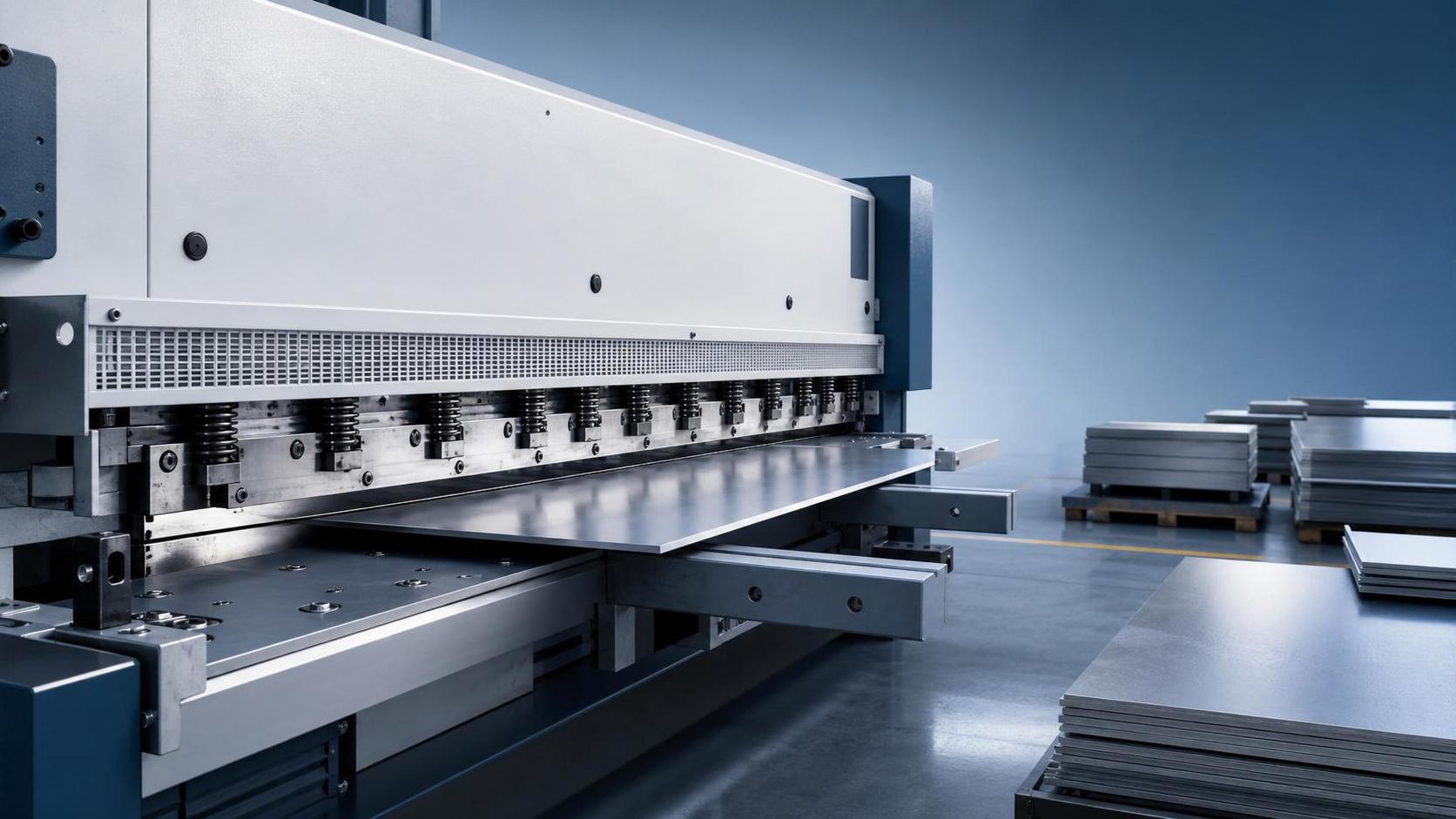
Hydraulic Shearing Machine Cost Factors That Affect ROI
When evaluating a Hydraulic Shearing machine, the sticker price is only the starting point.
Real return comes from output stability, labor efficiency, service life, and predictable operating costs.
A cheaper machine can become expensive fast if downtime, blade wear, or power use keeps rising.
That is why a smart purchase decision compares total ownership cost with long-term production value.
In sheet metal processing, the best Hydraulic Shearing machine is the one that protects margin year after year.
Why Purchase Price Alone Can Mislead
Many buyers compare quotes and focus on the lowest number first.
That approach feels efficient, but it often hides the drivers that shape actual ROI.
For example, two machines may look similar on paper.
Yet one may deliver tighter cutting tolerance, lower scrap, and fewer maintenance stops.
Over three to five years, those differences can outweigh the initial price gap.
A Hydraulic Shearing machine should therefore be reviewed as a profit tool, not just a capital expense.
Core Cost Factors That Affect Hydraulic Shearing Machine ROI
1. Cutting Accuracy and Material Waste
Accuracy has a direct financial impact.
If the Hydraulic Shearing machine produces uneven edges or repeatability issues, scrap rates rise quickly.
Even a small waste percentage matters when processing stainless steel, carbon steel, or aluminum daily.
- Higher precision reduces rework and secondary correction.
- Stable backgauge performance improves batch consistency.
- Better blade alignment protects usable material yield.
2. Production Speed and Throughput
Cycle time affects revenue more than many buyers expect.
A faster Hydraulic Shearing machine can support more orders without adding another shift.
This becomes especially important when lead times are tight or seasonal demand spikes.
Higher throughput spreads fixed costs across more finished parts, improving unit economics.
3. Energy Consumption
Power cost is easy to underestimate during equipment selection.
But over years of operation, inefficient hydraulics can add a meaningful burden to operating expense.
Energy-efficient controls, optimized pump systems, and better load management help reduce this hidden drain.
For plants running multiple machines, the savings multiply fast.
4. Maintenance Frequency and Spare Parts Cost
Maintenance is where low-cost equipment often loses its advantage.
If seals, valves, blades, or electrical components fail often, service costs rise and production stalls.
The better question is not only what parts cost, but how often they need replacement.
- Ask for preventive maintenance intervals.
- Check local spare parts availability.
- Confirm technician response time and support coverage.
5. Machine Reliability and Downtime Risk
Downtime is usually the most expensive cost factor.
When a Hydraulic Shearing machine stops, labor sits idle, delivery schedules slip, and customer confidence may weaken.
Reliable hydraulic systems, durable frames, and proven controls lower this risk.
In practical terms, uptime is one of the clearest indicators of investment quality.
Specification Choices That Change Total Cost
Not every Hydraulic Shearing machine should be configured the same way.
The right specification depends on production volume, material type, thickness range, and future expansion plans.
Overbuying adds unnecessary capital pressure.
Underbuying creates bottlenecks and may force an early replacement.
A balanced specification usually delivers better ROI than the biggest machine in the catalog.
Labor, Training, and Process Efficiency
Labor cost is not limited to headcount.
It also includes setup time, operator errors, training effort, and the ability to keep production flowing smoothly.
A user-friendly Hydraulic Shearing machine shortens learning curves and reduces mistakes during routine work.
This matters even more in factories facing skilled labor shortages.
From a wider production view, shearing rarely works alone.
It connects with bending, welding, deburring, and material handling steps.
That is why some buyers compare line efficiency across equipment categories, including solutions like Standard gantry h beam welding machine.
When upstream and downstream processes stay aligned, the full manufacturing system performs better.
Supplier Strength Also Affects ROI
The machine matters, but the supplier matters too.
A dependable manufacturing partner can reduce risk long before installation starts.
Wuxi Samgins International Trade Co.,Ltd focuses on mechanical equipment and related production solutions across global markets.
Its portfolio covers shearing machines, bending machines, rolling machines, CNC machine tools, welding robots, laser cutting systems, and more.
Products are organized under ISO9001 quality management practices and aligned with EU CE standards.
That combination helps buyers evaluate consistency, documentation quality, and export readiness with more confidence.
In ROI terms, strong support and stable quality reduce the risk of expensive surprises later.
A Simple ROI Evaluation Framework
If you are comparing several quotes, use a practical scoring model.
- List purchase price, freight, installation, and training cost.
- Estimate annual energy, maintenance, blades, and spare parts cost.
- Measure expected output, scrap rate, and labor hours saved.
- Assign a value to reduced downtime and delivery reliability.
- Review supplier support, warranty terms, and parts access.
This approach turns a Hydraulic Shearing machine comparison into a financial decision, not just a technical discussion.
It also helps internal teams align around facts instead of assumptions.
Common Mistakes That Reduce Return
- Buying only on price and ignoring total lifecycle cost.
- Choosing excess capacity that stays unused for years.
- Ignoring local service and spare parts access.
- Underestimating scrap cost from poor cut quality.
- Failing to match the Hydraulic Shearing machine to actual workflow needs.
These mistakes are common because they seem minor during procurement.
Later, they show up as lower margin, missed capacity, and slower payback.
Final Takeaway
A Hydraulic Shearing machine creates value when it cuts accurately, runs reliably, and supports efficient production over time.
The strongest ROI usually comes from the right balance of price, performance, service, and long-term operating cost.
Before approving a purchase, compare total ownership cost, expected output gains, and supplier stability in one clear view.
That simple shift leads to better equipment decisions and a more profitable manufacturing operation.
search
Products Navigation
Send Us A Message