




Common Hydraulic Shearing Machine Cutting Problems and Fixes
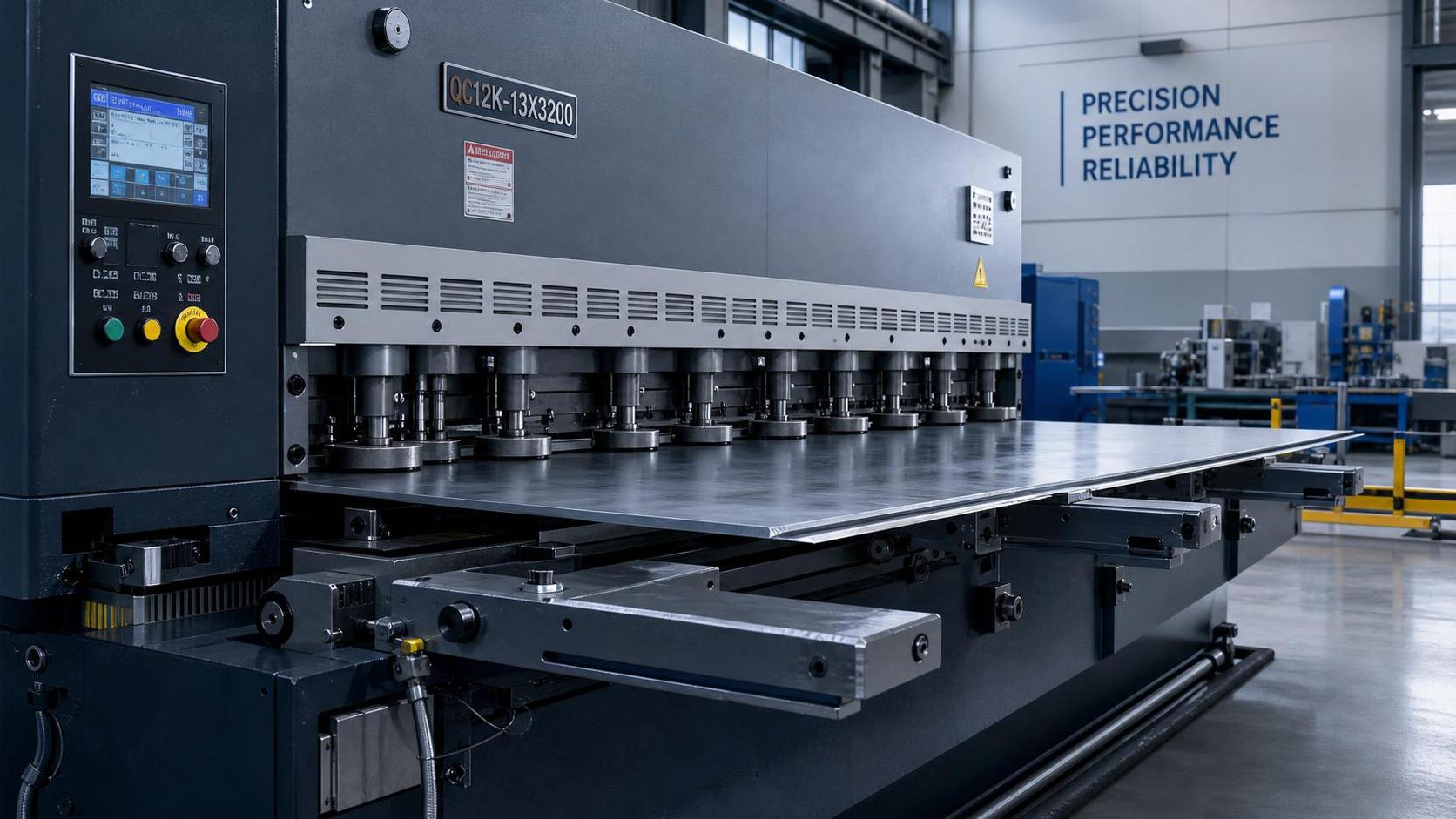
Common Hydraulic Shearing Machine Cutting Problems and Fixes
Hydraulic Shearing machine cutting issues can quickly affect accuracy, blade life, and production efficiency.
When cut quality starts changing, the root cause is often visible before the machine stops completely.
Rough edges, angle error, sheet movement, and fast blade wear usually point to setup, hydraulic, or mechanical problems.
This guide explains common Hydraulic Shearing machine faults and practical fixes that help restore stable, repeatable cutting results.
Why Cutting Problems Happen on a Hydraulic Shearing Machine
A Hydraulic Shearing machine depends on correct blade clearance, straight blade alignment, and steady hydraulic pressure.
If one factor shifts, cut quality drops quickly and the problem often spreads to other machine parts.
From recent service cases, the most common triggers are poor adjustment, weak clamping, worn blades, and backgauge deviation.
Material condition also matters.
High-strength plate, warped sheets, or inconsistent thickness can make a normal Hydraulic Shearing machine look unreliable.
That also means troubleshooting should begin with both the machine and the material, not the machine alone.
Problem 1: Rough Edges and Heavy Burrs
Heavy burrs are one of the clearest signs that the Hydraulic Shearing machine is not cutting cleanly.
The cut edge may feel sharp, torn, or uneven across the sheet length.
Likely causes
- Blade clearance is too large for the plate thickness.
- Upper or lower blades are worn or chipped.
- Blade edge is not parallel along the full cutting length.
- Hydraulic pressure is unstable during the shearing stroke.
Practical fixes
- Check the blade gap against material thickness and strength.
- Inspect both blades for wear marks, nicks, and uneven contact.
- Reset blade parallelism with a feeler gauge across several positions.
- Monitor pressure fluctuation at full stroke, not only at idle.
In actual maintenance work, burr problems often come from a gap setting that stayed unchanged after material switched.
A simple readjustment can restore clean cutting without replacing major parts.
Problem 2: Uneven Cut Quality from One Side to the Other
Sometimes one side looks smooth while the other side shows tearing or burrs.
This usually means the Hydraulic Shearing machine is cutting with unequal conditions across the blade length.
What to inspect first
- Blade alignment from left to right.
- Hold-down cylinder force balance.
- Machine frame leveling and foundation stability.
- Blade mounting bolts for looseness.
A twisted frame or uneven hold-down force can let the sheet lift during cutting.
That creates different shearing conditions from one side to the other.
More obvious signals include vibration marks, intermittent contact sounds, or repeated complaints on wide plates only.
Re-leveling the machine and synchronizing clamping force usually solve this issue faster than repeated blade grinding.
Problem 3: Sheet Slips or Deviates During Cutting
If the sheet moves during the cut, dimensional accuracy drops immediately.
For a Hydraulic Shearing machine, this issue usually comes from clamping or feeding support problems.
Common reasons
- Hold-down pressure is too low.
- Pad surfaces are worn, oily, or contaminated.
- Support arms are misaligned with the sheet path.
- Backgauge contact is uneven.
How to fix it
Start with the simplest checks.
Clean the hold-down pads, check for hydraulic leakage, and verify actual pressure under load.
Then confirm the sheet is fully supported before and after the cutting line.
Long or thin sheets need better side support because they bend and pull away more easily.
In a busy fabrication shop, support handling often matters as much as the Hydraulic Shearing machine itself.
Problem 4: Blade Wears Too Fast
Fast blade wear increases consumable cost and pushes the Hydraulic Shearing machine out of stable condition.
If blades dull too quickly, there is usually an operating or setup issue behind it.
Typical causes of rapid wear
- Incorrect blade clearance for hard material.
- Frequent cutting near maximum capacity.
- Loose blade seating or poor contact surfaces.
- Cutting material with scale, weld seam, or trapped debris.
A useful habit is to review wear pattern location, not only wear speed.
Localized wear often points to alignment errors or limited cutting area use.
Broader equipment planning also helps.
Many metalworking plants that run shearing, welding, and automation together improve consistency by matching upstream and downstream processes.
For example, integrated production lines may pair cutting with solutions like 7 axis cantilever type welding robot to reduce handling variation.
Problem 5: Inaccurate Length or Backgauge Error
When finished pieces vary in length, attention should shift to the backgauge system.
On a Hydraulic Shearing machine, backgauge error can appear gradually or suddenly after impact.
Main checkpoints
- Measure left and right gauge positions independently.
- Inspect guide rails, ball screws, chains, or drive belts.
- Check servo, limit switch, and encoder feedback.
- Look for looseness in the gauge fingers or mounting plate.
If repeatability is poor but positioning looks correct once, backlash is a likely cause.
If the error increases in one direction only, focus on drive transmission or sensor calibration.
After repair, run several trial cuts with different dimensions instead of checking one size only.
Problem 6: Machine Noise, Vibration, or Shock During Cutting
Abnormal sound is often the earliest warning from a Hydraulic Shearing machine.
A sharp shock, repeated knocking, or unusual vibration should never be ignored.
Possible causes
- Blade gap is too small.
- Gib clearance is not properly adjusted.
- Hydraulic system contains air or pressure spikes.
- Foundation bolts or frame connections are loose.
Cutting overload may also create impact, especially on thicker material near machine limits.
Check recent production records before replacing parts.
A process change can explain a machine symptom much faster than a full teardown.
A Practical Troubleshooting Sequence
When a Hydraulic Shearing machine shows multiple cutting problems, use a fixed inspection order.
This saves time and prevents repeated adjustments.
- Confirm material type, thickness, and flatness.
- Inspect blade condition and blade clearance.
- Check hold-down pressure and sheet support.
- Verify backgauge accuracy and parallelism.
- Test hydraulic pressure stability under load.
- Review frame level, fasteners, and moving clearances.
This sequence works well because it starts with high-frequency causes and moves toward deeper mechanical checks.
It also reduces the chance of masking one problem while trying to fix another.
How Preventive Maintenance Improves Shearing Quality
Most Hydraulic Shearing machine cutting faults do not appear without warning.
They usually begin as small changes in sound, edge finish, gauge repeatability, or clamping behavior.
A practical maintenance routine should include these points:
- Record blade rotation and sharpening intervals.
- Check hydraulic oil cleanliness and leakage points.
- Verify backgauge zero position on a regular schedule.
- Clean hold-down surfaces and support arms daily.
- Track recurring issues by material type and job batch.
This kind of record helps identify whether the Hydraulic Shearing machine problem is random or process-related.
That difference matters when planning service parts and reducing repeat downtime.
Final Takeaway
A Hydraulic Shearing machine delivers reliable results only when blade setup, pressure, clamping, and gauge accuracy stay in balance.
Most cutting problems can be solved faster by checking symptoms in a structured order.
Instead of replacing parts too early, focus on evidence from edge quality, movement, sound, and repeatability.
For manufacturers like Wuxi Samgins International Trade Co., Ltd, consistent equipment quality and practical support remain essential across metal fabrication lines.
With the right checks and timely corrections, a Hydraulic Shearing machine can return to clean cutting, longer blade life, and more stable daily production.
search
Products Navigation
Send Us A Message