


7 axis cantilever type welding robot
7 axis cantilever type welding robot
Full-range Machinery & Customized Non-standard Solutions
Authorized Certificates & Independent R&D Patents
Over 10 Years Global Export & Worldwide Project Cases
Product Description
Detailed Product Description
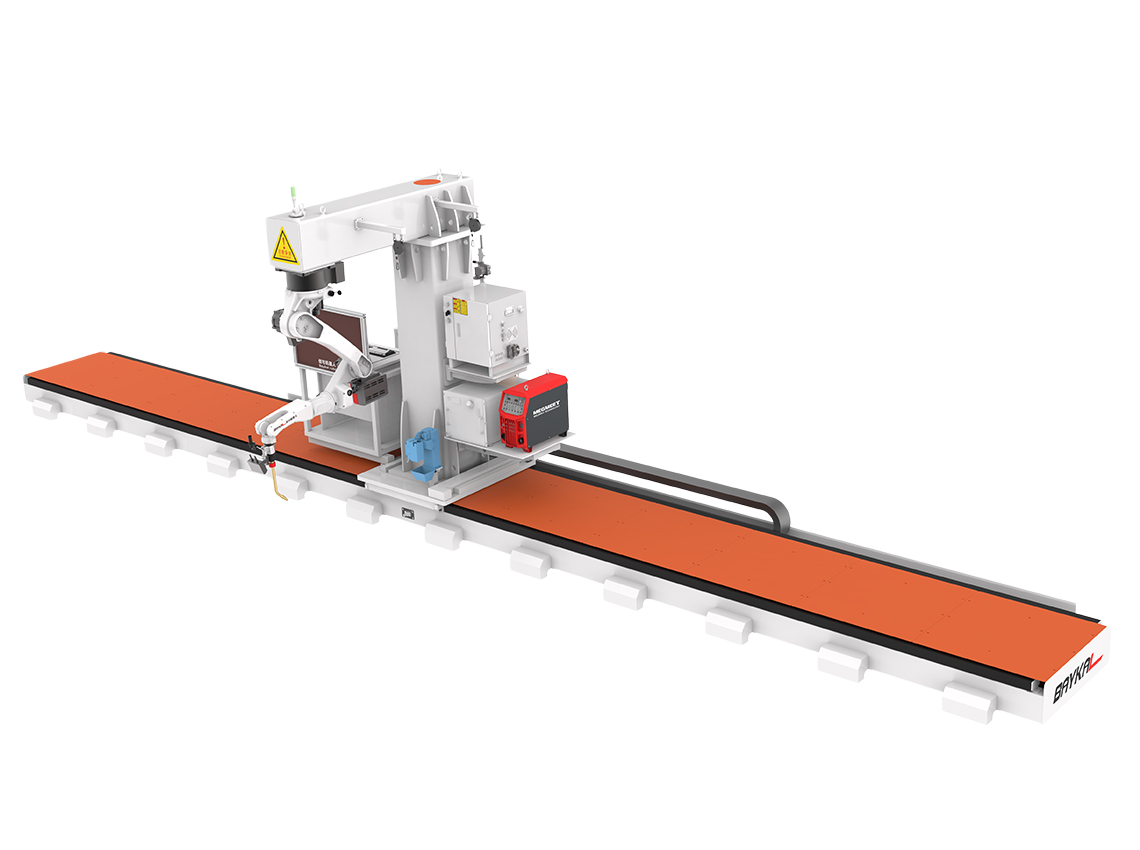
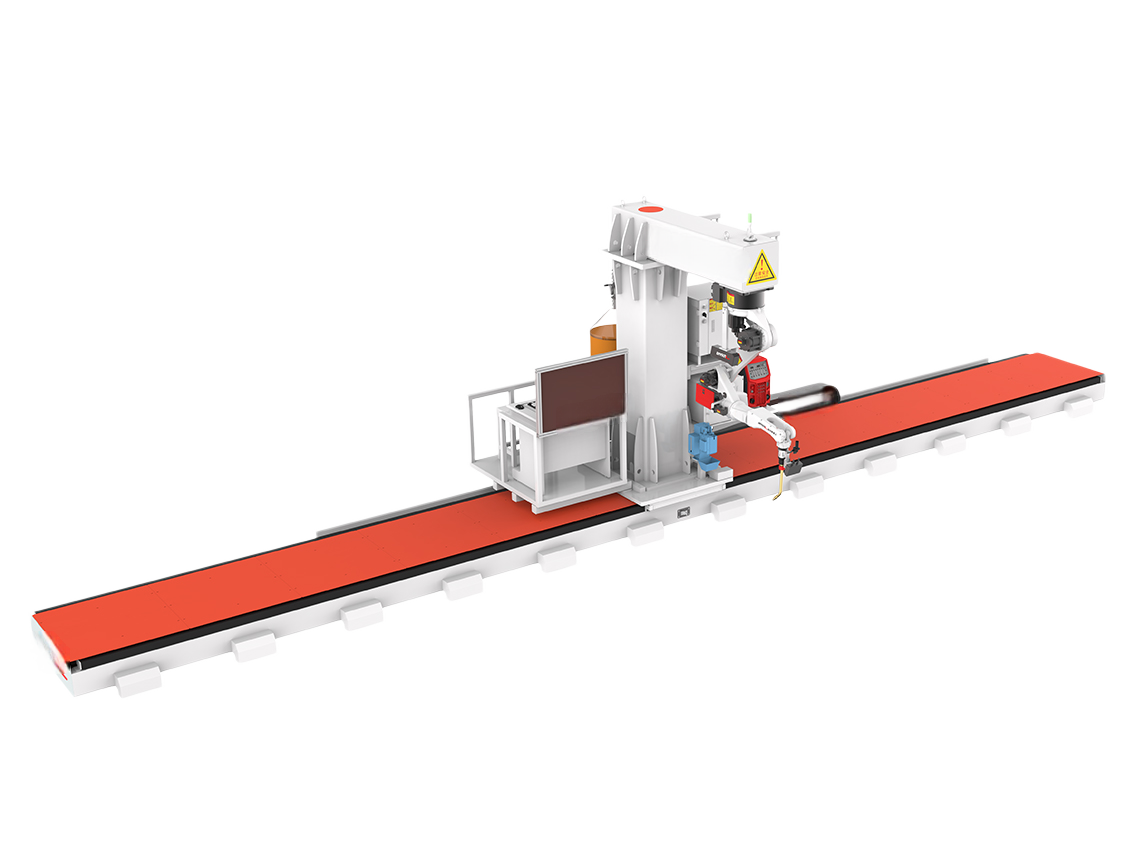
1.Introduction for 7 axis cantilever type welding robot:
1.1 System Configuration and Floor Space
The planned floor space for this equipment (exclusive of operator stations, material storage areas, cutting buffer zones, etc.) is 12 meters in width and 2 meters in depth. The system primarily comprises the following components: one dedicated robot rail, one slide carriage, one 6‑axis welding robot with its control system, one welding power supply, one torch cleaning station, one welding torch, and ancillary equipment.
1.2 Ground Rail Configuration and Multi‑Robot Welding
The ground rail support has a total length of 12 meters, accommodating one ground rail for welding. For workpieces exceeding 12 meters but less than 25 meters in length, two robots are employed to perform zone‑based welding, significantly improving welding efficiency.
1.3 Robot Installation and Status Indication
The welding robot in this workstation adopts a fixed installation mode and operates in conjunction with a servo‑driven slide carriage to complete workpiece welding. The equipment is equipped with three fault alarm indicator lights—red (equipment alarm or fault), yellow (equipment paused), and green (equipment running)—installed in a clearly visible location, allowing operators to instantly recognize the current system status.
1.4 Safety Protection Systems
The equipment features multiple emergency stop switches, enabling immediate cessation of all machine operations in emergency situations. Additionally, a safety grounding system is provided to ensure operational safety.
2.Characters for 7 axis cantilever type welding robot:
3.1 Hoist the good workpiece to the welding platform;
3.2 Lead in the 3D drawings;
3.3 Select welds (the weld can be extracted with one key, manual matching welding process);
3.4 Click the Start button to start the robot;
3.5 Robot automatic location;
3.6 The robot welded the weld required for the workpiece (automatically open arc tracking for real-time correction of the weld);
3.7 welding completed;
3.8 Manual disassembly of the workpiece and lifting of the workpiece;
3.9 And so on, the same type of work from the fourth step of the continuous cycle.
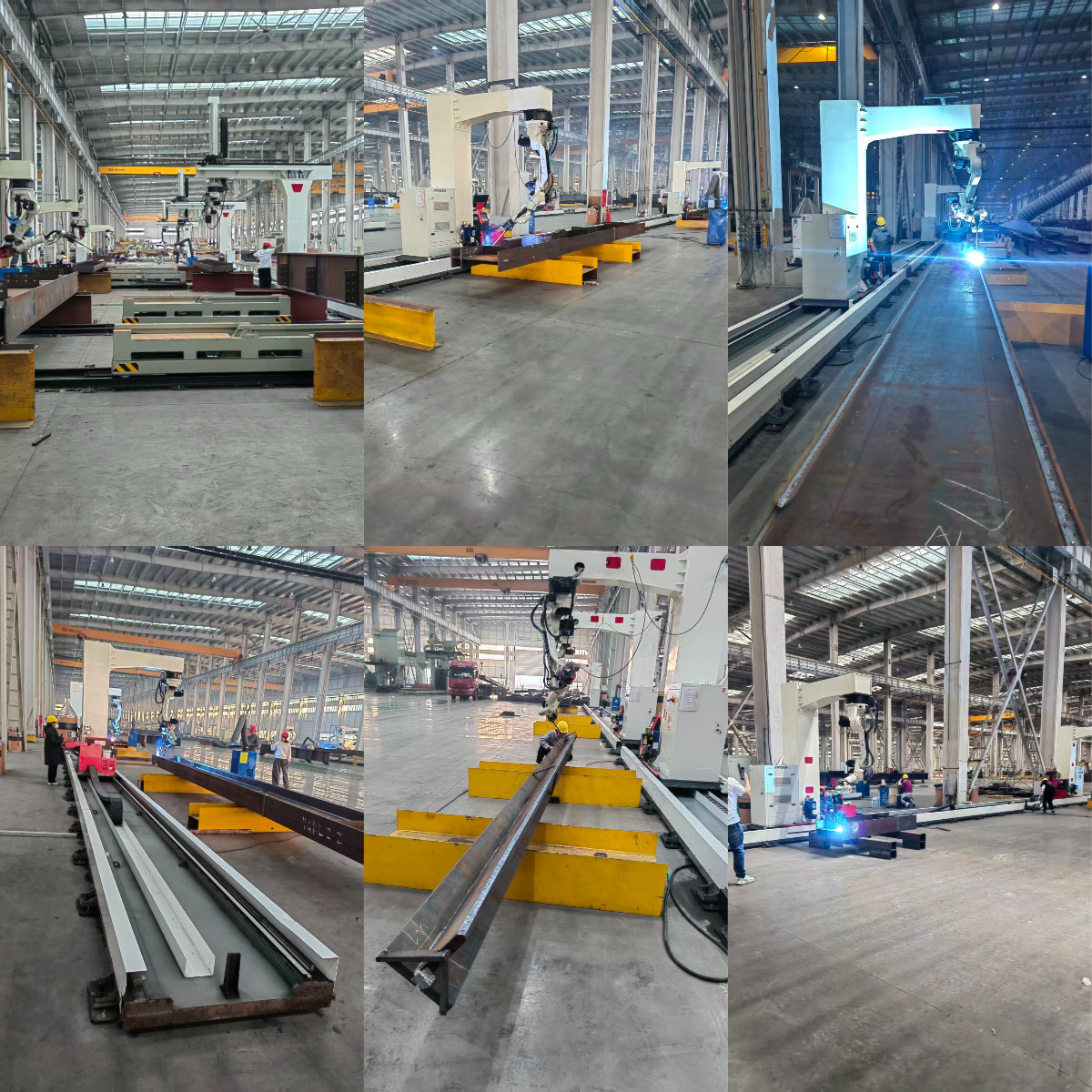
3.Projects for 7 axis cantilever type welding robot
products faq
A welding robot is an automated system consisting of a robotic arm, welding power source, wire feeder, and control unit. It follows pre-programmed paths to position the welding torch and execute welds with high precision. The robot can perform various welding processes including MIG/MAG, TIG, and plasma welding, with motion controlled by a PLC or CNC system that ensures repeatable accuracy.
Welding robots offer several key benefits:
Consistent quality – eliminates human error and fatigue
High productivity – operates continuously with minimal downtime
Labor savings – reduces dependence on skilled welders
Safety – removes operators from hazardous environments (fumes, heat, arc flash)
Precision – achieves repeatable accuracy within ±0.1mm
Welding robots are highly versatile and can handle a wide range of workpieces, including:
Structural steel components (H-beams, columns, frames)
Pipe and tube assemblies
Pressure vessels and tanks
Automotive and machinery parts
Custom fabricated assemblies
The robot can be equipped with positioners, rotary tables, and tracking systems to accommodate complex geometries and large components.
Modern welding robots feature user-friendly programming interfaces, including:
Teach pendant – operators guide the robot through the weld path, which is then stored as a program
Offline programming – allows programming from a computer without interrupting production
Intuitive software – simplifies parameter setting for speed, voltage, current, and weave patterns
Operators with basic welding knowledge can typically become proficient after short training.
Routine maintenance includes:
Checking and replacing welding consumables (contact tips, nozzles, liners)
Inspecting cables, hoses, and connections for wear
Lubricating robotic arm joints and gearboxes
Cleaning protective glass and sensors
Updating software and backing up programs
Regular preventive maintenance schedules help ensure long-term reliability and minimize production downtime. Our service team provides comprehensive technical support and spare parts availability.