




Hydraulic Shearing Machine Safety Checks Before Daily Operation
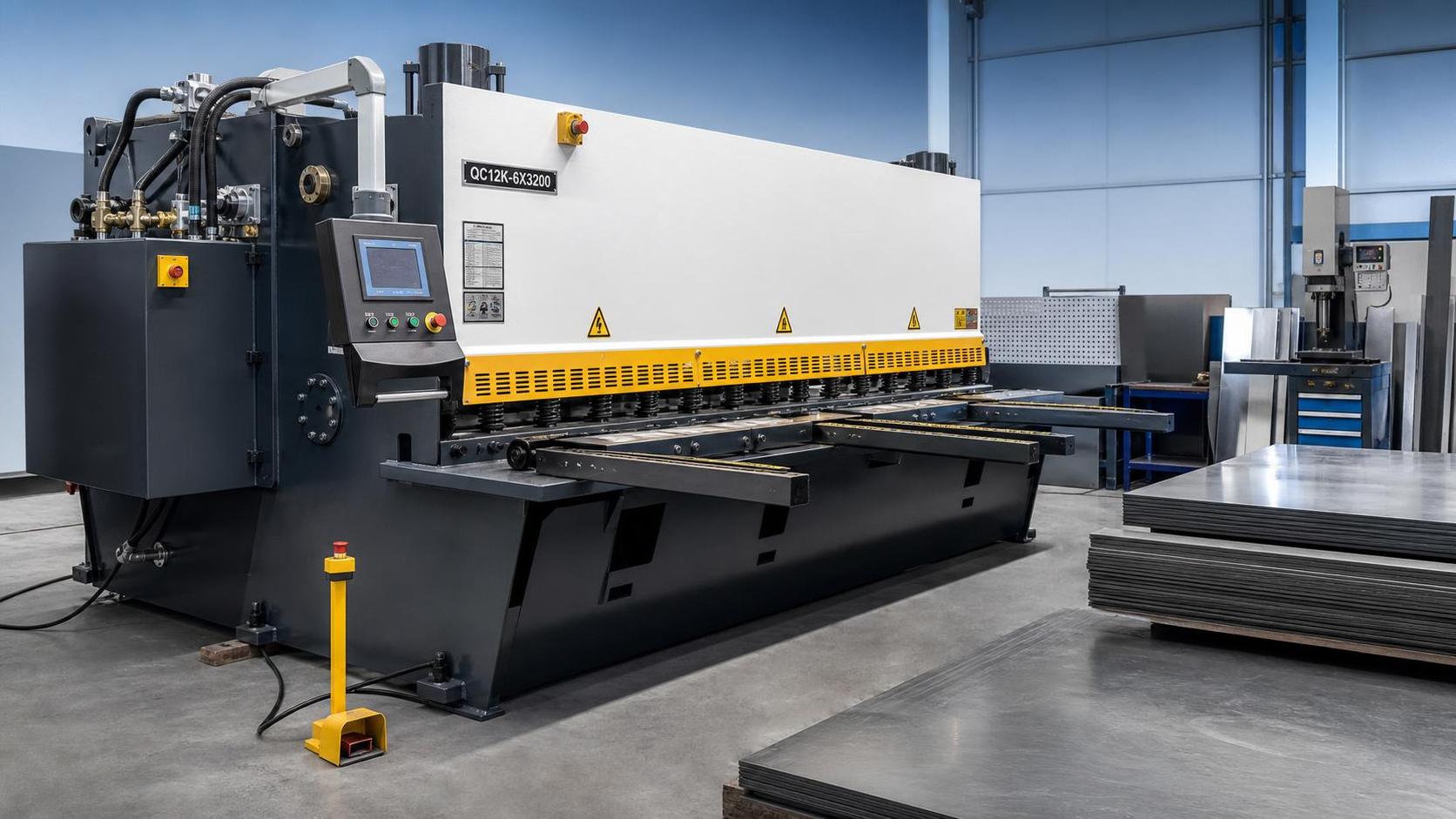
Hydraulic Shearing Machine Safety Checks Before Daily Operation
A Hydraulic Shearing machine may look routine on the shop floor, yet its daily start-up risk is never routine.
A missed leak, loose guard, or unstable blade gap can quickly affect safety, cut quality, and machine life.
That is why pre-operation checks matter.
They help catch hydraulic, electrical, and mechanical problems before the first sheet is loaded.
In practical terms, a consistent inspection routine also reduces unplanned stoppage and supports better dimensional control.
For companies handling metal fabrication equipment, this discipline usually matters across the whole line, not only on one machine.
Wuxi Samgins International Trade Co., Ltd, established in 2012 in Wuxi, works with shearing, bending, rolling, welding, CNC, and related equipment under ISO9001 and EU CE-oriented standards.
That wider equipment background is useful, because daily safety logic often overlaps between a Hydraulic Shearing machine and tools such as an Band Saw Machine.
What should be checked first before powering on?
Start with the machine condition you can see without touching controls.
This is often the fastest way to find obvious hazards.
Look at the floor around the Hydraulic Shearing machine.
Oil traces, scrap buildup, or wet patches may indicate leakage or slip risk.
Then check whether guards, covers, and warning labels are present and readable.
If a side cover is open or an interlock looks bypassed, the inspection should stop there.
A quick visual check should also include blade area cleanliness.
Offcuts trapped near the hold-down system can change workpiece positioning during the first cut.
- Confirm emergency stop buttons are accessible and not blocked.
- Check foot switch or control station for damage and stable response.
- Verify backgauge area is free from tools, sample parts, and loose hardware.
- Make sure lighting is sufficient to see blade line and scale markings.
This first step may seem basic, but many daily incidents begin with conditions that were visible from a few meters away.
How do you judge hydraulic and electrical condition without overcomplicating it?
The goal is not to perform maintenance before every shift.
The goal is to identify signs that normal operation is no longer safe.
For the hydraulic system, begin with oil level and visible hose condition.
Low oil level may cause pressure instability, slow return, noise, or inconsistent shearing force.
Cracked hoses, sweating fittings, and fresh drips should never be ignored.
After that, power on and listen carefully.
A healthy Hydraulic Shearing machine should not produce harsh cavitation sounds, irregular pump noise, or delayed clamping action.
Electrical checks are similar in spirit.
You are looking for abnormal heat, loose cables, damaged insulation, burnt smell, or unstable display behavior.
If the machine has indicator lights or a CNC interface, confirm that start-up messages are normal and alarms are cleared through the correct procedure.
This type of table works well as a shift-start reference because it ties each observation to a practical consequence.
If the machine still runs, do blade and backgauge checks really matter?
Yes, and often more than expected.
A Hydraulic Shearing machine can appear operational while producing hidden quality and safety risks.
Blade condition is a good example.
A chipped or unevenly worn blade increases burrs, sheet deformation, and overload on the drive system.
Incorrect blade clearance can also create poor edge quality and sudden material movement.
That becomes more serious with thicker plate, narrow strips, or higher-strength material.
Backgauge accuracy deserves the same attention.
When positioning drifts, operators may start compensating manually.
That habit introduces inconsistent dimensions and unnecessary hand exposure near the cutting zone.
A simple test cut on approved material is often the best daily confirmation.
Measure the piece, inspect the cut edge, and compare the result with the machine setting.
If deviation appears at start-up, production should not continue on assumption alone.
Which daily checks are most often skipped, and why is that risky?
In many workshops, skipped checks are rarely the complex ones.
They are usually the short checks people assume are unnecessary.
The hold-down system is one example.
If hold-down pressure is uneven, sheets may lift or shift during cutting.
The result is not just poor quality.
It can also create unpredictable material movement at the front of the machine.
Another overlooked item is the emergency stop test.
People often assume it worked yesterday, so it will work today.
That is not a safe assumption for any Hydraulic Shearing machine.
Needle movement on gauges, unusual vibration, and delayed ram return are also easy to dismiss when production pressure is high.
Yet these signs often appear before a larger failure.
- Do not normalize minor leaks because the machine still cycles.
- Do not treat repeated alarm resets as a routine workaround.
- Do not accept burr increase without checking blade wear and clearance.
- Do not bypass guarding to save setup time.
In real production, small deviations usually become expensive only after they have been ignored for several shifts.
How can the daily inspection be practical instead of just paperwork?
The most useful inspection routine is short, repeatable, and tied to real machine behavior.
If the checklist is too broad, people rush through it.
A better approach is to build the routine around visual check, functional test, and sample verification.
That keeps the Hydraulic Shearing machine review focused on what can actually prevent incidents.
It also helps when one site operates several metal cutting technologies.
For example, a workshop using shearing equipment and an Band Saw Machine may standardize similar checks for guards, emergency stops, lubrication condition, and trial-cut confirmation.
That makes training simpler and audit records more consistent.
Where equipment fleets are sourced internationally, consistency matters even more.
Suppliers with broad fabrication equipment experience and compliance awareness can help define clearer maintenance and inspection points from the start.
A useful daily routine often includes these actions:
- Record abnormalities in plain language, not vague remarks.
- Separate “monitor” items from “stop operation” items.
- Use one sample cut to confirm both safety and dimensional stability.
- Review repeated issues weekly to find root causes, not temporary fixes.
What is the best takeaway for safer daily operation?
A Hydraulic Shearing machine does not become safe merely because it powers on and cycles once.
Safe daily operation depends on a short but disciplined inspection before production begins.
The strongest checks usually cover visible hazards, hydraulic stability, electrical response, blade condition, backgauge accuracy, and emergency stop reliability.
When these points are reviewed consistently, cut quality becomes easier to control and downtime becomes easier to prevent.
If an inspection item repeatedly fails, the next step is not to tighten the checklist.
The next step is to review maintenance timing, operator habits, spare parts condition, and machine setup standards.
A clear daily standard, backed by traceable records and realistic stop criteria, usually delivers better results than a longer checklist nobody trusts.
For any site reviewing its current process, it is worth comparing the actual start-up routine against machine risk points, cut quality data, and recurring faults.
That comparison often shows where the Hydraulic Shearing machine inspection should be simplified, strengthened, or enforced more clearly.
search
Products Navigation
Send Us A Message