




How to Choose a Hydraulic Shearing Machine by Material and Thickness
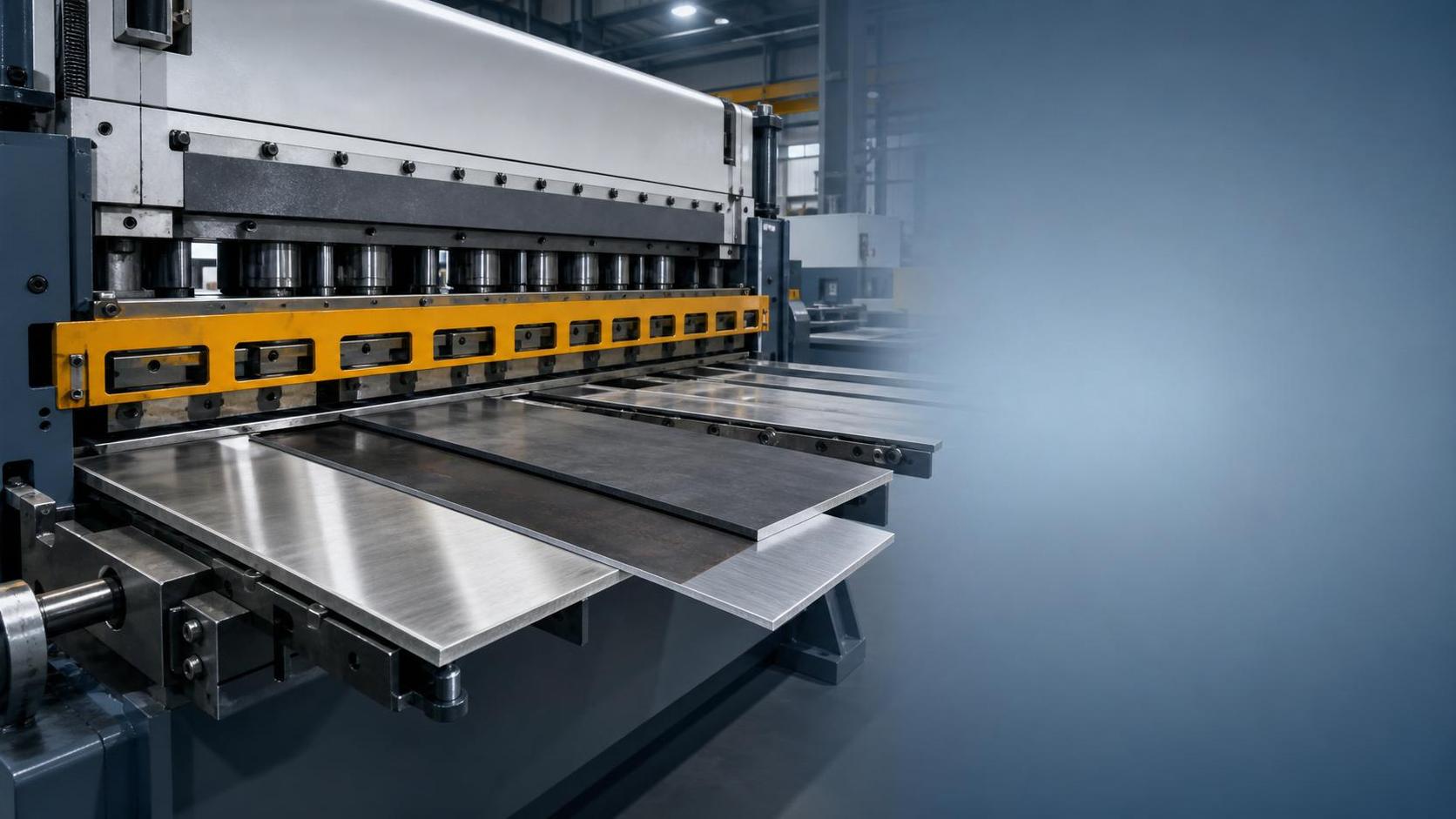
Choosing a Hydraulic Shearing machine by material and thickness is less about picking the biggest model and more about matching cutting behavior to real production conditions.
Sheet grade, tensile strength, thickness range, batch size, and edge quality all change what the right machine looks like.
A mismatch often appears quickly in the workshop.
Cuts become inconsistent, blade wear rises, scrap increases, and downstream bending or welding starts with avoidable dimensional variation.
In metal fabrication, that makes machine selection a technical decision, not only a budget decision.
For companies handling plate processing, structural parts, cabinets, frames, and general sheet metal work, a well-matched Hydraulic Shearing machine supports stable capacity and predictable operating cost.
What really determines the right machine
The first point is simple.
A Hydraulic Shearing machine must be selected around the hardest material and the thickest sheet that will be cut routinely, not occasionally.
Mild steel, stainless steel, aluminum, galvanized sheet, and high-strength alloys do not behave the same under the blade.
Higher tensile strength raises cutting force demand.
Softer material may reduce force demand, but it can still create issues such as burr formation, sheet marking, or deflection if hold-down force is poor.
Thickness also needs a realistic reading.
If daily production centers on 4 mm carbon steel, but some jobs reach 6 mm, the machine should be judged by sustained performance at 6 mm, not nominal comfort at 4 mm.
This is where published cutting capacity needs careful interpretation.
Many ratings are based on standard carbon steel under defined strength conditions.
If the actual material is stainless steel or thicker hot-rolled plate, usable capacity changes.
Material type changes the selection logic
Material is not just a line in the specification sheet.
It influences blade clearance, rake angle, frame rigidity, hydraulic response, and the expected edge condition after shearing.
Carbon steel and low alloy steel
These are common reference materials for a Hydraulic Shearing machine.
Selection usually focuses on thickness range, cutting width, and production frequency.
For general fabrication, stable frame construction and reliable blade gap adjustment often matter more than overly complex features.
Stainless steel
Stainless steel requires more attention because its strength and springback can challenge cut consistency.
A machine that performs well on mild steel may produce more burr or edge distortion on stainless if clearance control is limited.
For this reason, a Hydraulic Shearing machine with accurate clearance setting and strong hold-down performance is usually the safer choice.
Aluminum and coated sheet
These materials reduce force requirements, but surface quality becomes more sensitive.
Blade sharpness, table support, and marking control are often more important than maximum tonnage.
Where appearance-grade panels are involved, cut quality should be reviewed together with downstream forming requirements.
Thickness range should be judged by production reality
A common mistake is choosing by one maximum thickness figure.
In practice, the useful question is how the Hydraulic Shearing machine performs across the full mix of parts.
If the plant cuts thin sheet most of the time, but occasionally processes heavier plate, versatility matters.
If heavy plate is the main workload, frame strength and hydraulic stability become the core issue.
Machine length also matters together with thickness.
A long cutting width increases demands on frame deflection control.
That is why a 6 mm by 3200 mm requirement differs meaningfully from a 6 mm by 1500 mm requirement.
The second case may allow more flexibility.
The first case usually requires closer attention to structure and blade beam stability.
Machine structure affects cut quality and operating life
When comparing models, capacity figures alone are not enough.
Technical evaluation should include the structure behind those figures.
Frame design, hydraulic system quality, blade adjustment method, and backgauge precision directly shape production results.
- A rigid frame helps maintain straightness over long cuts.
- Reliable hydraulic components support repeatability and reduce pressure fluctuation.
- Fast and accurate blade clearance adjustment improves adaptability across materials.
- A stable backgauge matters when parts move to bending, welding, or assembly.
For integrated fabrication lines, these details influence more than the shearing station.
They affect how easily parts flow into press brake work, machining, and welded subassemblies.
In some factories, a shearing line sits close to plate rolling, beveling, or welding preparation.
Where welded assemblies are processed in parallel, equipment such as a Welding manipulator may also be part of the broader production chain.
That makes dimensional consistency at the cutting stage even more valuable.
Control features should match the job mix
Not every Hydraulic Shearing machine needs the same control level.
For repeated standard cuts, a practical NC system may be enough.
For varied part sizes and frequent setup changes, stronger control functions can save time and reduce human error.
Useful functions often include programmable backgauge movement, cut count control, blade gap adjustment support, and repeatable stroke settings.
The best feature set is not the longest list.
It is the one that fits the actual part mix, operator routine, and maintenance ability of the facility.
Supplier capability also matters in technical selection
A Hydraulic Shearing machine is rarely assessed in isolation.
Buyers often compare it within a wider metalworking process that includes cutting, milling, forming, deburring, and welding preparation.
This is where supplier experience becomes practical rather than promotional.
Wuxi Samgins International Trade Co., Ltd, established in 2012 in Wuxi, supplies a broad range of fabrication and machining equipment for global markets.
Its portfolio covers shearing machines, bending machines, laser cutting machines, CNC machine tools, plate rolling machines, deburring equipment, and welding-related systems.
That broader equipment background is useful when the shearing decision must fit an entire production route.
Production organized under ISO9001 and EU CE standards also gives a clearer baseline when reviewing manufacturing consistency and compliance expectations.
A practical checklist before final comparison
Before narrowing down models, it helps to convert workshop conditions into measurable selection points.
- List the real material grades, not only general names.
- Confirm the normal thickness range and the maximum recurring thickness.
- Check the longest sheet length that must be cut accurately.
- Define acceptable burr level and edge straightness for downstream work.
- Review daily output, setup frequency, and shift pattern.
- Compare maintenance access, blade replacement ease, and control simplicity.
This approach usually gives a clearer result than comparing only motor power or headline thickness ratings.
It also makes supplier discussions more precise.
If needed, the same review can be extended to related process equipment, including solutions like a second Welding manipulator in a welded fabrication workflow.
Choosing with fewer assumptions
The right Hydraulic Shearing machine is the one that matches material strength, thickness variation, cutting width, and production rhythm with minimal compromise.
That usually leads to better cut quality, steadier throughput, and lower lifetime cost than selecting on capacity margin alone.
A useful next step is to organize current jobs by material, thickness, width, and required edge quality, then compare those figures against machine structure and control capability.
Once that baseline is clear, technical evaluation becomes more objective and far easier to defend in actual purchasing decisions.
search
Products Navigation
Send Us A Message