




Do Pipe Bending Machines Need Custom Tooling for Different Diameters?
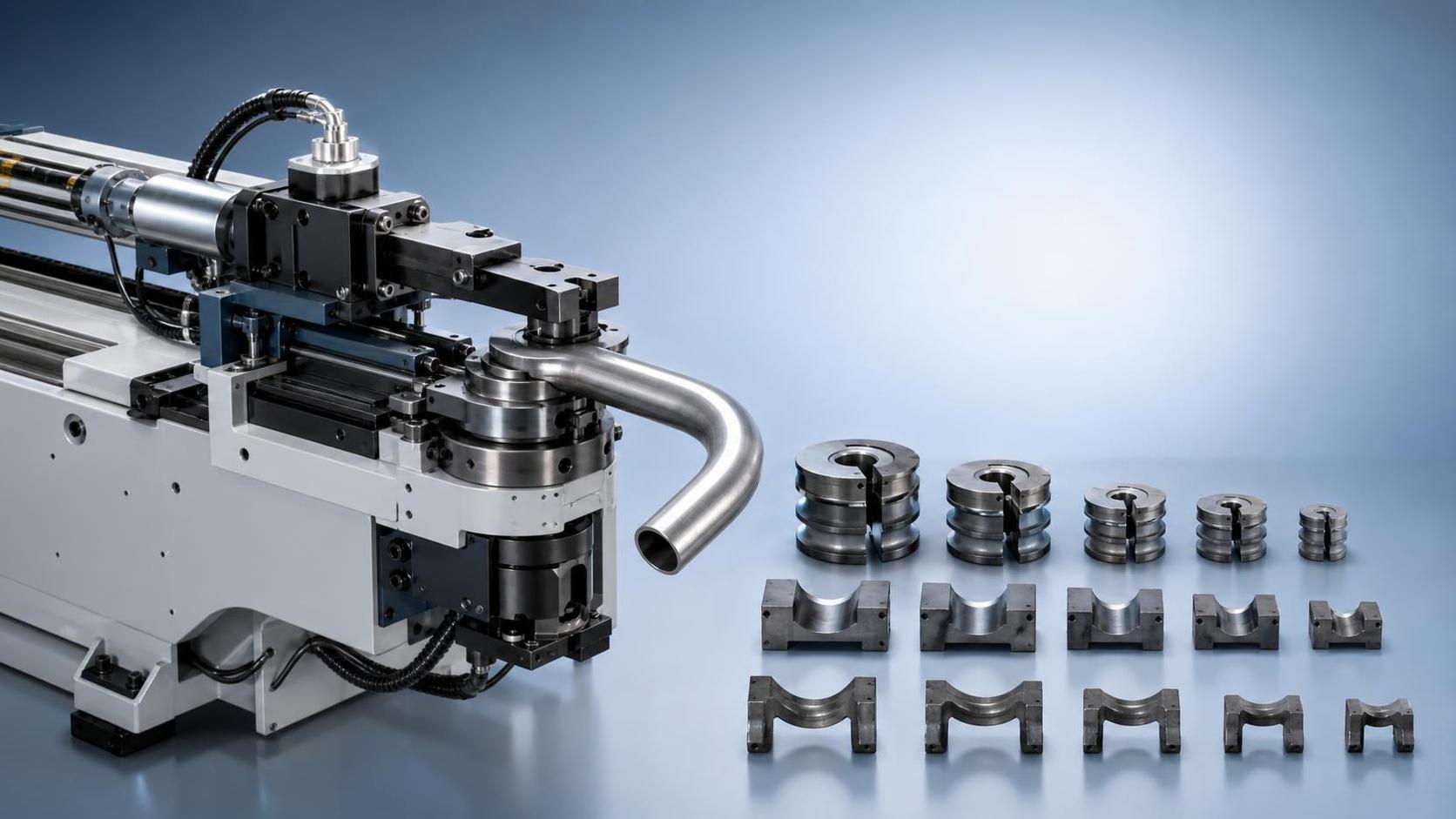
It usually starts with a very practical shop-floor question. A part drawing changes, the next batch uses a different tube size, and someone asks whether the existing pipe bending machine can handle it with the tooling already on the machine. If production is busy, this does not feel like a technical debate. It feels like a scheduling problem, a scrap risk, and sometimes a maintenance problem waiting to happen.
That is why the question, Does a pipe bending machine need custom tooling for different diameters?, comes up so often. The short answer is: sometimes yes, sometimes no. The real decision depends on how much the diameter changes, how tight the bend radius is, what material is being bent, and how consistent the finished shape needs to be. Treating every diameter change as “close enough” can lead to flattening, wrinkling, slippage, surface marks, or springback that is harder to control than expected.
Many people first look at this issue from the wrong angle. They focus only on whether the machine has enough power or enough program flexibility. But in tube and pipe bending, the machine is only one part of the process. Tooling geometry is what actually supports the tube wall, controls grip, and guides material through the bend. A strong machine with unsuitable tooling still produces unstable results.
Where the confusion usually comes from
A common misunderstanding is that a pipe bender works like a general-purpose press tool: if the size is not too far off, it should still bend. In a very loose sense, that can be true for rough work or large-tolerance jobs. But many bending problems do not show up as immediate machine failure. They show up as gradual quality loss. Operators may notice that one side of the bend starts to ovalize more than before, or the bend angle drifts, or the clamp needs more force than usual. These are often signs that the tube is no longer being matched correctly by the tooling set.
Different diameters affect several contact points at once. The bend die groove must fit the outside diameter correctly. The clamp die has to hold without excessive marking or slipping. The pressure die needs to support the tube as it moves. If the machine uses a mandrel, the mandrel size and position matter as well, especially for thin-wall material or tight radii. Even the wiper die setup can change when wall behavior changes. So the issue is not just “can the machine bend this diameter,” but “can the tooling control the deformation of this diameter in a stable way.”
When standard tooling may still be enough
Not every size change requires a completely custom tooling package. In some workshops, a machine is selected specifically to cover a practical diameter range with interchangeable standard die sets. If the new work falls within that intended range, and if the bend radius is not unusually tight, standard tooling may be entirely appropriate.
That tends to be more realistic when the following conditions apply:
- The diameter difference is small and stays within the machine’s normal tooling family.
- The wall thickness is not especially thin relative to the outside diameter.
- The bend radius is generous rather than tight.
- The material is predictable and not highly prone to wrinkling or springback problems.
- The part tolerance is moderate, not highly demanding on repeatability or appearance.
In these situations, the solution may be as simple as changing to the correct standard bend die and matching support tools from the machine maker’s available set. This is different from “making do” with a near-size tool. It still means using tooling sized for the actual diameter, but it may not require one-off custom engineering.
When custom tooling becomes the safer choice
Custom tooling becomes much more important when one or more process conditions are difficult. This is the point at which trying to save time on tooling often costs more time in setup adjustment, trial parts, and rework.
One obvious trigger is a diameter that falls outside the machine’s standard tooling range. Another is a part that combines a difficult diameter with a tight centerline radius. Small-radius bends place more demand on support and control, especially if appearance matters or wall thinning must be limited.
Custom tooling is also worth considering when the tube material does not behave gently. Stainless steel, high-strength alloys, and some polished or coated tubes may require different clamping behavior and better surface protection. If a standard die shape grips too aggressively, the part may come out marked. If it grips too lightly, the tube may slip and the bend angle may wander.
Then there is the thin-wall problem. Thin-wall tube often looks manageable until bending starts. A setup that works on thicker material of the same outside diameter may wrinkle or collapse when wall thickness drops. In that case, diameter alone is not the whole story. The tooling profile, mandrel arrangement, and pressure support often need closer matching to the specific tube specification.
A more useful way to decide
Instead of asking only whether different diameters need different tooling, it helps to ask four narrower questions:
- Does the tube need full support through the bend, or is light guidance enough?
- Is the finish requirement strict enough that minor marks or shape distortion are unacceptable?
- Will this part run repeatedly, making stable setup more important than short-term convenience?
- Is the material and radius combination likely to expose any weakness in a general-purpose setup?
If the answer to several of these is yes, custom tooling becomes easier to justify. Not because it is “better” in an abstract sense, but because it reduces process uncertainty.
What usually goes wrong when the tooling is not matched
People often expect a wrong-tooling problem to be dramatic and obvious. Sometimes it is, but often it is subtle at first. A bend may appear acceptable until the part is checked against a fixture or assembly position. The springback may vary from one piece to the next. The outside wall may show more stretch than expected. The inside radius may start to wrinkle only after a long run, once setup drift and material variation combine.
Another issue is machine wear. Using tooling that does not properly fit the diameter can encourage operators to compensate with force. More clamp pressure, more pressure-die load, more repeated adjustment. That may help a few parts through, but it is not a healthy habit for the machine or the tooling surfaces. A bending machine performs best when the tooling does the guiding and support work it was designed to do, rather than when the machine is forced to overpower a geometry mismatch.
A practical evaluation process before ordering or modifying tooling
If you are trying to decide whether to stay with standard tooling or move to a custom set, it helps to slow the decision down and review the part as a process, not just as a diameter number.
Start with the basic tube data: outside diameter, wall thickness, material grade, and expected bend radius. Then look at how the part will be used. Is it hidden inside an assembly, or is it visible? Does it need tight angle repeatability? Will it be welded, fitted, or sealed later? These downstream requirements often determine whether a marginal bending setup is acceptable or not.
Next, compare the part requirements to the available tooling family for the machine. A capable supplier of bending machines or related equipment can usually help clarify whether the machine platform supports that diameter with standard dies, whether mandrel and wiper options exist for that size, and whether the application is likely to need something more specialized. This step matters because “supported diameter range” on paper does not always mean “optimal for this exact part condition.”
After that, review the likely failure modes. For tight bends, think about flattening and wrinkling. For appearance-sensitive parts, think about clamp marks and surface scratching. For hard materials, think about springback consistency. For thin-wall tube, think about whether internal support will be required. Once these risks are identified, the tooling decision becomes less emotional and more process-based.
Why one machine may still handle many diameters
There is another point that often gets missed. A pipe bending machine does not need to be limited to one diameter just because custom tooling may be needed for some jobs. Good machine platforms are often used across multiple sizes by changing the tooling package appropriately. In other words, flexibility comes from the machine-and-tooling combination, not from assuming one tooling setup should fit everything.
For manufacturers handling mixed work, this is usually the better mindset. Instead of chasing a universal die set, they build a tooling strategy: standard sets for common diameters and radii, then custom tools where part complexity justifies it. That approach supports both efficiency and quality control.
What to discuss with a supplier before making the call
When talking with a machine or tooling supplier, the most useful conversations are not about broad claims. They are about specifics. Share the diameter, wall thickness, radius, material, and expected production style. Mention whether the job is occasional or repetitive. Describe any finish concerns or dimensional checkpoints.
Suppliers involved in bending machines, CNC machine tools, welding equipment, or related fabrication systems often see the same pattern: the success of the bending result depends less on headline machine capacity and more on how accurately the tooling package fits the actual part. If the machine is being selected for a wide mix of diameters, that discussion should happen early so tooling changeover, compatibility, and process limits are considered before production pressure starts.
This is especially relevant for shops trying to standardize equipment across several product types. A machine may be mechanically suitable, but the practical cost and complexity of covering many diameters depends on the tooling ecosystem behind it. That is where experienced design support becomes useful—not to oversell custom work, but to avoid underestimating the needs of a difficult bend.
Questions that usually come up next
Can I use one die for two close diameters?
It may be tempting, especially for prototype work, but it is rarely the best habit. Even a small mismatch can change grip, support, and bend shape. For loose-tolerance jobs, some operators may get acceptable results, but the process becomes less predictable.
Does custom tooling always mean high complexity?
No. Sometimes “custom” simply means the die groove, clamp surface, or support tooling is made specifically for a certain diameter and part condition. It does not always mean a complicated or unusual machine design.
Is diameter the only reason tooling changes?
No. Wall thickness, material type, bend radius, finish requirements, and whether a mandrel is needed can all affect the tooling decision. Two tubes with the same outside diameter may still need different setups.
If the machine is CNC-controlled, doesn’t programming solve most of this?
Programming helps with position, angle, sequence, and repeatability, but it does not replace mechanical support. CNC control cannot compensate for a bend die or clamp die that does not correctly fit the tube.
So, does a pipe bending machine need custom tooling for different diameters? The most honest answer is that different diameters always need correctly matched tooling, but not always one-off custom tooling. Standard tooling is often enough for normal size ranges and forgiving applications. Custom tooling becomes the practical choice when diameter, wall thickness, radius, material behavior, or quality requirements make the bend less tolerant of approximation.
If you are facing this decision, it helps to stop treating it as a yes-or-no machine question. Look at the whole bending process, the part demands, and the risks of forcing a near-fit setup. That is usually where the answer becomes clear.
search
Products Navigation
Send Us A Message