




CNC Cutting Machine vs Manual Plasma: Which Saves More for a Small Shop?
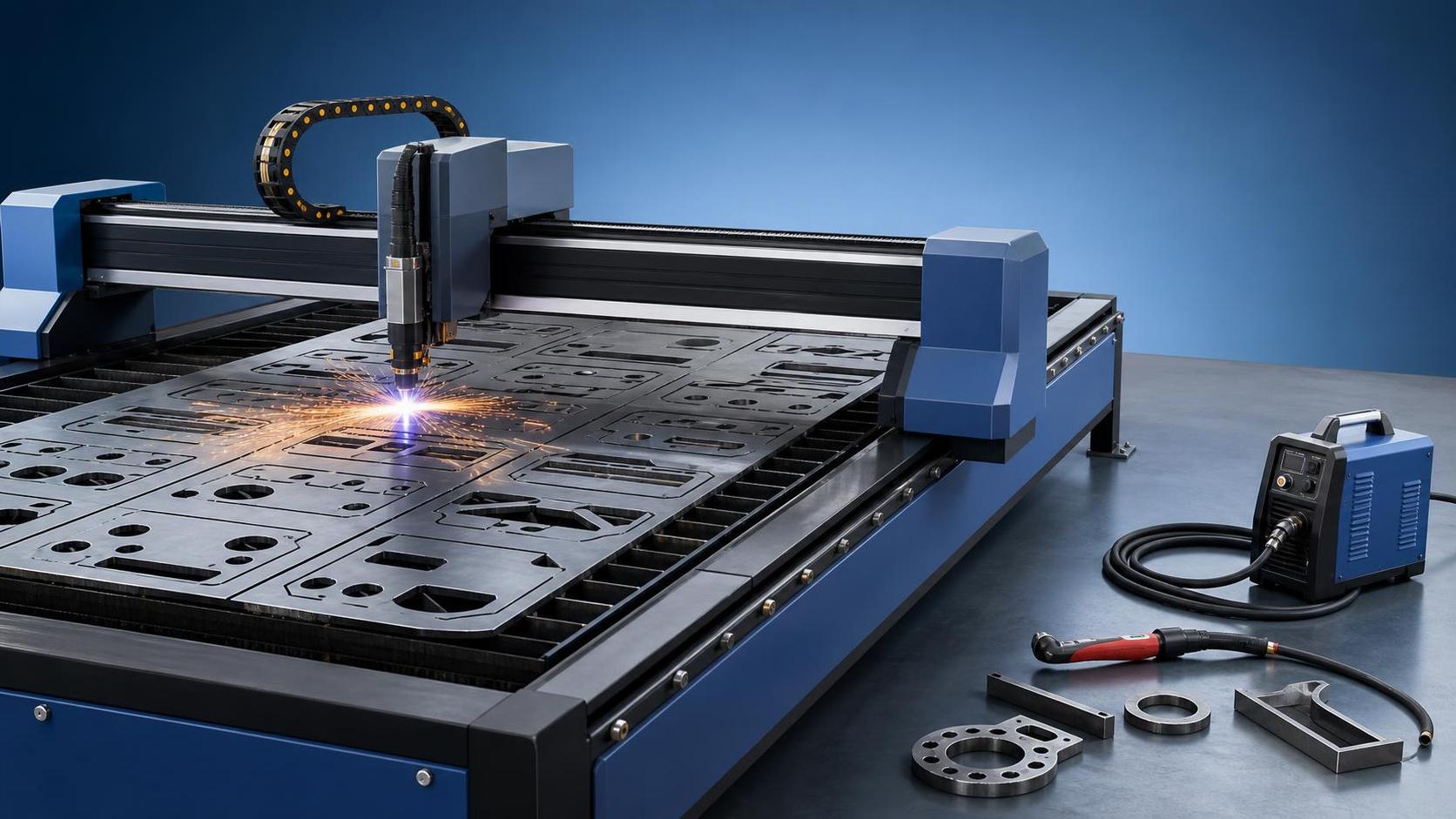
For many small fabrication shops, the short answer is this: manual plasma is usually cheaper to start with, but a CNC cutting machine is often more cost-effective over time when the shop has steady workloads, repeat jobs, or growth plans. The real decision is not just about purchase price. It is about labor hours, material waste, cut consistency, rework, delivery speed, and whether the shop needs to scale profitably.
When buyers search, “Which is more cost-effective for a small shop: CNC cutting machine or manual plasma?”, their core intent is practical and commercial. They want a clear comparison that helps them decide where their money will create more value. They are not looking for a basic definition of cutting methods. They want to know what saves more in actual operations.
That means the most useful discussion should focus on upfront investment, operating costs, throughput, training, precision, repeatability, and return on investment. Small shop owners, production managers, and workshop decision-makers usually care most about whether a CNC cutting machine can generate enough efficiency and consistency to justify the higher initial spend compared with manual plasma.
Start with the Main Decision: Low Entry Cost or Lower Cost per Part?
The most important distinction is simple. Manual plasma usually wins on initial affordability, while CNC cutting often wins on cost per part once production volume increases. If a shop handles occasional custom work, repair jobs, or low-volume cutting, manual plasma may be the smarter short-term purchase.
However, if the shop regularly cuts the same parts, works with larger batches, or needs predictable quality, a CNC cutting machine typically reduces labor time and scrap enough to deliver lower total production cost. For many small shops, the true cost-effectiveness question is not “Which machine is cheaper?” but “Which process makes each job more profitable?”
This is why the best choice depends on job mix. A workshop focused on one-off fabrication and field flexibility will evaluate value differently from a shop producing brackets, frames, flanges, base plates, gussets, or structural components every day.
Why Manual Plasma Still Makes Sense for Some Small Shops
Manual plasma remains attractive because it offers a lower barrier to entry. The machine price is much lower than a full CNC cutting system, and setup is straightforward. For a small business with limited cash flow, that matters. A basic manual plasma cutter can help a shop start taking jobs without a heavy financing burden.
It also offers flexibility for irregular workpieces and repair tasks. If operators frequently cut non-standard parts, perform on-site modifications, or make quick adjustments without preparing files or fixtures, manual plasma can be efficient in a practical way. In those cases, speed of setup may matter more than maximum cutting precision.
Training is another advantage. Although skill still matters, the system itself is less complex than a CNC setup. A small team may find it easier to begin with manual plasma if they do not yet have CAD, nesting, or CNC programming experience.
That said, manual plasma shifts more responsibility onto operator skill. Cut quality, edge consistency, angle control, and dimensional accuracy can vary from part to part. This makes it harder to standardize production and predict output cost.
Where CNC Cutting Machines Create Real Savings
A CNC cutting machine costs more upfront, but it can save money across several areas at once. The biggest savings usually come from reduced labor dependence. Once a program is prepared, the machine can cut repeated shapes accurately with less manual intervention, which lowers the labor hours required per part.
Material utilization is another major benefit. CNC systems can use nesting software to arrange parts more efficiently on a plate. Better nesting means less scrap. For small shops that process steel plate every day, even modest improvements in sheet utilization can become substantial annual savings.
Consistency is equally important. When dimensions and cut paths are controlled automatically, the shop sees fewer rejected parts, less rework, and more reliable fit-up in downstream welding or assembly. That operational stability often has more financial value than buyers expect at first.
CNC equipment also improves delivery performance. Shops that can quote accurate lead times and repeatedly meet them are more likely to retain customers and win larger contracts. In that sense, a CNC cutting machine does not only reduce cost. It can also strengthen revenue quality.
Comparing Upfront Investment Beyond the Sticker Price
Many buyers compare only the purchase price, but that approach is incomplete. Manual plasma has a lower equipment cost, yet the total entry cost still includes consumables, air supply, safety systems, operator time, and sometimes downstream grinding or correction work. The initial bill may be lower, but operating friction can remain high.
A CNC cutting machine requires a larger first investment because the package may include the cutting table, control system, drive components, software, torch height control, and sometimes extraction or supporting equipment. For some shops, that higher entry cost feels difficult to justify at first glance.
Still, decision-makers should evaluate capital cost against expected monthly utilization. If the machine will run often enough, the investment is spread across many parts and jobs. A higher purchase price can become economical faster than expected when labor savings and improved output are included in the calculation.
This is particularly true for small shops that plan to grow. Buying only for today’s volume may lead to underinvestment, especially if customer demand is becoming more repeatable or more quality-sensitive.
Labor Cost Is Often the Deciding Factor
For many small fabrication businesses, labor is one of the largest cost pressures. Manual plasma cutting depends heavily on operator control throughout the cut. Even skilled workers need time for layout, positioning, guiding the torch, checking dimensions, and correcting mistakes. The process is more labor-intensive by nature.
With CNC cutting, much of that manual effort is reduced or shifted upstream into programming and setup. Once the workflow is organized, one operator can often supervise more output with less physical effort and better repeatability. This can be a major advantage in markets where skilled labor is expensive or difficult to retain.
There is also a hidden management benefit. When quality depends less on individual hand skill, production becomes easier to schedule and scale. The shop owner gains more predictable output and less operational disruption when staffing changes occur.
So, when asking which is more cost-effective for a small shop, CNC often has the stronger case wherever labor cost, labor shortage, or output consistency is a serious concern.
Accuracy, Rework, and Their Effect on Profit
Many small shops underestimate the cost of inaccuracy. A part that requires edge cleanup, reshaping, drilling adjustment, or welding compensation is not just a minor inconvenience. It consumes time, slows the next process, and can weaken delivery performance. Over time, these hidden losses affect margin more than expected.
Manual plasma can produce good results in skilled hands, but repeatability is difficult to maintain across shifts, operators, and part geometries. CNC cutting machines provide more stable path control, better repeatability, and more uniform results, especially on repeated production runs.
That matters even more when cut parts feed into downstream processes like fit-up, robotic welding, assembly, or machining. Better incoming part consistency reduces bottlenecks across the entire workflow. A shop that reduces rework is not just cutting better. It is protecting profitability throughout production.
Which Option Fits Different Small Shop Business Models?
The most cost-effective choice depends heavily on what kind of small shop is making the decision. A maintenance-oriented workshop that handles repairs, urgent modifications, and varied one-off work may benefit more from manual plasma. In that setting, portability, simplicity, and low entry cost may outweigh automation benefits.
By contrast, a fabrication shop making structural parts, machine frames, brackets, panels, base plates, or repeated components for contractors and manufacturers will often gain more from CNC cutting. The more repeat work the shop has, the more valuable programming, nesting, and repeatability become.
Shops that want to move upmarket should also pay close attention. If customers increasingly expect tighter tolerances, cleaner edges, faster quoting, and dependable lead times, manual plasma may start to limit growth. CNC equipment can support a more professional production model and improve competitiveness in stronger markets.
In short, manual plasma fits flexibility-first operations. CNC cutting fits process-driven operations with repeat demand, quality expectations, and scaling ambitions.
How Small Shops Should Calculate Return on Investment
A practical ROI calculation should include more than equipment price. Shop owners should estimate monthly cutting volume, average labor time per part, scrap rate, rework hours, consumable use, and the value of faster delivery. These factors often reveal that the lowest-cost purchase is not the lowest-cost process.
For example, if a CNC cutting machine saves one to two labor hours per batch, improves plate utilization, and reduces rejected parts, the accumulated monthly savings may cover the financing difference faster than expected. In some shops, the break-even point can be surprisingly short once real production data is used.
On the other hand, if the machine would sit idle much of the week, ROI becomes weaker. A shop with limited throughput and inconsistent demand may be better served by manual plasma until workload becomes more stable. The key is honest capacity analysis rather than buying based on aspiration alone.
The strongest investment decisions usually come from reviewing actual jobs completed over the last three to six months. That gives a realistic basis for choosing between manual plasma and CNC cutting.
Common Buying Mistakes Small Shops Should Avoid
One common mistake is choosing manual plasma only because it is cheaper today, without considering how much profit is lost through slow throughput and inconsistent quality. Another is buying a CNC cutting machine too early, before the shop has enough repeat work to use it effectively.
A second mistake is ignoring workflow readiness. CNC equipment performs best when drawing preparation, nesting, maintenance, and operator training are organized. Without that discipline, the machine may not deliver its full value. Buyers should think in terms of system capability, not only hardware capability.
Some shops also focus only on cutting speed. Speed matters, but overall profitability depends on usable output, not just arc time. Material waste, fit-up quality, downtime, and labor input are often more important than headline speed figures.
Finally, supplier support matters. A small shop should look for equipment partners that can provide practical guidance, installation support, training, and dependable after-sales service. That support reduces operational risk and helps the investment perform as expected.
Final Answer: Which Is More Cost-Effective for a Small Shop?
If the shop’s priority is the lowest initial investment, irregular job flexibility, and simple startup, manual plasma is usually the more cost-effective choice in the short term. It allows smaller businesses to begin cutting work with less capital pressure and more portability.
If the shop has stable demand, repeated part production, rising labor costs, stricter quality requirements, or plans to grow, a CNC cutting machine is usually more cost-effective in the medium to long term. It lowers cost per part, improves consistency, reduces rework, and supports stronger delivery performance.
So the better answer is not universal. It depends on volume, repeatability, labor conditions, and business direction. For small shops with limited and unpredictable cutting work, manual plasma remains a practical tool. For small shops building a scalable fabrication business, CNC cutting usually delivers the better long-term return.
Wuxi Samgins International Trade Co., Ltd supplies a wide range of fabrication and metal processing equipment, including CNC cutting machines and related production solutions. For buyers comparing manual and automated cutting options, the right evaluation should always begin with real production needs, not just the machine price on a quotation.
search
Products Navigation
Send Us A Message