




Can Metal Laser Cutting Machines Process Reflective Materials Like Copper?
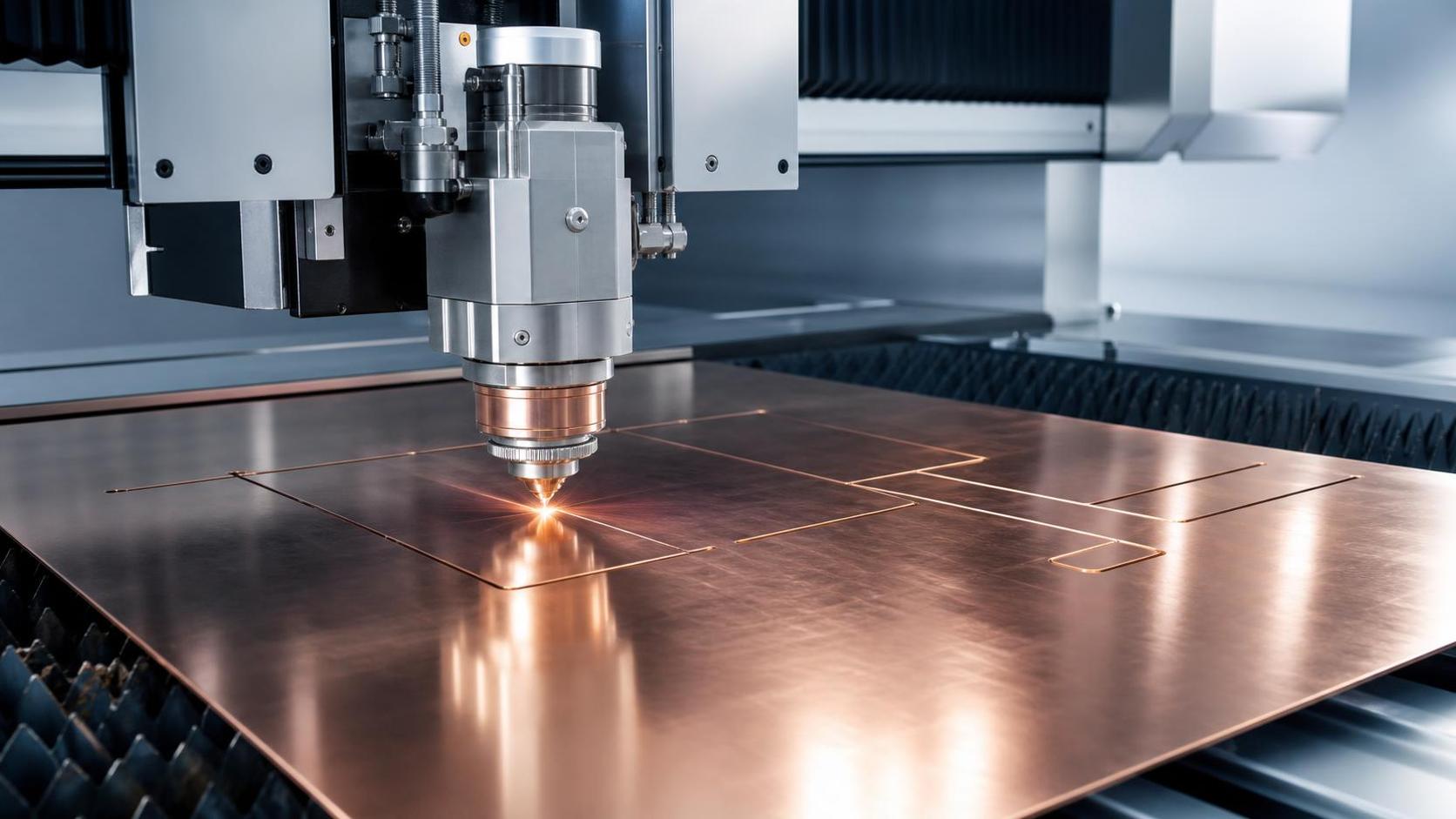
Can a metal laser cutting machine handle reflective materials like copper? In practical manufacturing, the answer is yes—but only under the right technical conditions. That distinction matters. Many buyers still treat copper laser cutting as either a routine capability or an automatic red flag. In reality, reflective materials sit in a more nuanced category: they are fully processable with modern equipment, but not with every laser source, every machine architecture, or every production expectation.
For fabricators, procurement teams, and project managers, the real question is not whether copper can be cut at all. The more useful question is what machine configuration, process control, and cost structure are required to cut copper reliably, safely, and profitably.
That is where many decisions go wrong.
Why copper is considered difficult for laser cutting
Copper creates challenges because of two material characteristics that directly affect laser performance: high reflectivity and high thermal conductivity.
Reflectivity is the issue most often mentioned first. Copper reflects a significant portion of incident laser energy, especially at certain wavelengths. In older cutting systems, particularly those using CO2 laser technology, this reflected energy could destabilize the process and even threaten optical components. That legacy experience still shapes market perception today.
Thermal conductivity is the second issue, and in production it can be just as important. Copper dissipates heat very quickly. That means the machine must deliver enough usable energy into the cut zone to initiate and maintain a stable kerf. If the beam-material interaction is not properly controlled, operators may see incomplete piercing, excessive burr, unstable edge quality, or interruption during contour cutting.
So when people ask, “Can a metal laser cutting machine handle reflective materials like copper?”, they are often compressing several different concerns into one sentence:
- Will the laser actually couple energy into the material?
- Will reflected light damage the machine?
- Can the machine maintain cut quality at production speed?
- Will operating costs remain acceptable compared with alternative processes?
Those are the decision points that matter.
Why the old answer and the current answer are different
The answer has changed mainly because laser source technology has changed.
With CO2 lasers, copper and brass were often treated as problematic materials. Reflection risk was higher, absorption behavior was less favorable, and the operating window was narrower. That led many factories to avoid these materials entirely or to process them only in thin gauges and under tightly controlled conditions.
Modern fiber laser systems have altered that picture. Their wavelength is better suited for cutting reflective metals than traditional CO2 systems, and machine builders have also improved protective design around the optical path, sensors, and cutting head. As a result, copper processing is no longer an exceptional capability reserved for niche setups. It is now a viable industrial application—provided the machine is built and configured for it.
This is why broad claims can be misleading. A supplier saying “our machine cuts copper” does not tell a buyer enough. Thickness range, source power, head protection strategy, gas configuration, and expected duty cycle all determine whether that statement has practical value.
Fiber laser is usually the right route, but not every fiber laser setup performs the same
In today’s market, fiber laser technology is generally the preferred solution for cutting copper. That does not mean all fiber laser machines are equally suitable.
Performance depends on several layers of configuration:
- Laser source quality and stability: Source brand, beam quality, power consistency, and long-term reliability affect cut performance on reflective materials.
- Power level matched to thickness: Thin copper sheet may be processed with moderate power, but thicker copper requires higher energy density and more stable piercing control.
- Cutting head protection: Reflective materials increase the importance of isolation design, protective windows, sensor robustness, and anti-back-reflection measures.
- Control software and process database: Good parameter libraries reduce trial-and-error and improve repeatability across batches.
- Assist gas system: Gas type, pressure stability, and nozzle condition have major influence on copper cutting quality.
For decision-makers, this means the conversation should move beyond machine power alone. Two machines with the same nominal wattage may perform very differently on copper if their beam delivery, cutting head design, and process tuning differ.
The biggest mistake in purchasing discussions: treating “can cut copper” as a binary specification
In procurement documents, material capability is often reduced to a yes-or-no checkbox. That is understandable, but it is not enough for reflective metals.
A more useful evaluation asks five operational questions:
- What copper grade and surface condition will be processed?
- What thickness range is required in normal production, not just in testing?
- Is the target output prototype-level, mixed small batch, or continuous industrial production?
- What edge quality is acceptable for downstream use?
- What level of process stability is required across shifts, operators, and seasonal operating conditions?
These questions matter because machine demonstrations can create false confidence. A supplier may successfully cut one sample thickness under optimized conditions, but that does not automatically prove robust production capability. Copper processing should be validated against the user’s actual material mix, expected throughput, and quality tolerance.
What determines successful copper laser cutting in actual production
Successful cutting of copper is not the result of one component. It is the result of a stable process chain.
Laser-material interaction
The machine must deliver enough energy into the workpiece despite reflectivity and rapid heat dissipation. Piercing is often the most sensitive stage, especially on thicker material. If the piercing routine is unstable, the rest of the cut will not be reliable.
Assist gas strategy
Nitrogen is commonly used when oxidation-free or cleaner edges are required, particularly for applications where electrical conductivity, appearance, or downstream welding quality matters. Oxygen may improve cutting behavior in some cases, but it can also change edge condition and application suitability. The right choice depends on end-use requirements, not just cutting speed.
Nozzle condition and alignment
Copper is less forgiving when gas flow is poorly centered or nozzle wear is ignored. Slight deviations can affect kerf stability, dross formation, and edge consistency. Shops that process reflective metals successfully usually maintain stricter discipline in consumable management.
Machine rigidity and motion control
At higher speeds or with intricate contours, motion stability influences edge quality and consistency. This is especially relevant for electronics parts, busbar components, heat transfer parts, and custom enclosures where dimensional accuracy matters.
Operator knowledge
Even with advanced automation, reflective metals still benefit from experienced setup logic. Shops that cut mostly mild steel may underestimate how much parameter sensitivity increases when moving into copper.
Thickness changes the economics as much as it changes the process
Thin copper sheet and thick copper plate should not be treated as the same application.
For thin gauges, laser cutting can be highly attractive. It offers precise contours, fast changeover, low tooling burden, and strong fit for customized production. This is why laser cutting is widely considered for electrical cabinets, conductive components, decorative architectural elements, HVAC-related parts, and certain electronics-related sheet applications.
As thickness increases, the process window narrows and economics become more case-specific. Cutting speed declines, piercing becomes more demanding, gas consumption may rise, and parameter stability becomes more critical. In some jobs, the laser remains the best choice because of flexibility and edge quality. In others, punching, waterjet, or CNC machining may offer a better overall balance.
That is an important commercial point. The question is not whether laser can cut thicker copper. The question is whether it should, based on part geometry, batch size, edge requirements, and total cost.
Where laser cutting copper makes business sense
Laser cutting is usually most compelling when the buyer values flexibility as much as raw cutting capability.
Typical favorable scenarios include:
- Frequent design changes or custom part production
- Medium-to-high precision sheet profiles
- Low to medium batch volumes where tooling cost should be minimized
- Applications requiring clean edges and controlled deformation
- Factories consolidating multiple materials onto one cutting platform
This is one reason fiber laser adoption continues to expand in export-oriented fabrication sectors. Contract manufacturers increasingly prefer equipment that can switch between carbon steel, stainless steel, aluminum, brass, and copper without adding separate dedicated systems for each material class.
For overseas buyers, this versatility also supports capacity planning. A machine that can process reflective materials broadens job acceptance range and reduces dependence on subcontracting.
Where caution is still justified
Copper cutting capability should not be oversold. There are still real limitations.
If a buyer expects heavy-gauge copper processing at very high throughput, the machine selection process must be more rigorous. The laser source may need higher power, the gas system may need stronger support capacity, and maintenance discipline must be better than average. In some operations, the return on investment may weaken if copper is only an occasional material but the machine is priced for high-spec reflective-metal performance.
There is also a quality-risk issue. In industries where copper parts affect electrical performance, thermal behavior, or sealing quality, edge condition is not a cosmetic matter. Burr, micro-defects, heat-affected variation, or oxidation may create downstream problems in bending, welding, coating, or assembly. Buyers should qualify the process based on final part requirements, not just whether the cut is visually acceptable.
How buyers should evaluate a machine for copper, not just listen to claims
A serious evaluation should include process verification, not only catalog review.
At minimum, buyers should ask suppliers to demonstrate copper cutting using representative samples and clearly define the test criteria:
- Material grade
- Sheet thickness
- Surface finish or film condition
- Contour complexity
- Piercing quality
- Edge roughness and burr level
- Dimensional tolerance
- Repeatability over multiple parts
It is also worth asking what protective measures the machine uses against reflected energy and what maintenance intervals are recommended when reflective materials are a regular part of the workload. That is not a minor service question; it affects long-term uptime and consumable cost.
For importers and cross-border buyers, after-sales support becomes even more important. Reflective-material processing may require remote parameter support, spare parts responsiveness, and operator training beyond initial commissioning. A machine may look competitive on price but become costly if technical support is weak when process instability appears.
Common misconceptions that distort decision-making
One common misconception is that reflective metals are inherently unsuitable for laser cutting. That view is outdated. Modern fiber laser systems have already proven otherwise in a wide range of industrial settings.
Another misconception is that higher power automatically solves everything. Power helps, but it does not replace process tuning, gas quality, or head protection design. A poorly matched high-power machine can still produce inconsistent results.
A third misconception is that copper cutting performance on a demo sample predicts factory-ready reliability. It does not. Stable production requires repeatability across real material variation, operator handling, and continuous operating hours.
There is also a commercial misconception: some buyers assume that if copper can be cut, then laser is automatically the best process. In truth, production method selection should still be based on geometry, throughput, downstream process needs, and total manufacturing cost.
What this means for the market
The ability to process reflective materials is becoming less of a niche differentiator and more of a baseline expectation in higher-value laser cutting equipment. As fabrication shops serve more diverse sectors—electrical equipment, energy systems, precision sheet metal, HVAC, transport components, and custom industrial assemblies—the demand for multi-material capability continues to rise.
This does not eliminate the gap between entry-level and production-grade machines. On paper, many machines may list copper among compatible materials. In practice, the difference lies in how consistently they cut it, how safely they manage reflection, and how much operator intervention is required to keep output stable.
That gap is where professional buyers should focus their attention.
So, can a metal laser cutting machine handle reflective materials like copper?
Yes—modern metal laser cutting machines, especially well-configured fiber laser systems, can process copper effectively. But the useful answer is more specific than that. Copper cutting is practical when the machine has the right laser source, sufficient power for the target thickness, reliable anti-reflection protection, stable assist gas support, and a validated process window for the actual application.
For manufacturers and buyers, the decision should not rest on a generic compatibility claim. It should rest on whether the machine can deliver repeatable edge quality, safe operation, acceptable running cost, and enough flexibility to justify the investment.
In other words, copper is no longer the impossible material it once seemed in laser cutting—but it is still a material that exposes the difference between nominal capability and real manufacturing readiness.
search
Products Navigation
Send Us A Message