




Typical Delivery Time for a Tube Bender from China to Southeast Asia
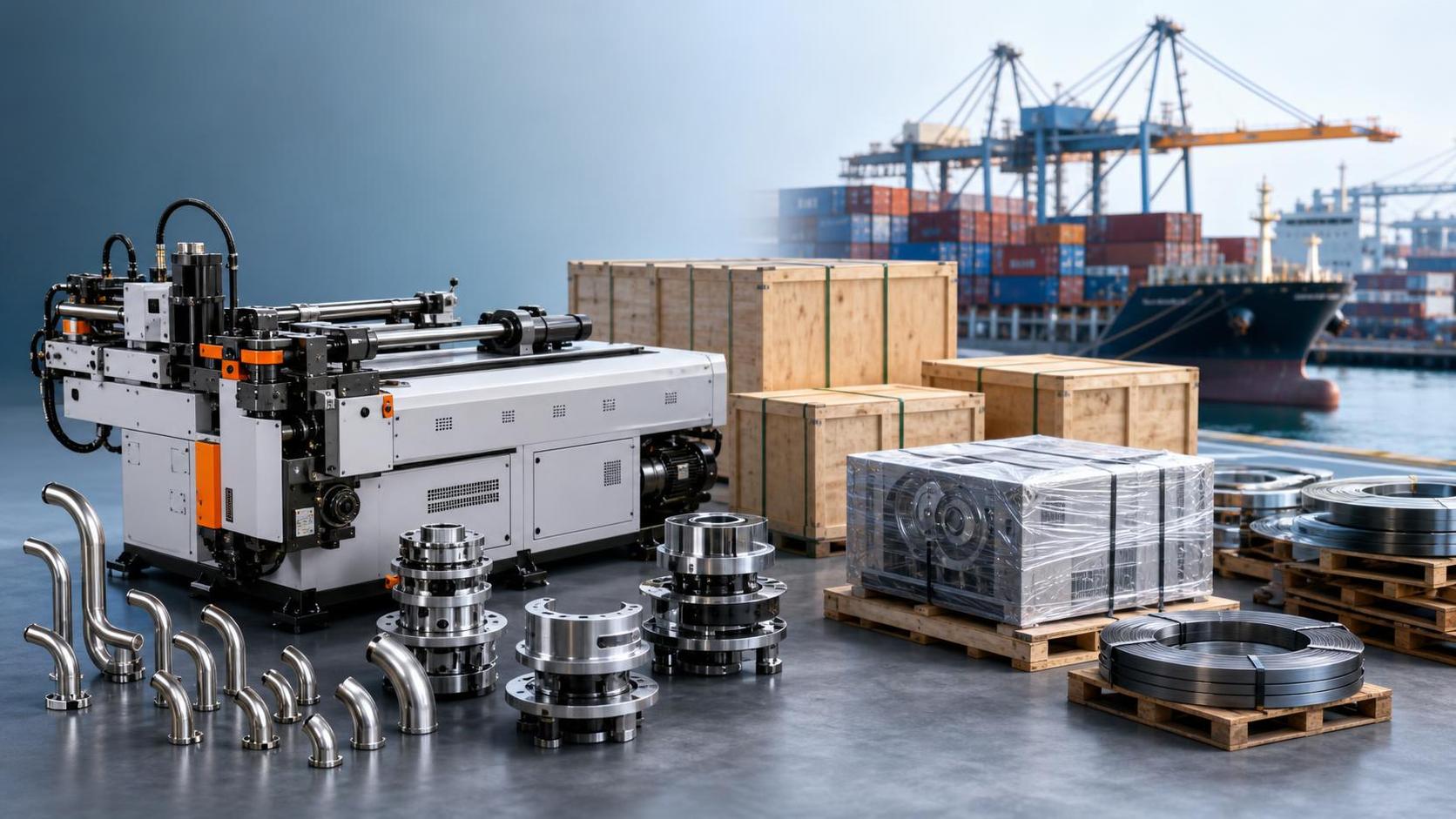
What is the typical delivery cycle for a tube bender from China to Southeast Asia? In most practical cases, buyers should expect roughly 3 to 8 weeks from order confirmation to arrival, but the real answer depends on whether the machine is standard or customized, how quickly technical details are confirmed, and which port and customs route are involved. Many delays do not happen on the sea. They happen earlier, during drawing confirmation, electrical configuration, testing, packing, and export paperwork.
If you are trying to plan installation, staff scheduling, or a production launch, that distinction matters. A tube bender that is “finished in the factory” is not the same as a tube bender that is ready to run in your workshop. The delivery cycle includes more than manufacturing time, and that is where many first-time importers get caught off guard.
Typical Delivery Time for a Tube Bender from China to Southeast Asia: a practical range
For a standard tube bender with no unusual tooling requirements, a common delivery cycle is often around 20 to 35 days for production and factory preparation, plus another 7 to 20 days for transport and customs movement within Southeast Asia. That puts many orders in the range of about 4 to 8 weeks.
A faster case can happen when the supplier has a standard machine in stock, the voltage and control language are straightforward, and shipment goes to a major port with smooth clearance. In that situation, the cycle may be closer to 2 to 4 weeks.
A slower case is usually tied to customization. If the machine needs special bending dies, unusual pipe diameters, servo or hydraulic upgrades, extra safety features, CE-related documentation, or customer-specific testing, the lead time can move well beyond the basic range. It is not unusual for a customized order to require 6 to 10 weeks or more before the machine is actually delivered.
The short answer, if you need one, is this: for most real orders, the typical delivery cycle for a tube bender from China to Southeast Asia is not just “shipping time.” It is a combined production-and-logistics window, and 30 to 60 days is a sensible planning range for many projects.
Where the time really goes
People often assume the factory builds the machine, puts it on a truck, and then the rest is just freight. In machinery trade, that is rarely how it works. Tube benders are process equipment, not generic cartons. Even standard models often need a round of technical confirmation before production can begin.
The delivery cycle usually breaks down into a few stages:
- Technical confirmation: pipe material, outer diameter, wall thickness, bending radius, tooling count, power supply, and control requirements
- Production or assembly: machine frame, hydraulic or servo system, electrical cabinet, control system, tooling preparation
- Testing and inspection: dry run, sample bending, stability checks, sometimes video confirmation for the buyer
- Packing and export preparation: wooden case, rust protection, labels, documents, booking
- Sea or land-sea transport: depending on destination and route
- Import clearance and local delivery: customs, duties, inland transport, unloading
When buyers ask, “How long will it take?” the most useful answer starts by asking which of these stages is already settled and which are still open.
Standard machine versus customized machine
This is usually the biggest factor.
If you are buying a standard hydraulic or CNC pipe bender with common specifications, the supplier may only need to confirm motor voltage, plug standard, and basic tooling. That kind of order moves relatively fast.
But when the machine is matched to a specific product line, lead time changes quickly. A few examples:
- Non-standard tube diameter or multiple bend radii requiring new dies
- Thin-wall stainless steel applications that need more careful testing
- Special mandrel bending setups
- Integration with existing production equipment
- Customer-requested PLC brand or multilingual HMI interface
These are not “small changes” in the way many buyers imagine. In bending equipment, tooling compatibility and test validation directly affect whether the machine will produce qualified parts after arrival. A supplier that says yes to every request without adjusting the delivery cycle should be treated carefully.
Shipping to Southeast Asia is usually not the hardest part
For destinations such as Vietnam, Thailand, Malaysia, Indonesia, and the Philippines, freight time from eastern China is often manageable. The bigger uncertainty is handover timing: when the machine is ready for booking, whether documents are complete, and how smoothly import clearance is handled on the destination side.
In other words, the sea voyage may be only one piece of the schedule. A machine can lose more time waiting for final testing photos, invoice corrections, packing list adjustments, or customs code confirmation than it loses in transit.
This is why experienced buyers ask for a milestone schedule instead of one final delivery promise. A useful supplier should be able to tell you:
- when technical confirmation will close,
- when production starts,
- when factory acceptance testing is expected,
- when packing will be finished,
- and when shipment is likely to leave port.
Common delays that buyers do not notice early enough
One common mistake is focusing only on price and machine model, while leaving application details vague. Tube benders are selected by material, tube size, radius, output target, and bend accuracy. If those details are incomplete, the supplier either pauses the order for clarification or builds based on assumptions. Neither outcome helps your schedule.
Another issue is sample testing. Many buyers want a bending video or sample parts before shipment, which is reasonable. But if sample tubes are not available, or the approved tooling is not ready, final inspection slips by several days or longer.
There is also the document side. Importers sometimes underestimate how important clear commercial invoices, packing lists, and machine descriptions are. If the declared information does not match local customs expectations, even a machine that left China on time can sit at destination.
Then there is payment timing. In real export business, production often starts after deposit receipt, and shipment documents may be released after balance payment. A delay in bank processing can shift the whole chain.
How to shorten the delivery cycle without creating new risk
Trying to “rush” a machinery order is not always wise. The better goal is to remove avoidable waiting time.
What works in practice is simple:
- Confirm the tube specifications in one complete package at the start
- State clearly whether you need standard bending, mandrel bending, or CNC multi-axis control
- Approve electrical standards early, including voltage and frequency
- Ask whether tooling is in stock or needs to be manufactured
- Request a realistic production schedule, not just a target shipping date
- Prepare import documents and customs classification checks before the machine departs
Many buyers save a week or more simply by reducing back-and-forth during the technical stage. In machine exports, clarity is speed.
When a shorter lead time is actually a warning sign
This point deserves some honesty. An unusually short promise is not always good news.
If a supplier offers an aggressive lead time for a customized tube bender, ask what exactly is included. Is the tooling already available? Will factory testing use your actual tube material? Is the wooden export packing included? Are CE-related documents or electrical drawings part of the package if required?
A short delivery promise can hide missing work. The machine may arrive quickly, but installation or stable production may take longer because important details were skipped. For factories running production schedules, that is usually more expensive than waiting a few extra days at the beginning.
What experienced importers usually check before placing the order
They do not only ask for the machine quotation. They also ask what defines “delivery.” That word can mean different things:
- machine completion at the factory,
- factory test completed,
- cargo loaded at port,
- arrival at destination port,
- or arrival at the customer’s site.
If those milestones are not defined in writing, the delivery cycle becomes hard to manage. This matters even more when the machine is part of a larger production line and installation teams are booked in advance.
It also helps to work with suppliers that are already familiar with export procedures for fabrication equipment. Companies such as Wuxi Samgins International Trade Co., Ltd., which handle tube benders along with other metal processing machinery and have export experience in Southeast Asia, tend to understand that buyers need more than a machine model and a freight quote. They need workable timing, proper documentation, and pre-shipment coordination that fits an industrial project schedule.
So what should you plan for?
If you are buying a standard machine for a straightforward job, plan around one month to one and a half months from confirmation to receipt, while keeping some buffer for customs and inland delivery. If the machine is customized, or if your project has strict testing and approval steps, planning closer to six to eight weeks is often more realistic. In some cases, longer is simply the honest answer.
The best approach is not to chase the shortest number. It is to ask for a timeline that matches the real work: specification confirmation, tooling, testing, shipping, and clearance. That is how you avoid the classic situation where the machine was “delivered on time” on paper but still not ready for production when you need it.
So, what is the typical delivery cycle for a tube bender from China to Southeast Asia? For most buyers, a practical estimate is 30 to 60 days, with shorter timing possible for stock or standard models and longer timing likely for customized equipment. If your order matters to a live production schedule, ask for milestone-based delivery planning from the start.
FAQ
Is sea freight always the best option for a tube bender to Southeast Asia?
Usually yes for cost control, especially for full machines. But for urgent tooling, spare parts, or electrical components, partial air shipment may sometimes make sense.
Can a supplier give an exact delivery date before technical confirmation?
Not reliably. Before tube specs, tooling scope, and electrical requirements are confirmed, any exact date is more of a sales estimate than a production commitment.
Does a standard machine always mean fast delivery?
Not always. A standard base machine may be quick, but if dies, mandrels, or test materials are not ready, the schedule can still move.
What creates more delay: shipping or customs?
It depends on the route, but in many machinery imports, document issues and clearance handling create more uncertainty than the transit itself.
Should buyers ask for a pre-shipment test video?
Yes, especially for tube benders. It helps confirm basic performance before dispatch, though it should not replace clear written technical acceptance standards.
Internal Link Anchor Text Suggestions
- Tube bender selection guide: product category or buying guide page
- CNC pipe bending machine vs hydraulic pipe bender: comparison page
- How to choose tube bending tooling: technical support page
- Importing metal processing machinery from China: logistics or service page
- Factory testing checklist for industrial equipment: blog or resource page
External Source Directions
- Official customs or trade authority pages for import procedures in Southeast Asian markets
- Shipping line or freight forwarder documentation on transit and port handling
- Machine safety and compliance references such as CE-related documentation guidance or industry technical standards
search
Products Navigation
Send Us A Message