




Tube Bender Explained: Essential Knowledge on Working Principles, Tooling, and Material Compatibility
What A Tube Bender Is In Industrial Manufacturing
A tube bender is a machine used to form metal tubes or pipes into controlled angles, radii, and multi-plane shapes without cutting and welding every directional change. In fabrication, its value is not limited to shaping alone. A well-matched Tube bender helps preserve flow area, maintain repeatability, reduce fit-up time, and improve the consistency of downstream assembly, whether the part is used in frames, process lines, handrails, exhaust systems, or structural fabrications.
From a process standpoint, tube bending sits between raw material preparation and final joining or installation. The output quality is judged by angle accuracy, bend radius consistency, ovality control, wall thinning, wrinkling resistance, and springback management. These factors directly affect whether the bent part can pass dimensional inspection, weld correctly into a larger system, or meet pressure, strength, and appearance requirements in industrial service.
The term Tube bender can refer to manual, semi-automatic, hydraulic, NC, or CNC equipment. In industrial purchasing, the distinction matters because machine architecture determines what can be bent reliably. Diameter range, wall thickness, material grade, centerline radius, tooling type, and production volume all influence which machine configuration is technically and commercially sensible.
For manufacturers and contractors, a Tube bender is often part of a broader forming and welding workflow rather than a standalone investment. Companies such as Wuxi Samgins operate in this wider manufacturing and processing machinery space, supplying not only hydraulic pipe bending machines but also related equipment for cutting, welding, edge preparation, plate forming, and structural fabrication, which is relevant when a buyer wants a coordinated production line instead of isolated machines.
How A Tube Bender Works And Why Process Control Matters
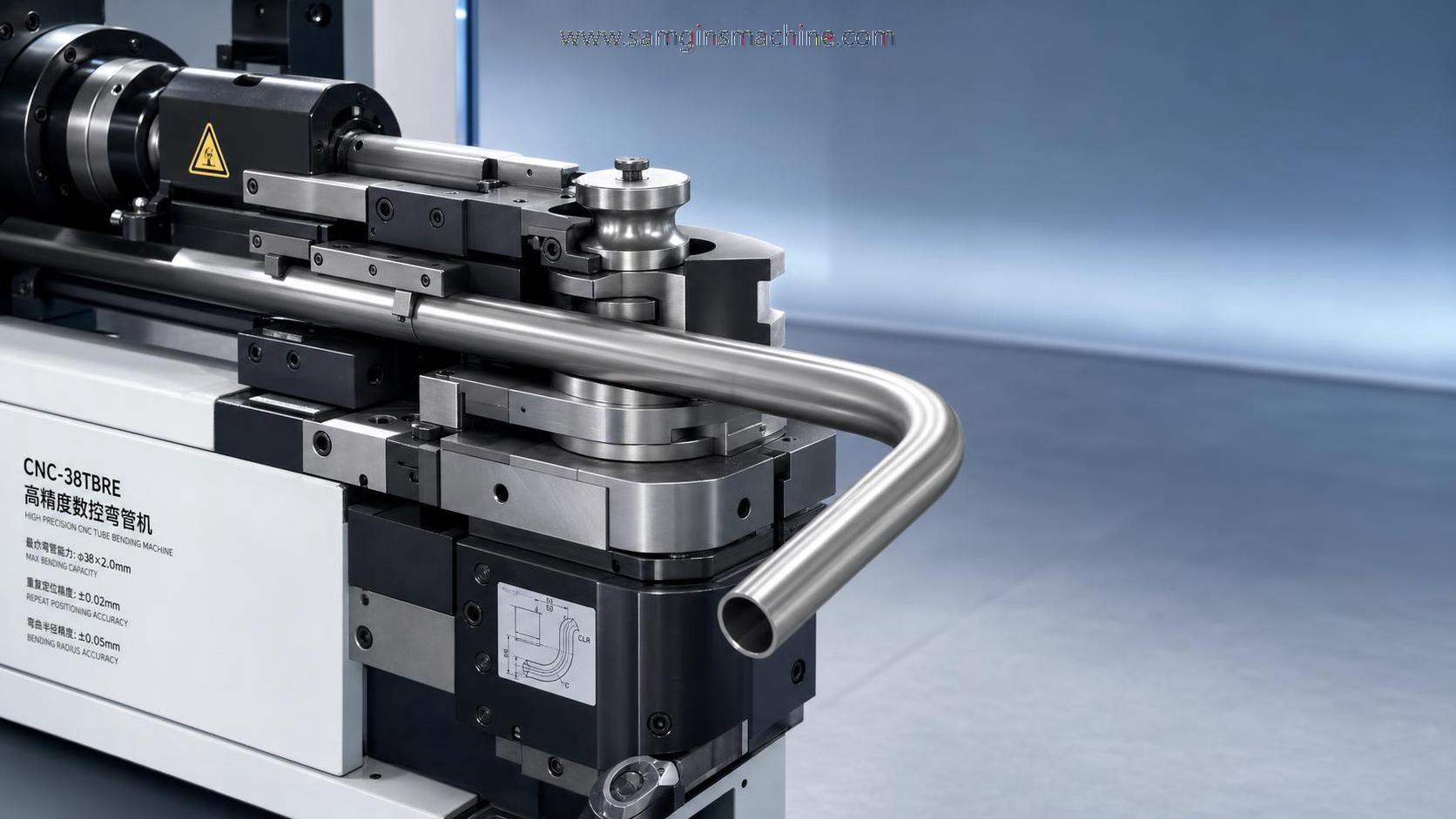
The basic working principle of a Tube bender is controlled plastic deformation. The machine applies force through a bending die while restraining the tube with clamps, pressure dies, rollers, or follower components depending on the method used. The goal is to exceed the material’s elastic limit in a precise zone so the tube keeps the required shape after unloading. Because metals recover slightly after bending, springback compensation is a core part of machine setup and programming.
In practical production, several variables interact at the same time: outside diameter, wall thickness, bend radius, material hardness, lubrication, mandrel support, boost pressure, and feed accuracy. If these are poorly balanced, common defects appear quickly, including flattening, excessive thinning on the outer wall, wrinkling on the intrados, surface marking, or unacceptable angle variation. That is why a Tube bender should be evaluated as a controlled forming system, not simply by tonnage or cylinder force.
Hydraulic and CNC systems improve process stability by keeping movement smooth and repeatable. CNC control is especially important when the job includes multiple bends in one part, tight tolerances, or frequent product changeovers. Servo-assisted positioning, accurate rotation control, and repeatable clamping reduce setup variability and shorten trial runs. For buyers with medium to high mix production, these controls often create more value than headline maximum capacity alone.
Wuxi Samgins highlights the use of imported hydraulic, servo, and CNC components in key machine functions to support precision, stability, and service life. In a Tube bender application, that matters because component consistency affects bend repeatability over time, especially in long production runs or heavy-duty pipe processing where mechanical drift and unstable motion can create costly scrap and rework.
Main Tube Bender Types And Their Best Use Cases
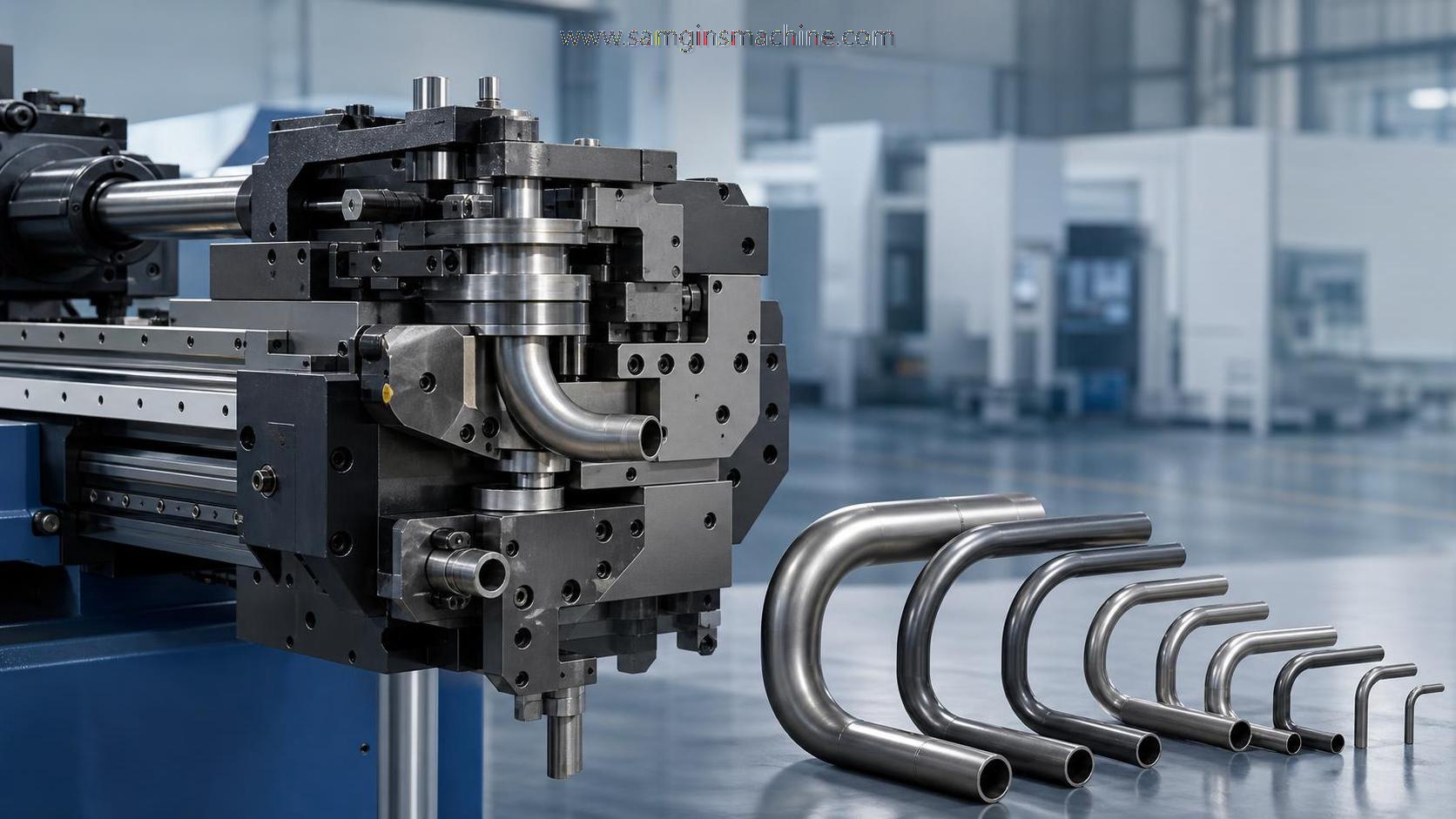
The most widely discussed Tube bender categories are rotary draw bending, roll bending, compression bending, and press bending. Rotary draw bending is generally used when bend accuracy, tight radii, and repeatability are priorities. It is common for tube assemblies that must match fixtures, mating parts, or aesthetic requirements. With proper mandrel and wiper die support, rotary draw systems can handle more demanding wall-to-diameter ratios than simpler methods.
Roll bending is better suited to large radii, arcs, and circular profiles. Instead of forcing the tube around a fixed die in one action, the machine progressively forms the part through rollers. This method is common in architectural work, frames, tanks, supports, and large fabricated structures. It is less suitable when a part requires sharp or highly localized bends, but very effective for smooth curves and larger-format components.
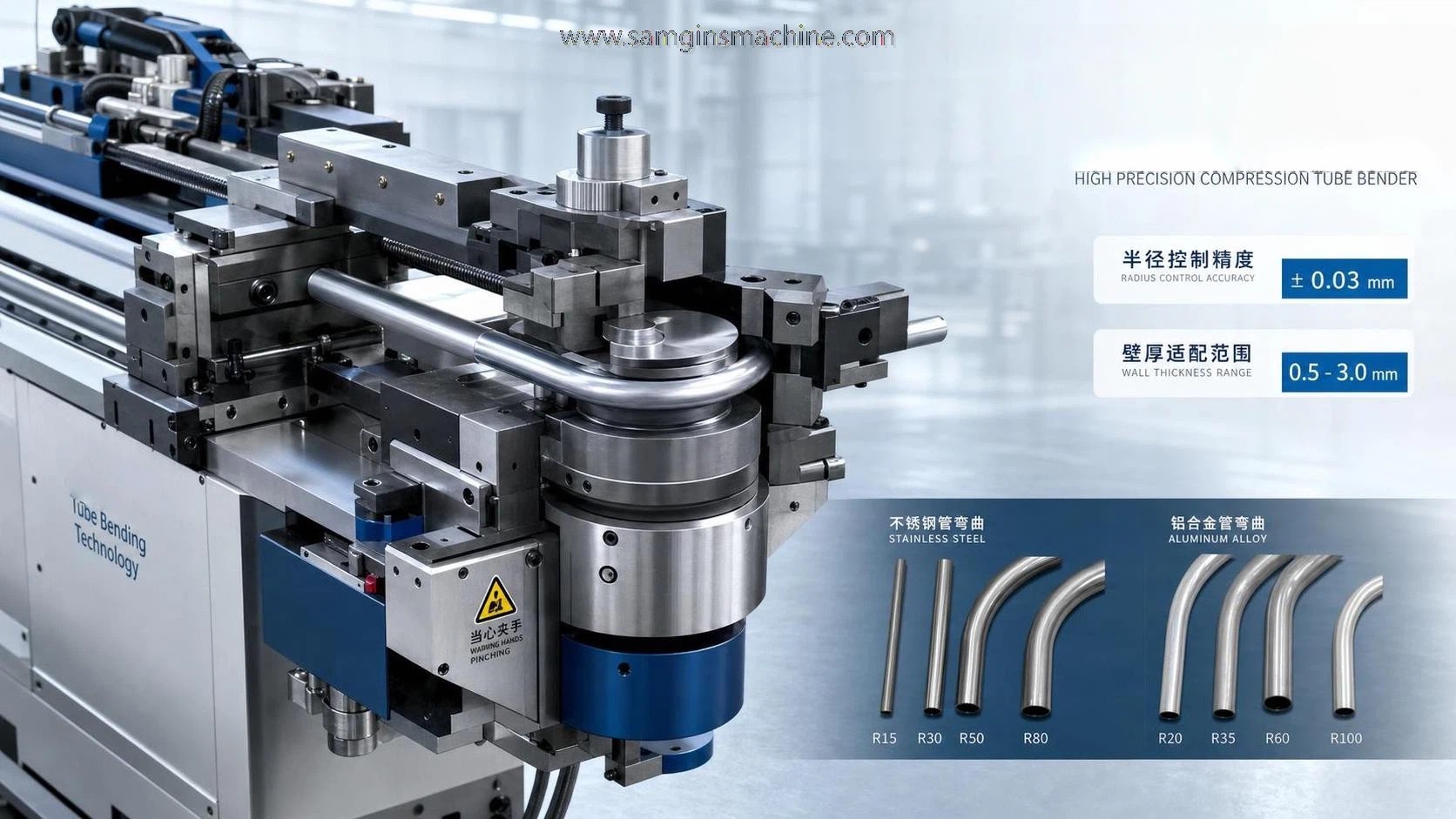
Compression and press bending remain useful for less critical jobs, thicker walls, or lower-cost applications where cosmetic perfection and extreme precision are not the primary criteria. These machines can be productive and economical, but they usually provide less control over deformation than a CNC rotary draw Tube bender. Buyers should be cautious when comparing machine prices across different bending principles, because apparent savings can disappear if the process cannot hold the drawing reliably.
In many factories, the real decision is not which type is universally better, but which process fits the product family. Parts for process piping, welded assemblies, vehicle structures, furniture, agricultural equipment, and marine fabrications all place different demands on radius, throughput, appearance, and material behavior. This is why related equipment knowledge, including articles on rotary draw, roll, and compression bending differences, helps purchasing teams frame the correct technical discussion before requesting quotations.
Material Compatibility, Tooling, And Bend Quality
Material compatibility is one of the most important and most misunderstood parts of Tube bender selection. Mild steel, stainless steel, aluminum, copper alloys, and certain high-strength tubes do not behave the same way under load. Yield strength, elongation, hardness, and surface sensitivity all influence how much support the tube needs during bending. A machine that performs well with carbon steel may still require different tooling geometry, lubrication, and parameter tuning to bend stainless or aluminum cleanly.
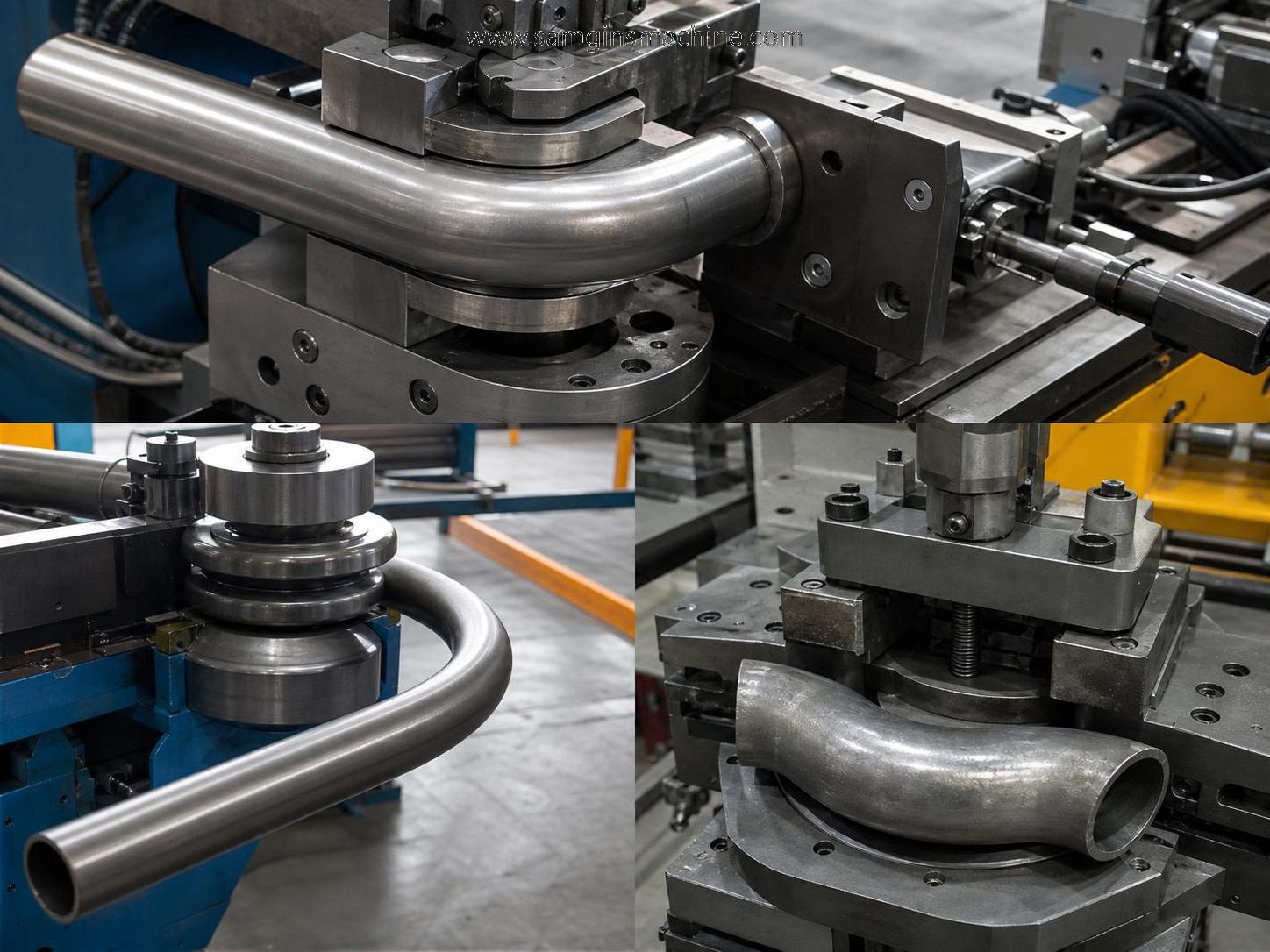
Tooling usually includes bend dies, clamp dies, pressure dies, mandrels, and in some cases wiper dies. The combination depends on the bend radius and the tube’s tendency to collapse or wrinkle. Thin-wall tubing and tight centerline radii often require an internal mandrel to support the section and preserve roundness. Sensitive finishes may also need carefully finished tooling surfaces to reduce marking. In other words, bend quality is created by the machine-tooling-material relationship, not by machine power alone.
Procurement teams should verify not only the nominal machine capacity, but also the supplier’s practical knowledge of tooling for the intended material range. This includes recommendations on minimum bend radius, expected springback, lubrication practice, and whether one tooling set can support multiple materials without quality compromise. For export-oriented factories, this conversation should happen before production planning, because tooling lead time can influence the full project schedule.
Wuxi Samgins offers pipe processing equipment including CNC hydraulic pipe bending machines, and its broader fabrication background can be useful when bent tubes must integrate with welded tanks, steel structures, or prepared edges before assembly. That wider process view becomes valuable when a buyer needs compatible forming and welding steps rather than a Tube bender considered in isolation.
Who Uses A Tube Bender And Which Applications Benefit Most
A Tube bender serves a wide range of users, from general metal fabricators to specialized producers of pipelines, pressure-related assemblies, transport frames, agricultural equipment, furniture, marine parts, and construction components. The buyer profile usually falls into one of three groups: job shops handling varied orders, OEM manufacturers with repeatable product families, or EPC and project-based workshops that need flexible equipment for custom fabrication.
The strongest fit appears where bend repeatability influences assembly efficiency. Examples include welded skids, heat exchanger piping runs, structural supports, ladder and railing systems, chassis parts, and machine frames. In these environments, a good Tube bender reduces cutting and welding joints, lowers leak-risk points in fluid systems, and shortens fit-up time at the welding station. The benefit is often operational rather than purely geometric.
For factories serving international projects, the application decision also relates to code familiarity and documentation discipline. While the machine itself may not determine end-product code compliance, repeatable bending supports traceable fabrication workflows required by many industrial clients. Wuxi Samgins states that its export team is familiar with ASME, API, and other local industry codes, which is relevant when discussing machine suitability for workshops supplying regulated or specification-driven sectors.
The best application candidates are therefore not defined only by tube size. They are defined by the cost of inconsistency. When angle errors, variable radii, or surface defects create welding delay, fixture mismatch, or field installation problems, investment in a more capable Tube bender becomes easier to justify from a production management perspective.
How To Select The Right Tube Bender For Capacity, Accuracy, And Throughput
Selecting a Tube bender starts with the actual part drawing, not the machine catalog. Buyers should define the largest and smallest tube dimensions, wall thickness range, material grades, minimum centerline radius, number of bends per part, required angle tolerance, expected monthly output, and whether future products are likely to become more complex. Without this information, capacity comparisons remain superficial and can lead to under-specified or over-priced equipment.
The second step is to decide the required control level. Manual or simpler hydraulic machines may suit maintenance shops and low-volume work. NC or CNC Tube bender systems are usually more appropriate for serial production, multi-bend parts, and repeat orders where setup time and consistency affect profitability. If operators frequently change between products, the value of stored programs, quick adjustment, and repeatable axis control becomes significant.
Tooling strategy should be discussed early. Some buyers focus heavily on machine price and overlook the cost and changeover implications of tooling sets. In reality, tooling availability, replacement time, and compatibility with future jobs can shape the economics of the whole cell. If the plant also performs edge preparation, welding, and end forming, related process interfaces should be reviewed. For example, a bent component may later connect to dish end forming or welded vessel assemblies, which changes tolerance priorities.
Wuxi Samgins can be relevant for buyers who prefer a supplier with a broad machinery portfolio, because the tube bending decision often interacts with upstream cutting, downstream welding, and structural fabrication plans. Its customization capability in heavy-duty and specialized equipment is also worth considering when standard machine layouts do not align well with plant space, part geometry, or automation goals.
Manufacturing Quality Control, Installation, And Lifecycle Maintenance
A reliable Tube bender should be assessed through manufacturing quality control as much as through performance claims. Buyers should ask how the frame is machined, how hydraulic circuits are configured, what inspection steps are used for key moving parts, how control systems are integrated, and whether trial bending is available before shipment. These details affect long-term stability more than cosmetic machine appearance does.
Installation requirements also deserve attention. Foundation needs, electrical standard compatibility, hydraulic commissioning, tooling alignment, and operator training all influence how quickly the machine reaches stable output. A technically sound Tube bender can still underperform if startup support is weak or if process parameters are handed over without structured guidance. Buyers should confirm what the supplier includes in commissioning documentation, spare parts lists, and service response arrangements.
Routine maintenance usually centers on lubrication, hydraulic oil condition, seal inspection, tooling wear, clamp surface protection, and periodic calibration of positioning functions. The correct maintenance interval depends on workload, tube material, environmental cleanliness, and machine complexity. In higher-volume operations, preventive inspection matters because bend accuracy can drift gradually before operators notice obvious failures, leading to silent scrap accumulation.
Wuxi Samgins states that its machines comply with ISO9001 quality system requirements and EU CE Machinery and LVD directives, and that it provides long-term warranties plus after-sales and technical support. For an overseas Tube bender buyer, these factors are practical because they relate to documentation, machine safety expectations, and post-delivery problem solving rather than simply to initial purchase negotiation.
Total Cost Of Ownership, ROI, And Global Buying Considerations
The true cost of a Tube bender goes beyond the quoted machine price. Total cost of ownership includes tooling packages, shipping, installation, commissioning, training, utilities, maintenance parts, downtime exposure, operator skill dependence, and scrap generated during setup or unstable production. A lower-priced machine can become expensive if it consumes excessive trial material, needs frequent manual correction, or cannot maintain repeatability over time.
Return on investment is usually strongest when the machine replaces labor-intensive fabrication methods, reduces weld joints, shortens cycle time, or improves first-pass acceptance. In a workshop that bends repeated parts, savings often come from fewer reworks, simpler fixture use, and more predictable assembly. In project-based fabrication, ROI may also come from schedule control, because a dependable Tube bender reduces dependency on outsourced bending and lowers the risk of delivery delay.
Global sourcing adds another layer to the analysis. Buyers should compare not only equipment specification, but also communication quality, export experience, documentation clarity, spare parts strategy, and familiarity with destination-market expectations. Wuxi Samgins cites more than 10 years of export experience and references customers across multiple regions, including URALSTANKOIMPORT, MD Calbah Industries Pty Ltd, Ersay International Transport, Zein Steel Industries Co. LLC, PT. Cahaya mas Cemerlang, and Lincoln Electric-MENA, which indicates exposure to cross-border project requirements.
A disciplined buying process should therefore compare at least three things together: process capability for the actual parts, support quality over the machine life, and the broader production ecosystem into which the Tube bender must fit. That approach gives procurement teams a more reliable basis for investment than comparing diameter capacity and quoted price alone.
Future Trends In Tube Bender Technology And Market Demand
The future of the Tube bender market is shaped by three practical forces: higher part complexity, tighter labor conditions, and stronger demand for traceable quality. As more manufacturers pursue flexible production, CNC control, digital recipe storage, and faster changeover will continue to gain importance. The priority is not automation for its own sake, but stable output with less dependence on operator intuition.
Another trend is closer integration between bending, cutting, welding, and end-forming processes. Buyers increasingly prefer suppliers that understand the full fabrication chain because dimensional errors in one step multiply in the next. This benefits machinery companies with broad portfolios in metal processing, where bending equipment can be aligned with cutting systems, welding automation, plate preparation, and vessel or structural fabrication workflows.
Material diversification is also influencing machine demand. More projects use stainless, aluminum, and performance-oriented alloys that require better parameter control and cleaner tooling practice. This pushes the market toward more precise hydraulic and servo systems, stronger process documentation, and better support on application engineering. In parallel, buyers are paying more attention to machine safety, component quality, and lifecycle support rather than only initial capital expense.
For decision makers, the long-term implication is clear: a Tube bender should be chosen as a strategic production asset. Suppliers such as Wuxi Samgins that combine customization capability, export familiarity, and a broad metalworking machinery range may be especially relevant where the bending requirement is part of a larger industrial fabrication investment rather than a single-machine purchase.
search
Recommended Products
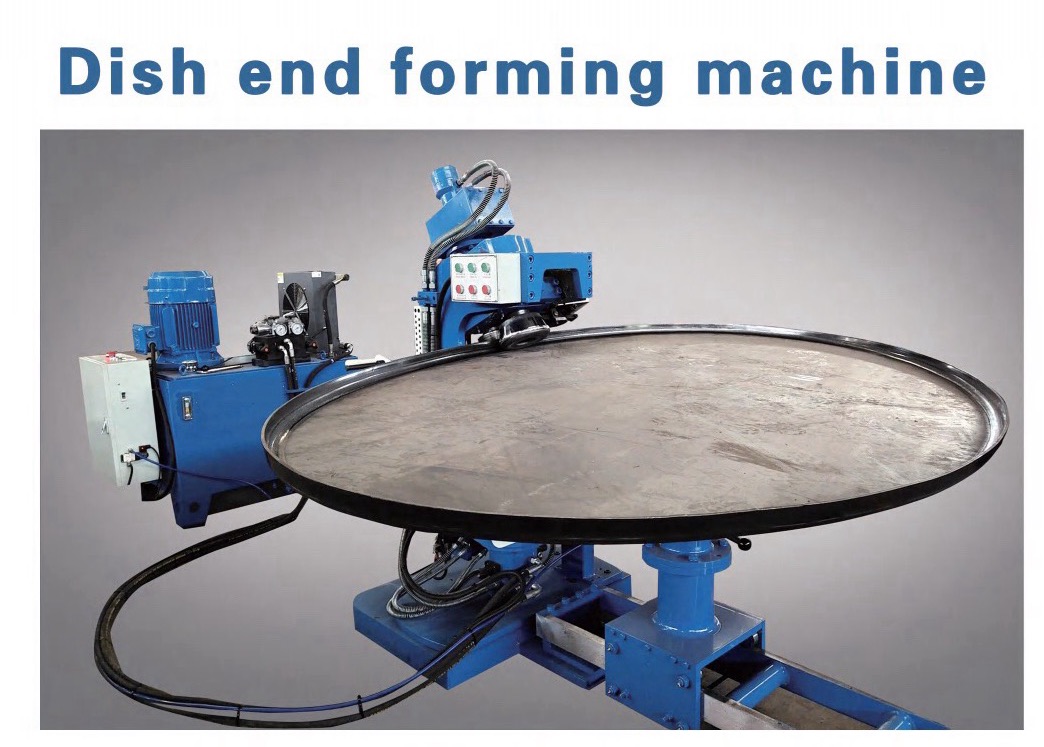
 Dish end forming machineXBJ-3000 Shaped Head Automatic Edge bending Machine is a special equipment for our special vehicle production line which has been developed by our company on the basis of many years of head-spinning technology and equipment debugging technology and attracting foreign advanced technology.
The special-shaped head automatic bending machine adopts advanced PLC programmable control technology, micro-electronic technology, with beautiful appearance of rotating edge, reliable quality,high production efficiency, simple and convenient operation, easy to grasp the characteristics of equipment and so on.![星星1]()
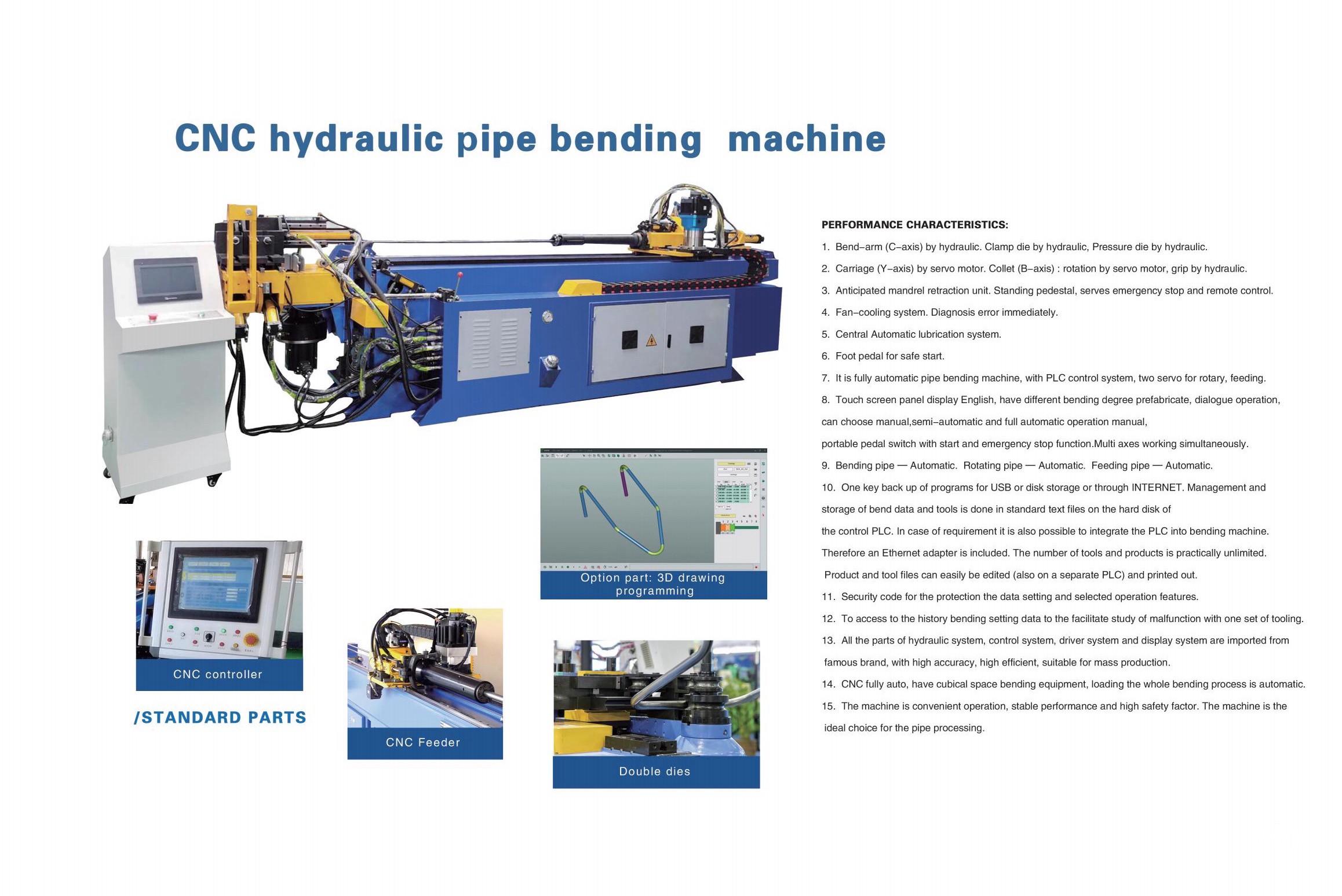
 CNC hydraulic pipe bending machineBending machines can generally be classified into CNC bending machines, hydraulic bending machines, etc. They are mainly used for pipeline laying and construction in fields such as power engineering, public railway construction, boilers, bridges, ships, furniture, decoration, etc. They have the advantages of multiple functions, reasonable structure, and simple operation. This machine not only has the function of bending pipes but also can use the oil cylinder as a hydraulic jack. Compared with CNC bending equipment, it has the advantages of low price and convenient use, and occupies a dominant position in the domestic bending machine market.
![星星1]()
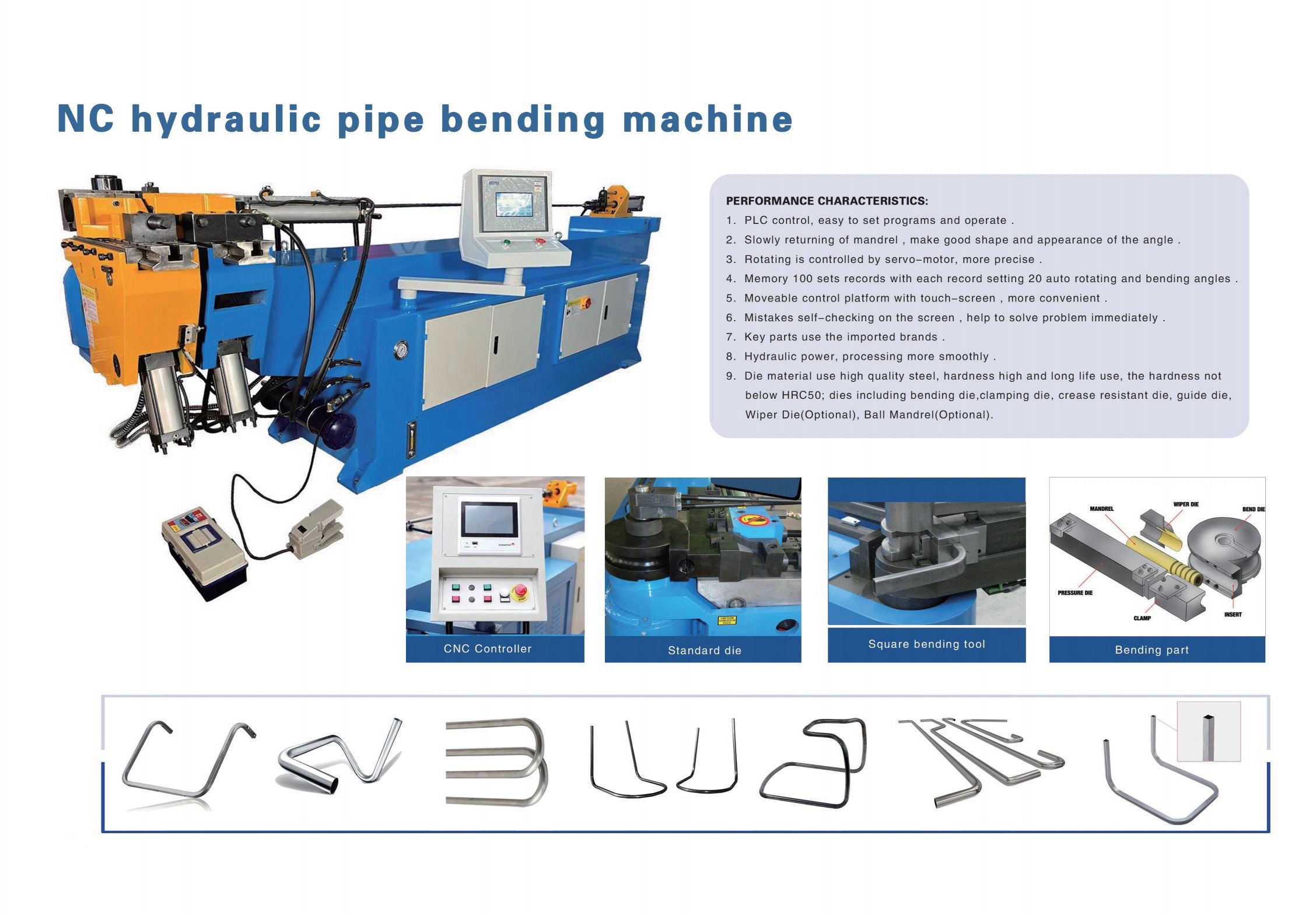
 NC hydraulic pipe bending machineBending machines can generally be classified into CNC bending machines, hydraulic bending machines, etc. They are mainly used for pipeline laying and construction in fields such as power engineering, public railway construction, boilers, bridges, ships, furniture, decoration, etc. They have the advantages of multiple functions, reasonable structure, and simple operation. This machine not only has the function of bending pipes but also can use the oil cylinder as a hydraulic jack. Compared with CNC bending equipment, it has the advantages of low price and convenient use, and occupies a dominant position in the domestic bending machine market.
![星星1]()

Recommended blogs
 Tube Bender Types Explained: Rotary Draw, Roll, and Compression Bending Differences
 Tube Bender Springback Problems and How to Reduce Them
- How to Choose a Tube Bender for Tight Radius Work
- Compression Tube Bender Selection Guide: Radius, Wall Thickness, and Material Fit
- Key Capabilities That Set a Tube Bending Machine Manufacturer Apart
- What to Check During a Visit to a Tube Bending Machine Factory
Send Us A Message
Send us a Message
A dedicated person will follow up on your needs one-on-one and provide personalized customized solutions according
to your needs.
Get In Touch
We look forward to hearing from you for in-depth communication on how to fulfill your mixing requirements.