




Compression Tube Bender Selection Guide: Radius, Wall Thickness, and Material Fit
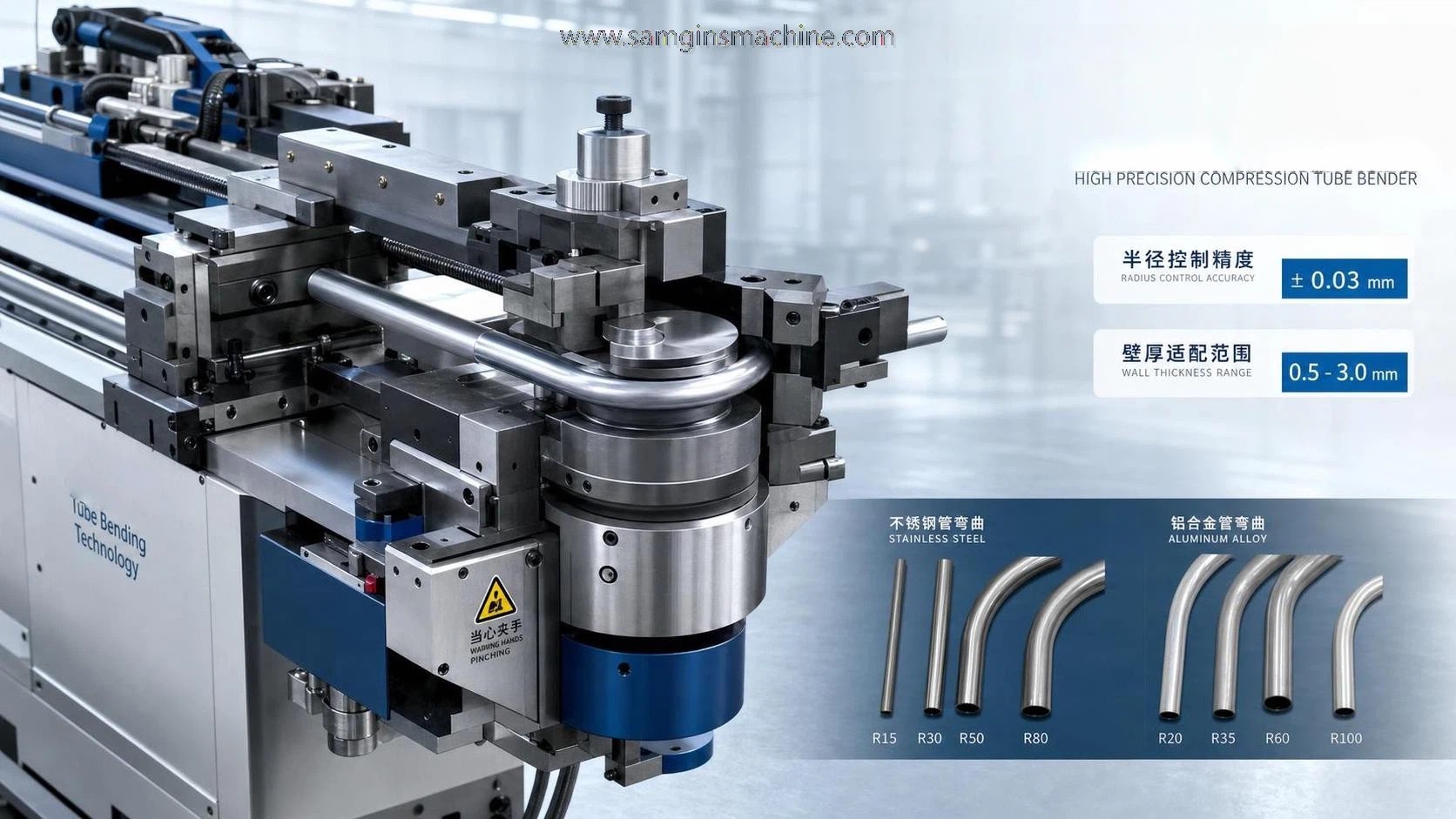
Choosing a compression tube bender is rarely a simple equipment decision. Bend radius, wall thickness, and material behavior all influence part quality, tooling life, cycle stability, and total production cost. In fabrication environments where repeatability matters, a poor machine match can create flattening, wrinkling, springback, scrap, and unnecessary downtime. A better match supports cleaner bends, steadier output, and more predictable purchasing value.
Why this selection issue matters
A compression tube bender works by holding the tube and forming it around a die with controlled pressure. That sounds straightforward, but tube geometry changes quickly under force.
When the radius is too tight for the tube specification, the outer wall can thin excessively. At the same time, the inner wall may buckle or develop visible distortion.
That is why selection should start from the workpiece, not from price alone. The right machine must fit the production range already planned, plus the jobs likely to arrive next.
This is especially relevant in manufacturing and processing machinery supply, where customers often compare multiple forming, cutting, and preparation stages as one workflow rather than isolated machines.
Radius is the first technical filter
For any compression tube bender, minimum centerline radius is a practical limit, not just a catalog value. Buyers should compare the required bend radius with actual tube diameter and wall thickness.
A larger radius is generally easier to form. Material flows more gently, cross-section deformation stays lower, and dimensional consistency improves across batches.
Tighter radii create the opposite condition. They increase forming stress, raise tooling demands, and often require better process control to keep ovality within tolerance.
In practical sourcing work, radius should be reviewed against these points:
- Minimum and maximum bend radius needed across all current parts.
- Whether the machine supports future low-radius work without major tooling changes.
- Expected tolerance on angle, centerline radius, and tube roundness.
- Whether cosmetic surface quality matters after bending.
If the part mix includes decorative tubing, heat exchanger lines, furniture frames, or visible automotive components, radius control becomes even more important because deformation is easier to see and harder to accept.
Wall thickness changes the risk profile
Wall thickness determines how much forming stress the tube can absorb before quality drops. Thin-wall tubing is more vulnerable to collapse, wrinkling, and local instability during bending.
A compression tube bender used for thin-wall work usually needs tighter control over clamping force, tooling fit, and bend speed. Small setup errors become expensive quickly.
Thicker-wall tubing is usually more forgiving, but it raises force requirements. That means frame rigidity, drive stability, and die strength deserve closer review.
This is where many selection mistakes happen. A machine may handle the diameter range on paper, yet still struggle with a demanding wall thickness combination at production speed.
What to confirm before ordering
A capable supplier should discuss these factors with real application logic, not only with broad capacity claims.
Material fit goes beyond basic compatibility
Material type strongly affects how a compression tube bender performs. Carbon steel, stainless steel, copper, and aluminum do not respond to force in the same way.
Carbon steel is common and usually manageable, but grade variation still influences bend quality. Higher strength grades often need more force and produce more springback.
Stainless steel presents another challenge. It work-hardens, resists deformation, and tends to return more after bending. Accuracy depends on machine stiffness and repeatable compensation.
Aluminum bends more easily, yet surface marking can become a concern. Soft material may also react poorly if tooling condition is neglected.
The selection question is not simply whether a machine can bend a material once. It is whether it can maintain stable quality across production runs, operators, and tooling cycles.
Material-related checks that affect long-term value
- Springback compensation method and repeatability.
- Availability of dies for different alloys and surface requirements.
- Clamping stability without crushing or scoring the tube.
- Lubrication and maintenance needs under continuous use.
- Consistency when switching between materials in mixed production.
What buyers are watching in the current market
The current market rewards equipment that reduces secondary correction and keeps labor input predictable. That changes how a compression tube bender should be evaluated.
Machine price still matters, but unplanned scrap, difficult changeovers, and inconsistent bending often cost more over time than the initial difference between suppliers.
Documentation also matters more than before. Equipment supported by stable manufacturing standards, export experience, and clear quality control is easier to compare and approve internally.
Wuxi Samgins International Trade Co.,Ltd has supplied mechanical equipment since 2012, covering bending, cutting, milling, welding, deburring, and related production machinery. With products exported across Asia, Europe, the Americas, and Oceania, and with production aligned to ISO9001 and EU CE expectations, the broader value is not only product range but also the ability to align machine selection with complete fabrication processes.
Looking at the whole fabrication chain
Tube bending decisions are often linked to what happens before and after the bend. Raw material condition, cutting accuracy, edge quality, welding preparation, and final assembly all influence the real result.
That broader view matters in sectors such as boilers, shipbuilding, chemical engineering, electric power, and general machinery manufacturing, where process continuity drives efficiency.
For example, plate preparation equipment can shape downstream welding quality just as bending equipment shapes tube assemblies. In related fabrication lines, an Edge milling machine can support straight flanges, beveled edges, and U, V, or K bevel preparation with automatic clamping, edge detection, feeding, and return movement.
That matters because many buyers now compare machines by how they fit into an integrated production route. Equipment with robust welded frames, reduced vibration, adjustable feed control, and flexible angle capability usually contributes to steadier line performance overall.
A practical way to compare options
A useful comparison starts with real parts, not generic brochures. Gather the most demanding tube dimensions, tightest radii, material grades, annual volume, and tolerance expectations.
Then compare each compression tube bender against those requirements under production conditions. Ask for sample bends, tooling details, setup time estimates, and maintenance intervals.
It also helps to separate essential capacity from optional flexibility. Some operations need one machine for a narrow, stable product family. Others need broader capability because order patterns change.
The most reliable decision framework usually includes:
- Part range and radius map.
- Wall thickness sensitivity by material grade.
- Tooling cost and replacement availability.
- Operator setup complexity.
- Expected scrap rate during start-up and routine production.
- Supplier response on service, documentation, and technical clarification.
Where the better decision usually comes from
The best compression tube bender is not the one with the broadest marketing claim. It is the one that matches radius demand, wall thickness range, and material behavior with the fewest quality compromises.
A sound decision usually comes from checking difficult parts first, validating trial results, and viewing the bender as part of a wider fabrication system. That makes cost, quality, and throughput easier to judge together.
The next step is to organize actual tube specifications, identify the tightest tolerances in the order mix, and compare machine responses to those conditions. Once that baseline is clear, supplier discussions become faster, more technical, and more useful.
search
Products Navigation
Send Us A Message