




Key Capabilities That Set a Tube Bending Machine Manufacturer Apart
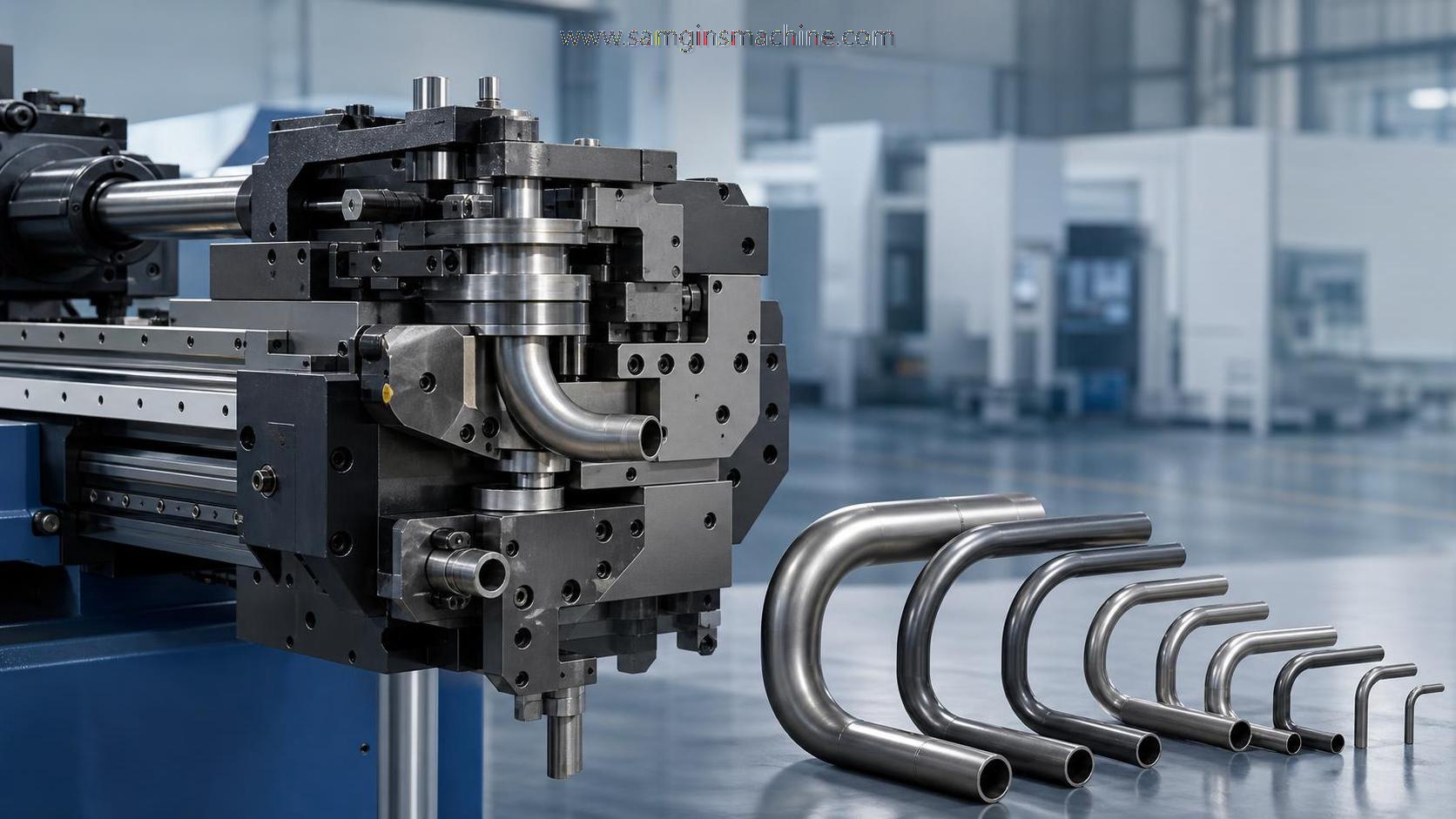
Start with the manufacturer’s process knowledge, not the brochure
When you are evaluating a tube bending machine manufacturer, the machine spec sheet is only the surface. What actually separates a reliable supplier from a risky one is whether they understand the production problem behind the machine. A builder that has worked across different metalworking equipment categories usually asks better questions: tube material, wall thickness, bend radius, springback behavior, downstream welding or assembly requirements, expected batch size, and the tolerance that really matters in your plant.
That matters because a technically acceptable bend on paper can still fail in production. Tube ovality may be too high for fit-up. Surface marks may be unacceptable for visible parts. Cycle time may collapse once operators switch from sample runs to mixed-part production. If the manufacturer stays focused on maximum bending diameter and servo count, you are not yet talking about the right things.
Check how they define the application before they quote
One of the clearest signals is the quality of the pre-sales technical review. A strong tube bending machine manufacturer will not rush straight to price. They will usually want part drawings, tube material grade, diameter range, thickness range, required centerline radius, number of bends per part, end-forming needs, and whether the part must interface with robotic welding, fixtures, or inspection stations.
- Ask what information they need before confirming the model.
- Watch whether they discuss tooling wear, lubrication, springback compensation, and changeover time.
- Notice if they separate prototype suitability from mass-production suitability.
If the conversation stays generic, the risk is usually transferred to your commissioning stage.
Look at bending stability, not just peak capacity
Technical evaluators know this, but it still gets missed in supplier comparisons: maximum capability is not the same as repeatable capability. A machine may be able to bend a tube once under favorable conditions, but your production line needs repeatability across shifts, tooling changes, and material lots.
The right questions are practical. How is bend accuracy controlled over long runs? What feedback methods are used in the control system? How is tooling alignment maintained? What parts of the machine structure are most exposed to wear or deformation? Manufacturers with mature engineering teams can explain where repeatability is gained and where it is usually lost.
This is also where broader fabrication knowledge helps. A supplier familiar with plate preparation, milling, cutting, and welding workflows tends to think in terms of process chain stability rather than isolated machine motion. In operations where bent tube assemblies feed into fabricated structures, that mindset is useful. The same supplier portfolio may include equipment such as Non-standard Edge Milling Machine Without Pressure Beam, which is designed for bevel and flange preparation before welding. That does not make the tube bender better by itself, but it can indicate a stronger grasp of how upstream and downstream tolerances interact on the shop floor.
Inspect the tooling approach early
Tooling is where many purchasing decisions go wrong. Buyers compare machine frames and control brands, then discover later that the tooling package is poorly matched to the part family. A capable manufacturer should be able to explain die selection logic for different materials and geometries, including where mandrel bending is necessary, when wiper dies become critical, and how they manage thin-wall tubes or tight radii.
A few warning signs are easy to spot:
- They treat tooling as an accessory instead of part of the process solution.
- They do not discuss setup repeatability for multi-part production.
- They cannot explain expected wear points or spare strategy.
- They avoid discussing marks, wrinkling, thinning, or flattening.
For technical review, ask for the tooling concept together with the machine proposal, not after commercial approval.
Verify their manufacturing and quality discipline
A tube bending machine manufacturer can sound impressive and still be inconsistent in build quality. You need to see how they control the basics: frame fabrication, machining accuracy, assembly discipline, electrical integration, and final testing. The stated use of ISO9001 quality system management and alignment with EU CE standards is relevant, but for evaluation purposes you still need to see how that shows up in actual documents and factory practice.
The point is not paperwork for its own sake. It is whether the supplier can prove that key machine characteristics are controlled before the crate is closed.
Customization capability should be specific, not promotional
Nearly every manufacturer says they support customization. The useful question is: customization of what, and with what engineering consequences? A serious answer will break this into machine structure, control logic, tooling, automation interface, loading method, safety configuration, and part family coverage.
For example, if your parts vary in length and geometry, ask how recipe management is handled and how quickly the machine returns to a known setup state. If bent parts move directly into welding cells, ask about positioning consistency and communication interfaces. If export projects are involved, verify voltage, documentation language, and destination-market safety expectations before the design is frozen.
Good customization narrows operational risk. Bad customization creates a one-off machine that is hard to maintain.
Do not separate service capability from technical capability
For a technical evaluator, after-sales support is not a soft topic. It is part of machine performance. A supplier exporting to Southeast Asia, Europe, the Americas, and Oceania may already be accustomed to cross-border documentation and shipment coordination, but what matters to you is the support model behind that reach.
Check these points in plain terms:
- How are installation and commissioning handled?
- What training is included for operators and maintenance staff?
- Which spare parts are recommended for the first year?
- What remote diagnostics or fault support is available?
- How are control-system backups and parameter recovery managed?
If those answers are vague, downtime risk is being deferred to your team.
Pay attention to how they talk about adjacent processes
Tube bending rarely lives alone. In real plants it sits beside cutting, end preparation, welding, deburring, fixturing, and inspection. Manufacturers that also work around CNC cutting machines, welding robots, milling equipment, or edge preparation machines often have a more grounded view of production bottlenecks.
That is useful when your evaluation is not only about buying one machine, but about keeping the line balanced. In some fabrication environments, edge preparation equipment such as the XBN or XBJ series Non-standard Edge Milling Machine Without Pressure Beam is selected for straight flanges, bevel edges, or U-type grooves before welding on carbon steel, stainless steel, or aluminum plates. Mentioning this here is not a detour. It is a reminder that the best machine suppliers usually understand where forming accuracy ends and assembly quality problems begin.
Use a short evaluation sequence before you compare prices
A practical review process keeps you from overvaluing presentation quality. Start with application fit. Then test engineering depth. After that, review quality evidence, tooling logic, and service structure. Price comparison becomes meaningful only when those five items are on the table in comparable form.
If you need a simple filter, use this order:
- Can they define your bending application correctly?
- Can they explain repeatability risks and control methods clearly?
- Is the tooling solution convincing for your actual part family?
- Can they document quality control and applicable compliance work?
- Will they still be useful after shipment?
That sequence tends to expose the difference between a seller of machines and a manufacturer that can support a production requirement. For technical evaluators, that difference is usually where long-term cost, uptime, and acceptance risk are decided.
search
Products Navigation
Send Us A Message