




Tube Bending Machine Explained: Key Types, Working Principles, and Industrial Applications
What A Tube Bending Machine Is And Why It Matters
A tube bending machine is industrial equipment designed to bend metal tubes or pipes to a specified radius, angle, and geometry while keeping the section usable for fluid transfer, structure, or assembly. In practice, buyers evaluate more than bend angle alone. They also care about wall thinning, ovality, springback, surface marks, repeatability, and the ability to maintain tight tolerances over multiple production cycles.
The machine category covers simple manual units, hydraulic equipment, and advanced CNC systems with programmable axes. Depending on the process, a tube bending machine may use rotary draw bending, roll bending, compression bending, or press bending. Each method suits different tube diameters, wall thicknesses, materials, and production volumes, so correct process selection is as important as machine size.
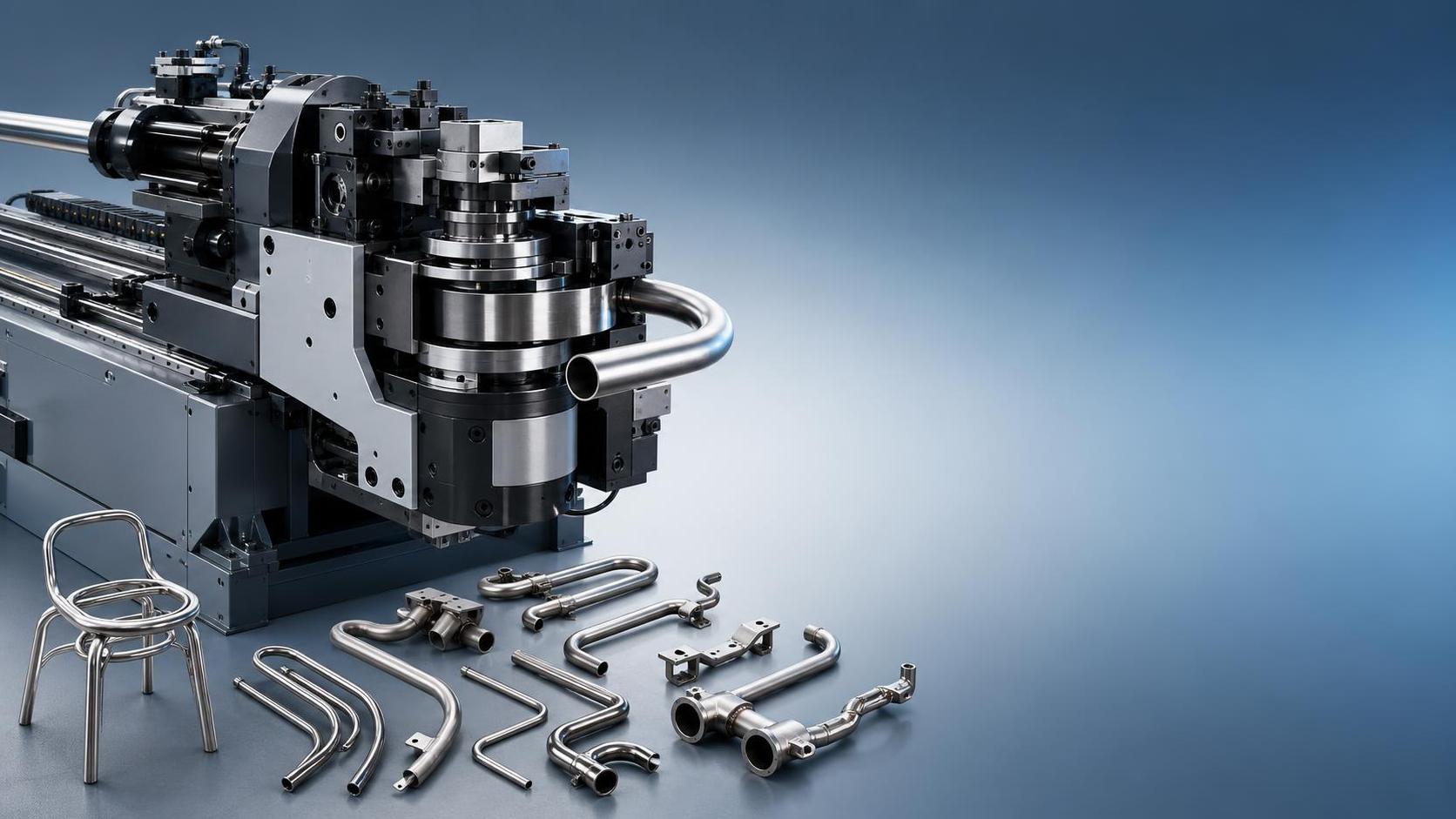
In manufacturing and processing machinery sectors, tube bending is essential because modern products increasingly require compact routing, stable structural shapes, and repeatable dimensional accuracy. Automotive exhausts, handrails, frames, heat exchangers, process piping, furniture, agricultural equipment, and construction systems all rely on controlled bends rather than welded angle joints in many cases.
For procurement teams, this topic goes beyond machine terminology. A well-matched tube bending machine can reduce scrap, shorten fitting time during downstream assembly, and improve visual consistency in finished parts. Those benefits directly influence total cost, production throughput, and delivery reliability, which is why machine capability should be reviewed together with tooling, operator skill, and service support.
How A Tube Bending Machine Works
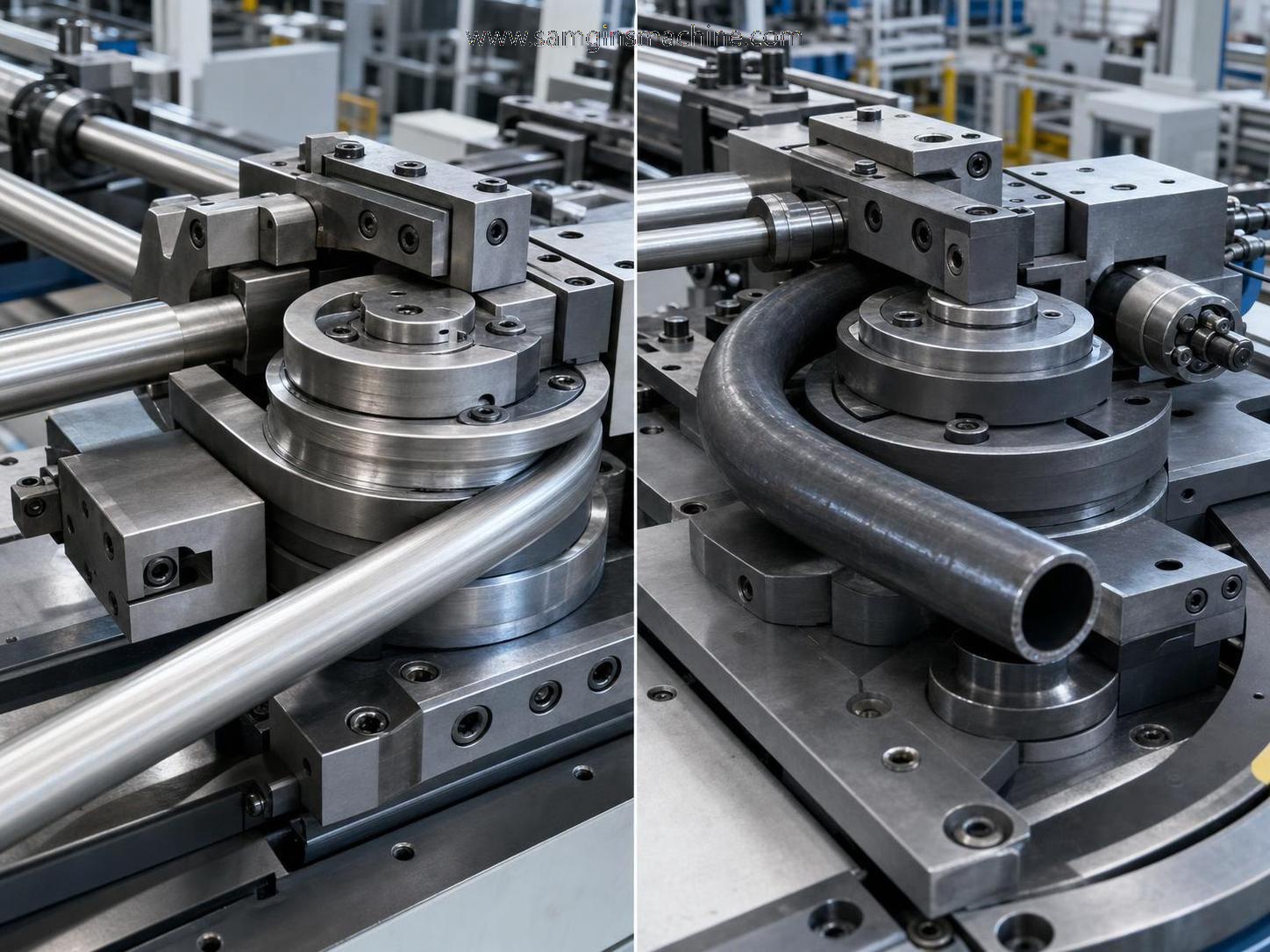
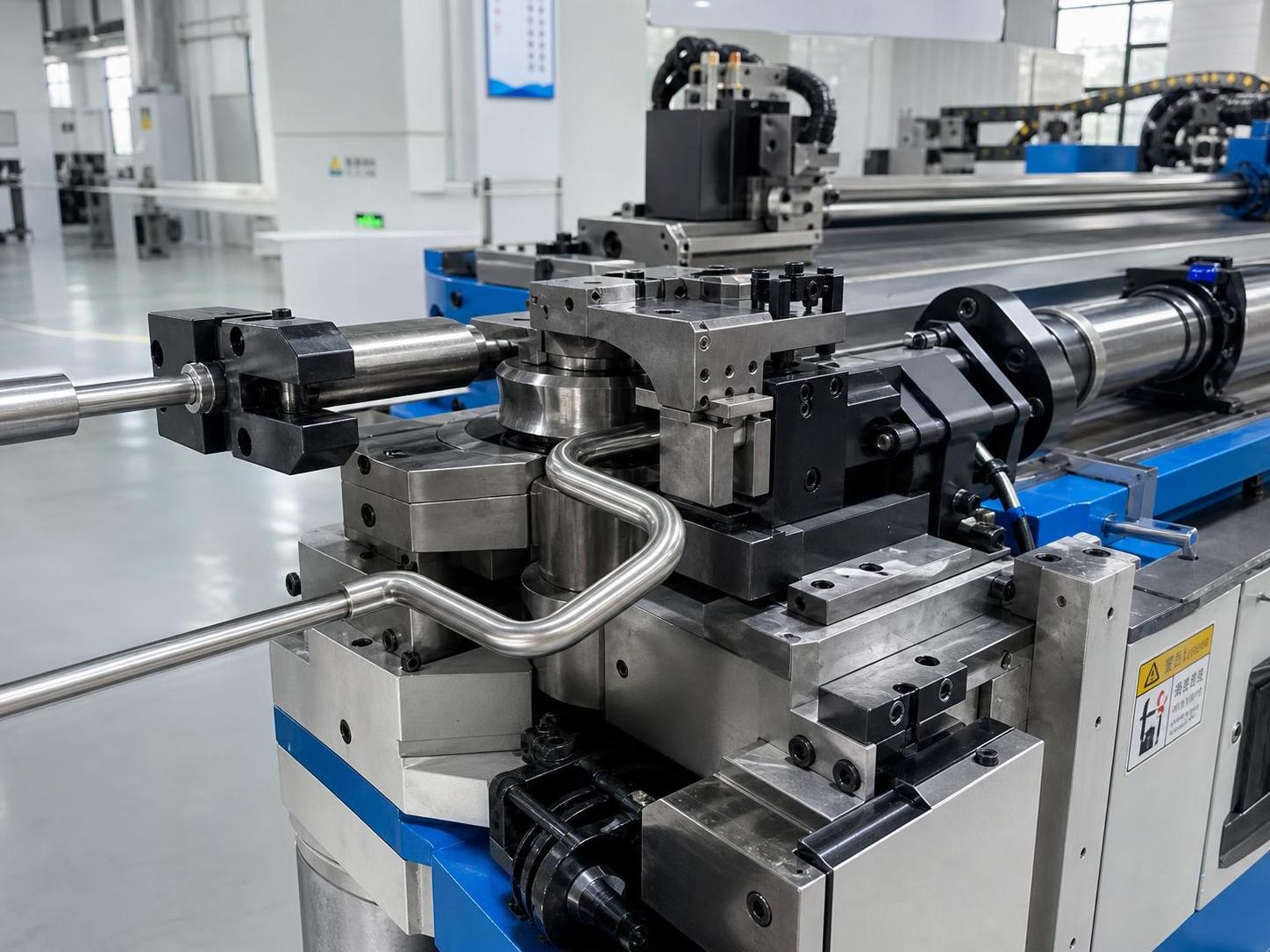
At a basic level, a tube bending machine applies controlled force to a straight tube so the material yields plastically around a defined bend centerline. The tooling set normally includes a bend die, clamp die, pressure die, and in many cases a mandrel and wiper die. Their combined job is to support the tube, guide material flow, and prevent collapse or wrinkling during the bend.
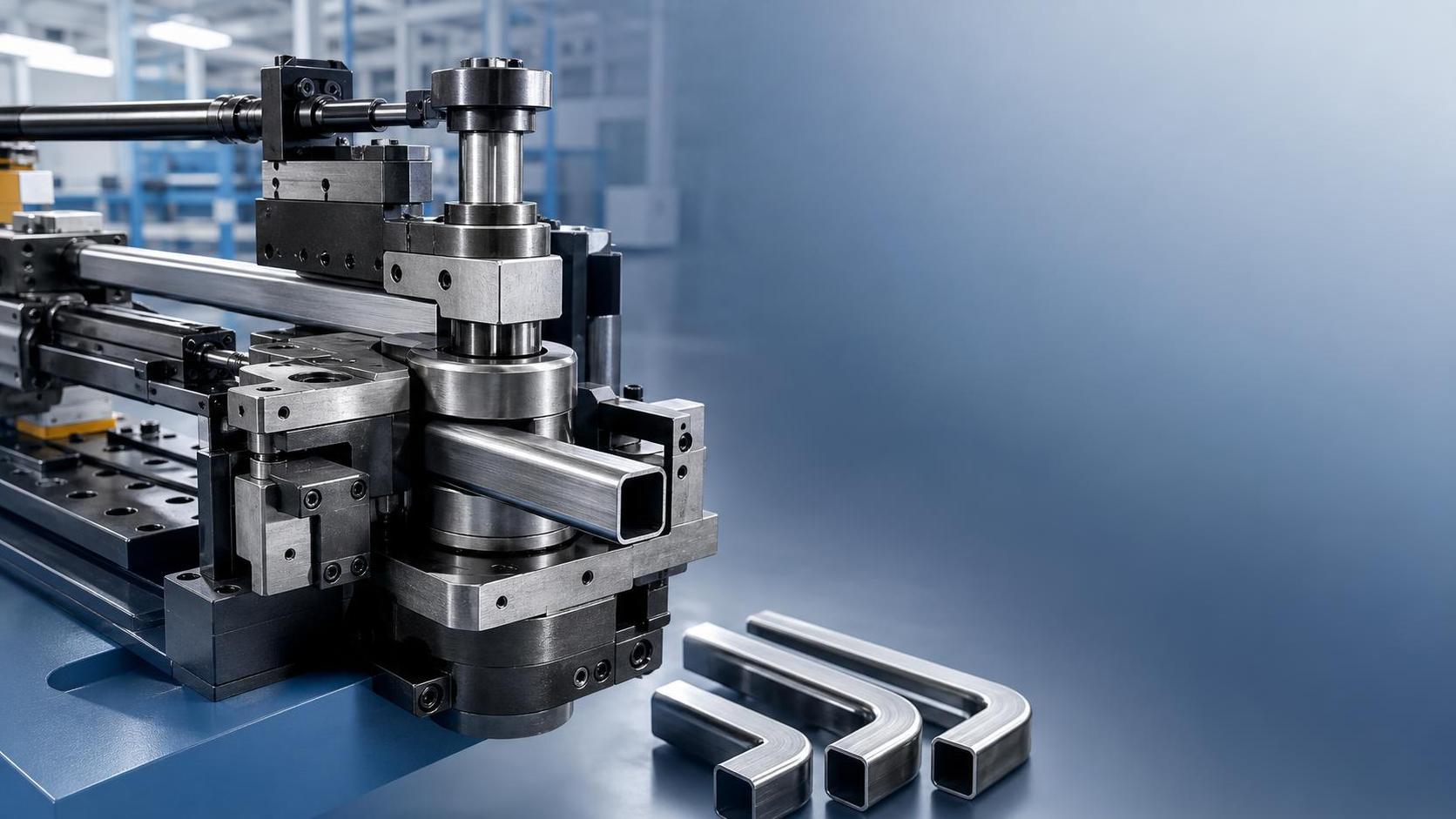
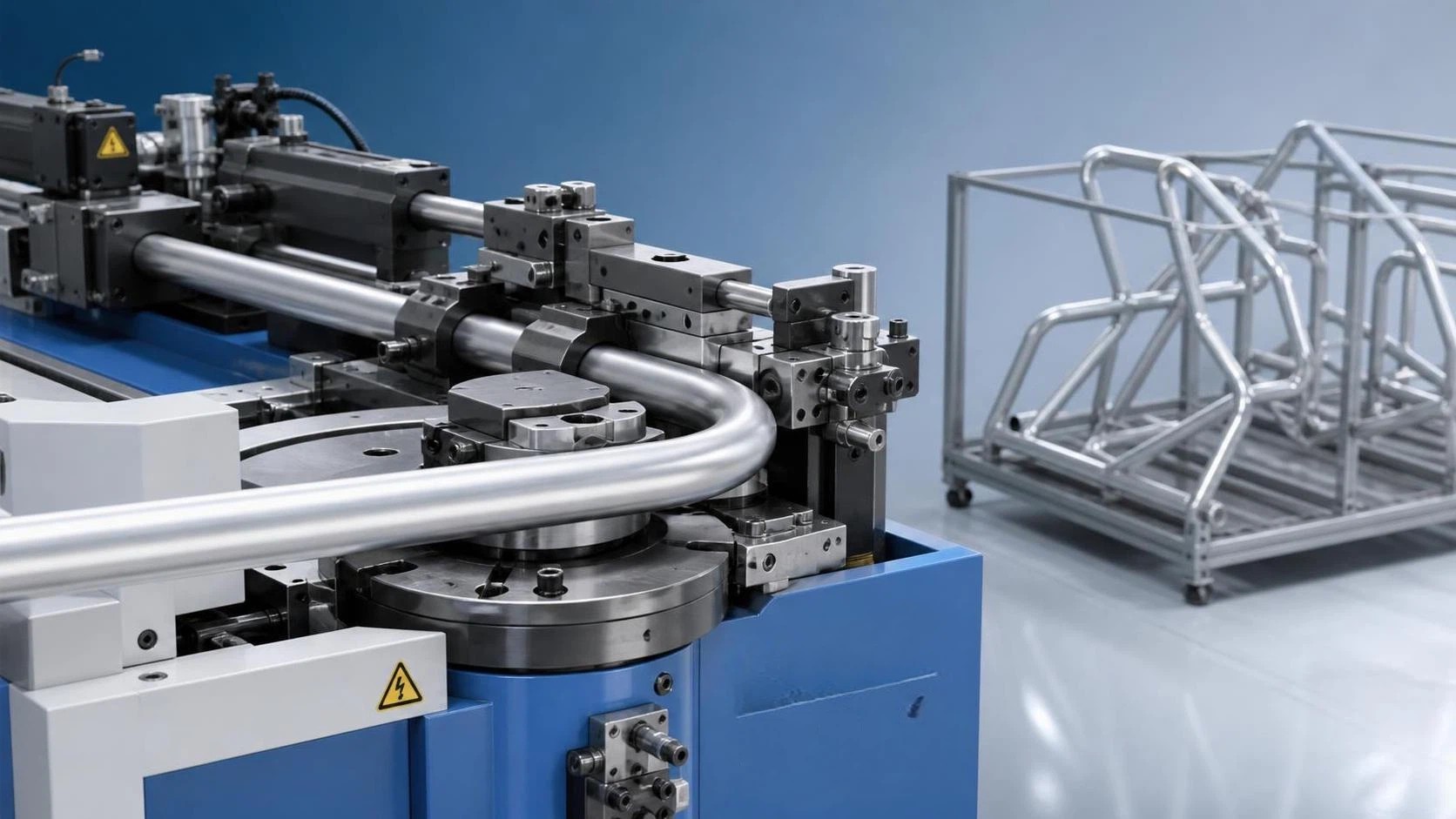
Rotary draw bending is widely used when a buyer needs precise bend geometry and good surface appearance. The tube is clamped to a rotating bend die and drawn around its radius while support tooling controls deformation. This method is common for stainless steel tubing, furniture parts, automotive components, and visible architectural products where consistency and appearance both matter.
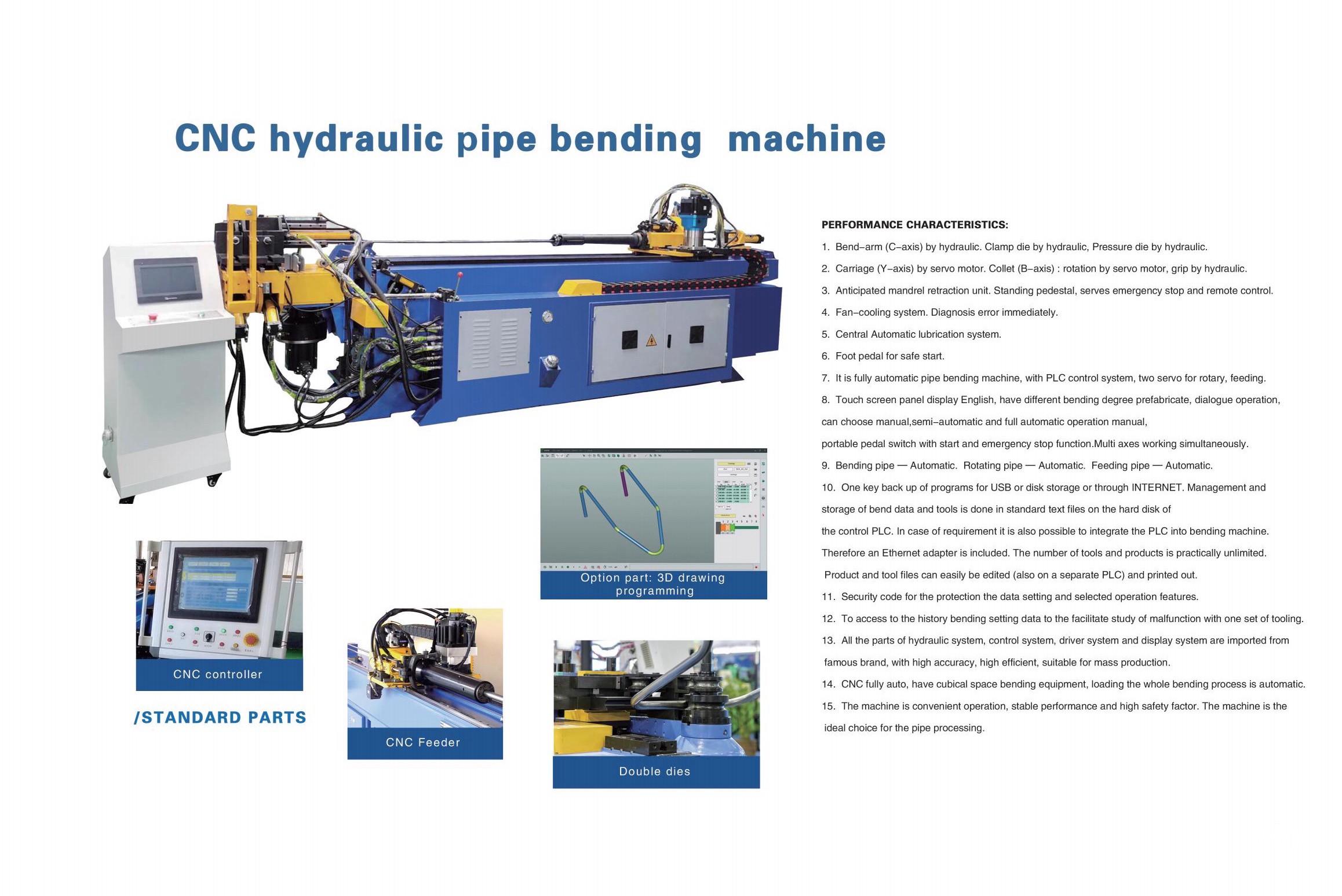
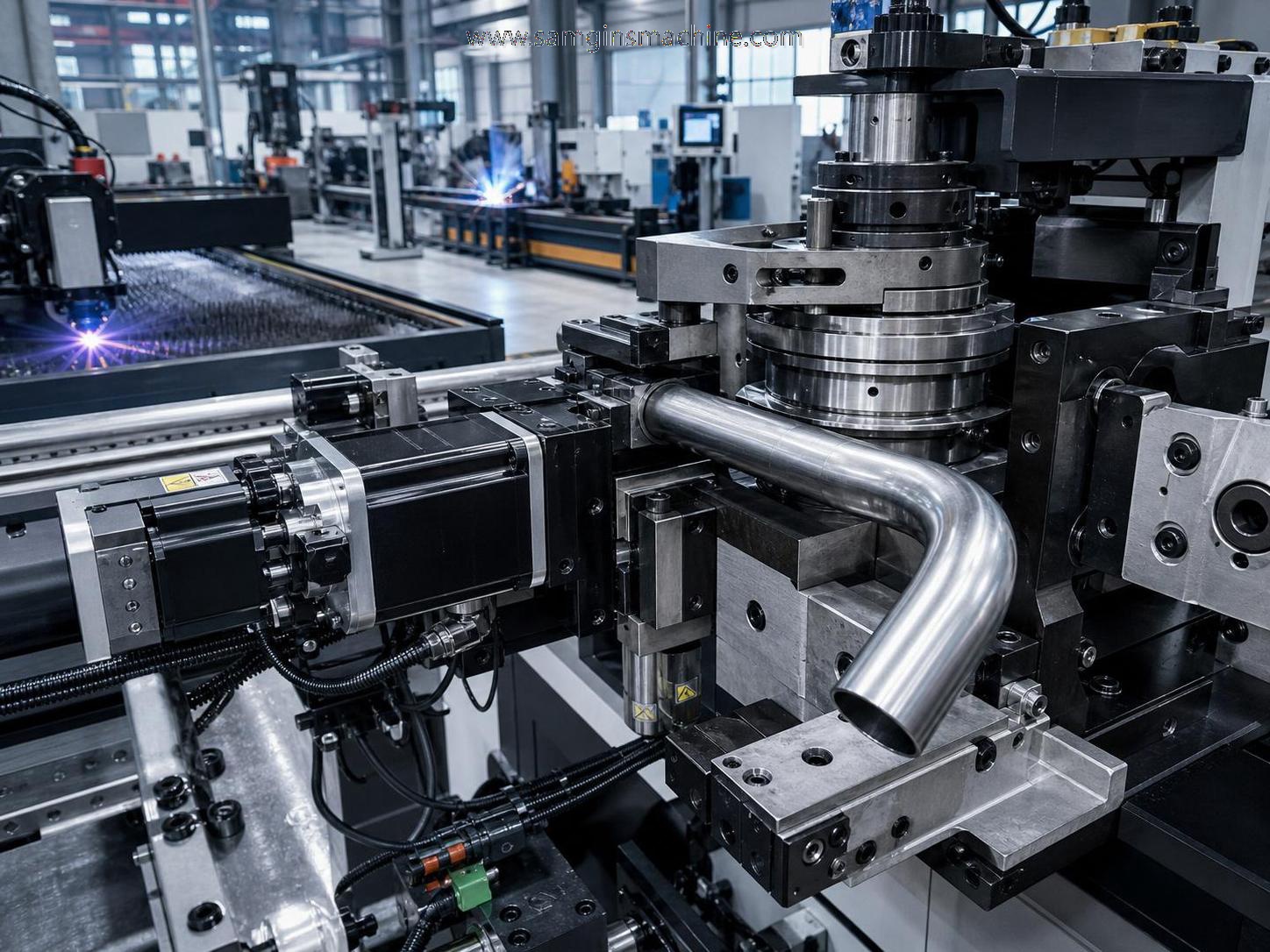
Hydraulic and CNC systems improve control over feed, rotation, pressure, and bend angle. A CNC hydraulic pipe bending machine can store programs, compensate for springback, and repeat multi-bend parts with less manual adjustment. Higher-end systems also manage axis synchronization, which is important when parts contain several bends on different planes and must still fit tightly during final assembly.
Actual bend quality depends on more than machine force. Material grade, outside diameter, wall thickness, bend radius, lubrication, tooling fit, and operator settings all affect the final result. Thin-wall tubes often need internal mandrel support and careful pressure control, while thick-wall tubes may demand higher torque and stronger tooling. For that reason, process validation using sample parts is usually a necessary step before volume ordering.
Main Types Of Tube Bending Machine
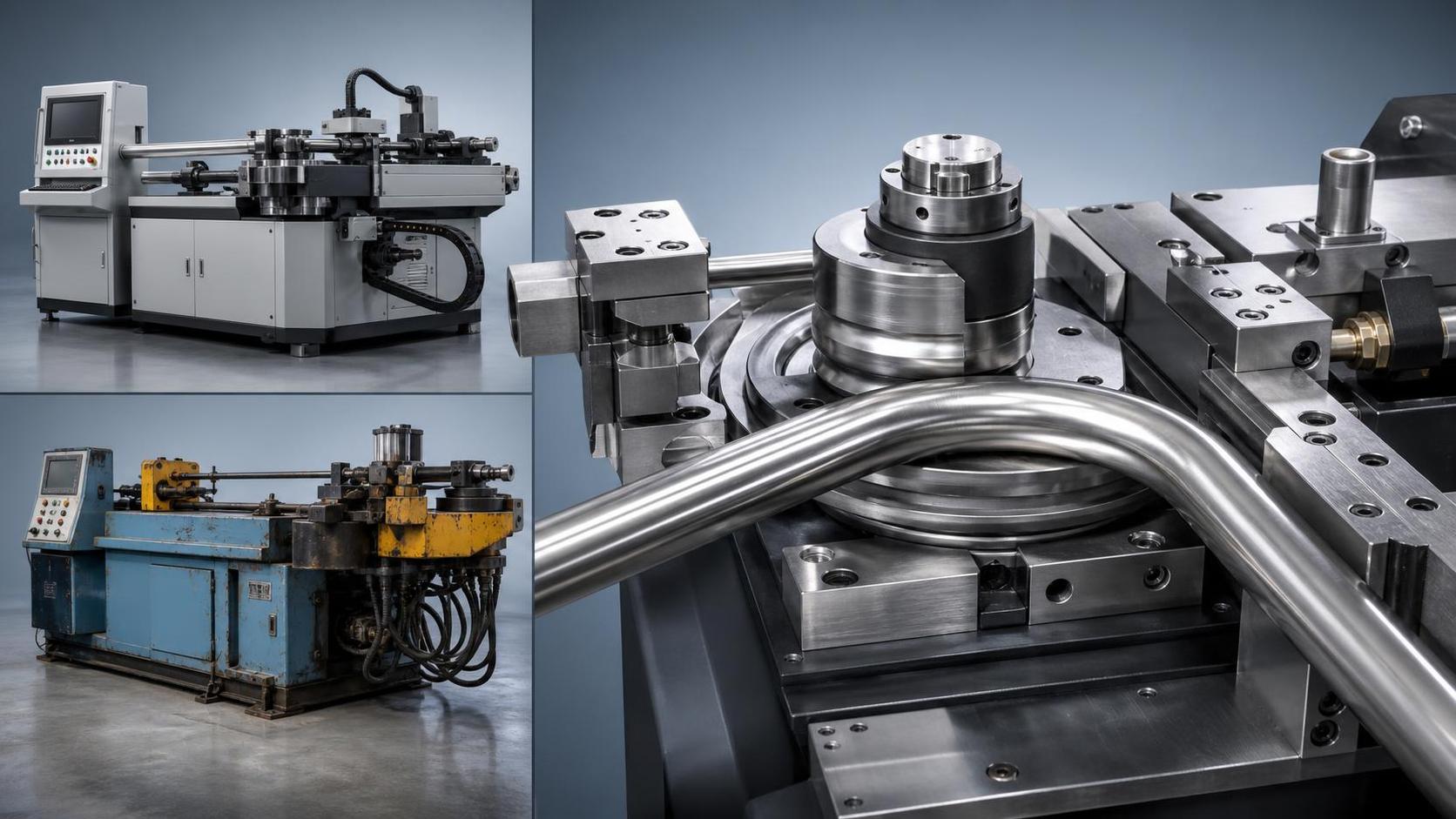
Manual machines are typically chosen for light-duty work, maintenance shops, prototypes, and low-volume jobs. They have lower entry cost and simple operation, but they rely heavily on operator consistency and are not ideal for demanding tolerance control. When bend complexity increases, manual systems often introduce variation in angle, plane alignment, and cycle time.
Hydraulic machines offer more force and more stable bending than manual equipment. They are suitable for larger diameters, thicker walls, and heavier industrial use. A hydraulic tube bending machine is often a practical middle ground for buyers that need solid production capability without the higher investment associated with full multi-axis CNC control.
CNC machines are preferred when parts have multiple bends, strict repeatability requirements, or frequent changeovers. Programming allows precise control of bend sequence, feed length, rotation angle, and compensation factors. This makes CNC equipment especially useful in export-oriented manufacturing environments where suppliers must maintain consistent part quality across long production runs and different operators.
By process, the most common categories are rotary draw bending, roll bending, compression bending, and press bending. Rotary draw is best for precision bends. Roll bending is often selected for large radii and curved frames. Compression bending can be economical for simpler geometries. Press bending suits some heavy applications but generally provides less dimensional precision than rotary draw methods.
Who Uses Tube Bending Machines And In Which Applications
The typical users of a tube bending machine include fabricators, OEM suppliers, process equipment builders, steel structure workshops, pressure vessel contractors, furniture manufacturers, and pipe processing companies. Their demand profiles differ. Some prioritize high output for standard parts, while others need flexible programming for custom projects, mixed materials, or short production runs.
Common applications include hydraulic lines, boiler or heat-exchanger tube work, handrails, chassis parts, architectural frames, agricultural machinery, fitness equipment, shipyard fabrication, and workshop piping systems. In each case, bend quality affects not only appearance but also assembly speed, sealing performance, flow behavior, and structural integrity under service conditions.
For global buyers, compliance and practical usability often matter as much as capacity. Export projects may require alignment with customer drawings, documented inspection routines, and familiarity with standards commonly referenced in heavy industry. Wuxi Samgins highlights experience with ISO9001 quality management and EU CE Machinery and LVD directives, alongside international project exposure involving ASME and API-related environments, which is relevant for buyers operating across different markets.
In application-driven purchasing, the recommended product path usually depends on part complexity. For repeatable industrial tube work, a CNC hydraulic pipe bending machine is often the preferred option because it balances force, accuracy, and production control. Buyers that also run wider metal fabrication lines may value suppliers such as Wuxi Samgins that can support related equipment for cutting, welding, rolling, and downstream assembly in one procurement relationship.
How To Select The Right Tube Bending Machine
Selection should begin with the workpiece, not the machine brochure. Buyers need to define tube material, outside diameter, wall thickness, bend radius, bend angle, number of bends, bend planes, surface finish expectations, and annual production volume. A machine that handles the maximum diameter may still perform poorly if the real challenge is thin-wall stainless steel with tight radii and strict cosmetic requirements.
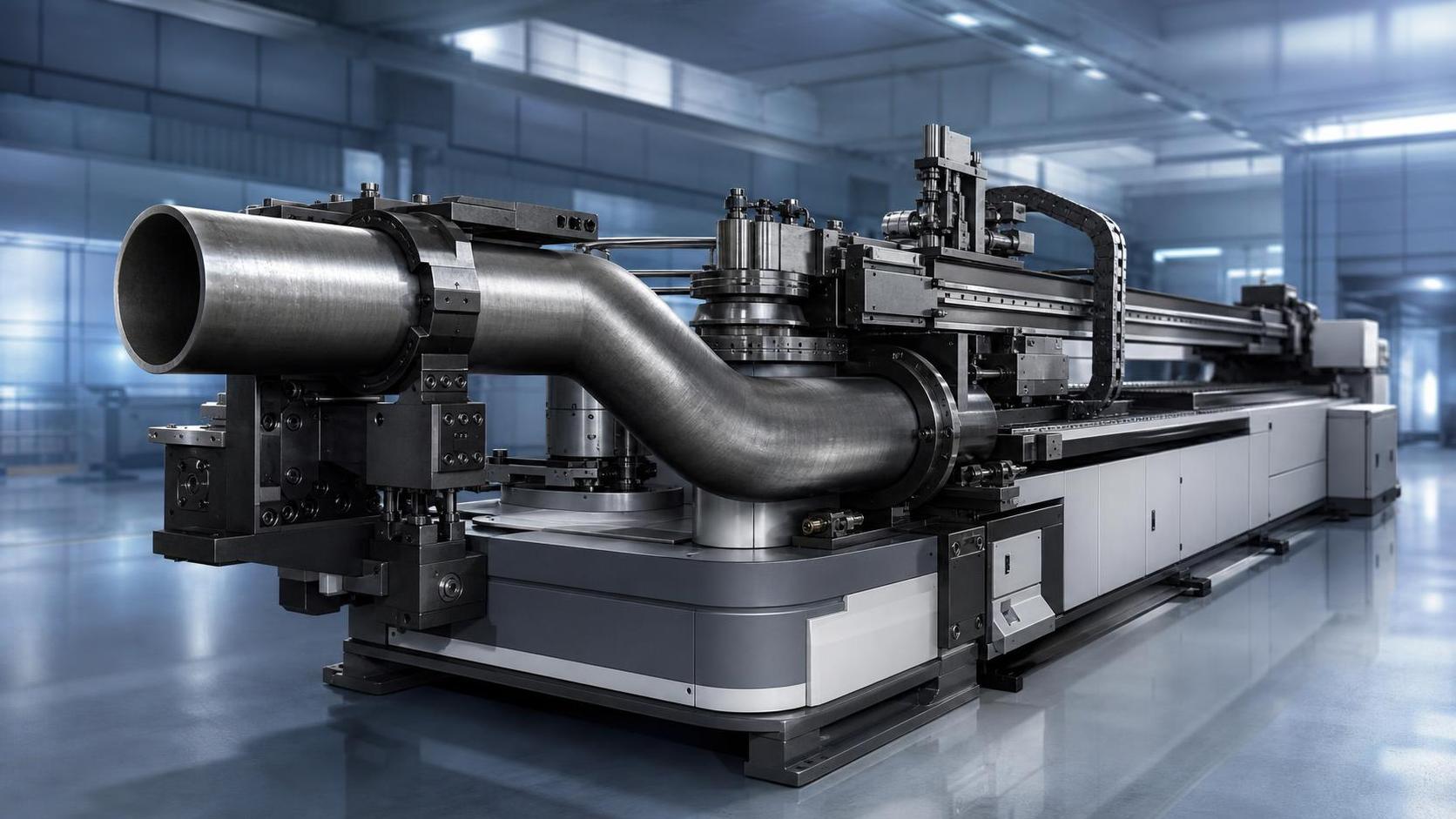
The next filter is process capability. Thin-wall tubes typically require better anti-wrinkle control, closer tooling fit, and often mandrel support. Thick-wall or large-diameter tubes place greater demand on torque, frame rigidity, and hydraulic stability. Buyers comparing equipment should ask for sample bending based on their actual drawings, including dimensional reports and visible evidence of ovality, thinning, and surface condition.
Production strategy also matters. If the factory runs many SKUs with frequent changeovers, CNC programming and data storage will create long-term efficiency gains. If the work is mostly standard parts with moderate tolerance requirements, a hydraulic machine may offer a better cost-to-output balance. Tooling availability, changeover time, and local maintenance capability should be evaluated before purchase approval.
Supplier capability is part of machine selection, not a separate issue. Wuxi Samgins emphasizes a broad product range and customization capability, including heavy-duty and application-specific equipment. For buyers in steel structure, tank, pipeline, and sheet metal operations, this matters because a tube bending machine often sits inside a larger production flow. A supplier that understands adjoining processes can help reduce integration risk.
Manufacturing Quality Control And Installation Considerations
Machine quality is strongly influenced by frame rigidity, hydraulic stability, control system reliability, machining accuracy of the dies and moving assemblies, and consistency of purchased components. In bending applications, small deviations accumulate quickly. Backlash, unstable pressure, or poor die machining can create angle drift, inconsistent repeatability, and premature wear that is expensive to diagnose once the machine enters production.
For this reason, buyers should review component sourcing and inspection routines with care. Wuxi Samgins states that key hydraulic, servo, and CNC components use world-famous imported brands to support precision, stability, and service life. That does not replace project-specific validation, but it is a meaningful indicator when comparing suppliers whose visible specifications may look similar on paper while internal build quality differs considerably.
Installation planning should cover floor space, power supply, hydraulic oil requirements, tooling storage, material infeed and outfeed paths, and operator access for setup and maintenance. In many workshops, a tube bending machine underperforms because the surrounding cell was not designed for safe handling of long workpieces. Good layout reduces loading delays, accidental damage, and ergonomic strain during repetitive production.
Commissioning should include trial runs with customer parts, parameter optimization, operator training, and a basic acceptance checklist covering bend angle accuracy, radius consistency, cycle stability, and maintenance points. Suppliers that can support design, manufacturing, after-sales service, and technical guidance are easier to work with over the full equipment life, especially for overseas buyers managing remote installations.
Industry Standards, Service Expectations, And Real Project Context
A tube bending machine is usually purchased into regulated or specification-driven environments rather than as a stand-alone shop tool. Buyers commonly ask about quality documentation, electrical safety conformity, inspection traceability, and whether the supplier understands customer code expectations. While exact requirements vary by project and geography, practical familiarity with ISO-based quality systems and CE-related directives is frequently relevant in cross-border trade.
Wuxi Samgins notes that its machines comply with the ISO9001 quality system and EU CE Machinery and LVD directives, and that the team has more than ten years of export experience. In B2B purchasing, that combination matters because machine performance is only one part of the decision. Clear communication, documentation discipline, and the ability to respond to delivery, service, and technical questions often determine whether a project stays on schedule.
Its reference list includes companies such as URALSTANKOIMPORT, MD Calbah Industries Pty Ltd, Ersay International Transport, Contevix comercio e servicos ltda, Zein Steel Industries Co.LLC, BatysMunaiGazZhabdyktary LLP, PT.Cahaya mas Cemerlang, Estructuras Metalicas Girders Chile Limitada, and Lincoln Electric-MENA. These names indicate experience serving varied industrial users and export destinations, which can help buyers assess whether the supplier is accustomed to multi-market project coordination.
For procurement teams, the practical takeaway is straightforward. Evaluate machine specifications together with documentation readiness, spare-parts policy, service response, and the supplier’s understanding of your fabrication sequence. When a tube bending machine is part of a broader welding, cutting, or pipe-processing line, coordinated support across equipment categories can reduce implementation friction and simplify future expansion.
Maintenance Timing, Upgrade Decisions, And Future Trends
Routine maintenance for a tube bending machine should follow actual usage intensity, material type, and operating environment. Daily checks often focus on hydraulic condition, lubrication points, fastener security, die cleanliness, and visible wear on contact surfaces. Weekly or monthly tasks usually include alignment review, fluid inspection, electrical checks, and verification that angle repeatability has not drifted beyond acceptable production limits.
Upgrade decisions are often triggered by one of three issues: rising scrap on thin-wall or complex parts, insufficient throughput, or too much setup dependence on a few experienced operators. In these cases, moving from manual or basic hydraulic bending to a CNC hydraulic pipe bending machine can improve consistency and make process knowledge more transferable through stored programs and standardized settings.
Market direction is moving toward higher automation, tighter precision control, and lower material waste. Buyers increasingly look for better springback compensation, easier tooling change, digital parameter storage, and integration with upstream cutting or downstream welding steps. These trends are consistent with broader fabrication demand for stable quality under labor pressure and mixed-product manufacturing.
For planning purposes, related topics such as selection guidance for thin-wall and thick-wall tubes, automation trends in 2026, and maintenance discipline across fabrication equipment all connect directly to bending performance. Companies that treat the tube bending machine as a process asset rather than a stand-alone purchase usually make better upgrade decisions and achieve more predictable production outcomes over time.
How Much A Tube Bending Machine Really Costs
The purchase price of a tube bending machine is only the visible part of ownership cost. Total cost includes tooling, operator training, installation, spare parts, maintenance labor, hydraulic consumables, floor space, energy use, setup time, scrap, and downtime risk. A lower-priced machine can become more expensive over its life if it produces unstable bend quality or depends on frequent manual correction.
Tooling is a major cost factor because different diameters, radii, and material types may require dedicated die sets, mandrels, and support components. Buyers should estimate not only the first tooling package but also future product variation. In multi-SKU factories, quick-change tooling and reliable program recall can have a meaningful effect on labor efficiency and available machine hours.
Return on investment should be assessed through measurable production improvements: fewer rejected bends, shorter fitting time in downstream welding or assembly, reduced operator dependence, and better schedule reliability. Where bent parts are visible or safety-related, quality consistency may also protect customer relationships by reducing field complaints and rework. These factors often justify a higher initial investment in a better-controlled machine platform.
A disciplined sourcing decision compares machine capability, supplier support, and lifecycle cost together. For buyers seeking a broader fabrication partner, Wuxi Samgins offers not only tube and pipe processing equipment but also welding, cutting, rolling, drilling, and beam-production machinery. That wider scope can be commercially useful when a project requires coordinated equipment planning rather than a single isolated machine purchase.
search
Recommended Products
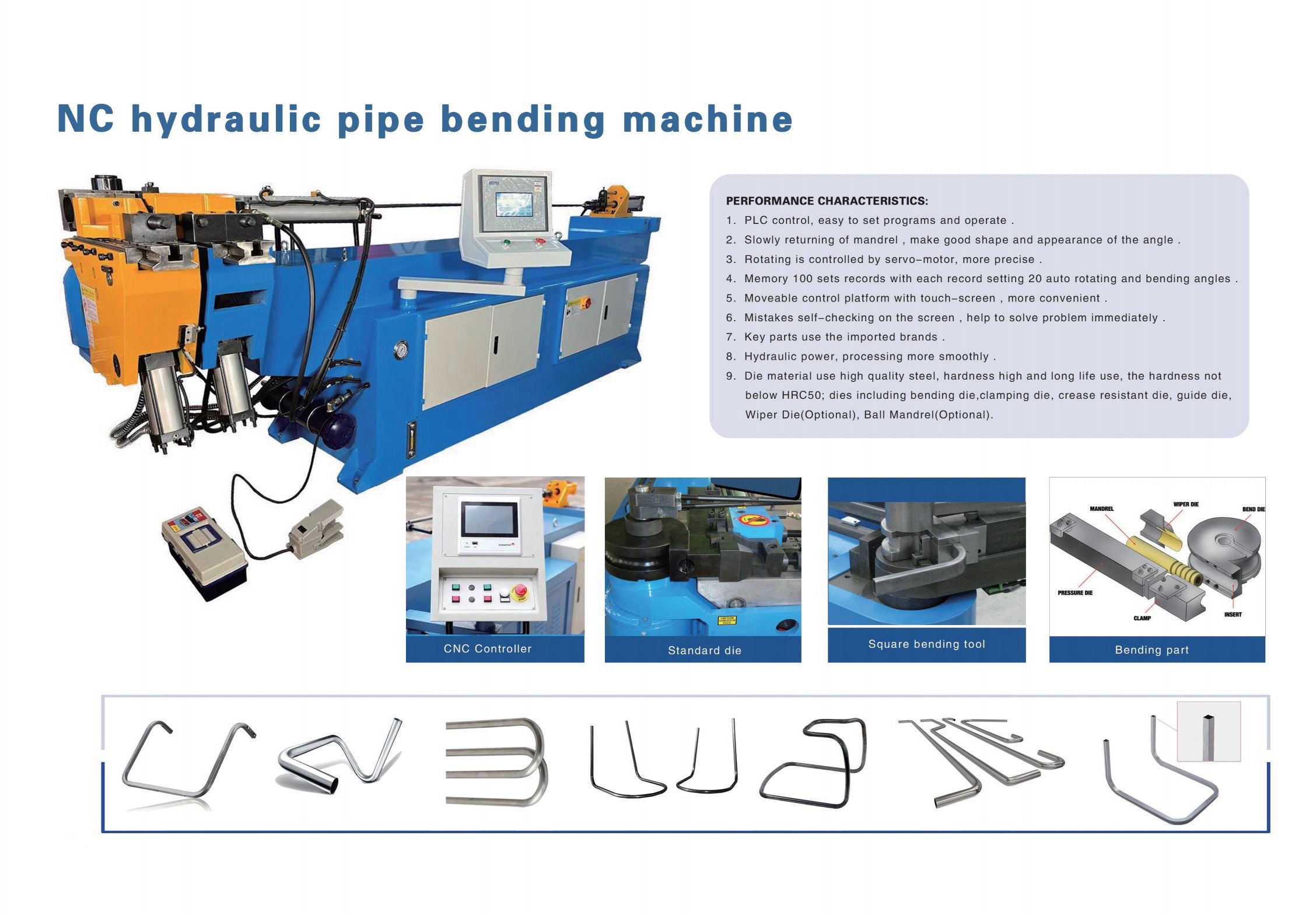
 CNC hydraulic pipe bending machineBending machines can generally be classified into CNC bending machines, hydraulic bending machines, etc. They are mainly used for pipeline laying and construction in fields such as power engineering, public railway construction, boilers, bridges, ships, furniture, decoration, etc. They have the advantages of multiple functions, reasonable structure, and simple operation. This machine not only has the function of bending pipes but also can use the oil cylinder as a hydraulic jack. Compared with CNC bending equipment, it has the advantages of low price and convenient use, and occupies a dominant position in the domestic bending machine market.
![星星1]()
 NC hydraulic pipe bending machineBending machines can generally be classified into CNC bending machines, hydraulic bending machines, etc. They are mainly used for pipeline laying and construction in fields such as power engineering, public railway construction, boilers, bridges, ships, furniture, decoration, etc. They have the advantages of multiple functions, reasonable structure, and simple operation. This machine not only has the function of bending pipes but also can use the oil cylinder as a hydraulic jack. Compared with CNC bending equipment, it has the advantages of low price and convenient use, and occupies a dominant position in the domestic bending machine market.
![星星1]()

Recommended blogs
 CNC Tube Bending Machine Explained: Axis Control, Accuracy, and Complex Part Capability
 Hydraulic or Electric Pipe Bender for Stainless Steel?
- How to Choose a Large Diameter Tube Bending Machine for Heavy-Wall Projects?
- Square Tube Bending Machine: Key Factors for Accurate Bends Without Wall Deformation
- What Makes a Round Tube Bending Machine Suitable for Furniture and Auto Parts?
- Aluminum Tube Bending Machine Selection Guide for Lightweight Frame Production
Send Us A Message
Send us a Message
A dedicated person will follow up on your needs one-on-one and provide personalized customized solutions according
to your needs.
Get In Touch
We look forward to hearing from you for in-depth communication on how to fulfill your mixing requirements.