




How to Choose a Large Diameter Tube Bending Machine for Heavy-Wall Projects?
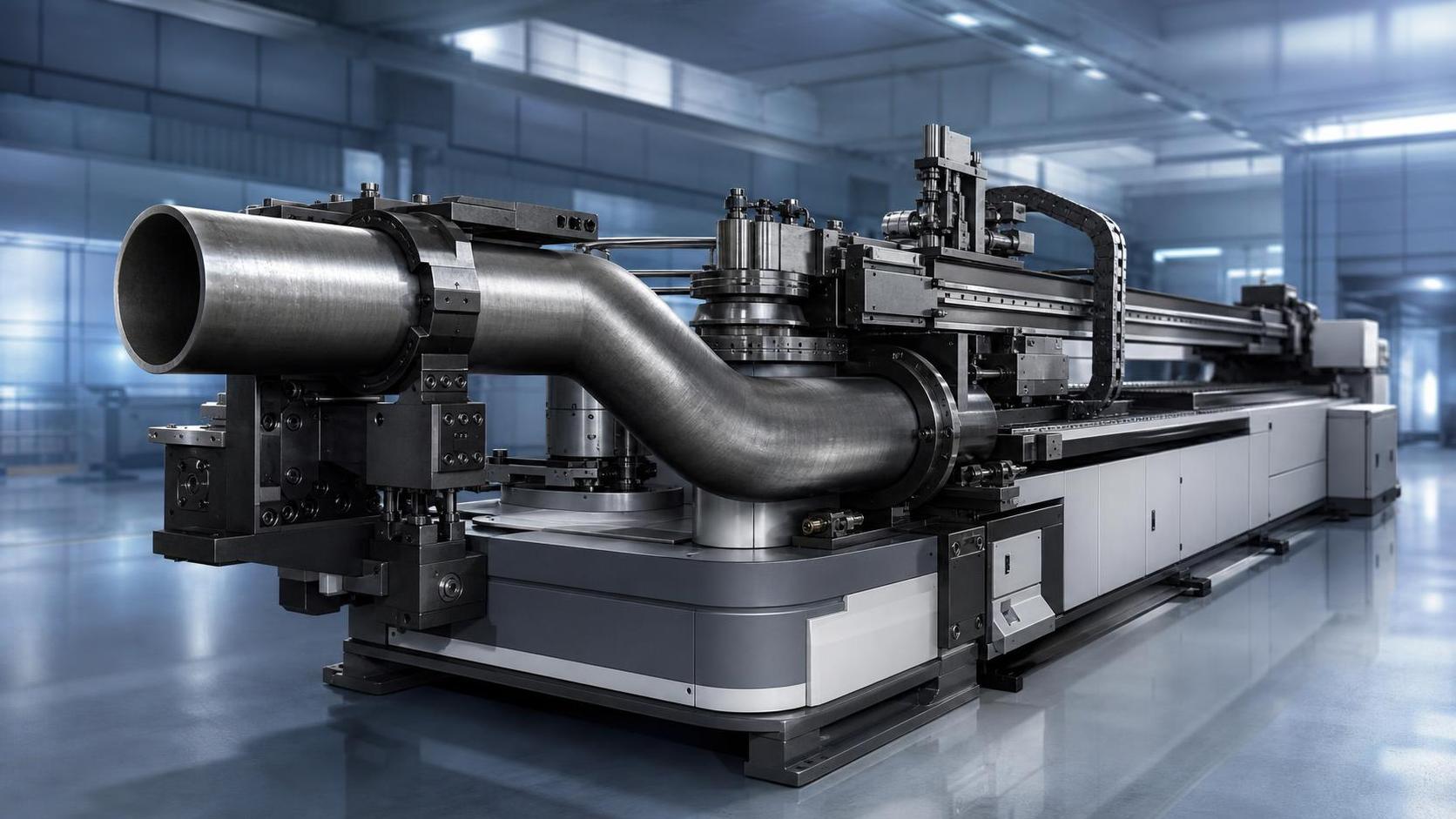
Meta Title: How to Choose a Large Diameter Tube Bending Machine for Heavy-Wall Projects
If you are evaluating a large diameter tube bending machine for heavy-wall work, the real question is not “Which machine has the biggest number on the brochure?” It is whether the machine can hold shape, wall thickness, repeatability, and uptime on your actual parts. Thick-wall tubes are less forgiving than many buyers expect. A machine that looks capable on paper can still struggle with springback control, tooling wear, ovality, or setup consistency once production starts. That is where selection mistakes get expensive.
A practical rule: choose the machine around the hardest bend you need to make, not the average one. For heavy-wall projects, capacity margin, tooling rigidity, and control stability matter more than headline speed.
Many technical evaluators get stuck between two bad choices. One is buying too small and discovering the machine only performs under ideal conditions. The other is overbuying a machine with unnecessary complexity, footprint, and cost. The right decision usually sits in the middle, but you only find it by checking a few non-negotiable factors in the right order.
Start with the part, not the machine
Before comparing brands or machine structures, lock down the real production envelope. For a heavy-wall tube, diameter alone tells you very little. You need the complete bending condition:
- Tube outside diameter and wall thickness
- Material grade and heat condition
- Centerline radius
- Minimum and maximum bend angle
- Straight length requirements before and after the bend
- Ovality, wrinkling, and thinning limits
- Required output per shift or per month
This is where many projects go off track. A supplier may say a machine can bend a certain maximum diameter, but that often assumes a mild bend ratio, suitable material, and favorable tooling. Heavy-wall carbon steel, stainless steel, duplex grades, or high-strength alloys can change the decision quickly. The same nominal diameter can be easy in one job and difficult in another.
If your team has not yet defined acceptance criteria, do that before requesting quotes. “Tube must be bent successfully” is not a usable standard. A better spec would define allowable flattening, wall thinning, angle tolerance, surface marking, and repeatability across a production batch.
What actually determines whether a large diameter tube bending machine is suitable?
The short answer is this: for heavy-wall bending, suitability depends on usable bending force, die and mandrel compatibility, machine rigidity, axis control, and how well the system manages deformation under load. Peak capacity alone is not enough.
That sounds obvious, but it is often missed because brochures are built around maximum tube size. In production, the machine is judged on part quality and process stability, not on whether it can complete one demonstration bend.
Capacity margin matters more than nominal capacity
One of the most common mistakes is selecting a machine whose rated capacity is only slightly above the target workpiece. On heavy-wall jobs, that leaves very little safety margin for harder material lots, tighter radii, or future part changes.
A better approach is to ask the supplier for examples of comparable applications: similar diameter, wall thickness, material, and bend radius. Ask whether the machine handled those parts with a mandrel, wiper die, boost assist, or special tooling. Those details tell you far more than a generic “maximum bending capacity” statement.
You should also ask what happens near the upper end of the machine range. Some machines can technically produce the bend but only at reduced repeatability or with much higher tooling wear. That may still be acceptable for low-volume work, but it is a problem for serial production.
In real evaluation work, I would treat “can bend” and “can bend reliably for production” as two separate checkpoints.
Tooling is not a detail. It is half the decision.
When heavy-wall parts fail, the machine often gets blamed first. In practice, the tooling package is frequently the bigger issue. A large diameter tube bending machine needs tooling that matches the material behavior and geometry closely: bend die, clamp die, pressure die, mandrel, wiper die, lubrication strategy, and sometimes booster support all influence the result.
For tighter radii or more demanding alloys, ask these questions early:
- Is the machine designed to use multi-ball or segmented mandrels if needed?
- What tooling materials are recommended for your tube material?
- How quickly can tooling be changed and requalified?
- Can the supplier support custom tooling design for non-standard bends?
- How are tooling wear and replacement managed?
This is also where experienced suppliers stand out. Wuxi Samgins International Trade Co.,Ltd, established in 2012 in Wuxi, supplies a broad range of fabrication and metalworking equipment, including pipe benders, CNC machine tools, cutting systems, deburring machines, and related line equipment. For evaluators, that matters because a supplier with cross-process familiarity is usually better at discussing the whole workflow around a bent part, not just the bending cell in isolation.
And that isolation is risky. After bending, some manufacturers still need edge conditioning, burr removal, or surface cleanup on related precision metal parts in the same production chain. In those cases, a finishing option such as Standard Magnetic polishing machine can make sense for small metal components with holes, threads, gaps, or delicate surfaces, especially where deburring and polishing need to be done without deforming the part. It is not a tube bending solution, but it is a relevant downstream consideration for facilities managing mixed metalworking processes.
Control precision becomes critical when springback is inconsistent
Heavy-wall tubes tend to create a false sense of security because they look robust. The problem is that robust material does not always behave predictably. Springback can vary by material batch, hardness, and bend radius. If your tolerances are tight, the machine’s control system matters a lot.
Look beyond whether the machine is “CNC.” That label is too broad to help. What matters is:
- Angle repeatability under load
- Servo or hydraulic control consistency
- Compensation capability for springback
- Recipe storage and repeat setup
- Operator interface quality and parameter protection
For low-mix, stable material applications, a simpler control architecture may be enough. For high-mix production or tight tolerance work, you want a machine that allows systematic compensation instead of relying on operator memory and trial-and-error adjustments.
If a supplier cannot explain how their control system handles batch-to-batch variation, keep pushing. That is a meaningful technical question, not a purchasing formality.
Machine structure and drive type affect long-run stability
There is no universal winner between hydraulic, hybrid, and fully electric designs because the better choice depends on part range and production priorities. But there are patterns.
For very large diameters and heavy-wall sections, buyers often prioritize frame rigidity, clamping stability, and available force over speed claims. A strong machine base, stable slide guidance, and well-supported tooling reduce vibration and help maintain bend consistency over long runs.
Ask the supplier about the frame construction, bearing support, lubrication points, maintenance intervals, and what components see the highest wear in heavy-wall service. A machine can produce acceptable parts during acceptance tests and still become expensive if wear points are hard to access or slow to replace.
This is especially important if your application runs multiple shifts. Technical evaluators sometimes focus heavily on first-pass bend quality and not enough on the machine after six months of real use.
Do not ignore loading, handling, and floor reality
A large diameter tube bending machine may fit your part technically and still fit your plant badly. Heavy-wall tubes are not easy to handle. Tube length, weight, and stiffness affect loading method, operator safety, cycle time, and layout. On larger workpieces, material handling can become the bottleneck even if the bending cycle itself is efficient.
Check these points during evaluation:
- Manual loading versus assisted loading
- Required space for infeed and outfeed
- Part rotation and orientation constraints
- Crane or lifting device compatibility
- Safety guarding and operator access during setup
I have seen technically sound machine choices become poor production choices because no one looked carefully at tube movement around the machine. Long, heavy parts need space and predictable handling. That is not a side issue.
Request a test bend, but ask for the right kind
A sample bend is useful only if it reflects your real process. Sending an easy sample and approving the machine based on that result tells you very little.
When possible, provide your actual tube material, not just a similar grade. Define the target radius, angle, and tolerance. Ask the supplier to document tooling used, lubrication, cycle time, and any compensation adjustments made during the trial. If wrinkles, flattening, or angle drift appear, do not treat them as minor details to sort out later. Those are exactly the issues the evaluation process should surface.
Also ask whether the result is repeatable over several pieces, not just one. A single acceptable sample does not prove process stability.
Selection mistakes that show up late
Some errors stay hidden until installation or early production:
- Underestimating tooling lead time for special diameters or radii
- Assuming the standard machine includes all needed support options
- Ignoring operator skill level during control-system selection
- Failing to define inspection standards before FAT or SAT
- Choosing based on maximum size instead of actual bend difficulty
Another common issue is treating future flexibility as free. It is not. If you need room for future projects, build in capacity margin intentionally. But if the machine is being oversized just to feel safe, you may end up paying for complexity that adds little value to the current program.
How experienced evaluators usually narrow the decision
They reduce the selection to a few practical questions:
- Can the machine bend our hardest part repeatedly within tolerance?
- Is the tooling approach proven for our material and geometry?
- Can our operators run it consistently after training?
- Will maintenance and spare parts be manageable in our region?
- Does the supplier understand upstream and downstream process needs?
That last point is often underestimated. A supplier working across bending, cutting, machining, welding, deburring, and plate processing is often better positioned to support line-level thinking. For buyers serving export markets or regulated sectors, it is also reasonable to ask about quality-system discipline and compliance practices. Samgins states that production and design are organized in line with ISO9001 quality system requirements and EU CE standards, which is the kind of baseline information evaluators usually want to confirm during supplier screening and documentation review.
Near the end of the process, your best choice is usually the large diameter tube bending machine that gives you stable quality on the most demanding part, with enough reserve for normal production variation, and without creating avoidable handling or maintenance problems. That is a better standard than simply buying the biggest or cheapest option on the list.
FAQ
Is a bigger machine always safer for heavy-wall tube bending?
No. Extra capacity helps, but too much machine can increase cost, footprint, and setup complexity. The safer choice is a machine with the right reserve margin for your hardest part.
Do I always need a mandrel for heavy-wall tubes?
Not always. It depends on radius, material, wall thickness, and quality requirements. Some bends can be made without one, but for tighter radii or stricter shape control, mandrel support is often necessary.
Should I prioritize hydraulic or CNC control?
Those are different questions. CNC control affects repeatability and compensation. Hydraulic or other drive architecture affects force delivery and mechanical behavior. Evaluate both in relation to your part requirements.
What is the best way to compare two suppliers?
Use the same part data, the same acceptance criteria, and ideally the same sample material. Compare repeatability, tooling approach, setup clarity, and service support, not just quoted capacity.
Internal Link Anchor Text Suggestions
- tube bending machine tooling selection: tooling guide or process knowledge page
- pipe bender for heavy-wall stainless steel: product category or application page
- deburring and surface finishing for metal parts: finishing equipment page
- CNC bending machine maintenance checklist: blog or technical support article
- how to evaluate industrial machine suppliers: buyer guide or company capability page
External Source Suggestions
- Brand official technical documentation for tube bending machines and tooling systems
- Industry association materials on tube forming, fabrication, and inspection standards
- Academic or technical institute research on tube bending deformation, springback, and process optimization
search
Products Navigation
Send Us A Message