




Long Seam Welding Machine Standards and Acceptance Checks for Industrial Fabrication
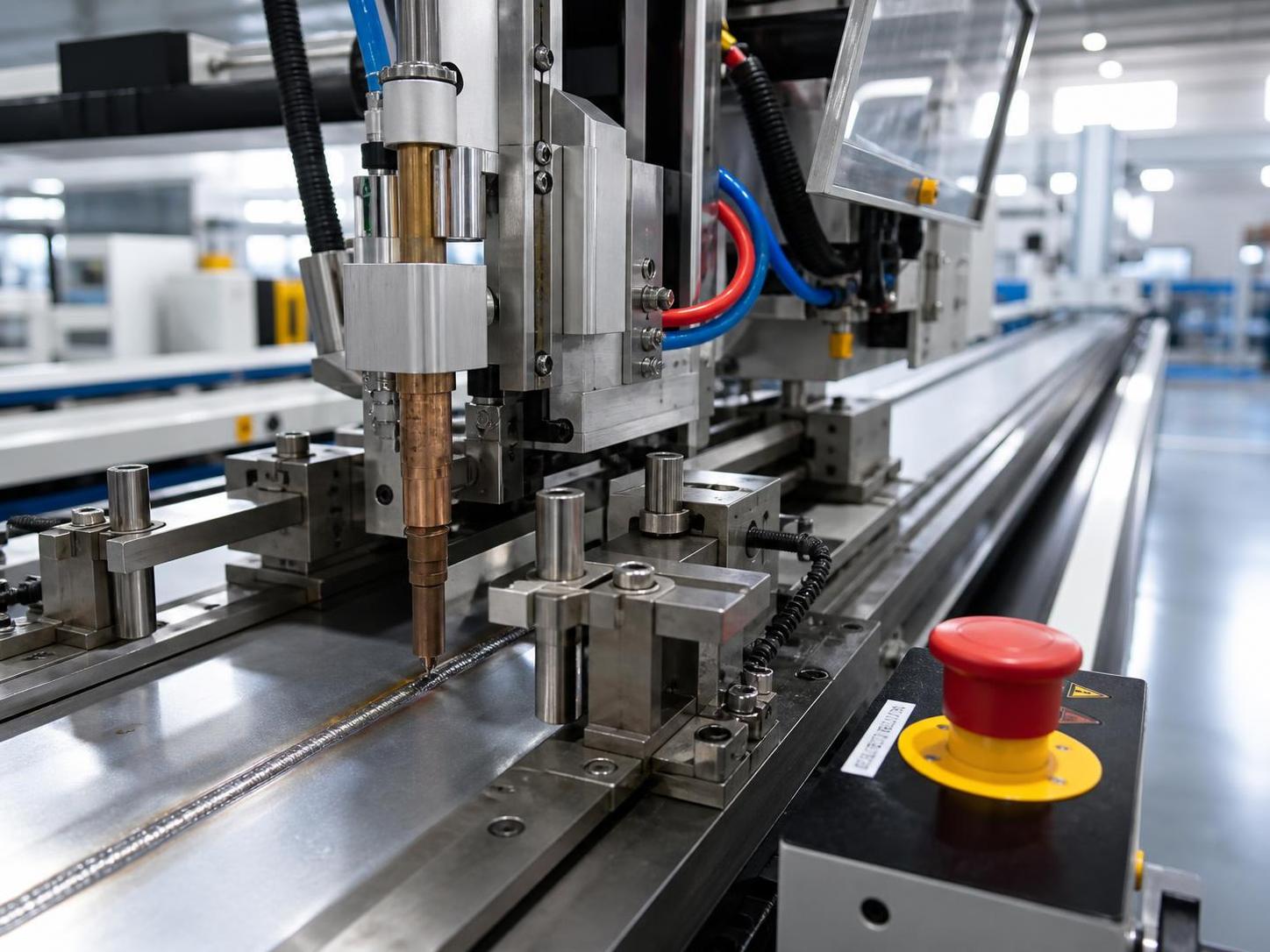
For quality control and safety teams in industrial fabrication, evaluating a long seam welding machine starts with one practical question: can the equipment consistently produce compliant welds under real workshop conditions while protecting operators and controlling process risk?
The right answer depends less on brochure specifications and more on standards alignment, measurable machine stability, electrical and mechanical safety, traceable acceptance testing, and suitability for your actual workpiece range and weld procedures.
For buyers, inspectors, and workshop managers, a reliable long seam welding machine should be treated as a controlled production asset. It must pass not only functional trials, but also structured acceptance checks tied to weld quality, operator safety, and maintenance predictability.
What Quality and Safety Teams Are Really Checking Before Approval
When users search for long seam welding machine standards, they usually do not want a generic overview of welding automation. They want a practical checklist for supplier evaluation, factory acceptance, site acceptance, and internal release to production.
Quality control personnel focus on weld repeatability, alignment accuracy, heat input stability, tracking consistency, and whether the machine can support documented inspection records. Safety managers care about guarding, emergency stops, interlocks, grounding, cable routing, fume control, and predictable operator behavior.
Both groups also want to reduce hidden risk. A machine may appear productive during a short demonstration, yet still fail later because of unstable travel speed, poor seam tracking, inadequate fixture rigidity, weak electrical protection, or unclear acceptance criteria.
That is why the most useful evaluation approach is not “Does the machine run?” but “Can the machine maintain process control and safe operation across normal production variation?” This is the standard that matters in industrial fabrication.
Which Standards Matter for a Long Seam Welding Machine
A long seam welding machine is usually assessed through a combination of machinery safety, electrical safety, welding process control, and quality management requirements. The exact compliance package varies by market, application, and customer contract.
At a minimum, buyers commonly review whether the equipment has been produced under a recognized quality system, whether it follows CE-related machinery and electrical requirements where applicable, and whether supporting documentation is complete and current.
For many industrial buyers, ISO 9001 matters because it indicates the supplier has controlled design, purchasing, production, inspection, and corrective action processes. This does not guarantee machine performance, but it improves confidence in consistency and traceability.
Where equipment is supplied into markets requiring CE conformity, the review should cover machine risk assessment, electrical cabinet design, emergency stopping logic, marking, technical file support, manuals, and declarations relevant to the delivered configuration.
Welding-specific standards also enter the picture indirectly. Even if a long seam welding machine itself is not “approved” by one single weld standard, it must enable production in line with qualified welding procedures, material requirements, dimensional tolerances, and inspection plans.
In pressure vessel, boiler, structural steel, or pipeline fabrication, teams should confirm that the machine supports the applicable code environment rather than assuming general automation is enough. Equipment that cannot hold repeatable alignment will create downstream compliance problems.
What Documents Should Be Reviewed Before Acceptance
Documentation review is often undervalued, but it is one of the fastest ways to identify future operational risk. Before approving a long seam welding machine, quality and safety teams should request a complete document package from the supplier.
This package should normally include the general arrangement drawing, electrical schematics, pneumatic or hydraulic diagrams if used, control logic description, spare parts list, operation manual, maintenance instructions, calibration records where relevant, and a factory test report.
Ask for the machine’s design limits in clear numbers. These include applicable workpiece thickness range, seam length, clamping capacity, carriage travel speed, welding head adjustment range, input power requirements, and duty cycle under expected workshop conditions.
It is also important to confirm what was actually tested before shipment. A vague statement that the machine was “inspected before delivery” is not enough. Acceptance documents should state which functions were verified, under what conditions, and with what results.
If the supplier operates under ISO 9001 and CE-oriented control practices, as many serious machinery manufacturers do, the document structure is usually more disciplined. That reduces ambiguity during installation, validation, and later maintenance support.
How to Check Mechanical Accuracy and Process Stability
For weld quality, the most important acceptance theme is process stability. A long seam welding machine must move, clamp, and guide the workpiece or welding head with enough consistency to avoid bead variation, incomplete fusion risk, misalignment, and rework.
Start with the bed, rails, carriage, and clamping system. Inspect fabrication quality, straightness, rigidity, and visible fit-up. Loose assemblies, uneven travel, abnormal vibration, or inconsistent clamping pressure usually become weld quality problems once production begins.
Travel speed verification is essential. Measure actual carriage speed across low, medium, and high settings, and confirm that speed remains stable throughout full travel length. Sudden fluctuation may affect penetration, bead shape, and heat input consistency.
Check torch or head positioning repeatability as well. Fine adjustment mechanisms should move smoothly and hold position under vibration and thermal influence. If the machine uses seam tracking or arc sensing, simulate realistic deviations to confirm the control response.
Workpiece support and orientation also deserve close attention. In cylindrical fabrication, longitudinal seam quality is often influenced by how well associated handling equipment positions the joint. In some production lines, a Self aligning welding rotator is used alongside seam welding equipment to stabilize heavy shells or pipes before and after seam operations.
That kind of support equipment matters because upstream or downstream instability can compromise an otherwise capable welding machine. Quality teams should evaluate the full handling path, not only the welding carriage itself.
What Safety Managers Should Inspect on the Machine
Safety acceptance should be deliberate and recorded. A long seam welding machine introduces risks related to electrical energy, moving parts, hot surfaces, arc radiation, fumes, pinch points, and sometimes pneumatic or hydraulic pressure.
Emergency stop buttons must be clearly located, reachable, and functionally tested. Pressing an emergency stop should bring hazardous motion to a safe state without confusing reset behavior. Restart should require intentional operator action.
Inspect guarding around drive components, moving carriages, pinch zones, and transmission elements. Guards should be secure, durable, and designed so that operators are not tempted to remove them for normal work.
Electrical safety checks should include cabinet layout, component labeling, wire management, grounding continuity, overload protection, cable protection, and ingress protection appropriate to the environment. Poor panel discipline often predicts future downtime and unsafe troubleshooting.
Also verify torch cables, work return routing, gas lines, and control pendants. These should be arranged to avoid abrasion, entanglement, and accidental contact with hot workpieces. Operators should not need improvised cable handling to complete a normal cycle.
Fume extraction and arc shielding arrangements should be reviewed as part of the workstation, even if not delivered as integral machine components. Safety performance depends on how the machine is installed and used, not only on what is shipped.
What a Practical Factory Acceptance Test Should Include
A factory acceptance test, or FAT, is where many purchasing risks can still be contained before shipment. For a long seam welding machine, FAT should verify real machine behavior against agreed technical and quality requirements.
First, perform a no-load functional test. Confirm carriage travel, speed control, direction control, limit switching, clamping action, torch adjustment, control panel response, alarms, and emergency stop behavior. Record the results, not just observations.
Next, run a simulated production cycle using representative dimensions. If possible, include the same joint type, thickness range, and welding process intended for your plant. This is where issues such as inadequate rigidity or poor motion smoothness become visible.
Then complete a weld trial and inspect the result against pre-agreed criteria. Depending on application, review bead appearance, alignment, distortion behavior, arc stability, and dimensional consistency. When relevant, perform NDT or macro examination rather than relying only on visual appearance.
FAT should also check installed components against the purchase specification. Confirm motor ratings, control brand or equivalent, speed control method, accessory scope, and whether promised features are actually present on the delivered machine.
For operations involving large cylindrical components, buyers may also validate supporting rotation equipment during FAT. For example, models such as HGZ-5 through HZG-200 in the supplier’s self-aligning rotator range cover different load classes and workpiece diameters, which can be useful when checking compatibility with vessel or pipe fabrication flow.
What to Verify During Site Acceptance and Trial Production
Even a successful FAT does not replace site acceptance testing, because installation conditions can change performance. Power quality, floor level, operator access, cable routing, ventilation, and part handling methods all affect final usability and risk.
During SAT, verify machine leveling, anchoring if required, electrical connection quality, control function, grounding, and full-travel operation after installation. Repeat emergency stop and limit switch testing on site, not just at the supplier’s factory.
Then run production-representative parts with your own operators, fitters, and inspectors. This is the moment to confirm whether training was adequate and whether the machine works smoothly within your real upstream and downstream process.
Track first-run defects carefully. If you see recurring mismatch, arc wandering, inconsistent bead shape, or operator hesitation around controls, do not treat those as minor startup issues. They often indicate acceptance gaps that should be closed immediately.
A disciplined SAT also checks maintenance practicality. Teams should verify access for cleaning, consumable replacement, lubrication, inspection, and troubleshooting. A machine that is hard to maintain usually becomes unstable long before its service life should end.
How to Build an Internal Acceptance Checklist That Actually Works
The best internal checklist is specific, measurable, and tied to responsibility. Avoid broad phrases such as “machine operates normally.” Replace them with testable statements, acceptance values, and named reviewers from quality, safety, maintenance, and production.
Your checklist can be organized into five sections: documentation, mechanical condition, electrical and control safety, weld trial performance, and installation readiness. Each section should include objective pass or fail criteria and space for corrective actions.
For example, under process performance, record target travel speed, measured speed deviation, clamp stability, head positioning repeatability, and weld inspection outcomes. Under safety, record emergency stop confirmation, guard condition, grounding test, cable routing, and signage completeness.
It is also useful to define what remains open after acceptance. Some issues may be acceptable only if they are listed on a punch sheet with deadlines and ownership. Otherwise, temporary deviations often become permanent unresolved risks.
Most importantly, connect machine acceptance to procedure control. The long seam welding machine should be released to production only after its validated operating range matches qualified welding procedures and approved work instructions.
How Buyers Can Judge Supplier Capability Beyond the Machine Itself
For industrial fabrication, supplier quality is not only about one piece of equipment. Buyers should also assess responsiveness, technical communication, spare parts support, training quality, and the supplier’s understanding of compliance-driven manufacturing environments.
A supplier with broad experience in welding automation, CNC cutting, machine tools, and fabrication line equipment is often better positioned to understand how seam welding performance interacts with handling, alignment, fit-up, and downstream inspection needs.
This matters because real workshop performance depends on system thinking. A vendor that can explain machine limits clearly, provide structured test records, and support integration issues will usually create fewer quality and safety problems after commissioning.
For quality and safety teams, that broader capability is not a marketing extra. It is part of risk control, especially when equipment will be used in pressure vessel, boiler, pipe, or heavy fabrication applications where nonconformance is expensive.
Conclusion
A long seam welding machine should be accepted as a controlled manufacturing system, not simply as powered equipment. The key question is whether it can deliver stable weld quality, documented compliance support, and safe, repeatable operation in your actual production environment.
The most effective evaluation method combines standards review, document verification, mechanical and electrical inspection, weld trial evidence, and structured FAT and SAT records. This approach gives quality control and safety teams a defensible basis for approval.
When acceptance checks are clear and measurable, buyers reduce rework, startup delays, operator risk, and hidden maintenance problems. That is the practical value of taking standards and acceptance testing seriously before a long seam welding machine enters production.
search
Products Navigation
Send Us A Message