




Long Seam Welding Machine vs Other Welding Equipment: Differences, Benefits, and Best Use Cases
What Is A Long Seam Welding Machine
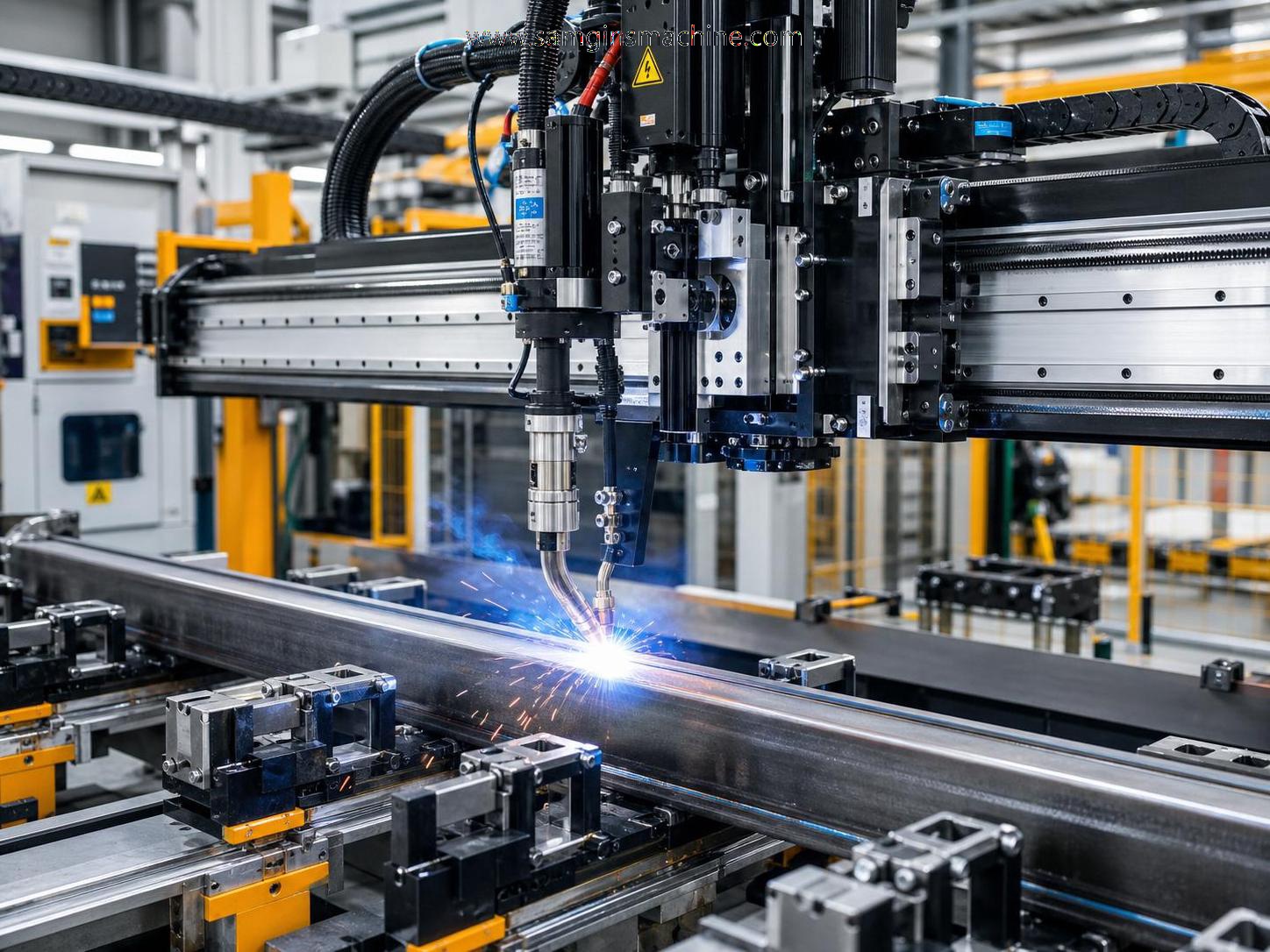
A long seam welding machine is a production system designed to join two straight edges over an extended length with stable torch travel, controlled clamping, and repeatable heat input. It is commonly used for stainless steel, carbon steel, aluminum, and coated sheet components that will later become tanks, shells, ducts, cabinets, silos, filter housings, and pressure-related assemblies.
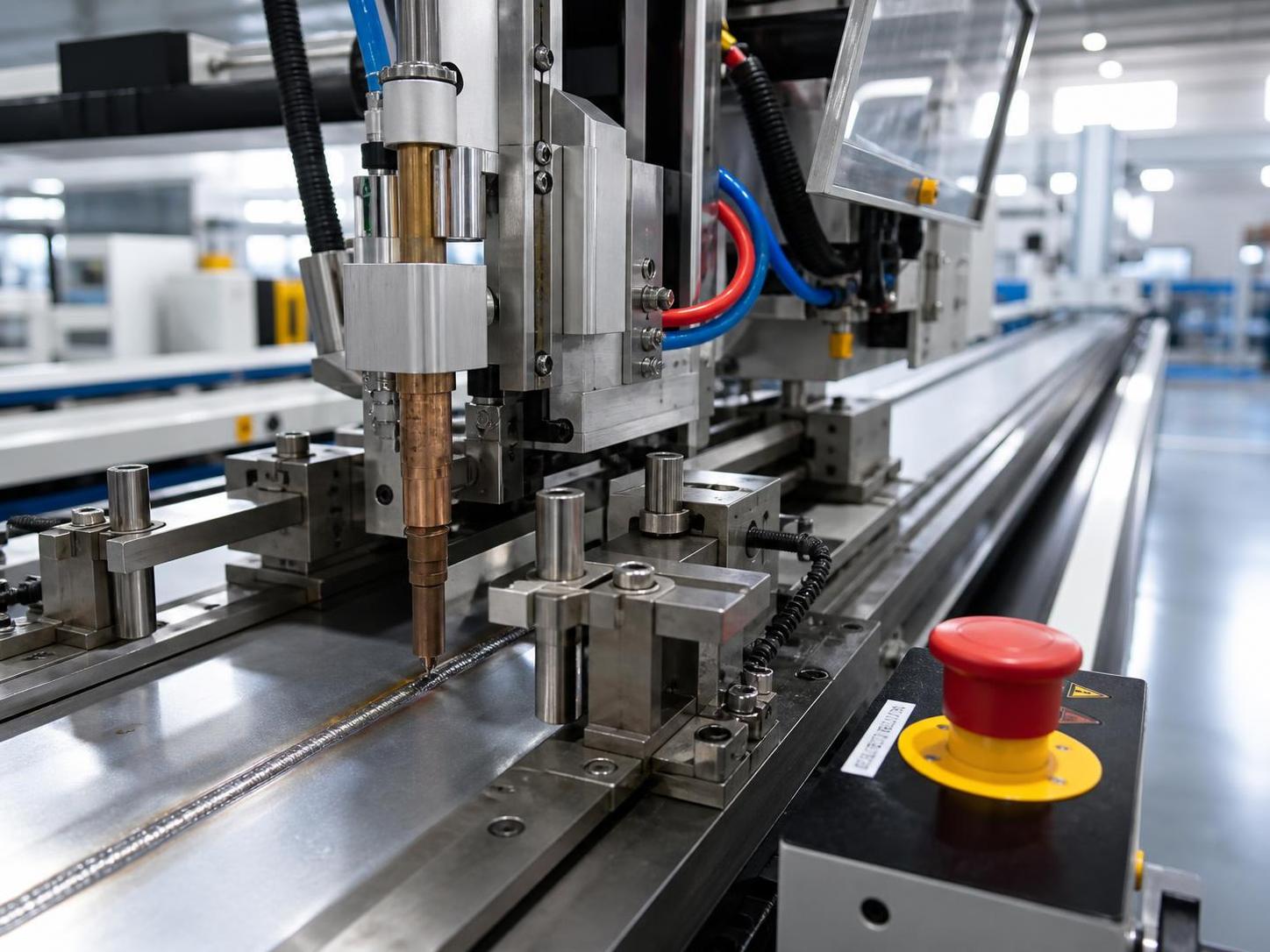
Unlike a general welding bench, the machine is built around seam accuracy. Typical configurations include a rigid frame, copper backing, pneumatic or hydraulic clamping, torch carriage, controller, and optional arc tracking or water cooling. The purpose is not only to make a weld, but to keep distortion, mismatch, burn-through, and cosmetic inconsistency within an acceptable process window.
In practical procurement terms, buyers compare a long seam welding machine with manual TIG or MIG stations, welding robots, manipulator systems, and circumferential welding equipment. The main distinction is that this machine specializes in linear seams. That specialization often improves setup repeatability, training efficiency, and weld appearance when production involves recurring straight joints rather than highly variable geometries.
For fabricators serving code-sensitive industries, the machine also helps standardize weld preparation and motion control before formal procedure qualification. Actual compliance still depends on the full welding procedure, operator skill, filler selection, material condition, inspection method, and the applicable standard used by the customer or project.
How It Works And Why The Process Is Different
The working principle is straightforward: the workpiece edges are aligned, clamped firmly along the seam, supported from below, and welded by a torch that moves at a controlled speed. The backing bar absorbs heat, supports the molten pool, and helps maintain root shape. Because the seam is fixed and the torch travel is uniform, process stability is usually better than hand-guided welding on long, thin materials.
This matters because linear seams are highly sensitive to edge gap variation and thermal distortion. If clamping is weak or the travel speed changes, the defect pattern often repeats over the full length, turning a small setup error into large scrap or rework. A long seam welding machine reduces that exposure by combining consistent pressure, seam support, and programmed travel in one controlled station.
Process options vary by application. TIG is common when cosmetic finish and low spatter are priorities. MIG or MAG is often selected for thicker material and higher deposition rates. Plasma, submerged arc, or other variants may be used in specialized cases, depending on material thickness, productivity targets, and the required balance between penetration, speed, and post-weld finishing.
Compared with a robot, the machine offers a simpler motion path and usually lower programming complexity for straight seams. Compared with a welding manipulator, it provides more dedicated part holding and seam-specific support. The difference is important for factories that do not need maximum flexibility, but do need a stable and repeatable method for one recurring joint family.
Main Types And How They Compare With Other Welding Equipment
The most common way to classify a long seam welding machine is by welding process, clamping structure, and automation level. Entry-level units may use manual loading with programmed torch travel. More advanced versions add automatic clamping, water-cooled backing, seam tracking, length positioning, and recipe storage. Heavy-duty models are built for thicker plate or larger shell sections and require stronger support and drive systems.
Another useful classification is by product form. Some machines are optimized for rolled shells before closing the cylinder. Others suit flat sheet assemblies, rectangular ducts, or narrow stainless housings. The correct architecture depends on whether the workpiece needs delicate surface protection, root support on thin gauge material, or high rigidity for long, heavy parts.
When compared with circumferential welding equipment, the difference is in joint geometry. Circumferential systems rotate the part or torch around a round component, while a long seam welding machine follows a straight axis. When compared with a welding positioner or rotator, those machines support part orientation and rotation, but they are not by themselves a complete seam-specific welding solution.
Robots sit at the flexible end of the spectrum. They handle varied paths and can be integrated with fixtures, but they usually need more programming, fixturing discipline, and process tuning. For factories producing repeated straight seams at scale, a dedicated long seam welding machine can deliver a better ratio of throughput to complexity. This is why many buyers use robots and seam welders together rather than treating them as direct substitutes.
Best Use Cases And Who Should Buy One
The strongest use case is repetitive fabrication of straight seams where consistency matters more than path flexibility. Typical buyers include producers of tanks, pressure-related shells, HVAC ducts, filtration equipment, pipeline accessories, metal enclosures, food-grade vessels, and sheet metal components that require low distortion and neat internal or external weld appearance.
It is also a good fit for exporters supplying projects that demand tighter documentation and process repeatability. A long seam welding machine helps create a more controlled production route for parts that will later be inspected visually, dimensionally, or by non-destructive testing methods selected by the end customer. The machine does not replace quality management, but it improves process discipline at the point where many weld defects begin.
Factories that process both simple and complex weldments often benefit the most. Straight seams can be shifted from manual booths or robot cells onto a dedicated machine, freeing flexible equipment for irregular tasks. That division improves capacity planning. It also reduces the tendency to use expensive automation for jobs that only need accurate clamping and stable linear travel.
For buyers building a broader production line, Wuxi Samgins can be relevant because its offering extends beyond the long seam welding machine itself. The company supplies welding manipulators, rotators, positioners, welding robots, pipe welding systems, edge milling machines, plate rolling machines, and H-beam equipment. That range is useful when a project requires one seam station to connect with upstream plate preparation or downstream assembly handling.
Selection Criteria Buyers Should Evaluate
The first decision is product fit. Buyers should define material type, thickness range, seam length, edge condition, acceptable distortion, weld appearance target, and the intended welding process. A machine selected only by maximum length or price often underperforms if the clamp design, backing structure, or heat control do not match the actual workpiece. Thin stainless steel and thicker carbon steel usually require very different process windows.
The second decision is automation depth. For moderate production, programmable travel, stable clamping, and reliable controls may be enough. For higher repetition, features such as stored recipes, automatic start-stop sequencing, seam tracking, water cooling, and integrated torch oscillation may improve repeatability and reduce operator dependence. The right level depends on skill availability, takt time, and the cost of rework in the buyer's plant.
The third decision is integration. Buyers should check how the machine connects with rolling, edge milling, fit-up, fume extraction, inspection, and part handling. If shells are rolled upstream, the loading method and part support become critical. If the seam is later joined with circumferential welds, it may be more efficient to source compatible rotators, manipulators, or positioners from the same supplier to simplify electrical and process coordination.
A final selection layer is supplier capability. Wuxi Samgins positions itself around customization for tanks, pipelines, steel structures, and sheet metal factories, including customized welding robots, long seam welding machines, and heavy-duty rotators. The practical question for the buyer is whether the supplier can translate drawings, material data, target throughput, and local power requirements into a machine layout that fits the real job rather than a generic catalog specification.
Manufacturing Quality, Standards, And Global Delivery Considerations
In this equipment category, mechanical rigidity and control stability usually determine long-term performance more than headline speed. Buyers should look at frame construction, guide accuracy, clamp uniformity, backing design, cable routing, safety interlocks, and the serviceability of hydraulic, servo, and CNC components. Precision in these areas directly affects seam straightness, repeatability, and maintenance frequency.
Wuxi Samgins states that its machines comply with the ISO9001 quality system and EU CE Machinery and LVD directives, and that key hydraulic, servo, and CNC components use widely known imported brands. For international buyers, that can be relevant when the project requires clearer documentation, more predictable parts sourcing, or easier internal review by engineering and purchasing teams. Final acceptance should still be based on the agreed technical specification and factory testing scope.
Where the end market uses ASME, API, or similar project codes, the machine must be treated as one part of a broader compliance chain. Procedure qualification, welder qualification, traceability, inspection planning, and material control remain project responsibilities. A capable supplier can reduce execution risk by understanding those frameworks and preparing the machine around realistic fabrication conditions rather than generic assumptions.
Global projects also depend on support after installation. Wuxi Samgins highlights export experience of more than 10 years and long-term after-sales support. For buyers, the useful procurement step is to confirm what that support means in detail: commissioning scope, spare parts list, remote troubleshooting, training coverage, response route, and what tests will be completed before shipment and after arrival.
Cost, TCO, And ROI From A Buyer's Perspective
The purchase price of a long seam welding machine is only one part of the decision. Total cost of ownership includes tooling, fixtures, power demand, shielding gas, consumables, operator training, maintenance labor, installation, and the cost of floor space. More important than any single cost line is how the machine changes scrap rate, rework hours, delivery reliability, and the number of skilled welding hours needed per unit.
ROI is usually strongest where production is repetitive and defects are expensive. If a factory currently relies on manual welding for long, thin seams, the hidden cost may come from warpage, polishing, grinding, leak repair, and variable output between shifts. In such cases, a dedicated long seam welding machine often improves the economics not by replacing all labor, but by reducing instability in the highest-risk section of the job.
Buyers should also compare the machine against alternative investments. A robot may look attractive, but if most parts share one straight seam, the robot can become an over-flexible solution with higher integration cost. On the other hand, if part geometry changes every week, a dedicated seam station may be too narrow. The correct answer depends on product mix, batch size, skill availability, and the cost of delayed shipments.
A disciplined quotation process helps. Ask for cycle assumptions, utility requirements, consumable expectations, spare parts recommendations, and the exact boundary between standard scope and customization. A supplier with a broad portfolio, such as Wuxi Samgins, can often propose a staged investment path that links a long seam welding machine with complementary handling or preparation equipment instead of forcing one oversized purchase at the start.
Maintenance, Upgrade Timing, And Future Industry Trends
Routine maintenance focuses on clamp condition, guide cleanliness, drive stability, cable wear, cooling performance, backing surface condition, and calibration of travel and welding parameters. The maintenance interval depends on duty cycle, material type, and process selected, but buyers should treat preventive inspection as part of daily production discipline rather than only a repair task after quality drift appears.
Upgrade timing usually becomes relevant when product thickness range expands, cosmetic requirements tighten, or labor variability begins to affect delivery. Typical upgrade triggers include adding seam tracking, recipe storage, higher precision drives, stronger clamping, or integration with manipulators, rotators, and digital production records. These upgrades matter most when the existing machine is mechanically sound but no longer aligned with the factory's throughput or quality target.
The industry trend is toward more connected and application-specific welding cells rather than isolated equipment purchases. Buyers increasingly expect the long seam welding machine to fit into a coordinated workflow that includes edge preparation, rolling, positioning, inspection, and traceable parameter control. Labor shortages also push demand toward solutions that reduce dependence on individual operator technique for long repetitive joints.
Evidence of that global demand can be seen in the spread of users across different markets, including companies such as URALSTANKOIMPORT, MD Calbah Industries Pty Ltd, Ersay International Transport, Contevix comercio e servicos ltda, Zein Steel Industries Co.LLC, BatysMunaiGazZhabdyktary LLP, and Lincoln Electric-MENA listed by Wuxi Samgins. For procurement teams, the main takeaway is that the right machine is not just a welding asset. It is a process-control asset that should be selected around product type, quality risk, and long-term production strategy.
search
Recommended Products
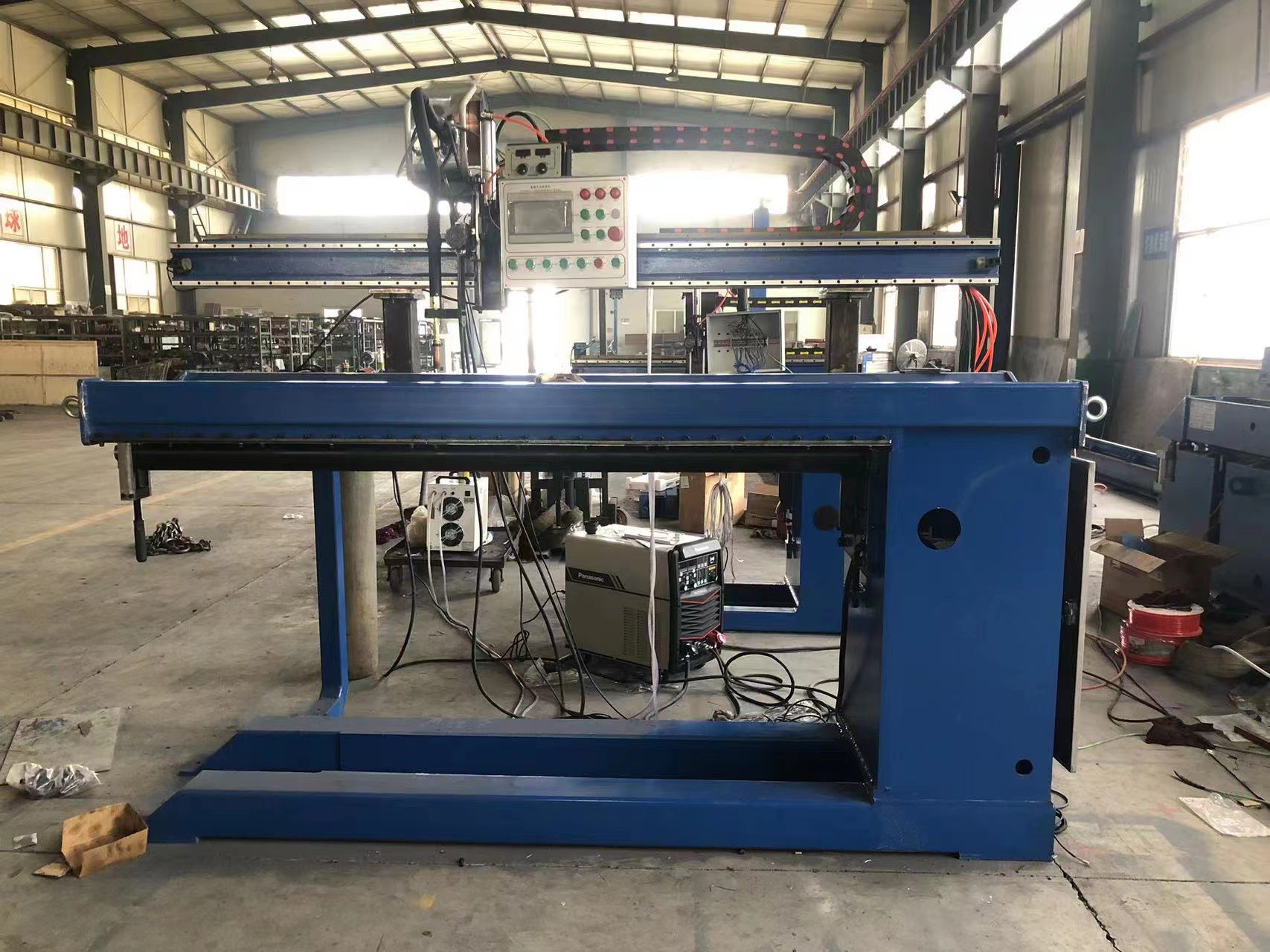
 Longitudinal seam welding machine1.1 Key-type pneumatic pressing device is applied to calmp the work piece. This device provides force evenly to work piece and prevents
deformation.
1.2 It is widely applied in high quality welding and low-deformation straight seam. Use in such fi eld: petrochemical industry, solar water
heater manufactor, pipeline and automobile industry.
1.3 Controlled by PLC, driven by DC motor, and stepless speed regulation, with control system to realize automatic welding,and equipped
with straight oscillator for optional choice.![星星1]()
- Space frame welding machineBody of space frame welding machine is assembled by steel metal,structure parts are anneal processed,quite stable and durable;Automatic space frame truss welding machine realizes welding gun swing welding,welding gun is adjusted by manual;Main and vice withstanding device is by hydraulic,Space frame welding machine will loose after welding finishes,lifting of work piece adopts lead screw by manual.Automatic space frame welding machine Length of body is 7.2 meters,and width is 900mm,max welding gap could be 3-5cm,length of work piece should be under 5.5 meters,and diameter of work piece is 42mm-180mm
![星星1]()
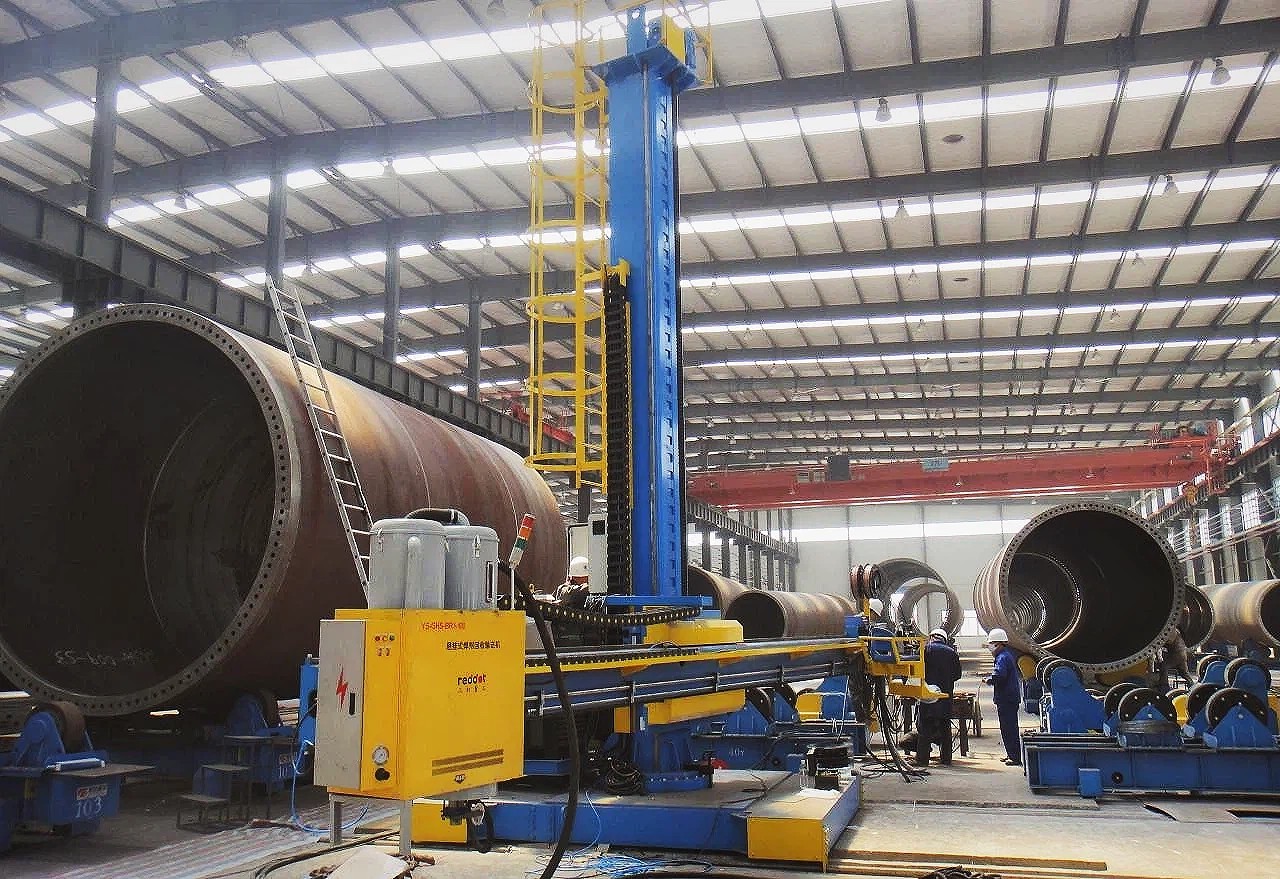
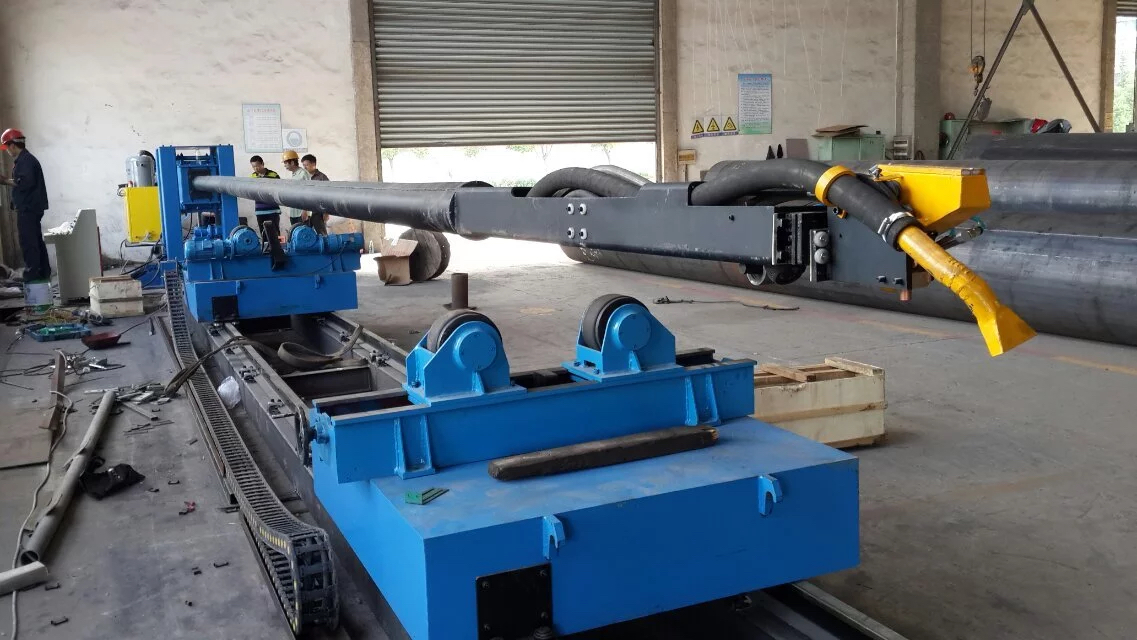
 Welding manipulatorThis welding manipulator is a core piece of equipment designed specifically for automated welding applications. Combined with welding positioners, roller frames, and other components, it forms a highly efficient automated welding workstation. The equipment features strong structural rigidity and flexible operation, making it suitable for longitudinal, circumferential, and internal/external seam welding in industries such as pressure vessels, pipelines, and steel structures.
![星星1]()
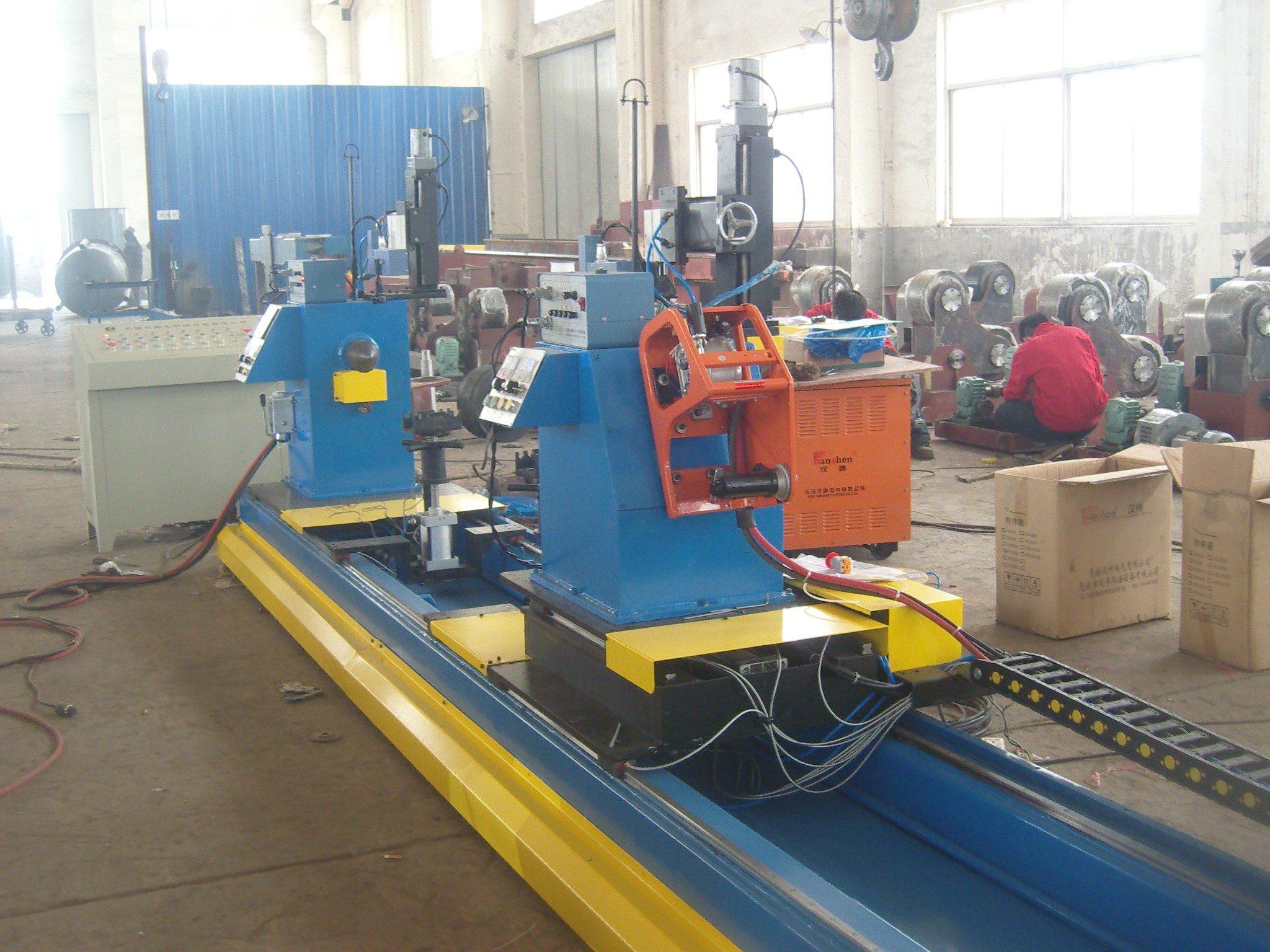
 12 meter Pipe inside and outside seam welding machine12 meter pipe welding machine is customized according to client’s request,long beam is clamped on the frame,inside seam welding is welded through moving of welding rotator on the trolley.12 meter pipe longitudinal seam welding machine Moving of trolley is controlled by VFD,stable and reliable,and speed is adjustable,12 meter pipe inside longitudinal seam welding machine meet with different welding technology.Since diameter of pipe is small,worker can not get inside for checking and adjusting,12 meter pipe outside longitudinal seam welding machinewe adopted advanced monitoring system to check welding quality and condition.Worker can check and operate all conditions from Computer screen,and work with motorized accurate adjusting,12 meter pipe welding machine finishes automatic inside longitudinal seam welding for small diameter pipe.It improve the working efficiency and welding quality.Its suitable for manufacturing small diameter pipe in batch
![星星1]()

Recommended blogs
- Hydraulic Press Brake Maintenance Checklist to Reduce Downtime
- Long Seam Welding Machine Standards and Acceptance Checks for Industrial Fabrication
- Hydraulic Guillotine Shearing Machine Manufacturer: 7 Key Checks Before You Compare
- Common Welding Robot Integration Problems and How to Fix Them on Production Lines
Send Us A Message
Send us a Message
A dedicated person will follow up on your needs one-on-one and provide personalized customized solutions according
to your needs.
Get In Touch
We look forward to hearing from you for in-depth communication on how to fulfill your mixing requirements.