




Automatic Seam Welding Machine ROI: Labor Savings, Throughput, and Rework Reduction
Cost justification starts with weld length, not machine price
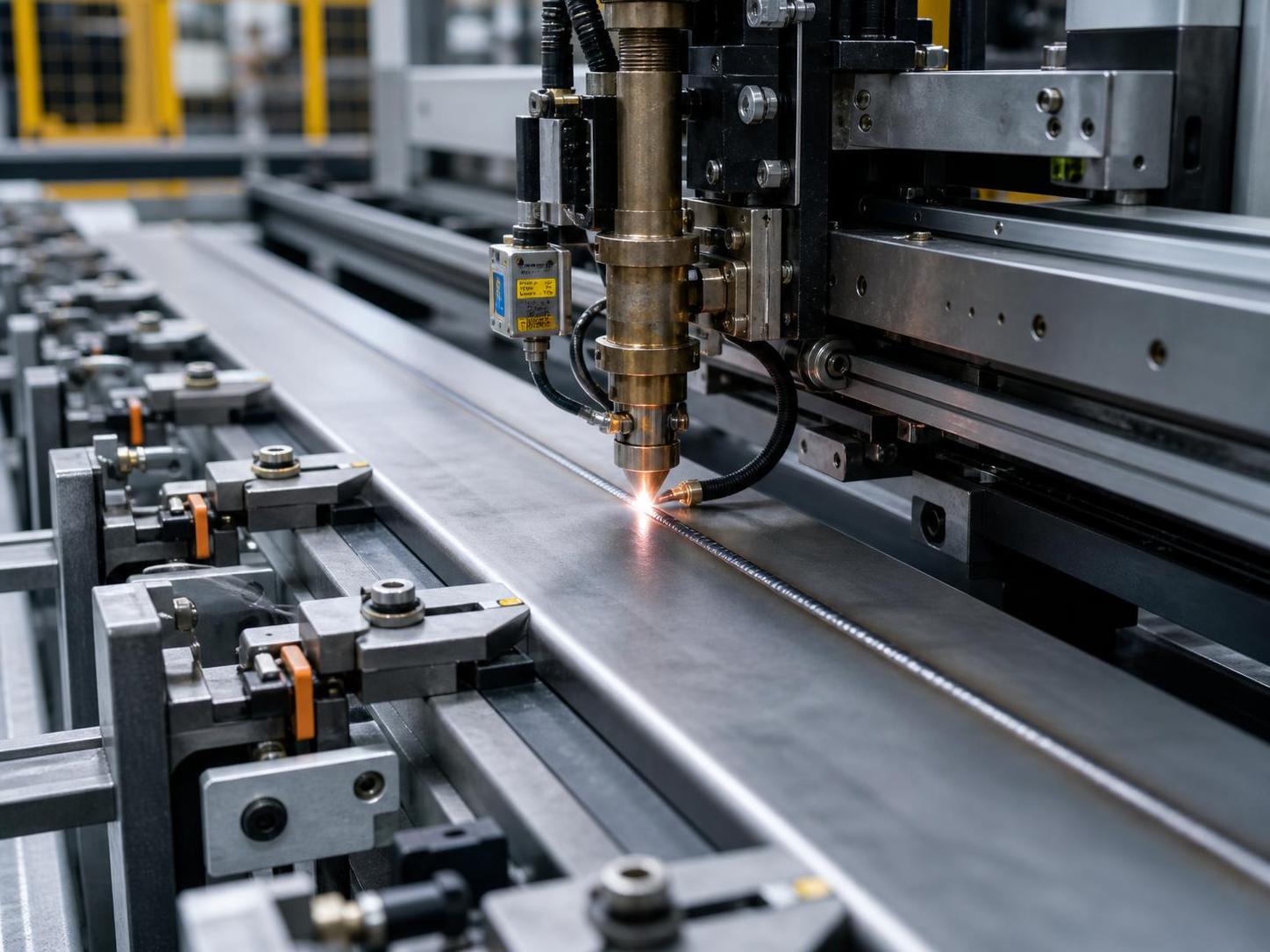
An automatic seam welding machine earns its place when the cost of each welded meter becomes predictable and lower than the current manual or semi-automatic method. The useful comparison is usually labor hours per joint, arc-on time, filler and flux consumption, expected rework, and the production delay caused by inconsistent weld quality. If the work mix includes long straight seams on tanks, ducts, cabinets, structural sections, or repeated plate assemblies, automation often changes the economics because the machine can hold travel speed, torch angle, and seam position with far less variation than hand welding over an entire shift.
The purchase discussion often gets distorted by rated speed alone. A machine advertised at a certain welding speed does not automatically produce that rate on the shop floor. Real throughput depends on fit-up quality, tack consistency, part loading, clamping, cleaning, interpass requirements, and whether the seam can run continuously without stopping for correction. For ROI, the useful question is how many acceptable parts leave the station per shift, not the highest number shown on a specification sheet.
Labor savings are usually visible first. One operator can often supervise a seam process that would otherwise require higher manual attention, especially where the joint geometry repeats. The savings do not come only from replacing hand travel with carriage travel. They also come from shorter setup corrections, reduced grinding after uneven bead shape, fewer pauses to recover alignment, and less dependency on the narrow band of highly skilled manual welding output that is difficult to sustain over overtime or multiple shifts.
Where labor reduction is real and where it is overstated
Labor reduction is strongest when the joint is accessible, the seam is long enough to justify setup, and the upstream process delivers repeatable dimensions. Thin sheet, stainless assemblies, carbon steel tanks, and longitudinal seams on formed parts can all be suitable, but only if the fixture prevents part movement under heat. If the current process already has stable fixtures and frequent repetition, an automatic seam welding machine may shift the operator from constant weld execution to loading, monitoring, and inspection.
Claims around labor should be discounted when the product mix changes constantly. A shop with short runs, many small batches, variable thickness, or poor edge preparation may not capture the same reduction in direct labor because machine setup time can absorb much of the saved arc time. In those conditions, the better financial argument may come from quality stability rather than headcount reduction.
Another common mistake is counting only welding labor while ignoring support tasks. If manual welding creates long downstream grinding, straightening, leak repair, or dimensional correction, those hours belong in the comparison. A stable seam process can reduce the hidden labor around the weld as much as the labor during the weld itself. That matters especially on visible external seams, pressure-retaining parts, and assemblies that must pass subsequent machining or coating without extra correction.
Throughput depends on flow, not a single machine
In many factories, the automatic welding station is judged unfairly because it is installed into an unstable process. If cutting variation, plate camber, root gap inconsistency, or poor tack sequence reaches the welding stage, the machine will spend time waiting for rework or manual intervention. That does not mean the equipment has low productivity; it means the line feeding it has weak control.
Useful throughput analysis should include the full cycle: part arrival, loading, alignment, welding pass, cooling or transfer, unloading, and inspection release. Some lines lose more time in material handling than in welding. A heavy fixture that requires crane availability can turn a fast weld cycle into a slow station. Similarly, if copper backing bars, clamps, or seam guides are difficult to change between part families, the theoretical output may never be reached consistently.
Material thickness also changes the payback story. On heavier sections, travel speed may be lower, but the machine can still produce economic value through longer uninterrupted welds and better deposition consistency. On thinner material, distortion control and burn-through risk become central. If the process window is narrow, automatic control may protect yield better than manual work, but only if the machine’s pressure system, seam tracking, and current control are matched to the material.
Practical throughput variables worth pricing into the evaluation
- Joint length per part. Very short seams rarely recover setup time efficiently.
- Part family count across a month. Fewer changeovers generally improve machine utilization.
- Fit-up tolerance from upstream cutting and forming. A seam machine performs best when gap variation stays controlled.
- Loading method, especially for larger fabrications where crane scheduling can become the real bottleneck.
- Inspection hold points. If every part still waits for extensive manual repair checks, the throughput gain may remain trapped downstream.
Rework is usually the hardest cost to see and the easiest to underestimate
Rework reduction often has a larger effect on payback than many initial spreadsheets show. Scrap and repair are obvious, but the expensive part is usually schedule disruption. A leaking seam discovered after assembly, paint, or machining carries a much higher penalty than a defect found immediately at the weld station. Automatic seam welding reduces variation in penetration, bead placement, and overlap, which can lower the frequency of these late discoveries when the joint design is suitable for mechanization.
Distortion is part of rework, even when it is not reported under welding. Excessive heat input can force straightening, hole mismatch correction, edge trimming, or assembly shimming later in the route. A stable automatic process may lower that burden by holding travel speed and heat input more consistently. This is particularly relevant on long panels, thin-gauge enclosures, formed shells, and structural members that must maintain alignment across several downstream operations.
Repair cost should include consumables used twice, repeated non-destructive examination where required, labor for defect excavation, and the productivity loss of re-entering finished work into the line. When evaluating an automatic seam welding machine, it helps to compare first-pass yield rather than only the finished acceptance rate. Two processes may both eventually produce acceptable welds, yet one may consume far more hours in hidden repair activity.
Specification points that materially affect ROI
Several technical details influence operating cost more than expected. Seam tracking method is one of them. Mechanical tracking may be sufficient where the joint is well controlled and the part geometry is stable. Laser or sensor-based tracking can justify itself where seam position drifts, but the extra cost only pays back if the parts actually present that level of variation. Buying advanced tracking for highly consistent work may add complexity without returning value.
Speed control range also matters. A wide, stable range is useful when the same machine must run different thicknesses, materials, or joint forms. Machines with poor low-speed stability can create problems on heavier deposits or awkward start-stop locations. Power source compatibility is another item frequently missed in budgeting. If the selected process requires upgrading electrical supply, ventilation, flux handling, or extraction, those costs belong in the approval model.
Maintenance access deserves attention before installation. A machine that reduces welding time but creates long stoppages for roller replacement, alignment adjustment, torch servicing, or cable routing issues may perform well on paper and poorly in practice. Wear parts, sensor cleanliness, guide rail condition, and carriage drive accuracy all affect consistency over time.
In structural fabrication, some production lines compare seam welding economics with gantry-based submerged arc work on long steel members. For example, a T type gantry h beam welding machine built for H-beam or T-beam production addresses a different geometry but highlights the same financial logic: repeatable alignment, continuous welding travel, and reduced manual correction around long joints. In applications such as steel structures, bridge components, heavy machinery frames, or building members, features like automatic centering, stepless speed control, and simultaneous welding of two workpieces can shift the cost model sharply when the product family matches the machine envelope.
Installation and transport costs can change the payback period
A realistic estimate should include inbound transport, unloading method, floor preparation, utility connection, and commissioning time. Larger automatic systems may require rail alignment, foundation verification, or additional space for loading tables and finished part transfer. If the machine must sit near blasting, cutting, or grinding areas, dust control becomes part of the installation budget because contamination can affect tracking and drive components.
Electrical requirements deserve closer review than a simple nameplate check. Welding source capacity, auxiliary motors, control cabinet load, and extraction demand all contribute to real consumption and site readiness. Compressed air quality may also matter where pneumatic clamping or actuation is used. If the factory power supply is unstable, output consistency and component life can suffer, which weakens the expected ROI.
Training cost is usually moderate compared with the machine price, but the timing matters. If the process depends on one experienced programmer or maintenance technician, the risk profile remains high. A stronger setup is one where operators can manage routine adjustments, production staff understand acceptable joint preparation, and maintenance can handle preventive work without repeated external support.
Good ROI often comes from fewer process compromises
Manual welding frequently survives because it is flexible, not because it is cheap. That flexibility has value when parts vary, but it also hides process compromises such as oversized gaps, inconsistent tack spacing, or bead profiles accepted only because repair is expected later. An automatic seam welding machine can expose those weaknesses quickly. That is useful financially because it pushes costs into the open, but it can disappoint early expectations if the upstream process is not corrected at the same time.
One practical sign of a sound investment is when the planned machine settings can be linked directly to actual product dimensions and material grades already running in production. If the target work includes carbon steel plate, stainless seams, or structural members with known thickness bands and regular lengths, the expected operating window can be estimated with more confidence. If the machine is being purchased on the assumption that future products will eventually fit it, the payback calculation becomes much weaker.
In heavier beam fabrication, gantry units such as the T type gantry h beam welding machine show how specification fit affects returns. A railway gauge of 2000 mm, web height range of 200-2000 mm, flange width of 200-800 mm, H-beam length of 4000-15000 mm, two DC-1000 SAW sources, and welding speed around 0.15-1 m/min are meaningful only when the actual product mix sits inside those limits. Where that match exists, one-pass simultaneous welding, automatic flux recovery, and bevel-free welding on certain web thicknesses may remove several non-value-added steps. Where it does not, even strong equipment becomes underused capital.
Common errors in ROI calculations
One error is using average labor rates without distinguishing between direct welding time and support labor. Another is assuming the machine will run at high utilization from the first month, even though fixture refinement, parameter tuning, and operator familiarization usually take time. It is also common to leave out spare parts, scheduled downtime, and the impact of preventive maintenance intervals on available production hours.
Some evaluations count energy savings aggressively even when the welding process itself remains broadly similar. Energy can matter, especially when a machine or process configuration reduces unnecessary heat input or idle running, but electricity alone rarely justifies the purchase. The larger drivers are usually labor structure, throughput stability, and reduced nonconforming work.
There is also a tendency to compare a new automatic process with an unusually poor manual baseline. That inflates expected savings and can create disappointment later. A tighter comparison uses current output from trained operators working with realistic fixtures and normal material variation. If the machine still shows an advantage under those conditions, the investment case is far stronger.
When the weld path is repetitive, the parts are dimensionally controlled, and rework currently consumes meaningful time, an automatic seam welding machine can shift cost from variable and unpredictable to stable and measurable. That is the point where ROI becomes credible: fewer labor hours buried around the weld, more acceptable output per shift, and less disruption from repair work appearing late in production.
search
Products Navigation
Send Us A Message