




Linear Seam Welding Machine Problems: How to Reduce Distortion and Arc Misalignment
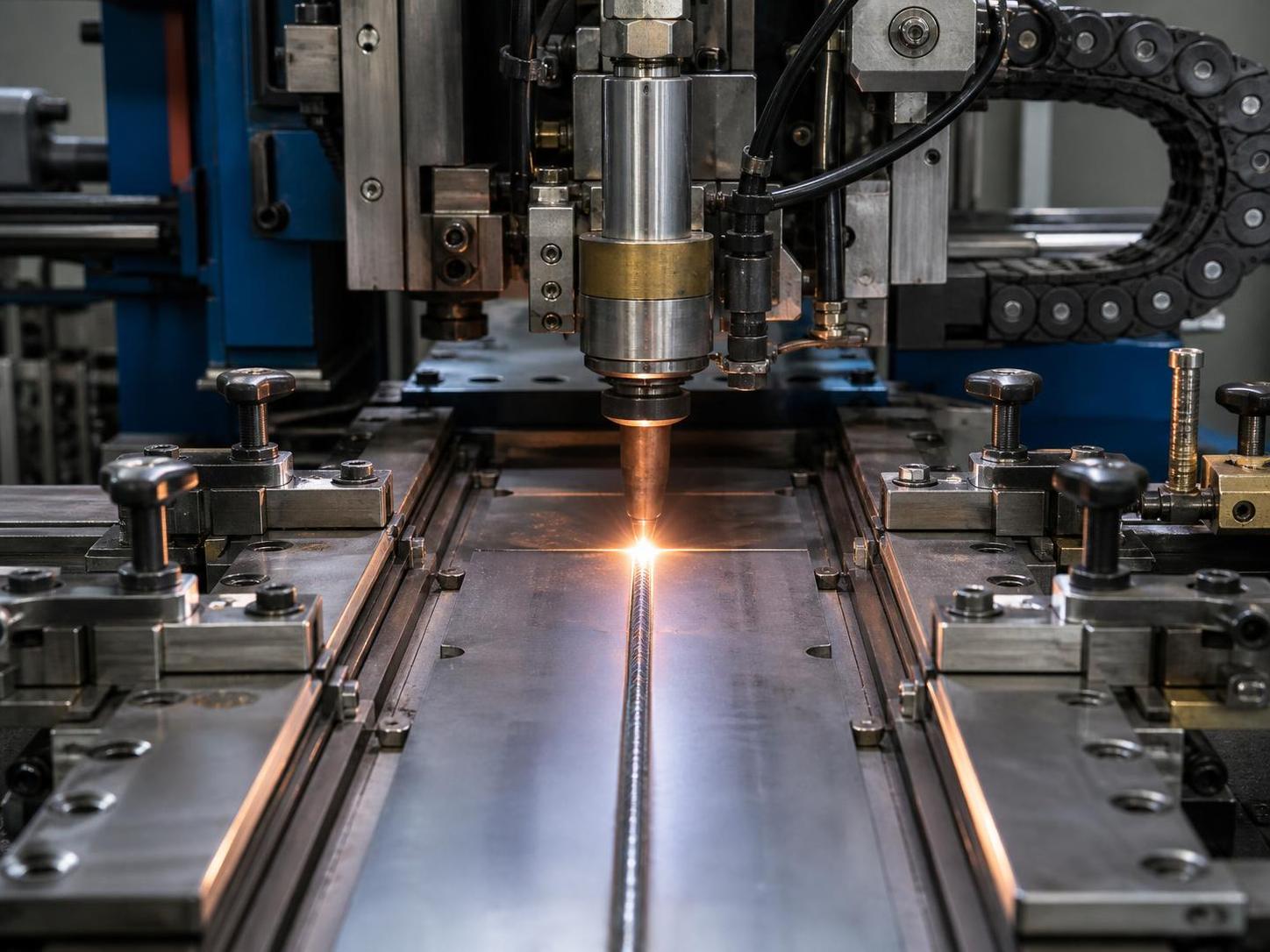
For after-sales maintenance teams, solving recurring issues in a linear seam welding machine means more than restoring output—it means protecting weld quality, reducing rework, and improving customer trust. If distortion and arc misalignment keep affecting performance, understanding their root causes is the first step toward stable operation. This guide outlines practical troubleshooting ideas and maintenance-focused solutions for more consistent welding results.
Why Distortion and Arc Misalignment Keep Returning in a Linear Seam Welding Machine
The main search intent behind this topic is practical troubleshooting. Maintenance personnel are usually not looking for theory alone. They want clear reasons why weld distortion and arc drift happen repeatedly, and what can be adjusted on site.
For most service teams, these two defects are linked. Distortion changes the joint condition during welding, while arc misalignment reduces fusion accuracy and heat balance. When both appear together, the machine may still run, but weld quality becomes unstable.
In a linear seam welding machine, recurring defects often come from a combination of mechanical wear, poor fixture condition, incorrect parameter settings, and inconsistent workpiece preparation. If a team addresses only the visible weld defect, the problem usually returns.
The most effective maintenance approach is to treat distortion and arc misalignment as system-level issues. That means checking structure, torch guidance, clamping, travel stability, heat input, and operator parameter use as one connected process.
What After-Sales Maintenance Teams Usually Need to Confirm First
Before changing welding parameters, maintenance teams should confirm whether the issue is primarily mechanical, thermal, electrical, or procedural. This first judgment saves time and prevents unnecessary replacement of consumables or motion components.
Start with the customer complaint in measurable terms. Ask whether the weld bends the part, whether the seam centerline moves during travel, whether the defect appears at the start or end, and whether it happens on all workpieces or only certain sizes.
Then review four basic conditions: machine alignment, torch position repeatability, fixture pressure balance, and material consistency. In many cases, the machine itself is blamed when the real trigger is variation in the incoming plate, edge condition, or assembly gap.
Maintenance staff should also compare current performance with historical baseline data. If the linear seam welding machine worked well with the same material and thickness before, the root cause is more likely drift in setup condition than an inherent process limitation.
How Mechanical Errors Lead to Weld Distortion
Mechanical causes of distortion are often underestimated because the arc appears stable at first glance. In practice, poor clamping geometry, worn support rollers, and uneven bed straightness can allow the workpiece to shift while heat is building.
If the fixture does not distribute force evenly, the material may lift slightly during welding. Even a small lift changes heat concentration and contraction behavior. The result is angular distortion, bowing, or a seam that no longer stays aligned with the torch path.
Another common issue is carriage vibration. Excessive backlash in the travel mechanism, loose linear guides, or inconsistent drive response can produce a wandering bead pattern. That pattern often comes with uneven penetration and localized shrinkage stress.
Guide rail contamination also matters. Dust, spatter, or hardened residue can interrupt smooth travel. The torch may not visibly jump, but minute changes in speed and position can still increase distortion, especially on thinner workpieces or longer seams.
For this reason, after-sales teams should inspect rail straightness, carriage play, support table flatness, clamp condition, and drive transmission wear as part of any repeated distortion complaint. Mechanical stability is the base for thermal stability.
Why Arc Misalignment Happens Even When the Torch Looks Centered
Arc misalignment is not always caused by obvious torch offset. A torch may appear centered before welding starts, yet the arc can still drift during operation because of wire feed irregularity, contact tip wear, grounding issues, or changing joint geometry.
One frequent cause is accumulated deviation in the torch mounting system. Slight looseness in the bracket, slide, or height adjustment assembly can change the torch angle under heat and vibration. Over a long seam, that small deviation becomes visible in the weld bead.
Wire extension is another factor. If stick-out changes because of warped parts or poor height tracking, the arc becomes less stable. That can shift the fusion line and create the impression that the machine has lost seam tracking accuracy.
Electrical return path quality should also be checked. Weak or inconsistent grounding can destabilize the arc, especially on oxidized surfaces or large structural parts. The symptom may look like guidance error when the real problem is electrical instability.
Contact tip wear, nozzle spatter buildup, and liner resistance can all affect wire direction and arc concentration. In many field cases, replacing worn consumables restores bead centering faster than changing machine calibration alone.
A Practical Troubleshooting Sequence for Field Service Teams
When a customer reports distortion or arc drift, a structured troubleshooting sequence is more useful than random adjustments. The goal is to isolate the dominant variable and avoid changing several conditions at once.
First, inspect the workpiece and joint preparation. Confirm plate flatness, edge straightness, root gap consistency, tack weld distribution, and contamination level. If the part enters the machine in an unstable condition, machine adjustments will only mask the issue.
Second, verify fixture and support performance. Check whether clamps engage evenly, whether backup support sits flat, and whether there is any movement during dry travel. If the workpiece moves under load, distortion control will remain poor.
Third, inspect torch positioning hardware and travel accuracy. Measure torch-to-joint centerline, travel straightness, carriage play, and repeatability after several cycles. Repeatability matters more than single-point alignment because many defects appear only after thermal expansion begins.
Fourth, review the welding procedure parameters. Travel speed, current, voltage, wire feed, torch angle, stick-out, and dwell time at the start or end should be compared with the approved process window. Excess heat input is still one of the fastest ways to produce distortion.
Finally, run a controlled test coupon with recorded settings. A short test weld under known conditions helps separate machine defects from batch-specific material issues. It also gives the customer visible evidence for the corrective action taken.
How to Reduce Distortion Without Sacrificing Weld Integrity
Reducing distortion is not simply a matter of lowering heat. If heat input falls too far, penetration and fusion quality may suffer. The maintenance objective is to keep heat balanced, controlled, and repeatable along the full seam length.
Begin with clamping strategy. Balanced restraint on both sides of the joint usually works better than excessive force from one direction. Too much local force can trap stress and cause more deformation after cooling rather than less.
Travel speed should be checked against actual bead shape, not only the panel setting. If the carriage speed fluctuates under load, average speed values may look correct while real heat input remains uneven. This is why drive system inspection is essential.
Sequence and tack arrangement also influence results. Uneven tacking or poor fit-up can make the seam open or close during welding, forcing the process to react to changing geometry. That often increases both distortion and arc offset symptoms.
On long structural parts, support spacing is important. If the section is insufficiently supported, its own weight can change joint alignment before heat effects are even considered. This is especially relevant when customers weld beams, columns, or larger fabricated assemblies.
In some fabrication environments, upstream machining quality also affects welding stability. Accurate end preparation from equipment such as an CNC Face milling machine can improve fit-up consistency, reduce gap variation, and help the welding system maintain a more stable seam condition.
How to Correct Arc Misalignment and Keep It from Returning
To correct arc misalignment effectively, teams should confirm both static alignment and dynamic alignment. Static alignment is the torch position before welding. Dynamic alignment is the torch behavior while the machine is moving, heating, and feeding wire.
Start by checking torch angle, contact tip condition, and wire centering through the nozzle. Then inspect the mounting bracket for looseness, thermal movement, and repeatability after multiple start-stop cycles. A component that passes one check may still drift during production.
Next, evaluate wire feed stability. Slipping feed rolls, worn liners, or poor spool resistance can create fluctuating wire presentation. That changes arc shape and may pull the weld off center even when the carriage path remains correct.
Sensor-based tracking systems, if equipped, should be calibrated under actual production conditions. Some teams calibrate on ideal samples, but real customer parts may have scale, gap variation, or reflected heat that changes tracking response. Calibration must match reality.
It is also useful to log the position of misalignment. If drift always begins near the weld start, preheat effect or start parameter timing may be responsible. If it grows across the seam length, thermal expansion or mounting shift becomes more likely.
Preventive correction depends on routine checks. A short inspection list for torch centerline, consumable wear, cable tension, and grounding quality before each shift can prevent a large percentage of repeat service calls.
What Preventive Maintenance Should Focus on for Long-Term Stability
Preventive maintenance for a linear seam welding machine should focus on repeatability, not only uptime. A machine that runs every day but produces variable seams is still failing in a quality-critical production environment.
Mechanical points to monitor include guide rail cleanliness, carriage backlash, drive transmission wear, support roller condition, clamp surface wear, and bed straightness. These items influence motion stability and workpiece restraint directly.
Electrical and process-related checks should cover grounding integrity, cable damage, wire feed consistency, contact tip wear rate, nozzle cleanliness, and parameter lock settings. These are small details, but they have a large effect on arc behavior.
Maintenance teams should encourage customers to keep a defect record tied to material thickness, joint type, parameter set, and operator shift. Repeated patterns become easier to identify when service data is organized instead of remembered informally.
For manufacturers processing structural members, stable upstream preparation also supports downstream weld quality. Equipment built for geometric consistency, including systems used for beam or column face preparation, can reduce variation before welding begins. A well-maintained CNC Face milling machine is one example where better dimensional consistency helps reduce fit-up-related welding problems later.
When the Problem Is Not the Machine Alone
After-sales teams often face complaints that seem machine-related but actually involve the whole fabrication process. Material stress, inconsistent assembly practice, poor tack sequence, and weak operator discipline can all produce distortion and arc stability problems.
This is why the best service response combines machine inspection with process review. If the customer changes plate supplier, introduces thicker sections, or shortens preparation time, welding results may shift even though the machine settings remain unchanged.
A strong maintenance team therefore acts as both troubleshooter and process advisor. The goal is not only to restore current production, but also to help the customer build a more stable operating window that reduces future downtime.
Conclusion
For after-sales maintenance personnel, solving distortion and arc misalignment in a linear seam welding machine requires more than a quick parameter adjustment. The most reliable results come from checking the machine, the consumables, the fixture condition, and the workpiece preparation together.
In practical terms, distortion usually points to restraint, heat balance, or structural stability issues, while arc misalignment often involves torch condition, wire feed behavior, grounding, or tracking drift. Because these factors interact, isolated fixes rarely last.
A disciplined troubleshooting sequence, combined with preventive maintenance and attention to upstream preparation quality, gives the best chance of stable weld performance. For service teams, that approach reduces repeat failures, improves customer confidence, and supports more consistent production quality over time.
search
Products Navigation
Send Us A Message