




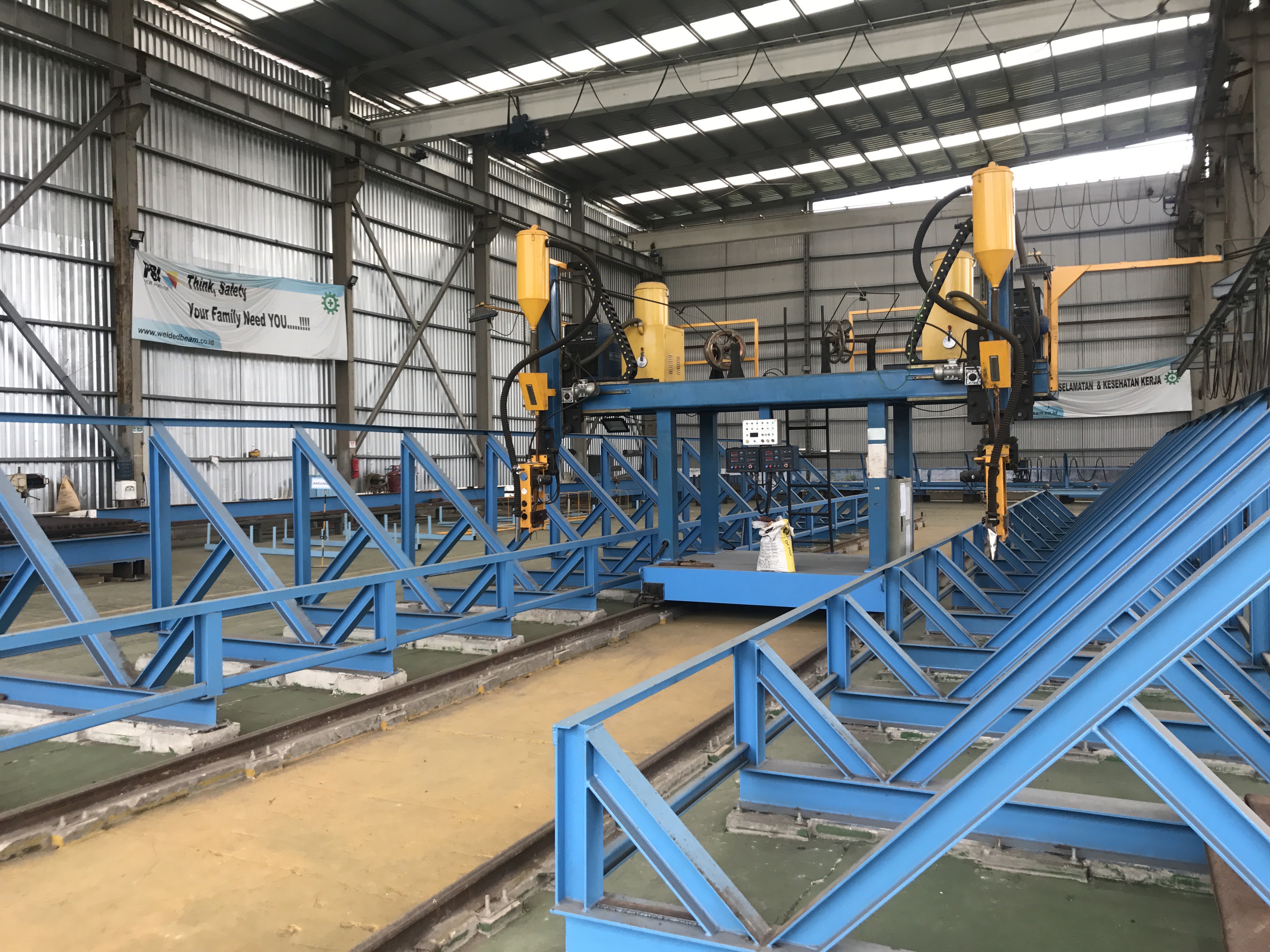
T type gantry h beam welding machine
Welding speed is adjustable from 0.15 to 1.5 m/min via an imported frequency converter, enabling stepless speed control with high accuracy and constant torque. The arc guide frame features mechanical up/down and left/right tracking for precise torch positioning along the weld joint.
Control is managed through a main cabinet and a convenient remote operation box. The machine is capable of welding two workpieces simultaneously in one pass, significantly boosting productivity.
Ideal for steel structure fabrication, bridge building, and heavy machinery manufacturing.
Full-range Machinery & Customized Non-standard Solutions
Authorized Certificates & Independent R&D Patents
Over 10 Years Global Export & Worldwide Project Cases
Navigation
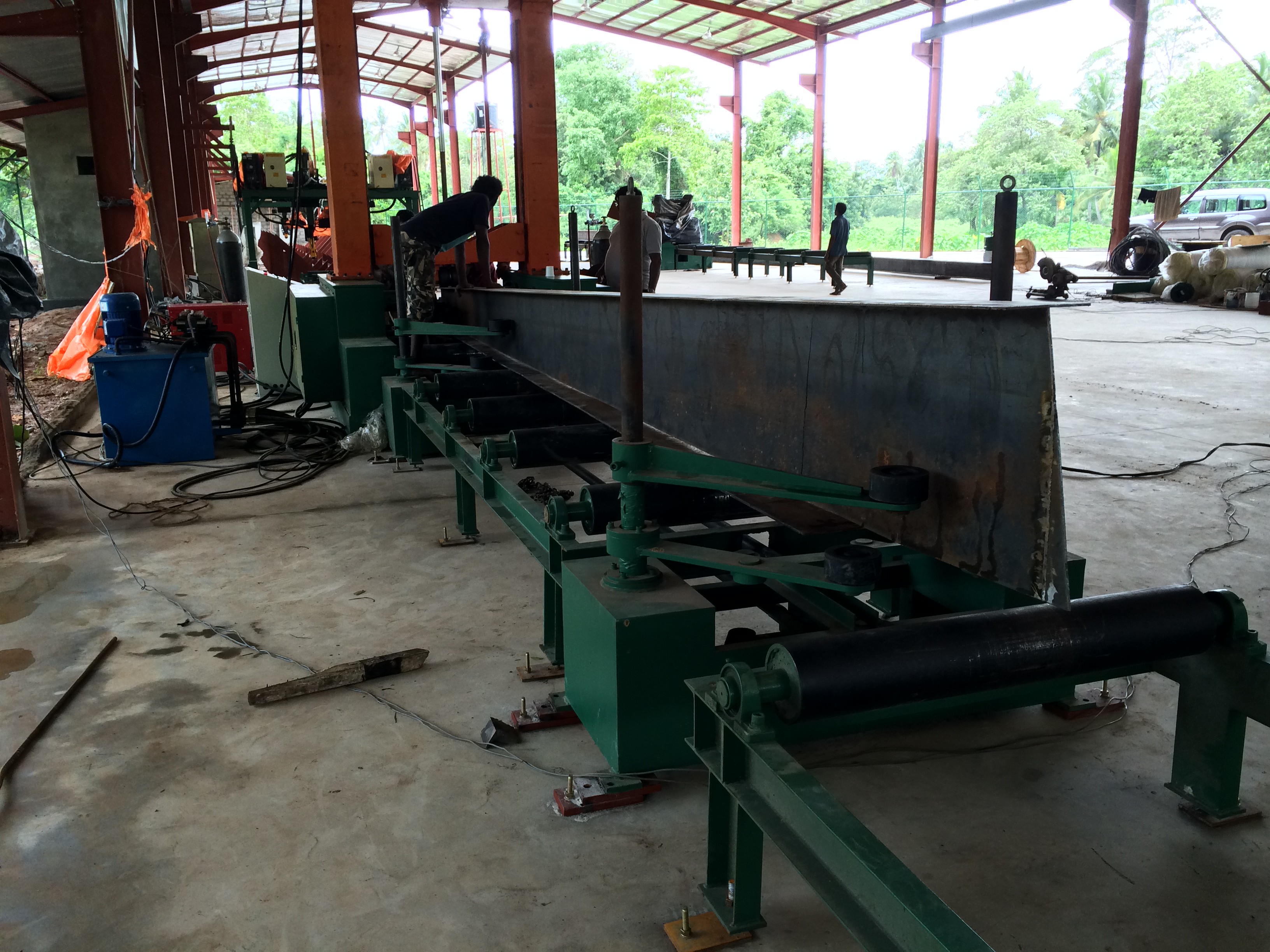

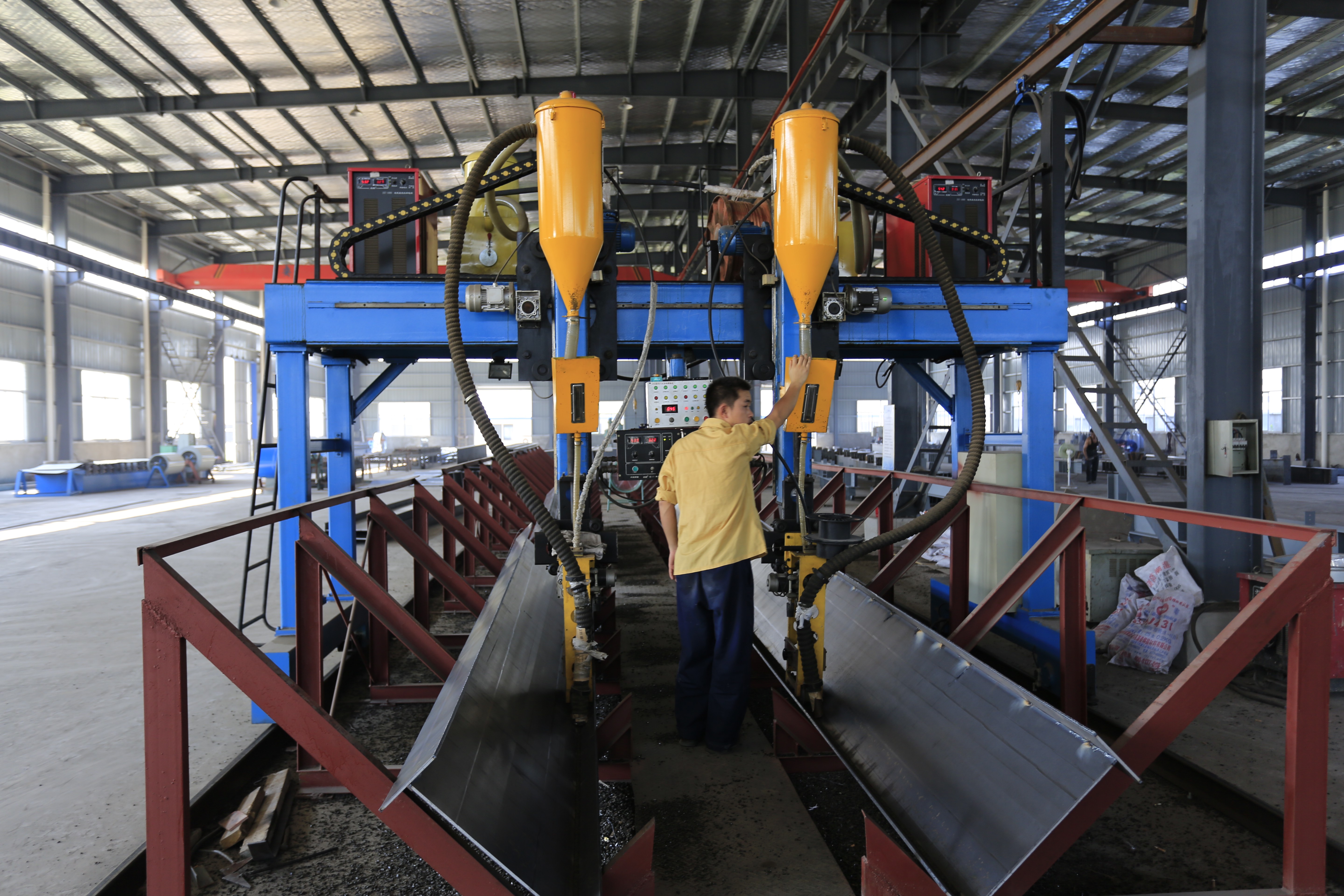
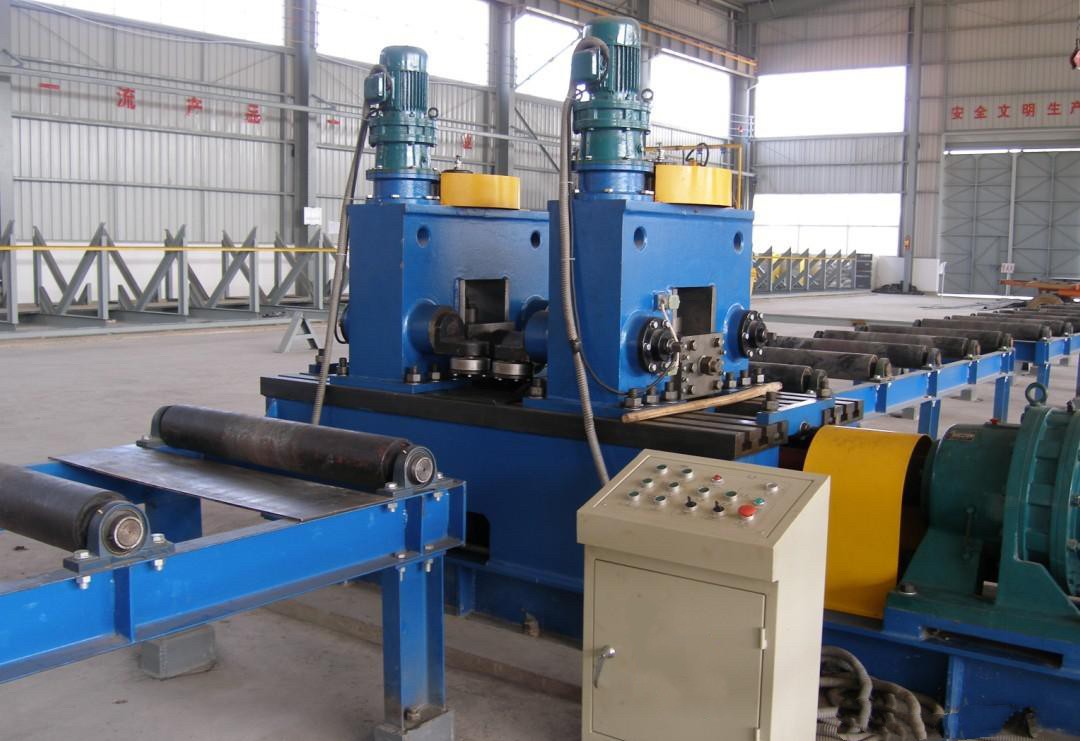
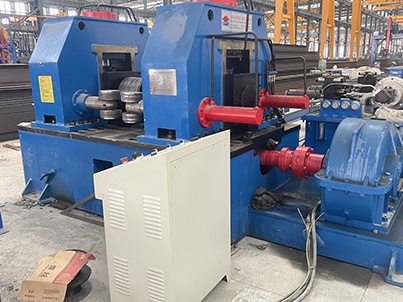
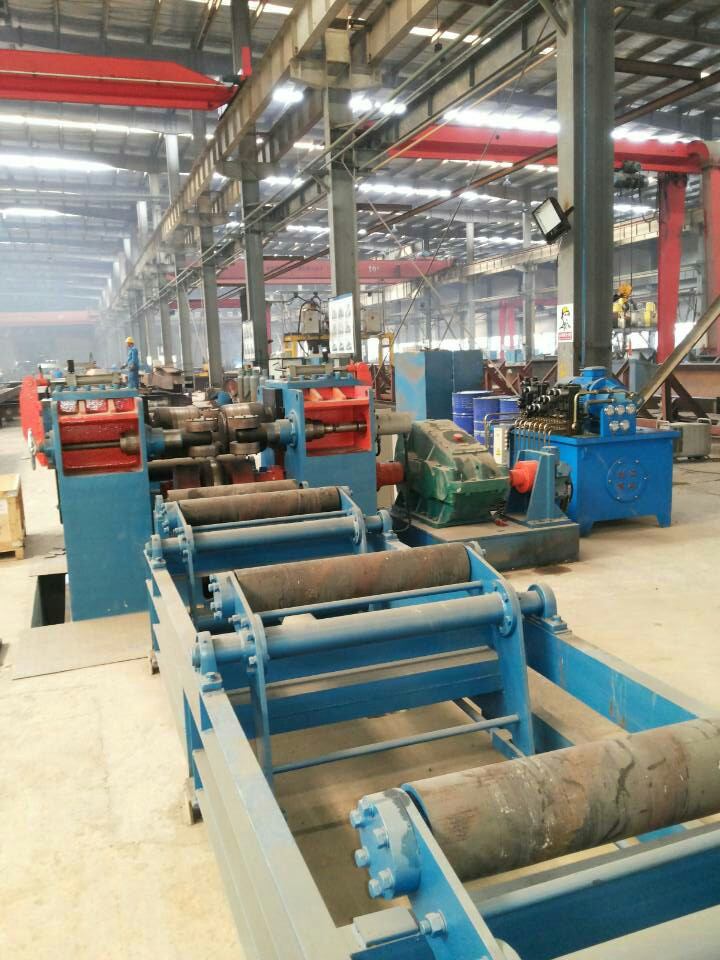
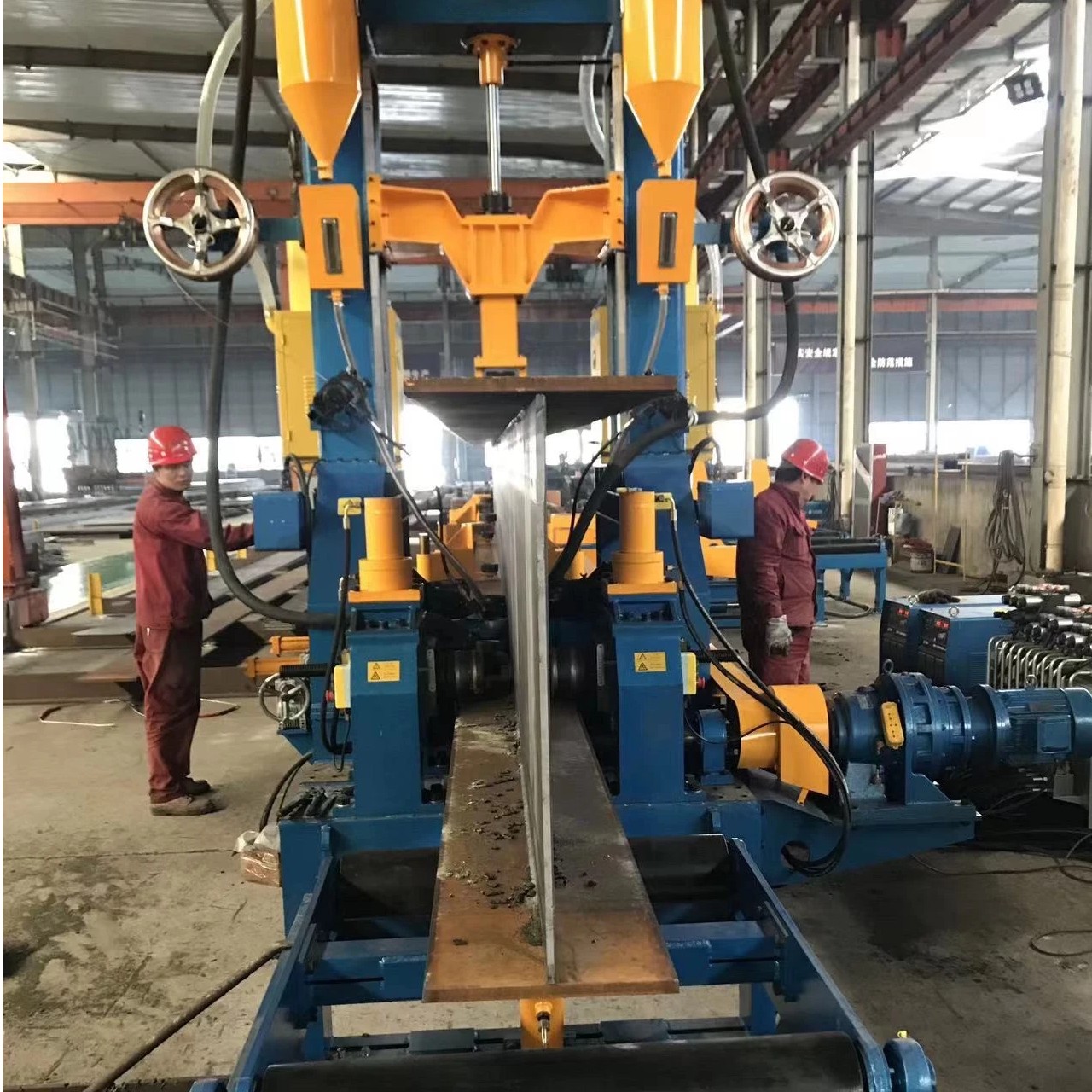
T type gantry h beam welding machine Description
1. Product Introduction: H-Beam Welding Machine
The H-beam welding machine is a specialized automatic welding system designed for the efficient fabrication of H-shaped steel beams. It is available in two structural configurations to suit different production requirements.
1.1 Machine Configurations
The equipment is offered in two main structural types:
Gantry (portal) type – the welding unit moves along a fixed gantry frame
Double cantilever type – features two cantilever arms for enhanced flexibility
1.2 Drive System
Powered by an AC motor paired with an R-series worm reducer for reliable and efficient transmission
Both gantry and cantilever versions utilize this robust drive solution
1.3 Welding Speed
Welding speed ranges from 0.15 to 1.5 m/min, accommodating various material thicknesses and process requirements
1.4 Arc Guiding Frame
The arc guide frame head is equipped with a mechanical tracking system that provides:
Vertical (up/down) tracking
Horizontal (left/right) tracking
This ensures precise torch positioning along the weld joint
1.5 Speed Control
Equipped with an imported frequency converter enabling stepless speed adjustment for the gantry or cantilever movement
Offers a wide speed regulation range, high accuracy, and constant output torque for consistent welding performance
1.6 Control System
The electrical control system comprises:
A main control cabinet for central control
A remote operation box for convenient floor-level operation
1.7 High Efficiency
Capable of welding two workpieces simultaneously in a single pass, significantly improving production throughput
1.8 Key Applications
This machine is ideal for mass production of H-beams used in steel structures, bridge construction, building frameworks, and heavy machinery manufacturing.
2.Technical parameter for H beam welding machine
3.Characters for H beam welding machine:
3.1 High degree of automation, equipped with NC control system, laser or mechanical weld seam tracking device, achieving integrated operations such as automatic centering, automatic speed adjustment, and automatic recovery of flux.
3.2 Bevel-free welding capability: It enables full penetration welding for H-shaped steel with a web thickness of ≤ 18mm, eliminating the need for beveling, thus simplifying the process and enhancing efficiency.
3.3 High Precision and Stability, Wide Welding Speed Range (e.g. 150–2400 mm/min), Adopting AC Variable Frequency Speed Control, Smooth Operation, Supports Rapid Return
3.4 High efficiency and energy saving: Compared to traditional equipment, electricity consumption is reduced by approximately 50%, the number of lifting operations is decreased, and production efficiency has significantly improved (for example, from 10 meters per hour to 40 meters per hour)
3.5 High applicability. It can be used for welding H-shaped, T-shaped and other special-shaped steel. It is applicable to various industries such as bridges, buildings, ships, and high-speed railways.
products faq
An H Beam Production Line is a complete automated system for manufacturing H-shaped steel beams. It typically includes an uncoiler, leveling unit, assembly machine, tack welding machine, main submerged arc welding (SAW) system, straightening machine, cutting equipment, and material handling conveyors. All components work together to transform steel plates or coils into finished H-beams with high efficiency and consistent quality.
Submerged Arc Welding (SAW) is the most commonly used process for main welding in H beam production lines. It offers deep penetration, high deposition rates, excellent weld quality, and minimal spatter—making it ideal for heavy structural beams. Some lines also incorporate gas-shielded welding for tacking or light sections.
The line is adjustable to accommodate a wide range of beam sizes. Standard configurations typically handle web heights from 200mm to 1,500mm, flange widths from 100mm to 800mm, and material thicknesses from 6mm to 60mm. Custom sizes can be accommodated with tailored equipment design.
After welding, the thermal distortion caused by heat input is corrected by a straightening machine, which applies pressure to bend the beam back to the required straightness tolerance. In addition, precision assembly fixtures and automated control systems ensure accurate web-flange positioning before welding, maintaining consistent product dimensions throughout production.
Routine maintenance includes checking and replacing welding consumables (flux, wire, contact tips); inspecting conveyor chains, rollers, and bearings; monitoring hydraulic system oil levels and seals; cleaning the flux recovery system; and verifying the straightening machine's adjustment accuracy. We provide comprehensive maintenance schedules, spare parts support, and on-site technical assistance to minimize downtime.