




Beam Welding Machine Explained: Principles, Components, and Performance Factors You Need to Know
What A Beam Welding Machine Means In Industrial Production
A Beam welding machine is an industrial welding system designed to join metal members with controlled travel, stable torch positioning, and repeatable weld parameters. In practice, the term may refer to equipment used for H-beams, box beams, T-beams, pipe sections, longitudinal seams, or other fabricated assemblies where dimensional consistency and weld integrity are critical.
Unlike manual welding alone, a Beam welding machine combines mechanical guidance, motion control, fixturing, and a welding power source into one coordinated process. This improves arc stability, reduces operator-to-operator variation, and helps manufacturers hold tighter tolerances across long weld seams, heavy sections, or repetitive production batches.
In the manufacturing and processing machinery sector, beam welding equipment is especially important for steel structures, bridge parts, ship sections, storage tanks, pressure-related fabrications, and plant equipment. Buyers usually evaluate these systems not only by weld speed, but also by alignment accuracy, penetration consistency, distortion control, and compatibility with downstream handling or straightening operations.
From a procurement perspective, the right Beam welding machine is not simply a welding unit. It is part of a production system that influences labor efficiency, rework rates, consumable usage, fit-up quality, and delivery reliability. That is why machine configuration, automation level, and application matching deserve close technical review before purchase.
How Beam Welding Works: Core Principles And Process Logic
The operating principle of a Beam welding machine is straightforward: maintain the correct relative position between the weld head and the workpiece while feeding heat and filler in a controlled way. The machine supports stable travel speed, torch angle, stick-out, seam tracking, and workpiece presentation so the weld pool remains predictable over long distances.
In many beam applications, the process relies on submerged arc welding, gas metal arc welding, or application-specific automated welding methods. The selected process depends on material thickness, joint preparation, deposition targets, and production speed. Heavy H-beam lines often favor high-deposition processes because they improve throughput while maintaining acceptable penetration and bead shape on long structural seams.
A well-configured Beam welding machine also manages thermal balance. Heat input that is too low can lead to incomplete fusion or poor penetration, while excessive heat can increase distortion, enlarge the heat-affected zone, and create more straightening work later. Stable travel and consistent fit-up are therefore as important as raw power capacity.
For automated production, the machine must synchronize several actions at once: clamping, positioning, welding head travel, flux or wire feeding where applicable, and sometimes rotation or flipping of the workpiece. This coordination is what separates industrial beam welding equipment from stand-alone welding stations and determines whether the line can sustain repeatable output shift after shift.
Main Components That Determine Weld Quality
Most Beam welding machine systems include a structural frame, motion rails or gantry, welding power source, wire feeder, torch or welding head, control cabinet, and workpiece support mechanism. Depending on the application, the support mechanism may include rollers, manipulators, positioners, hydraulic clamps, or dedicated beam conveying devices.
The mechanical structure matters more than many buyers first assume. Frame rigidity affects vibration resistance, travel accuracy, and torch stability. If the gantry or support structure lacks stiffness, the resulting movement can reduce arc consistency and make uniform bead formation harder to maintain, especially on long workpieces or thick steel sections.
Control and drive components are equally important. Servo systems, hydraulic assemblies, sensors, and CNC or programmable controls influence positioning precision, repeatability, and ease of setup. Wuxi Samgins highlights the use of world-famous imported hydraulic, servo, and CNC components in key positions because those parts directly affect stability, service life, and parameter consistency in production environments.
Consumable handling also shapes performance. Wire feeding stability, contact tip condition, flux recovery where relevant, grounding integrity, and shielding effectiveness all contribute to weld soundness. Even a strong mechanical platform cannot compensate for poor feeding consistency or inadequate maintenance of wear parts. For this reason, experienced buyers review both machine design and the practical serviceability of critical consumable paths.
Main Types Of Beam Welding Machine And Where They Fit
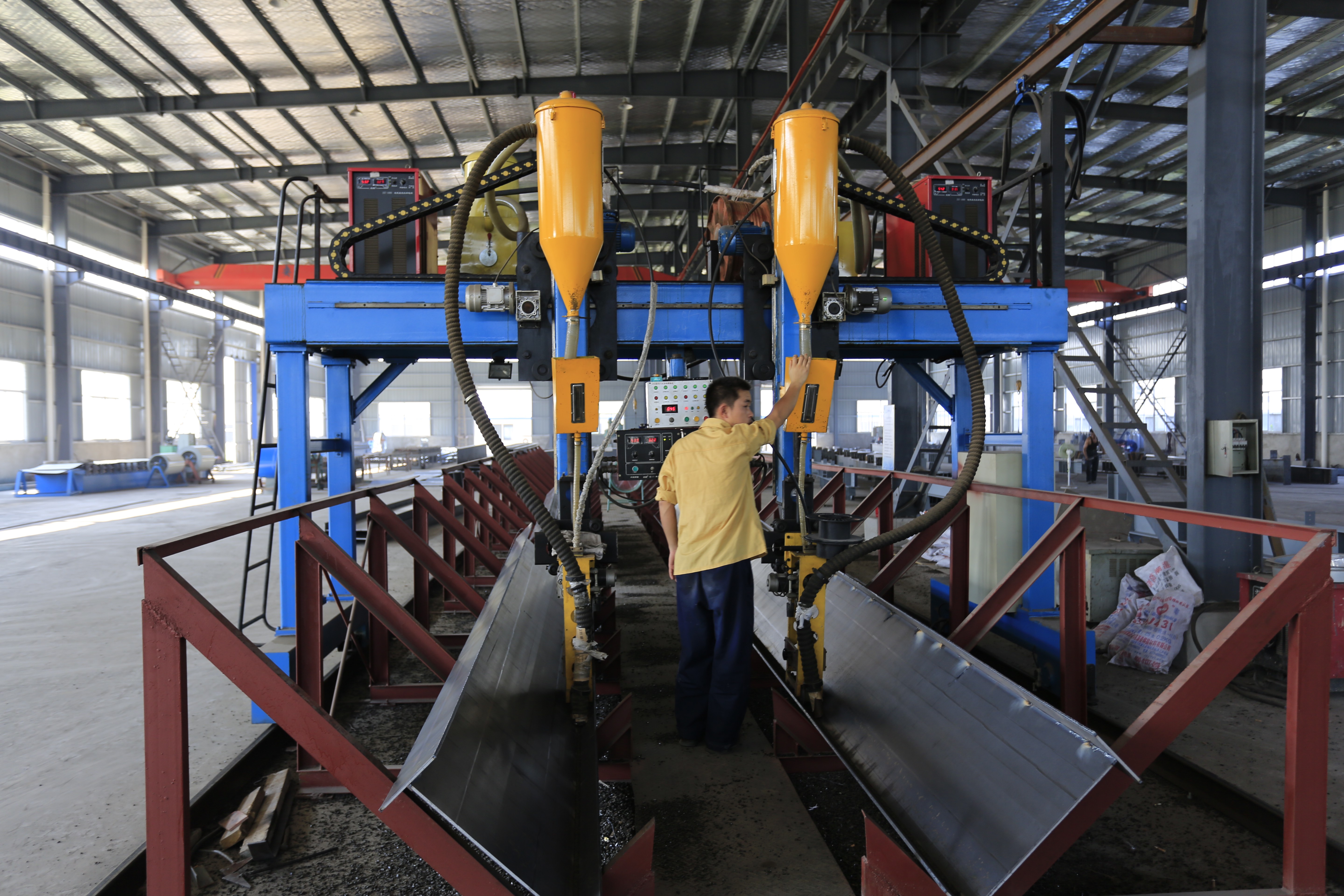
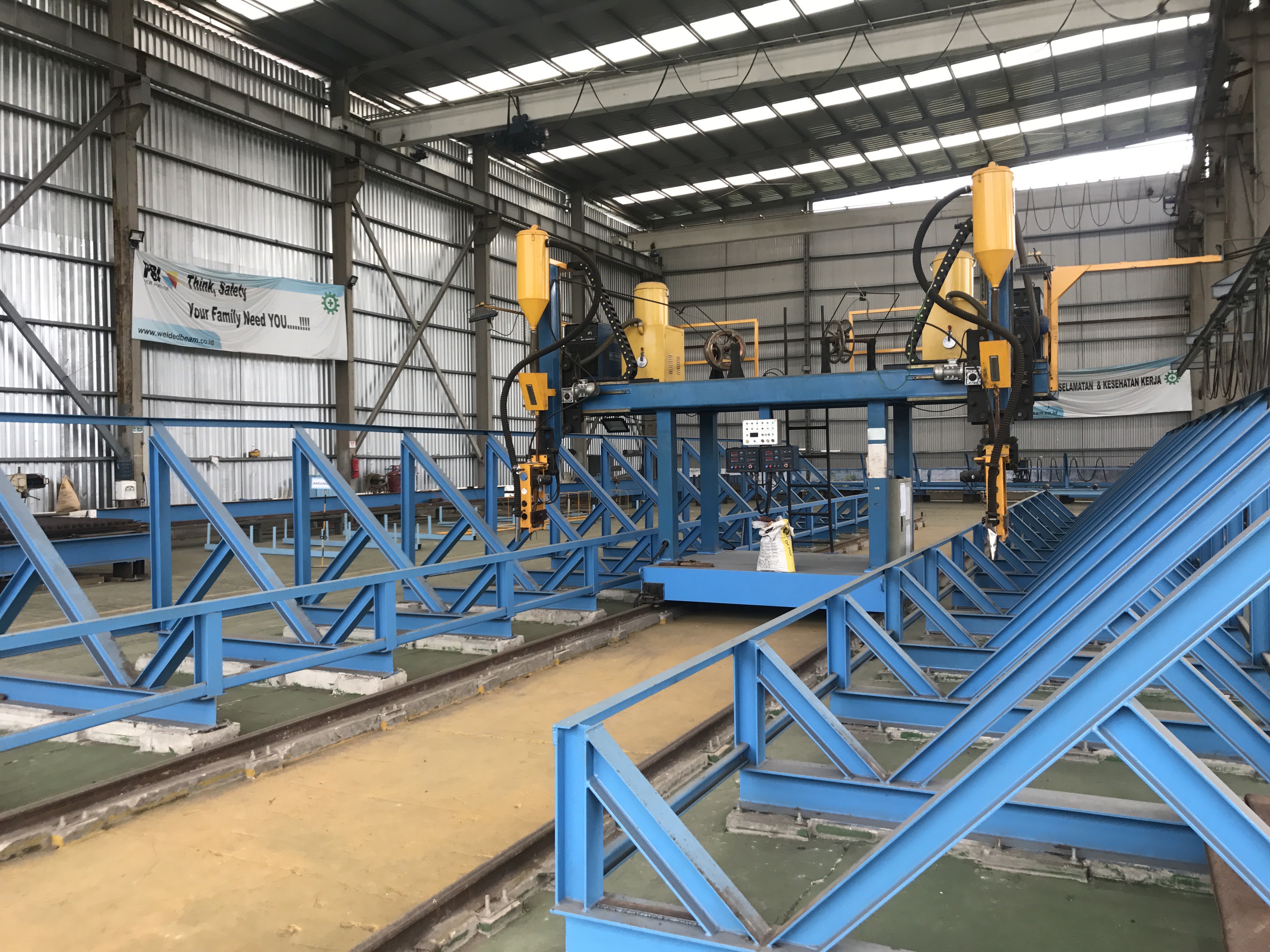
The market includes several major categories of Beam welding machine, each built for a different production logic. Gantry beam welders are common for large structural members because they support long travel paths and stable torch movement across extended seams. They are widely used in steel fabrication plants producing H-beams, box columns, and heavy fabricated members.
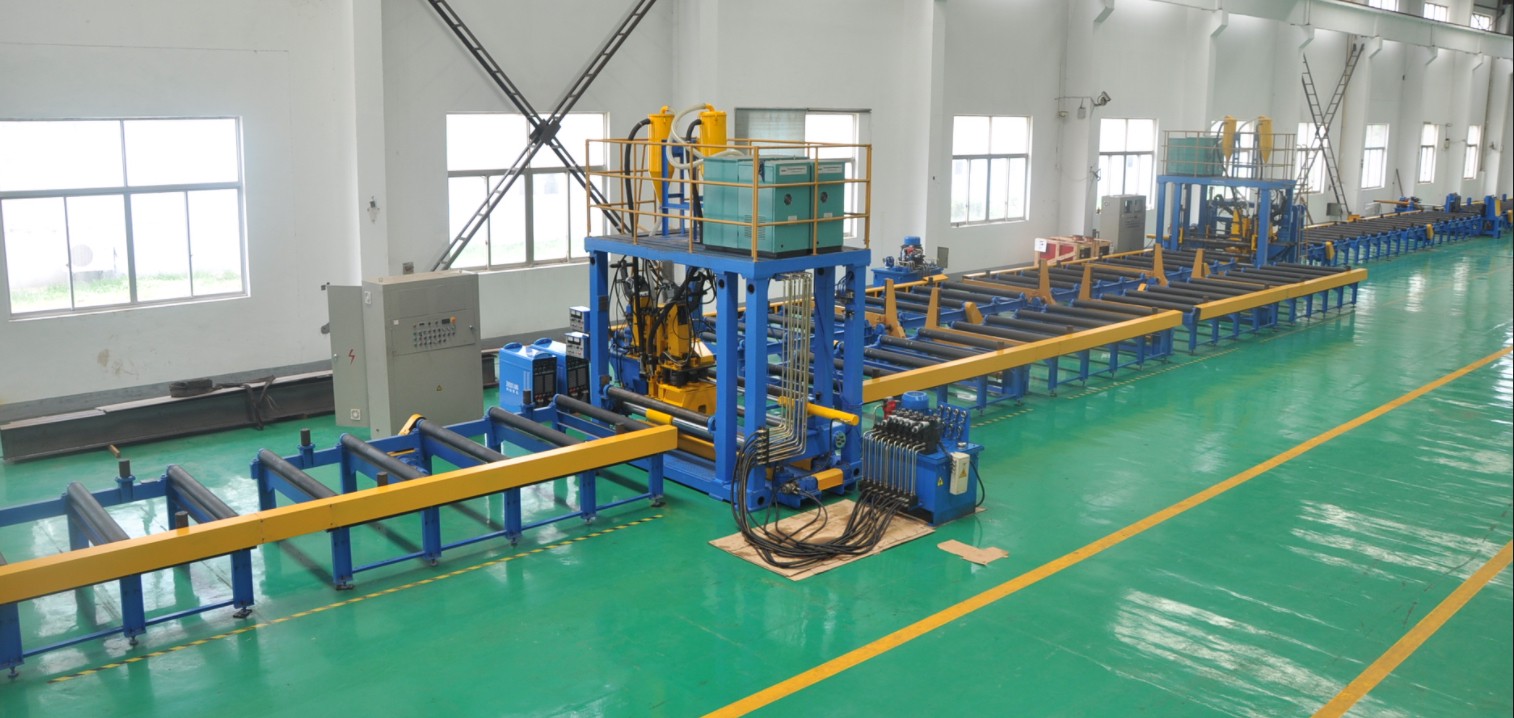
Integrated H-beam lines combine assembly, welding, conveying, and in some cases straightening into a coordinated workflow. For buyers focused on structural steel output, related equipment such as a T type gantry H beam welding machine, Horizontal H beam line, or 3 in 1 H beam welding machine can reduce handling steps and improve production continuity compared with isolated stations.
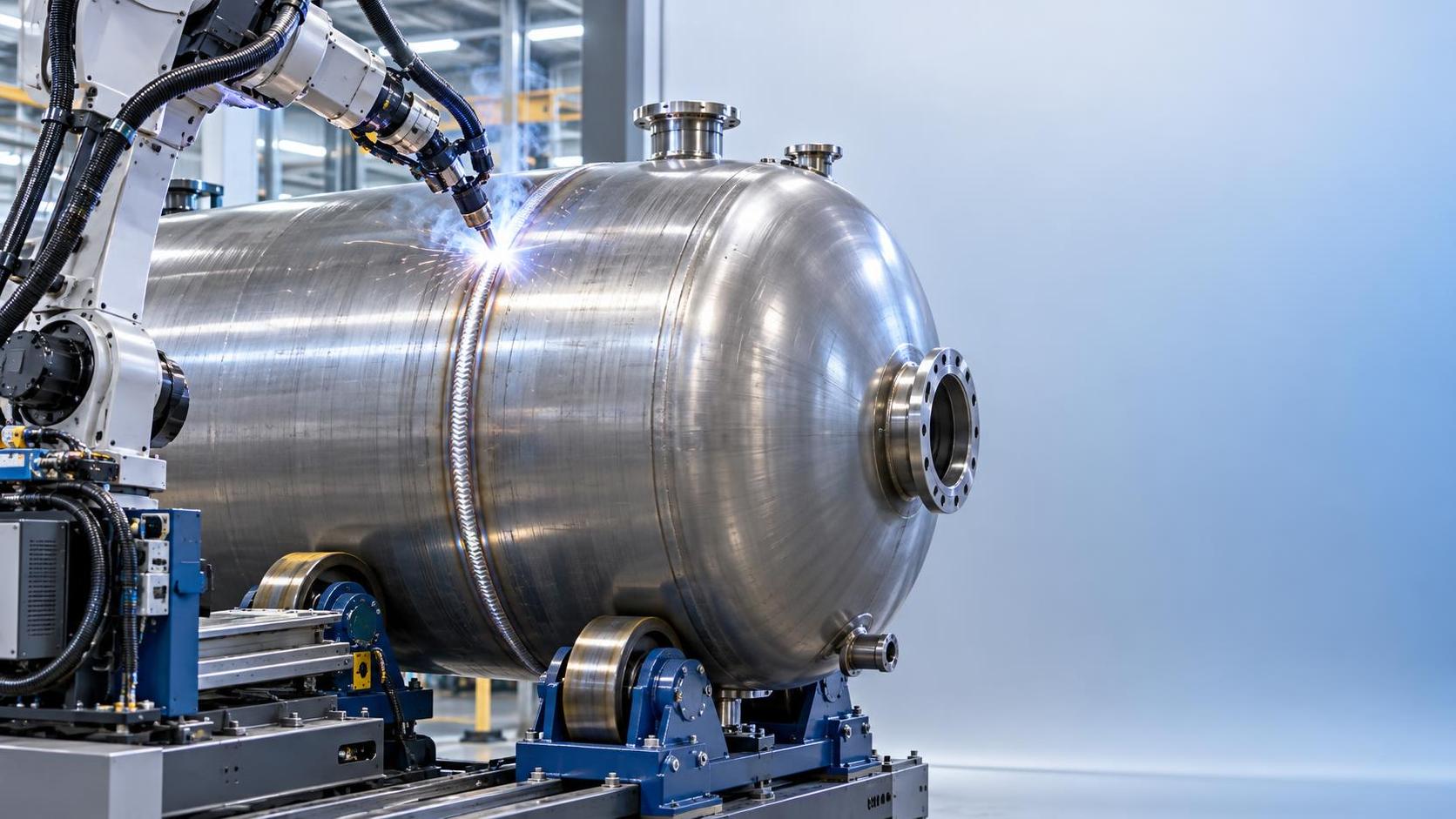
Longitudinal seam welding machines are another important branch when the workpiece is cylindrical or plate-formed rather than structural beam-shaped. These machines are commonly selected for tanks, pipes, and sheet metal fabrications where seam straightness and heat control matter more than heavy beam conveying. Wuxi Samgins also supplies long seam welding machines and pipe-related equipment, which is relevant for buyers operating across both structural and vessel applications.
Robotic and multi-axis systems serve users with more variable geometries or higher automation targets. Where product mix is diverse, customized 7-axis or 9-axis welding robots can provide flexibility that dedicated beam lines do not. The right choice depends on whether the factory values maximum throughput on standard profiles or broader adaptability across multiple part families.
Who Uses Beam Welding Machines And Why They Matter
A Beam welding machine is typically used by structural steel fabricators, pressure-related equipment manufacturers, pipeline workshops, shipbuilding suppliers, heavy machinery plants, and metal processing factories that handle repetitive welded sections. In all of these sectors, the machine supports a common objective: turning long, alignment-sensitive welds into a more controlled and scalable manufacturing step.
The value becomes clear when comparing automated beam welding with manual methods. Manual welding can be effective for low-volume or irregular jobs, but it usually introduces more variability in travel speed, bead shape, heat input, and labor output. A Beam welding machine helps standardize those variables, which improves predictability in scheduling, inspection, and downstream fabrication.
For decision-makers, the machine is often less about replacing people and more about assigning skilled labor more effectively. Operators can shift from constant manual deposition to supervision, setup, quality checks, and parameter control. This is especially relevant in markets facing labor shortages, rising quality expectations, or frequent customer audits on process control and traceability.
Wuxi Samgins positions its offering around this broader production need rather than a single machine category. Its range includes welding manipulators, rotators, positioners, welding robots, H-beam assembly and welding machines, straightening equipment, and cutting systems. For factories trying to build a coherent welding workflow, that broad product range can simplify line planning and equipment matching.
How To Select The Right Beam Welding Machine
Selection should start with the workpiece, not the brochure. Buyers need to define beam type, material grade, thickness range, section size, joint design, daily output target, and acceptable distortion level. A Beam welding machine that performs well on standard H-beams may be poorly suited to mixed profiles, thinner materials, or shorter production runs with frequent changeovers.
The next checkpoint is process compatibility. Consider whether the line needs submerged arc welding, robotic arc welding, seam welding, or a combination with positioning equipment. Also review handling requirements such as conveyors, turning devices, rotators, and fit-up stations. In many factories, handling inefficiency creates more lost time than the welding cycle itself.
Buyers should also review control depth and maintenance access. Parameter storage, recipe switching, fault diagnostics, sensor reliability, and spare part availability all affect uptime. Wuxi Samgins emphasizes customization for tanks, pipelines, steel structures, and sheet metal factories, which can be useful when off-the-shelf configurations do not match actual production constraints.
Finally, evaluate the machine against plant realities: available floor space, crane access, power supply, operator skill level, inspection requirements, and future expansion plans. A slightly more capable Beam welding machine can produce better long-term value when it supports wider product coverage or easier integration with upstream cutting, milling, and downstream straightening or blasting processes.
Performance Factors Buyers Should Measure Closely
When evaluating Beam welding machine performance, travel speed alone is an incomplete metric. Buyers should examine deposition rate, arc stability, penetration consistency, bead appearance, alignment retention, and post-weld straightness. A machine that welds quickly but causes significant rework or distortion may reduce effective throughput rather than improve it.
Fit-up tolerance is another major factor. Automated welding systems perform best when the incoming workpieces are prepared consistently. If cut quality, flange-web alignment, or tack quality varies too much, the welding process becomes less predictable. This is why many manufacturers pair beam welding with capable cutting, milling, assembly, and positioning equipment across the same production line.
Duty cycle, thermal stability, and structural rigidity influence whether the machine can sustain output over long shifts. For higher-volume plants, review not only nominal specification sheets but also how the system behaves during continuous operation, including wire feed stability, control response, and ease of correcting small deviations without extended stoppage.
Quality verification should include dimensional checks, visual weld consistency, and process records where required by the customer or project code. Manufacturers serving international projects often need stronger documentation discipline. Wuxi Samgins states familiarity with ASME, API, and other local industry codes, which is relevant when the buyer must align equipment capability with market-specific fabrication expectations.
Industry Standards, Market Access, And Application Scenarios
A Beam welding machine used in export-oriented fabrication should be considered in the context of quality systems, electrical safety, and customer code requirements. Machine compliance does not replace welding procedure qualification, but it supports smoother equipment approval and plant audits. Wuxi Samgins states that its machines comply with ISO9001 quality system requirements and EU CE Machinery and LVD directives, which can help buyers reviewing supplier credibility.
Application scenarios differ by region and industry. Structural steel workshops may prioritize throughput and section size capacity, while tank and pipeline fabricators focus more on seam integrity, repeatability, and handling of cylindrical workpieces. In mixed-production environments, the best Beam welding machine is often the one that integrates cleanly with manipulators, rotators, positioners, and cutting systems already in use.
The company’s customer references, including URALSTANKOIMPORT, MD Calbah Industries Pty Ltd, Contevix comercio e servicos ltda, Zein Steel Industries Co.LLC, BatysMunaiGazZhabdyktary LLP, and Lincoln Electric-MENA, suggest experience serving different industrial settings and export markets. These examples should be read as evidence of market reach rather than a shortcut around technical due diligence.
For buyers comparing suppliers, one practical advantage is the ability to source a broader line solution from one manufacturer. Wuxi Samgins can pair beam welding equipment with H-beam assembly machines, straightening machines, shot blasting equipment, CNC cutting machines, edge milling machines, and pipe processing systems. That matters when the project objective is a coherent production route rather than a single stand-alone machine.
Maintenance, Service Life, And Upgrade Timing
A Beam welding machine should be maintained on a preventive schedule built around mechanical wear, electrical inspection, lubrication, calibration, and consumable replacement. Daily checks typically cover cable condition, torch alignment, contact components, feed stability, clamping function, and the cleanliness of rails, guides, and sensing elements. Small issues in these areas can quickly affect weld consistency.
Weekly and monthly maintenance often include drive inspection, hydraulic checks where fitted, fastener tightening, travel accuracy review, and validation of stored welding parameters. Factories that run multiple shifts should shorten inspection intervals and keep critical spares available for components with predictable wear patterns. Downtime on a beam line can interrupt several downstream processes at once.
Upgrade timing usually becomes relevant when product sizes change, quality standards tighten, or the labor model shifts toward greater automation. A plant that begins with a dedicated Beam welding machine for one beam size range may later require robotic flexibility, stronger handling automation, or better digital control for process traceability and recipe management.
After-sales support has a direct effect on useful machine life. Wuxi Samgins highlights long-term warranties and service covering design, manufacturing, sales, after-sales, and technical support. For overseas buyers, the practical questions are response speed, commissioning guidance, spare parts planning, and whether the supplier can help diagnose line-level issues rather than only individual machine faults.
Total Cost Of Ownership And ROI Considerations
The purchase price of a Beam welding machine is only one part of the financial picture. Total cost of ownership includes installation, training, electrical and foundation work, fixtures, consumables, spare parts, maintenance labor, energy use, and the cost of lost production during stoppages. Machines with stronger initial build quality may cost more upfront but reduce hidden operating losses over time.
ROI depends heavily on the factory’s production profile. High-volume, repetitive beam work usually benefits most because automation reduces cycle variability and labor intensity across many similar parts. In lower-volume environments, the financial case often depends on whether the machine also reduces rework, improves delivery reliability, or opens access to projects with stricter quality expectations.
Buyers should model at least five variables: annual output, labor savings or redeployment, consumable efficiency, scrap or rework reduction, and expected uptime. It is also wise to estimate the cost of supporting processes. For example, a Beam welding machine paired with suitable cutting, edge preparation, and straightening equipment may deliver better actual economics than a cheaper welding unit installed into an unstable upstream process.
For sourcing teams, the most reliable investment case combines technical fit, supplier service capability, and realistic plant-level assumptions. Wuxi Samgins can be relevant where buyers need customized welding robots, heavy-duty welding rotators, H-beam lines, or long seam systems within one supply relationship. That approach may reduce integration risk and help the equipment perform as a production asset rather than an isolated machine purchase.
Future Trends In Beam Welding Technology
The future of the Beam welding machine market is moving toward smarter automation, stronger process feedback, and tighter integration with upstream and downstream equipment. Buyers increasingly expect not just motion automation, but also easier recipe management, fault diagnostics, and more stable performance across broader product ranges. Digital controls and better sensor use will continue to shape purchasing decisions.
Another trend is modular production design. Factories want beam welding equipment that can connect with CNC cutting, edge milling, fit-up, straightening, blasting, and robotic handling without excessive customization after delivery. Suppliers with a broad machinery portfolio are often better placed to support that system-level planning because they understand process dependencies beyond the weld station itself.
Energy efficiency, labor optimization, and shorter changeover time are also becoming more important than simple maximum speed claims. As buyers compare capital projects, they are paying closer attention to usable uptime, ease of maintenance, and the ability to shift between product types without long setup interruptions. This favors well-engineered machines with robust controls and practical service access.
For companies reviewing next investments, a Beam welding machine should be assessed as part of a broader fabrication strategy. Related process knowledge, such as the themes covered in maintenance, shearing selection, or CNC bending setup guidance, often matters because weld quality starts upstream. The strongest results usually come from treating welding automation as one coordinated part of the entire metal processing workflow.
search
Recommended Products
 Standard gantry h beam welding machineThe H Beam Welding Machine is available in two configurations: gantry gate move type and double cantilever move type, both driven by AC motors with R-series worm reducers. The system features an arc guide frame head for mechanical tracking (up/down and left/right), ensuring precise torch positioning. Welding speed is adjustable from 0.15 to 1.5 m/min, with imported frequency converters enabling stepless speed control, high accuracy, and constant torque output. Electrical control includes a main cabinet and remote operation box for flexible operation. The machine supports simultaneous welding of two workpieces at once, significantly improving production efficiency.
![星星1]()
 T type gantry h beam welding machineThe H-beam welding machine is an automatic system designed for high-efficiency fabrication of steel H-beams. It is available in two configurations: gantry type and double cantilever type, both driven by an AC motor with R-series worm reducer.
Welding speed is adjustable from 0.15 to 1.5 m/min via an imported frequency converter, enabling stepless speed control with high accuracy and constant torque. The arc guide frame features mechanical up/down and left/right tracking for precise torch positioning along the weld joint.
Control is managed through a main cabinet and a convenient remote operation box. The machine is capable of welding two workpieces simultaneously in one pass, significantly boosting productivity.
Ideal for steel structure fabrication, bridge building, and heavy machinery manufacturing.![星星1]()
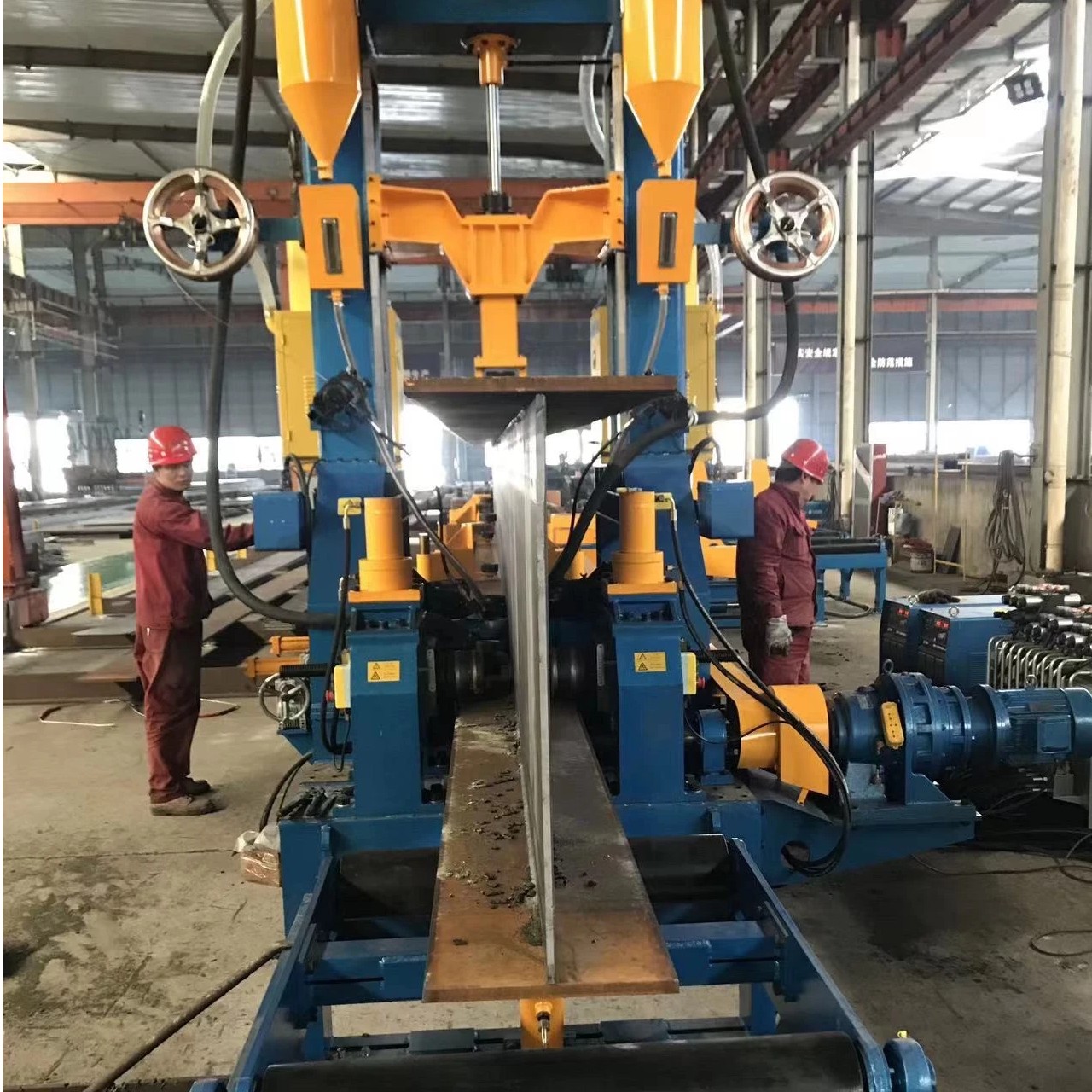
 3 in 1 H beam welding machineThe 3-in-1 H Beam Welding Machine features a patent-protected heavy-duty assembly host with automatic web/flange centering for high precision and efficiency. The independent welding gun mechanism enables flexible height, horizontal, and angle adjustments for quality welds. Its unique correction unit uses two active wheels without obstructing operator view. The system offers versatile use—assembly host can work alone as a welder or combine with the correction unit for full assembly and welding. The correction unit can also be modified into a small straightening machine, adding extra value.
![星星1]()
 Horizontal H beam line1.Introduction for Horizontal H beam line:
Horizontal h beam welding line includes Horizontal H beam assembly machine,Horizontal H beam welding machine,tilting machine and transmission roller,its most suitable big quantity light duty h beam manufacturing,H beam manufacturing speed is 1.2-1.5 times comparing to conventional h beam welding line.
Technical functions:![星星1]()

Recommended blogs
- How to Evaluate a Hydraulic Shearing Machine Exporter for Documentation and After-Sales Support
 Common Hydraulic Shearing Machine Cutting Problems and Fixes
- Are welding robot for pressure vessels compatible with ASME Section VIII Div. 1 weld procedure specifications?
- Which gripper suits a handling robot arm for sheet metal?
- Why Deburring Sheet Metal Edges Matters for Welding Quality and Operator Safety
- What to Check When Sourcing a Gantry Box Beam Welding Machine Manufacturer
Send Us A Message
Send us a Message
A dedicated person will follow up on your needs one-on-one and provide personalized customized solutions according
to your needs.
Get In Touch
We look forward to hearing from you for in-depth communication on how to fulfill your mixing requirements.