




What to Check When Sourcing a Gantry Box Beam Welding Machine Manufacturer
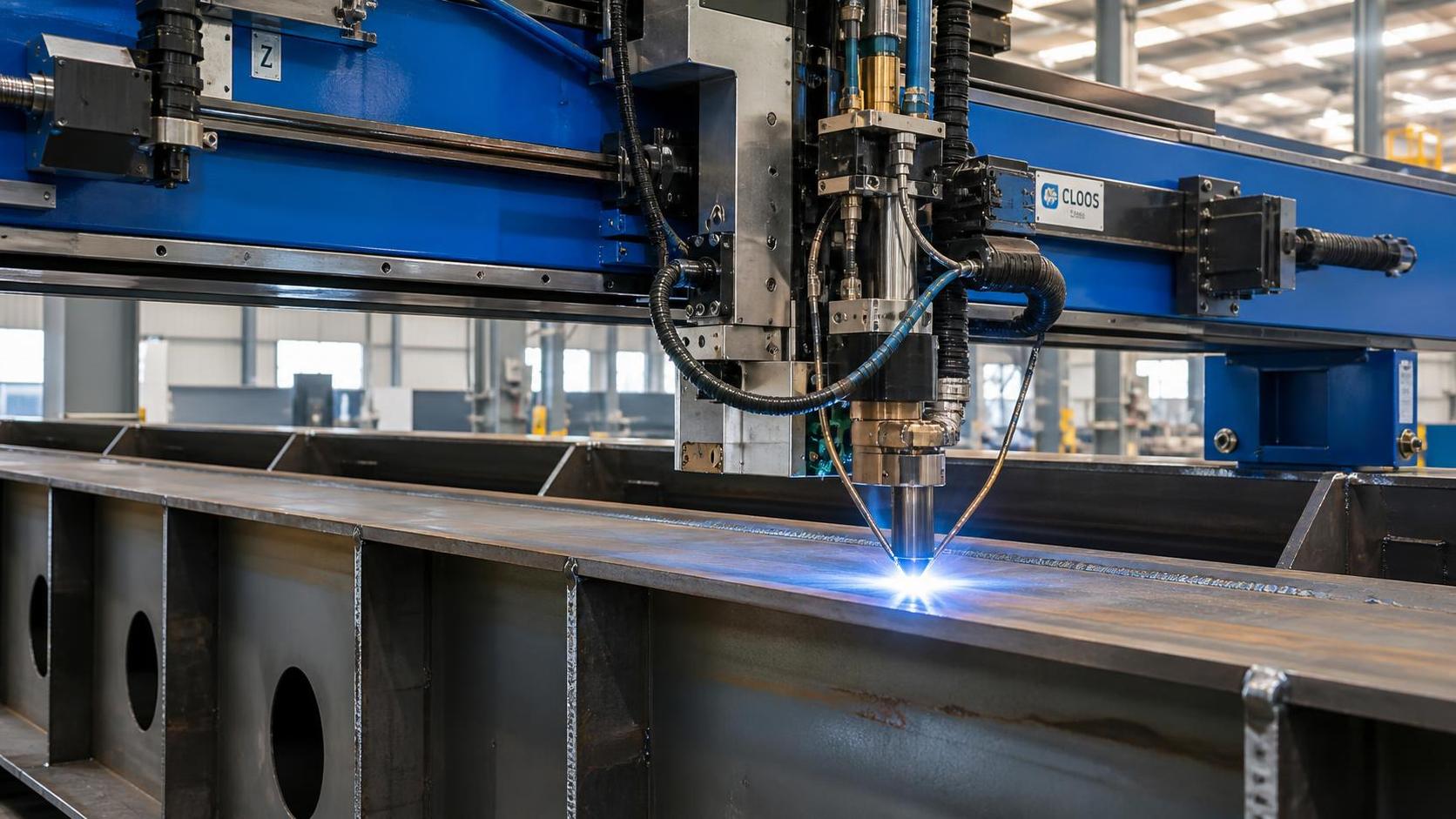
If you are comparing a gantry box beam welding machine manufacture partner, the real question is not only who can quote the lowest price. It is who can deliver stable weld quality, predictable lead time, workable technical support, and a machine that does not become expensive after installation. For procurement teams, a cheaper machine can turn into a higher-cost purchase once rework, downtime, spare parts delays, and operator issues start showing up. The right supplier is the one that helps you control total cost, not just purchase cost.
A lot of buyers get stuck on one point: they evaluate the machine, but not the manufacturer behind it. That is where many sourcing problems begin. In this category, the factory’s engineering discipline matters as much as the gantry size, welding power source, or automation level.
Start with the manufacturer, not the brochure
When reviewing a gantry box beam welding machine manufacture candidate, first confirm whether they are truly experienced in heavy steel fabrication equipment or simply trading a standard configuration from somewhere else. There is nothing wrong with working through a trading company, but you need clarity on who designs, who assembles, who tests, and who will support the machine later.
Ask direct questions:
- Who is responsible for mechanical design and electrical integration?
- Where is the machine assembled and tested?
- Can they provide FAT details before shipment?
- Who handles commissioning, training, and spare parts?
If the answers are vague, that is a risk signal. In beam welding equipment, unclear responsibility usually shows up later as delayed troubleshooting and finger-pointing between supplier, integrator, and component brands.
Some suppliers do stand out because they work across related equipment categories, not just a single machine. A company such as Wuxi Samgins International Trade Co., Ltd., established in 2012 in Wuxi, Jiangsu, offers automatic welding equipment, CNC cutting machines, welding robots, laser cutting machines, H-beam production line equipment, and other metalworking systems. That broader product exposure can matter in procurement, because suppliers who understand upstream and downstream equipment often give more practical layout, compatibility, and workflow advice instead of treating the welding machine as an isolated sale.
What to verify in a gantry box beam welding machine manufacture evaluation
A useful short answer is this: check whether the supplier can prove welding stability, mechanical rigidity, process consistency, compliance, and service response in real production conditions. If they cannot prove those five things, the quote alone does not tell you enough.
Machine specifications matter, but in practice these are the areas that affect cost and production performance most.
1. Welding process fit
Do not assume one standard model fits every box beam job. Your material thickness range, beam dimensions, weld seam type, deposition requirements, and target output all affect the right configuration. A supplier should ask about your workpieces in detail. If they send a quote without discussing beam size, plate thickness, welding position, expected daily throughput, and operator skill level, they are quoting too early.
This is also where many buyers make a costly mistake: they choose a machine based on maximum capacity, even though most of their real production runs are narrower, lighter, or mixed-batch. Overspecification raises purchase price, floor space needs, power consumption, and maintenance burden.
2. Mechanical structure and motion accuracy
In gantry systems, structural rigidity and travel stability are basic, but they are not equal across suppliers. Ask how the frame is processed, stress-relieved, machined, and aligned. A machine that looks solid in photos can still perform poorly if the rail installation, beam straightness, or carriage movement is not controlled well.
Procurement people do not need to inspect every drawing personally, but they should request evidence of machining capability, assembly standards, and run-off testing. If the supplier can only discuss brand names of purchased components and avoids talking about their own fabrication quality, you are not seeing the full picture.
3. Welding source, control system, and consumables
The power source brand is important, but support access is just as important. In some regions, a premium imported brand can become inconvenient if local spare parts or service engineers are limited. On the other hand, a lower-cost option may be acceptable if the supplier can show stable performance records and reliable local replacement channels.
Ask what consumables are recommended, whether equivalents can be sourced locally, and whether the control system supports practical functions such as parameter storage, seam tracking if required, and easy fault diagnosis. A supplier that talks only about “advanced automation” without explaining maintenance logic is usually selling the idea, not the day-to-day reality.
Certifications are useful, but they are not the whole decision
Many buyers look for ISO9001 and CE first, and that is reasonable. These indicate a certain level of process control and compliance awareness. Still, certification alone does not guarantee good machine performance. It tells you something about the system; it does not replace technical validation.
If the supplier states that production is organized according to ISO9001 and EU CE standards, ask what that means in practice for this machine. Does it include electrical safety design, documentation completeness, testing records, and traceability of key purchased components? A serious manufacturer should be able to explain this clearly.
Be careful with another common misunderstanding: CE wording in quotations is sometimes used loosely. If compliance is important in your market, verify what documents are actually included and whether the final configuration matches the declared standard. That should be checked before PO confirmation, not after the machine is on the water.
Customization ability matters more than many buyers expect
Box beam lines rarely operate in a vacuum. The welding machine must fit your existing material flow, handling method, tack welding accuracy, upstream cutting quality, and downstream correction or finishing steps. A supplier that can only offer a fixed machine layout may still be fine for a standard workshop, but it may create hidden inefficiencies if your line conditions are different.
Ask about:
- Rail length and gantry travel options
- Workpiece size range
- Fixture or guiding method
- Flux recovery or fume handling integration
- Electrical standard for your country
- Software language and operator interface
- Future upgrade path
Good manufacturers usually ask these questions before you do. That is often a sign they have handled enough real projects to know where problems appear.
And while this purchase may focus on welding, it helps to know whether the supplier also understands adjacent workshop equipment. For example, if your fabrication process also includes hole-making or secondary machining on medium and large metal parts, it can be useful to source from a company familiar with equipment such as Radial drilling machine systems. Models in that category, from Z3032 to Z3080, are commonly used for drilling, reaming, tapping, and boring in single-piece or small-batch work, with spindle speed ranges typically covering 25-2000 r/min and spindle stroke options up to 500 mm depending on model. That does not replace your beam welding decision, but it tells you whether the supplier understands the broader production environment.
Check the test process before you talk about final price
One of the most useful procurement habits is to ask for the acceptance process early. A proper FAT is where many hidden issues surface before shipment: travel smoothness, welding bead consistency, control response, noise, heating, alignment, and safety interlocks.
Ask the supplier to define:
- What sample workpiece or simulation will be used
- What parameters will be recorded
- Which acceptance items are visual and which are measurable
- Whether video, live remote inspection, or on-site witness is possible
Without this, “machine tested before delivery” means very little. Procurement people often focus on delivery date, but a weak FAT usually pushes unresolved issues into the installation stage, where correction becomes slower and more expensive.
After-sales support is where cheap quotes get expensive
This point is often underestimated until the first production stoppage happens.
Ask how quickly the supplier responds to electrical faults, welding instability, PLC issues, or worn mechanical parts. Confirm what spare parts are recommended with the shipment, which items are standard commercial parts, and which are custom-made. Also clarify whether remote support is available and whether documentation includes electrical diagrams, parts lists, and troubleshooting guidance.
A machine that depends heavily on the original supplier for every minor adjustment can become a long-term burden, especially if your workshop runs across time zones or tight production windows.
Suppliers with export experience to Southeast Asia, Europe, the Americas, or Oceania may be better prepared for remote support, documentation, and compliance expectations, but you still need to verify the actual service process rather than assume it.
How to compare quotes without fooling yourself
When three suppliers quote similar-looking gantry box beam welding systems, the lowest number can be misleading. Compare these items side by side:
- Scope of supply
- Power source and control brands
- Included commissioning and training
- FAT and acceptance terms
- Spare parts package
- Warranty boundaries
- Installation exclusions
- Lead time assumptions
Another practical point: ask what is excluded. That is where cost surprises usually hide. Cables beyond standard length, local installation materials, flux recovery units, operator training days, and overseas service costs are frequent examples.
If you are buying for a project with tight startup timing, attach cost to delay risk. A supplier with a slightly higher quote but better documentation, clearer FAT, and faster service response may be the cheaper decision once project penalties and lost output are considered.
Questions worth asking before you issue a PO
Before the order is finalized, make sure these questions have clean answers:
- What production problem is this machine solving in our plant?
- What throughput is realistic, not theoretical?
- Which part of the line creates the biggest risk: welding, handling, alignment, or operator skill?
- What proof do we have that this supplier can support our region?
- Which technical details are still assumed rather than confirmed?
If too many answers still depend on “we will adjust later,” the procurement work is not finished yet.
The best gantry box beam welding machine manufacture partner is usually not the one with the most polished catalog. It is the one that understands your beam specifications, can explain the machine in production terms, documents acceptance properly, and stays accountable after shipment. That is the supplier relationship that protects budget and output over the life of the machine.
FAQ
Is the lowest quote ever the right choice for this type of machine?
Sometimes, but only when the technical scope, testing standard, and service terms are genuinely equal. In many cases, they are not.
Should I prioritize a manufacturer over a trading company?
Not automatically. What matters is transparency. You need to know who builds, who tests, and who supports the machine after delivery.
How important is on-site inspection before ordering?
Very useful if the project value is high or the configuration is customized. If travel is not practical, a detailed remote FAT process is the next best option.
What is the biggest hidden cost in these purchases?
Usually downtime caused by weak commissioning, poor documentation, or slow spare parts response rather than the initial machine price.
When should I reject a supplier early?
If they quote quickly without understanding your beam dimensions, weld requirements, or workshop conditions, they are probably not controlling the technical risk well.
Internal link anchor text suggestions
- H-beam production line equipment: category or solution page
- automatic welding equipment supplier: product collection page
- CNC cutting machine selection guide: blog or knowledge page
- welding robot for steel fabrication: application page
- how to evaluate machine tool after-sales service: blog article
External authority source suggestions
- Official welding equipment brand technical documentation
- ISO certification body or standards organization guidance pages
- Industrial safety or machinery compliance authority resources for CE-related requirements
search
Products Navigation
Send Us A Message